DbcultAccessing Vault...
Cult Review
Senior Film Conservator
If you are wondering if you should spend your afternoon with this one, the answer is a solid maybe.
It is really for people who like the quiet, messy feelings of the late silent era in Japan. If you want a plot that moves fast or makes total sense, you will probably hate this movie.
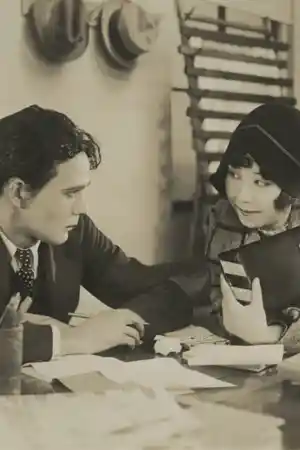
I watched this late at night and honestly, it felt like looking through someone’s old family photo album that they didn't really want you to see. The movie starts with this girl just... showing up at a widower's house. It is weirdly intrusive.
She acts like she owns the place from the second she walks in. Yukiko Tsukuba plays the girl and she has this wild energy that doesn't quite fit the dusty furniture of the house.
The widower, played by Hideo Fujino, looks like he just wants to take a nap most of the time. I kept thinking about how much more alive this felt than some other stuff from that year, like Mitt the Prince, which was just okay but felt a bit stiffer.
There is a specific moment where the girl is fixing her hair in a mirror and you can see the dust floating in the air. It’s such a small thing but it made the whole house feel real to me.
The house is full of these heavy shadows that remind me a bit of the look in Sei no kagayaki, though maybe a little less fancy. One scene involves a tea set that gets more screen time than some of the supporting actors.
I think the director, whoever was holding the camera that day, really liked that tea set. The modern girl vibe is so strong here.
She has the short hair and the "I don't care" attitude that must have been shocking in 1930. It makes the widower's traditional life look kind of boring and sad, which I guess is the whole point of the title.
Some of the acting is a bit much, I'll admit. Lots of clutching chests and wide eyes like they’re trying to reach the back row of a theater.
But then Kinuyo Tanaka shows up and she is just... better than everyone else. She has this way of looking at the camera that makes you feel like she knows a secret you don't.
The middle of the movie drags a bit when they start talking about family obligations. The intertitles are long and I found myself checking my watch once or twice.
It’s not as funny as something like Frisco Sally Levy, which has a different kind of chaotic energy. But then the girl does something impulsive and the energy kicks back up.
I like that it doesn't try to explain every single emotion with a title card. You just watch these people be awkward and sad together in a room.
It reminds me of the pacing in The Dance of Life, where the silence is actually the loudest part of the scene. There is a shot of a window that lingers for way too long.
I think it was supposed to be poetic or deep. To be honest, it just made me think about how I really need to clean my own windows at home.
The lighting gets really flat in the outdoor scenes, which is a shame. It is like the sun was too bright for the film stock they were using that day.
But the indoor stuff is where the real mood is. It is a strange little film that feels like a time capsule.
The writer, Tokusaburō Murakami, seems to really get how annoying young people can be to older folks. Or maybe he just liked writing about girls who cause trouble for no reason.
The ending feels like they just ran out of film or maybe the actors had to go home. It just sort of... stops.
I’m glad I watched it, even if I don’t think I’ll ever put it on again. It has that specific 1930s smell to it—metaphorically, I mean.
If you like old Japanese cinema, it’s a must-see for the atmosphere alone. Otherwise, it might just feel like a bunch of people standing in a dark room wondering why they are there.
It’s not "great" in a masterpiece way, but it is definitely interesting to look at. 🎞️
IMDb —
1920
Community
Log in to comment.