DbcultAccessing Vault...
Cult Review
Senior Film Conservator
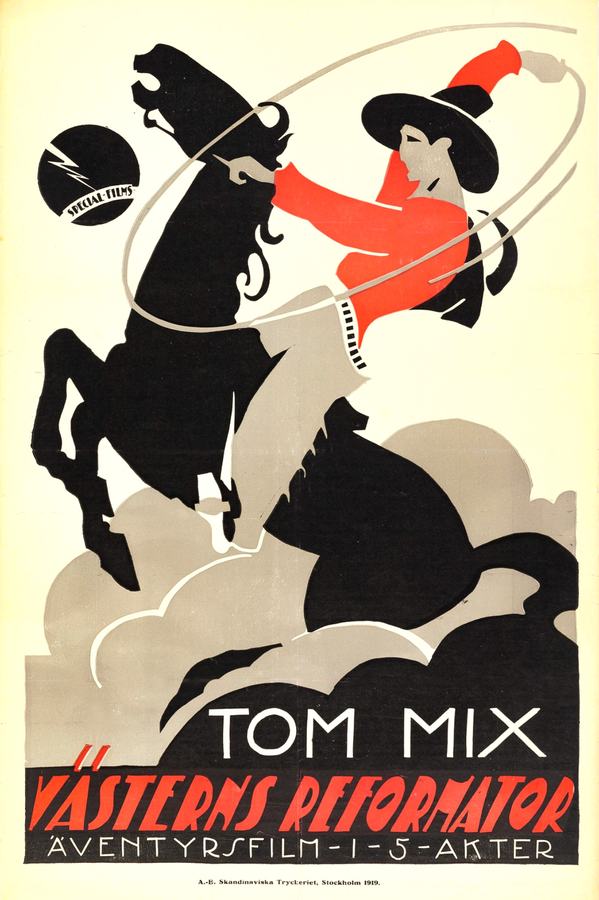
Stepping back into the dusty, sun-baked landscape of the early 20th century cinema, one cannot help but be struck by the sheer kinetic energy and moral clarity that defined the silent Western. Among its most iconic figures stood Tom Mix, a man whose very name became synonymous with daring horsemanship, impeccable white hats, and a steadfast commitment to justice. His 1919 vehicle, Hell-Roarin' Reform, serves as a quintessential example of the genre's enduring appeal, a rollicking adventure that, beneath its surface of thrilling stunts and clear-cut heroics, offers a fascinating glimpse into the social conscience and entertainment values of its era.
The film plunges us headfirst into a world where good intentions are swiftly met with villainous opposition. Our protagonist, Tim, played with characteristic charm and athleticism by Mix, begins not as a gunslinger seeking vengeance, but as a benevolent community organizer. His initial endeavor—collecting funds for the Belgian Babies' Milk Fund—is a poignant reminder of the contemporary global events that permeated even the escapist fare of Hollywood. It grounds the narrative in a tangible, humanitarian cause, instantly establishing Tim as a figure of unimpeachable moral fiber. This setup, however, quickly pivots from pastoral philanthropy to high-stakes action when the collected donations are brazenly stolen by a gang of outlaws. This transition is seamless, leveraging the audience's emotional investment in the fund's noble purpose to fuel their desire for Tim's inevitable pursuit and triumph.
The robbery itself is more than just a plot device; it's the catalyst that transforms Tim from a good-hearted cowboy into an agent of reform. His immediate reaction is not despair, but decisive action, setting him on the trail of the perpetrators. This pursuit is punctuated by another act of heroism: the rescue of Doris Jenkins from a runaway stagecoach, a direct consequence of the same gang's nefarious activities. This sequence not only showcases Mix's legendary stunt work – a hallmark of his career that often involved him performing his own breathtaking feats – but also introduces the romantic interest, Doris, played by Kathleen O'Connor. Her vulnerability and subsequent admiration for Tim provide a personal stake in his larger mission, weaving a thread of romance through the rugged fabric of the Western narrative. Much like the strong female characters who, though often in distress, provided crucial motivation in films like The Waif, Doris serves to deepen the emotional resonance of Tim's quest.
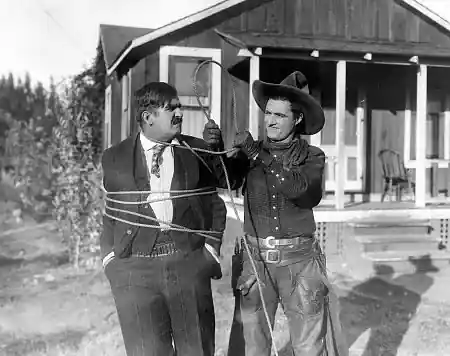
The narrative takes an intriguing turn with Tim's encounter with a minister, a man physically and spiritually battered after being ejected from the notorious town of Tarantula. This detail is crucial. It elevates Tim's personal vendetta against the robbers into a broader crusade against systemic corruption. Tarantula is not just where the gang operates; it's a place where lawlessness has become the law, where even men of God are summarily cast out. Tim's decision to infiltrate Tarantula under the guise of a new preacher is a stroke of narrative genius, allowing him to challenge the town's entrenched evil from within, using a moral authority that belies his cowboy exterior. This thematic exploration of a righteous individual taking on a corrupt system echoes the moral clarity found in other silent era films that championed justice, such as Thou Art the Man, which also explored themes of moral awakening and confrontation.
Tim's arrival in Tarantula as a preacher is fraught with both comedic potential and dramatic tension. His initial attempts at sermonizing, likely delivered with a blend of earnestness and cowboy bluntness, are met with predictable contempt by the town's criminal elements, led by the villainous Sheriff Baxter (Bowditch M. Turner). Baxter, a classic silent film antagonist, is not merely a robber but a corrupt lawman, embodying the ultimate betrayal of public trust. His command to have Tim's flimsy church pulled down during a sermon is a powerful visual metaphor for the forces of chaos attempting to suppress order and morality. This act of blatant disrespect and aggression sets the stage for Tim's transformation from a moral crusader into a veritable force of nature.
The retaliation is pure Tom Mix. Instead of retreating, Tim escalates the conflict with an audacious display of physical prowess. His ride upstairs to a building's balcony, followed by a gravity-defying leap to the roof of Baxter's saloon, and a subsequent crash through the ceiling, is the stuff of cinematic legend. It's a moment that perfectly encapsulates the silent film's reliance on spectacle and physical storytelling. This sequence isn't just about showing off stunts; it's about Tim asserting his dominance, demonstrating that his commitment to reform is backed by an unparalleled ability to outmaneuver and outfight his adversaries. It's a defiant declaration that even without a badge, his brand of justice will prevail. This kind of physical, almost balletic heroism, sets Mix apart, much like the dynamic performances seen in films such as His Majesty, the American, where Douglas Fairbanks similarly used athleticism to define his heroic persona.
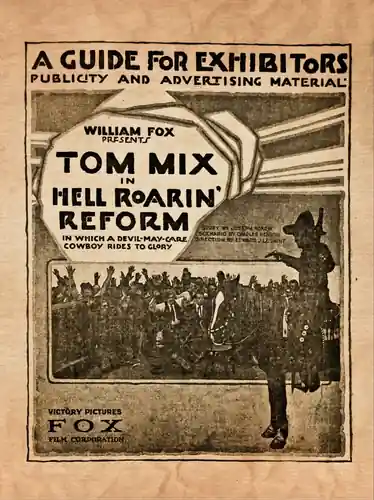
Predictably, Tim's daring infiltration leads to his capture. The image of the hero, bound and facing execution by hanging, is a classic trope, designed to heighten suspense and underscore the seemingly insurmountable odds. Yet, for an audience familiar with Mix's persona, there's an implicit understanding that escape is not just possible, but inevitable. His subsequent liberation is swift and decisive, paving the way for the film's climactic confrontation. This narrative structure, moving from initial conflict to hero's defeat and then triumphant comeback, is a tried-and-true formula that resonates with audiences, promising ultimate victory for righteousness.
The true ingenuity of Hell-Roarin' Reform lies in its resolution. Tim doesn't merely defeat Baxter; he orchestrates a form of poetic justice that is both satisfying and symbolically rich. The rescue of Doris, whom Baxter had abducted, brings the romantic subplot to its zenith. But it's the subsequent forced marriage, with Baxter as the unwilling witness, that truly elevates the film beyond a simple action-adventure. This act signifies the establishment of a new moral order, with Tim and Doris as its foundational figures. Furthermore, compelling Baxter to write a check for a new church is a brilliant stroke. It not only rectifies the initial injustice of the stolen funds but forces the villain to finance the very institution he sought to destroy. This act of financial restitution, coerced by the hero, serves as a powerful symbol of reform, not just in terms of physical structures but in the very moral fabric of the community. It’s a clean, decisive victory that leaves no room for ambiguity, echoing the clear moral pronouncements often found in films of social commentary like The Heart of Lincoln, which championed virtuous leadership.
Tom Mix was more than just an actor; he was a phenomenon. His films, including Hell-Roarin' Reform, captivated audiences with their blend of high-octane action, clear moral compass, and the undeniable charisma of their star. Mix's appeal lay in his authenticity as a cowboy, having genuinely lived the life he portrayed on screen, lending an unparalleled credibility to his performances. He was the embodiment of the rugged individualist, capable of prodigious feats, yet always guided by an unwavering sense of right and wrong. This archetype resonated deeply with American audiences, particularly in the post-World War I era, offering a vision of strength, self-reliance, and moral fortitude in a rapidly changing world.
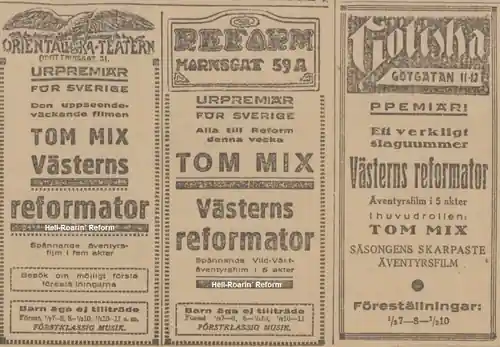
The silent Western, as exemplified by this film, was a genre that thrived on visual storytelling. Dialogue cards were sparse, relying instead on exaggerated expressions, dynamic camera work (for its time), and meticulously choreographed action sequences. The narrative of Hell-Roarin' Reform is a masterclass in this form, communicating complex themes of justice, corruption, and redemption through visceral action and clear character motivations. The absence of spoken words forced filmmakers to be incredibly creative with their visual language, and Mix, with his expressive physicality, was perfectly suited to this medium.
The film's exploration of reform is also noteworthy. It's not just about punishing the wicked, but about rebuilding society, literally and figuratively. The funding of a new church signifies the restoration of community values and moral guidance. This theme of societal renewal through individual heroism was a popular motif in many films of the era, reflecting a broader cultural desire for stability and order. Films like The Dawn of Freedom similarly depicted the triumph of moral principles over adversity, albeit in different historical contexts.
In its entirety, Hell-Roarin' Reform is more than just an artifact of early cinema; it's a vibrant, engaging piece of storytelling that continues to entertain and inform. It showcases Tom Mix at the height of his powers, delivering a performance that is both physically demanding and emotionally resonant. The film's enduring appeal lies in its straightforward narrative, its thrilling action sequences, and its unambiguous moral message. It reminds us of a time when heroes were unequivocally good, villains were irredeemably bad, and justice, no matter how circuitous the path, always prevailed.
For contemporary viewers, it offers a fascinating window into the cinematic techniques and cultural values of a bygone era. It's a testament to the power of silent film to convey complex emotions and thrilling narratives without uttering a single word. The film's unique blend of humanitarian concern, thrilling adventure, and moralistic triumph makes it a valuable entry in the annals of Western cinema, solidifying Tom Mix's place as one of its most dynamic and beloved stars. It stands as a testament to the fact that even without spoken dialogue or advanced special effects, a compelling story, a charismatic lead, and a clear sense of purpose can create a truly unforgettable cinematic experience. The themes of personal responsibility and the fight for a better community resonate even today, proving that tales of courageous individuals standing up to corruption are timeless, much like the universal struggles depicted in films such as Paid in Advance, which also centered on the pursuit of justice against overwhelming odds. This film, with its audacious hero and triumphant conclusion, remains a vibrant example of the enduring power of the Western genre to entertain, inspire, and reflect the deepest desires of a society for order, fairness, and the triumph of the human spirit.
The creative choices made in Hell-Roarin' Reform, from the strategic deployment of stunt work to the symbolic weight of its ending, underscore a sophisticated understanding of audience engagement. It's not merely a series of events but a carefully constructed narrative designed to elicit specific emotional responses and reinforce societal ideals. The film's legacy is not just in its entertainment value but in its contribution to the evolving language of cinema, demonstrating how visual storytelling could be both thrilling and profoundly meaningful. It’s a silent roar that still echoes with the spirit of the Wild West and the indomitable will of a true screen hero.
IMDb 6.1
1932
Community
Log in to comment.