DbcultAccessing Vault...
5.6/10
Senior Film Conservator
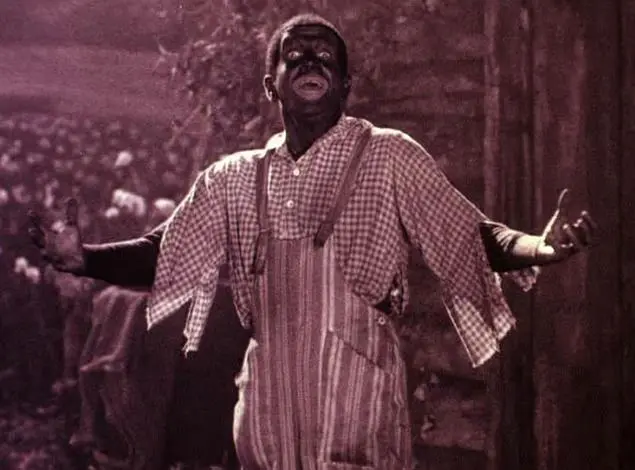
A definitive 5.6/10 rating for a film that redefined the boundaries of cult cinema. A Plantation Act remains a cornerstone of transgressive art.
Short answer: No, unless you are a dedicated film historian or a student of racial politics in American media. This is not a movie for casual viewing or a relaxing evening; it is a difficult, often repulsive artifact of a bygone era's prejudices. This film is for those who want to witness the literal birth of synchronized sound cinema and understand the technical foundations of the industry. It is absolutely NOT for anyone looking for entertainment or those sensitive to dehumanizing racial caricatures.
1) This film works because it successfully proved that synchronized sound could capture the charisma of a live performer, effectively ending the dominance of the silent era.
2) This film fails because its reliance on blackface minstrelsy creates an insurmountable barrier for modern audiences, rendering its artistic merits secondary to its offensive content.
3) You should watch it if you are researching the transition from silent films like The Moonstone to the talkies, or if you want to see the raw prototype for The Jazz Singer.
In 1926, the film industry was at a crossroads. While directors were mastering the visual poetry of silent cinema in works like Scandal, a technical revolution was brewing in the form of the Vitaphone. A Plantation Act was the shot heard 'round the world—or rather, the song heard 'round the world. When Al Jolson opens his mouth and the sound of his voice matches the movement of his lips, the art form changed forever. It was the end of an era for films like The Perfect Flapper, which relied on intertitles and pantomime.
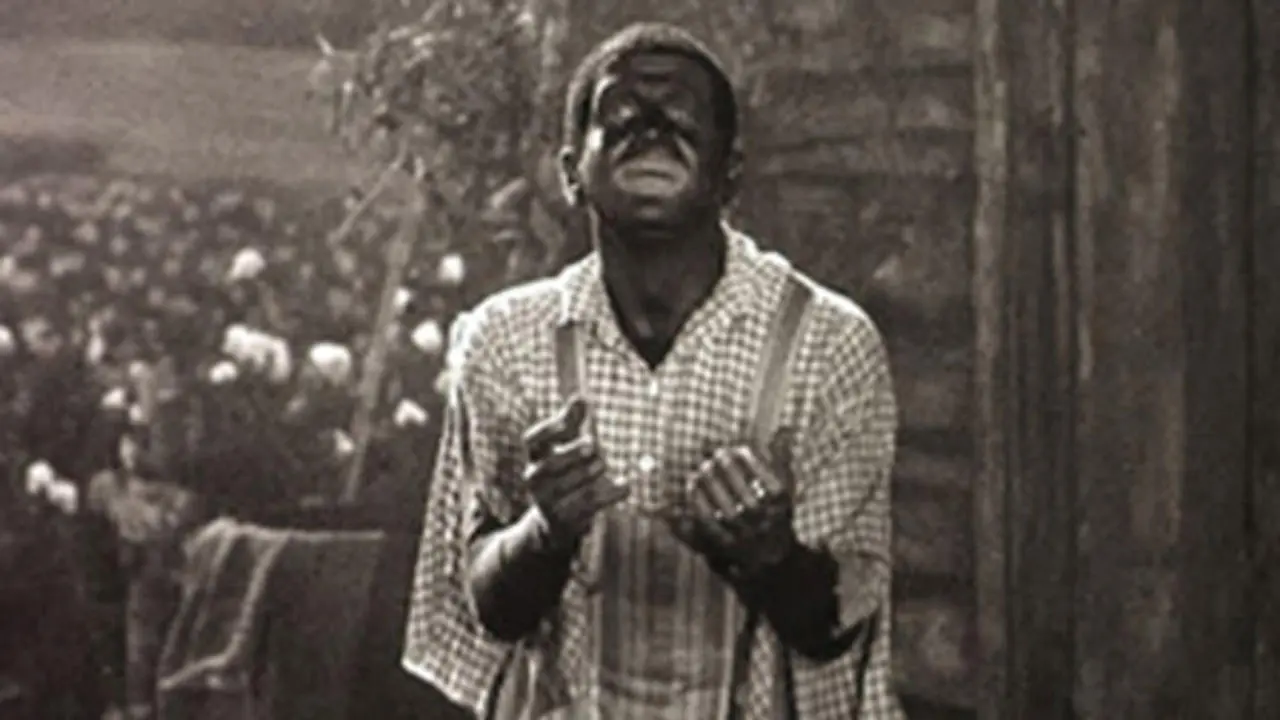
The technical achievement here is undeniable. Unlike the experimental shorts of the early 1920s, the Vitaphone system used in A Plantation Act offered a clarity that was shocking for the time. You can hear the gravel in Jolson's voice and the specific cadence of his breath. It feels immediate. It feels hauntingly real. But that realism is exactly what makes the content so jarring. The film doesn't just record a song; it records a specific, ugly brand of American showmanship that has thankfully been relegated to the archives.
Watching Al Jolson in A Plantation Act is a masterclass in cognitive dissonance. On one hand, Jolson’s energy is infectious. He doesn't just sing; he performs with every muscle in his body. Compared to the often-stiff acting found in contemporary dramas like Lady Hamilton, Jolson is a whirlwind of motion. He understands the camera in a way few stage actors of 1926 did. He plays to the lens as if it were the front row of the Winter Garden Theatre.
On the other hand, there is the greasepaint. The blackface is thick, crude, and grotesque. It is a mask that attempts to strip away the humanity of the people it purports to represent. For a modern viewer, it is impossible to separate the technical brilliance of the synchronized sound from the moral failure of the performance. Jolson’s 'Mammy' persona is a relic of a white supremacist imagination that viewed Black life as a source of comedy or sentimental longing for a fictionalized, idyllic past. It is a brutal reminder of how deeply embedded these tropes were in the DNA of early Hollywood.
Visually, the film is remarkably primitive. There is no camera movement. There are no cuts. It is a single, static wide shot that captures Jolson from the waist up as he stands before a painted backdrop of a plantation. Compared to the sweeping cinematography of Hei de Vencer or the atmospheric lighting in Samhällets dom, A Plantation Act looks like a regression. This was the 'sound trap' that many early talkies fell into—the camera became a prisoner of the microphone.
Because the recording equipment was so bulky and sensitive, the fluid visual language developed in the 1910s and early 20s was temporarily abandoned. In A Plantation Act, the image exists solely to serve the audio. Jolson moves, but the camera does not dare to follow him. This creates a strange, claustrophobic effect. You are trapped in the frame with him, forced to endure the performance without the relief of a cutaway or a change in perspective. It is an endurance test for the modern eye.
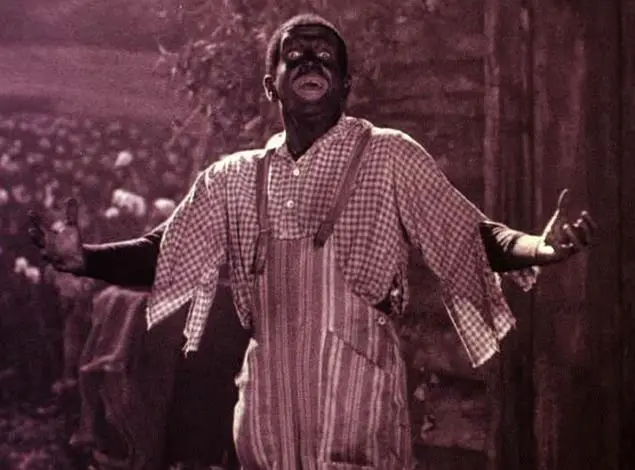
The three songs Jolson performs—'April Showers,' 'When the Red, Red Robin,' and 'Rock-a-Bye Your Baby'—were already massive hits. Hearing them in a theater in 1926 must have been an overwhelming sensory experience. In an era where audiences were used to the live accompaniment of a theater organ or a small pit orchestra, the booming, synchronized voice of a superstar was a revelation. It provided a level of intimacy that silent films, even great ones like Jes' Call Me Jim, could never achieve.
However, the audio quality also highlights the limitations of the Vitaphone. There is a persistent hiss, a mechanical heartbeat that reminds you of the spinning disc behind the screen. It’s a dry sound. It lacks the warmth of modern digital recordings, but it has a piercing quality that makes Jolson’s vibrato feel like it’s cutting through the air. The audio is the star here, more so than Jolson himself. It was the proof of concept that convinced Warner Bros. to bet the studio on sound.
The only reason to watch A Plantation Act today is for historical context. It is a primary source for understanding the evolution of media. If you are interested in how technology can be used to amplify both art and prejudice, this film is a vital, if painful, piece of evidence. It shows how the most 'progressive' technology of its day was used to cement the most regressive social ideas.
To understand A Plantation Act, one must look at what else was happening in cinema. While The Cricket on the Hearth was providing sentimental Victorian drama, and Battling Mason was offering physical comedy, Jolson was offering something else entirely: personality. The silent era relied on archetypes. Sound allowed for the cult of personality to truly take hold. Jolson wasn't just a character; he was a brand.
This film was the bridge between the vaudeville stage and the modern Hollywood machine. It proved that people would pay not just to see a story, but to hear a specific person. It’s a shift that led directly to the star system we know today. Yet, it’s a shame that this leap forward was tethered to such a backward mode of performance. It’s a reminder that progress is rarely linear. Sometimes, we take one step forward in technology and two steps back in humanity.
A Plantation Act is a ghost. It is the ghost of a dead technology and the ghost of a social order that we are still trying to exorcise. It is technically brilliant for its time and morally bankrupt by any standard. It works as a museum piece, but it fails as a movie. If you choose to watch it, do so with your eyes open to the ugliness it represents. It is a necessary watch for the scholar, but a toxic one for the fan. It’s a fascinating, hideous, and essential part of film history. But it is not a 'good' film. It is merely an important one.
"A Plantation Act is the exact moment the silent era died, but it’s a death that comes with a heavy, uncomfortable price tag."
IMDb —
1925
Community
Log in to comment.