DbcultAccessing Vault...
5.9/10
Senior Film Conservator
A definitive 5.9/10 rating for a film that redefined the boundaries of cult cinema. Yvette remains a cornerstone of transgressive art.
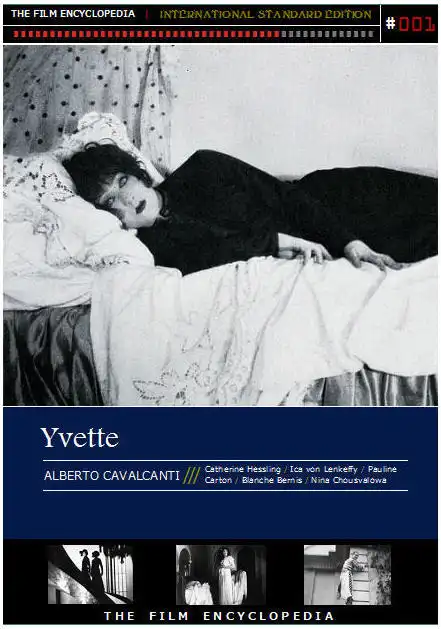
Yvette is probably not going to be your next Friday night binge, let’s be honest. This 1928 silent drama, based on a Maupassant story, is really for silent film completists or those genuinely curious about how social commentary played out on screen before sound. If you're looking for fast-paced narrative or subtle emotional depth by today's standards, you'll likely find yourself checking your watch. But for a certain kind of viewer, there are some fascinating, if often clunky, moments here.
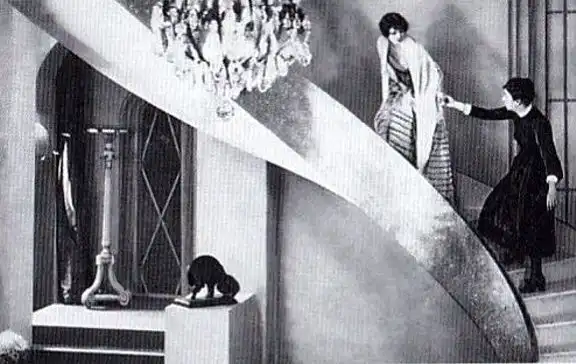
The film drops us into 1883 Paris, all high society and hushed opulence. Yvette, played by Blanche Bernis, is the sheltered daughter of a courtesan. She's completely oblivious to her mother's actual line of work, just thinking these princes and barons are simply very generous family friends. The opening scenes really try to establish this dreamy, almost naive bubble Yvette lives in. There's a lot of lingering on expensive gowns and lavish interiors, showing off the wealth without really digging into its source, at least not yet.
Blanche Bernis as Yvette has this wide-eyed innocence that mostly works, though sometimes it tips into something a little too theatrical, even for a silent film. Her reactions are often big, her gestures sweeping, which makes sense for the era, but there are moments where a slight shift in expression might have said more than a full arm sweep. You can almost feel the director pushing for a certain emotional beat, and Bernis delivers it, just maybe a little too loudly.
The pacing here is a real mixed bag. Some scenes, particularly those establishing Yvette's gilded cage, feel like they go on a beat too long. We get the point about her blissful ignorance pretty quickly, but the film keeps circling back to it. Then, when the plot needs to move, it sometimes lurches forward with a sudden intertitle that feels like a jump cut in narrative. It's not always a smooth ride.
Her mother, played by Ica von Lenkeffy, is a more interesting character, if only because she carries the weight of the film's central hypocrisy. Lenkeffy has this weary elegance about her, a quiet resignation under the surface of all the social graces. There’s a scene where she’s getting ready for a party, and the way she glances at her reflection, it’s not vanity you see, but something almost like a sigh. It’s a small, fleeting moment, but it really lands.
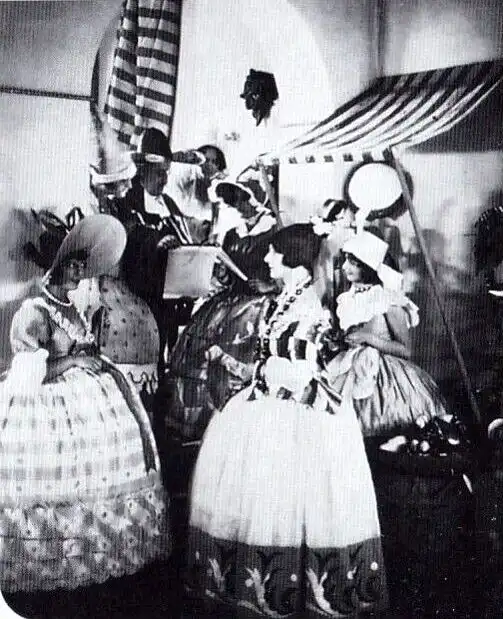
The core of the story, of course, is Yvette's awakening. This happens during a holiday away from the city, a classic narrative device to strip away the familiar and force confrontation. It's Banker Saval, one of her mother's 'friends', who inadvertently (or perhaps intentionally, the film is a little vague on his true motives beyond self-interest) triggers Yvette's realization. The moment she understands, it’s depicted with a sudden, almost physical recoil. The camera pushes in on her face, and her expression shifts from confusion to a kind of horrified understanding. It’s effective, if a bit melodramatic.
The film then grapples with Yvette feeling 'dirty.' This is where the silent film conventions sometimes feel a bit strained. The intertitles spell out her anguish, but the visual language struggles to convey the internal turmoil beyond broad gestures of shame and despair. You get it, but you don't always feel it in the gut. There's a particular shot of her clutching her dress, almost as if trying to wash away an invisible stain, that almost gets there, but then the scene cuts a bit abruptly.
The supporting cast, particularly the various 'gentlemen' who frequent Yvette's mother's salon, are mostly forgettable. They blend into a uniform mass of top hats and tailored suits, serving more as background texture than distinct characters. Jean-François Martial as Saval tries to be menacing, but he mostly just comes across as stiff. It's hard to feel much for or against any of them. They exist to fill out the world, not to drive the emotional stakes.
What I found unexpectedly interesting were the little glimpses of Parisian life, especially the outdoor scenes. The cinematography captures a certain bustle, a sense of a living city, even if the crowd scenes occasionally feel a little thin, like they didn't quite have enough extras for a truly convincing throng. But the carriages, the street vendors, the architecture – it helps ground the melodrama in a tangible world, even if that world feels slightly stage-managed.
There's a strange tonal shift toward the end, where the film tries to pull back from the intense emotional drama into something resembling a resolution. It feels a bit rushed, almost like the filmmakers realized they needed to wrap things up quickly. The ending doesn't quite earn the emotional weight it's aiming for; it leaves you with a sense of 'oh, okay, that happened' rather than a profound impact.
What we have with Yvette is an artifact. It's a window into a specific era of filmmaking and storytelling, one that often prioritizes grand gestures over nuanced psychology. It’s a film that asks for patience, and in return, offers flashes of insight into societal hypocrisy and personal disillusionment, even if those flashes are sometimes obscured by the limitations of its form. Don't go in expecting a masterpiece, but if you're open to a slow, occasionally awkward, journey into early cinema, there's something to chew on here. Just don't expect to be fully satisfied.
IMDb 5.2
1923
Community
Log in to comment.