DbcultAccessing Vault...
6.3/10
Senior Film Conservator
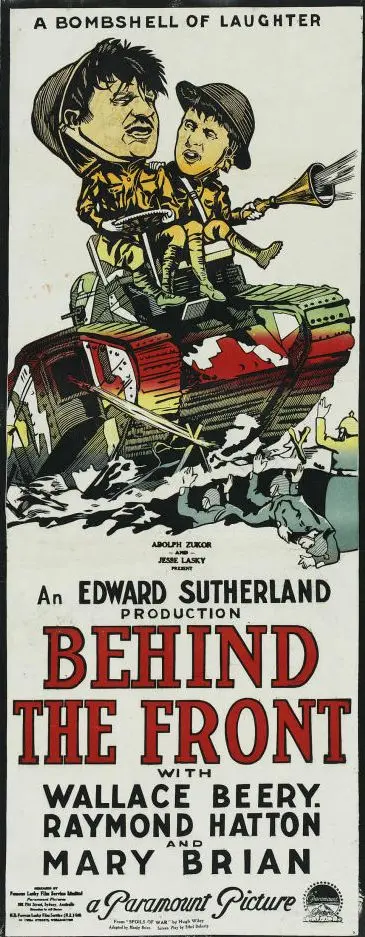
A definitive 6.3/10 rating for a film that redefined the boundaries of cult cinema. Behind the Front remains a cornerstone of transgressive art.
Short answer: Yes, but it’s not for everyone. 'Behind the Front' (1926) is a charming and often hilarious film that captures the camaraderie and chaos of World War I with a unique, lighthearted touch. It’s a must-watch for fans of early Hollywood comedies and those who enjoy a good mix of drama and humor, but it might not appeal to those seeking a darker or more historically accurate portrayal of the war.
This film works because it manages to balance the horrors of war with moments of pure, unadulterated humor and heart. Frances Raymond and Hayden Stevenson, playing the young recruits, deliver performances that are both earnest and entertaining. Their chemistry is palpable, making their on-screen friendship believable and endearing.
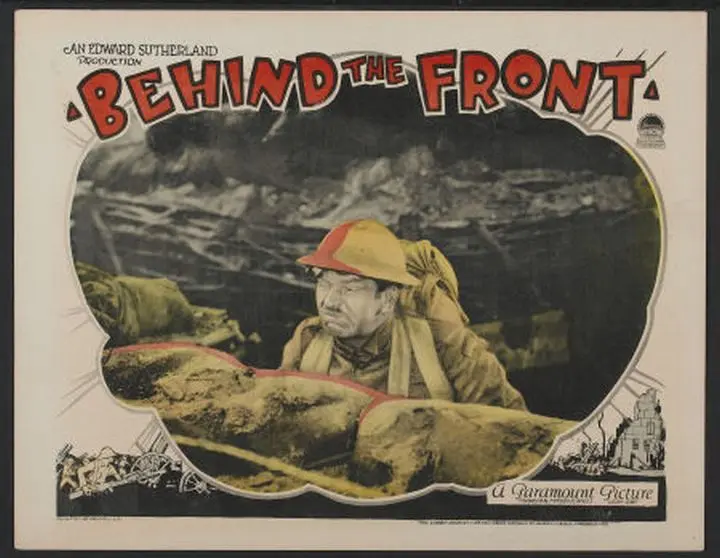
This film fails because it sometimes relies too heavily on broad comedy, which can feel dated to modern audiences. Additionally, while the film is charming, it doesn’t delve deeply into the historical context or emotional toll of war, which might make it feel slightly shallow compared to more serious war films.
You should watch it if you have a soft spot for early Hollywood comedies, appreciate a blend of humor and drama, and are willing to suspend disbelief in favor of a lighthearted wartime story. It’s also a good choice for film enthusiasts who enjoy early cinema and its unique blend of styles.
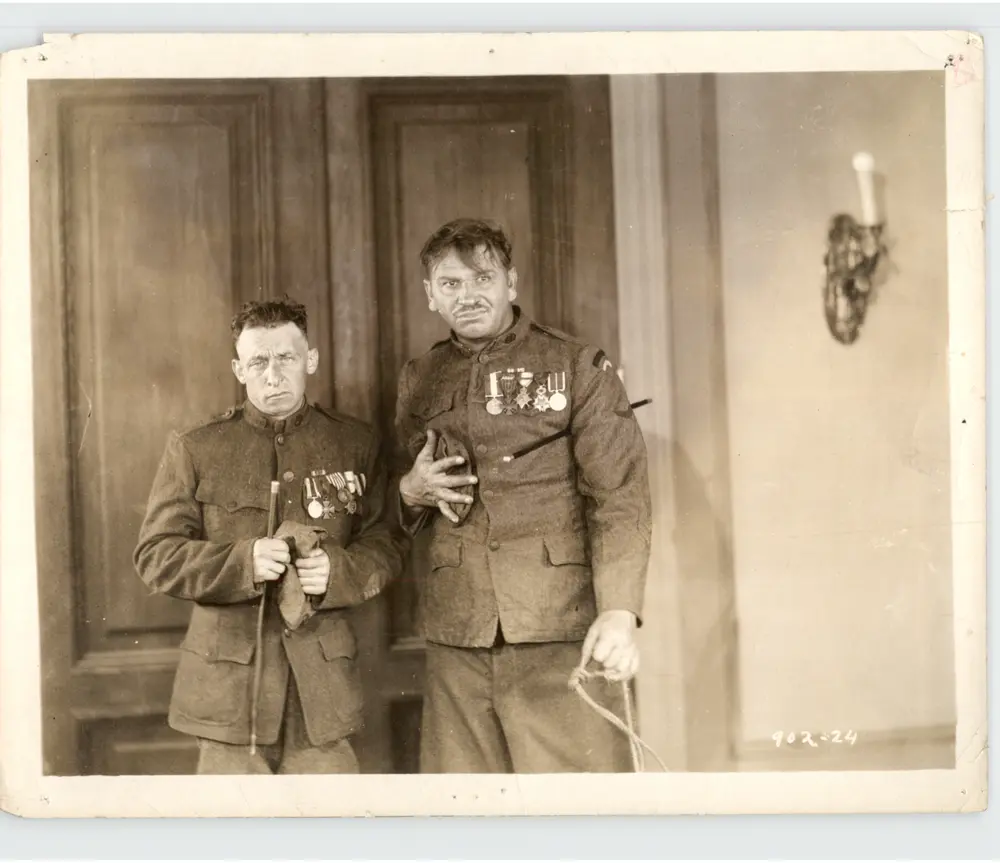
The performances in 'Behind the Front' are generally solid, with Frances Raymond and Hayden Stevenson delivering the kind of earnest, endearing portrayals that were common in early Hollywood. Their on-screen chemistry is one of the film's strongest elements, grounding the more comedic moments in genuine emotion. Supporting actors, like Raymond Hatton and Mary Brian, also add depth to their roles, contributing to the film's overall appeal.
Raymond West directs 'Behind the Front' with a deft touch, balancing the film's various tones seamlessly. His direction is most effective in the comedic scenes, where the humor is sharp and the pacing is just right. However, in more dramatic moments, the film can feel a bit rushed, which can make the emotional impact somewhat diminished.
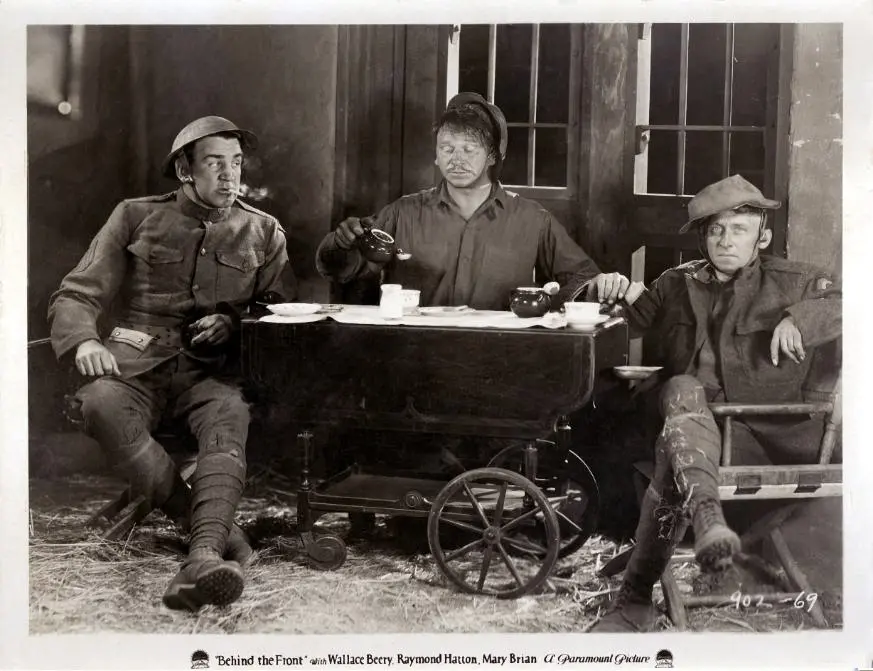
The cinematography in 'Behind the Front' is a standout feature. The film's use of close-ups and dynamic camera work helps to create a sense of immediacy and intimacy, drawing the audience into the characters' experiences. This, combined with the film's use of natural light and shadow, gives the scenes a lived-in quality that enhances the overall atmosphere.
The pacing of 'Behind the Front' is one of its strongest elements. The film moves at a brisk pace, keeping the audience engaged with a mix of humor and drama. The quick succession of events and the film's ability to switch between comedic and dramatic scenes create a sense of momentum that keeps the viewer invested in the story.
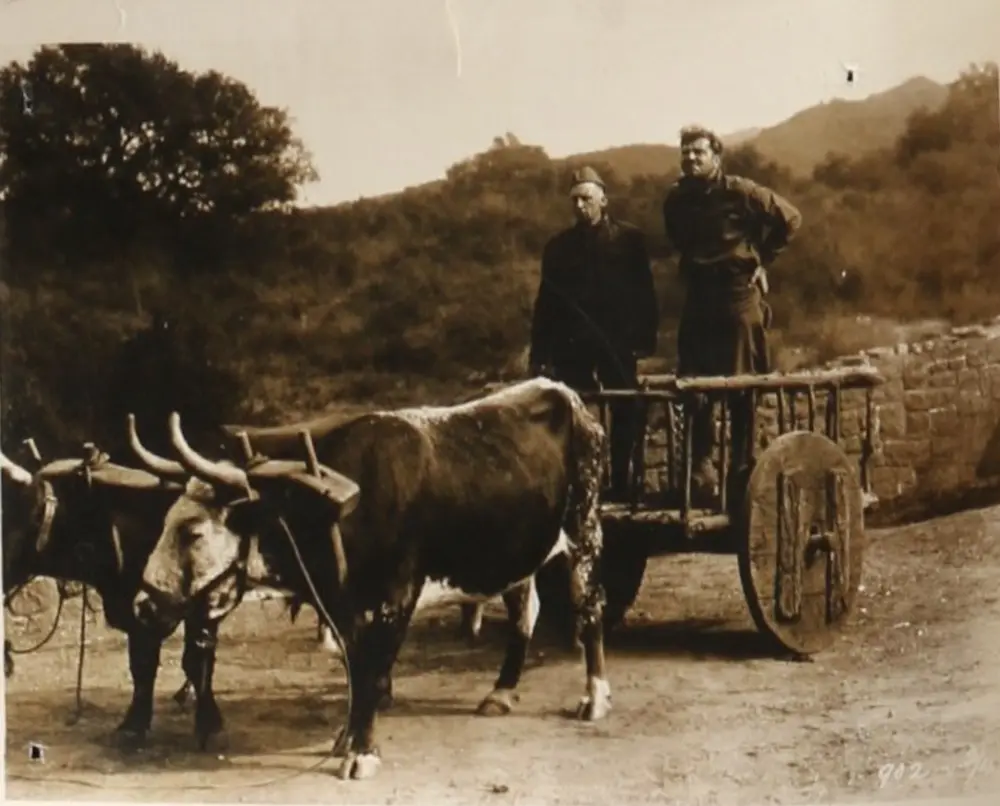
The tone of 'Behind the Front' is a mix of humor and drama, with a slight skew towards the former. This approach works well for the film, as it allows for a balance between lighthearted moments and more serious ones. However, the film sometimes veers into broad comedy territory, which can feel a bit forced at times. Nonetheless, the overall tone is engaging and helps to keep the film's various elements in harmony.
While 'Behind the Front' (1926) may not be a groundbreaking film in terms of historical accuracy or depth, it’s a delightful and entertaining watch. Its blend of humor and drama, combined with its engaging performances and dynamic cinematography, make it a worthwhile experience for those who appreciate early Hollywood comedies. Whether you’re a history buff, a fan of classic cinema, or someone who enjoys a good old-fashioned comedy, 'Behind the Front' is a film that’s worth your time.
Pros: Engaging performances, well-balanced tone, dynamic cinematography, and a mix of humor and drama.
Cons: Broad comedy that can feel dated, occasionally rushed pacing, and a lack of deep historical context or emotional impact.
It works. But it’s flawed. 'Behind the Front' (1926) is a charming and often hilarious film that captures the essence of wartime camaraderie and chaos with a lighthearted touch. Its engaging performances, dynamic cinematography, and well-balanced tone make it a delightful watch, even if it occasionally veers into broad comedy territory. For those who appreciate early Hollywood comedies and a mix of humor and drama, it’s a must-see.
IMDb 6.6
1922
Community
Log in to comment.