DbcultAccessing Vault...
Cult Review
Senior Film Conservator
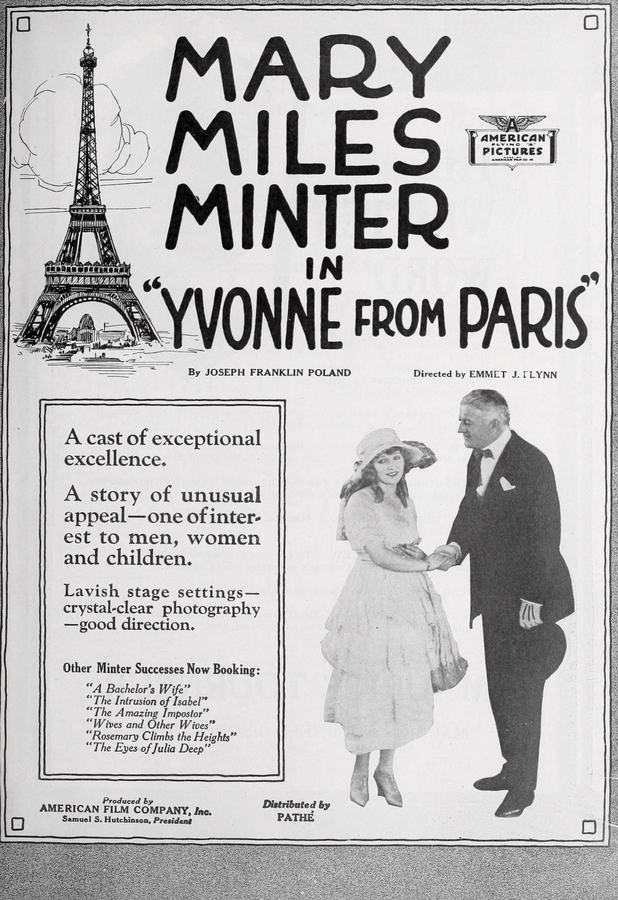
Stepping into the flickering glow of silent cinema, one often encounters narratives that, despite their age, resonate with timeless human aspirations. Yvonne from Paris (1919), a captivating vehicle for the luminous Mary Miles Minter, stands as a prime example. This film, penned by the collaborative talents of Frank Howard Clark and Joseph F. Poland, transcends a mere plot summary to deliver a rich tapestry of themes: the relentless pursuit of artistic freedom, the intoxicating allure of reinvention, and the often-comical labyrinth of mistaken identity. It's a story that, even a century later, speaks volumes about the desire to break free from gilded cages and forge one’s own destiny.
At its heart, Yvonne from Paris is a testament to the indomitable spirit of its titular character, Yvonne Halbert. A dancer of considerable renown in the glittering salons of Paris, Yvonne finds herself increasingly stifled by the suffocating protectiveness of her Aunt Marie. This isn't a story of rebellion for rebellion's sake, but rather a profound yearning for autonomy, a desire to breathe artistic air unencumbered by familial expectations or the rigid social strictures of her European upbringing. Her decision to abscond to America isn't merely an act of defiance; it's a bold declaration of self, a pilgrimage to a land perceived as the very embodiment of freedom and boundless opportunity. This narrative arc, where a spirited woman seeks to escape societal constraints, echoes similar sentiments found in other films of the era, such as A Woman's Awakening, though Yvonne's journey is distinctly marked by her artistic profession.
The transatlantic voyage itself is presented as a liminal space, a crucible where Yvonne sheds her old skin. Disguised and deliberately relegated to the steerage, she embraces anonymity, a stark contrast to her former life of public acclaim. It is here, amidst the melting pot of hopeful immigrants, that she encounters Luigi, a violinist portrayed with understated charm by E. Alyn Warren. Their meeting is less a romantic spark than an artistic communion, a recognition of kindred spirits drawn together by the universal language of music and movement. Luigi becomes more than just an accompaniment; he is a silent collaborator, a mirror reflecting Yvonne's nascent American identity. This partnership, forged in the belly of a ship, symbolizes the organic, unforced creativity Yvonne craves, a stark departure from the managed performances of her Parisian past.
Upon reaching the shores of America, Yvonne, now a self-proclaimed 'unknown,' finds her stage in the bohemian heart of Greenwich Village. The cabaret setting perfectly encapsulates the era's burgeoning counter-culture, a place where artistic expression was raw, authentic, and often unpolished. Here, dancing to Luigi's evocative melodies, Yvonne's inherent brilliance cannot remain hidden. Her performances, imbued with a newfound passion born of freedom, catch the discerning eye of David Marston, a prominent producer embodied by J. Barney Sherry. The exquisite irony of the plot unfurls as Marston, unaware of Yvonne's true identity, had previously engaged in protracted negotiations to bring the celebrated Parisian dancer—the very Yvonne Halbert now performing before him—to America. Believing her to have reneged on her contract, he now signs this 'unknown' performer, intending to bill her under the name of 'Yvonne,' a name he mistakenly believes to be available due to the supposed breach. This dramatic irony is a masterstroke of the screenplay, highlighting the capricious nature of fame and identity.
The film cleverly plays with the audience's knowledge, allowing us to relish Marston’s unwitting pursuit of the very star he already possesses. This comedic tension is further amplified by the introduction of Cecile, an 'Apache dancer' (portrayed by Jeanne Robbins) who, seizing an opportunity for notoriety, brazenly claims to be the real Yvonne. This subplot injects a delightful element of farce, a common trope in silent comedies like All Wrong, where mistaken identities drive much of the humor. Cecile's exaggerated posturing and attempts to embody the elegance of a Parisian star, despite her rougher 'Apache' style, provide a stark and amusing contrast to Yvonne's genuine grace and talent. This sequence not only provides levity but also underscores the film's thematic exploration of authenticity versus performance, and the often-superficial nature of public perception.
As the dramatic threads tighten, the narrative reaches its crescendo with the arrival of Aunt Marie, played by Vera Lewis. Her appearance serves as the ultimate deus ex machina, cutting through the Gordian knot of mistaken identities and contractual misunderstandings. Aunt Marie's initial overwatchfulness, the very catalyst for Yvonne's flight, now ironically becomes the instrument of her vindication. Her presence confirms Yvonne's true identity, exposing Cecile's charade and untangling Marston's predicament. This resolution, while perhaps a touch convenient, nonetheless delivers a satisfying conclusion, allowing all the characters to finally operate under the light of truth.
The film culminates in Yvonne's marriage to Lawrence Bartlett (Bertram Grassby), the talented author of the play that now features her as its star in America. This union is significant, not merely as a romantic denouement, but as a symbolic fusion of Yvonne's artistic and personal journeys. Bartlett's play provides the perfect vehicle for her talent, allowing her to fully express herself on stage, no longer constrained by the past. The ending suggests a harmonious balance achieved, where Yvonne's independence is celebrated, her artistic aspirations realized, and her heart contented. It's a conclusion that resonates with the optimistic spirit of the era, where ambition and love could, indeed, conquer all.
Mary Miles Minter, the star around whom Yvonne from Paris revolves, delivers a performance that solidifies her status as a prominent figure of the silent screen. Minter, known for her delicate beauty and expressive eyes, imbues Yvonne with a compelling blend of vulnerability and steely resolve. Her portrayal of a young woman yearning for self-determination, navigating a foreign land, and ultimately triumphing over adversity, is both nuanced and powerful. She effortlessly conveys Yvonne's Parisian sophistication, her initial timidity in steerage, and her burgeoning confidence as a Greenwich Village performer, all without uttering a single word. Her physical grace as a dancer is palpable, even through the archival footage, suggesting a performer deeply connected to her craft.
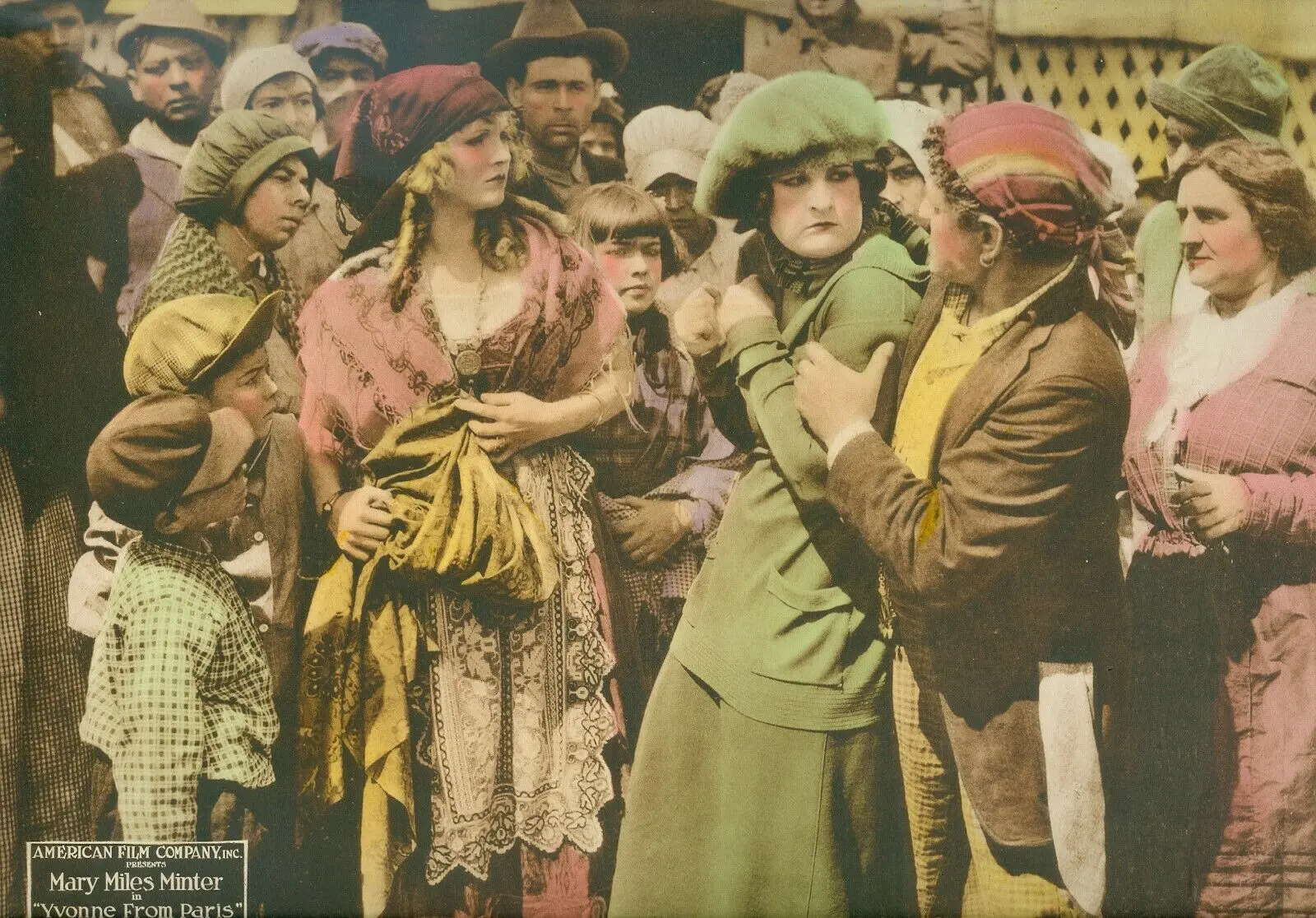
Minter's career, though tragically cut short by scandal, was marked by a series of roles that often cast her as innocent yet determined heroines. In Yvonne from Paris, she showcases a maturity and depth that perhaps foreshadowed the more complex roles she might have embraced had her career not been derailed. Comparisons to her other notable performances, such as the iconic Anne of Green Gables, reveal a consistent ability to capture the essence of spirited young women navigating challenging circumstances. Here, however, the stakes feel higher, the journey more personal, as Yvonne actively seeks to reshape her entire existence.
The directorial choices, while not explicitly attributed in the provided details, would have been crucial in shaping the film's tone and pacing. Silent films relied heavily on visual storytelling, exaggerated gestures, and the strategic placement of intertitles to convey dialogue, internal thoughts, and plot exposition. In Yvonne from Paris, the successful conveyance of Yvonne's internal struggle, her burgeoning relationship with Luigi, and the comedic misunderstandings, speaks to effective direction and thoughtful screenwriting. The contrast between the opulent Parisian scenes and the grittier, more vibrant Greenwich Village would have been visually striking, emphasizing Yvonne's journey from constraint to liberation. The film's ability to maintain suspense and comedic timing through purely visual means is a testament to the sophisticated craft of silent era filmmaking.
The writers, Frank Howard Clark and Joseph F. Poland, crafted a narrative that, while adhering to popular tropes of the era, imbued them with freshness. The concept of a celebrated figure seeking anonymity and finding it only to be 'rediscovered' by the very forces she fled, is a particularly clever device. It allows for both dramatic tension and comedic relief, ensuring the audience remains engaged. The interplay between Yvonne's genuine talent and Cecile's opportunistic impersonation is not just a plot device but a commentary on the nature of celebrity and the often-blurred lines between artifice and authenticity. This thematic depth elevates the film beyond a simple romantic comedy.
Beyond its engaging plot and captivating performances, Yvonne from Paris offers a fascinating glimpse into the cultural zeitgeist of the late 1910s. The theme of European sophistication meeting American dynamism was a popular one, reflecting America's growing confidence on the world stage. The allure of Paris, a symbol of artistic excellence and romanticism, is juxtaposed with the promise of America as a land of opportunity and personal freedom. Yvonne's journey embodies this transatlantic dialogue, making her story resonate with the aspirations of many immigrants and artists of the time.
The film also subtly touches upon the evolving role of women in society. Yvonne's decision to escape her aunt's 'overwatchfulness' can be seen as a microcosm of the broader movement towards female independence and self-determination. Her ability to forge a new life and career on her own terms, even if initially under a veil of anonymity, speaks to the changing social landscape that would fully blossom in the roaring twenties. Her artistic profession further emphasizes this, showcasing a woman who not only seeks personal freedom but also professional fulfillment, a narrative thread explored in films like The Lure, which often depicted women finding agency through their careers.
The mistaken identity plot, a staple of comedic and dramatic storytelling, is handled with a light touch, ensuring that the film remains engaging rather than overly convoluted. The presence of an 'Apache dancer' character like Cecile also highlights the fascination with exotic and sometimes sensationalized cultural portrayals prevalent in popular entertainment of the era. This aspect, while potentially problematic by modern standards, provides insight into the popular imagination of the time.
In its totality, Yvonne from Paris is more than just a historical artifact; it's a vibrant piece of silent cinema that continues to charm with its blend of romance, comedy, and a deeply resonant message of self-discovery. Mary Miles Minter's captivating performance anchors the narrative, drawing the audience into Yvonne's journey with grace and conviction. The film's clever screenplay, with its layers of dramatic irony and comedic twists, ensures that the story remains fresh and entertaining. It reminds us that the quest for authenticity and the courage to pursue one's artistic calling are universal themes that transcend the limitations of spoken dialogue and the passage of time.
For enthusiasts of silent film, or indeed anyone interested in the evolving narratives of personal freedom and artistic expression, Yvonne from Paris offers a delightful and insightful experience. It stands as a testament to the enduring power of storytelling, proving that even a century later, the silent screen can speak volumes, captivating hearts and minds with its artistry and timeless tales. Its subtle commentary on identity, ambition, and the pursuit of happiness makes it a compelling watch, inviting us to reflect on our own journeys of self-discovery and the choices that define us.
IMDb 5.6
1919
Community
Log in to comment.