DbcultAccessing Vault...
Cult Review
Senior Film Conservator
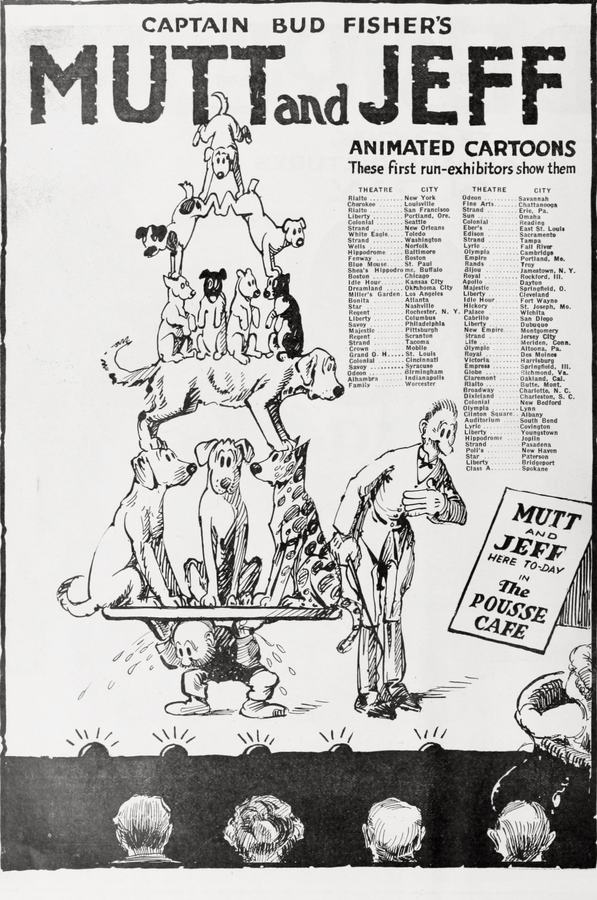
The Anarchic Genesis of Visual Comedy
To witness The Pousse Cafe is to peer through a temporal keyhole into the raw, unrefined infancy of cinematic humor. Directed and written by the visionary cartoonist Bud Fisher, this short film represents a pivotal moment where the serialized daily comic strip—specifically the exploits of Mutt and Jeff—began to colonize the burgeoning medium of film. Unlike the polished melodramas of the era, such as Syndens datter, Fisher’s work eschews moral grandiosity in favor of a frenetic, almost nihilistic commitment to the gag. The premise is deceptively simple, yet it functions as a masterclass in the 'comedy of errors' trope that would later define the works of Chaplin and Keaton.
The narrative pivot of the film—the literal interpretation of the 'pousse café'—is a fascinating study in early 20th-century linguistic play. In the sophisticated circles of the 1910s, the drink was a symbol of refinement, a layered digestif requiring steady hands and a discerning eye. By having Mutt mistake the French term for a literal 'pussy cat' (a pun that bridges the gap between high-brow mixology and low-brow street slang), Fisher highlights the inherent absurdity of social pretension. This thematic thread of social alienation is echoed in more somber works like Mrs. Balfame, though here it is played for laughs rather than courtroom drama. The kitten in the glass is not merely a prop; it is a visual hand grenade tossed into the machinery of polite society.
The cabaret setting provides a rich tapestry for this subversion. While films like Miss Ambition often depict the urban nightlife as a place of aspiration or moral peril, The Pousse Cafe treats it as a powder keg. The transition from a quiet service error to a full-scale riot is handled with a rhythmic intensity that suggests Fisher understood the kinetic potential of the frame long before the formalization of montage. The chaotic movement of the patrons, the flying furniture, and the frantic gesticulations of Mutt create a visual cacophony that mirrors the rapid urbanization of the period.
When examining The Pousse Cafe alongside its contemporaries, one notices a distinct lack of the sentimental gravity found in The Supreme Sacrifice. Where other filmmakers sought to elevate the medium through tragic pathos, Fisher was content to revel in the messiness of human stupidity. There is an interesting parallel to be drawn with A Girl Like That, which also navigates the perils of metropolitan life, albeit through a more conventional narrative lens.
Furthermore, the isolation of Mutt within the cabaret evokes a strange similarity to the protagonists in Stranded in Arcady. Both characters are thrust into environments where they are fundamentally ill-equipped to function, though Mutt’s survival mechanism is to inadvertently destroy his surroundings rather than adapt to them. This destructive impulse is a hallmark of early American comedy, a stark contrast to the European sensibilities often seen in films like Das sterbende Modell.
Technically, the film is a product of its constraints, yet it thrives within them. The lighting is harsh, the sets are functional, and the camera remains largely static, acting as a proscenium arch for the unfolding madness. However, the staging of the riot shows a sophisticated understanding of depth and movement. Characters don't just move left to right; they erupt from the background, creating a sense of claustrophobia that heightens the comedic tension. This use of space is far more advanced than the static tableaux found in Rebecca the Jewess.
Bud Fisher’s presence as both writer and actor (or at least the creative force behind the character's live-action manifestation) ensures a stylistic continuity with his comic strips. The exaggerated physicality—the long limbs, the wide-eyed stares—transfers the 'ink and paper' logic of the Sunday funnies into a three-dimensional space. It’s a precursor to the surrealism we would later see in the works of Max Fleischer. While The Lion's Den might offer a more traditional adventure narrative, The Pousse Cafe offers a psychological portrait of a man who sees the world through a prism of total literalism.
The riot itself is a marvel of early stunt work and ensemble coordination. In an era where safety standards were non-existent, the sheer physicality of the brawl is palpable. It lacks the choreographed grace of modern action but possesses a terrifying authenticity. This isn't the romanticized conflict of The Night Riders of Petersham or the epic scale of War and the Woman; it is a dirty, messy, localized explosion of temper.
What makes The Pousse Cafe endure is its refusal to apologize for its protagonist. Mutt is not a hero, nor is he a villain; he is a force of nature, a catalyst for chaos. This 'holy fool' archetype is something we see reflected in the struggles of characters in Bonds of Love, though Mutt lacks the redemptive arc that audiences usually crave. He remains unchanged by the riot, likely ready to commit the same error in the next reel. This lack of growth is, paradoxically, what makes the character so modern—he is a flat, unchanging icon of comedic disruption.
The image of the kitten in the glass remains one of the most striking and bizarre images of the silent era. It is a moment of pure surrealism that predates the formal Surrealist movement. The kitten represents the intrusion of the domestic and the natural into the artificial, highly regulated world of the cabaret. It is the 'wild' element that breaks the social contract. In films like Wild Oats, the 'wildness' is metaphorical, usually referring to youthful indiscretion. In Fisher’s world, the wildness is literal, furry, and confused.
Comparing this to the mystery and suspense of The Mysterious Mr. Browning, we see two different ways of engaging an audience. One uses the slow burn of enigma; the other, the immediate shock of the absurd. Fisher’s approach is visceral. He doesn't want the audience to think; he wants them to react. The laughter is a reflex, a response to the shattering of expectation. Even the title itself, The Pousse Cafe, is a joke played on the audience, promising a sophisticated evening but delivering a feline-fueled melee.
In the grand scheme of film history, The Pousse Cafe is often overshadowed by the feature-length epics that followed. Films like Bought and Paid For may offer more complex character studies, but they rarely capture the raw, unadulterated joy of the cinematic medium in its purest form. Bud Fisher was not trying to change the world; he was trying to make a theater full of strangers erupt into simultaneous laughter.
The film remains a vital piece of the puzzle in understanding how American humor evolved. It bridges the gap between the static panels of the newspaper and the fluid motion of the screen. It reminds us that at the heart of all great comedy is a simple, profound misunderstanding. Whether it is a kitten in a drink or a riot in a cabaret, the message is clear: the world is a chaotic place, and our attempts to impose order—whether through language, manners, or mixology—are ultimately futile. The Pousse Cafe is a celebration of that futility, a riotous toast to the absurdity of the human condition.
A definitive relic of the pre-war era, essential for any serious student of the silent screen and the origins of the American gag.

IMDb 5.5
1934
Community
Log in to comment.