DbcultAccessing Vault...
Cult Review
Senior Film Conservator
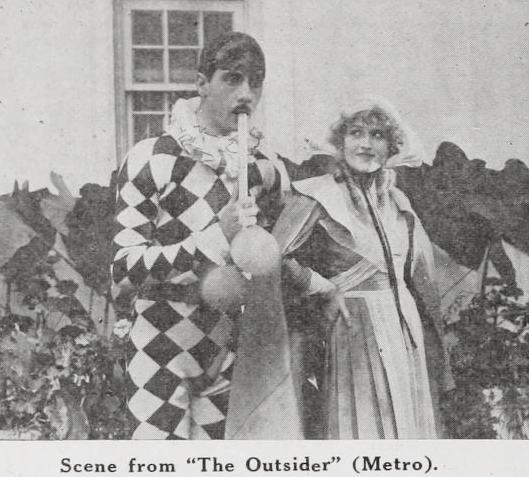
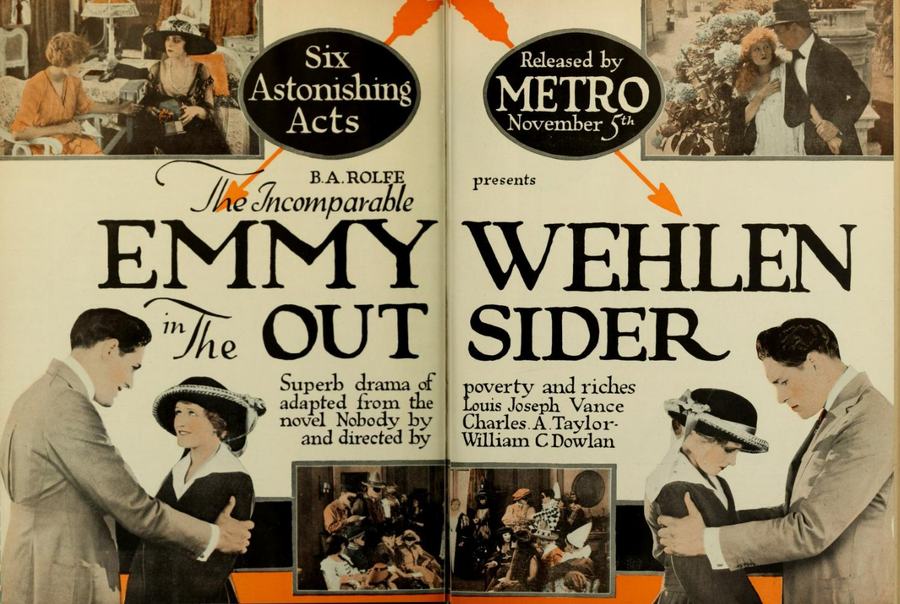
Roaring seventeen, celluloid still moist from the lab, and already The Outsider is flirting with genres that won’t be named for another decade: screwball, noir-lite, social satire shot through with rooftop expressionism.
Picture it: a department-store salesgirl—feet swollen, soul bruised by endless ribbon measurements—clambers up a tenement ladder to gulp starlight. One thunderclap later she is drenched, locked out, and funneled into a drawing-room crime that smells of lilac powder and larceny. The moment is pure proto-screwball: rain as plot device, class collision as meet-cute.
Director Herbert Heyes (doubling as the detective who arrives like a bad omen) never tilts the camera; instead he tilts morality. Every character is both parasite and host in a moneyed ecosystem where jewels are bait, insurance the true romance, and marriage a negotiable IOU.
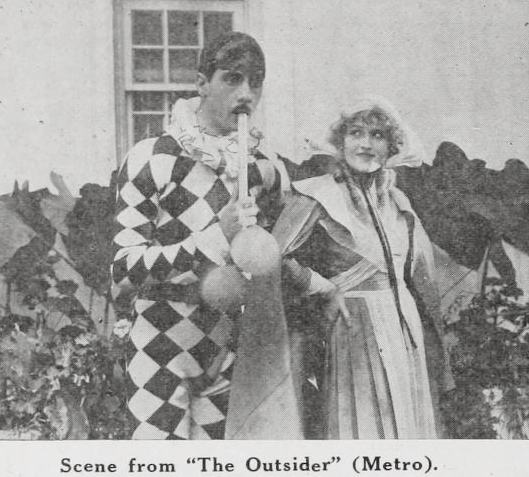
Florence Short’s Sally starts with Chaplin-adjacent slumps and eyebrow arches, but watch her pupils when she first spots the safe’s open maw: the glint of rebellion, not fear. By the time she dictates correspondence for Mrs. Gosnold, her spine is a Corinthian column of sass; she has metabolized privilege merely to mock it.
Harry Benham gives Walter Savage a lounge-lizard languor that anticipates the dissolute gentlemen William Powell will trademark a decade later. He lounges even while cracking a safe, cigarette ember a punctuation mark in the cobalt dark.
Meanwhile Emmy Wehlen’s society vamp suggests a Her Secret vamp drained of malice, all cheekbones and champagne bubbles, proof that even predators can be bored.
The narrative detour to Newport mansions—shot on location at marble terraces—plays like a A Rich Man's Plaything outtake scored only by ocean hiss. Here, polo grounds become existential treadmills; every tux lapel hides a balance sheet. Sally’s fatigue is palpable: the camera holds on her silk-slippered feet swelling inside borrowed shoes, a metaphor for Cinderella with buyer’s remorse.
Charles A. Taylor and pulp prince Louis Joseph Vance lace the intertitles with epigrams that sting: “A burglar is only a stockbroker with the lights off.” The line zings louder post-1929, but already in 1917 it smells of insider cynicism.
Compare its gender politics to Perils of Our Girl Reporters: both feature working women navigating peril, yet The Outsider refuses to punish its heroine for appetite—whether for adventure or oysters Rockefeller.
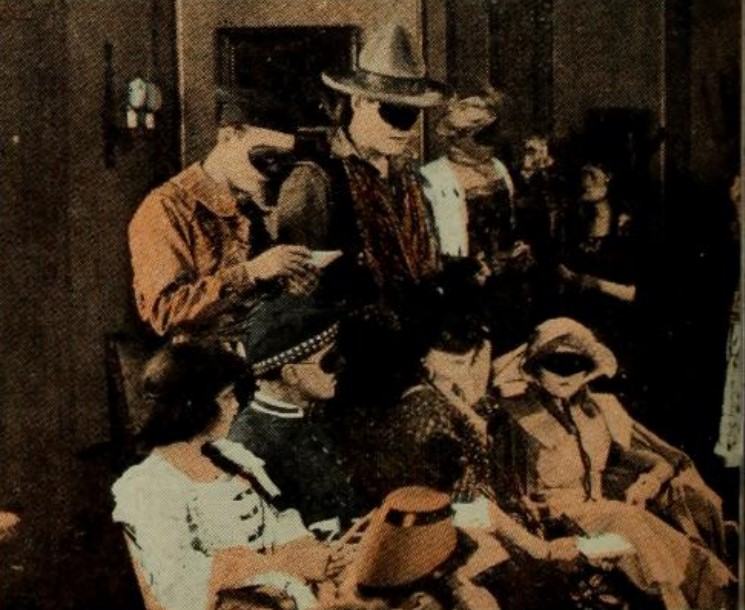
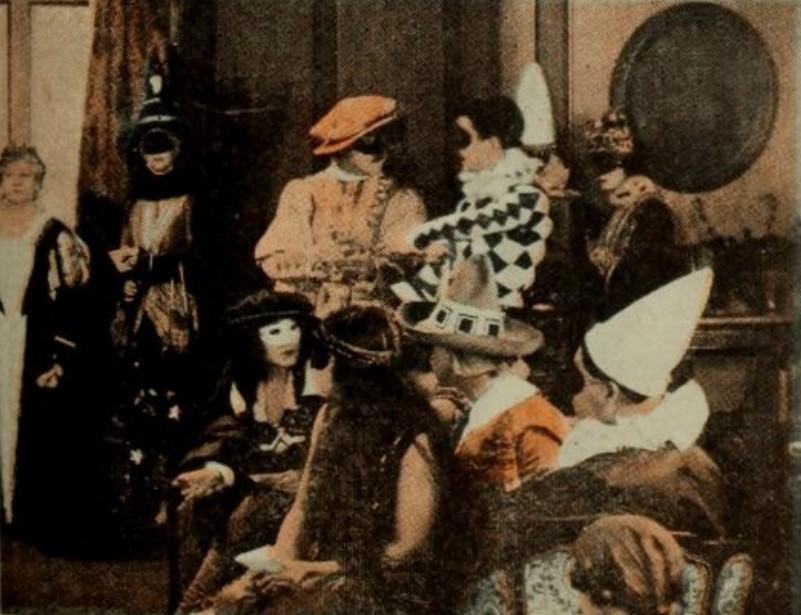
Rain recurs as liquid destiny: first the downpour that baptizes Sally, later the drizzle slicking Newport terraces, finally the mist on Riverside Drive promising renewal. Mirrors proliferate—hand-held, pier-glass, silver tray—each doubling characters until identity itself is negotiable. The masquerade ball is lit like a Caravaggio: burnt umber shadows, faces emerging as if varnished. When the final reveal occurs, Savage’s domino mask is yanked away but the true mask—his caste entitlement—cannot be removed.
Where The Adventurer leans on slapstick momentum and The Fatal Card into melodramatic hysterics, The Outsider hybridizes: it pirouettes between heist logistics and drawing-room banter, anticipating the talkie sophistication of Un día en Xochimilco’s cultural clash, though without folkloric palette.
In contrast to The Law Decides—where justice is granite and immutable—here justice is a society-page retraction: embarrassing, fleeting, quickly buried under tomorrow’s horse-race results.
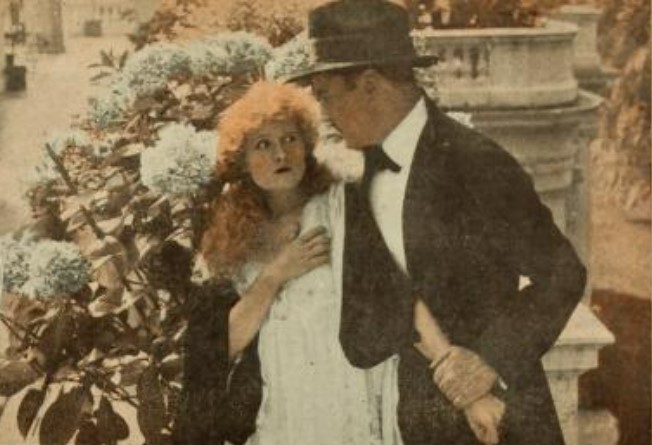
The abduction switcheroo—Mrs. Gosnold donning Sally’s sequined cloak—works both as comic relief and as quiet revolution: the dowager volunteers for the sack so the shopgirl may breathe. It’s a moment of cross-class sorority Hollywood won’t replicate until It Happened One Night.
Note how cinematographer Jules Raucourt frames the carriage getaway: through a rain-streaked window, the captive’s face blurred, suggesting newsreel footage of anarchist kidnappings then splashed across Hearst papers. The real theft isn’t jewels—it’s narrative agency.
Existing cue sheets suggest a fox-trot during the ballroom scene, but surviving prints often screen with improvised jazz. Try syncing Scott Joplin’s Magnetic Rag—its off-beat phrasing mirrors Sally’s foot-dragging contempt for high-society choreography.
The closing promise—life not on gilded Fifth but on breezy Upper West Side—feels radical. Riverside Drive in 1917 is middle-class, Jewish, immigrant-adjacent. Sally’s choice is a rejection of whitewashed affluence, a demand for a horizon where smokestacks and cherry trees coexist. Compare to Little Eve Edgarton’s prairie closure: both heroines spurn fortune, yet Sally does so inside the metropolis, asserting that happiness can be rented, not merely inherited.
No complete 35 mm negative survives; what circulates is a 9.5 mm Pathéscope abridgement with French intertitles, digitized by Eye Filmmuseum. Yet even truncated, the film vibrates with mischief. Scholars seeking thematic cousins should queue Die Frau mit den Karfunkelsteinen for its gem-based intrigue, or The Reincarnation of Karma for Eastern mysticism replacing Newport cocktails.
The Outsider is a celluloid onion: each peel reveals sharper social satire beneath romantic froth. Its DNA strands coil through Midnight (1939) and The Palm Beach Story (1942), proving that class-mixup comedies need not wait for synchronized speech. For modern viewers, the film offers a tonic against algorithmic sameness: here plot zigzags because human desire is zigzag, not because a beat-sheet mandates twist #6 at minute 28.
Watch it at 1 a.m. with windows open, city rain tapping the fire escape—then try claiming the 1910s had no sense of anarchic fun. Sally Manvers would snort, adjust her soggy cloche, and stride into the night, looking for the next roof to climb.
IMDb —
1935
Community
Log in to comment.