DbcultAccessing Vault...
Cult Review
Senior Film Conservator
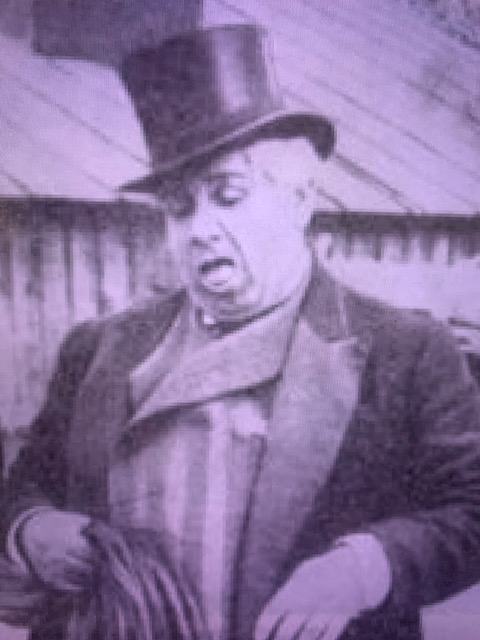
To approach Zapugannii burzhui (1919) is to step into a time capsule of revolutionary fervor, a moment where the very foundations of visual storytelling were being weaponized for social transformation. This isn't merely a film; it is a cinematic bayonet. Produced during the height of the Russian Civil War, this 'agitka'—a short, punchy agitprop film—offers a fascinating glimpse into the nascent Soviet psyche. While Western audiences of the era were consuming the domestic dramas of Do You Love Your Wife? or the mystery of The Green Cloak, the Russian screen was vibrating with a different kind of urgency. Here, the stakes weren't just romantic or criminal; they were existential.
The script, penned by the formidable duo of Lev Nikulin and Yakov Yadov, is a masterclass in focused satire. Yadov, perhaps best known for his lyrical contributions to Russian urban folklore, brings a street-level wit that prevents the film from descending into dry ideological lecturing. Instead, we are treated to a grotesque ballet of paranoia. Unlike the sprawling narratives found in Jane Eyre, which relies on the slow burn of Gothic tension, Zapugannii burzhui operates on the frequency of a fever dream. The writers understood that to reach a population in the midst of upheaval, the message had to be visceral, immediate, and undeniably funny in its cruelty.
Lidiya Tridenskaya and Vladimir Gradov deliver performances that are intentionally larger than life. In an era where acting styles were transitioning from the stage-bound histrionics of Trilby to a more cinematic language, Gradov’s portrayal of the 'frightened bourgeois' is a revelation of physicality. He is a man composed entirely of twitches and backward glances. Every shadow is a Red Guard; every sound is the drumbeat of the inevitable. Tridenskaya provides a perfect foil, her presence grounding the satirical flights of fancy with a sharp, observational edge that reminds us of the human cost—and the human absurdity—of class collapse.
When we compare this to the feminine archetypes in Mothers of Men or the rugged escapades of Wild Women, the contrast is staggering. There is no sentimentality here. The bourgeois is not a figure of pity, but a relic to be laughed out of existence. This is cinema as a social broom, sweeping away the Victorian sensibilities that still clung to films like The House of Temperley.
Technically, the film is a product of its constraints, yet it thrives within them. The lighting is harsh, almost interrogatory, reflecting the lack of resources but also the ideological transparency of the era. There is a certain 'daring' here, though different from the narrative risks in The Daring of Diana. The daring of Zapugannii burzhui lies in its refusal to offer a middle ground. It is binary, brutal, and brilliantly paced.
The editing, while primitive by today's standards, displays an early understanding of the Kuleshov effect—the idea that meaning is derived from the juxtaposition of images. Cuts between the bourgeois’s trembling hands and the stoic, looming figures of the revolution create a tension that is almost palpaple. It lacks the serial adventure pacing of The Adventures of Ruth, opting instead for a rhythmic repetition that hammers home its point like a factory piston.
Consider the depiction of wealth in Fruits of Desire or the high-stakes gambling of The High Hand. In those films, capital is a source of drama, a prize to be won or lost. In Zapugannii burzhui, capital is a curse. The very possessions that once defined the protagonist’s status now become the bars of his cage. This inversion of the American Dream—a staple of films like They're Off—is what makes Soviet cinema of this period so jarringly modern. It isn't interested in the individual's rise, but in the collective's reclamation.
Even the comedic elements differ from the lighthearted innocence of Twin Kiddies or the slapstick of Jinx. The humor in this film is dark, almost gallows-like. It’s the laughter of someone watching a statue topple. When Gradov’s character attempts to hide his valuables, the sequence is staged with a frantic energy that borders on the macabre. It’s a far cry from the sentimental father-son dynamics of Her Father's Son; here, paternal legacy is something to be hidden or denied in the face of a new world order.
Looking back through the lens of over a century, Zapugannii burzhui remains a potent artifact. It captures the raw, unpolished energy of a cinema that was figuring out its own power. Nikulin and Yadov didn't just write a script; they wrote a manifesto for the eyes. The film’s brevity is its strength; it doesn't overstay its welcome or dilute its vitriol with unnecessary subplots. It is a straight shot of revolutionary adrenaline.
While many films from 1919 have faded into the obscurity of archive shelves, this one pulsates with a strange, nervous life. It reminds us that cinema has always been at its most potent when it reflects—or violently rejects—the world outside the theater doors. The 'frightened bourgeois' might be a caricature, but the fear Gradov portrays was very real, and the triumph the film celebrates was the defining event of the 20th century. In the pantheon of early cinema, this film stands not as a polished diamond, but as a jagged piece of flint, capable of sparking a fire even after all these years.
Ultimately, Zapugannii burzhui is essential viewing for anyone seeking to understand the roots of Soviet montage and the psychological landscape of the revolution. It is a work of fierce intelligence and uncompromising vision, a testament to the power of the image to not only reflect reality but to actively participate in its dismantling. It is crude, it is loud, and it is absolutely brilliant.
IMDb 4.6
1925
Community
Log in to comment.