DbcultAccessing Vault...
Cult Review
Senior Film Conservator
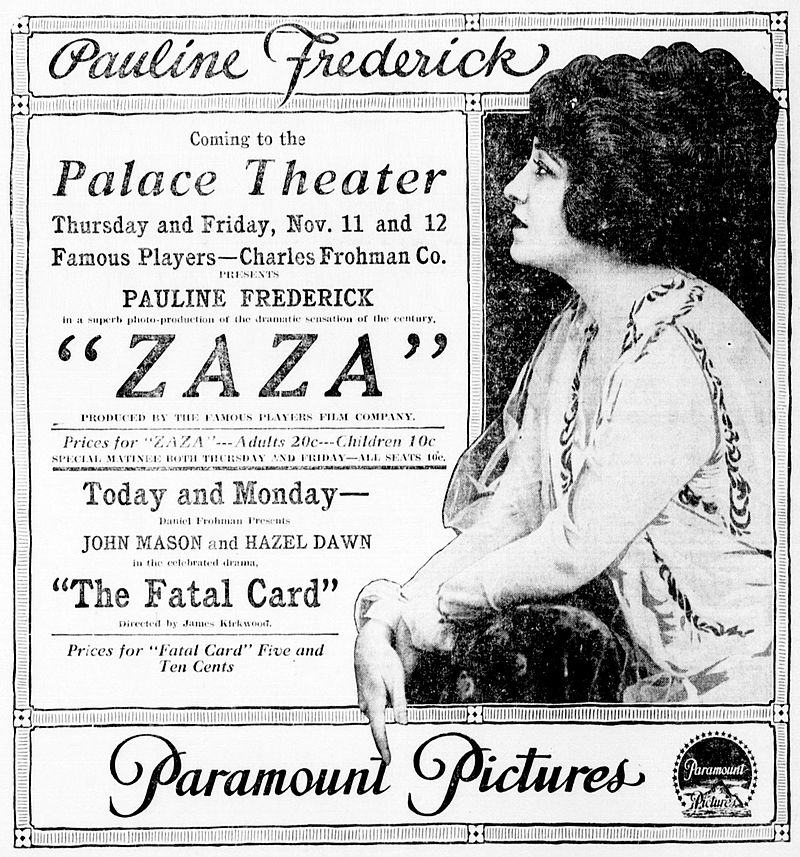
Ah, the silent era. A time when emotions were writ large across the screen, conveyed through the nuanced flicker of an eyelid, the dramatic sweep of a gesture, or the poignant stillness of a moment. In this crucible of early cinema, stories often explored the grand passions and moral dilemmas that resonated deeply with audiences navigating a rapidly changing world. Among these, the 1915 production of Zaza stands as a compelling testament to the era's dramatic prowess, offering a heartbreaking yet ultimately redemptive narrative centered on a woman's tumultuous journey through forbidden love and profound self-discovery. Directed with an eye for emotional intensity, and featuring the luminous Pauline Frederick in the titular role, Zaza is more than just a period piece; it’s a timeless exploration of sacrifice, the transformative power of empathy, and the arduous path to true independence.
From the moment the curtain rises on Zaza, we are transported to the glittering, gaslit world of Parisian music halls. Zaza, portrayed with a compelling blend of vivacity and vulnerability by Frederick, is initially presented as a creature of the stage: charismatic, effervescent, and utterly captivating. Her life, a whirlwind of applause and admiration, seems perfectly contained within the theatrical spotlight. Yet, beneath this dazzling surface lies a longing for something more profound, a yearning for authentic connection that the ephemeral adoration of her audience cannot fulfill. This void is seemingly filled by the arrival of Bernard Dufrene, played by Julian L'Estrange with an air of sophisticated charm that makes his eventual deception all the more insidious. Their initial flirtation, a dance of wit and glances, quickly blossoms into an intense, all-consuming affair. Zaza, perhaps for the first time, allows herself to fall completely, utterly in love, believing this passion to be a mutual, unburdened bond. The film masterfully captures the intoxicating rush of this early romance, painting a picture of a woman utterly swept away, her every thought and action dictated by this new, powerful emotion.
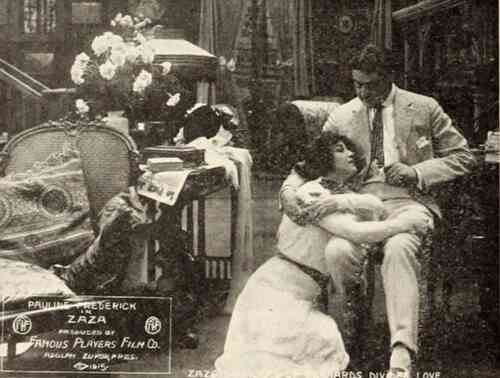
The dramatic pivot, however, arrives with the crushing revelation that Bernard is not only married but also a father. This truth shatters Zaza’s carefully constructed world, transforming her passionate love into a bitter cocktail of betrayal, despair, and incandescent rage. It’s a moment that resonates with the timeless tragedy of illicit love, a theme explored in countless narratives, from the grand operas of Verdi to the poignant silent dramas like The Other's Sins, where societal conventions often dictate the tragic trajectory of unsanctioned affections. Zaza’s initial reaction is visceral and understandable: a burning desire for retribution, to confront Bernard’s unsuspecting wife and expose the illicit affair, to inflict the same pain she now endures. This impulse for vengeance is a raw, human response, a testament to the depth of her hurt.
Yet, it is in her journey to Bernard’s home, armed with the intention of tearing down his domestic facade, that Zaza undergoes her most profound transformation. The film's narrative brilliance lies in this pivotal encounter: not with the wife, but with the innocent child of Bernard and his legitimate spouse. Madge Evans, likely portraying the child, embodies an unblemished purity that cuts through Zaza’s fury like a sharp blade. In the child's guileless presence, Zaza’s vengeful spirit falters. The sight of this innocent being, entirely unaware of the marital discord and the scandalous shadow cast by her father’s actions, awakens a powerful, almost maternal empathy within Zaza. It's a moment of profound moral reckoning, where personal grievance clashes with a higher sense of compassion. The child becomes a mirror, reflecting not Zaza’s anger, but her innate capacity for selflessness. This scene is a masterclass in silent film storytelling, relying on subtle facial expressions and body language to convey an emotional earthquake within Zaza, a shift from destructive rage to protective instinct.
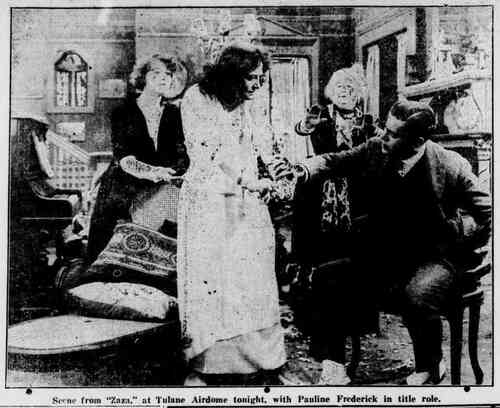
This unexpected encounter with innocence fundamentally alters Zaza’s trajectory. She cannot bring herself to inflict pain upon this child, to shatter a family for her own wounded pride. Her improvised excuse, a quick-witted deflection of her true purpose, marks a profound turning point. It is an act of supreme sacrifice, a conscious decision to absorb her own pain rather than propagate it. This selfless act elevates Zaza from a mere victim of circumstance to a tragic heroine, a woman capable of immense moral fortitude. This theme of a woman grappling with profound moral choices, often under immense societal pressure, echoes through other silent films of the era, such as The Goddess, which often explored the complex inner lives of its female protagonists.
Following this epiphany, Zaza makes the difficult, yet ultimately empowering, decision to dismiss Bernard. This is not a dismissal born of weakness or fear, but of strength and a newfound self-respect. She recognizes that a love built on deceit, one that would necessitate the suffering of an innocent, is not a love she can, or should, sustain. Her return to the stage is therefore not a retreat, but a triumphant re-entry. However, it is a transformed return. The plot states she gains “real fame as a dramatic artist.” This distinction is crucial. It suggests that her personal crucible, her heartbreak and subsequent sacrifice, has imbued her performances with a depth and authenticity previously unattainable. The superficial glamour of the music hall now gives way to a profound artistic expression, her stage becoming a canvas for the very emotions that nearly destroyed her. This artistic redemption, born from personal suffering, is a powerful narrative arc, reminiscent of the profound character development seen in grand literary adaptations like Les Misérables, Part 1: Jean Valjean, where characters undergo immense personal trials to emerge stronger and more morally refined.
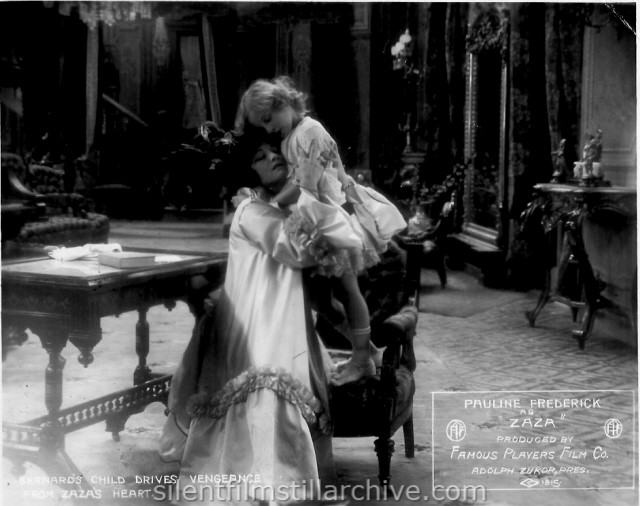
The film’s climax, or rather, its final act of emotional resolution, arrives when Bernard, perhaps realizing the depth of his loss or simply seeking to rekindle a potent passion, once more seeks Zaza. But the Zaza he finds is no longer the vulnerable, lovesick woman he once knew. She has undergone a profound metamorphosis. The memory of the child, that innocent face that saved her from herself, remains a potent force, a constant reminder of the moral compass she has adopted. This memory, coupled with her hard-won independence and artistic fulfillment, fortifies her resolve. She rejects Bernard, not out of bitterness, but from a place of serene strength. Her journey is complete; she has navigated the treacherous waters of forbidden love, endured the agony of betrayal, and emerged not only intact but elevated. She is a woman who has found her own true north, her artistic prowess now a reflection of her inner resilience.
From a technical perspective, Zaza, as a 1915 production, would have relied heavily on the visual language of silent cinema. The effectiveness of the narrative hinges on the actors' ability to convey complex emotions without spoken dialogue. Pauline Frederick, a celebrated star of the era, would have employed a range of expressive gestures, nuanced facial expressions, and powerful body language to communicate Zaza's journey from effervescent performer to heartbroken lover, and ultimately, to a woman of profound inner strength. The use of intertitles would have been critical in providing context, advancing the plot, and articulating internal monologues or crucial dialogue. The direction, likely focused on staging powerful tableaux and employing dramatic close-ups, would have amplified the emotional intensity, allowing audiences to connect intimately with Zaza's internal struggles. The dramatic arc, meticulously crafted by writers David Belasco, Pierre Berton, and Charles Simon, showcases a deep understanding of human psychology and the power of theatrical storytelling, adapting a popular stage play for the nascent film medium.
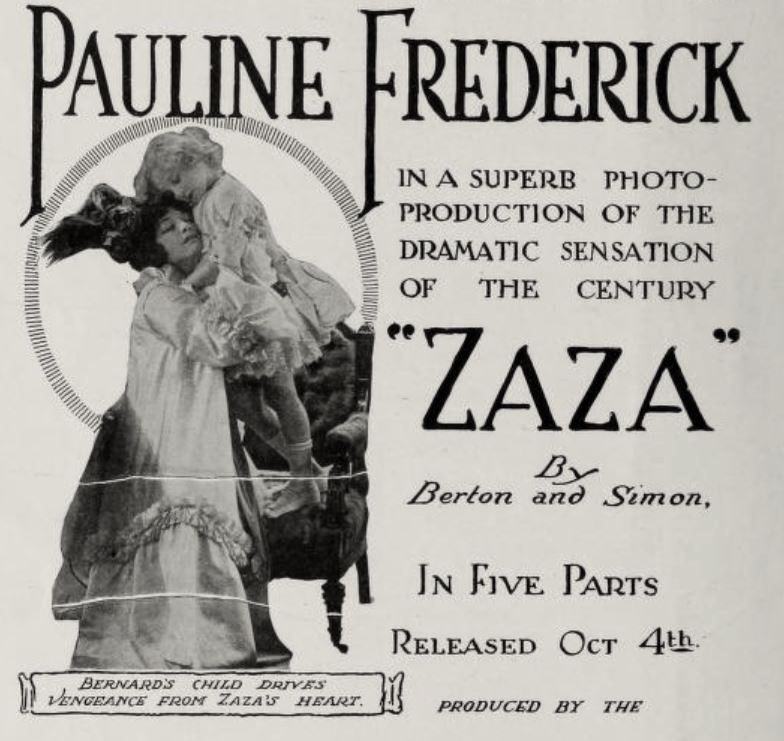
The film’s enduring relevance lies in its exploration of themes that transcend its specific historical context. The dilemma of forbidden love, the pain of betrayal, the struggle for self-respect, and the redemptive power of empathy are universal human experiences. Zaza's journey from a woman defined by her passion for a man to one defined by her moral integrity and artistic talent offers a powerful commentary on female agency and the pursuit of self-actualization. In an era where women's roles were often constrained, Zaza's ultimate independence, achieved through profound personal sacrifice, would have resonated deeply with contemporary audiences, much as other films exploring women's struggles, like Anny - en gatepiges roman or even My Official Wife, captivated viewers with their complex female protagonists.
Consider the societal implications of Zaza's choices. In 1915, the concept of a 'mistress' was fraught with scandal, often leading to social ostracism for the woman involved. Zaza’s initial fury and desire for confrontation reflect the intense societal pressures and moral judgments of the time. Her decision to spare the family, however, elevates her beyond the confines of societal condemnation. She chooses a path of internal rectitude over external validation or vengeful satisfaction. This choice, while deeply personal, carries a quiet strength that speaks volumes about her character. It’s a subtle defiance of the expected melodrama, opting instead for a more nuanced and ultimately more powerful resolution. This kind of nuanced character development, focusing on the internal battles and moral compass of individuals, can be seen as a precursor to more complex psychological dramas that would emerge in later decades, but even then, it stands out for its depth in the early silent era.
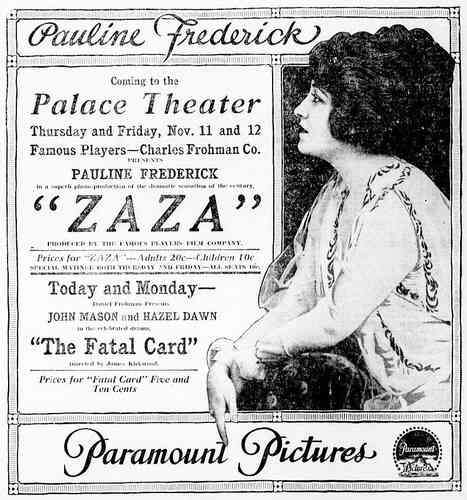
The film also subtly critiques the superficiality of celebrity. Zaza’s initial fame is rooted in her performance, her ability to entertain. But her transformation into a “dramatic artist” suggests a deeper engagement with her craft, a move from mere spectacle to genuine artistry. Her personal suffering fuels her artistic growth, demonstrating how life's deepest wounds can often be transmuted into profound creative expression. This narrative thread offers a compelling insight into the artist's journey, suggesting that true greatness often stems from authentic human experience, not just innate talent. It’s a theme that continues to resonate in stories about artists across various mediums, highlighting the intimate connection between life and art.
In an era that was still defining the language of cinema, Zaza exemplifies the power of visual storytelling to convey intricate emotional landscapes. The absence of spoken dialogue forces a greater reliance on visual cues, music (which would have been performed live with the film), and the sheer expressive power of the actors. The film’s success would have depended not just on the compelling plot, but on the ability of its cast, particularly Pauline Frederick, to make Zaza's internal world palpable to the audience. Her performance, even without the benefit of sound, must have been a tour de force, embodying the passionate, the heartbroken, and the ultimately resilient woman.
The film’s concluding message is one of empowering self-reliance. Zaza doesn’t find happiness by securing Bernard, nor by destroying his family. She finds it by making peace with her past, embracing her artistic calling with renewed vigor, and choosing a path that respects her own moral compass. Her final rejection of Bernard is not an act of bitterness, but a confident assertion of her independence and her transformed identity. It’s a powerful statement for any era, but particularly poignant in 1915, offering a vision of a woman who, despite immense personal turmoil, emerges stronger, wiser, and fundamentally in control of her own destiny. While films like The Love Tyrant might focus on destructive passions, Zaza ultimately champions a different kind of strength—one forged in empathy and self-possession.
In summary, Zaza is a remarkable example of early silent cinema's ability to craft deeply moving and morally complex narratives. It takes a seemingly melodramatic premise – the classic love triangle with a scandalous twist – and elevates it through the profound emotional journey of its protagonist. Zaza’s transformation, spurred by an unexpected encounter with innocence, her subsequent act of sacrifice, and her ultimate artistic and personal redemption, resonate with a powerful, timeless truth about the human spirit. It is a film that reminds us that true strength often lies not in vengeance or acquisition, but in the capacity for empathy, the courage to make difficult choices, and the unwavering pursuit of one's authentic self. A true gem from the archives of early film history, offering much to ponder about love, loss, and the enduring quest for meaning.
The nuanced portrayal of Zaza's internal struggle, particularly the pivotal moment with the child, showcases a sophisticated understanding of character development that might surprise those unfamiliar with the depth of silent film narratives. It’s easy to dismiss early cinema as simplistic, but films like Zaza prove otherwise, demonstrating a rich tapestry of human emotion and moral complexity. The film stands as a testament to the enduring power of storytelling, irrespective of technological limitations. It speaks to the universal human experience of navigating love, betrayal, and the arduous path to self-acceptance. The legacy of Zaza, therefore, is not merely that of a successful silent film, but as a compelling piece of art that continues to illuminate the timeless struggles and triumphs of the human heart. Its narrative, though set over a century ago, remains remarkably fresh and pertinent, a compelling argument for revisiting these foundational works of cinematic history.
The film's impact on audiences of its time must have been considerable, offering both escapism into the glamorous world of Parisian music halls and a powerful moral drama that mirrored their own societal concerns. The choice of Pauline Frederick for the lead role was undoubtedly a strategic one, capitalizing on her established star power and her proven ability to convey deep emotion. Her portrayal of Zaza, from the initial effervescence to the profound heartbreak and eventual stoicism, would have been central to the film's success. This kind of star-driven vehicle was common in the silent era, where the magnetism of actors like Frederick could draw large crowds and lend credibility to dramatic narratives. The power of a single performance to carry an entire film, especially in the absence of spoken words, is a remarkable aspect of silent cinema that Zaza undoubtedly leveraged to its full potential, creating a lasting impression on its viewers and cementing its place as an important work from the early 20th century.
Ultimately, Zaza is a profound meditation on the cost of love and the price of redemption. It challenges its protagonist, and by extension, its audience, to consider the true meaning of sacrifice and the transformative potential of empathy. The film's resolution, where Zaza chooses self-respect and artistic integrity over a problematic love, offers a powerful message of empowerment. It’s a narrative that, despite its age, continues to resonate, reminding us of the timeless human struggle between passion and principle, and the enduring strength found in choosing one’s better self. For enthusiasts of early cinema or anyone seeking a poignant human drama, Zaza remains a compelling and deeply rewarding watch.
IMDb —
1933
Community
Log in to comment.