DbcultAccessing Vault...
Cult Review
Senior Film Conservator
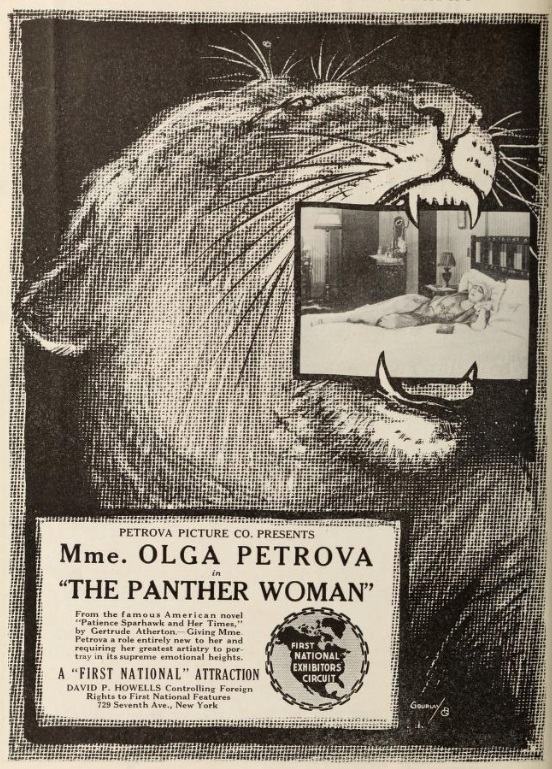
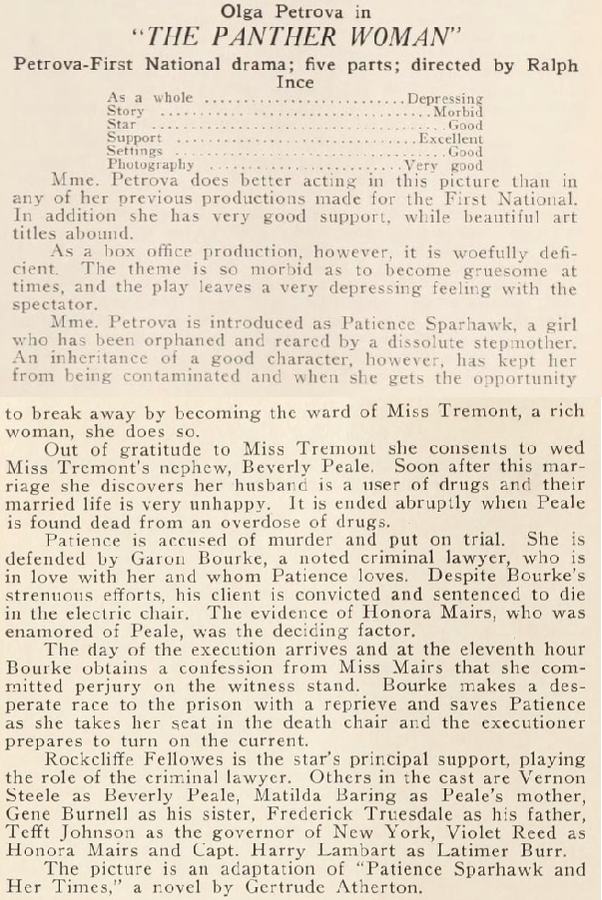
In the pantheon of silent-era luminaries, few figures commanded the screen with the serpentine elegance and intellectual gravitas of Olga Petrova. Her 1918 vehicle, The Panther Woman, directed by Harry Lambart, remains a fascinating artifact of a time when cinema was bifurcated between the raw, lawless energy of the frontier and the stifling, often hypocritical morality of the urban East. This film is not merely a melodrama; it is a scathing indictment of the limited agency afforded to women during the early 20th century, wrapped in the guise of a sensationalist legal thriller. The narrative begins with a somber exodus, as John Sparhawk (James A. Furey) attempts to outrun the ghost of his deceased wife by dragging his daughter, Patience, into the dusty maw of a mining town. It is a setting that evokes the gritty realism of A Romance of the Redwoods, yet Lambart’s vision is arguably more cynical.
The introduction of the stepmother—a dance hall girl whose name is synonymous with the transactional nature of the mining camp—serves as the catalyst for the film’s primary conflict. Here, the 'Panther Woman' moniker is earned not through literal shapeshifting, but through the predatory environment that forces Patience to adopt a defensive, feline alertness. The stepmother’s attempt to induct Patience into the dance hall is a sequence filmed with a palpable sense of claustrophobia. Unlike the whimsical theatricality seen in The Circus Man, the entertainment here is depicted as a soul-crushing industry. Petrova’s performance during these scenes is masterclass in understated defiance; her eyes convey a profound weariness that belies her character’s youth, a trait often found in the tragic heroines of King Lear.
The entry of Rockliffe Fellowes as Garon Bourke provides the film with its moral fulcrum. Bourke is the quintessential 'outsider'—a man of letters in a world of lead. His advice to Patience to flee Eastward is presented not just as a paternalistic rescue, but as a strategic maneuver. The screenplay by Mary Murillo and Gertrude Atherton cleverly subverts the 'damsel in distress' trope by emphasizing Patience’s active choice to leave. This transition from the West to the East marks a visual and tonal shift. The cinematography loses its rugged, wide-angle grandeur and adopts the shadowed, interior-focused aesthetics of a domestic noir. This thematic pivot mirrors the tension found in The Man Who Wouldn't Tell, where the truth is often buried beneath layers of social etiquette.
Patience’s marriage to Beverly Peale (Vernon Steele) is the film’s most tragic pivot. Peale is a character defined by his fragility and perhaps his unsuitability for the 'Panther Woman’s' burgeoning strength. When he is found poisoned, the film shifts gears into a high-stakes courtroom drama that rivals the intensity of On Record. The accusations leveled against Patience are steeped in the misogynistic tropes of the era: because she is beautiful and came from the 'wild' West, she must inherently be a poisoner. The trial scenes are a marvel of silent storytelling, utilizing evocative intertitles and tight close-ups to heighten the sense of impending doom. The electric chair looms as a literal and metaphorical shadow over the proceedings, representing the cold, mechanical nature of Eastern justice.
When evaluating The Panther Woman against its contemporaries, such as The Naulahka, one notices a distinct lack of exoticism in favor of psychological realism. While many films of 1918 relied on grand spectacles or comedic relief—think The Baseball Revue of 1917—Lambart’s work is somber and focused. The film shares a certain DNA with Face Value in its exploration of how identity is projected upon women by the men who desire or judge them. Petrova’s Patience is a woman whose 'face value' is constantly misread by the jury, just as the characters in Men struggle with the weight of their reputations. The direction utilizes a chiaroscuro lighting scheme that anticipates the German Expressionist movement, particularly during the scenes of Patience’s imprisonment, creating a visual language of entrapment that is incredibly sophisticated for its time.
The climax, involving Garon Bourke’s desperate race against the clock, is a triumph of editing. It eschews the simplistic 'hero saves the girl' ending for something more complex. Bourke’s success is not merely a physical rescue but a legal vindication that exposes the rot at the heart of the prosecution’s case. This resolution resonates with the themes of The Convict Hero, where the line between criminal and saint is blurred by circumstance. The final moments of the film suggest that while Patience has escaped the electric chair, the scars of her journey—from the mining pits to the death house—will remain. This emotional honesty is what elevates The Panther Woman above the standard fare of the late 1910s, such as the more lighthearted The Sixteenth Wife.
Olga Petrova’s contribution to this film cannot be overstated. Often compared to the likes of Anna Held in terms of stage presence, Petrova brought a unique, almost regal stoicism to her screen roles. In The Panther Woman, she navigates the transition from a victim of domestic coercion to a woman facing the ultimate state-sanctioned violence with a consistency of character that was rare for the period. The film’s exploration of the 'fallen woman' who rises through sheer force of will is a precursor to the more nuanced female-led dramas of the 1920s. It lacks the saccharine sentimentality of Happiness of Three Women, opting instead for a gritty, almost nihilistic view of social mobility. Even the lighter moments, which are few and far between, carry an undercurrent of anxiety that keeps the audience in a state of perpetual suspense.
From a technical standpoint, the film’s pacing is remarkably modern. Lambart avoids the static, stage-bound compositions that plagued many early silents, such as The Land of the Lost. Instead, he uses the camera to interrogate the spaces his characters inhabit. The mining town feels vast and indifferent, while the courtroom feels small and oppressive. This use of spatial dynamics reinforces the narrative’s central theme: that freedom is a fleeting concept, and safety is often an illusion. The costume design also deserves mention; Petrova’s wardrobe evolves from the utilitarian rags of the West to the high-fashion mourning wear of the East, symbolizing her transformation while also highlighting the superficiality of the class-based society that eventually tries to execute her. It is a visual journey as much as a psychological one, echoing the transformative arcs seen in Rolling Stones.
Ultimately, The Panther Woman is a seminal piece of silent cinema that deserves a place in the modern critical conversation. It is a film that demands to be watched not just for its historical value, but for its surprisingly contemporary resonance. The themes of judicial fallibility, the exploitation of the vulnerable, and the resilience of the human spirit are timeless. Petrova’s performance remains a haunting reminder of the power of the silent screen to convey complex internal states without the need for a single spoken word. For any cinephile looking to understand the evolution of the legal thriller and the portrayal of the 'strong woman' in early Hollywood, this film is an essential, if harrowing, experience. It stands as a testament to the fact that even in 1918, filmmakers were capable of producing works of profound social depth and visual beauty, navigating the treacherous waters of morality and justice with the grace and precision of its titular feline namesake.
IMDb 6.4
1925
Community
Log in to comment.