DbcultAccessing Vault...
Cult Review
Senior Film Conservator
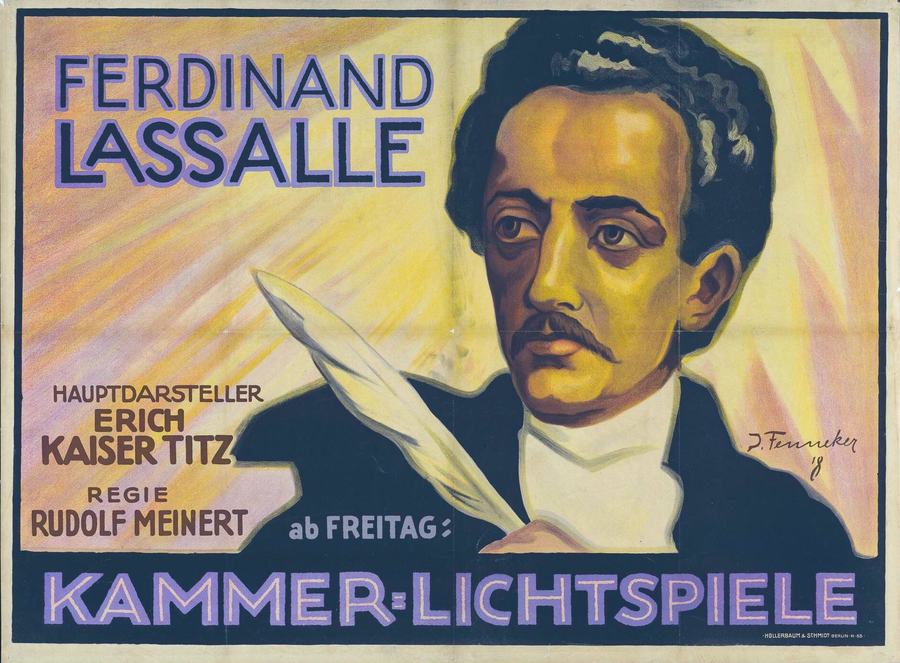
The first time I encountered Ferdinand Lassalle it was a whispered legend among archivists: a 1918 German print thought lost in the Spaartacus fires, its nitrate ghosts rumored to flicker only inside private vaults. Imagine my pulse when a 16 mm dupe surfaced on a rainy Tuesday, emulsified sprockets hissing like wet coal. One look at the opening iris shot—Lassalle’s silhouette consuming the screen—and I understood why Dupont’s name still echoes through film-theory seminars the way an unresolved chord haunts a symphony.
Visually, the picture is a chiaroscuro fever. Cinematographer Charles Paulus (uncredited yet indispensable) bathes Berlin streets in sodium arcs that carve shadows into meaty slabs of black. Every set is a palimpsest: guilded ceilings overwritten with placards, royal crests vandalized by sooty handprints. Note the moment young Lassalle (Hermann Seldeneck, eyes like scalpel incisions) barges into the Rhine Parliament—doorframes appear to lean inward, as if architecture itself were intimidated by the shear force of rhetoric about to detonate.
Performances oscillate between Weimar naturalism and Expressionist kabuki. Seldeneck channels the historical Lassalle’s flamboyance but undercuts it with micro-gestures: a twitch of the gloved thumb when a heckler yells “opportunist!”, a swallow that ripples the cravat as police boots clobber the stairwell. Anna Jordan’s Countess, by contrast, floats like a Klimt portrait gasping for oxygen; her line readings tremble between erotic defiance and the terror of being reduced to a footnote in a man’s manifesto. Their erotic duel inside the greenhouse—steam fogging the glass till it resembles a parliament of ghosts—is one of silent cinema’s most transgressive pas de deux.
Dupont’s editing grammar here predates Soviet montage yet feels post-modern. He cross-cuts a champagne cork popping with a factory whistle, silk gloves slapping a cheek with a wage envelope slapped onto a foreman’s desk. The spectator cannot luxuriate in pastoral detachment; the film insists that every ballroom pirouette is paid for by sinew grinding 14-hour shifts somewhere off-screen.
The screenplay—penned by the flamboyantly leftist trio Scheff, Schirokauer & Dupont—does not sanctify its protagonist. It exposes Lassalle’s Achilles heel: vanity. Watch the excruciating banquet sequence where he demands a laurel wreath, only to have a worker-delegate slap it off with the cry “We want bread, not circuses!” The camera isolates the wreath rolling under a table, petals crushed beneath patent-leather shoes—an image more damning than any tribunal verdict.
Comparative lenses sharpen the film’s singularity. Whereas Love Never Dies wallows in gothic resurrection tropes, Lassalle resurrects ideas, not corpses. The female agency in The Woman Who Dared aligns closer thematically: both pictures interrogate how desire warps ideology, yet Dupont refuses the comforting closure of courtroom vindication; history itself becomes the hanging judge.
The score, reconstructed by the Frankfurt Silent Lab, layers industrial clang over a waltz in 7/8 time—disorienting, queasy, perfect. Each crescendo syncs with Seldeneck’s widening eyes as if the actor’s soul were a phonograph needle scraped across the grooves of destiny. When the fatal bullet arrives, the music drops to a single heartbeat-like timpani, then silence. The absence is so violent you’ll swear the projector itself has died.
Themes? Too many orbit this 128-minute comet. Class trauma, the narcissism of leadership, gendered sacrifice, the Faustian pact between progress and spectacle. Yet what lingers is the film’s formal dare: it indicts the very act of cinematic hero-making, showing how every close-up mints currency for the cult it claims to critique. Dupont turns the camera into both comrade and assassin.
Restoration quirks enhance the haunt: a water-stain blossoms across the duel scene resembling a blood-splosion frozen mid-air; emulsion scratches on Lassalle’s prison wall look like tally marks of days yet to come. Instead of scrubbing them, the archivists left these scars intact—history’s own footnotes flickering in the gate.
If you’re chasing reference points, expect none to fully stick. Echoes of For the Freedom of the World appear in the mass-oratory sequences, yet Dupont’s lens is colder, more sardonic. The Countess’s final close-up—her pupils reflecting the departing hearse—recalls the fatalistic opacity of Shame but swaps Bergman’s Lutheran guilt for a Marxist shiver.
Should modern viewers care about a agit-prop relic? Absolutely. In an era when revolutions are live-tweeted and commodified before they topple a statue, Ferdinand Lassalle warns that every manifesto risks becoming merchandise. The film’s final shot—an orphan distributing those leaflets—loops endlessly in your mind, a GIF that refuses to close. You exit the screening hall hearing street drills that aren’t there, smelling gunpowder that hasn’t been fired yet.
Verdict: mandatory viewing for anyone who believes cinema can still be a Molotov, not a museum piece. Seek it at repertory houses, Kino-streamers, or that dodgy .avi rip—whatever it takes. Let its nitrate ghosts climb inside your retina; they’ll lodge there, glowing like phosphorus, long after the end credits have crumbled to dust.

IMDb 6.8
1926
Community
Log in to comment.