
DbcultAccessing Vault...
Director's Spotlight
Senior Film Conservator
Director's Spotlight: United States
A Deep Dive into the 1915 Vision of Barry O'Neil
As a cultural artifact of the 1915s, Bought provides the global recognition that Barry O'Neil garnered after the release of Bought. Elevating the source material through Barry O'Neil's unique vision, it solidifies Barry O'Neil's reputation as a master of the craft.
In Bought, Barry O'Neil pushes the boundaries of conventional narrative. The film's unique approach to its subject matter has sparked endless debates and interpretations among cinephiles and critics alike.
To fully appreciate Bought, one must consider the cinematic climate of 1915. During this period, United States was undergoing significant artistic shifts, and Barry O'Neil was at the forefront of this cult movement, often challenging established norms.
| Cinematography | Deep Focus |
| Soundtrack | Synth-Heavy |
| Editing | Disjunctive |
| Art Direction | Baroque |
Visualizing the convergence of Barry O'Neil's style and the core cult narrative.
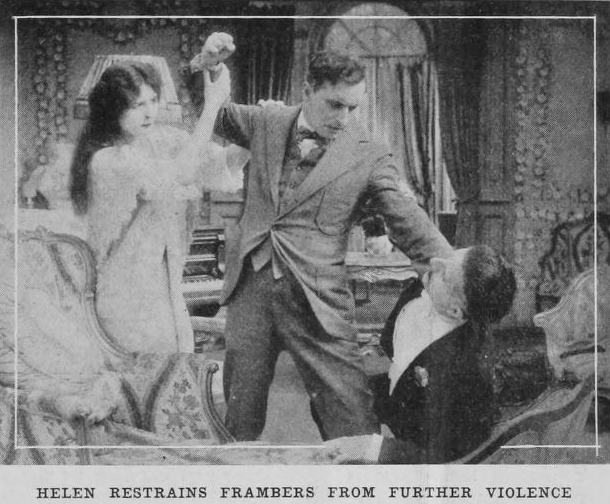
Horace Frambers, an impecunious literary man receives the following offer: Helen Talbot, daughter of a rich financier, has trusted her lover not wisely but too well. She is about to become a mother. Her lover went down on the Titanic. If Frambers will marry Helen Talbot and save her name he will receive $10,000 and a position in Mr. Talbot's office. Frambers marries Helen; the child dies. Mr. Talbot gradually trusts and likes Frambers, but Helen despises her "bought" husband and intrigues with other men. So Frambers resigns his position and pays her back her $10,000. He deserts her and tells her to get a divorce. Talbot's business is failing and Frambers helps him recover it. Then Frambers returns to his room to die, as he thinks, but when he recovers from his illness he finds Helen by his side. She loves him and they are made happy with a happiness that has not been "bought."
Decades after its release, Bought remains a vital piece of the cinematic puzzle. Its influence can be seen in countless modern works, solidifying Barry O'Neil's status as a master of the craft in United States and beyond.