
DbcultAccessing Vault...
Recommendations
Senior Film Conservator
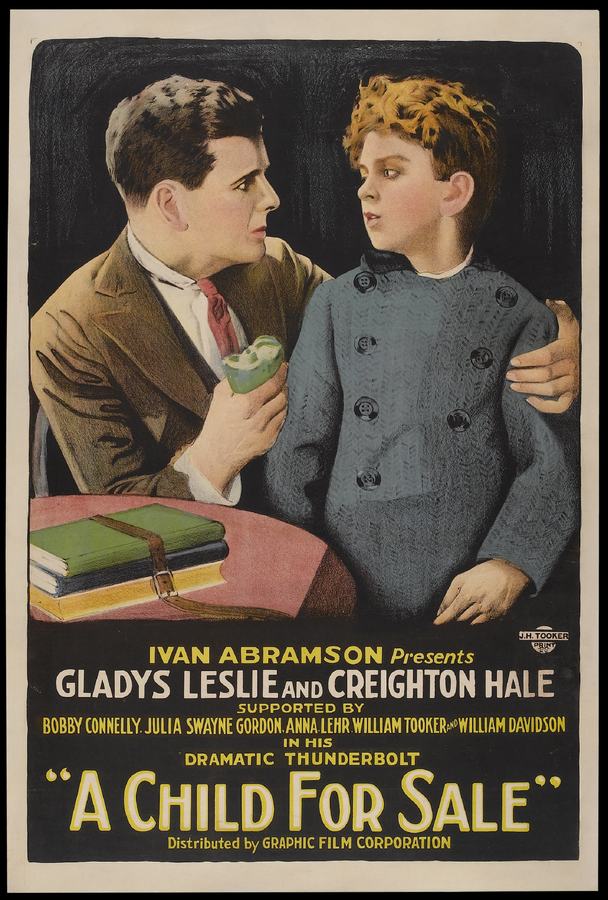
The 1920 release of A Child for Sale redefined the parameters of cult storytelling, the narrative complexity found here is a rare find in the 1920 landscape. Prepare to discover your next favorite movie in our hand-picked collection.
Historically, A Child for Sale represents to explore the darker corners of the human condition with stylistic flair.
A struggling artist in Greewich Village is devastated when his wife dies. Left with two children and with little money to support them, in desperation he sells one of them to a childless but wealthy couple. When he realizes what he has done, he determines not to go through with the "deal".
The influence of Ivan Abramson in A Child for Sale can be felt in the way modern cult films handle stylistic flair. From the specific lighting choices to the pacing, this 1920 release set a high bar for atmospheric immersion.
Based on the unique stylistic flair of A Child for Sale, our vault has identified these titles as the most compelling follow-up experiences for fans of cult cinema:
Dir: Ivan Abramson
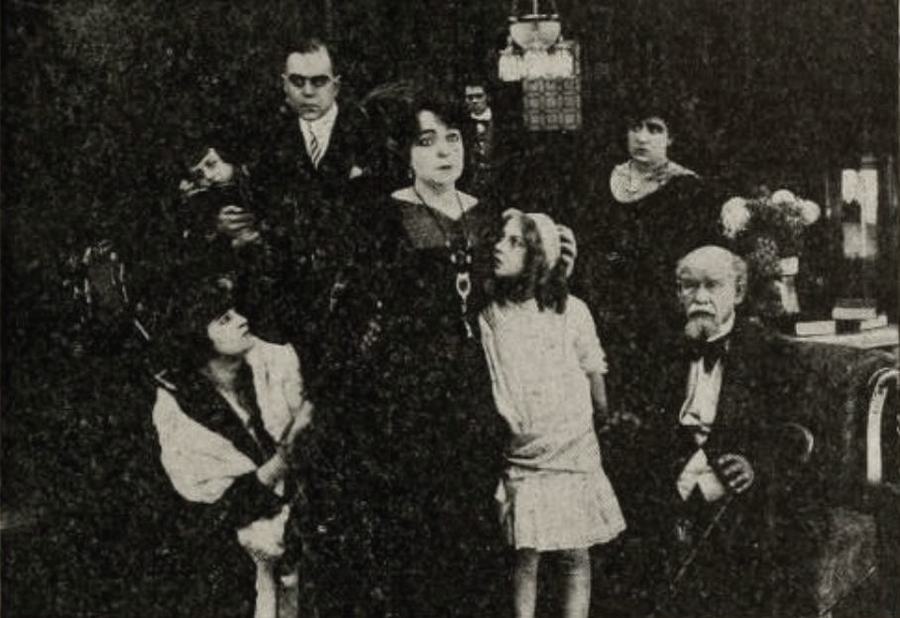
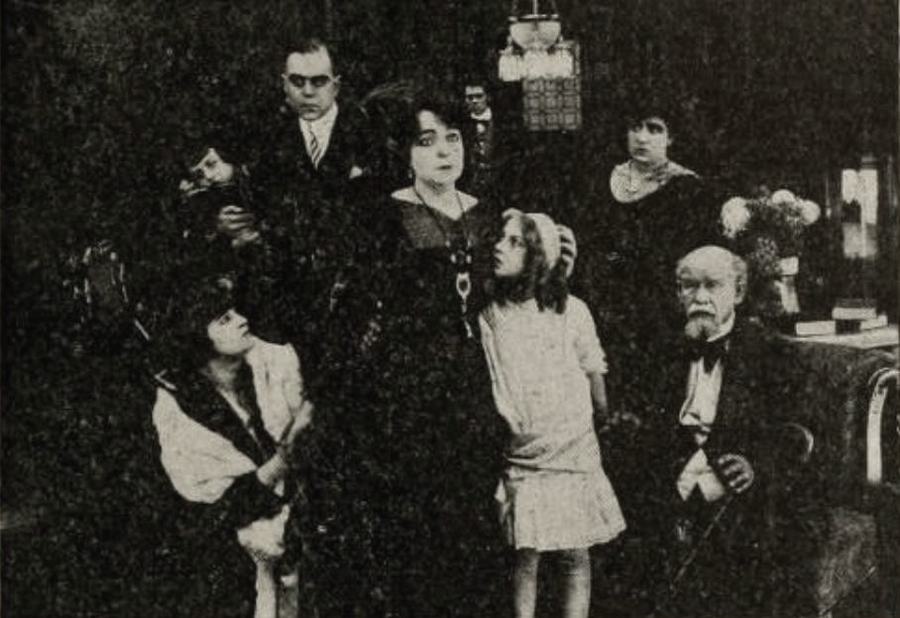
Blanche Scott, a famous actress married to rich lawyer Martin Scott, is living happily in New York, but her cousin Elsie is married to Frank Edmonds, a performer who mars her happiness through infidelity. Blanche invites Elsie to stay with her, and induces her husband to procure a divorce for Elsie. Blanche's blind grandfather George Moore lives with them. Previous to her marriage to Scott, Blanche met with an automobile accident in which both of her parents were killed, and from the shock she became mentally deranged, but shortly afterward recovered. At the birth of Blanche's first child Viola, her attack of insanity returns. Physicians declare her case hopeless, and she is confined to an asylum. Her cousin Elsie adopts Viola. Two years elapse and Blanche is still at the asylum. Meanwhile, Elsie has secured a divorce from her husband. During this time Scott makes advances to Elsie, but is repulsed. Scott's love for Elsie prompts him to bring suit for an annulment of his marriage to Blanche on the ground of her being insane prior to his marriage, and he succeeds in having his marriage annulled. Blanche, in her hallucinations, raves both of her child and of her past successes on the stage, and very often sees herself playing her favorite roles of various classic plays, in which she starred. Scott, assuring Elsie that Blanche's condition is hopeless, is successful in winning Elsie's love, and in due course of time, they are married. A year later Elsie gives birth to a boy. All are overjoyed, except the blind grandfather, who still lives with Scott. The moral wrong, though legally done to his grandchild Blanche rends his heart with sorrow. Six years later: All are living happily, having forgotten the past. One day Scott receives a letter from the superintendent of the asylum, notifying him that Blanche has unexpectedly recovered and is in a condition to be taken home. Scott shows the letter to Elsie, who insists that he bring Blanche back. Scott refuses, but Elsie fervently pleads with her husband to gratify her wish. He still remains obdurate. Moore, overhearing Elsie's plea, cautions Scott not to tell anything to Blanche for the time being, as it may cause a relapse. Scott, convinced by the prudent advice of the blind old man and Elsie's pathetic appeal, finally yields and brings Blanche home. Blanche's joy upon her return is somewhat dampened by her former husband's coolness. She suspects that there is some secret in the house, and questions Scott, Elsie, her grandfather, and the servants, but gets no satisfactory reply. Baffled in her efforts she at last questions her own eight-year-old daughter Viola, who tells her the truth. Elsie, wishing to sacrifice her own happiness for Blanche, decides to go away with her child, Eddie, but Blanche, realizing that she cannot live under the same roof with her former husband, prevents Elsie from leaving. The ex-wife then seizes a knife near at hand and attempts to cut her throat, but is prevented by Scott and Elsie. The furious rage and wild excitement again disturb her mental balance, and she is pronounced incurably insane. Blanche, while being led to the ambulance, wildly calls for Viola. Moore, sunk in unutterable grief, goes to her, but his suffering is beyond human endurance. He is overcome by his emotions, stricken with heart failure and dies. Blanche, seeing him fall, breaks loose from the physicians and rushes madly to the prostrate form of her grandfather, kneels over him, imagines that she performs the scene of La Tosca, where she kills the Baron and laughs hysterically.
View Details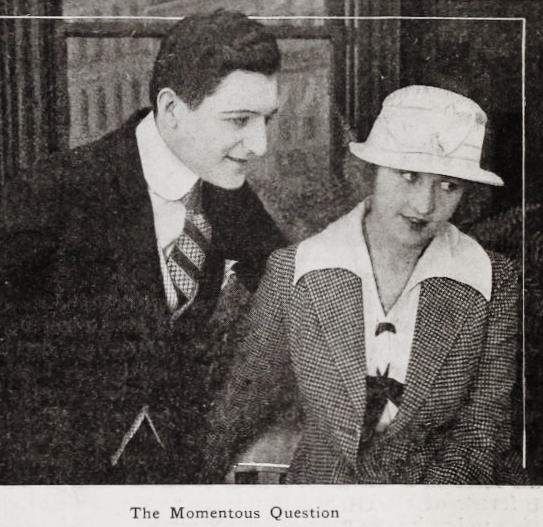
Dir: Ivan Abramson
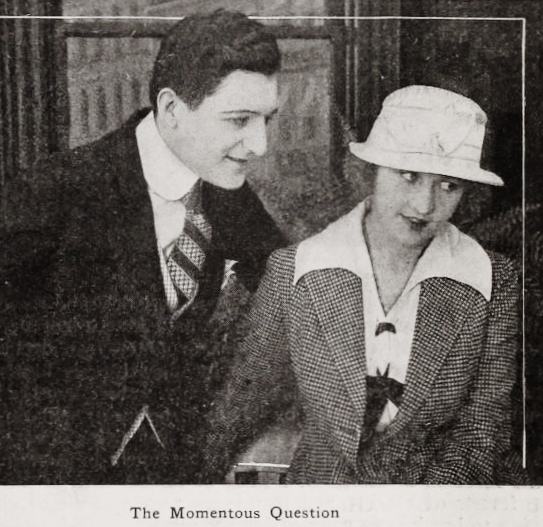
Rhoda Cortlandt, daughter of Theodore Cortlandt, a millionaire who is interested in charity, is beloved by Webster, son of Madeline Stuyvesant, a philanthropist who is Cortlandt's competitor. Burton Woodrow, employed by Cortlandt in order to send his consumptive mother to Colorado, steals $250 from his employer. He is detected and sent to prison for a year. Clarice Lee, a thief, is beloved by Chicago Jim, a gang leader. Mrs. Stuyvesant and Rhoda are visiting a poor family residing in the apartment adjacent to Clarice's. Chicago Jim discovers Clarice in the arms of Pugsy, a member of his gang, and beats her. Her cries reach Rhoda and Mrs. Stuyvesant, who go to her rescue. Jim escapes. Clarice, to work upon the sympathies of Mrs. Stuyvesant, declares that Jim beat her because she would not steal for him. Mrs. Stuyvesant takes Clarice to her home. Cortlandt, believing that Mrs. Stuyvesant has procured a million dollar contract through bribery, calls her a trickster in Webster's presence; he defends his mother. A quarrel ensues. Cortlandt orders Webster from his home. Clarice while in the home becomes infatuated with Webster, who ignores her. Hearing of his love for Rhoda, she persuades Pugsy, her admirer, to lure Rhoda to his room for the purpose of degrading her. Pugsy entices and attempts to assault her there. Rhoda, defending herself, is severely wounded and suffers great loss of blood. At the hospital to which she is taken the doctors declare that only a transfusion of blood will save her life. Webster, hearing of Rhoda's condition, offers his blood. The offer is refused by the stubborn and angry Cortlandt, who orders the doctors to advertise and offer $500 for the necessary blood. Burton, released from prison, unable to secure employment, reads the advertisement and applies at the hospital, where after a rest he is accepted and a quantity of his blood is transfused to Rhoda's veins. Before his discharge from the hospital Burton learns that the recipient of his blood is the daughter of the man who sent him to prison. Cortlandt and the Stuyvesants become reconciled. Burton in the presence of Rhoda offers to return to Cortlandt the money he stole. Rhoda prevents her father from accepting it, and insists that he re-employ Burton. Cortlandt grants Rhoda's wish. Mrs. Stuyvesant gives a reception in celebration of Rhoda's recovery, during which the engagement of Webster and Rhoda is announced. Rhoda is horrified by constantly recurring visions of Burton. Wherever she goes Burton appears before her, whatever she does recalls him to her mind. His vision constantly calls to her. She struggles against the thought, but realizes that with the blood given her by Burton has come love. Unable to restrain the call of his blood she surrenders herself to it and telephones asking him to visit her. He does so, and she confesses her love for him. Burton tells her that he loved her long before he was sent to prison, but that his past is a shadow that will darken her future. Rhoda pleads with Burton and declares that his shadow will fade in the warmth of her love. That evening Webster finds Rhoda in Burton's arms, and is horrified. Rhoda returns the engagement ring to Webster, telling him, "Condemn me if you will, Burton gave me blood, and with it came love." Webster, realizing the power of true love, sacrifices his own love for Rhoda's sake and takes back the returned engagement ring. Cortlandt enters the scene, learns the truth. He is shocked and in great excitement denounces and orders Burton from his house. Webster tells Cortlandt that his stubbornness of not permitting him to give his blood caused it all. He pleads and moves Cortlandt to consent to the marriage of his daughter to the man he sent to prison.
View Details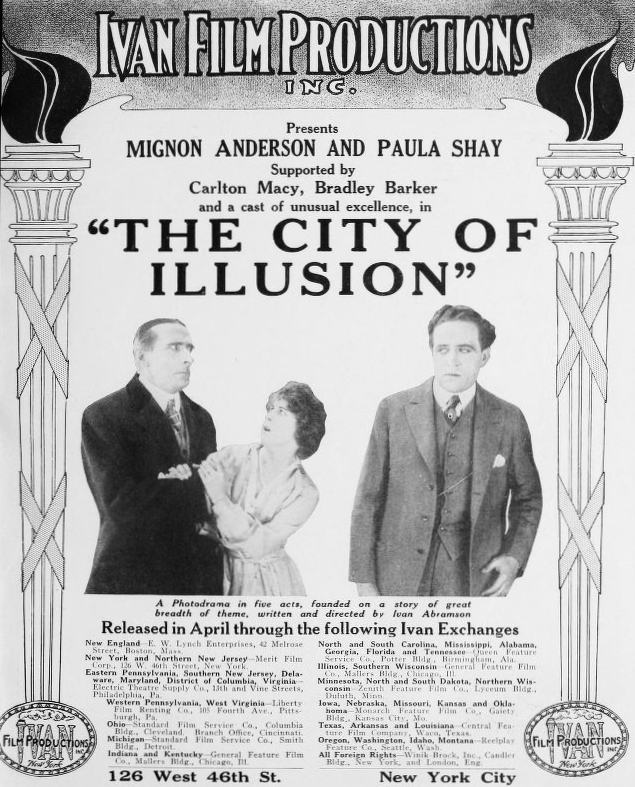
Dir: Ivan Abramson
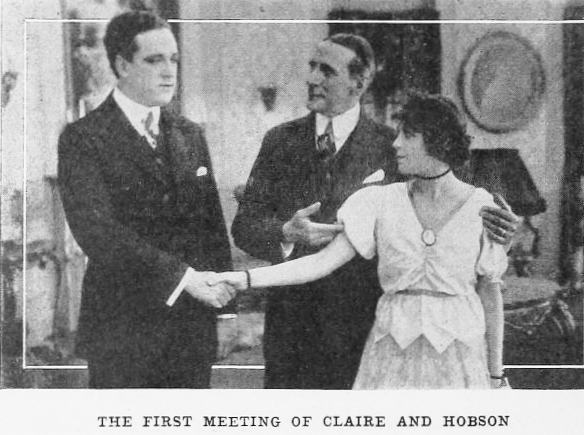
Claire, a young Southern girl, marries wealthy plantation owner Paul but has always dreamed of moving to and living in New York City. She falls for Paul's New York lawyer Douglas, and when he goes back to "The Big Apple", she fibs to her husband that she had been having an affair with Douglas and wants a divorce. However, when she travels to New York to be with him, she finds that he's already married and is running for District Attorney. Complications ensue.
View Details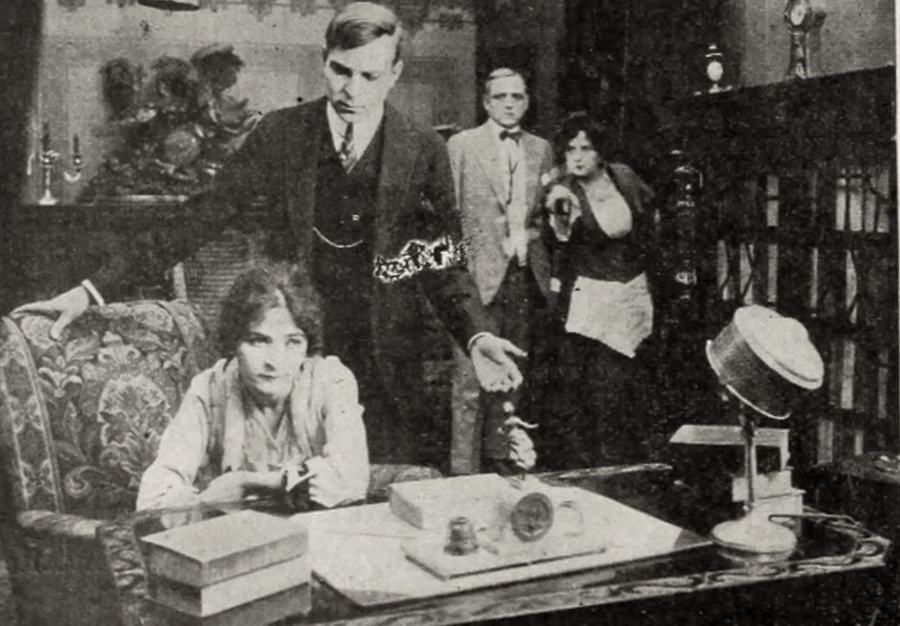
Dir: Ivan Abramson
Victor Gilmore, a composer, is in love with his father Cyrus' secretary Dorothy Eldridge, but Dorothy marries his brother Robert, even though a doctor has told them that Robert can never father children. Dorothy, however, has never lost her hope to have children, and doesn't know that Robert is secretly supporting his former lover Flo Merrivale. The brothers' father eventually dies but leaves his estate to Robert, saying that he didn't believe that Victor was his son. This causes a huge rift between the brothers and a fight ensues, resulting in Victor's being thrown out of the house and family. Complications ensue.
View Details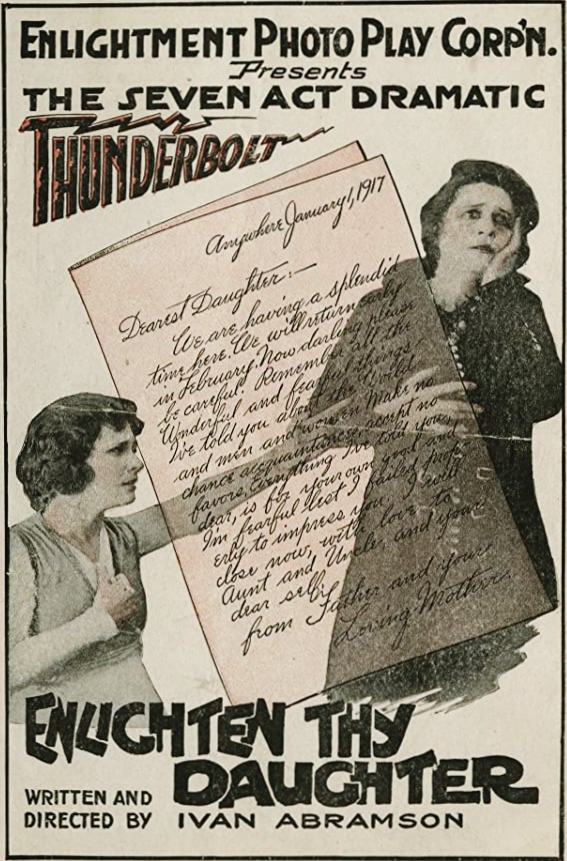
Dir: Ivan Abramson
A story of the difference in fate of two young girls caused by the difference in their home lives and training. This shows vividly the criminal folly of allowing a girl to reach womanhood without knowledge of certain facts essential to her welfare and happiness. A worse-than-foolish mother keeps her daughter in ignorance. In her efforts to avoid the consequences which follow, she places the girl in the hands of an unscrupulous doctor with whom she is in partnership.
View Details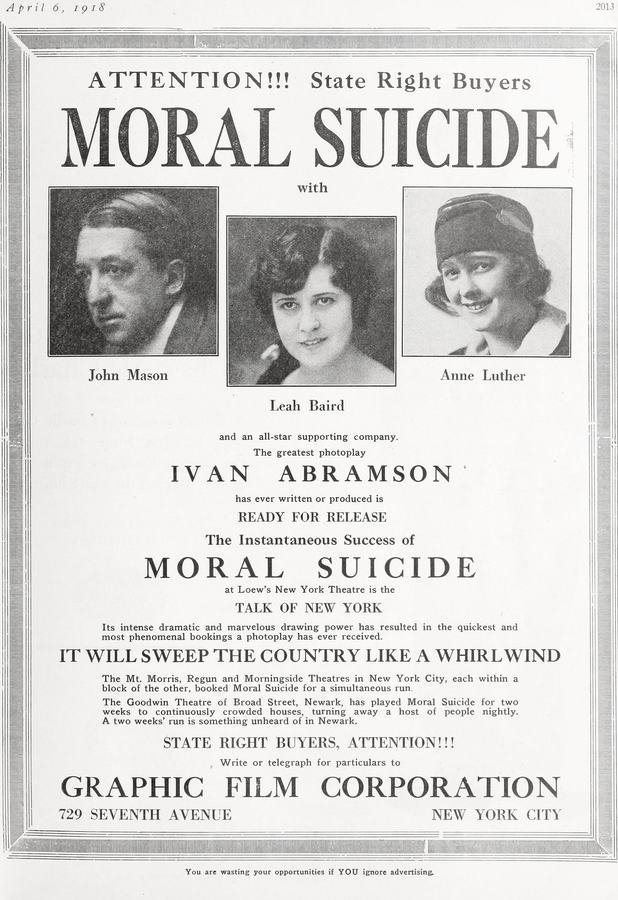
Dir: Ivan Abramson
Wealthy Richard Covington, although aging and lonely, distresses his children, Waverly and Beatrice, by marrying a heartless seductress named Fay Hope. Because Fay's extravagant spending threatens to ruin Richard, Beatrice confronts her, which prompts Richard, who is hopelessly in love with the beautiful vampire, to order his daughter from the house. Fay introduces her lover, "Lucky" Travers, into the Covington household as her brother, but Waverly catches them in each other's arms and, in a fit of insanity, shoots at Lucky. The bullet strikes and kills Fay, and Waverly is locked in an asylum, leaving Richard broken, penniless and completely alone. In New York, he finds work carrying sandwich boards that advertise a cabaret, where he sees Beatrice warmly conversing with Lucky. Beatrice consoles her distraught father by admitting that she now works for the Secret Service. After securing Lucky's arrest, Beatrice returns to her fiance, Rodman Daniels, who has arranged Waverly's release from the asylum, and the entire family is reunited.
View Details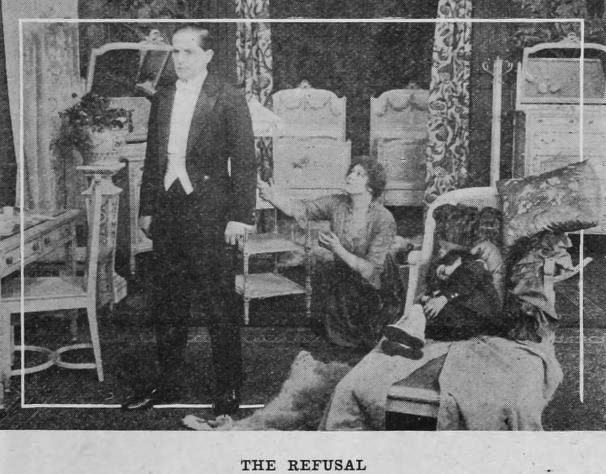
Dir: Ivan Abramson
Ruth Ancaster is about to marry her fiance, Edward, when she discovers that he has been cheating on her with a variety of different women. Angered, she marries Henry, Edward's best friend. Edward sees a chance to take his revenge on both of them when Henry, in financial trouble, forges Edward's name on a stock certificate and is caught. He offers to drop the charges against Henry if Ruth agrees to "pay the price"--and he doesn't mean money.
View Details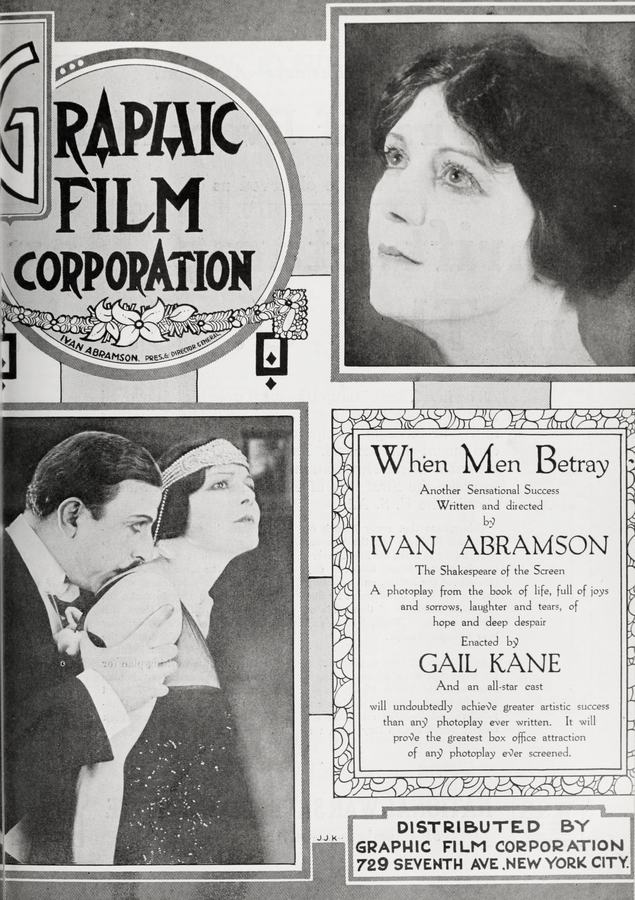
Dir: Ivan Abramson
Despite the pleading of his wife Marion and his little daughter Vivian, Raymond Edwardes intensifies his affair with a charming adventuress named Lucille Stanton. Marion attends a reception with Frederick Barton one evening, leaving Raymond free to visit Lucille and leaving Raymond's younger sister Alice alone in the house. Bob Gardner, who is engaged to Raymond's elder sister Florence, rapes Alice, and that same evening, Raymond finds Frederick in Lucille's room. Realizing the great pain he has caused his wife, Raymond asks for Marion's forgiveness. Bob is killed in a fight with Frederick, whereupon his brother, Dick Gardner, offers to marry Alice to atone for Bob's wrong.
View Details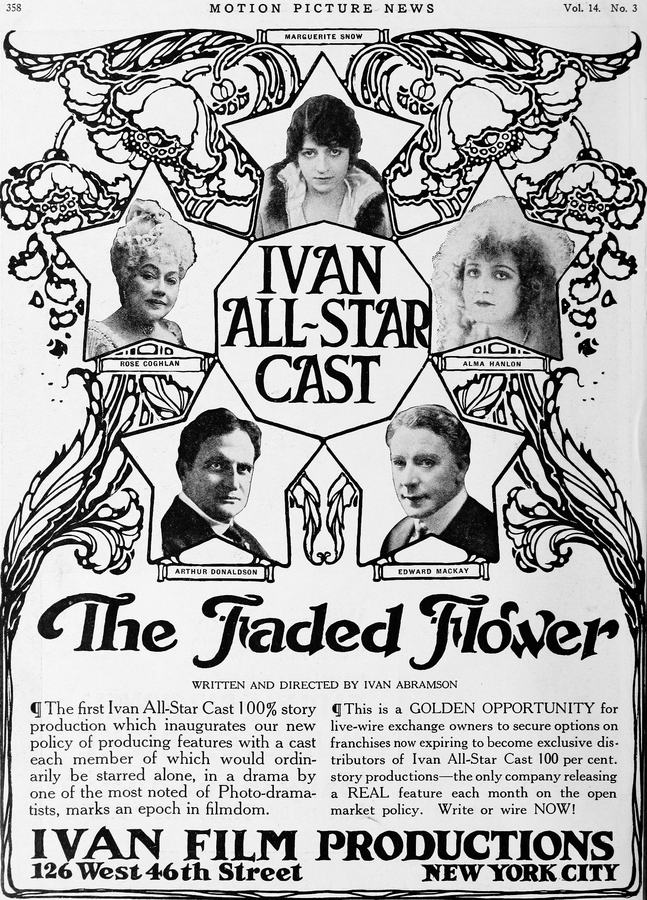
Dir: Ivan Abramson
Elderly millionaire widower Wilbur Mason, father of only child Anne, proposes to his stenographer Lillian Hill, who accepts him because he declares that he will devote his fortune to restoring her blind mother's sight. In the presence of struggling playwright Henry Parker, Lillian introduces Mason to her mother as her future husband. Parker, who thinks himself in love with Lillian, imagines that his heart is broken. After the Masons' honeymoon, Mason engaged a renowned specialist whose operation on Mrs. Hill is unsuccessful. Lillian now sadly realizes that her sacrifice was in vain and becomes cold towards Mason. Two years later Lillian and Anne meet Parker, of whose great success they have read. Parker and Anne fall in love; at Anne's suggestion, Lillian invites him to call on them. He does, hoping to see Anne, but finds Lillian alone. She gives him a rose from among those Mason plucked for her that morning because he knew she loved them. Mason, unseen, sees this gesture and concludes that Lillian's love for Parker is the cause of her indifference toward him. His jealous rage becomes ungovernable and he makes his presence known and orders Parker from the house after tearing from the latter's coat the rose Lillian gave him. Mason thereafter repeatedly charges Lillian with being false to him and in love with Parker. Parker meeting Anne, accompanies her to the gateway of her home, where she leaves him. Mason discovering him there alone believes that Parker has clandestinely met Lillian, whom he later upbraids, again thrusting the rose before her. Lillian, as the result of Mason's accusations, becomes grief stricken and ill. Despondent she leaves her husband's home and returns to her mother where she fades like roses in the autumn winds. Mrs. Hill, fearing for her daughter's life, goes to Mason who is moved by her heart-broken and anguished appeal. He accompanies her, repentant and remorseful, to Lillian's bedside which he reaches in time to receive with her expiring breath the pardon for which he pleads and to hear the doctor pronounce her dead. Crazed with sorrow, scarcely hearing the doctor's words, Mason is about to lift the coverlet from Lillian's face when he is stricken with paralysis. Later at his home he weeps in secret at sight of the now-faded rose which to him has become a symbol of Lillian. Repenting his mistake, he bids Anne send for Parker and consents to their marriage. Troubled by his conscience, Mason's overwhelming woe permits him no rest, and he goes at dead of night to Lillian's burial place, carrying with him roses which in life she so dearly loved, which he tenderly places over her dust. "Lillian, my faded flower," he cries, "you died a martyr to my unfounded jealousy. May your soul find peace in the Kingdom of Heaven."
View Details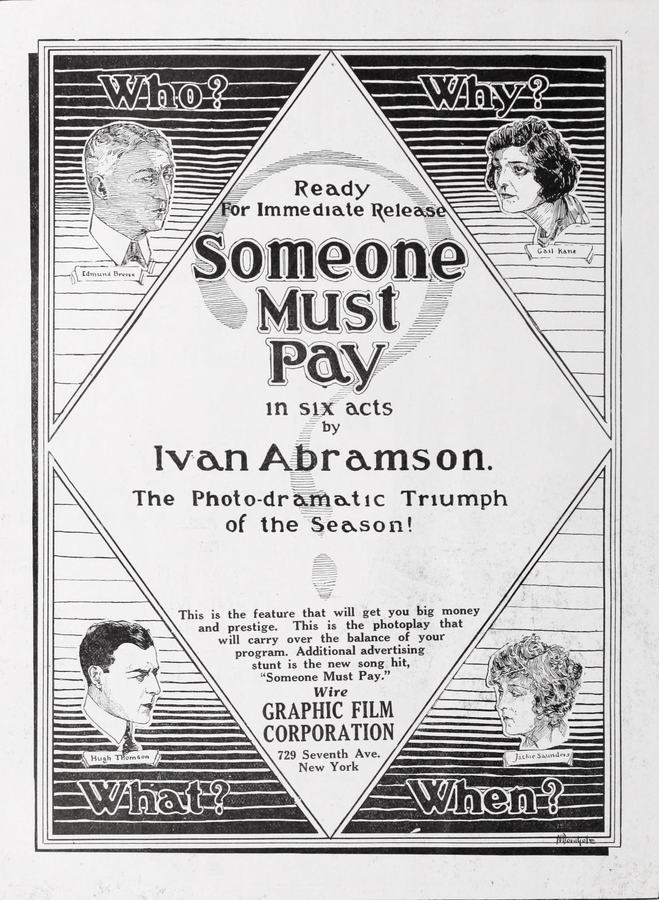
Dir: Ivan Abramson
Stockbroker Henry Taylor becomes insanely jealous when wealthy South African jeweler Charles Bryant shows friendly attentions to Taylor's wife Regina and adopted daughter Vivian. Henry banishes Bryant from the Taylor home. In order to lavish riches on his wife, Henry speculates wildly and then uses a client's stocks to raise funds. The client threatens Henry with arrest, but agrees to withdraw the charge if Regina raises the appropriate funds. Bryant comes to her aid, but Henry believes another friend is responsible. When he learns the truth, Henry drives Regina and Vivian from home and they seek shelter from a heavy rainstorm in the asylum in which Regina was reared. Vivian contracts pneumonia and dies. Meanwhile, Henry seeks out Bryant and shoots him. In the ensuing trial, Bryant reveals that he is Regina's father and that he had been compelled to flee to South Africa after being accused of a murder of which he was innocent. Examination of the criminal record reveals that his innocence has been made clear. Bryant brings about a reconciliation between Henry and Regina.
View DetailsAnalysis relative to A Child for Sale
| Film Title | Atmosphere | Complexity | Similarity |
|---|---|---|---|
| The Unwelcome Wife | Gothic | Dense | 91% Match |
| Her Surrender | Surreal | Abstract | 88% Match |
| The City of Illusion | Surreal | Dense | 91% Match |
| The Concealed Truth | Gothic | Dense | 88% Match |
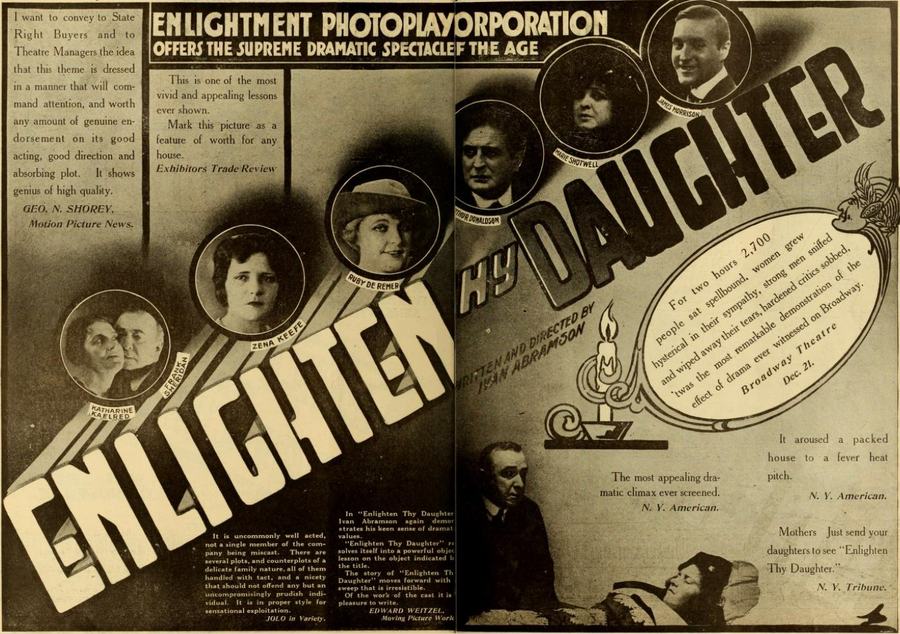
| Enlighten Thy Daughter | Tense | Abstract | 89% Match |
This guide was algorithmically generated using the cinematic metadata of Ivan Abramson's archive. Last updated: 8/16/2026.
Back to A Child for Sale Details →