
DbcultAccessing Vault...
Recommendations
Senior Film Conservator
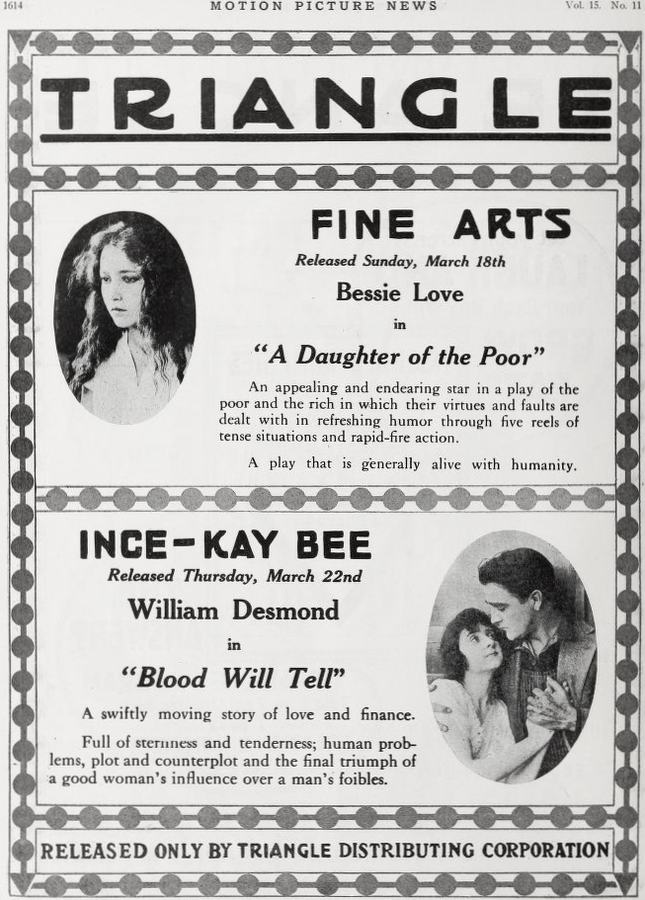
For cinephiles who admire the unique vision within A Daughter of the Poor, its lasting impact ensures that its spirit lives on in modern recommendations. Each of these movies shares a piece of the unique vision that made A Daughter of the Poor so special.
At its core, A Daughter of the Poor is a study in to provoke thought and inspire awe in equal measure.
A young girl, Rose Eastmen ( Besie Love ) lives with her lazy Uncle, who works as a janitor in a publishing house. Lacking education, both Rose and her Uncle are susceptible to the socialist ideas of writer Rudolph Creig. One day Rose encounters Jack Stevens the wealthy son of the owner of a publishing house, working on his car. She believes he is a common laborer, and she begins courting him. Through her exposure to Jack, Rose begins to realize the rich are not such an abominable people. Rudolph has also reached this conclusion after learning Stevens has published his book. Now bolstered by success and armed with a hefty royalty check, Rudolph is able to marry Rose.
Based on the unique unique vision of A Daughter of the Poor, our vault has identified these titles as the most compelling follow-up experiences for fans of cult cinema:
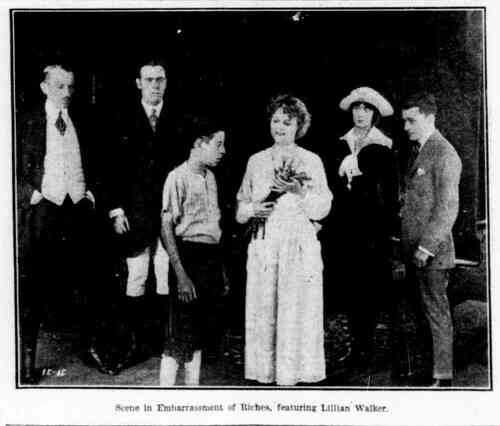
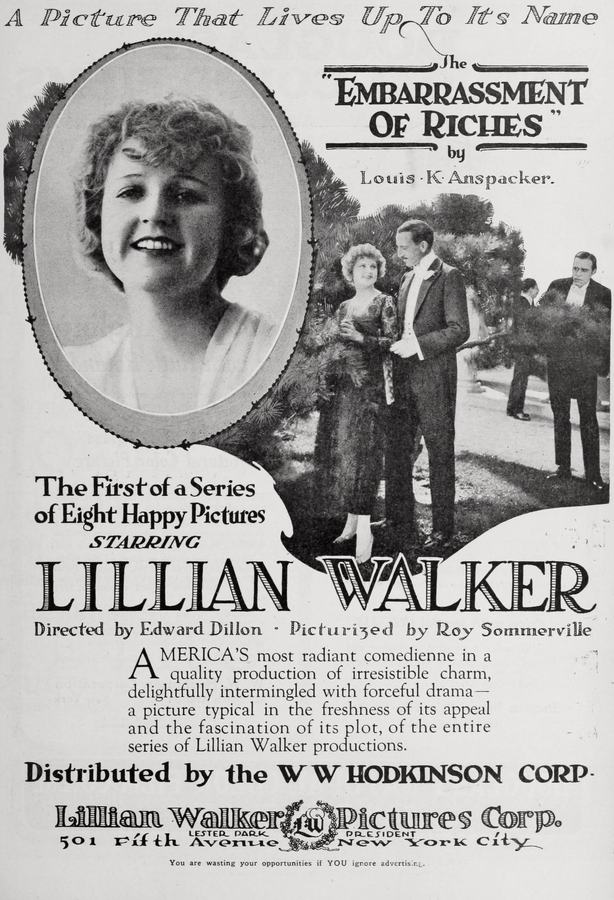
Dir: Edward Dillon
Through the death of a relative, New York sweatshop worker Lizzie Holt is transformed into Miss Elizabeth Holt, heiress. Elizabeth soon tires, however, of the shallowness of society life and occupies herself by working in a settlement house on the lower East Side. There she falls in love with John Russell, an idealist who despises the rich, and to escape his scorn, she identifies herself as Miss Holt's secretary. John's efforts to close up ward boss Ted Phelan's gambling house next door prove successful when the place is raided, but when several of Elizabeth's acquaintances on a "slumming party" seek her aid in escaping arrest, John discovers her true identity. He is about to change his mind about marrying her, when Elizabeth convinces him that her love and her character are true, and the two are united.
View Details
Dir: Edward Dillon
In a mock fraternity initiation, a group of Yale students haze Paul Browning for tattling. When he learns that the leader of the group, oarsman Buck Simmons, is also winning the favor of Aida Courtlandt, the dean's niece, the jealous Browning and gambler Burton Hampdon, to whom Browning owes money, attempt to disgrace Buck so he will not be allowed to participate in the upcoming Yale-Harvard race. After they fail to lure Buck to bed with a girl, Browning takes Aida to a roadhouse so that Buck will have to break training rules to go there. When the coach, suspicious about the roadhouse incident, finds a letter planted on Buck about a deal for him to throw the race, he suspends Buck, but with Aida's influence, the dean straightens matters out. After Yale wins a close race, Browning shoots at Buck, who then trounces him. Proclaimed captain of the next year's team, Buck becomes engaged to Aida.
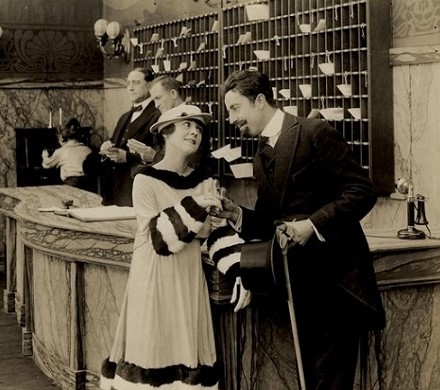
Dir: Edward Dillon
The theft of a sacred diamond band from a Hindu shrine starts the action. Count Kotschkoff, who has stolen the band, soon finds that the Mystic Seer and the Mystic Doer are hot on his trail. To thwart them, he asks the Widow Marrimore to keep the jewels for him. She wears the band as a garter, and at a dance it drops off and is picked up by Alonz Evergreen, a middle-aged actor who still aspires to be the juvenile. He does no work and lives on the daily touches he is able to obtain from his hardworking son. Evergreen, who believes that he's in love with the widow, reads an advertisement for the return of the jewels. He aims to increase his favor with the widow by sending back the band. He has wrapped it up in an affectionate note when his son's fiancée enters the office on her way home from a shopping tour. When she departs she takes all the bundles in sight. Alonzo discovers his loss and goes in mad pursuit. In her home the young woman has decided that her beloved is untrue, and has sent back the diamond band and her engagement ring. A distracted lover soon reaches the house to find his father engaged in a frantic attempt to verify his suspicion that the young woman is wearing a costly garter. The gems regained, Evergreen races to the hotel where the widow lives. The Mystic Seer and the Mystic Doer are on his track, but he eludes them and delivers the band. When the Seer and Doer break in and explain their errand the widow goes to the hiding place, but the jewels are gone. The Count has recovered them. The widow is taken to the shrine and tied, to a stake and threatened with death. The stake is near a cage in which a lion is confined. Slowly the gate is lifted and the lion is about to dart out when Alonzo arrives and releases his adored one. There is a thrilling chase and Leo, the lion, finally stalks the widow to a bath room. There Alonzo rescues her under the nose of the beast, the count is captured and the band recovered.
View Details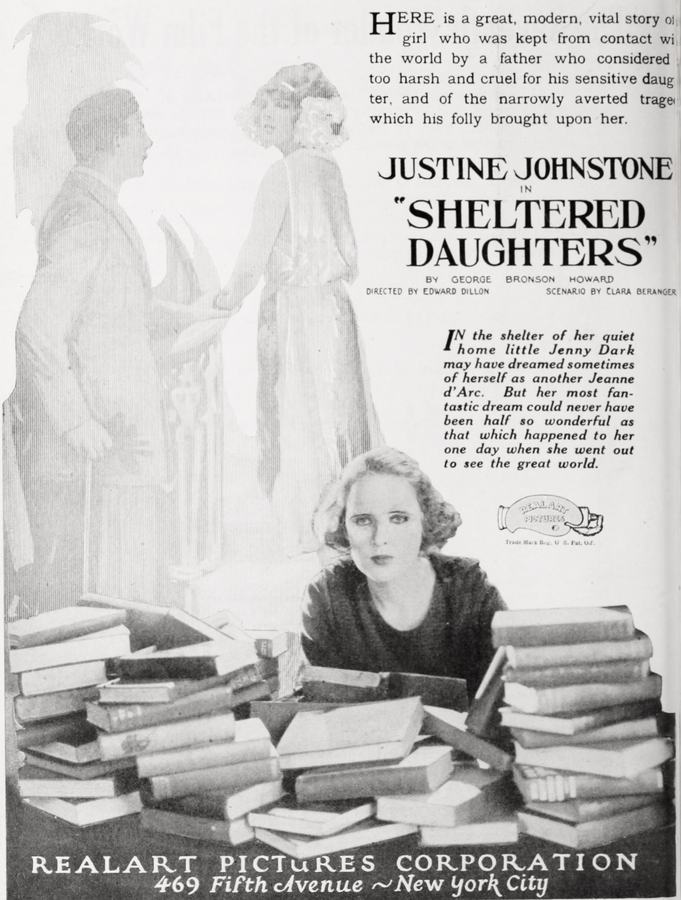
Dir: Edward Dillon
New York police sergeant Jim Dark is determined that his daughter, Jenny, will be shielded from any knowledge of evil. Consequently, she lives in a dream world, imagining herself to be a descendant of Saint Jeanne d'Arc, but has a loyal friend in reporter Pep Mullins. Her school friend, Adele, also raised by overly protective parents, is ejected from her home when she becomes inebriated after spending an evening with a disreputable young man. Later, Jenny falls into the hands of a crooked Frenchman, posing as a wounded veteran, who absconds with $250,000 intended for war orphans. Jim tracks the criminal to a rendezvous with his daughter and rescues her with the aid of Pep, who makes Jenny his wife.
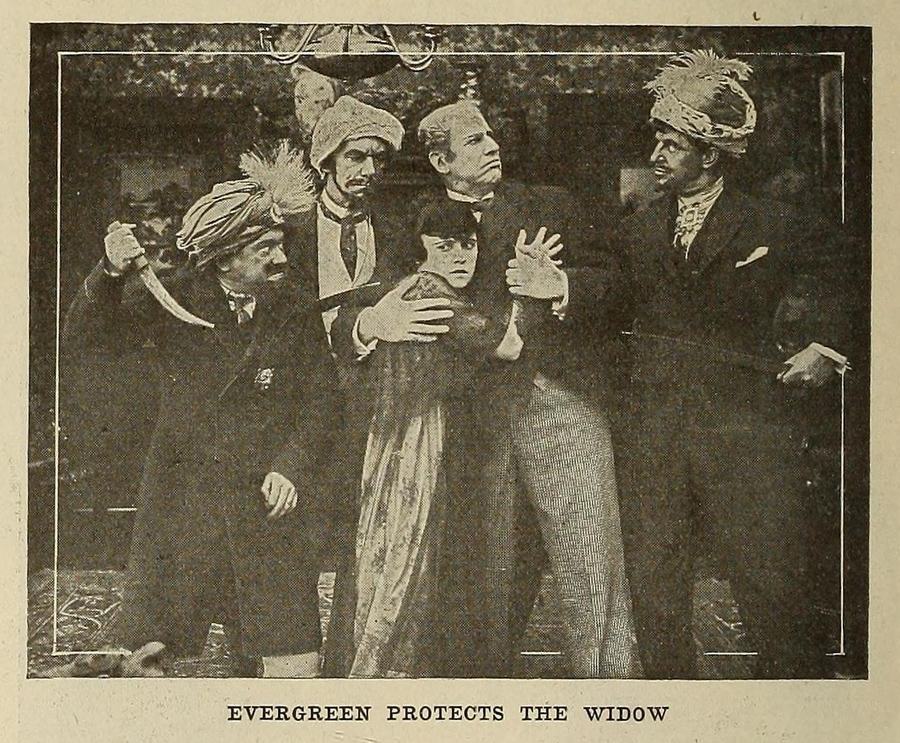
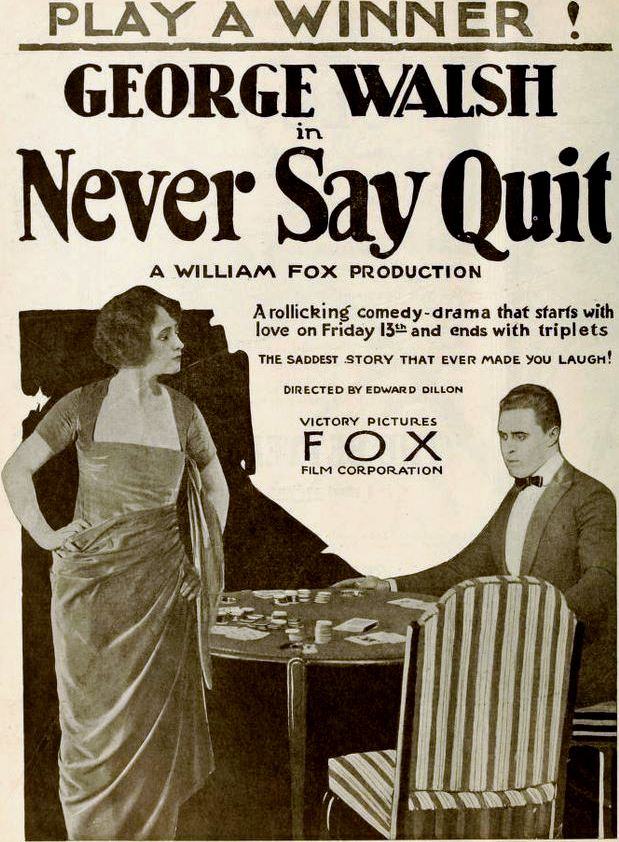
Dir: Edward Dillon
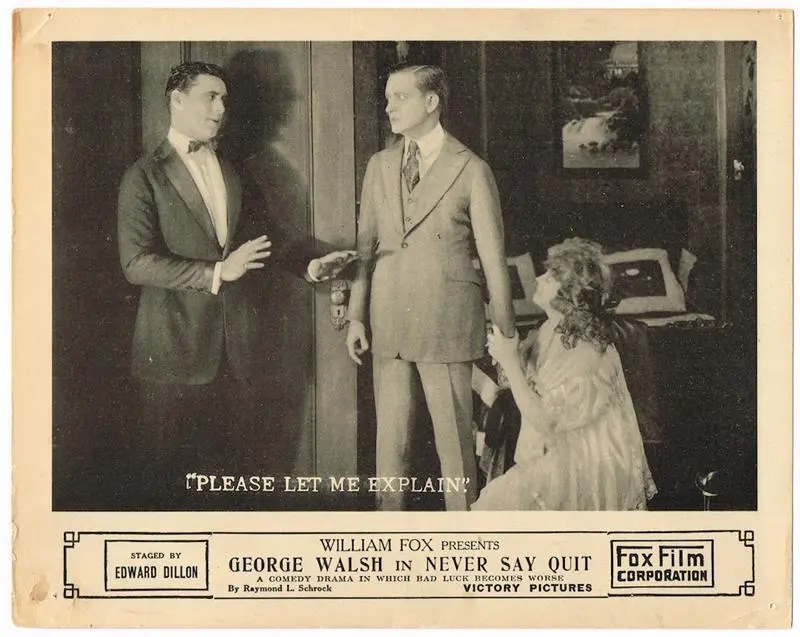
Born on Friday the thirteenth with thirteen letters in his name, Reginald Jones has been plagued with bad luck his entire life. Attempting to escape his jinx, Reginald attends a chauffeur's ball, where, after he helps a girl whose companion is berating her, the girl hits Reginald for interfering. After Reginald loses at matching coins, is sold out in the stock market, and is fleeced of his money in a badger game, he loses his inheritance of $999,998.60 when he gets arrested for fighting, and misses his aunt's funeral. Reginald then boards a schooner and meets millionaire Professor Lattimore and his daughter Helen, supposedly there to look for buried treasure. After falling in love with Helen, Reginald discovers the ship captain's plot to hold Lattimore for ransom. Reginald fights off all the crew members and forces the wireless operator to signal a U. S. Destroyer, which arrives and saves them. Reginald and Helen marry.
View Details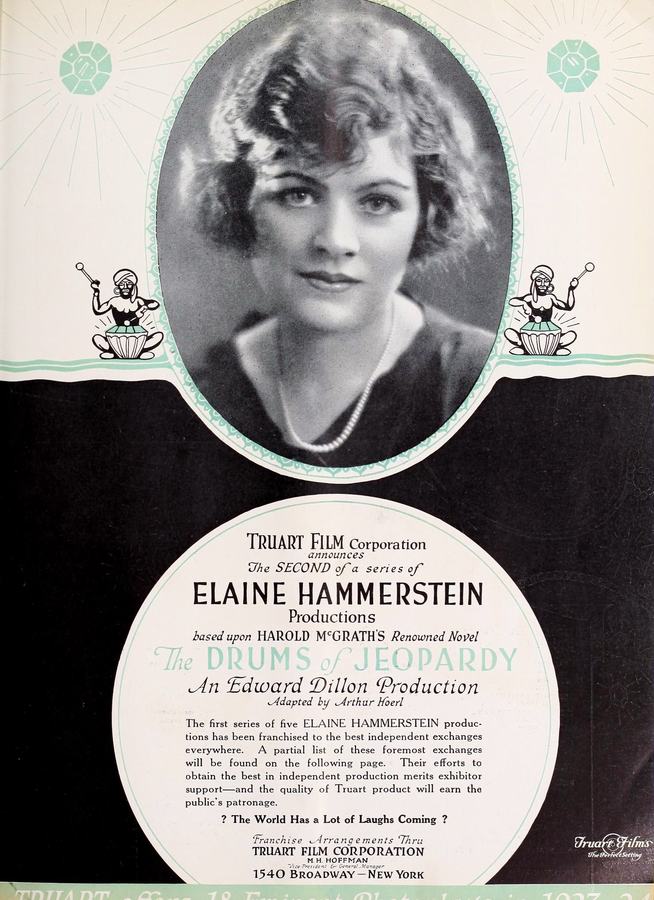
Dir: Edward Dillon
Grand Duke Alexis of Russia possesses two priceless emeralds, known as the Drums of Jeopardy, which allegedly exert a sinister power over their owner. They are willed to the duke's private secretary, Jerome Hawksley, who brings them to New York City and places them in the care of Banker Burrows. Bolshevik secret agent Gregor Karlov steals the jewels, kills Burrows, and kidnaps Jerome. The banker's daughter, Dorothy Burrows, assisted by Cutty, a member of the U.S. Secret Service, trail Karlov to a café and he is killed in the ensuing battle. Jerome recovers the jewels, and he marries Dorothy.
Dir: Edward Dillon
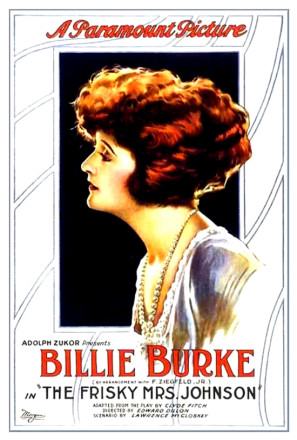
"The Frisky Mrs. Johnson" is a 1920 silent film comedy starring Billie Burke. It was produced by Famous Players-Lasky and distributed through Paramount Pictures. It is based on a 1903 Broadway stage play by Clyde Fitch. On the stage Burke's part was played by Amelia Bingham. Burke's next-to-last silent film, it is a lost film.
View Details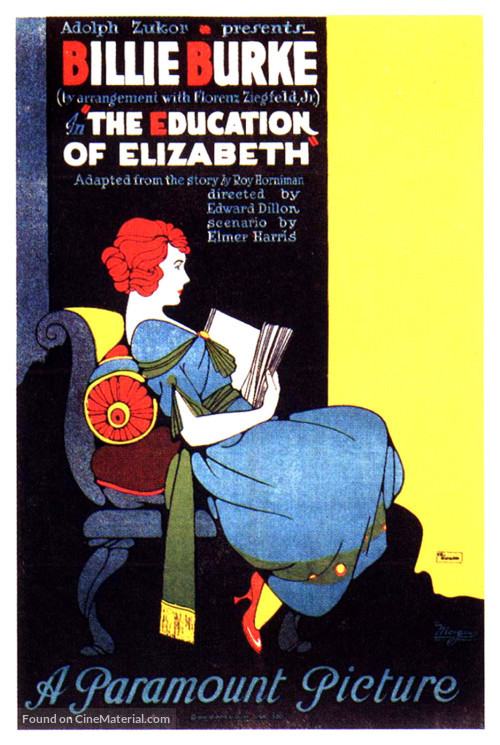
Dir: Edward Dillon
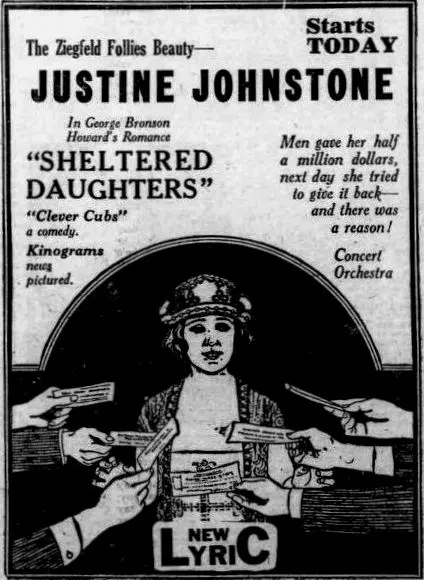
A follies girl is courted by the son of an aristocratic family. The presence of this rough and ready showgirl in such sedate surroundings creates amusing situations. She brings with her to the household a sympathetic pet--a goldfish--to which she confides her troubles. When her wealthy suitor is called away on business, she learns of his younger brother, who, though he appears to be absorbed in his books, is more her type. She transforms him into her ideal and alienates the elder brother; her own wit brings about a happy ending in her prospective marriage to the younger brother.
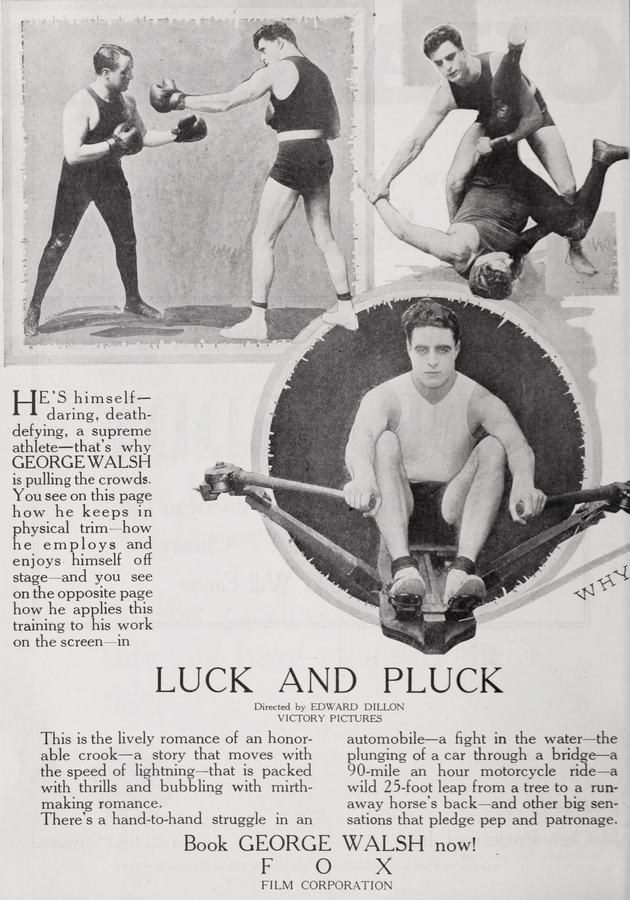
Dir: Edward Dillon
Professional thief Joe Grim is killing time in New York City's Central Park before he robs the Wall Street subtreasury. He spots pretty young Laura White on a runaway horse. He manages to rescue her. Falling for her, he tries to steal a photo of her but is discovered and held at gunpoint by Laura's friend Countess Briand--who, unbeknownst to Laura, is actually the head of a German spy ring, among whose members if Laura's fiance Karl Richter. The countess convinces Joe to steal plane for a new airplane by telling Joe that they're papers that are being used to blackmail Laura. But things don't go exactly as planned.
View Details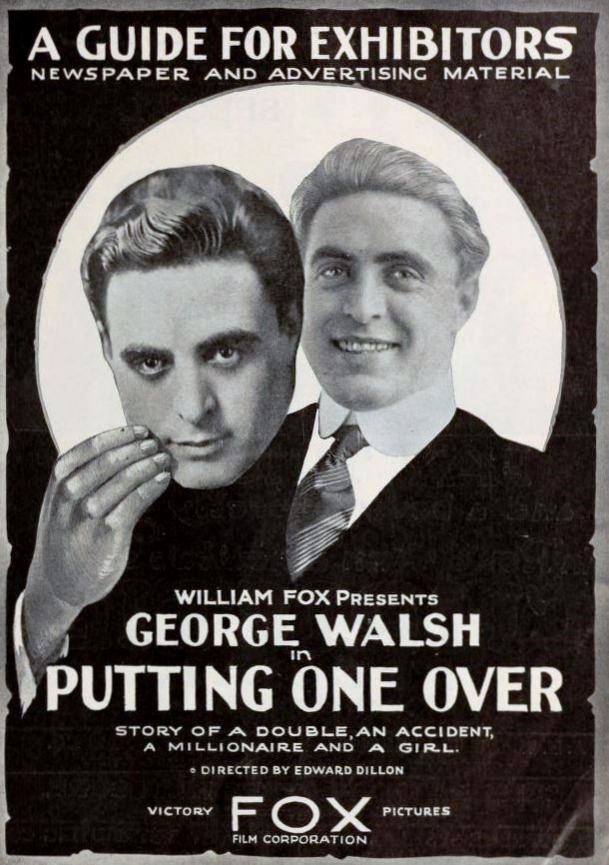
Dir: Edward Dillon
Traveling on a Pullman train are two strangers who, except for a difference in hair color, bear a striking resemblance to each other. Horace Barney, the heir to a fortune, is on his way to a mental sanitarium, accompanied by his unscrupulous guardian Maurice Claypool and Claypool's accomplices, Dr. Wallace and Thomas Farrel. Jack Trevor, an automobile salesman, is substituted for Barney when the train crashes and Barney is killed. When Trevor awakens from his unconscious state, he finds himself in a mansion and addressed as Barney. He falls in love with Helen Townsend, Barney's cousin who is next in line for the inheritance. Trevor realizes the fraud and sets out to save the estate for Helen. Claypool, who wants to marry Helen, tries to declare Trevor insane and commit him to an institution. A series of fights, chases, and misunderstandings ensue, but Trevor finally forces a confession from Claypool and wins both Helen and the fortune.
View DetailsAnalysis relative to A Daughter of the Poor
| Film Title | Atmosphere | Complexity | Similarity |
|---|---|---|---|
| The Embarrassment of Riches | Ethereal | Linear | 95% Match |
| The Winning Stroke | Ethereal | High | 87% Match |
| Sunshine Dad | Surreal | Abstract | 85% Match |
| Sheltered Daughters | Ethereal | Abstract | 90% Match |
| Never Say Quit | Ethereal | High | 96% Match |
This guide was algorithmically generated using the cinematic metadata of Edward Dillon's archive. Last updated: 6/27/2026.
Back to A Daughter of the Poor Details →