
DbcultAccessing Vault...
Recommendations
Senior Film Conservator
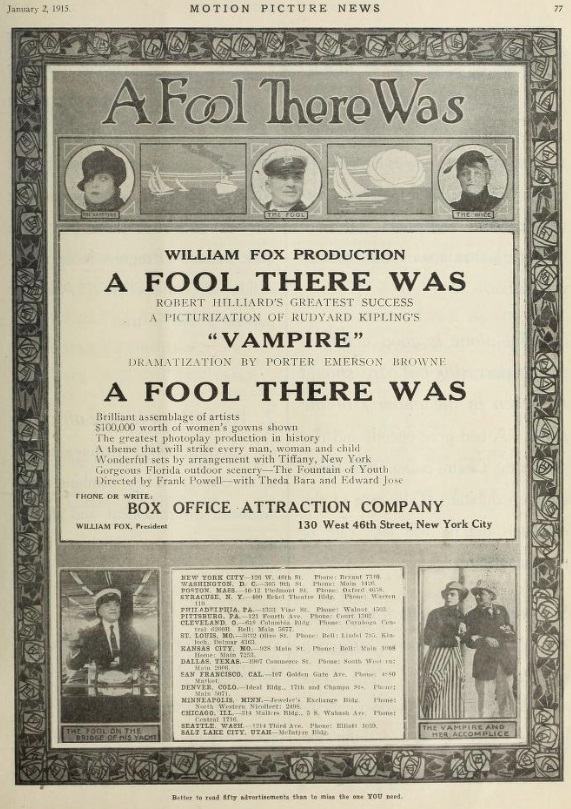
Looking back at the 1915 milestone that is A Fool There Was, the specific cult status of this work is a gateway to a broader cult world. Our archive is rich with titles that mirror the cult status of Frank Powell.
As Frank Powell's most celebrated work, it defines to create a dialogue between the viewer and the cult status.
A married diplomat falls hopelessly under the spell of a predatory woman.
A Fool There Was was a significant production in United States, bringing a unique perspective to the global stage. It continues to be a top recommendation for anyone studying cult history.
Based on the unique cult status of A Fool There Was, our vault has identified these titles as the most compelling follow-up experiences for fans of cult cinema:
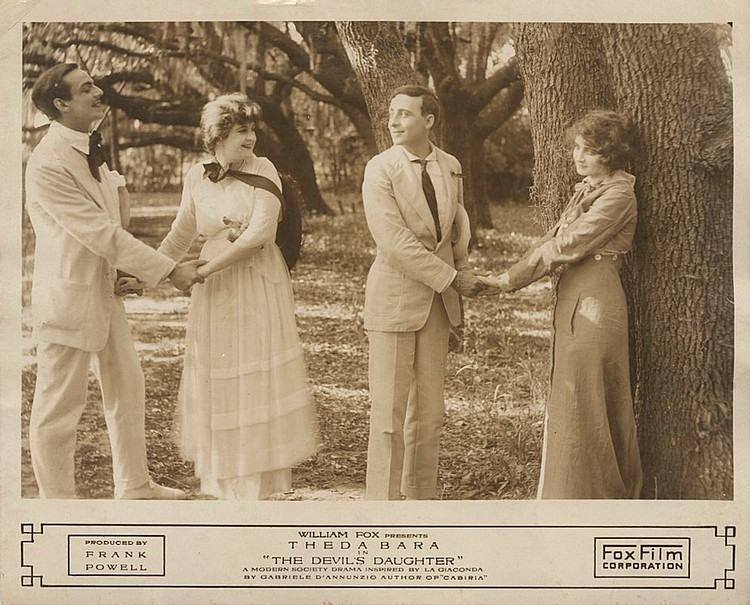
Dir: Frank Powell
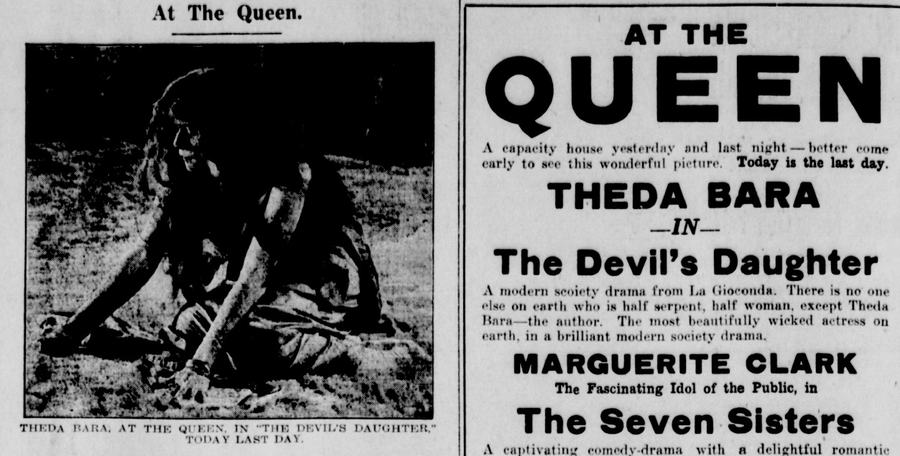
When her lover deserts her, Gioconda Dianti seeks revenge by wrecking the lives of other men. When famous sculptor Lucio Settala meets her and asks her to pose for him, she sets out to ruin him. She captivates the artist with her charms, and he soon forgets his wife Silvia, their daughter Little Beata, and even his work. After Gioconda defies Silvia to take her husband back, Lucio shoots himself in a fit of desperation. Although Silvia nurses him back to health, Lucio soon returns to the enticing Gioconda. When Silvia's subsequent quarrel with Gioconda becomes a fight, Gioconda attempts to destroy Lucio's statue, but it falls on Silvia and is saved. Silvia, however, is crippled for life. Because of this, Lucio's sanity is affected and he becomes a raving maniac. Later, cast aside by her "man of the world," Gioconda also descends into madness.
View Details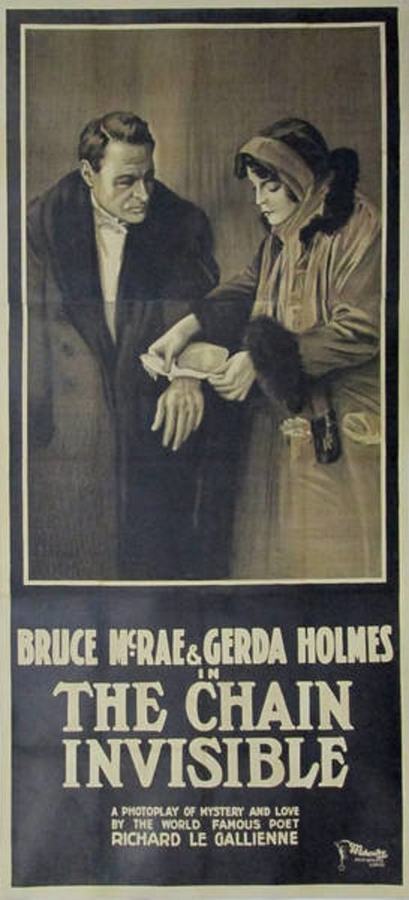
Dir: Frank Powell
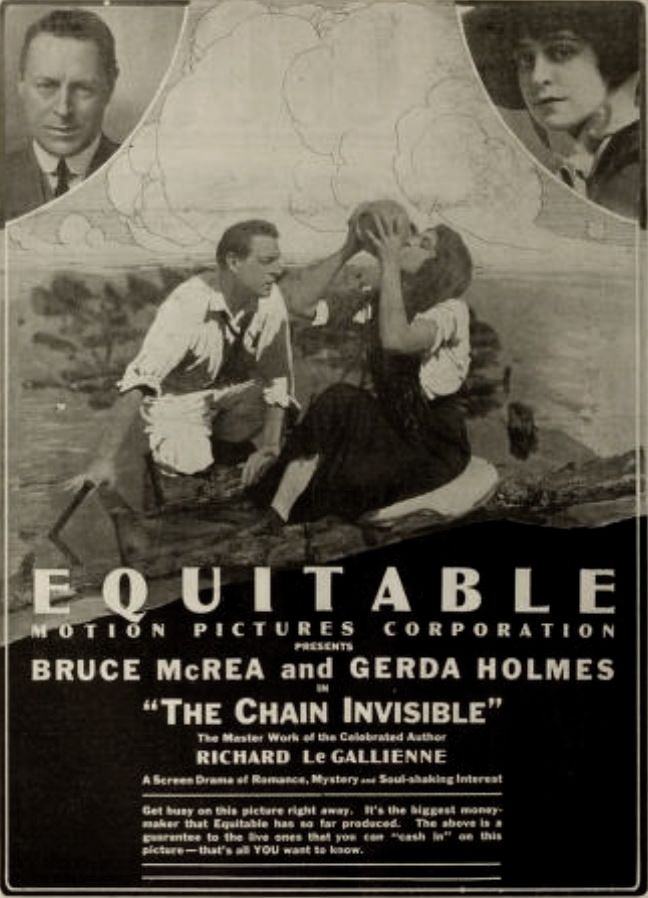
James Wadsworth sets his sights on lovely society girl Anna Dalton and determines to marry her. To achieve that goal, he follows her everywhere she goes, including on a ship to South America. He comes up with a plan to make her love him: he throws her overboard, follows her over the side, and swims with her to a deserted island. His somewhat unorthodox method works and he wins over Anna, but problems arise when Richard Towne, Anna's fiancé who has been searching for her, finds the island and discovers the two.
View Details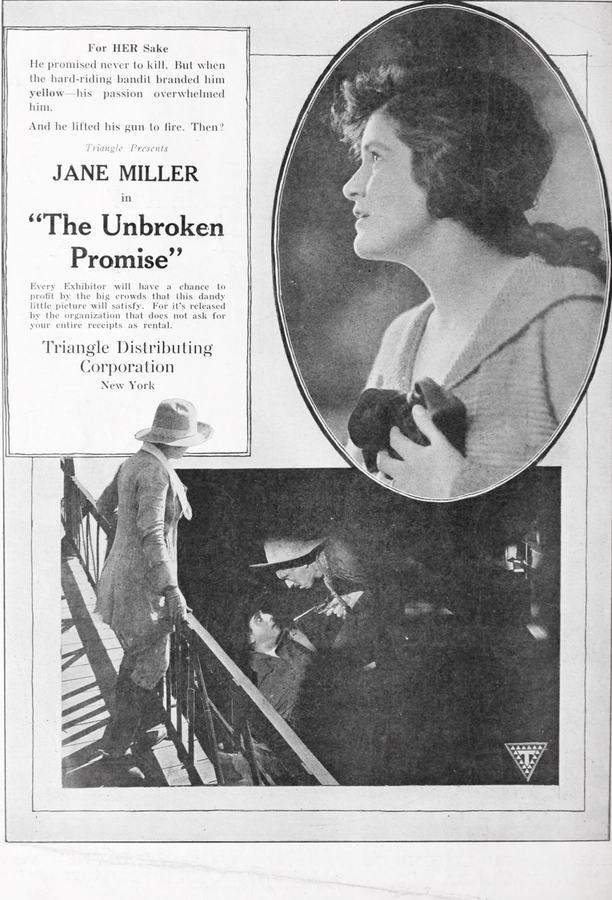
Dir: Frank Powell
Nell Loring, a Texas sheep rancher's daughter, stops a fight between her father and his neighbor John Corliss, a cattleman, who have feuded for years. Although John loves Nell, he keeps it secret when she promises to marry his errant brother Billy if he stops drinking. After John rescues Nell from a runaway horse, though, she confesses that she really loves him. Worried about the feud, Nell makes John promise never to kill anyone. After Billy is wounded in a barroom brawl, John refuses him money until he reforms. Angered, Billy plots with Fadeaway, a cowboy John dismissed, to rob John's safe. John remembers his promise during his subsequent fight with Fadeaway and only punches him soundly. After Fadeaway is killed by the sister of a woman he betrayed, John, believing that Nell killed him, plants evidence to convict himself. Although Billy, now reformed, tries to take the blame, the murderer's written confession frees John to marry Nell.
View Details
Dir: Frank Powell
Travers Gladwin, a young millionaire, returns incognito from abroad with his Japanese servant, Bateato, after cabling his chum Whitney Barnes to meet him that evening at the Gladwin mansion. Al Wilson, a picture thief, arrives from Europe the same afternoon. He has obtained keys to the Gladwin mansion from a dismissed servant of Gladwin's and, parading under the other's name, wins the love of romantic Helen Burton with whom he plans to elope at ten thirty that night. Bateato goes to the mansion at once and excites the suspicions of Phelan, "Officer 666," whom he finally satisfies as to his identity. A few minutes later Whitney Barnes reaches the home, followed shortly after by Travers. This visit is interrupted by the arrival of Helen Burton and her friend, Sadie Small, and Helen explains that she intends that evening to elope with her sweetheart, Travers Gladwin. Amazed at first, Travers scents trouble and then pretends an intimate friendship with Gladwin. Barnes, under the influence of a brilliant idea, takes Sadie aside and advises that she tell her aunt of the proposed elopement. Both girls leave, promising to return at 10:30. Gladwin at once determines upon a plan, brings in "Officer 666," borrows his uniform and, sending Phelan to the kitchen with Bateato, goes into the street, where he purchases a false mustache and returns. Sadie and her aunt call and Gladwin hides, leaving Phelan and Barnes to face the music. After threatening to have them arrested, the two women leave in high dudgeon, the house is darkened and Barnes and Phelan go into the kitchen to entertain themselves in anticipation of Wilson's visit. Promptly at ten, Wilson slips into the house and begins cutting valuable oil paintings from their frames. He is surprised by the sudden appearance of Gladwin in Phelan's uniform and immediately puts the pseudo-policeman to work helping him pack the canvases. Helen arrives and does not recognize Gladwin in his false mustache and policeman's uniform, but when Wilson goes upstairs for a moment, Travers quickly explains the situation, advising Helen to be quiet to avoid scandal. In the meantime the excitable Japanese, Bateato, alarmed at the strange doings, brings a captain and two patrolmen toward the house. Phelan enters the parlor and demands the return of his uniform, explaining the matter to Wilson. Travers dares not tell the truth for fear of implicating Helen for whom he has already formed a strong attachment. Thus Wilson easily brands Gladwin as the real thief. Meantime at Phelan's approach, Helen hides herself in the hallway clothes closet. At this juncture the police enter with the Japanese and Phelan denounces Gladwin. The captain praised Phelan and sends him on his beat. The Japanese, seeing a door partly open, reaches in and drags Helen into the parlor. Barnes, attracted by the noise, enters from the kitchen and a patrolman promptly claps the handcuffs on that unfortunate gentleman, much to his subsequent misery and woe. Helen takes advantage of the confusion to slip into the closet. The situation is further complicated by the arrival of Sadie and her aunt with a half dozen policemen. One of them takes a long look at Wilson, recognizes him as an old offender and steps forward to arrest him. Instantly Wilson throws the room into darkness and jumps unseen into a large chest. The police scamper in all directions, leaving Gladwin alone in the parlor. A moment later Wilson emerges, revolver in hand, and exchanges some pleasantries with Gladwin, who for Helen's sake is anxious that the thief should escape. A fresh wagonload of police arrive and among them Phelan, who, seeing Galdwin at liberty in the parlor, promptly leaps upon him. The captain enters and upbraids Phelan and leaves with Gladwin to search the roof. Wilson takes advantage of the opportunity to step from behind the portieres, chloroform Phelan, don his uniform and toss him into the big chest. Then he calmly walks into the street, informs the wagon-driver that he is wanted inside by the captain, and coolly makes his escape on the driver's seat of the empty patrol. Meanwhile in the library Barnes, still handcuffed, after failing in his desperate effort to embrace Sadie, brings her into the parlor where Travers and Helen are engaged in rescuing the unhappy Phelan. And when Sadie makes a promise to Barnes and Helen to Travers, that wealthy young gentlemen makes another to Phelan, that uniform or no uniform there will always be a job waiting for "666."
View Details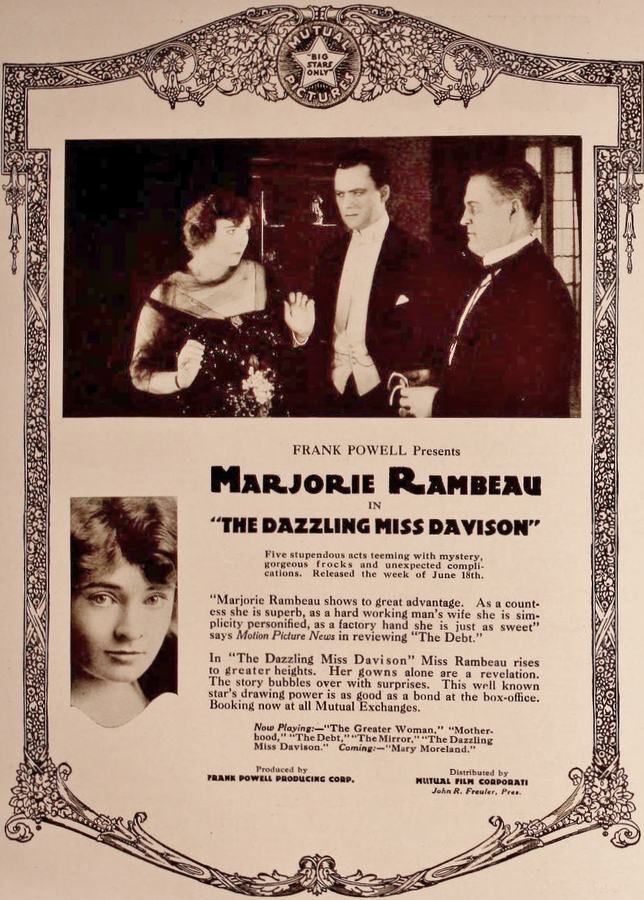
Dir: Frank Powell
Young society rake Gerard Buckland spies a pretty girl walking down the street. As he tries to figure out a way to approach her, he sees a disreputable-looking man surreptitiously hand her a diamond necklace, which she hides on her person before fading into the crowd and disappearing from sight. Later that day he visits a friend's home, and is astounded to meet that same girl. During their conversation she claims that, as a lark, she picks her friends' pockets of valuables and gives them back later--but Gerard doesn't quite buy it. It turns out that she is, in fact, not what she says she is, but not in the way Gerard thinks.
View Details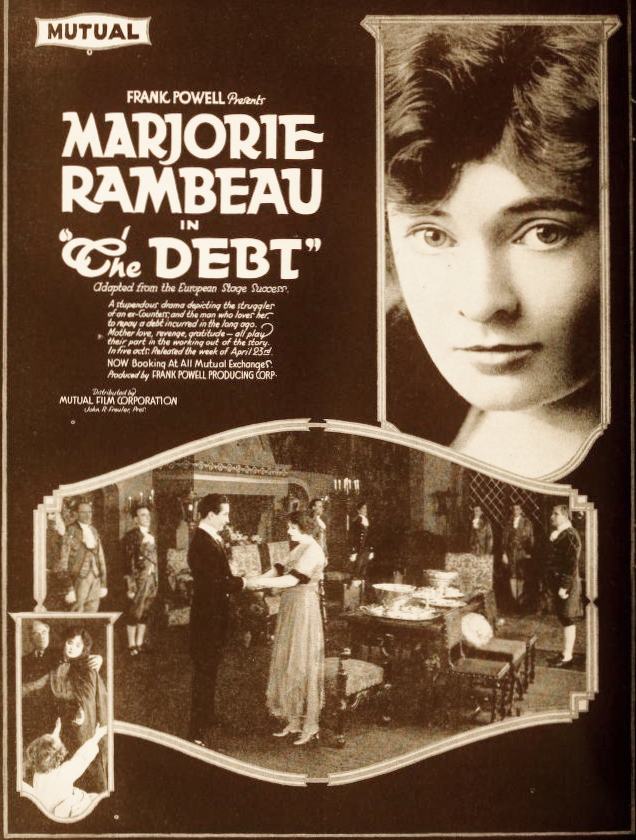
Dir: Frank Powell

A reception given by the Count to celebrate his daughter Ann's engagement to Baron Moreno is disrupted by the news that a mine in which the whole village has invested is worthless. When the Count, who persuaded the townspeople to invest their savings in the venture, commits suicide, the baron jilts the now-destitute Ann. She marries Slater, an American promoter, and they move to the United States, hoping to earn enough to pay off her father's debts, but the baron follows Ann and forces his attentions on her. This provides Slater's mother, who is insanely jealous of her son's love for his wife, with the opportunity to break up their marriage. Slater orders his wife from the house and the baron offers her sanctuary. Ann's baby's incessant crying for her mother forces Slater to attempt a reconciliation, and when he looks for her, he finds her with the baron. In the ensuing fight, both men are mortally wounded. Ann returns to her child; she finds her mother-in-law repentant, and the three return to France to repay the debt.
View Details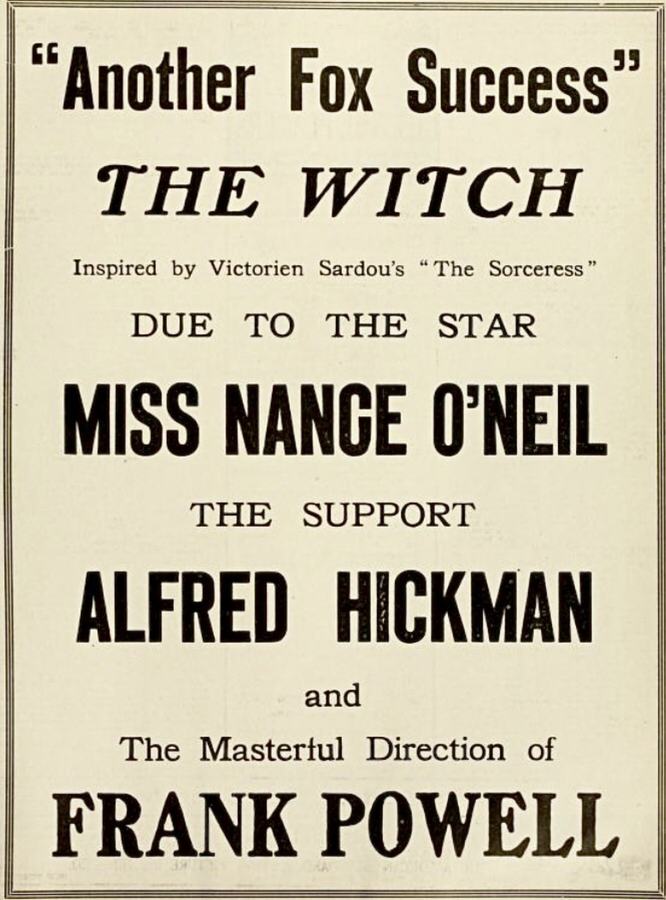
Dir: Frank Powell
Dr. Fernandez is believed by Mendoza, the military governor of Mexico, to possess hypnotic powers. Mendoza is in love with Dr. Fernandez's daughter Zora. When Zora displays no love for him, Mendoza assumes that the father is responsible for the failure of his suit. So great becomes the hatred between the two that when a faction of insurrectionists arises, the doctor places himself at its head and leads it against the Government. Dr. Fernandez is killed in battle. Meanwhile, the Governor's daughter Dolores suffers from somnambulism. While she is anxious to be cure, she dislikes to inform her father or her lover that she is so afflicted. Finally her old nurse makes the fact known to Zora, who possesses the hypnotic power that was her father's. Dolores submits to treatment at Zora's hands and is cured, Zora unaware that Dolores is engaged to Riques--Zora's sweetheart. When she does learn that the wedding day is set, she goes into a rage and contrives to get into the palace by night and hypnotizes Dolores. Shortly thereafter, Zora is denounced as a witch and carried away by an angry mob to be burned at the stake. Just before the torch is applied, the old nurse makes known to the Governor that his daughter has the habit of sleepwalking and is in a trance from which she cannot be roused. She also informs him that only person who can cure Dolores is Zora. At the last instant, the Governor stays the burning of Zora and promises her freedom if she will bring Dolores from her lethargic state. Zora, believing that the Governor is acting in good faith, goes to the palace and awakens Dolores. When she is found to be safe, the Governor goes back on his word and commits Zora to prison. She escapes, however, and Riques, who realizes that he loves Zora more than Dolores, runs away with her. The two are captured after a fight, and in the end Zora is put to death.
View Details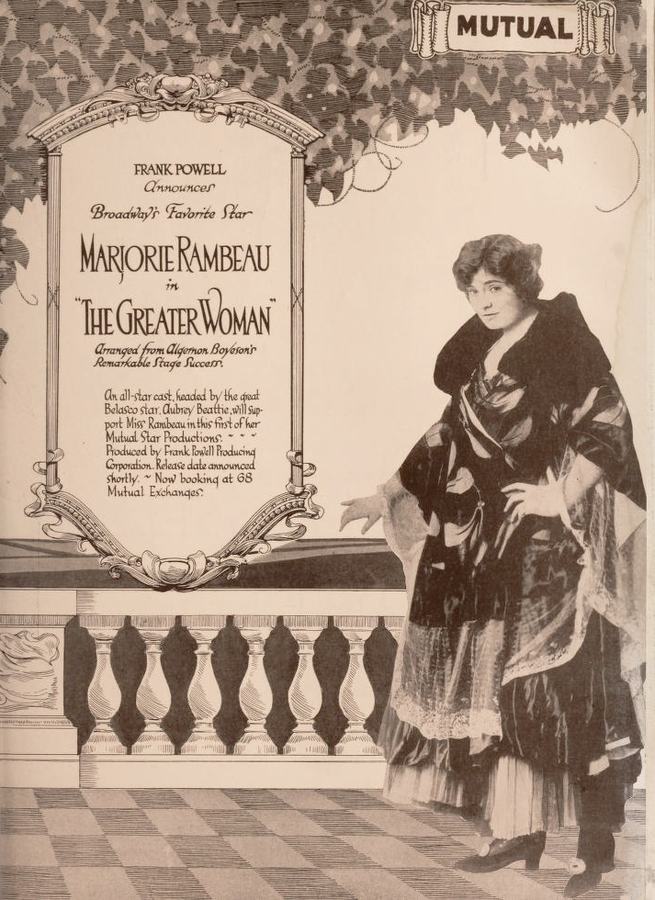
Dir: Frank Powell
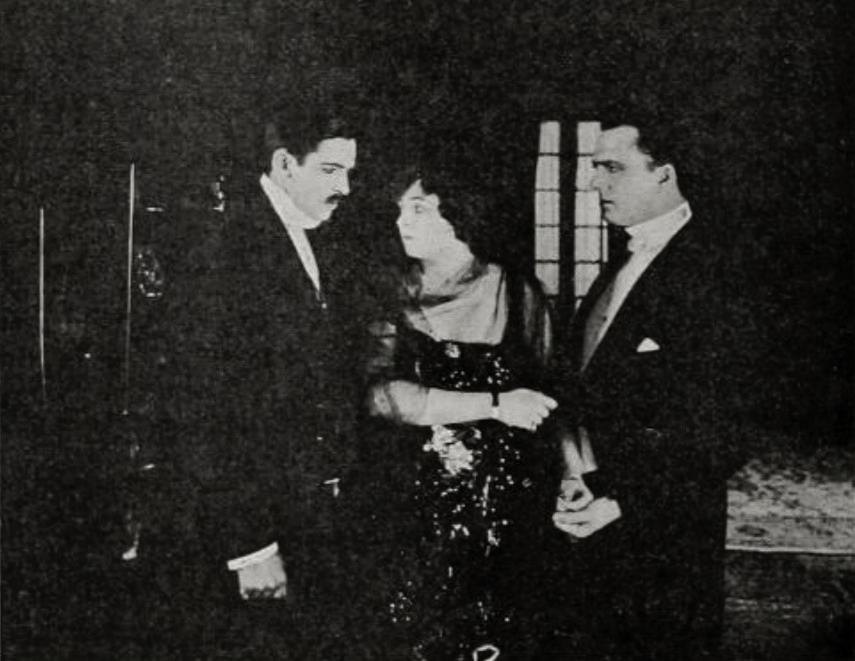
Farmer Leo Bannister is crazy about his neighbor Auriole Praed, but she finds him to becoming on too strong. She travels to Paris to see her brother, and there falls in love with and marries Otto Bettany, a young painter. When the couple return home, Bannister--still carrying a torch for Auriole--plots to claim Auriole for himself by using a beautiful young actress to work her "charms" on Otto and then showing Auriole how untrustworthy her new husband is.
View Details
Dir: Frank Powell
Alaire Austin runs a cattle ranch along the Texas-Mexican border with her corrupt husband Ed. After Texas ranger Dave Law saves her from dying of thirst in the desert, the two fall in love. Mexican bandit Longorio, who longs to possess the beautiful Alaire, orders his men to kill her husband and take control of the ranch. The bandit captures Alaire and forces an old priest to marry them, but before the ceremony can be performed, Dave arrives and secretly marries her himself. The couple escapes and seeks refuge in a little house just inside the Mexican border, but Longorio's men pursue them and set the building on fire. Just in time, a force of United States cavalrymen arrives and conducts the couple across the Rio Grande to safety.
View Details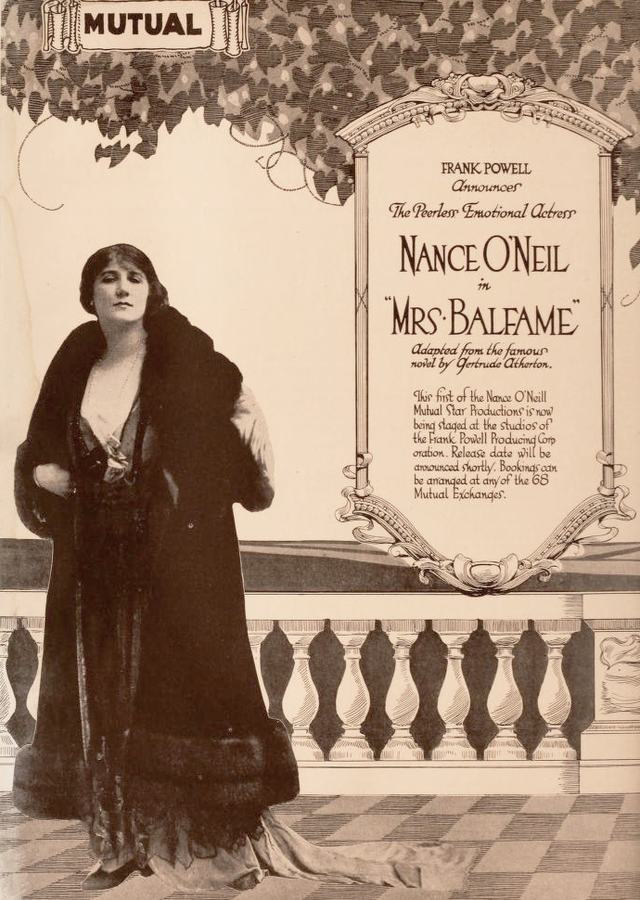
Dir: Frank Powell
Mrs. Balfame is the social leader of the small town of Elsinore, and David Balfame, her husband, is the political leader, a drunken loutish man his wife has hated during their sixteen years of married life. While attending a club meeting Mrs. Balfame listens to a speech by Dr. Anna Steuer, her friend, stating that many of the women on the other side are glad to be rid of their beasts of husbands who made war possible. Later in her home Dr. Steuer shows Mrs. Balfame an untraceable poison. With these two facts in her mind, and urged on by a disgraceful scene at the Country Club caused by Mr. Balfame's drunkenness, Mrs. Balfame decides to kill her husband. Meanwhile, Mr. Balfame has wandered into Old Dutch's saloon and insults the proprietor and his son, Conrad, and also arouses the ire of a tough young man who is dancing with a girl. Discovering that he must go to Albany on political business he phones Mrs. Balfame and asks her to fix him a bracer and pack his grip. She replies that a glass of lemonade and aromatic ammonia will be left on the table for him. Mr. Balfame, still drunk, then starts for home, followed by the young man from Old Dutch's. Mrs. Balfame make a glass of lemonade, putting in the poison, and places it on the table. Then, discovering a man lurking on the grounds, she takes a revolver and hurries out to scare him off. Frieda, the maid of all work, sees Mrs. Balfame leave the house. As Balfame nears the house there is a shot and he falls. Mrs. Balfame rushes in and, still watched by Frieda, pours out the lemonade and rinses out the glass. On the testimony of Frieda and Conrad Mrs. Balfame is arrested, charged with her husband's death. Dwight Rush, a young lawyer who has long been in love with Mrs. Balfame, represents her. Mrs. Balfame does not love Rush, but promises to marry him if he obtains her freedom. Alys Crumley, a young artist, is in love with Rush, and through her jealousy of Mrs. Balfame tells of the conversation she overheard in which Dr. Steuer told Mrs. Balfame of the poison. Dr. Steuer is called as a witness, but is sick in a hospital, and from her dying bed makes a confession that she shot and killed Mr. Balfame because she could no longer see her dear friend abused by the brute. Rush finds his love for Mrs. Balfame has been diminishing as his interest in Alys is strengthened, but goes to claim Mrs. Balfame after the acquittal. Realizing the disparity in their ages, she sends him to seek happiness with Alys Crumley.
View DetailsAnalysis relative to A Fool There Was
| Film Title | Atmosphere | Complexity | Similarity |
|---|---|---|---|
| The Devil's Daughter | Ethereal | Linear | 94% Match |
| The Chain Invisible | Gritty | High | 85% Match |
| The Unbroken Promise | Gritty | High | 88% Match |
| Officer 666 | Ethereal | Dense | 89% Match |
| The Dazzling Miss Davison | Surreal | Layered | 97% Match |
This guide was algorithmically generated using the cinematic metadata of Frank Powell's archive. Last updated: 6/19/2026.
Back to A Fool There Was Details →