
DbcultAccessing Vault...
Recommendations
Senior Film Conservator
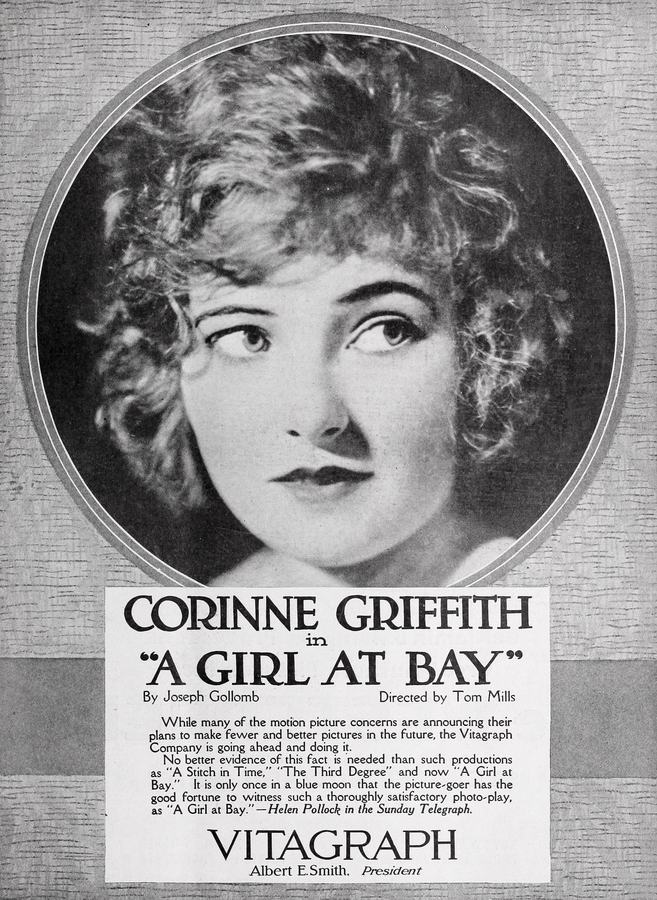
If you found yourself captivated by the artistic bravery of A Girl at Bay (1919), the quest for comparable cinema becomes a journey through the fringes of film history. Below, we've gathered a list of films that every fan of Thomas R. Mills's work should explore.
A Girl at Bay remains a monumental achievement to create a hauntingly beautiful cinematic landscape.
After Mary Allen drops a blood-stained knife, Judge Robert Craigin's dead body lies next to her. Mary secures a secretarial position with Judge Bruce Craigin, the dead man's younger brother. Professor Galt, a criminal psychologist, and Detective Hooker believe that Mary committed the crime. Craigin and Mary fall in love and are married. Galt persuades Craigin to let Mary furnish their new home because a clue to the solving of the murder is the artistic furnishings of the room in which the murder victim was found. The similarity between the decor of the house and the crime room convinces Craigin that Mary murdered his brother, but Thomas Gray confesses to the crime. He had been in the room waiting to avenge his wife's wrongs on Craigin. When Craigin attacked Mary, she lifted her paper-knife and fainted, and Gray killed Craigin, leaving the murder weapon in Mary's hand. Mary and Bruce find happiness together.
Based on the unique artistic bravery of A Girl at Bay, our vault has identified these titles as the most compelling follow-up experiences for fans of cult cinema:
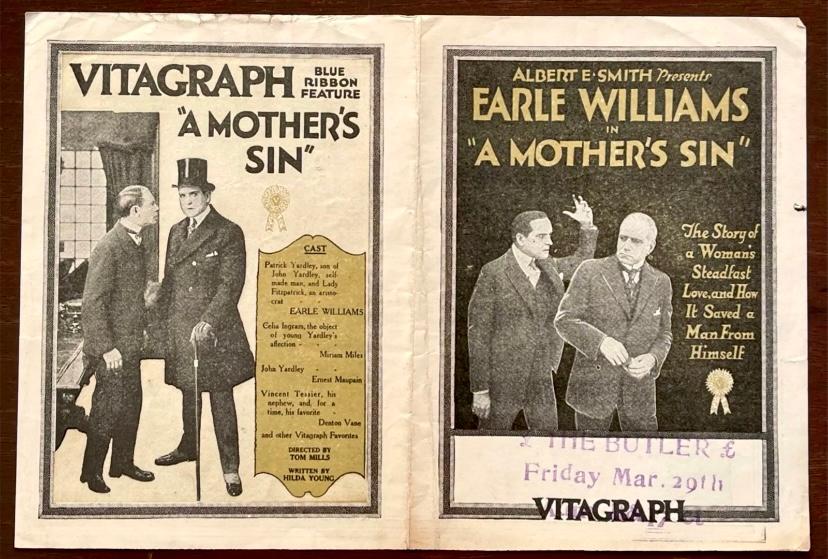
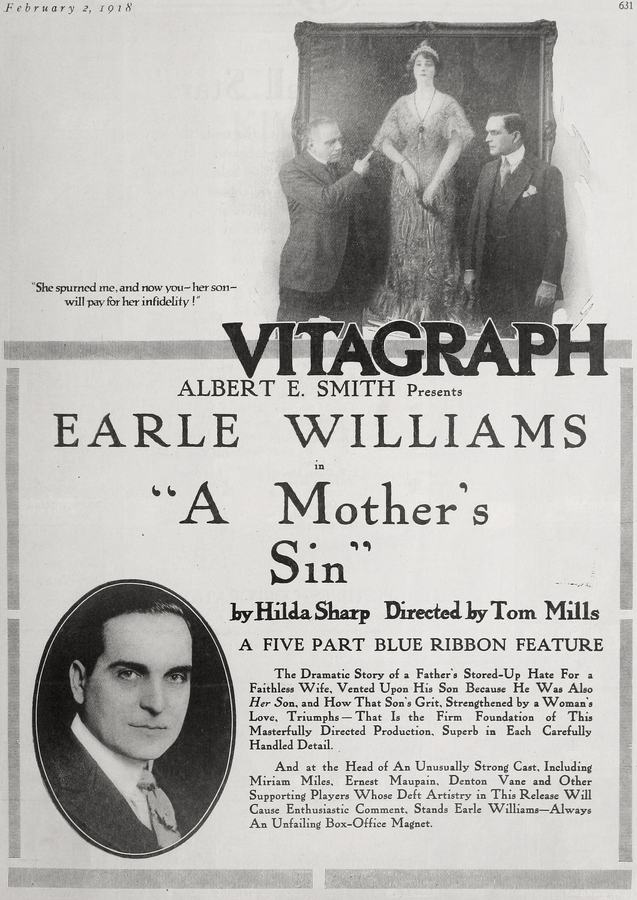
Dir: Thomas R. Mills
Because of his close resemblance to his mother, who years earlier had left his father for another man, Patrick Yardley is shunned and finally disinherited. Yardley, Sr., prefers his young nephew, Vincent Tessier, who has ingratiated himself to the old man, and has been bequeathed his entire estate. Learning that Patrick is penniless, the mother of his sweetheart, Celia Graham, urges her daughter to abandon him in favor of Vincent. Having lost everything, Patrick leaves England, but in his absence, his father discovers that Vincent, masquerading as Patrick, has betrayed a young woman. Remorsefully, Yardley prepares a new will, but because he dies before presenting it to his lawyer, everything is left to Vincent. Later, however, a friend discovers the final will, and Vincent is ousted from the estate and later killed by Maxton, Patrick's valet. Finally, Celia, who loved Patrick all along, joins him.
View Details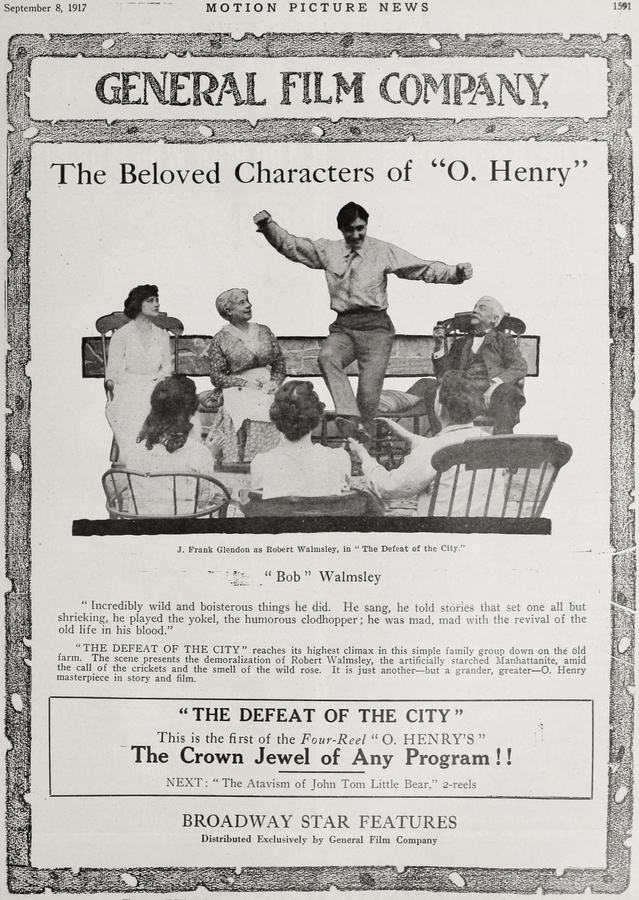
Dir: Thomas R. Mills
Robert Walmsley, at the end of six years in the city, has won fortune, fame, and Alice Van Der Pool, a "daughter of the old burghers, high and cool and white and inaccessible." So Robert feels that he has achieved the ultimate end of success and happiness. Alice finds a letter written to Robert by his mother, a letter straight from home, full of farm lore and gossip. She prevails upon Robert to take her for a visit to the farm. Robert is dismayed at the prospect, fearing Alicia will be shocked at the crudeness of his rural atavism. There his wife sits silent and immovable while Robert cuts ridiculous capers. Alicia presently ascends to her room. Robert, suddenly feeling that he is disgraced in her eves, and that he has been unmasked by his own actions and that "all the polish, the poise, the form that the city has given him has fallen from him like an ill-fitting mantle at the first breath of a country breeze," grows quiet. Presently he follows Alicia upstairs, prepared to meet his fate. He knew the rigid lines that a Van Der Pool would draw She is standing at the window, in the twilight. Robert silently takes his place beside her. "Robert," said the cool, calm voice of his judge, "I thought I married a gentleman," Alicia steps closer to Robert. "But," she continues, "I find that I have married something better, a man. Bob, dear, kiss me, won't you?"
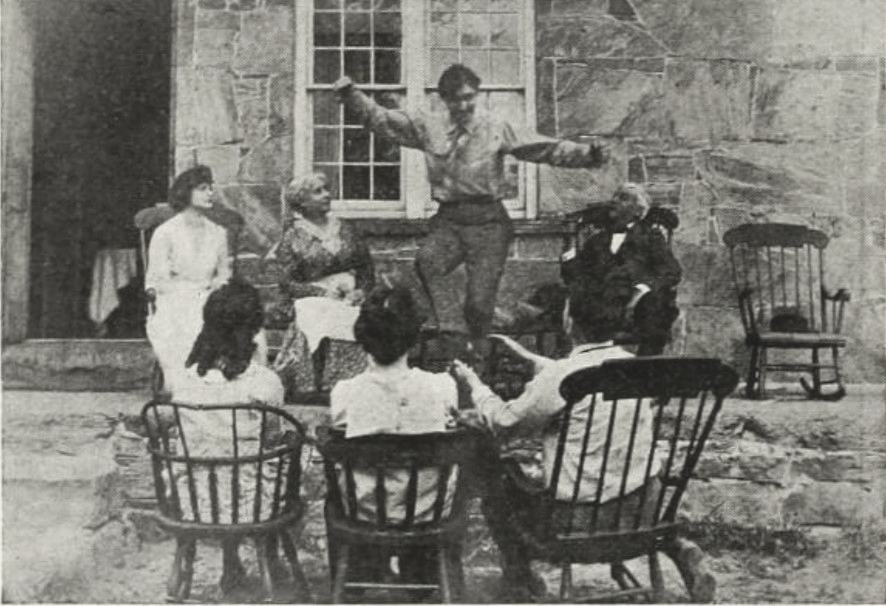
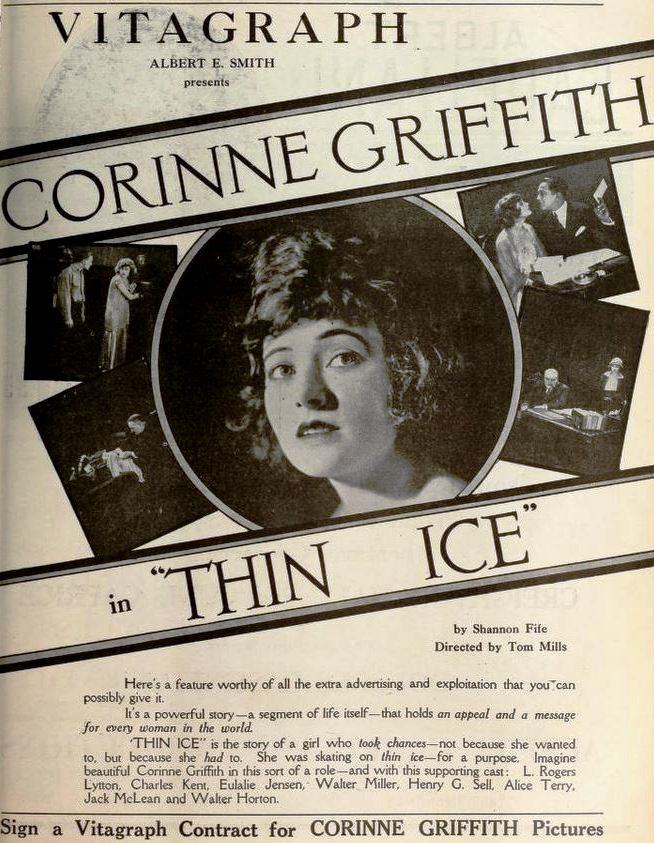
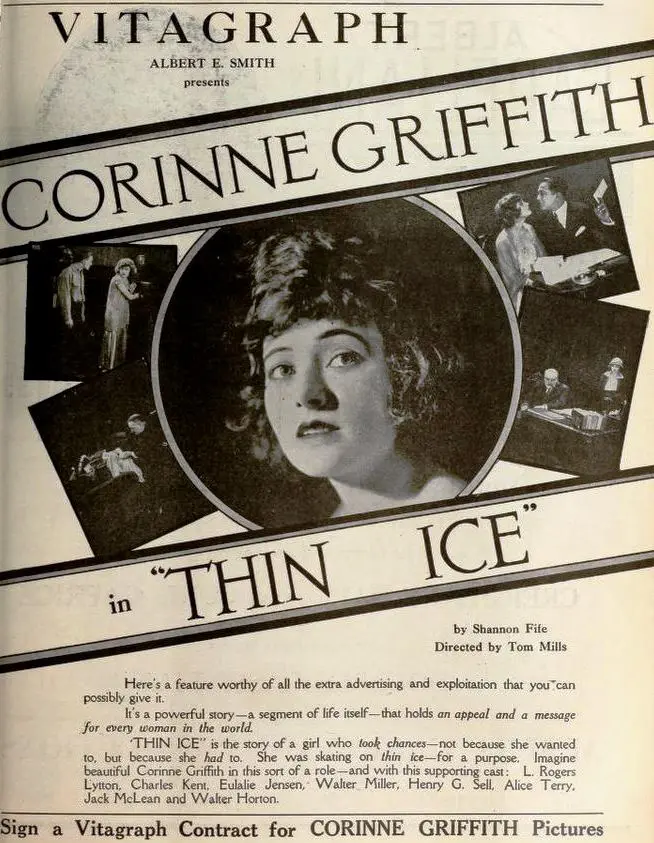
Dir: Thomas R. Mills
When Alice Winton's brother embezzles funds belonging to his employer, Benjamin Graves, a promoter of worthless mining stock, she saves him from arrest by signing over to Graves a hefty promissory note. Later Graves deliberately wrecks the mining company in which Alice's invalid father has invested his money, and the shock from the resulting bankruptcy, kills him. Alice marries Robert Burton, a noted criminologist who believes in the theory, "once a thief, always a thief," and the couple takes up temporary residence with District Attorney Jeffrey Miller. In Miller's safe are incriminating documents concerning Graves's illegal activities, and Graves, knowing of their existence, blackmails Alice into stealing them by showing her some compromising love letters to which he has forged her name. As Alice robs the safe, Ned, who has been arrested for larceny and is now being tested by the reform-minded district attorney, discovers her. After Ned hears of Graves's misdeeds, the burglar alarm sounds, and he and Alice are spotted. Casting suspicion on himself, Ned vows revenge on Graves and flees. Fearful, Alice goes to Graves's apartment, finds him dead just as the police arrive, and is implicated in the crime. At that moment, Rose La Vere, Graves's jilted lover, staggers in and, before dying from self-inflicted poison, confesses to the murder, thus clearing both Alice and her brother.
View Details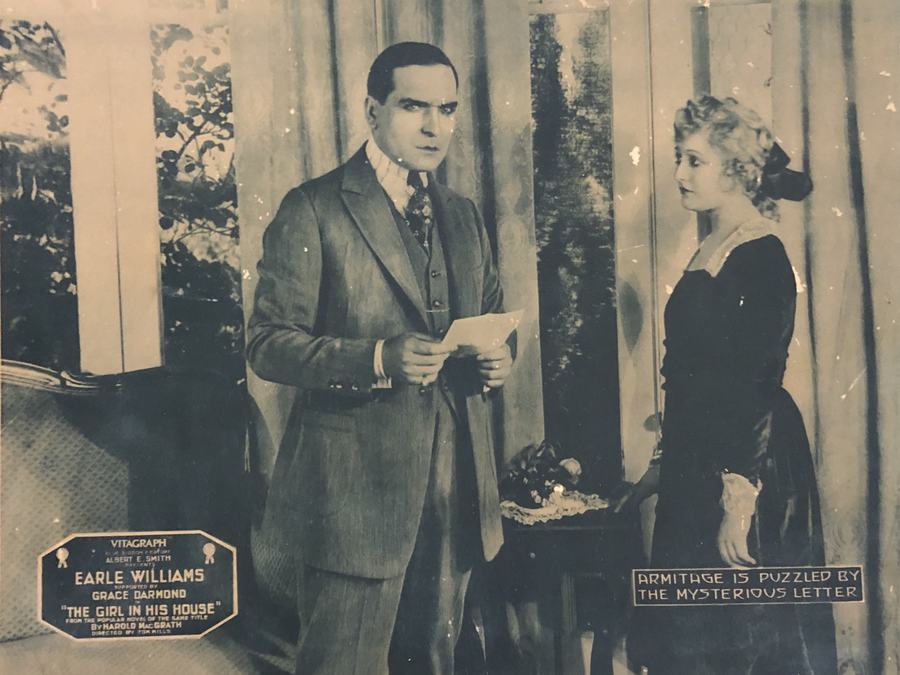
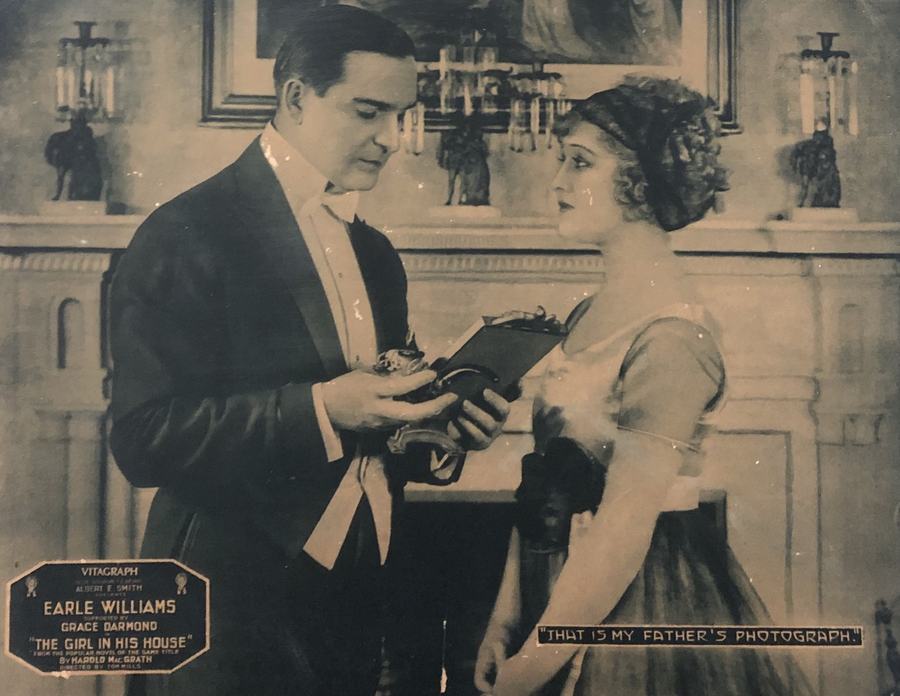
Dir: Thomas R. Mills
When James Armitage, a wealthy young man, is jilted by Clare Wendell, he leaves for Burma after committing the care of his estate to his lawyer. Years later he is informed that Clare is a widow. His old love for her flames anew and he returns to find that the lawyer has absconded with half of his fortune and that his mansion has been sold to the father of Doris Athelstone. Armitage's love for Clare dies, and an investigation reveals to him that the lawyer is in reality the thief and the father of Doris, and that the young girl, who has not seen her father since she was a baby, is under the impression that he is an explorer. In his love for Doris, who is the sole occupant of his mansion, he keeps this a secret, but is impelled to disclose the facts to her when, entering his house for some papers, he is shot by Doris. He starts out to unravel the mystery and locates the father dying in Yucatan. The old man tells Armitage that he stole to keep his daughter from want, and forgiven, he dies happy. Armitage, returning, marries Doris, but keeps secret that her father was a thief.
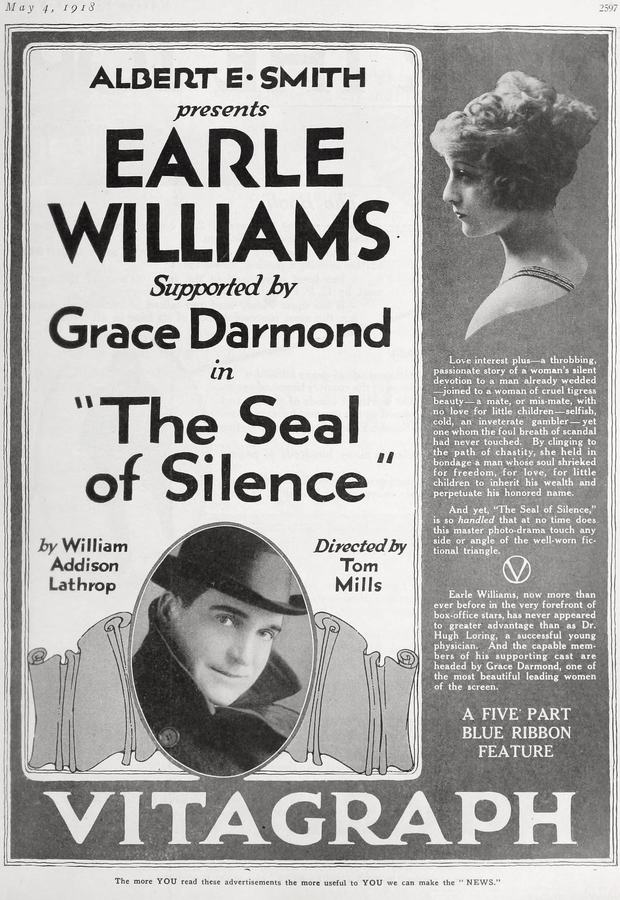
Dir: Thomas R. Mills
Dr. Hugh Loring, whose hobby is heredity, has evolved the theory that physical or mental peculiarities of children reveal the parents. The doctor's intense desire for children is only equaled by his wife's aversion. On the occasion of the doctor admonishing his wife for being friendly with an admirer she leaves him, and when her child is born she swears Ruth Carden, an employee of her husband's, who has accompanied her, to secrecy, so that she may keep from the doctor his greatest joy. Mrs. Loring dies, and Ruth returns to the doctor's office, leaving the child in the care of the nurse. Three years later the nurse finds it necessary to give up the child, and the doctor, who has fallen in love with Ruth, is stunned, for he believes that the child is hers. Dr. Loring subsequently learns that the child is his, and he and Ruth are married.
View Details
Dir: Thomas R. Mills
Even though she's 17, Belinda is tired of being treated like a small child in the small Southern village where she lives with her father, Judge Lee. Out of frustration, she arranges a "growing-up" party, and makes her appearance dressed "to the nines", in a long, elegant gown with her hair and face all made up. That night an Sanford, an escaped convict, breaks into Judge Lee's home, bent on revenge for the judge having sent him to prison. However, both he and Belinda are in for a big surprise.
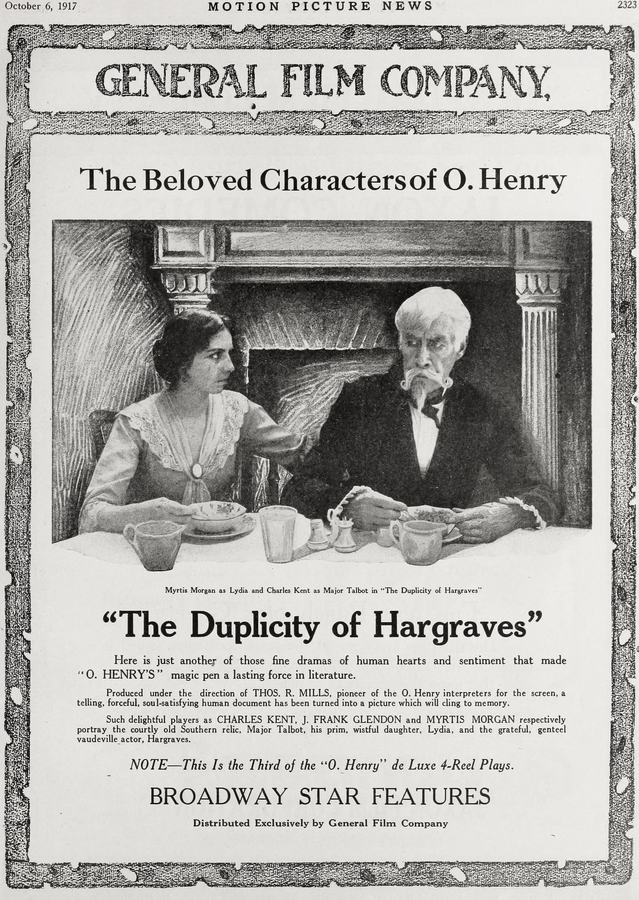
Dir: Thomas R. Mills
Old Major Pendleton Talbot of Mobile moves with his daughter Lydia to Washington, D.C., where he works on his book of reminiscences about Alabama, while Lydia scrimps to keep up appearances. Although the young government clerks ridicule the Major's dress, vaudeville actor Henry Hopkins Hargraves, the Talbots' boardinghouse neighbor, cultivates their friendship and listens attentively to the Major's stories. When a new Southern play opens, the Major splurges and buys tickets for himself and Lydia. Hargraves, playing the lead, imitates the Major's dress, mannerisms, and speech, and delights the audience, while infuriating the Major. He castigates Hargraves, who leaves, to Lydia's dismay. Later, when the Major is broke and refuses to seek a loan, an old slave from the Talbot plantation, Uncle Mose, arrives and gives the Major $300 which, he claims, is payment for a pair of mules which the Major's father gave him. The Major soon finds a publisher for this book, and Lydia gets a letter from Hargraves revealing that he, as Uncle Moses, repaid the Major for his help with the role.
View Details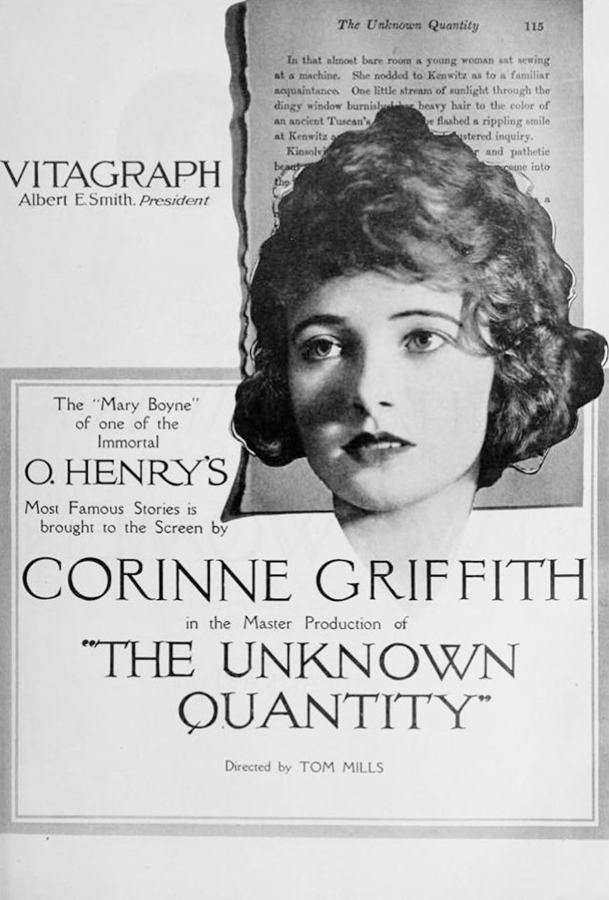
Dir: Thomas R. Mills
Mary Boyne, who made shirts at four dollars a week, had no place for love in her life - only despair and hate for the son of the man who had plunged her family into deepest distress. Peter Kenwitz loved Mary, but because he was a mathematician and a pessimist by trade, his love was as hopeless as her chance for happiness. Dan Kinsolving was the son of the man who ruined Mary's family. He loved Mary and gloried in her hatred for him. He set about moving the problem of turning her hate into love. He let X represent The UNKNOWN QUANTITY in life's greatest problem. Did he win?
Dir: Thomas R. Mills
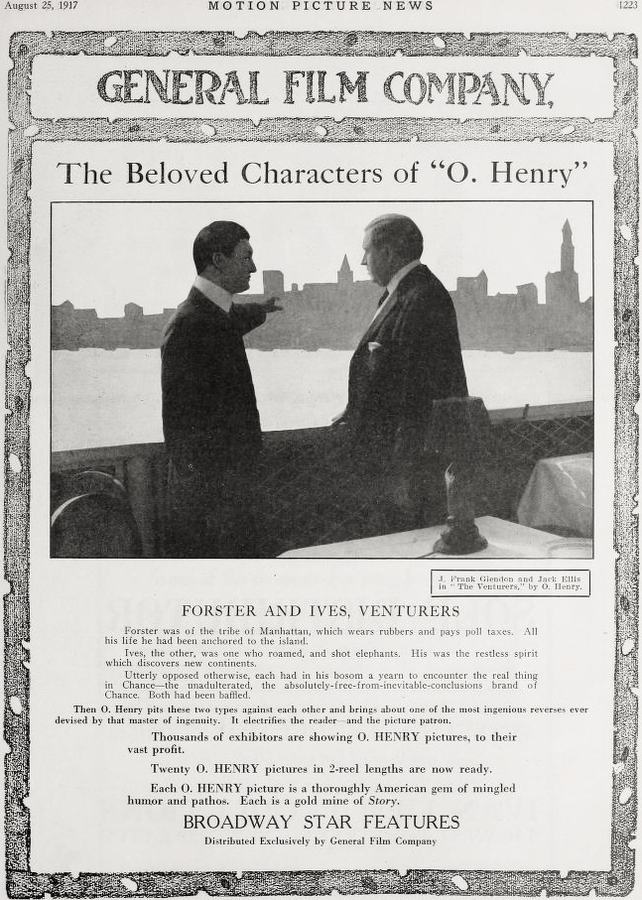
The one was a venturer; the other an adventurer--the one a man who wanted to see adventure, but who had never been beyond the city limits; the other a man who had seen adventure in all parts of the world, and who assured the venturer that things were just as monotonous every place in the world as in the city. So they met, each seeking for the unconventional on a New York street, and dined together as men out of luck, with two cents between them--and still nothing happened. They both had credit at the hotel. Then into their lives came the feminine influence: a sweet girl who lived in a house which was irrevocably a household. The adventurer hesitated--he had yet to satisfy his longing for the incalculable. Suddenly, love changed the venturer into an adventurer, and settled the adventurer into a venturer.
View Details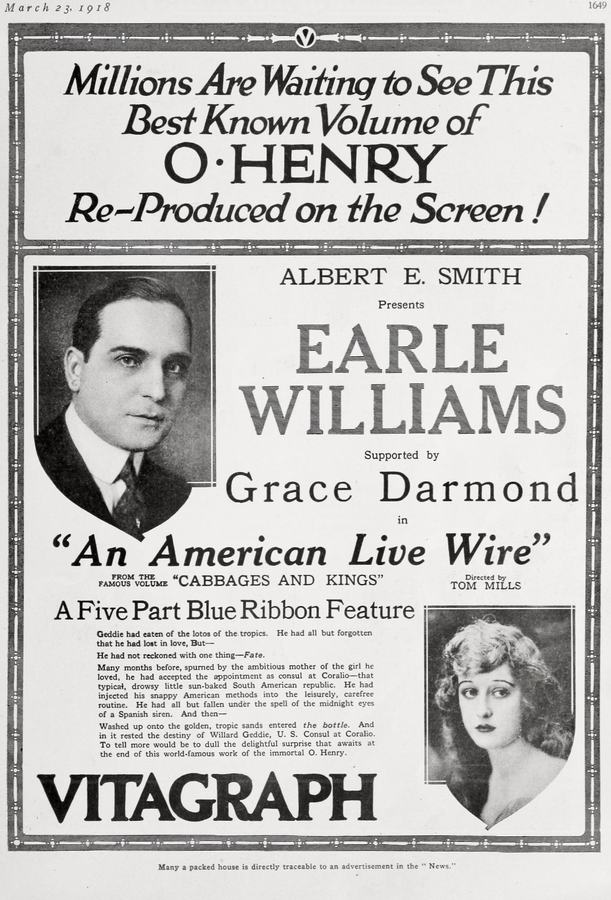
Dir: Thomas R. Mills
When Willard Geddie is told by his sweetheart Ida Payne's fortune-hunting mother that Ida no longer wishes to see him, the heartbroken man leaves New York and accepts an official position in the small South American country of Coralio. He lives an idle life there until news arrives that the President of Coralio and his mistress, an American opera singer, are planning to abscond with the country's treasury. By mistake, Geddie captures the President of an American insurance company who is trying to enter Coralio with embezzled money, after which the criminal commits suicide. Meanwhile, Ida arrives in South America looking for Geddie, but she is erroneously identified as the President's mistress and refused permission to come ashore. A detective from New York later arrests the President and the opera singer, believing them to be the embezzler and his wife. Finally the confusion is cleared up and Geddie returns to New York with the stolen insurance money and Ida.
View DetailsAnalysis relative to A Girl at Bay
| Film Title | Atmosphere | Complexity | Similarity |
|---|---|---|---|
| A Mother's Sin | Surreal | Layered | 93% Match |
| The Defeat of the City | Gothic | High | 91% Match |
| Thin Ice | Surreal | High | 93% Match |
| The Girl in His House | Gritty | Layered | 86% Match |
| The Seal of Silence | Gritty | Abstract | 89% Match |
This guide was algorithmically generated using the cinematic metadata of Thomas R. Mills's archive. Last updated: 6/25/2026.
Back to A Girl at Bay Details →