
DbcultAccessing Vault...
Recommendations
Senior Film Conservator
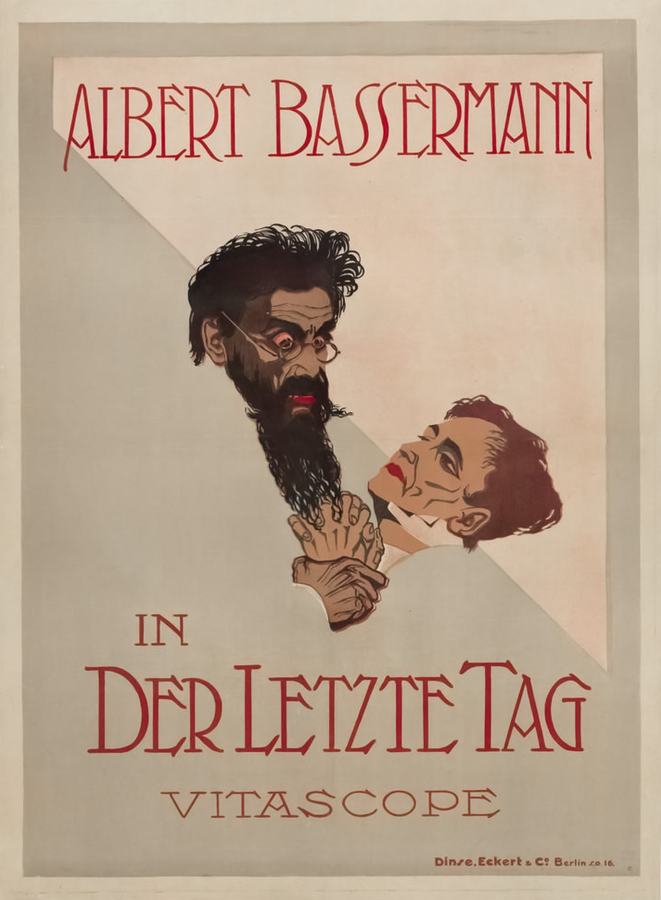
For those who were mesmerized by Der letzte Tag, a true cult masterpiece from 1913, its influence on cult cinema remains a vital reference point for fans today. This list serves as a bridge to other cult experiences that are just as potent.
The legacy of Der letzte Tag is built upon its ability to blend thematic complexity with stunning visual execution.
Based on the unique artistic bravery of Der letzte Tag, our vault has identified these titles as the most compelling follow-up experiences for fans of cult cinema:
Dir: Max Mack
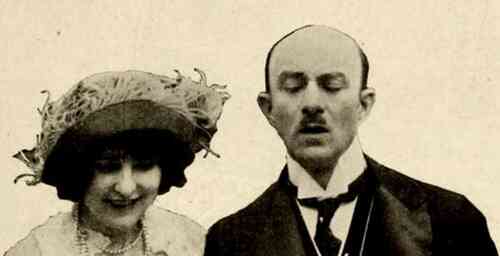
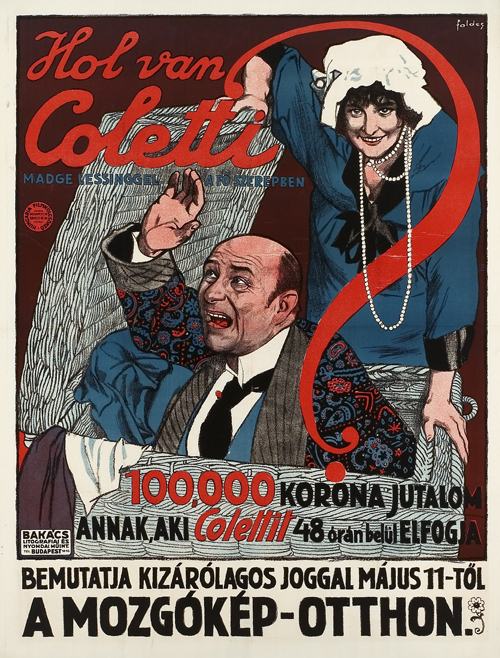
This production tells the story of the famous detective, Coletti, of Berlin. Coletti has taken charge of a bank robbery case, and the editor of the Continental Daily Mail publishes an article in which he chides the detective for mismanagement of the case. As it was known the criminal remained in Berlin for forty-eight hours after the robbery; the article claimed that had Coletti published and distributed inscription of the criminal someone of the millions of inhabitants of Berlin would have captured him. In an open letter to the editor of the paper, Coletti states it is almost impossible to unearth a man hidden away in as large a city as Berlin, and to back up his statement, offers a reward of $25,000 to any person who can capture him within forty-eight hours after a full description of himself, and his photograph, have been printed in every newspaper, and posted all around the city. The challenge is accepted. All the inhabitants of Berlin, except Anton, the barber, and Lolette, Coletti's fiancée, are seeking the detective. Anton disguises as the detective, and Coletti assumes the rough clothes of a street sweeper. Freely mingling with the crowd, Coletti keeps his eyes open for Anton, whom he presently sees boarding a bus. Then a wild mob pursues Anton, but the athletic barber makes his escape by jumping from the fast going vehicle. After running a short distance he sees a Zeppelin airship about to sail away. In a mad jump he succeeds in boarding the airship, which has a good many passengers on board. Taking a seat, Anton calls for a drink, and is very much astonished to find that the waiter who serves him is Coletti himself. Finally a stout lady passenger observes Anton, and feeling confident she has captured Coletti, keeps a firm hold on the collar of Anton's coat. When the airship descends she marches poor Anton off to the editor's office to claim the $25,000. While the mob that has followed the fair stout lady are cheering her to the top of their lungs, Anton calmly removes his disguise, and distributes his business cards, and then they realize they have been tricked. In the meantime, Coletti has constantly mingled with the masses in various disguises. Then a celebrated police dog is put on the trail of Coletti. While Coletti and his sweetheart are enjoying themselves at a nearby café the crowd follows the police dog. The dog is on the scent, tugging at the leash with all his might he makes for the café. As they enter the café Lolette begins to dance, while Coletti goes into an adjoining room and changes back to his own clothing. Time has been flying fast; the mob has been watching in admiration the dancing of Lolette, then the inner door opens and a wild dash is made at the man who enters, Coletti himself, who calmly raising his hand, says, "Yes, you have caught me, but you are five minutes too late."
View Details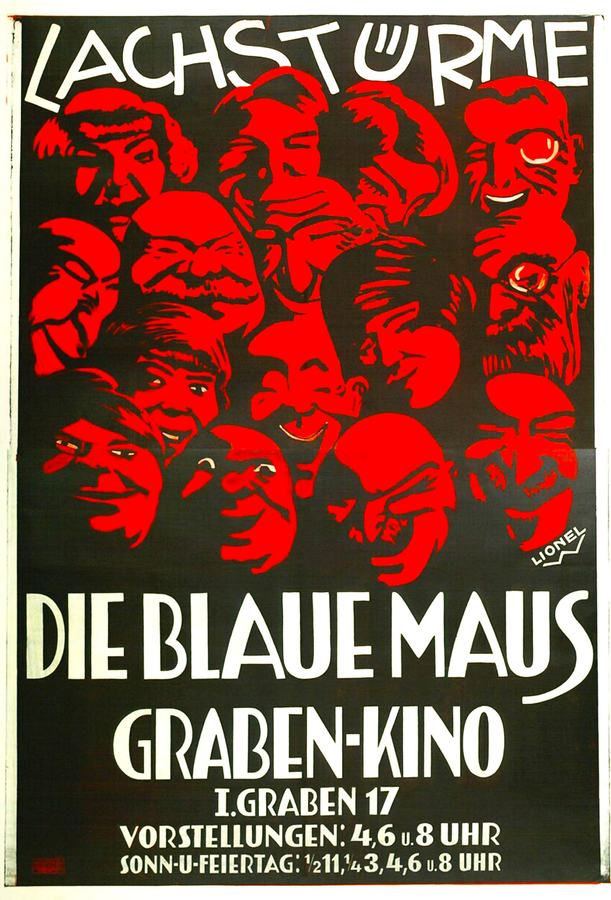
Dir: Max Mack
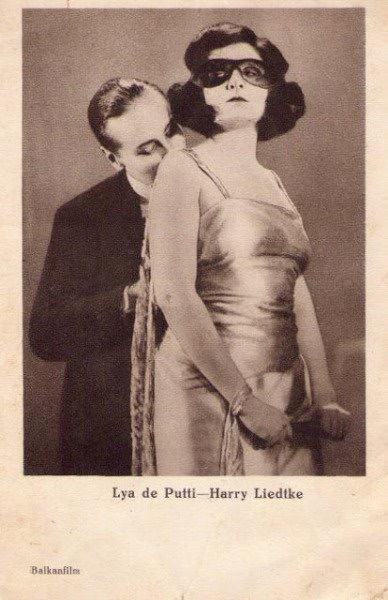
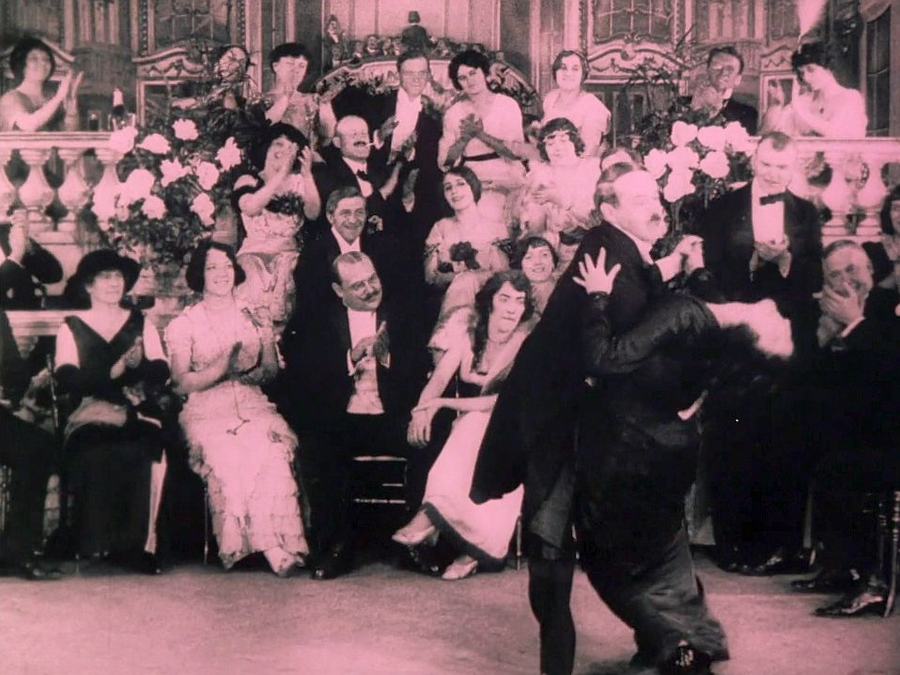
Teddie Barker, an employee of the Searchlight Insurance Company, falls in love with Clara Brummer. Her father does not, at first, acquiesce to the engagement, but after persuasion agrees and attends the marriage of his daughter, and promises a dowry of £5,000 when the young man attains the position of branch manager in his company. Mr. Bock, the director of the insurance company, has a weakness for granting concessions to his employees who have fascinating wives. Bumble, as general factotum, is well aware of this, and when Teddie calls for an interview, he advises him as to the necessary ways and means, and shows the methods of his colleague, John Bains, for advancement. Teddie has a most unsatisfactory interview with the director, and Bumble then advises him that if his wife is prettier than Mr. John Bains', and he will bring her along, his appointment is certain. Teddie is very downhearted, but eventually he is smitten with a brilliant idea. He will persuade one of the habitués of a famous dancing hall to impersonate his wife. Miss Dolly Frivoluse, known to her many admirers as "The Blue Mouse," readily agrees to his proposition, and for a payment of £200 consents to appear as his wife, until she can influence Mr. Bock to promote Teddie to a position as manager. Teddie introduces "The Blue Mouse" as his wife to Mr. Bock outside their offices, and the director is quickly captivated. He insists on driving them to No. 14 Park Street, the home of "The Blue Mouse." The following morning the presence of Mr. Barker is requested by the director, and he is promoted to a higher post, but not yet a branch manager, and occupies the office adjoining his chief. Teddie is in high spirits, and writes to "The Blue Mouse" asking her to come to his office that evening and to bring her photograph. Mr. Bock appears on the scene when the pseudo wife arrives, and he is more than ever enamored with the lady. The wife of another of his clerks sees the frivolity between Mr. Bock and "The Blue Mouse," and follows the lady home and finds out who she is, and promptly writes an anonymous letter to Mrs. Bock, which causes the director's domestic happiness to be disturbed. Teddie and "The Blue Mouse" now arrange that they will endeavor to bring matters to a climax, and a letter is written by Dolly to his director asking that her husband may be sent away, and suggests that she should like to have dinner with him. Teddie is ordered to a northern bank, and Mrs. Bock is advised that her husband will not be home until late. Mrs. Barker's father, Mr. Brummer, is anxious for his son-in-law's success, and calls at his office, interviews the director, and informs him he has just left his daughter's house at 30 Linden Street. Mr. Bock having recently driven to No. 14 Park Street with Teddie and his wife ("The Blue Mouse") a dispute arises as to Mr. Barker's address. The real Mrs. Barker appears opportunely at the office and appeases the excitement of Mr. Brummer, but she is believed to be "The Blue Mouse" by Mr. Bock. Mr. Barker returns and is upbraided by Mr. Bock for his infidelity to his wife. Complications are now approaching a crisis. The plot moves to the residence of "The Blue Mouse." Mr. Brummer arrives at her house to clear the doubts in his mind as to his son-in-law's address and is satisfied that there must be two "Teddie Barkers." Mr. Bock now appears and is cajoled by Dolly into signing a letter appointing Mr. Teddie Barker a branch manager, and thus fulfills her part of the contract. "The Blue Mouse" is in debt and a sale of her furniture takes place, which is surely on novel lines. A band and light refreshments to entice prospective buyers and some amusing scenes are enacted when Mrs. Barker and Mrs. Bock attend the sale while their husbands are endeavoring to hide from them in the house.
Dir: Max Mack
A fascinating piece of cinema that shares thematic elements.
View Details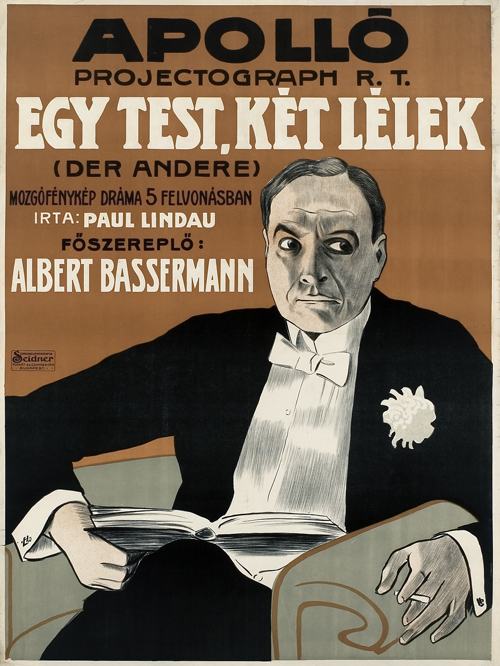
Dir: Max Mack
A man has an accident while out riding his horse one day. He soon discovers that he now has a split personality, and that his alternate is helping a criminal to rob his house.

Dir: Max Mack
A fascinating piece of cinema that shares thematic elements.
View Details
Dir: Max Mack
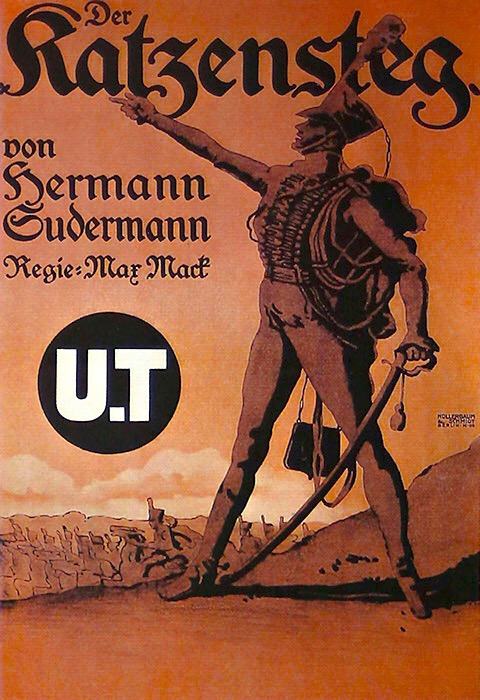
Three charming sisters vow to one another eternal adherence to the blessing. of single life. Augusta, ring-leader of the three, is particularly violent toward the sterner sex. She looks for a position, obtains several, but resigns them because of the unwelcome attentions forced upon her by various men. Meantime her sister Ethel gives music lessons in their apartment, while Clara, the third sister, a medical student, secures a position as assistant to young Doctor Squibb. In the same apartment house with the sisters lives a girl who is receiving attentions from Carl Waldeck, a young attorney. Her father has forbidden the young man to call upon her. Carl calls upon her one day and barely manages to escape the angry father. He seeks refuge in the apartment of the three sisters and entreats them to permit him to stay there to avoid his pursuer. To get rid of him they make a bridge of their ironing-board. On this he escapes through a window into another flat. The morning after Augusta receives her answer to a position in an office of two attorneys. She makes such a good impression upon Mr. Speck, one of the attorneys, that she secures a position. Here she undergoes the same annoyances that she has received before, which only ends when she knocks the office manager down. This causes him the loss of his position. She is now promoted to his position and requests that her former position be given to her sister, Ethel. Mr. Speck consents. Ethel makes a hit with the office clerk. Clarence Hallroom, a confirmed bachelor. He and Ethel make eyes at one another and are intercepted by Augusta, who asserts her authority and puts a stop to the lovemaking. One day Carl returns from his vacation to his work, and is recognized as the ironing-board tourist. The beauty of Augusta has made a profound impression on him but in seeking to obtain from her a corresponding feeling he receives a rebuff. He decides to teach her a lesson. He arouses her jealousy by a flirtation with Ethel. Augusta resigns her position and leaves and compels poor Ethel to leave with her. Clarence cannot forget her and seeks an excuse to call upon her. Freed from the grim censorship of Augusta, they shortly come to an understanding. A little later Augusta, now returning to her home, receives a call from Waldeck. As she will not admit him by the door, he enters the apartment through the window by means of the ironing-board. His eloquence sweeps away the last vestiges of her old-time man-hate, and she also becomes engaged. That very same day the charming Clara joins the ranks of the brides-to-be becoming engaged to Dr. Squibb.
Dir: Max Mack
A fascinating piece of cinema that shares thematic elements.
View Details
Dir: Max Mack
A fascinating piece of cinema that shares thematic elements.

Dir: Max Mack
A fascinating piece of cinema that shares thematic elements.
View Details
Dir: Max Mack
The Maharaja of Odhapur goes on a trip to Europe and meet the young dancer Ellen Esmond. In her London accommodation, the Savoy Hotel, the prince can prove to be a gallant gentleman and protect Ellen from an intrusive theatrical agent.
View DetailsAnalysis relative to Der letzte Tag
| Film Title | Atmosphere | Complexity | Similarity |
|---|---|---|---|
| Where Is Coletti? | Tense | Linear | 93% Match |
| The Blue Mouse | Surreal | Dense | 88% Match |
| Die Fledermaus | Surreal | Abstract | 97% Match |
| Der Andere | Gritty | Abstract | 95% Match |
| Die Tangokönigin | Gothic | Abstract | 91% Match |
This guide was algorithmically generated using the cinematic metadata of Max Mack's archive. Last updated: 8/17/2026.
Back to Der letzte Tag Details →