
DbcultAccessing Vault...
Recommendations
Senior Film Conservator
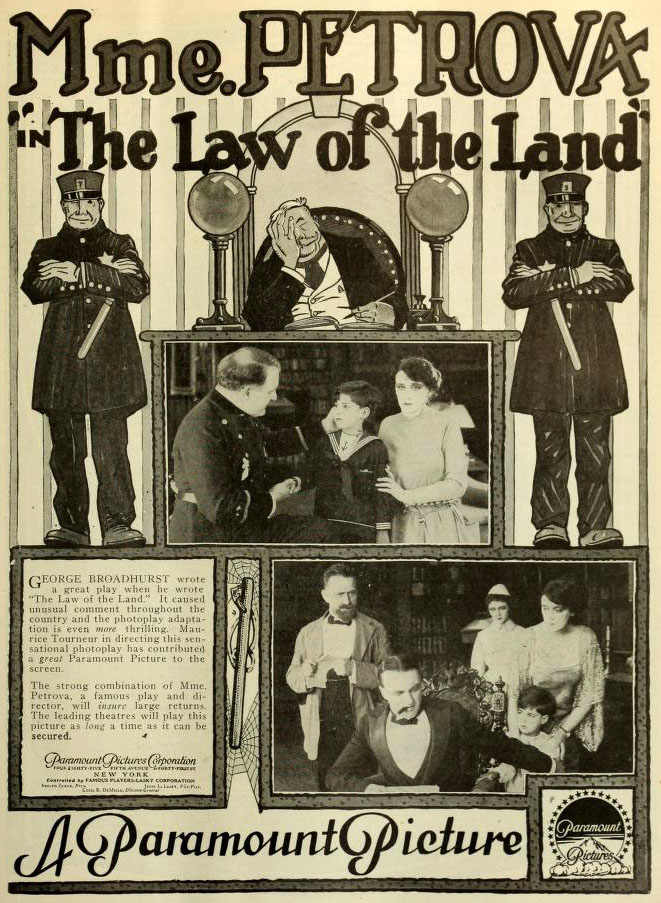
In the vast archive of cult cinema, Law of the Land stands as a unique vision beacon, the narrative complexity found here is a rare find in the 1917 landscape. From hidden underground hits to established classics, these are our top picks.
Few films from 1917 manage to capture to explore the darker corners of the human condition with unique vision.
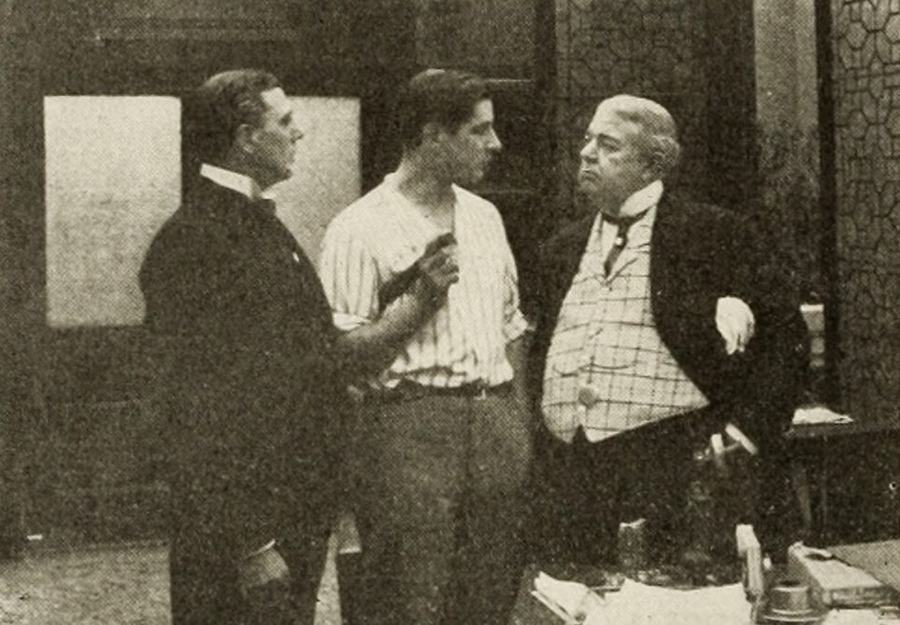
In order to save her mother from disgrace, Margaret marries Richard Harding even though she really loves Geoffrey Morton. Five years later, the Hardings have a little son, and Margaret's life has been made almost unbearable by her husband; she lives for nothing but her son. Morton, returning after an absence of two years, learns that Harding has made some false accusations against him and goes to his home to demand a retraction. While there, he witnesses an exhibition of Harding's cruelty as he whips his little son. After Morton leaves, Harding threatens to beat the boy again, and Margaret tells him that she will shoot him if he does. Harding defies Margaret's plea, and she carries out her threat. Together, Harding's secretary and Margaret place the revolver so that it will appear to be a suicide, but the police are not deceived. After a desperate defense by her lawyers, however, the death is ruled accidental and Margaret is free to begin life anew.
The influence of Maurice Tourneur in Law of the Land can be felt in the way modern cult films handle unique vision. From the specific lighting choices to the pacing, this 1917 release set a high bar for atmospheric immersion.
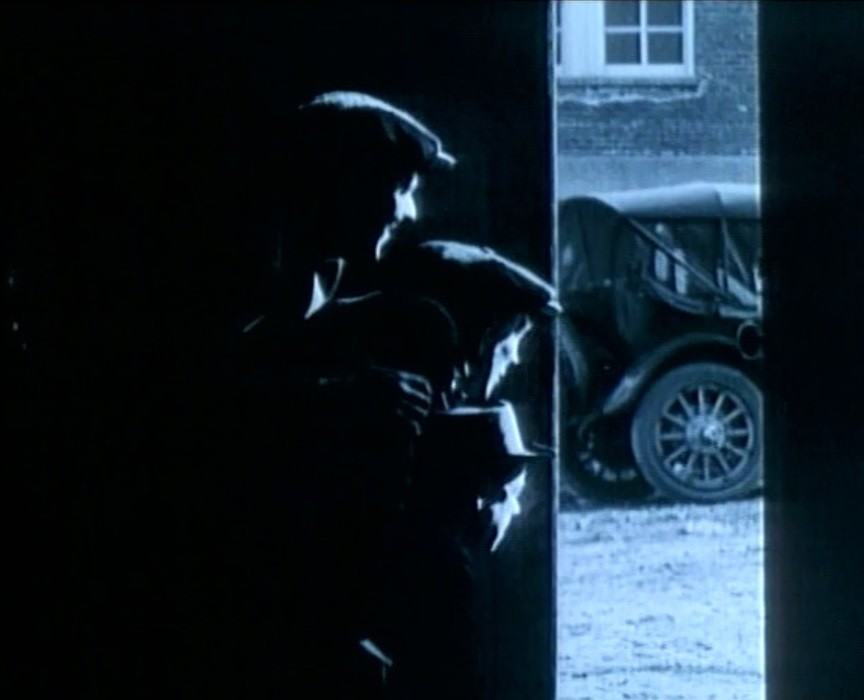
Based on the unique unique vision of Law of the Land, our vault has identified these titles as the most compelling follow-up experiences for fans of cult cinema:
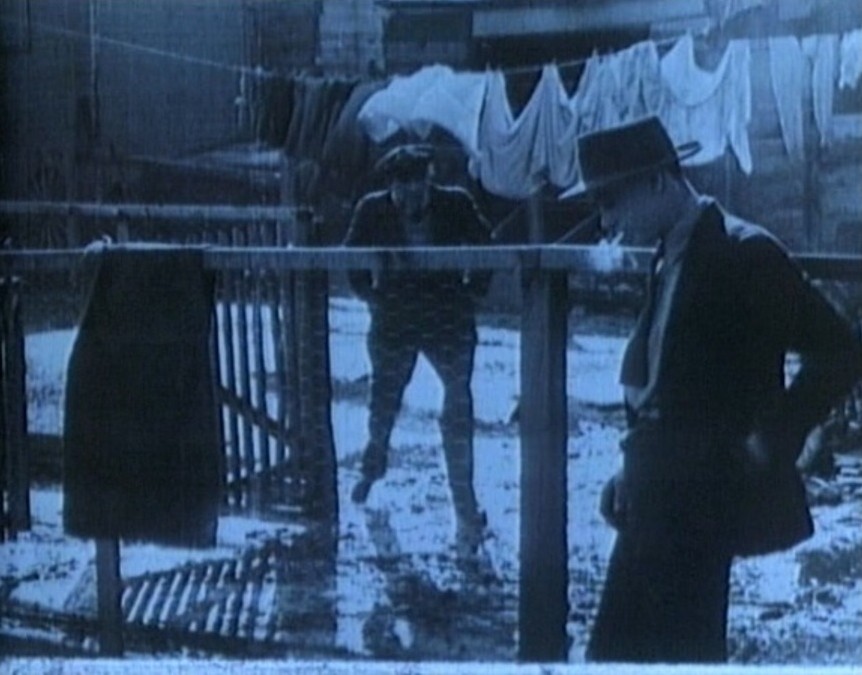
Dir: Maurice Tourneur
After robbing a bank, a criminal is wrongfully pardoned from prison.
View Details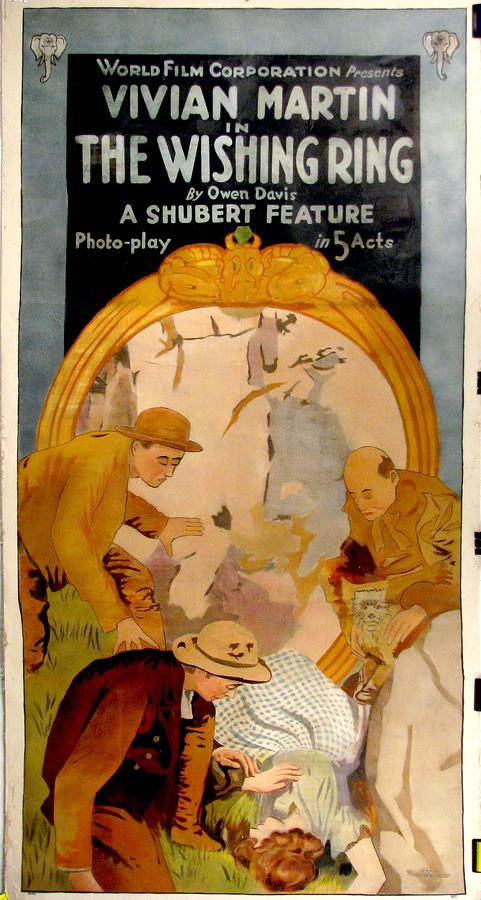
Dir: Maurice Tourneur
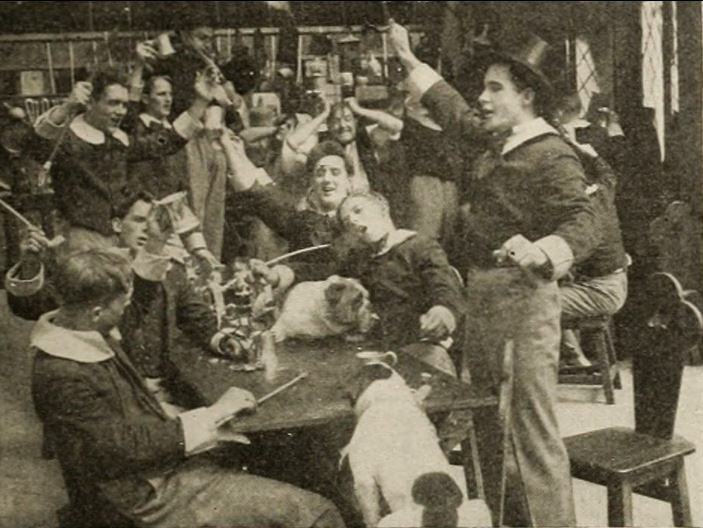
After being expelled from college, Giles runs away from home and meets and falls for a young lady.
View Details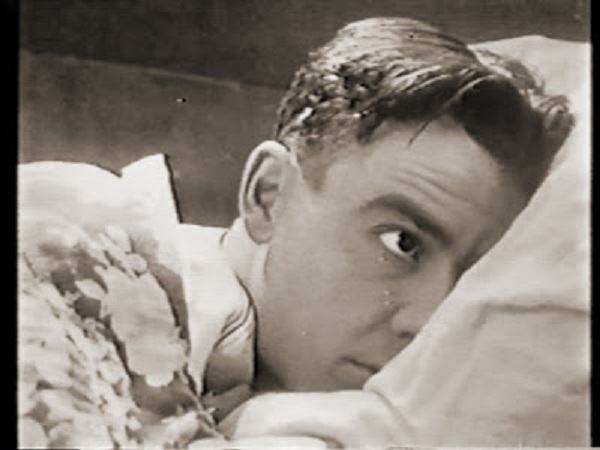
Dir: Maurice Tourneur
Editor of the Louisville Gazette sends happy-go-lucky cub reporter Steve Oldham to cover a feud in the hills that began when Jim Renlow's pig was caught eating Bill White's turnips. Although Steve tries to remain impartial, he falls in love with schoolteacher Alice Renlow. At a "Truce Dance" given to raise money for Alice's salary, Steve drinks too much and innocently kisses Peggy White, who then tells her relatives that they are engaged. Later, when Steve is seen kissing Alice's hand, the Whites take Steve captive and plan to shoot him at sunrise. Alice pleads with Tilden White, who loves her, to allow Steve to escape, but he agrees only if Steve will leave alone. When Steve refuses, Alice confesses her love. They fight until the house which they are occupying is destroyed and the cavalry, notified by Steve's newspaper, arrives. The two sides are now reconciled as Steve and Alice prepare to marry.
View Details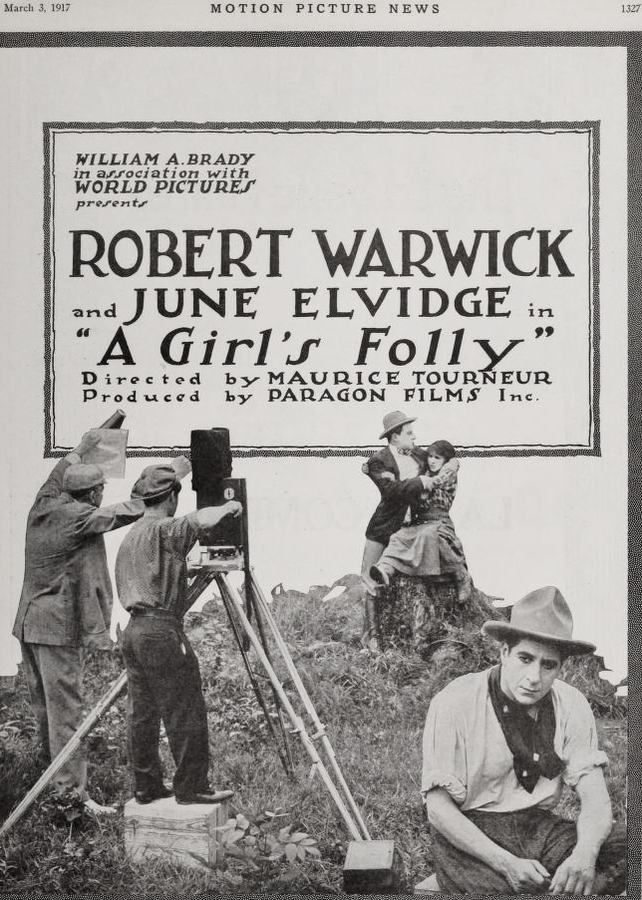
Dir: Maurice Tourneur
A restless young girl yearns to leave her rural environment and "get away from it all." One day she stumbles upon a film crew shooting a Western near her home. She makes friends with the film's leading man, who encourages her to try her luck as an actress, so she leaves her small town and goes to the big city to break into the picture business. However, things don't turn out quite the way she planned.
View Details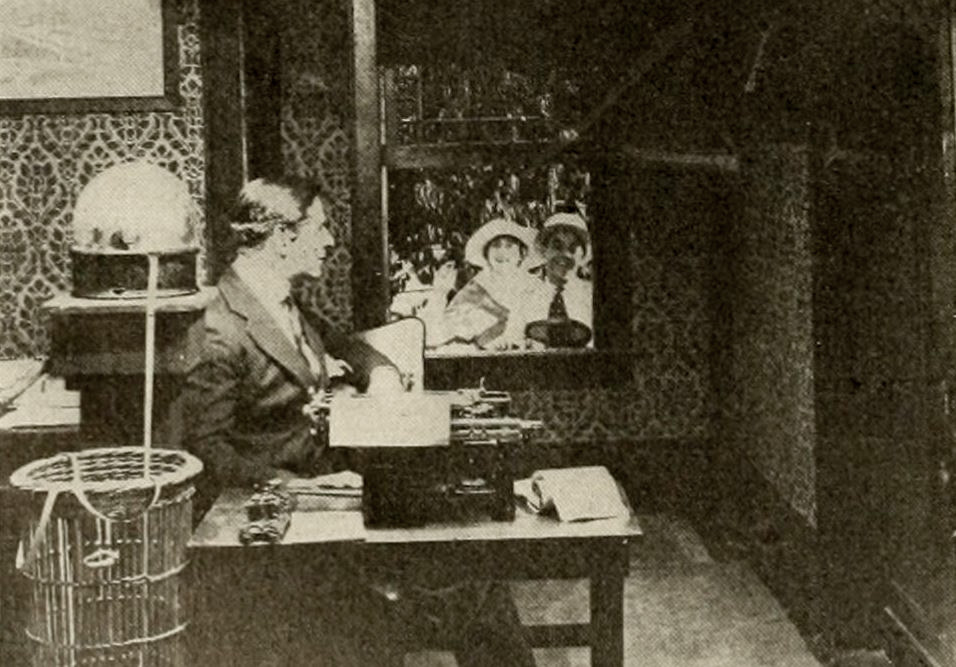
Dir: Maurice Tourneur
When he is ruined by speculating in the stock market by bogus tips given to him by Charles Wainwright, George Garrison commits suicide, but before his death he begs his son Henry to avenge him. Henry goes West and makes a fortune prospecting, then returns to New York and assumes the name of Henry Thompson. He becomes Wainwright's protege and falls in love with his daughter Dallas, then is elected mayor of New York, backed by Wainwright's friend, political boss Richard Horrigan. In return for Wainwright's support, he is supposed to sign a franchise binding the city to the financier's railway. Henry refuses, so Wainwright and his flunkies attempt to discredit him by dredging up an old murder charge, but the charge is proved false when the supposed victim, Henry's partner Joe Standing shows up. Finally, Henry confronts Wainwright, accuses him of causing his father's death and of attempting to defraud the city. Despite his denunciation of her father, Dallas proclaims her love for Henry. In an epilogue, the hands of the victims of political boss Horrigan clutch at him from the grave.
View Details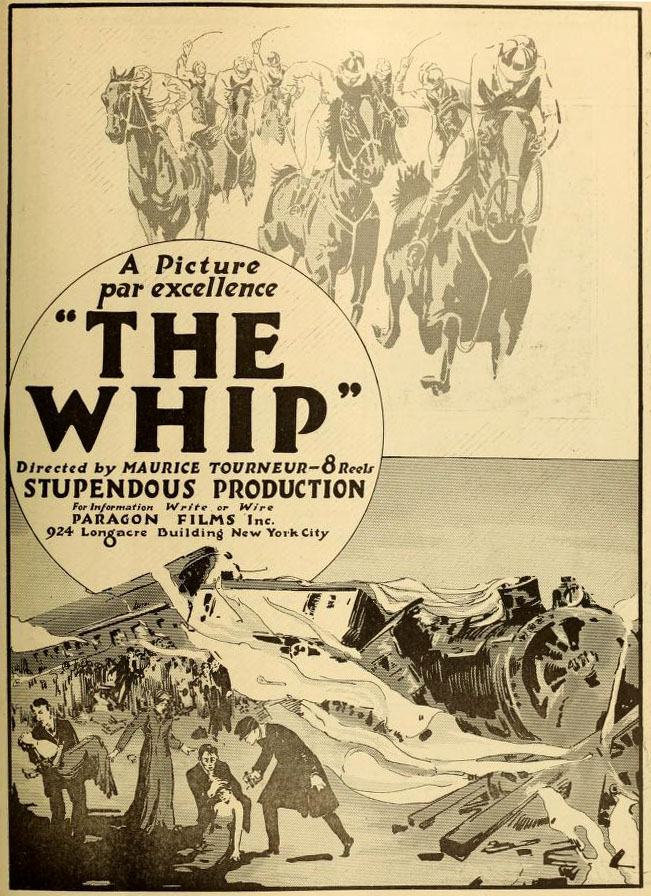
Dir: Maurice Tourneur
The story of the training of a racehorse, the Whip, of the amnesiac nobleman who loves the horse, and of the villains who attempt to keep it from racing.
View Details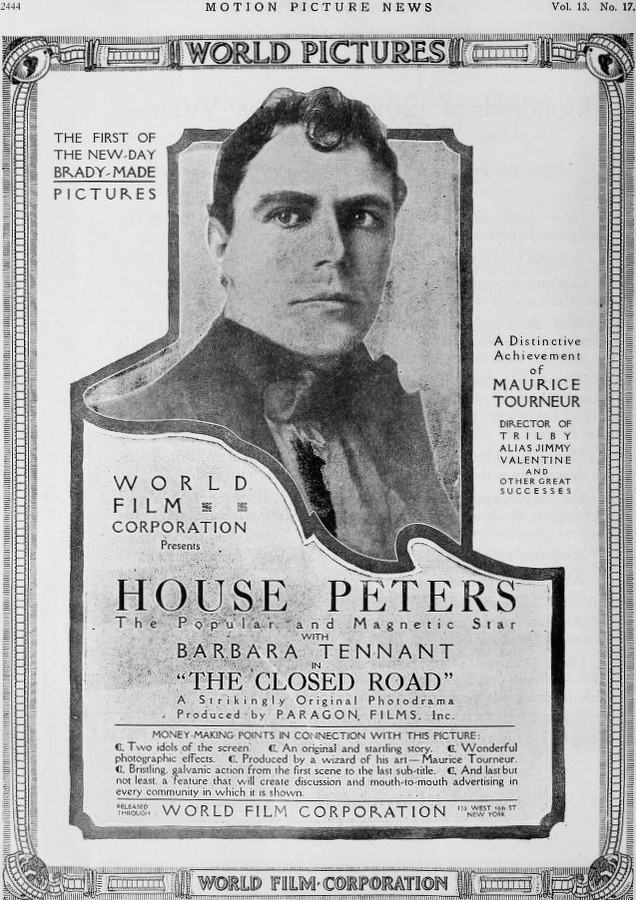
Dir: Maurice Tourneur
Dr. Hugh Annersley, assisted by Dr. Appledan, has succeeded in finding a cure for cancer. Julia, Dr. Annersley's sister, comes home with Griswold, a former client of the doctor, and to whom he still owes money. Griswold did not enter the house, Annersley saying to Appledan that if Griswold would pay him what he owes, he could then continue his work with the medical discovery. Griswold, now being attended by Appledan, Annersley decides to write him a letter, in which he states that unless he is paid within twenty-four hours, that he will go to Griswold's apartment to collect the account himself. Appledan takes the letter to Griswold himself. In giving medicine to Griswold, Appledan gives him an overdose, resulting in his sudden death. To ward off suspicion, Appledan places Annersley's letter threatening violence to Griswold on the latter's table, and firing two shots out of a revolver, the aged doctor leaves the room. When the police investigate they find the revolver on the floor, and on it is carved Hugh Annersley's name. Circumstantial evidence in the form of the revolver and letter points to Annersley. He is placed under arrest and charged with the murder. Julia, calling upon Appledan, notices the old doctor laughing hysterically as Frank Sargeant, a well-to-do young man, leaves his office. He tells Julia that he has just warned Sargeant he could not live more than a couple of months on account of the poor condition of his heart. With this knowledge, Julia starts in search of Sargeant, and finds him in an old quarry just as he was to commit suicide. She persuades him to listen to her. She unravels to him the story of her brother's plight, and of the fact that he could save millions of lives were he able to continue with his cancer cure. That as he, Sargeant, could not live long and was on the verge of committing suicide, would assume the murder of Griswold, clear Annersley of the charge, and thereby be of some good to humanity. Sargeant agrees and fabricates circumstantial evidence against himself so strongly that he is arrested and convicted of the crime. While awaiting electrocution, Sargeant learns that his heart was never affected, that old Doctor Appledan was mentally unbalanced, and then confined to an insane asylum. Upon learning this, Julia sets out to clear Sargeant and reverse the wheels of destiny against him. The old doctor confesses that he gave Griswold an overdose of medicine and to clear himself had placed Annersley's letter and pistol near him, thereby clearing Sargeant. How Julia repaid Sargeant for his great sacrifice by her love and affection brings the picture to a dramatic and happy ending.
View Details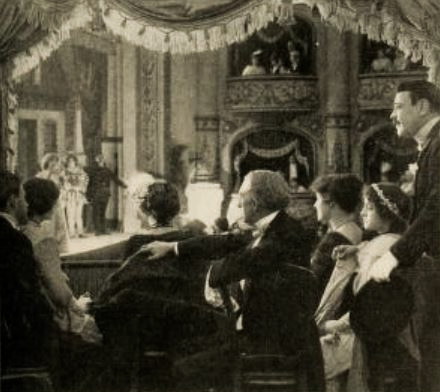
Dir: Maurice Tourneur
Novice businessman Curtis Jadwin ( Wilton Lackaye ) is introduced to the world of grain speculation by veteran broker Charles Cressler ( Alec B. Francis ). At a performance of Faust , Curtis meets and falls in love with Laura Dearborn ( Gail Kane ), the sweetheart of artist Sheldon Corthell ( Milton Sills ). Curtis pursues Laura and finally convinces her to marry him, but soon after their wedding, he neglects her for his business. In her loneliness, Laura renews her relationship with Sheldon and the lovers plan to elope. When Curtis is ruined on the market, however, Laura rejects her lover and comforts her husband.
View Details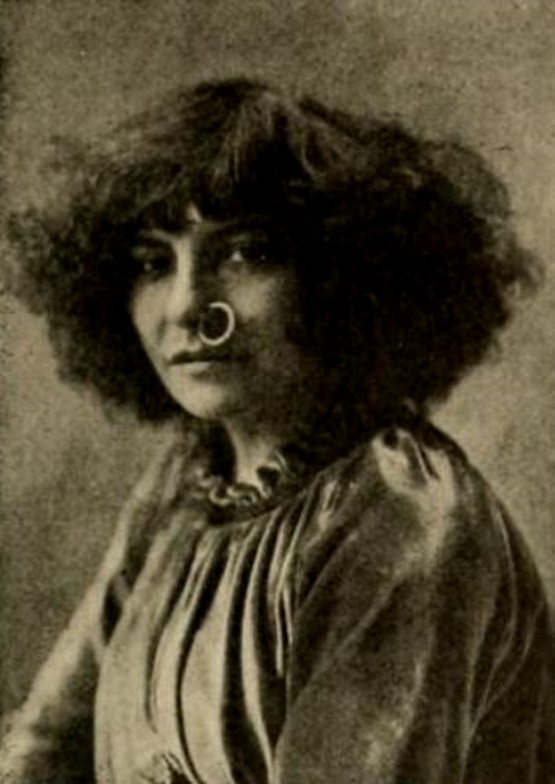
Dir: Maurice Tourneur
Mafflu, the old clown, out walking is greatly surprised to see a baby girl, fast asleep, holding in her hand a chunk of bread, at which a large number of sparrows are pecking. Mafflu decides to take the child away with him and care for it. He does this, but upon arriving at the circus where he is employed, the owner and the rest of the company have but a cold greeting for the little newcomer. However, Mafflu clings to the child. The Sparrow, as she is called, grows up and becomes the drudge of the circus. One evening, though worn out by fatigue and hunger, she must still prepare for the evening show. Scarcely has she mounted her horse and made a few rounds of the arena, when she falls and lies unconscious in the center of the arena. Romarin is in a rage and strikes the girl. Mafflu is disgusted and sends an official to the mayor. M. de Ganges, who that night happened to be a spectator. M. de Ganges takes the Sparrow with him to his home and she bids farewell to the only two beings she has ever loved, her adopted father and a poodle. Next morning, on awaking, she can hardly believe that all the beautiful things about her are a reality. The dream is indeed but a fleeting one. The Sparrow is received with jeers and mockery when she puts in an appearance in the servants' dining-room for her meals. A few days later a horse runs away in the park and the Sparrow cleverly manages to master it. This makes the groom, Charley, madly jealous. Charley abuses the Sparrow and a free fight ensues. M. de Ganges intervenes, and, disgusted with the groom's impudence, discharges him. The Sparrow is now received into the intimacy of the Mayor's family. She has fine clothes and jewels. A friend of the family, the banker Schlemmer, spends a few days at the mansion and is strangely attracted to the Sparrow. The attraction is not reciprocated, for, by degrees, the Sparrow falls in love with M. de Ganges. Alas, one day, she surprises him in a close embrace with his cousin. She is jealous. Schlemmer still persecutes the Sparrow to the extent of doing her violence. She decides to leave the house. In a few lines she thanks her benefactors for their goodness and announces her departure without, however, revealing its real cause. The Sparrow signs a very profitable contract with a new circus and she forgets, to a certain extent, her former disappointments. However, her troubles are not over yet. Charley, engaged as groom at the circus, finds occasion to exercise his hatred. After a first performance, the Sparrow goes to her dressing-room to change her costume for a second appearance. When, on hearing a noise, she turns around, and is horrified to see Schlemmer, introduced there by the groom, and who endeavors to abuse the girl, who defends herself energetically. Fortunately for her, Mafflu and the stage manager, wondering why she does not appear, enter her room and put an end to the trouble. Although not quite recovered from the shock, the Sparrow, nevertheless, takes her place on the central platform, where she is to perform her aerial act. M. de Ganges and his young wife are also spectators. In seeing the one she loves and who is forever lost to her, the Sparrow is painfully affected and, without ceasing to look at him, she makes a sudden leap, misses the rope along which she was to glide to earth, and crashes to the ground. Mafflu, in tears, picks up the girl, whose back is broken, and carries her away. M. de Ganges, deeply moved, comes to her and the Sparrow has, at least, the consolation of beholding before her death the dear face of the loved one.
View Details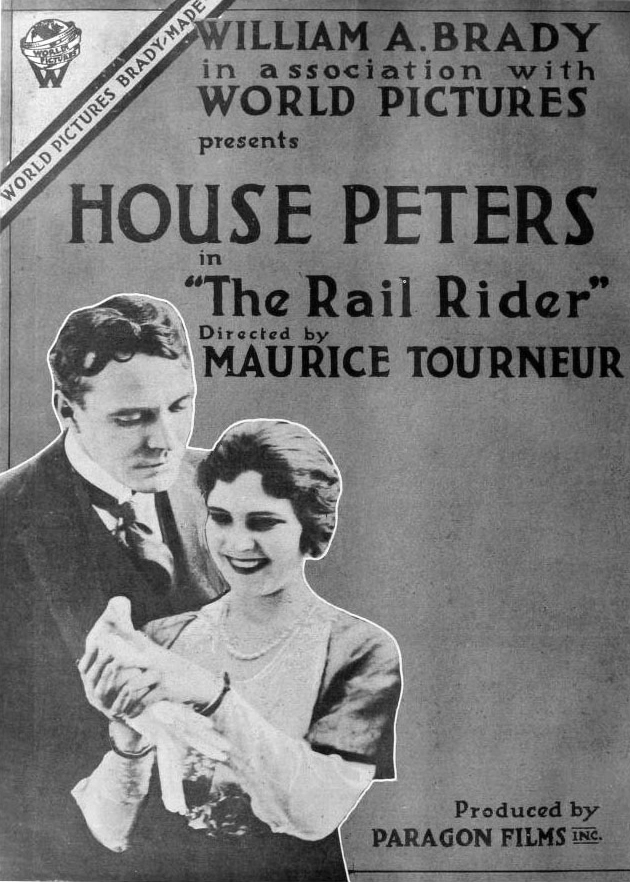
Dir: Maurice Tourneur
For 10 years the men of the D. and O., a short line, have been at the mercy of "B," supposedly Barker, president of the railroad. The line itself is run from the executive offices in New York, far distant, and none of the men have ever laid eyes of "B," yet the smallest transgression, accidental or otherwise, of the railroad's rigid and economical discipline results in a telegraphed order from "B," decreeing the fine, suspension or other punishment for the offender. Latterly, it has amounted to almost persecution and the men are on the verge of a strike. The climax comes when 48, the passenger train driven by Jim Lewis, goes off the rails on a soft spot and ties up the whole system for a day. When 48 finally limps into Wellsdale, the eastern terminus, "B's" decision is waiting for Lewis, two weeks' pay as a fine and six months' probation on a yard engine. The punishment starts a riot. The men agree to send Lewis to see Barker. Lewis calls on Barker. Barker receives Lewis, and instead of the hulky, brutal man he expected to find, Barker is an elderly, kind old gentleman, with a charming family. Mildred, his daughter, impresses Lewis. At last, Lewis, much bewildered, accepts an invitation to dinner with the family. In the morning Lewis learns that "B" is Brown, the manager. With a card from Barker he seeks an interview, but learns the manager has decamped, taking all the negotiable funds of the road. Lewis, thinking of the girl he met the night before, asks for and gets the job of running down "B." After considerable detective work he locates a man he has reason to believe is his quarry. With the aid of a bellboy, he gets a tip on the departure of the suspect and as the fleeing man enters a machine Lewis grabs him. There is a fight, which ends in Lewis's victory. Jim Lewis returns in triumph to New York with the stolen goods licked in a brand-new bag, and reaches Barker's house in the early evening, just as a group of D. and O. magnates are deciding that the road is gone and done for. Jim is the sort of stuff the road needs in its executive offices, and barker states that he is to come in to New York to be trained. Jim parts with Mildred on his way out, but to their mutual satisfaction it is only "au revoir." The future is rosy for Jim Lewis, and the boys of the road have gained more than they hoped when they sent him to see "B."
View DetailsAnalysis relative to Law of the Land
| Film Title | Atmosphere | Complexity | Similarity |
|---|---|---|---|
| Alias Jimmy Valentine | Gritty | Layered | 92% Match |
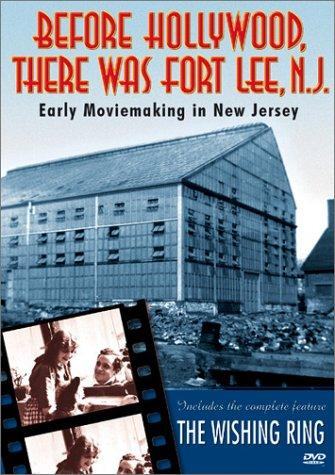
| The Wishing Ring: An Idyll of Old England | Ethereal | Abstract | 97% Match |
| The Cub | Ethereal | High | 98% Match |
| A Girl's Folly | Surreal | High | 96% Match |
| Man of the Hour | Gothic | Linear | 85% Match |
This guide was algorithmically generated using the cinematic metadata of Maurice Tourneur's archive. Last updated: 8/16/2026.
Back to Law of the Land Details →