
DbcultAccessing Vault...
Recommendations
Senior Film Conservator
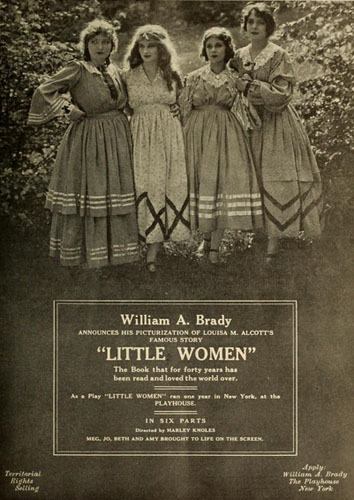
If you found yourself captivated by the stylistic flair of Little Women (1918), the profound questions raised in 1918 still require cinematic answers today. Experience the United States influence in these recommendations that echo Little Women.
Little Women remains a monumental achievement to provide a definitive example of Harley Knoles's stylistic genius.
Jo March and her sisters Meg, Beth, and Amy live in a happy family in Concord, Massachusetts. Jo yearns to be a writer, and through the course of the years, finds much within her own family to write about.
Little Women was a significant production in United States, bringing a unique perspective to the global stage. It continues to be a top recommendation for anyone studying cult history.
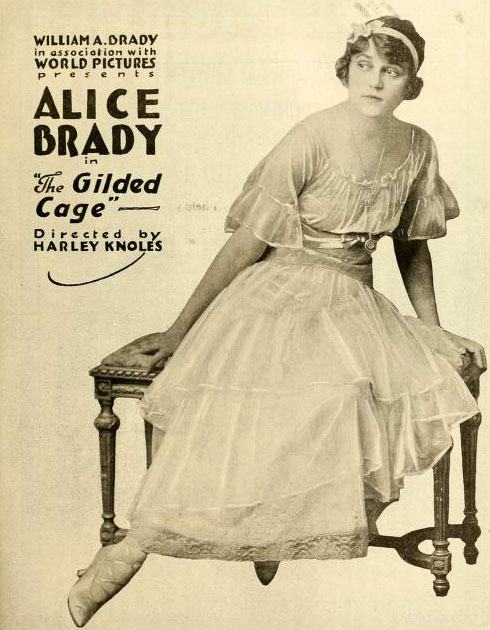
Based on the unique stylistic flair of Little Women, our vault has identified these titles as the most compelling follow-up experiences for fans of cult cinema:
Dir: Harley Knoles
In the little kingdom of Balkany lived a king and queen who were not liked by their subjects. His Majesty was King John the Fifth, and Her Royal Highness was Queen Vesta. To them was born a daughter, the Princess Honore, who was placed in the convent of the Holy Sisters. The little kingdom rebelled against the extravagance of King John, and an attack was made upon the castle. Both the king and queen were assassinated. Princess Honore succeeded to the throne. In love with her and coveting the crown was Baron Stefano, Prime Minister, but his love was not returned. This incurred the ill-will of the Prime Minister, who set out to overthrow the little kingdom and turn it into a republic with himself as ruler. Prince Boris renounced his title and cast his lot with the peasantry. He was loved by the common folk and proved a leader. During the annual fair people gathered in the capital from far and near. There were rumors of an uprising. The young queen had not brought about much change in the conduct of the official household. The extravagance had continued to eat up the revenue raised by the heavy tax, and the people were protesting and demanding that something be done for their relief. These rumors reached the girl queen, and clad in the garments of a peasant girl she went forth during the fair to learn what she could. In this way she soon learned of her disfavor. One day she met Prince Boris, who told her of conditions that existed. One of the government spies, overhearing his conversation, suspected that he was forming a plot against the young queen, who was not recognized by the spy because of her disguise. The spy hastily informed the Prime Minister, who ordered the arrest of Prince Boris. The soldiers were dispatched, and Prince Boris was placed under arrest. The young queen protested. She as his companion was also confined to the prison. The chief of the Royal Guard notified the Prime Minister of the arrest, telling him that during the struggle with the queen she defied him by proclaiming that she was the queen, and this aroused the suspicions of the Prime Minister. Alone he went to the dungeon and discovered that Boris's companion really is the queen. It dawned upon him that now he had her in his power, he will force her to make him her king consort, or bring about conditions that will speedily overthrow the government. Meanwhile Lesbia, a peasant girl, learns of the conspiracy and through her love for one Ivan, sergeant of the Royal Guard, she secured the release of the queen, who escaped in safety to the Royal castle. Next morning the queen heard the tolling of the prison bell. On asking her secretary what it indicated, she was told that her sweetheart, the Prince Boris, was to be executed at sunrise. She rushed into the office of the Prime Minister and forbid the execution. He laughed at her. Back in the village, outside the prison wall, the soldiers were drawn up to execute Prince Boris. But the people saw their beloved leader. rushed forward, overpowered the soldiers and released him from his bonds. An attack was then made on the castle. Prince Boris discovered his peasant girl companion to be none other than her Royal Highness, Queen Honore. The people were for revenge, but the queen told them of the Prime Minister's conduct and followed by her the crowd attacked Baron Stefano, which resulted in his death. The queen accepted Prince Boris as her beloved king consort.
View Details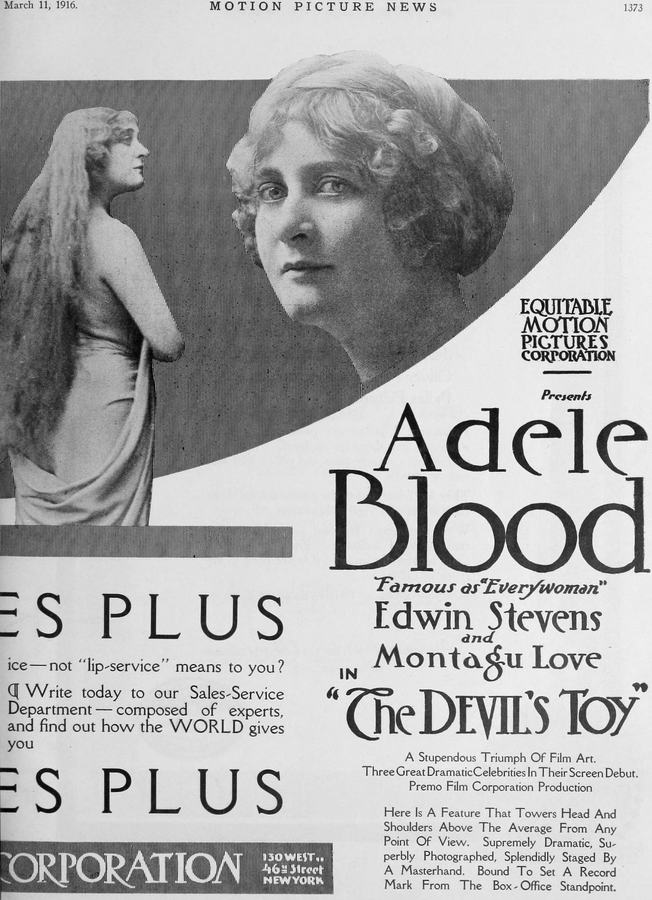
Dir: Harley Knoles
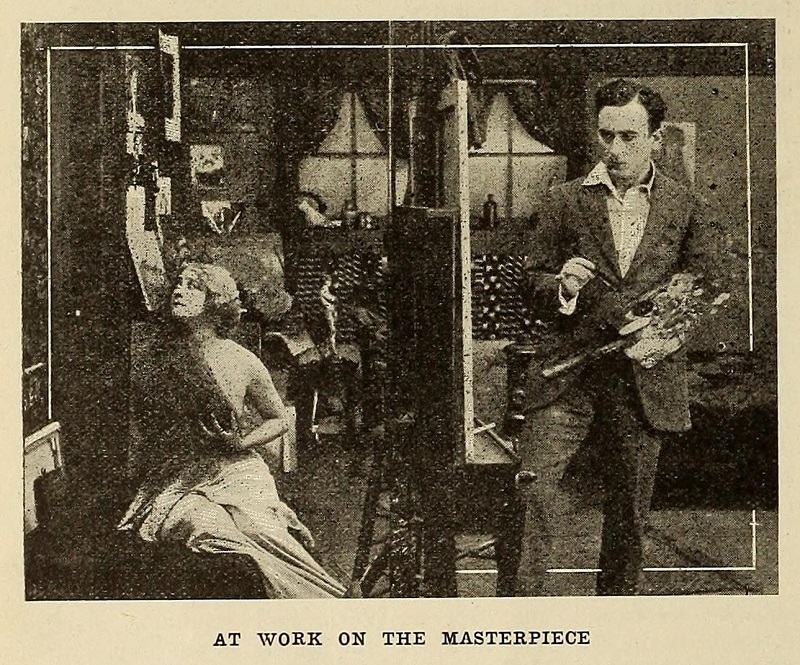
When untalented artist Wilfred Barsley is eager for success, he sells his soul to the devil, who first has him kill his uncle for an inheritance. Then, the devil instructs him to commit the sickly, struggling artist Paul La France to a sanitarium and exhibit Paul's paintings as his own. After doing so, Wilfred becomes an overnight modern master, while Paul, during his convalescence, loses his memory and also his sweetheart, Helen Danver, who does not know that he has been hospitalized. Then, when Helen sees one of Wilfred's paintings and recognizes it as Paul's, she bluffs an interest in the fake artist to get information about the real one. After she succeeds, she goes to Paul, and the sight of her restores his memory. Meanwhile, having returned to the vault where he had stashed his uncle's body, Wilfred dies when the door slams shut on him.
View Details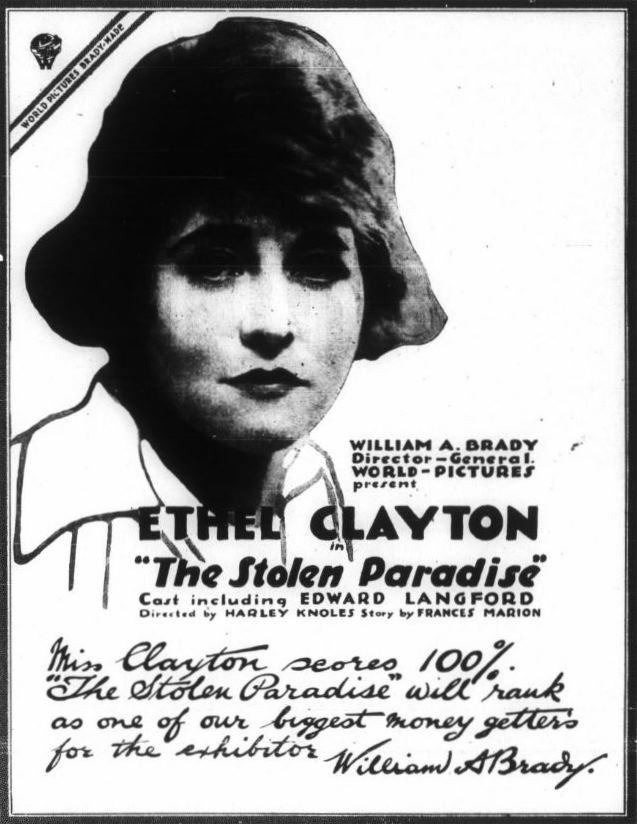
Dir: Harley Knoles
David Clifton is blinded while rescuing Katharine Lambert, the girl he loves, from a fire. Caring nothing for David, Katharine pursues her pleasures while Joan Merrifeld, who loves David, takes her place by his bedside. Believing that Joan is Katharine, David marries her and it is through her support and cooperation that he becomes a noted author. Upon regaining his sight, David is more than surprised to learn the identity of his wife. He is content, however, until Katharine reappears, bored with her husband Brooks. David's old love for Katharine returns and Joan, crushed, offers little resistance until Brooks, in anger, vows to kill Katharine if he discovers her unfaithful. It is only through Joan, who enters into a battle of wits with Brooks, that a catastrophe is averted. Then David at last realizes that he loves Joan, but at her command, leaves her for a year's time.
View Details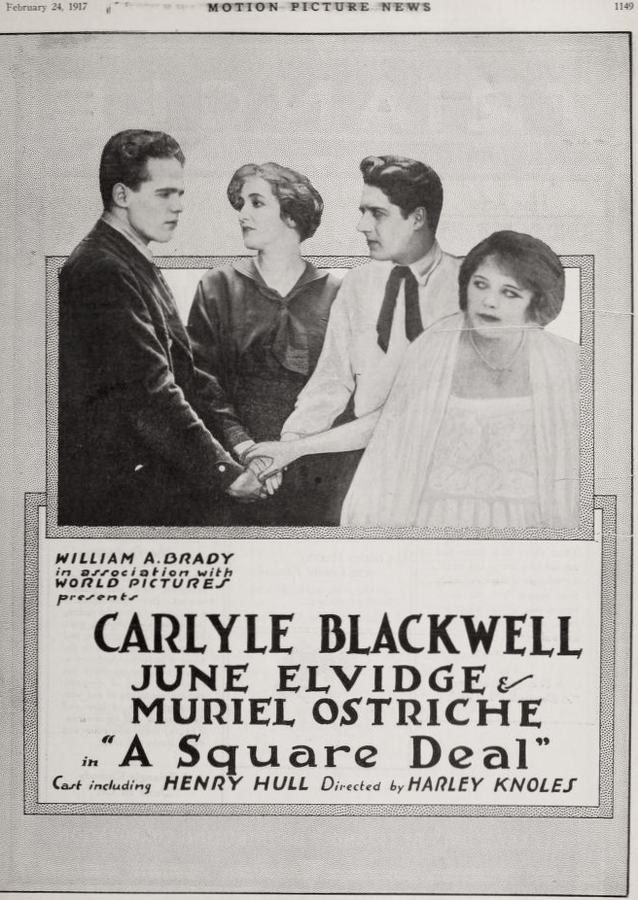
Dir: Harley Knoles
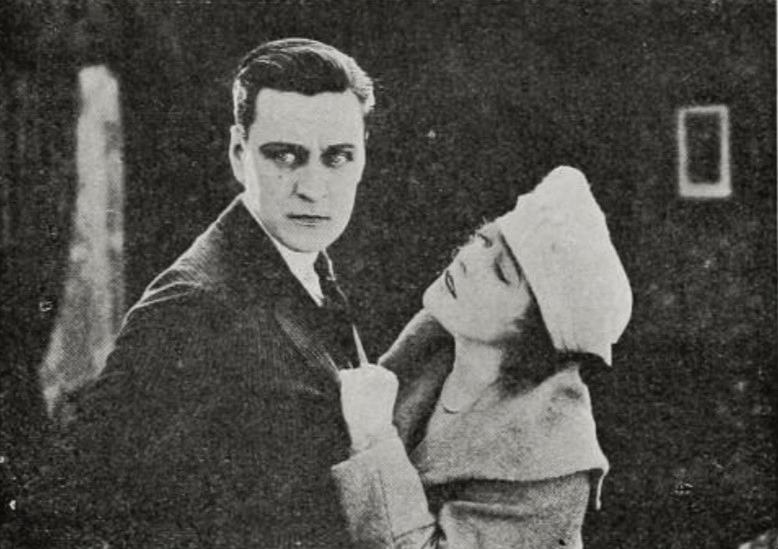
Hugh Eltinge, a struggling artist, and Mark Dunbar, a genius of the pen, whom the world has as yet failed to reward, live together in MacDougal Alley. Across the hall is Doris Golden, a reporter on the Evening Star, who enthuses over the work of both. Mark's novel is sold and Hugh and Doris see a new Mark. Mark begs Hugh to allow him to stake him until his pictures sell, but pleasure in his new clothes and new popularity dwindle as he sees his old friends will not profit by them. A happy idea strikes him and he buys all of Hugh's paintings on exhibition at a local dealer, requesting that his name be not mentioned. Mark rejoices with Hugh when he comes home to tell the news. Then the two decide Doris must also share with them, and together they go to a lawyer, and arrange to persuade him to send a letter to Doris saying her uncle in San Francisco has died leaving her a thousand dollars. In another section of the City Mrs. Trailes and her daughter, Ruby, scheme to ensnare a wealthy husband for the girl. Mark's reputation has impressed them. He is invited to attend a meeting of their Literary Club and the girl is given instructions to attract him. Mark meets the young society girl. Hugh and Doris, she is reporting the meeting, are also there and to them evidences of Mark's awakening infatuation are pitifully clear. Mark sees Ruby often. At a ladies' swimming club he is the guest of her mother. At a sign from her mother Ruby pretends to be drowning and Mark jumps in to her rescue. The friendship thus engendered ripens into love and it is not long before they are married. But early in his wedded life Mark begins to feel the pangs of disillusion. Ruby is pettish and extravagant and when he remonstrates with her, she breaks into tirades of scolding that drive him to silence. Doris discovers her uncle is alive, and, perplexed, goes to the lawyer, who tells her all. She writes to Mark, enclosing a check for the whole amount she has left and promising to send the balance as soon as she can. His wife intercepts the letter and accuses him of infidelity. Her true vulgarity asserts itself and he goes to the little studio. Ruby follows and finds him with Doris and another scene is enacted. Mark begs Hugh to look after Doris, then leaves. Hugh leaves a letter for Doris and a note in which he asks her not to read the letter before she has found happiness. Hugh tells a newspaper reporter with whom he is acquainted that he has inherited a fortune from his grandfather, and the account is printed in the evening paper. Ruby and her mother remember he is a friend of Mark's and ask him to call. Soon a closer intimacy than friendship develops and Mark comes home one evening to find Ruby in his friend's arms. Disillusioned, his last ideal, friendship, completely shattered, Mark hurries away. After the divorce, he seeks Doris and the two become engaged. She remembers the letter and opens it. Herein Hugh has outlined his plans, the story of the fortune was a hoax, wherewith to entrap Ruby. For the sake of friendship he had sacrificed himself to bring happiness to the two he loved. Mark telephones to him and when he comes the old feeling of happiness and love fills once more the little studio in MacDougal Alley.
View Details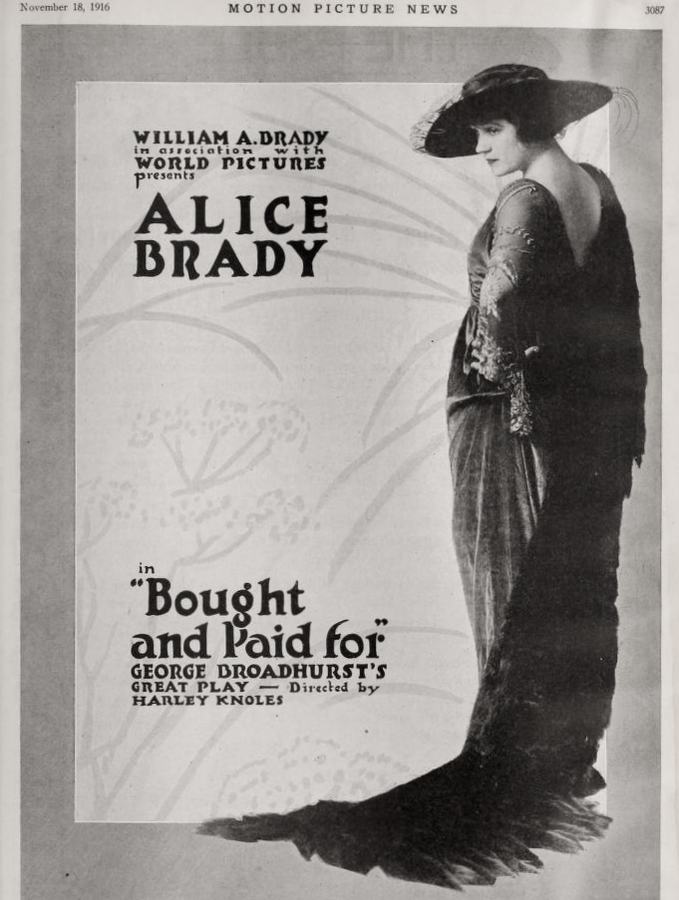
Dir: Harley Knoles
A social-climbing young woman marries Robert, a rich alcoholic, for his money. Although basically a good man, when drunk Robert treats her as if she's just one more thing he owns, and not his wife. Realizing her mistake, she leaves him. Her brother-in-law believes that the two of them actually do love each other, and sets out to bring them back together.
View Details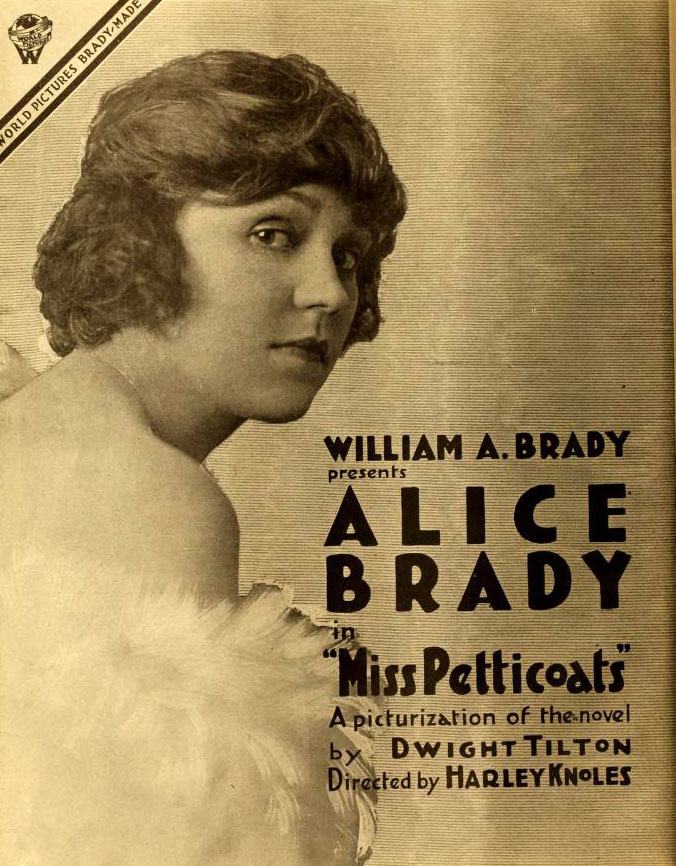
Dir: Harley Knoles
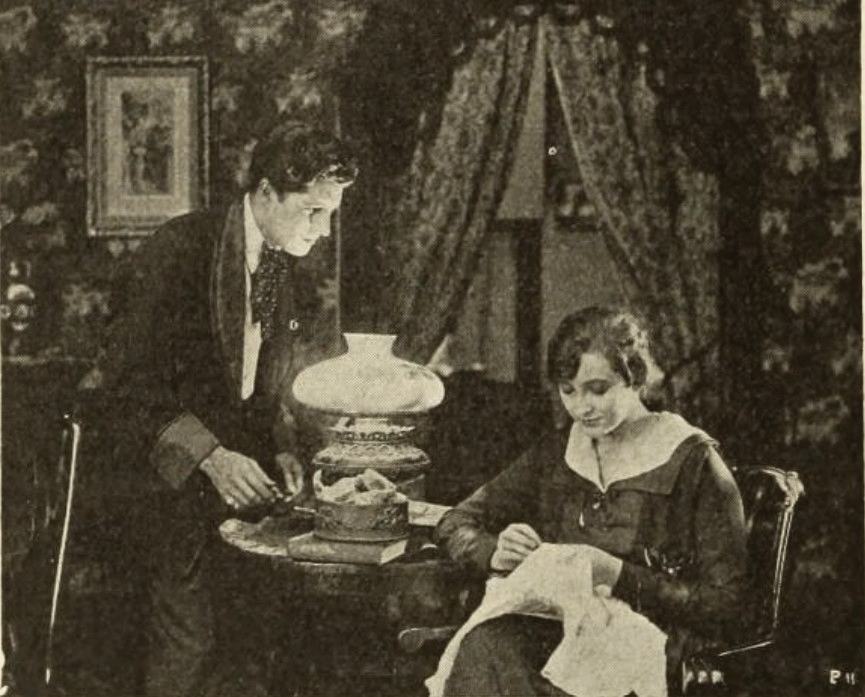
Agatha, called "Miss Petticoats," is daughter of a French nobleman and an American woman, lives with her grandfather, Captain Joel Stewart, since the death of her mother years before. Knowing nothing of her royal heritage, Agatha gladly takes a job as secretary to the wealthy Sarah Copeland, whose nephew, Guy Hamilton, immediately begins pursuing the new employee. Jealous of Agatha, one of Guy's former sweethearts, Mrs. Worth Courtleigh, starts spreading rumors about her, and when Joel hears a particularly scandalous one, he dies of shock. Taking Agatha away from all the gossip, Sarah sails with her to Europe, where Agatha finally learns about her bloodline, and also discovers that she is the heiress to a fortune. Then, when she and Sarah return home, Agatha forgives all the people who believed the rumors, and marries the Reverend Ralph Harding, who was always certain of her innocence.
View Details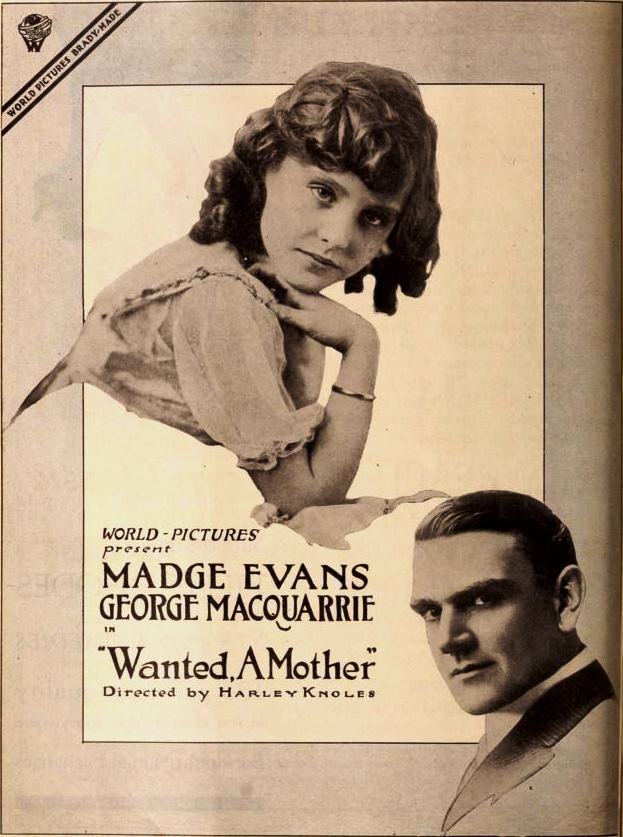
Dir: Harley Knoles
Neglected by her grief-stricken father, a doctor, after the tragic death of his wife, little Eileen Homer changes the wording of her father's ad for a governess to read: "Wanted, a mother." A laborer named Giuseppe asks Dr. Homer to operate on his ailing son, but when the boy dies, the enraged father attacks the doctor. Eileen meets her father's friend, Dr. Thelma Winter, and that night, while dreaming that Dr. Winter has become her fairy mother, she walks in her sleep to the edge of the lake. Wandering aimlessly in his grief, Giuseppe rescues the girl and takes her home to fill the void left by the loss of his son. In trying to return home, Eileen falls from the fire escape and is rushed to the hospital, where Dr. Winter saves her life. Afterwards, the grateful Dr. Homer becomes a more loving father with the help of his new wife, Dr. Winter, and Giuseppe becomes the family's gardener.
View Details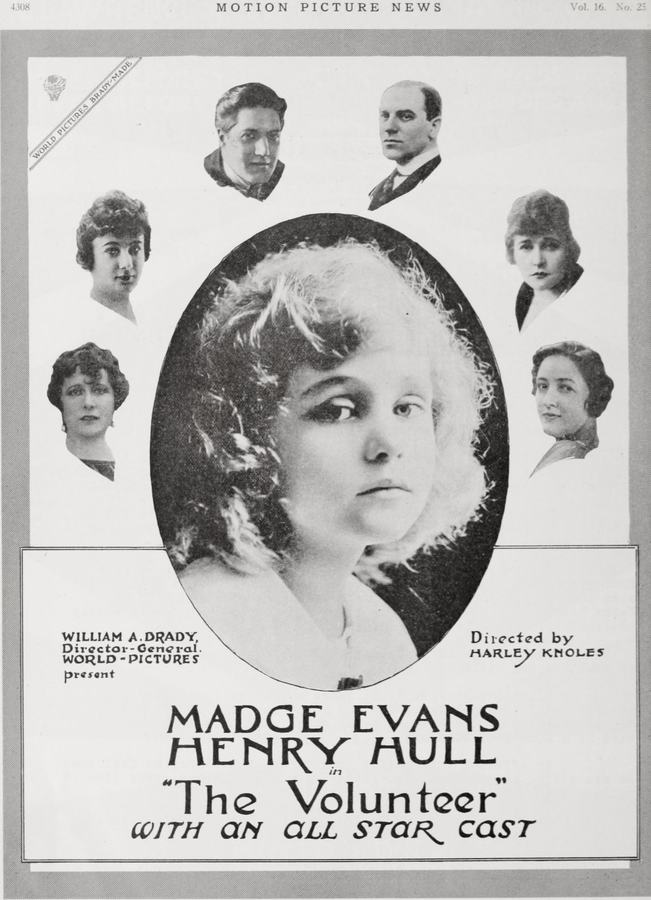
Dir: Harley Knoles
Madge Evans, World Film Corp. juvenile star, is sent to her Quaker grandparents, Timothy and Tabitha Mendenhall, when her father and mother go to serve in World War I. After bidding farewell to the World stars, Madge goes to her grandparent's home where she experiences stern discipline. Jonathan Mendenhall, her uncle, is anxious to enlist, but is forbidden by his father, whose religion opposes fighting. Madge creeps into the old Quaker's heart by degrees, but he maintains unrelenting discipline in the household. Jonathan comes of age, enlists despite his father's opposition, and is disowned. When Madge's latest picture comes to town, the child implores her grandfather to take her to see it, but he refuses. Timothy secretly visits the theater, however, and is completely won over by Madge's acting. A change takes place in the old Quaker's nature as he praises Madge, forgives his son and writes to Madge's mother, whom he had cast out when she married against his will, to be sure and bring her husband back safe.
View Details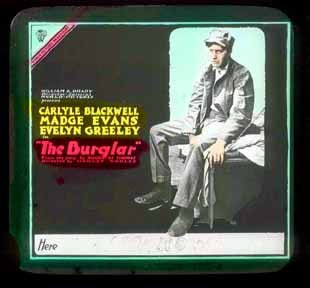
Dir: Harley Knoles
As a prank, college student William Lewis and some of his friends break into a house and are interrupted by a policeman who is accidentally shot. Will's friend Sid accuses Will of the shooting, but Will manages to escape and moves to a large city far away. He meets and marries Alice Hamilton, and they later have a daughter, Editha. Will has a job as a bank teller and everything is going fine--until Sid shows up one day and threatens to expose Will as the man who killed the officer unless Will helps him rob the bank. Complications ensue.
View Details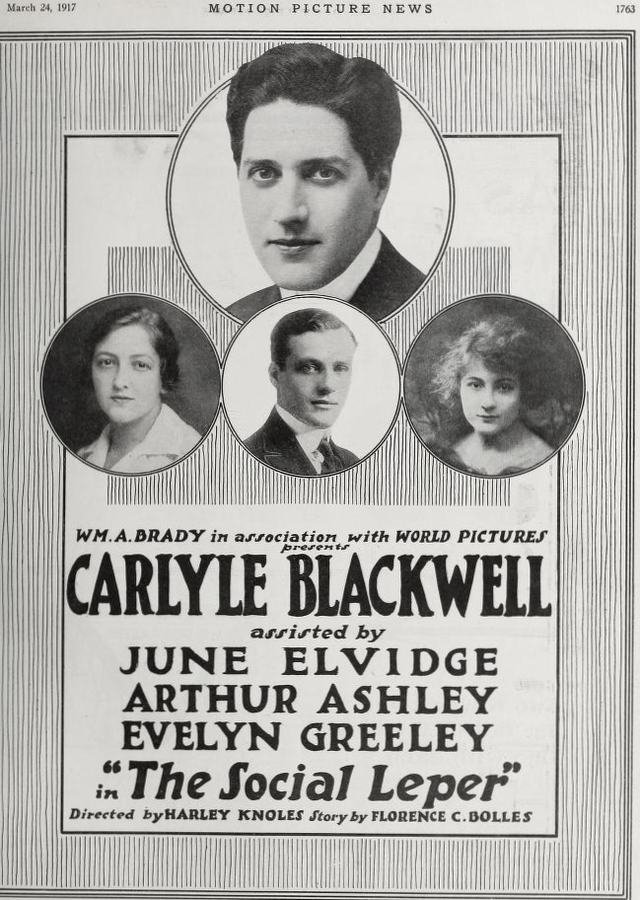
Dir: Harley Knoles
Divorcée Adrienne Van Couver visited clairvoyant Mme. Melvina, who tells her that a tall dark man, Robert Warren, is excited over a letter he has just received from her, telling him she does not love him. The fortuneteller bids her beware of him, then tells her that Henry Armstrong, the man she loves, will never love her. The clairvoyant then tells Adrienne of a young girl, Lorraine, whose eyes are dim with the tears that she has caused in another part of the city, Lorraine greets her fiancé, Henry Armstrong, with ill-concealed dejection and he tells her he fears she still loves John Dean, but she dispels his suspicions. John Dean shares the secret of his silent love for Lorraine with his mother. Robert Warren goes out into the night; it is then he meets John. In the other's haggard face, John Dean sees traces of his own sorrow and trying to make it easier for this man who has been his friend for five years, he tells Robert Warren his story. Eight years ago he and Adrienne were married. For two years they lived on the money inherited from his father. It was then the baby came and the father found happiness in the touch of baby hands, but to his wife it made no difference. Then the baby became ill, and while its mother was away dancing, the little life slipped away. Six months later Adrienne was given a divorce. Then he and his mother came to New York and a few years later he met and loved Lorraine Barkley. Although Henry Armstrong was a dangerous rival, Lorraine loved him and he did not fear until the day when the Barkleys gave a reception. It was then he met Adrienne again and she taunted him with his love for the young girl. When she demanded money, he gave it to her. Lorraine sees this and misconstrues the situation. It is then her engagement to Henry Armstrong is announced. John finishes his story and Robert is maddened by the destruction of the halo he had built around the woman he loved. Robert makes his way to Adrienne, who has been nervous and ill at ease ever since she returned from the fortune teller. Robert's haggard appearance frightens her and she telephones Henry, but her call for help is only half-uttered when Robert forcibly takes the instrument from her. Alarmed, Henry starts off at once to help her. Meanwhile, John, fearful for Adrienne's safety, goes to warn her. He arrives just after Robert has made his escape after murdering Adrienne. When Henry arrives with two policemen, he finds John bending over the dead woman. He is arrested. Lorraine is brokenhearted when she hears of the arrest and pleads with Henry, who is a lawyer, to take Dean's case. Detectives search Robert's apartment and find here a coat with buttons similar to one found in the dead woman's hand, and one is missing. They trace Robert to the hotel and after a terrible fight he is taken into custody. Happiness came with the morning, for Henry took Lorraine's hand and told her she was released from her promise to marry him. Then she called up John Dean and told him that she was ready to marry him.
View DetailsAnalysis relative to Little Women
| Film Title | Atmosphere | Complexity | Similarity |
|---|---|---|---|
| The Gilded Cage | Ethereal | High | 98% Match |
| The Devil's Toy | Gritty | Layered | 96% Match |
| The Stolen Paradise | Gritty | Layered | 85% Match |
| A Square Deal | Ethereal | High | 92% Match |
| Bought and Paid For | Gritty | Dense | 96% Match |
This guide was algorithmically generated using the cinematic metadata of Harley Knoles's archive. Last updated: 6/23/2026.
Back to Little Women Details →