Summary
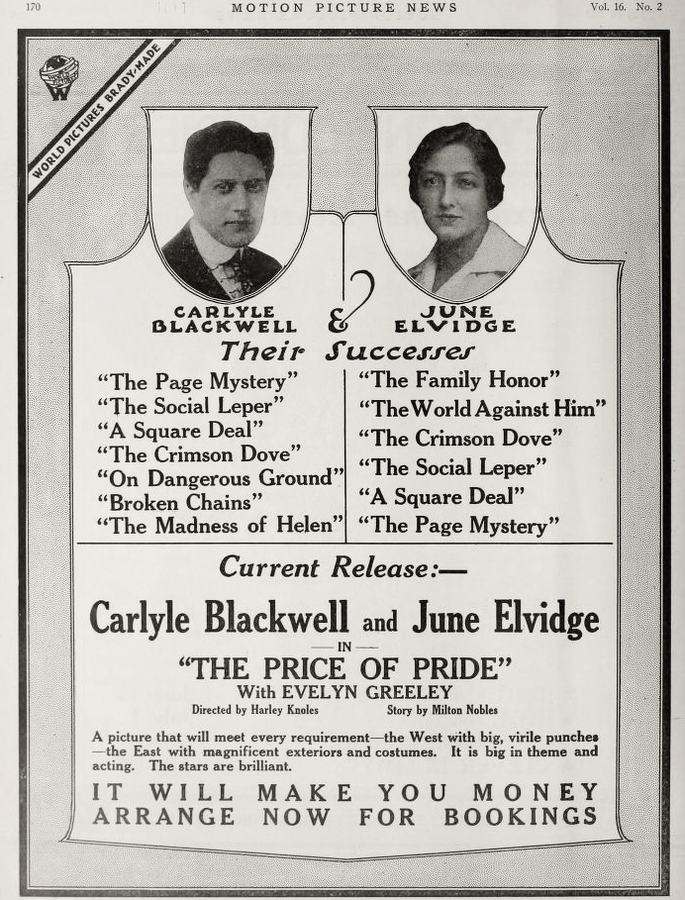
“The Price of Pride” unfurls a sprawling melodrama steeped in the corrosive aftermath of a singular, misconstrued transgression. At its genesis, the film plunges into the domestic upheaval of Madge and Jeffrey Black, a rupture catalyzed by Madge's unyielding pride and Jeffrey's wounded silence. A fleeting kiss between Jeffrey and Madge's confidante, Nan Westland, on their son David's second birthday, shatters their bourgeois idyll, igniting a chain of events that irrevocably splinters two families. Jeffrey, a successful lawyer, departs, his refusal to clarify his financial contributions to their home—a point of contention Madge wrongly attributes to her father—a testament to his own simmering resentment.
His subsequent encounter with a seemingly penitent Nan on a westbound train sets in motion a clandestine union, born not of love, but of a misguided sense of protection and Nan's desperate affection. A year hence, their son William is born, yet Jeffrey's steadfast refusal to legitimize their bond through divorce and marriage underscores the enduring shadow of his prior commitment. Nan, yearning for recognition and chafed by Jeffrey's emotional distance, eventually seeks solace and legitimacy with Ben Richardson, a client turned suitor, abandoning her son William to an uncertain fate.
Two decades later, the narrative dramatically converges. David Black, raised in stability, embodies upright manhood, while his half-brother, William—now the notorious “Rodeo” Arnold—has descended into a life of banditry. Their paths intertwine in the rugged West, where David manages a mining operation and Nan, now Ben Richardson's wife, co-owns the Chanceland gambling house, unknowingly presiding over her estranged son's haunt. A fateful train robbery, led by Rodeo, results in David being wrongly identified by his fiancée, Kathleen, due to their striking resemblance. This tragic case of mistaken identity propels the story towards its inevitable, climactic confrontation.
The ultimate unraveling occurs in a tense courtroom, presided over by none other than Jeffrey Arnold Black. Here, the two half-brothers stand diametrically opposed: David, the accused, and Rodeo, the true culprit, brought in after Nan's desperate attempt to shield him leads to his discovery. In a heart-wrenching confession, Nan reveals her maternity, a poignant moment of recognition for her dying son, who clears David's name with his final breath. The film culminates in a tender, if bittersweet, reconciliation among the fractured patriarch, his first wife, and their son, while Nan finds forgiveness and a fragile peace with Richardson, her life's tumultuous journey etched into the very fabric of their shared history. It's a searing indictment of the ripple effects of pride, judgment, and the enduring quest for belonging.
Synopsis
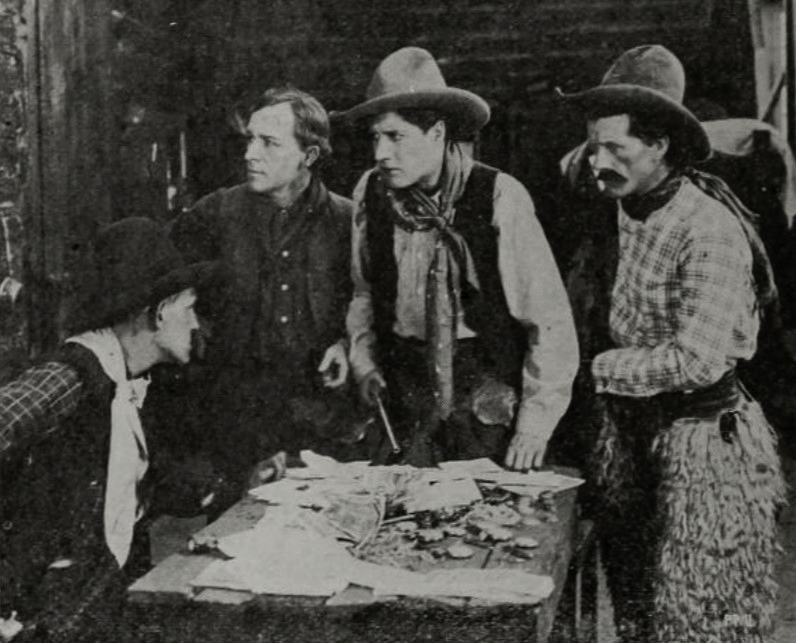
On her son David's second birthday, Madge Black witnesses her best chum Nan Westland, kissing her husband Jeffrey Arnold Black, a successful lawyer, and orders Nan from the house. Angered, Jeffrey does not explain that it is his money that maintains their home--not her father's, as she believes. Jeffrey leaves his wife and son. On board a westbound train, Jeffrey meets Nan. She explains that she has been compromised, and that she is going away to hide. Touched by her apparent sorrow, Jeffrey tells her that, though he doesn't love her, he will try to protect her. In love with him, Nan is willing to accept him on any terms. A year later a son is born to Nan and Jeffrey. She pleads with him to divorce Madge and marry her for the sake of their son William's name, but he will not hear of it. Ben Richardson, Jeffrey's client, is a frequent visitor at their home. Richardson's sincerity eventually wins Nan; goaded by Jeffrey's indifference, she leaves him and their son to become Richardson's wife. Twenty years later David Black has developed into a splendid specimen of manhood, while his half-brother William has become the leader of a lawless band. David goes West to take charge of a mining plant. Happily married, Ben Richardson and Nan have become owners of Chanceland, a gambling-house in Colorado. "Rodeo," as William Arnold is known, goes to Chanceland to try his luck, but he loses all his money. He sees Nan in the music room adjoining, and eager to make an impression on her, he saunters in. When Nan asks his name, he says they call him "Rodeo the bandit." His real name, William Arnold, son of Jeffrey Arnold, from whom he had run away at 14. Never knew his mother; he guesses he'd better be going or he'd get sentimental. Not revealing her identity, Nan presses a ring into his hand, and tells him to come to her if he should be in trouble. Believing that he has surely "caught" the Queen, he strolls out. In the same town, his half-brother, David Black, is working on his mining schemes. In the doorway of Chanceland, "Rodeo" passes David Black, and both are struck by their remarkable resemblance to each other. David receives a telegram from his fiancée Kathleen May, asking him to meet her at the train which is to arrive the next morning. That night Rodeo and his men hold up the train. While Rodeo is relieving the passengers of their valuables, the conductor leaps on him, and the bandanna which concealed the bandit's features, is torn away, revealing him to Kathleen, who believes that he is David. The bandit effects a getaway. When David comes for Kathleen the next day, she snubs him and walks past him. Ben Richardson's servant sees Rodeo and his men dividing the plunder and reports to Richardson. The latter intimates to Nan that the young fellow she was interested in is suspected of a number of crimes. She realizes that her son is in danger. Disconsolate, David tries to find solace in Chanceland, where he is arrested on the charge of robbing the mails and holding up the train. Deciding on a bold stroke, Rodeo goes to see Nan. She discloses herself as his mother and pleads with him to be careful, for as soon as the prisoner proves an alibi, the sheriff will be after Rodeo. Hearing Richardson, she pushes her son into her bedroom. Richardson, suspecting that Nan is hiding her lover, dashes into the room and fires at Rodeo, who is taken to court where David is being tried for the bandit's crimes. Nan confesses to Richardson that Rodeo is her son, and hastens to court. Also in the courtroom are Kathleen and Madge, David's mother. The presiding judge is Jeffrey Arnold Black, father of the prisoner. When Rodeo is brought in, a dramatic scene ensues, during which the two half-brothers face each other. Nan embraces her wayward son, while he bewails the fact that he had found his mother only to lose her, and draws his last breath after vindicating David. A tender reconciliation follows among Madge, Jeffrey, and their son David. Richardson seeks and obtains Nan's forgiveness for his suspicions of her. David and Kathleen embrace, then discuss their hopes of a little cottage for two.
Review Excerpt
"
There's a certain gravitas that silent films, particularly those from the nascent era of feature-length storytelling, carry within their frames. They speak in gestures, in the stark contrast of light and shadow, and in the raw, often melodramatic, force of human emotion. Milton Nobles' 1917 creation, The Price of Pride, is a quintessential example, a sprawling narrative tapestry woven with threads of betrayal, mistaken identity, societal judgment, and the enduring, often destructive, power of..."