
DbcultAccessing Vault...
Recommendations
Senior Film Conservator

If you found yourself captivated by the thematic gravity of Miss Nobody (1920), the quest for comparable cinema becomes a journey through the fringes of film history. Below, we've gathered a list of films that every fan of Francis J. Grandon's work should explore.
Miss Nobody remains a monumental achievement to create a hauntingly beautiful cinematic landscape.
A raft carrying a little girl and a dead woman drifts in from a shipwreck to Devil's Island. There, a band of thieves and smugglers name the girl Rose Marie, though she grows up as "nobody's girl." Living in a cave, she learns to read through the kindness of Jason, who is soon killed by the cruel leader, Red Gull. In Red Gull's power, and urged on by Jason's jealous wife, Rose Marie makes her escape in a rowboat, where she is spotted by an aviator flying above the sea. He rescues her, taking her to be cared for at his home where she is well treated. When newspapers report a mysterious shipwreck on Devil's Island, Rose Marie reveals the way in which Red Gull lured ships to their doom there. She guides the authorities to the island, where, after a fierce battle, the thieves are wiped out. Eventually the aviator falls in love with Rose Marie, and "nobody's girl" is somebody's sweetheart at last.
Miss Nobody was a significant production in United States, showcasing the immense talent of Lloyd Bacon, Mary Alden, Billie Rhodes. It continues to be a top recommendation for anyone studying Drama history.
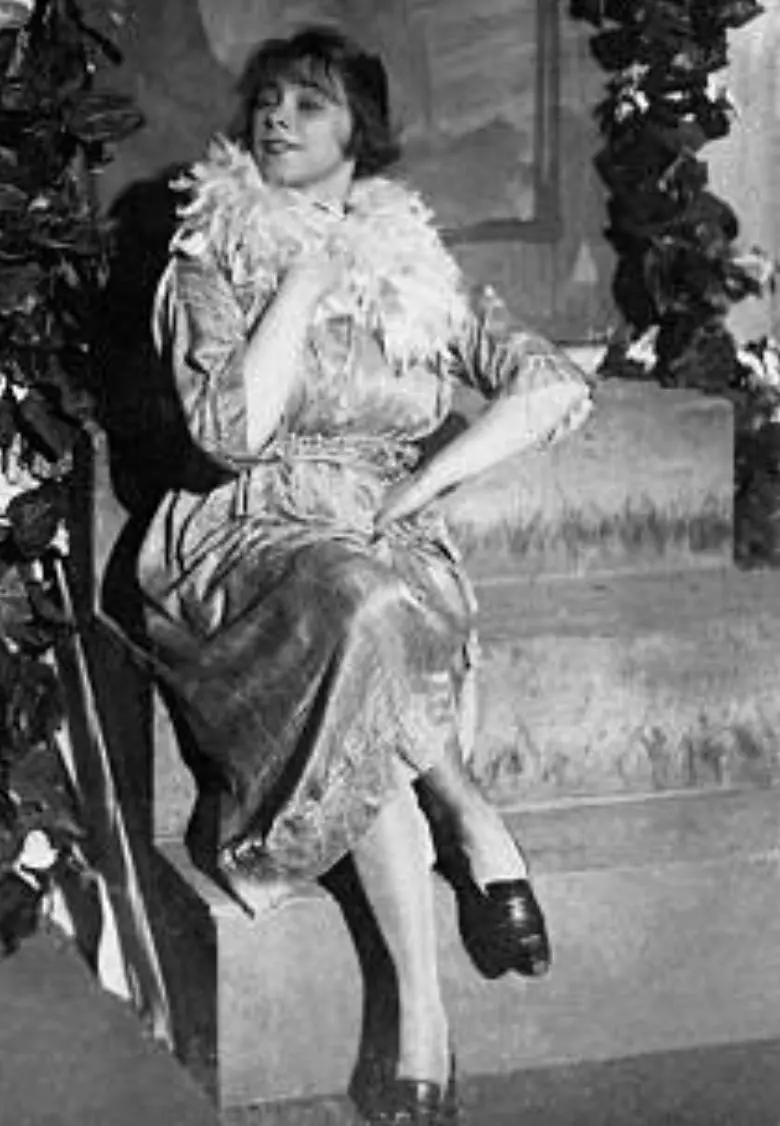
Based on the unique thematic gravity of Miss Nobody, our vault has identified these titles as the most compelling follow-up experiences for fans of Drama cinema:
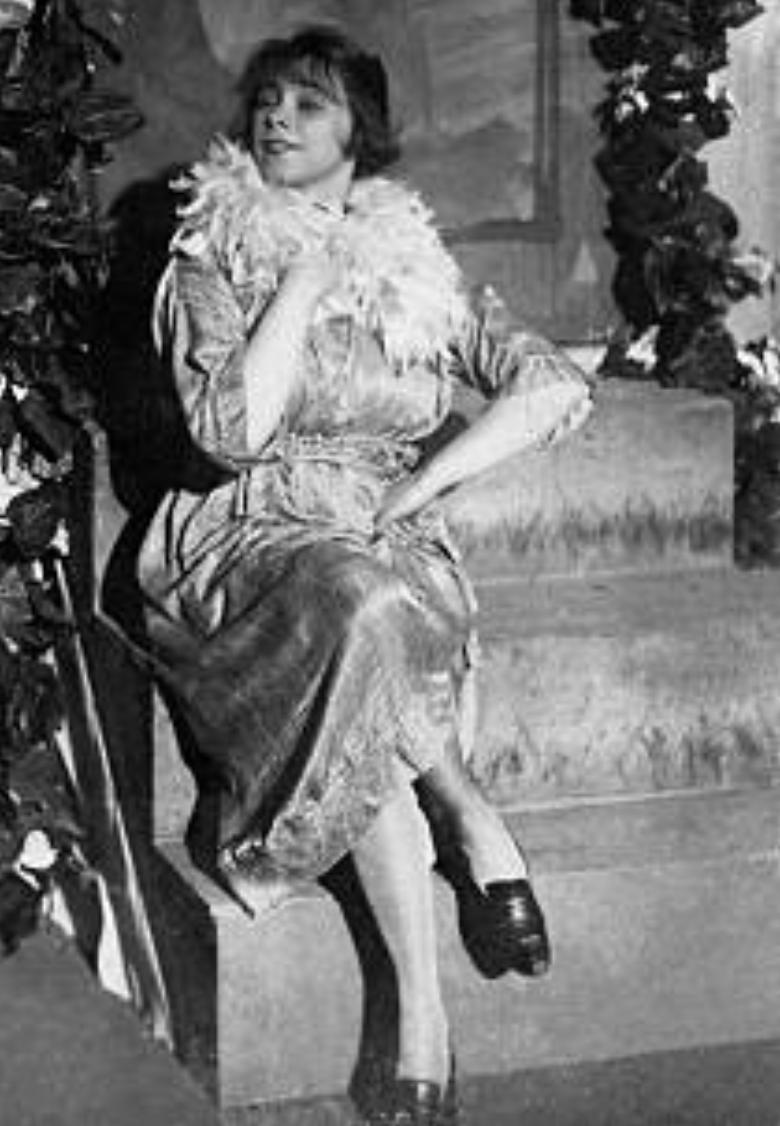
Dir: Bruno Ziener
A fascinating piece of cinema that shares thematic elements.
View Details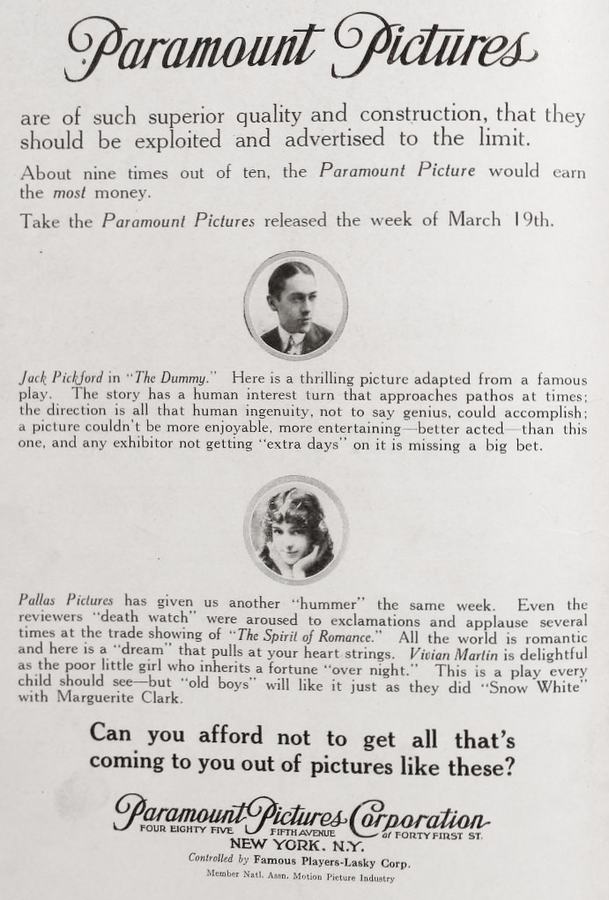
Dir: Francis J. Grandon
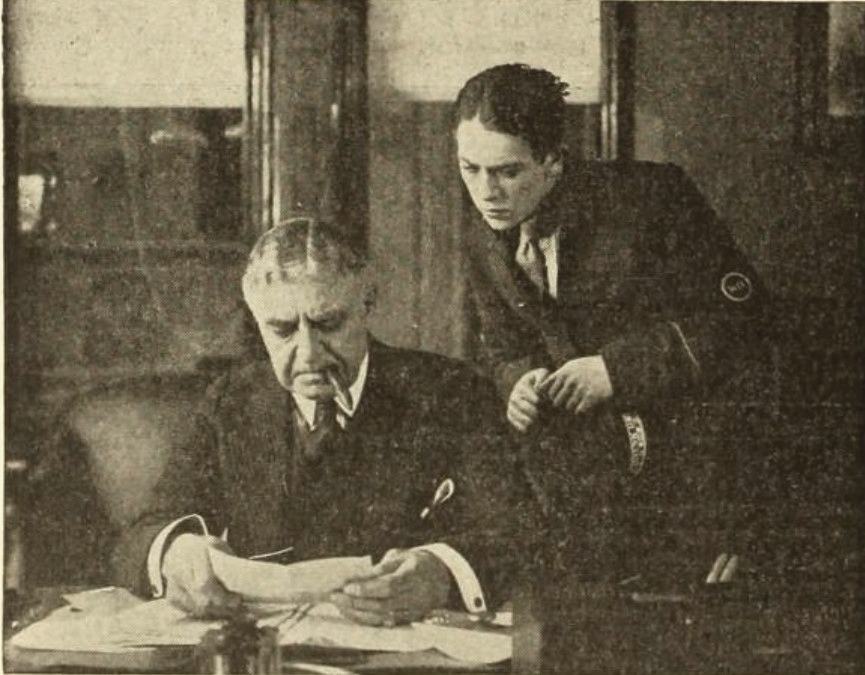
The Merediths, in reality much in love, have quarreled and agreed to separate but cannot agree as to the disposition of their little daughter Beryl. All this is opportune for the plans of Spider, a notorious kidnapper and his gang, who plot to steal Beryl while her nurse flirts in the park with one of their pals. The scheme works out as they plan and the child is taken to a deserted gambling den. The father and mother, in desperation, each apply to Babbings, a celebrated detective, although each accuses the other of haying kidnapped the child. Babbings privately suspects Spider's gang, whom he knows to be in town, but intends to make sure, so he has Spider shadowed. His men discover that Spider is receiving telegrams in code. It is necessary to get this code, so Babbings and one of his trusted men go to the hotel where Spider is stopping. Here they are at a loss until Barney, one-time messenger boy, comes whistling into their office to apply for a position with "reglar deetectuvs," and carries Babbings' bag to the hotel. Babbings has noticed the boy's shrewdness and asks him what he can do. Barney replies that he can "hold his tongue and talk deaf and dumb." This appears to please Babbings, who hires the boy at once and starts him to work by telling him to get the code book from Spider's room. The lad, disguised as a bellhop, accomplishes this and Babbings tells him the real plan, which is for Barney to masquerade as a wealthy deaf and dumb boy going to a sanatorium with an attendant. Spider will undoubtedly think this is a nice morsel for himself and will take Barney to the spot where he is hiding little Beryl, thinking to receive still another big ransom. This happens as Babbings has foreseen and Barney finds himself in the deserted house with little Beryl and Spider's gang. He manages to phone his information to Babbings in the night and the latter comes to the house disguised as a member of the gang. He gives the password and all would have been well had not Mrs. Meredith, summoned by the gang for the purpose of wringing money from her, entered and exclaimed his name, warning the crooks. They succeeded in making a getaway, but take Beryl and Barney with them. Barney is nearly discovered in his efforts to speak to Babbings but manages to disarm their suspicions and later signals to a small town sheriff whom he sees reading the notice of the thousand dollar reward offered by the Merediths. The sheriff, however, objects to sharing the reward with Barney and locks him and Beryl in a room while he goes to town to get it. Barney escapes, however, and an automobile race to town follows in which Barney is the victor by a few seconds.
View Details
Dir: Francis J. Grandon
A girl known as "Boots," who keeps house for a band of crooks led by her kind guardian, Uncle Ben, called "The Lion," demands that she be allowed to accompany them on a burglary. Dressed in boy's clothes, Boots is caught by Mrs. Kathryn Sylvester, a rich society widow, who, upon learning that Boots is a girl, resolves to avenge herself on James Graham, who refused to marry her stating that he wanted no stain on his lineage. She raises Boots in luxury, and at the proper time, introduces her to Graham's son Donald. After Boots endures an awkward two years of study during which she still frolics with her pet pig, she and Donald fall in love. During their wedding, Mrs. Sylvester announces Boot's past to Graham, but Uncle Ben, now reformed, reveals that Boots is really the daughter of Major Richard Harvey, who is present. The happy couple then resume their wedding.
View Details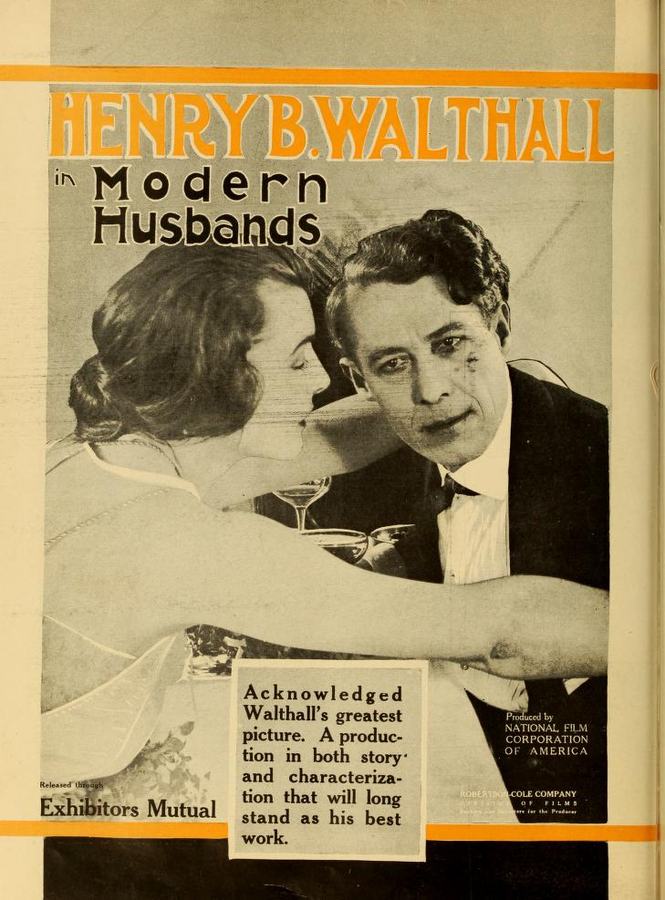
Dir: Francis J. Grandon
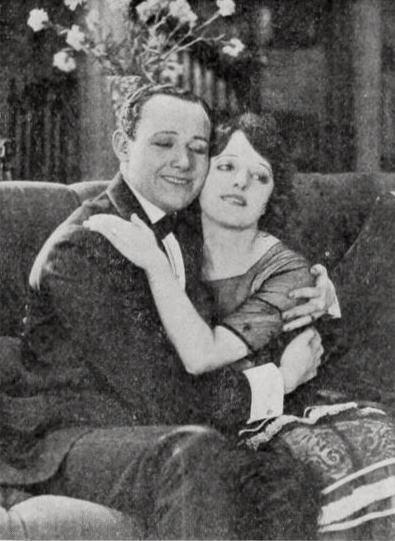
When wealthy Wall Street stockbroker Stephen Duane neglects his wife Julia for business, she consorts with philanderer Bert Brockwell. Finding them in an embrace forced by Brockwell, Stephen denounces Julia and leaves. After losing his fortune in the market, Stephen refuses Julia's offer to sell her jewels, and stays away for one year, while she opens a successful millinery store and has a baby. Despondent, Stephen decides to shoot himself, but when he hazily imagines Julia entering and catching his dead body, he drops the gun and decides to renew his life. After Jonathan Cosgrove, a friend, gives him $5,000 and a room in his home, Stephen discovers Brockwell in Mrs. Cosgrove's bedroom, forcing himself on her. Stephen hurls Brockwell through the window and then, to save Mrs. Cosgrove's reputation, allows Jonathan to think that he is the guilty party. After Mrs. Cosgrove discovers that Brockwell is a forger, she confesses to Jonathan, and arranges a meeting between Stephen and his wife and son that ends happily.
View Details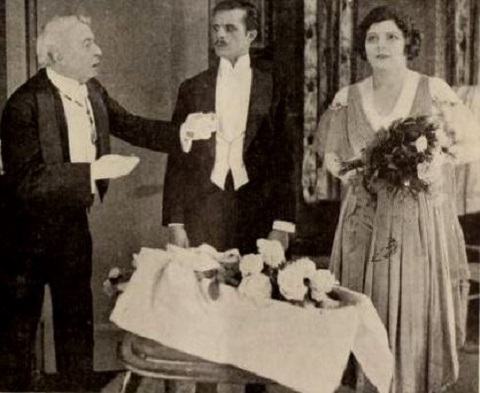
Dir: Francis J. Grandon
Young Polish American Sonia, whose deceased parents were famous musicians, exasperates her poverty-stricken guardian, Ivan Jandoroff, with her dreams of becoming a great violinist. When his employer, Andrew Hamilton, threatens to lower the wages at his steel mill, Ivan orders Sonia to work in the mill and then pawns her violin. Infuriated, Sonia soon learns that Andrew has purchased the instrument and visits the millionaire's home to demand its return. Upon hearing her play, Andrew offers to finance Sonia's musical education, but following her successful debut, he suggests that she offer herself to him to cancel the debt. Sonia tearfully smashes the violin and then returns to the factory, where she nurses the sick laborers through an epidemic and prevents a strike that would have ruined Andrew. Realizing his injustices to his workers and the woman he loves, Andrew promises to improve conditions at the mill and later proposes to Sonia.
View Details
Dir: Francis J. Grandon
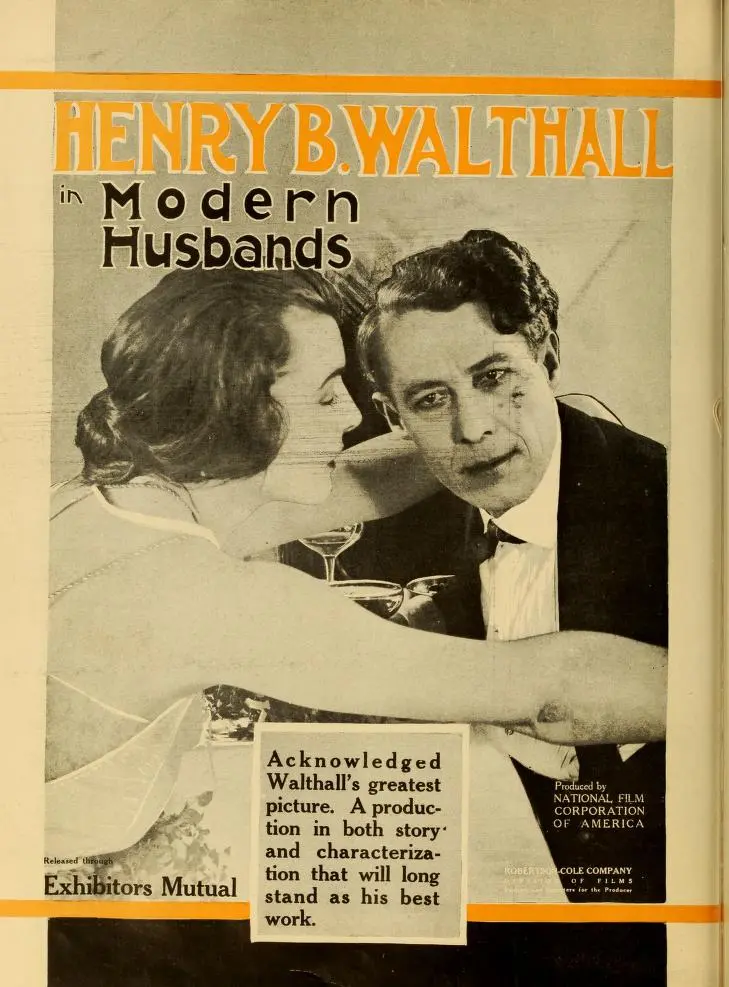
Two passionate suitors pursue actress Elaine Elton Oscar Billings, the head of several large theaters, and millionaire Jack Dexter, whom she has never met. To force her to spend time with him, Jack pretends to be a chauffeur and gets a job with Elaine, who soon feels quite attracted to him. Then, Oscar combines a marriage proposal with a threat, and tells Elaine that she will never work again if she refuses to become his wife. Elaine gives in and marries Oscar, but then murders him because of his numerous affairs, after which she herself dies while trying to escape from the police. Elaine then wakes up, and after realizing that her marriage and the events that followed it were a bad dream, decides that the nightmare may have foretold the future. As a result, she ignores Oscar's threat to her career, and marries her millionaire chauffeur.
View Details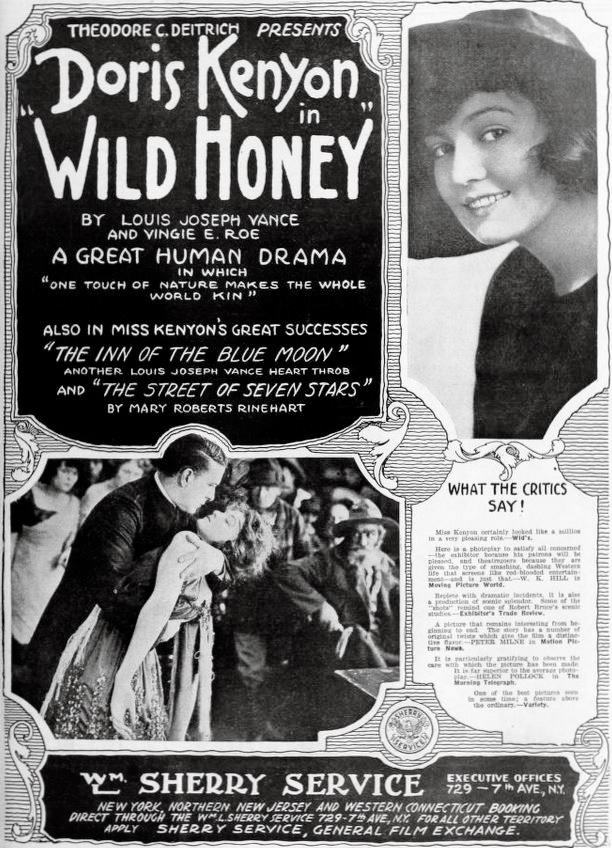
Dir: Francis J. Grandon
Concerned that she will ruin the Rev. David Warwick's career by marrying him, actress Letty Noon accompanies her fiancé to the home of Pastor and Mrs. Holbrook to seek advice. In answer to their question, the old parson narrates the story of young Jim Brown, a minister who resolves to reform the rough miners in a small Western town. His strength and dedication deeply impress the townspeople, but his sermons seem to have little effect on "Wild Honey," a dance hall girl who resents his constant admonitions. Wild Honey secretly loves Rev. Brown, however, and after she impulsively kisses him, he forgets his preaching and thinks only of her. One of Wild Honey's jealous suitors frames the reverend for murder, but she clears his name and, later that night, tells the parson of her love. Hearing her declaration, another rejected suitor attempts to shoot Rev. Brown, but Wild Honey shields him and is seriously wounded. The reverend then takes her to another town, where they happily grow old together.
View Details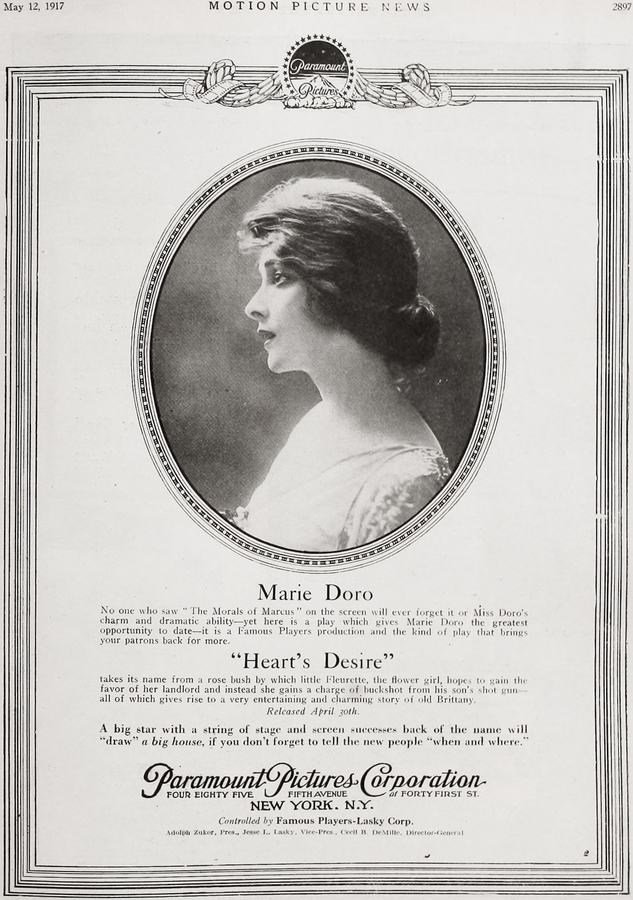
Dir: Francis J. Grandon
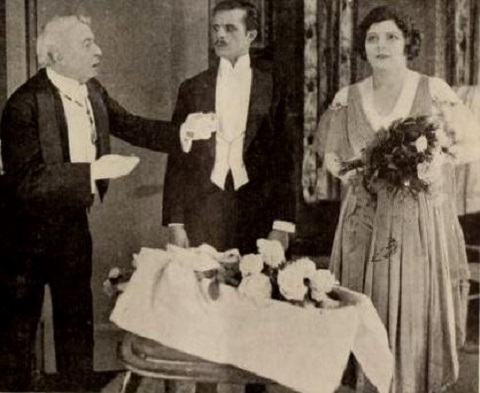
Henri Le Rocque's arrival to an island village causes much consternation when he insists upon advanced rental for the land he owns. Accompanying Le Rocque is his nephew Paul, recovering from the effects of an unfortunate love affair. One day, little flower girl Fleurette visits the Le Rocque estate to make a present of a rare flower and is shot as a trespasser. She is nursed back to health at the mansion, and Paul falls in love with her. However, her former sweetheart, Jacques, appears and persuades Fleurette to run away. As Fleurette returns to the village, she learns that the villagers are planning to storm the mansion and, realizing that she loves Paul, rushes back to warn him. This endears her to Henri, who urges Fleurette to marry his nephew and bring happiness into their lives.
View Details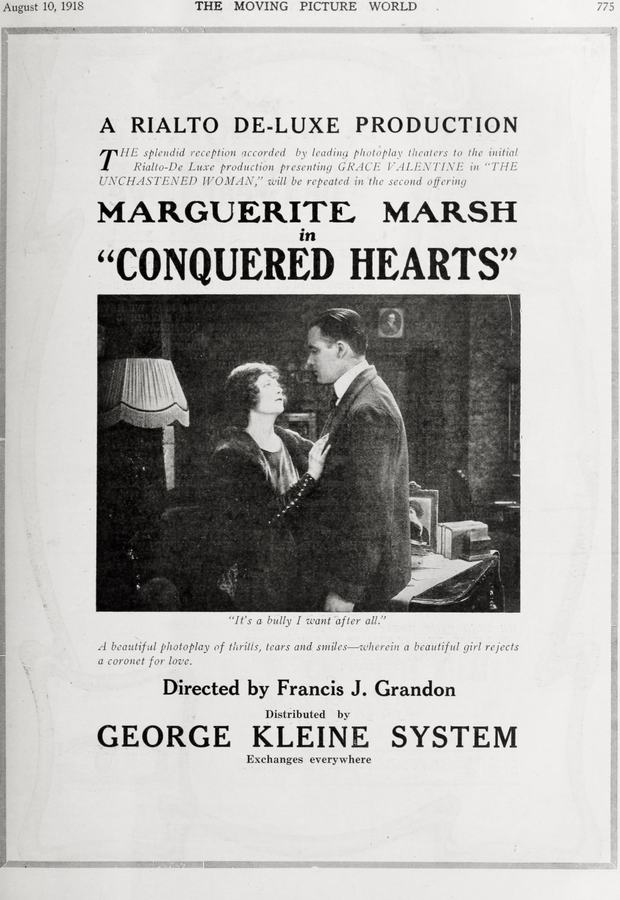
Dir: Francis J. Grandon
Nora, a girl of the lower East Side of New York City, marries a rising ward politician. A child is born. They are happy, but the young politician is running for office against the old ward boss and has to be out every night. The wife becomes jealous of a certain woman. Nora's child dies. Things get worse for her as jealousy and the seeming neglect of her husband increase. She finally leaves him and becomes a model for a noted painter. The husband finds where she is, but makes no attempt to force her to return to him, though he still loves her. One of the artist's friends, a magnate in the motion picture business, promises her a chance. Her rise to stardom is quick. The climax of the story is a struggle between the old love and the new fame. She does not know that the politician has become a first-class lawyer. Finding that the old love and the new fame are not incompatible, she is reunited with her husband.
View Details
Dir: Francis J. Grandon
The daughter of an adventurer in India is kidnapped by a native king, whom she is forced to marry. She has several adventures battling natives and wild animals.
View DetailsAnalysis relative to Miss Nobody
| Film Title | Atmosphere | Complexity | Similarity |
|---|---|---|---|
| Eva, wo bist du? | Gothic | Dense | 86% Match |
| The Dummy | Surreal | Abstract | 98% Match |
| The Lamb and the Lion | Tense | Layered | 85% Match |
| Modern Husbands | Gothic | Abstract | 98% Match |
| Love's Law | Ethereal | Linear | 88% Match |
This guide was algorithmically generated using the cinematic metadata of Francis J. Grandon's archive. Last updated: 6/25/2026.
Back to Miss Nobody Details →