
DbcultAccessing Vault...
Recommendations
Senior Film Conservator

If the unique vision of Burton L. King's work in More Truth Than Poetry left an impression, the cinematic shorthand used by Burton L. King is both ancient and revolutionary. We've prioritized films that capture the 1917 aesthetic with similar precision.
By merging unique vision with cult tropes, it to articulate the unspoken anxieties of United States's 1917 era.
When Vera, the daughter of steel king Daniel Maitland, marries Blair, a young lawyer, her father cuts her off with only a small allowance. A few months later, Blair becomes famous by securing the acquittal of one of his friends who had killed his wife's lover, basing his plea on "the unwritten law." He then succumbs to the fascination of another woman. Vera discovers them in a compromising situation and shoots Blair. At her trial, her lawyer is pleading for mercy when Vera explains that she does not want mercy, but justice. She asks if there is one law for a woman and another for a man and explains that she shot her husband because he betrayed her trust. At that moment, it is revealed that the whole episode is being composed by novelist Elaine Esmond, who interrupts her story to go to the opera with her sweetheart.
More Truth Than Poetry was a significant production in United States, bringing a unique perspective to the global stage. It continues to be a top recommendation for anyone studying cult history.
Based on the unique unique vision of More Truth Than Poetry, our vault has identified these titles as the most compelling follow-up experiences for fans of cult cinema:

Dir: Burton L. King
Ralph Courtland and Pierre Felix are sitting in their Fifth Avenue Club discussing the eternal question, woman. Ralph contends that it is birth and breeding that make the gentlewoman, but Felix, who is a designer of fashionable apparel, claims in three months he can make a lady of any one he may happen to pick up on the street, simply by dressing her properly. An old organ-grinder and a young woman, leading a monkey by a string, stop in front of the club to gather some pennies, and Ralph and Felix decide to make her the subject of the test. The wager is for $25,000 and expenses and stakes are placed with Allen Tait, a young lawyer. Ralph goes to California, where his aeroplane is to be entered in a race, and Pierre, fitting out Bianca with beautiful clothes and installing her in a handsome apartment, begins his experiment. Bianca wears her new garments as if born to the purple, and is soon introduced to society at a charity ball and bazaar given by Ralph's mother, Pierre introducing her as a Russian Countess. Ralph returns in time to meet her, and not knowing her identity, is delighted with her. He pays her so much attention that Pierre's jealousy is aroused. Pierre, maddened by her exotic beauty attempts to embrace her, when he escorts her to her new apartments after the ball. She is so infuriated that she returns at once to the old organ-grinder. Pierre apologizes profusely, and persuades her to return, so that he may win the wager. Ralph and Bianca spend a great deal of time together. They are out horseback riding when Ralph's horse becomes frightened and he is thrown. Bianca is so overcome with fear that she rushes to him and pours forth her love in a torrent of words. Ralph is not badly hurt, and returning to consciousness, hears her and is overjoyed. He proposes marriage to her, and she accepts at once. Later Pierre reminds Ralph that he has lost the wager, since Bianca has been accepted by society. Ralph's affairs are in a precarious condition, and this threatens to ruin him. Then Bianca tells him her real identity. She is the daughter of the King of Montenaro. Being ordered to marry the Grand Duke Seridan, she has escaped to America, taking Carlo, an old servant, with her. Ralph rushes back to the club and prevents Allen from paying over the money to Pierre, since he is the one who has lost. Pierre, infuriated, vows revenge. He hurries to Bianca and forces her into an automobile. The Grand Duke has come in search of her, and Pierre promises to deliver Bianca to him. He takes her to the Duke's ship, which is in the harbor. Ralph, who has been notified by Bianca's maid that her mistress has been kidnapped, at once follows in his aeroplane, and Allen Tait gets into communication with the government officials to have the ship stopped within the three-mile limit. A cruiser is sent after the boat and stops it, but not before Ralph has dropped to the deck from his airship and fought his way to Bianca. Their immediate marriage puts a stop to further persecution from the Grand Duke.
View Details
Dir: Burton L. King
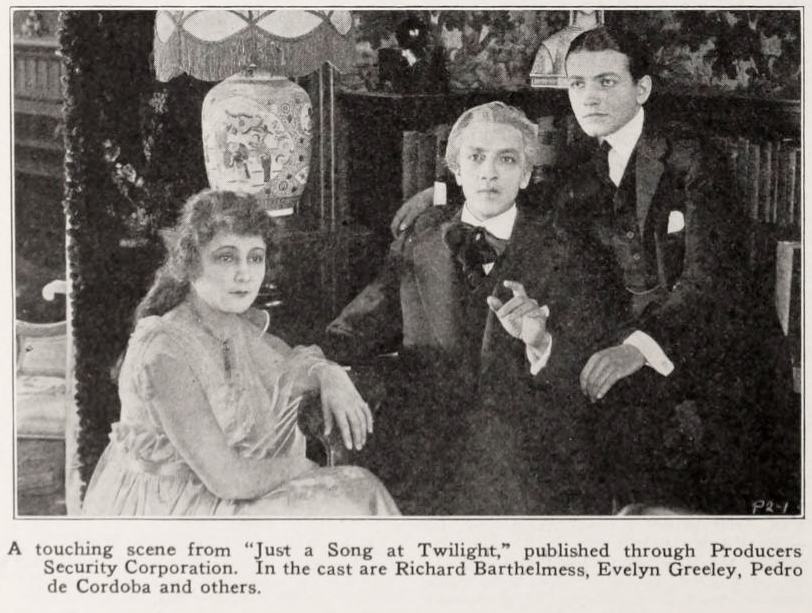
Lucy Winter, raised in the lap of luxury, has reluctantly accepted the suitor of her father's choice. George Turner, whose aunt has recently died, leaving him a necklace of peculiar antique beauty, has decided to search for his father, whom he has always believed dead. Passing a beautiful old Southern mansion that somehow seems strangely familiar, he sees a "Gardener Wanted" sign, applies for the position, and is accepted by the girl Lucy, with whom he falls in love, to the chagrin of her banker father, who orders him to leave after recognizing the necklace which the boy has given Lucy in lieu of an engagement ring. During a troubled sleep Father Time leads Winter's conscience to review his past. This extends over 18 years, during which Winter is installed as gardener at the Turner mansion and becomes the pal of his master, Carlysle. They love the same girl, Lucy Lee, who elopes with Winter. Their married life is one continued struggle. Previously Turner has given the antique necklace to Lucy as a wedding gift. This she later places in Carlysle's hands as security for one of the loans he made to her in their struggle against poverty. She led her husband to believe the money came from her mother, but he knew the truth, and accepted Carlysle's friendship, planning his ruin at the same time. Through the loss of Lucy's love, Turner passes many restless nights, eventually resorting to morphine, which finally masters him. Winter rises to the position of bank cashier, forecloses a mortgage on the Turner mansion, ousts Carlysle as bank president, and becomes president himself. Turner has been wrongly convicted of murder and sent to prison for life. Lucy, realizing the despicable character of Winter, and really in love with Carlysle, dies of a broken heart. Father Time leads Winter's conscience back into his body, and he wakes, calling "Lucy. Lucy!" George Turner arrives at the house and reads a number of letters, including one from his father, accusing Stephen Winter of being the cause of his troubles. He determines on revenge and hastens to the Winter mansion. Pity takes the place of anger at sight of Winter, and the old man tells George how it happened, giving his promise that he will secure his father's pardon. Soon George is able to bring his father from prison to the Winter Mansion. Winter tries to make amends to Carlysle, and the two leave the room arm-in-arm, and the young people give each other the previous promise, "I will."
View Details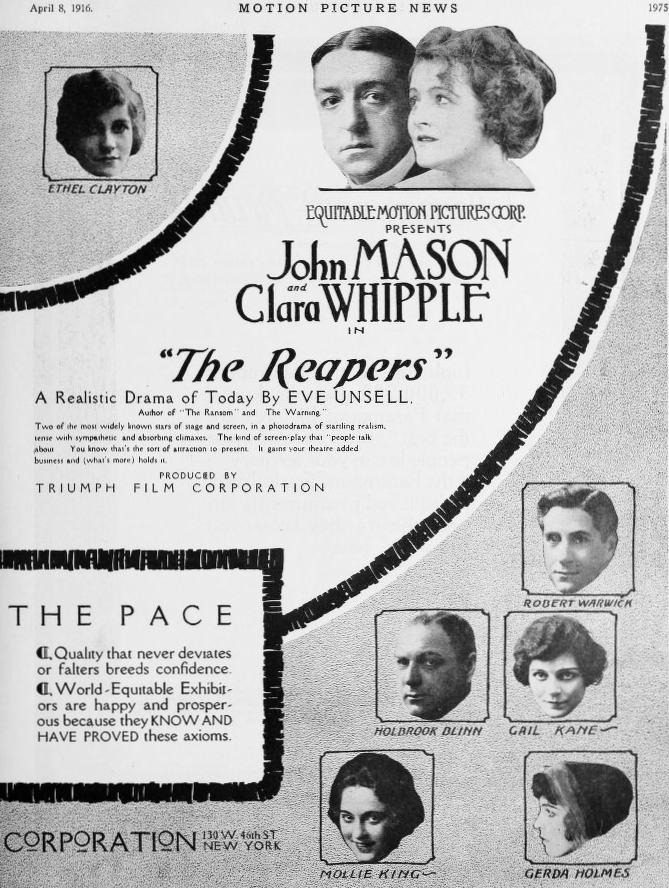
Dir: Burton L. King
Albert Jordan, publishing house manager, lavishes his salary on his adored wife, Rita, and little daughter Edna. She is a churchgoing woman, while his home and his family is his religion. While returning home one day, Jordan sees his little daughter in the path of an auto. He runs to snatch her from instant death. He saves her but is seriously injured himself. As a result, he becomes a half paralytic. His wife becomes the bread-winner of the family. She frets against this and is tempted by a former lover, Jim Shaw, a race-track follower, and leaves with him. Jordan becomes an embittered blasphemer. He is compelled to sell newspapers and pencils at an elevated station. Here a splendid woman with a deathless faith finds the hopeless Jordan and teaches him her creed of life. Jordan begins to pray. At last, in response to his prayers and more hopeful state, Jordan is healed and learns that God's way is not always the ways of men. The years pass. Jordan with health, new strength, new friends, becomes successful in business. His daughter, Edna, now a beautiful young woman, marries Frank Rollins, of aristocratic family, and assistant district attorney. Jordan makes his home with the young couple. On the other hand, Rita, who first lived in luxury, has gradually gone down the ladder of life and now reaps the harvest of her sin and selfishness. Shaw is drinking heavily and beats her. They return from Paris and start a flashy tango hall. A few months later, after his daughter's marriage, Jordan is asked by Rollins to accompany him on a vice crusade. While in a dance place, there is a quarrel between a man and a woman. Jordan goes to intervene and comes face to face with his wife. After a night of anguish Jordan goes to Rita, telling her of himself and of Edna. He teaches her to see the "light," as he calls it, as he has seen it. Rita is touched by Jordan's willingness to forgive and forget and the latent good in Rita's nature rises to meet the good in Jordan. How Rita repays his wish to reclaim her is unfolded in the climax.
View Details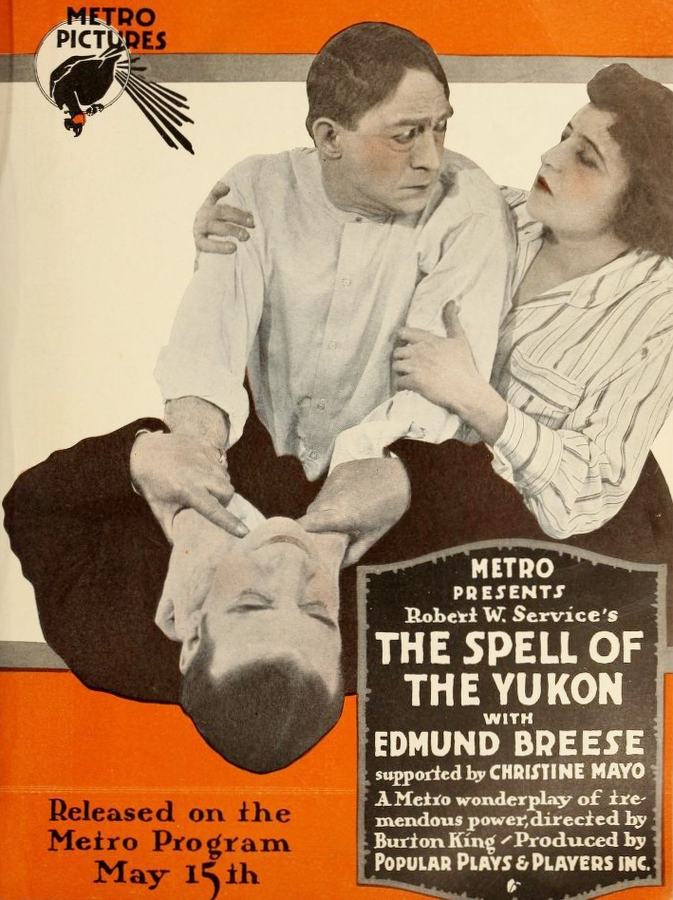
Dir: Burton L. King
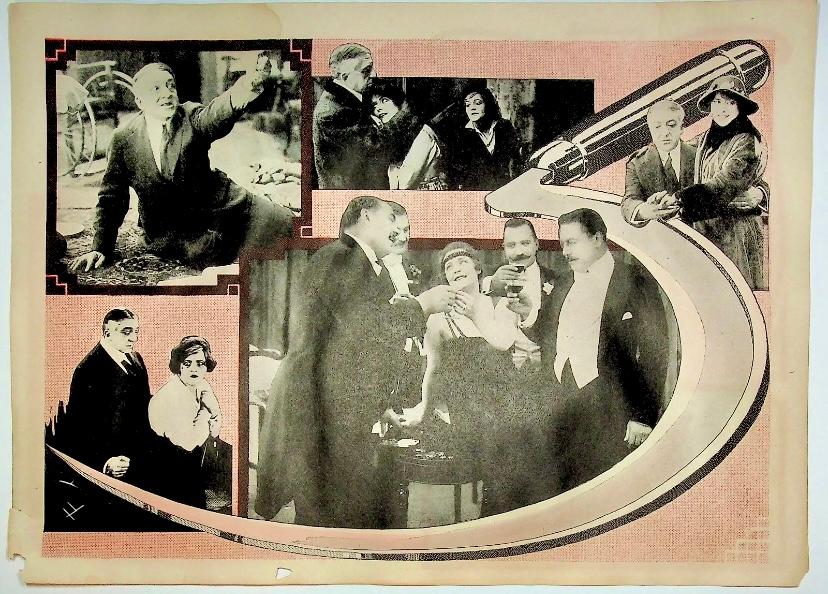
Having forced Jim Carson to leave town in order to avoid a trumped-up embezzling charge, now Albert Temple is rid of his only serious rival for Helen, whom he soon marries. Jim goes to Alaska, where he adopts Bob Adams, the son of a murdered friend, and then makes a fortune in a gold strike. After eighteen years in the Yukon, Jim returns to his hometown with Bob, who falls in love with Helen and Albert's daughter Dorothy. Because he so hates Albert, however, Jim refuses to consent to a marriage between Bob and Dorothy until Helen tells him that Albert is not the young woman's father. In reality, Dorothy is Jim's own daughter, and when he learns this, Jim quickly changes his mind about the marriage.
View Details
Dir: Burton L. King
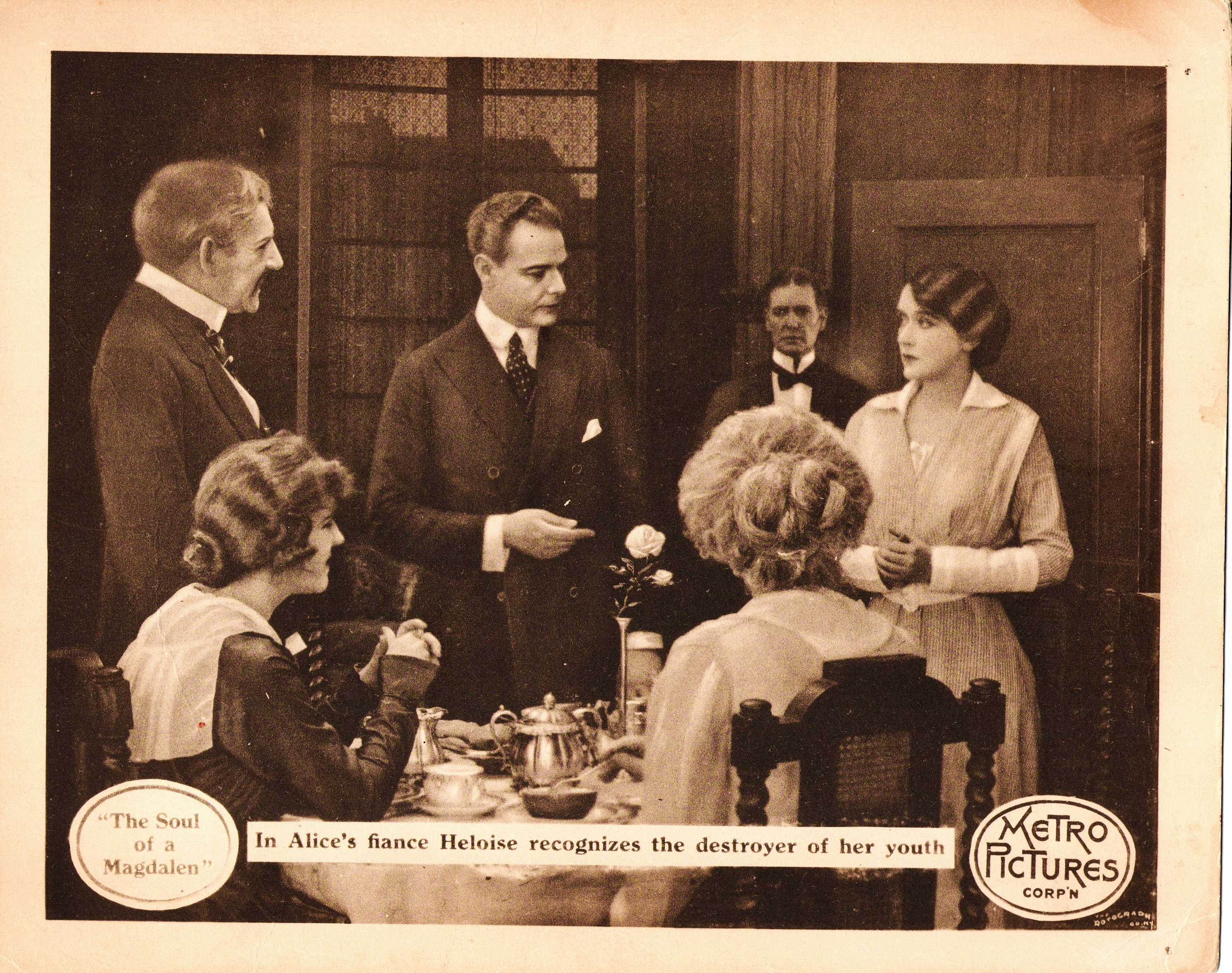
The sole support of her invalid mother and young crippled brother, Heloise Broulette is forced to become the mistress of Leland Norton in order to secure the money for an operation to save her mother's life. Mrs. Broulette recovers, but when she discovers the real source of her daughter's income, the news kills her. After her mother's death, Heloise leaves her career behind and goes to the country where she takes a job as a secretary to author Carter Vail, who falls in love with her. Ruth finds herself in a dilemma when Vail's sister Alice visits friends in the city and falls in love with Norton. Honor bound, Ruth sacrifices her own happiness to save Alice from Norton. In revenge, Norton informs Vail of Heloise's past, but Vail responds that she has the soul of a Magdalene despite the life that she had been forced to endure.
View Details
Dir: Burton L. King
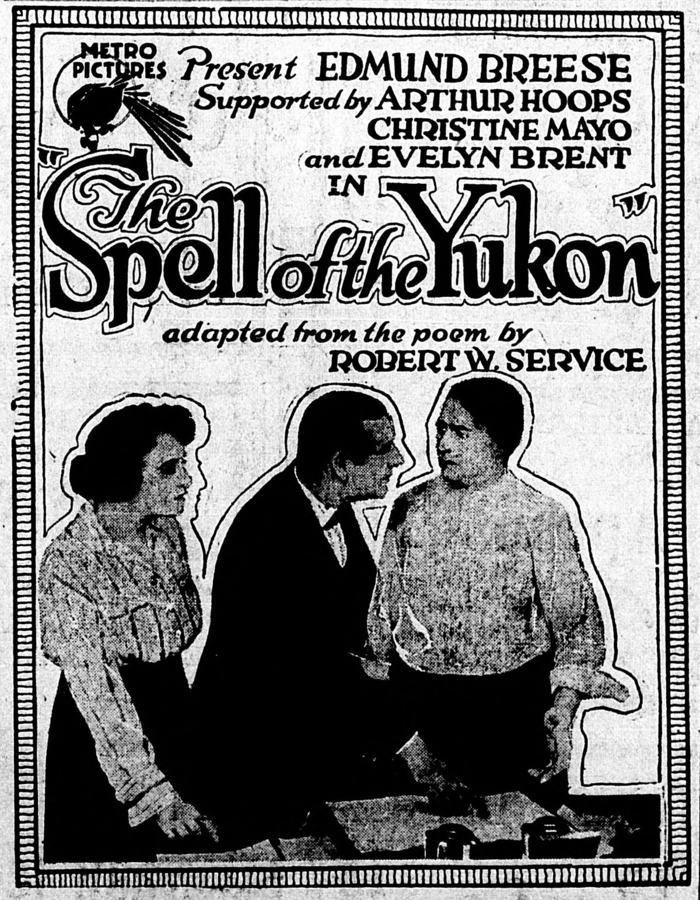
Nancy Page is a frivolous socialite until her husband Richard becomes entangled in his employer David Davenport's shady business dealings. Davenport, a building contractor, had secured Richard's signature on several papers that promised payment of over a million dollars, even though the firm was insolvent. At a party held in honor of wealthy Japanese agent Tato Usaki, Richard tries to convince Davenport's wife Lila, who is in love with him, to obtain the vouchers, and Nancy attempts to charm Usaki into signing a building contract that will save the firm. Usaki and Nancy arrange to meet at the vacant house next door, where he signs the contract but then locks the door and attacks her. Nancy escapes through a window and returns to the party with the contract, while Davenport, having discovered that his wife has destroyed the incriminating vouchers, shoots himself.
View Details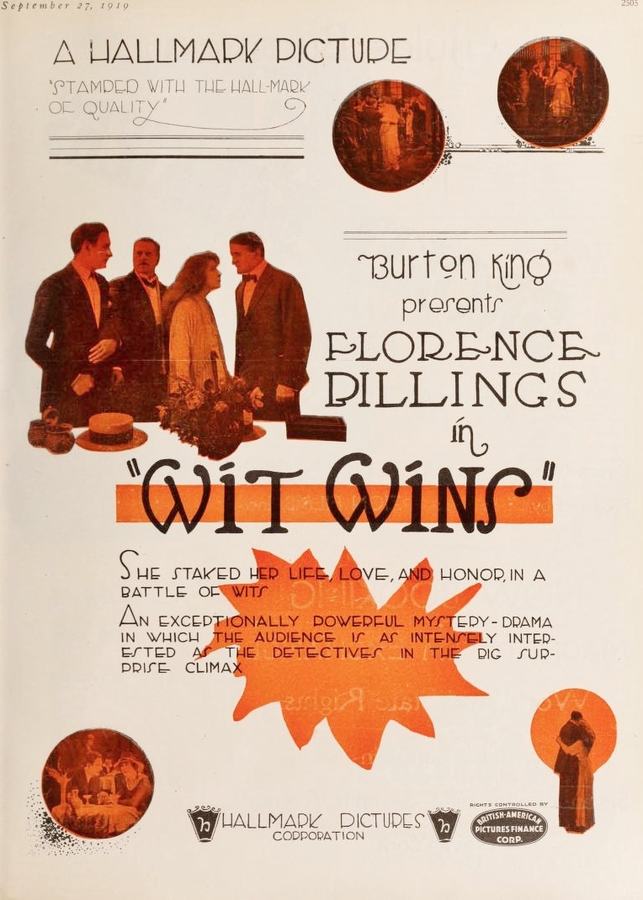
Dir: Burton L. King
When the dominating financier takes the girl as his private secretary he secures not only an efficient girl but a beautiful one. It is then that his son decides to take an interest in business. His father suspects that his son has suddenly become imbued with business affairs because of the striking young woman secretary he has engaged and tells him that if he intends to go into business he can do so but he does not want him about the office. The son is unsuccessful in many deals and when some bonds are missing the guilty parties manage to successfully charge him with stealing them. In the meantime he had been visiting the charming young secretary of his father and often met his father's cashier coming out of the apartment. He had become furiously jealous and the climax came when he discovered his sweetheart in the arms of the cashier. It is when he is accused of stealing the bonds that he begins to realize that his father's cashier and the pretty secretary are in a plot to ruin his father. And right here is where the story becomes intensely interesting and the suspense is finally lifted. Of course the business rivals become staunch friends again as of yore. But the lovers have come over a rough road in their romance and a pleasant future is also assured for them.
View Details
Dir: Burton L. King
A battalion of the U. S. Army's 77th Division penetrates deep into the Argonne Forest of France during the First World War. The battalion becomes surrounded and holds out for six long days, awaiting reinforcement and rescue.
View Details
Dir: Burton L. King
Ephram Judson is an itinerant evangelist. He is always accompanied by his daughter Ruth and his 17-year-old son Tom. They enter a community of devout Christians and hold a series of meetings. On the outskirts of the community lives Hugh Lee, an outcast. His only sister had been burned to death on her wedding day when he renounced the world and his God. Accidentally he meets Ruth Judson, the evangelist's daughter. For the first time since the tragedy, the world looks bright to him. Ruth induces him to attend the Sunday service, but in the midst of it, he pictures his sister's death, and bursts forth into a violent denunciation of religion. The worshippers are shocked and pursue him to the woods. The collection that day was large and the money is given to young Tom Judson to take to the treasurer. Tom has formed the acquaintance with the village sport, who meets him and inveigles him into a game of cards. Tom stakes the church funds and loses. The gambler turns the money over to the village grocer in payment of a bill and the distressed boy, who has witnessed the transaction, sees the grocer hide it. Tom steals the money, but is pursued and slightly wounded by the grocer. He makes his way to the only place of refuge he can think of, the cabin of Hugh Lee, the unbeliever. Tom believes he is dying and pleads for his sister. Lee fetches her at night to the cabin. Meantime the grocer has aroused the community, including the evangelist, to hunt down the thief. The boy is traced to Lee's cabin, which is attacked. Ruth, aroused, as she was from her slumber, is found in the cabin in her night clothes, but she still shields her guilty brother and Lee. The fury of the mob breaks loose, Lee is dragged from his cabin and a noose placed about his neck. Ruth refuses to tell why she was in the cabin, despite the pleadings of Lee to save her honor, and give her brother up to the law. She declares that God will save them all. A storm is raging. Lighting its way with fire-brands, the mob marches Lee to the scene of the revivals after having fired the cabin. The leader of the mob throws the end of the noose over a tree and gives the horse Lee is riding a crack with the whip. Just at that moment a terrific bolt of lightning strikes the limb, severing it from the tree and throwing Lee to the ground. It strikes, too, the mob leader, killing him instantly. Tom, driven from the burning cabin, has followed the mob and arrives on the scene just as the hand of God saves an innocent man. He confesses his guilt, clearing Lee and his sister's honor and changing a frenzied mob into a rejoiceful gathering, the picture closes with Lee acknowledging the power of faith that has saved him and clasping Ruth in his arms.
View Details
Dir: Burton L. King
Young Dudley Kent falls in love with Grace Vaughan and leaves his wife for her. The two are very happy until Kent learns that his young son has died. He blames Grace for "luring" him away from his family and leaves her. Alone and broke, Grace is tricked into working at a "sporting house" run by madam Marie D'Arcy. Desperate to escape her circumstances, she meets a young man who she believes can rescue her from her predicament. He eventually does, but complications ensue.
View DetailsAnalysis relative to More Truth Than Poetry
| Film Title | Atmosphere | Complexity | Similarity |
|---|---|---|---|
| The Eternal Question | Ethereal | Dense | 98% Match |
| Just a Song at Twilight | Ethereal | High | 97% Match |
| The Reapers | Gritty | High | 98% Match |
| The Spell of the Yukon | Ethereal | Linear | 87% Match |
| The Soul of a Magdalen | Tense | Linear | 97% Match |
This guide was algorithmically generated using the cinematic metadata of Burton L. King's archive. Last updated: 6/24/2026.
Back to More Truth Than Poetry Details →