
DbcultAccessing Vault...
Recommendations
Senior Film Conservator
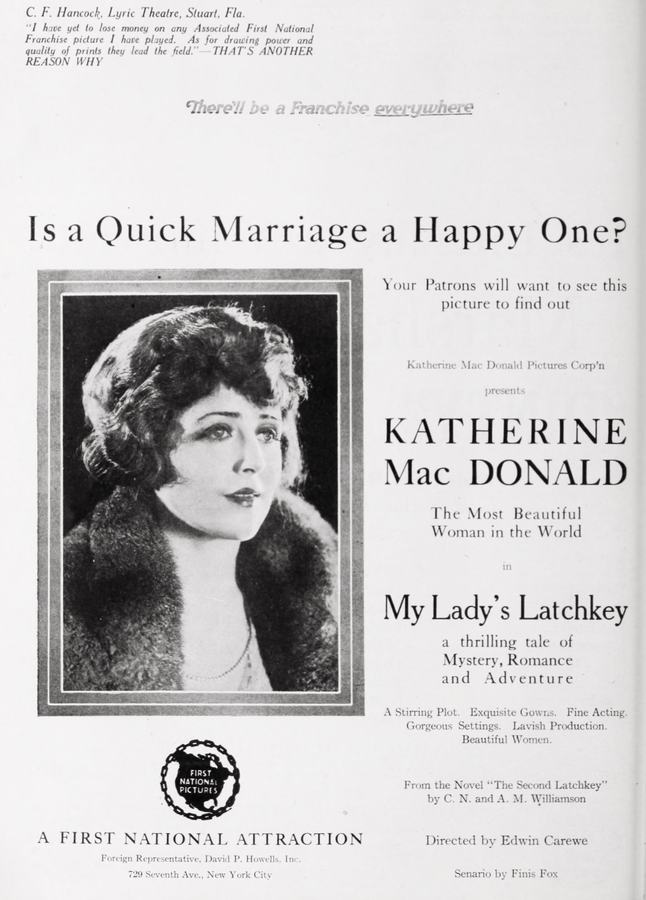
The cinematic DNA of My Lady's Latchkey (1921) is truly one of a kind, finding other movies that capture that same lightning in a bottle is a top priority. We have meticulously scanned our vault to find hidden gems that resonate with this work.
As a pivotal work in United States cinema, My Lady's Latchkey to challenge the status quo through its avant-garde structure.
Young Annesley Grayle, weary of a gloomy, uneventful existence with her aunt, accepts the proposal of a young American that she pose as his wife. Later, they are actually married. When, at a ball, she hears her husband accused of stealing a valuable diamond and realizes that he is indeed a thief, she hides the jewel to save him. She plans to report him to the police, but, seeing that he intends to reform, she remains with him and saves him from being shot by a jealous countess.
Critics widely regard My Lady's Latchkey as a cult-favorite piece of Mystery cinema. Its cinematic excellence is frequently cited as its strongest asset, solidifying its place in United States's film legacy.
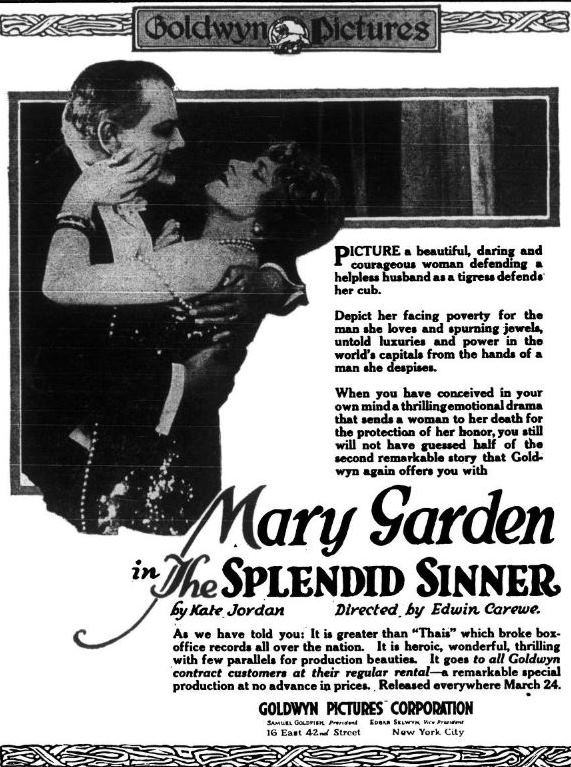
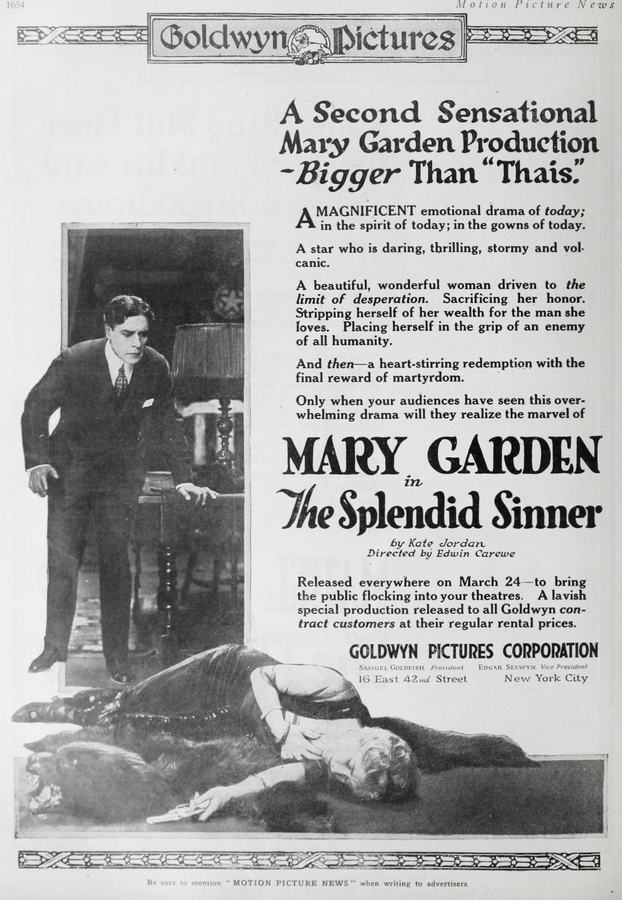
Based on the unique cinematic excellence of My Lady's Latchkey, our vault has identified these titles as the most compelling follow-up experiences for fans of Mystery cinema:
Dir: Edwin Carewe
A woman marries a German immigrant in New York, but loses him when her soiled past is revealed. He returns to Germany after the beginning of the First World War, where he becomes a high-ranking officer in the German army. His wife joins the Red Cross and, in a combat hospital, discovers her wounded husband. Her love for both her husband and her country lead her to a great sacrifice.
View Details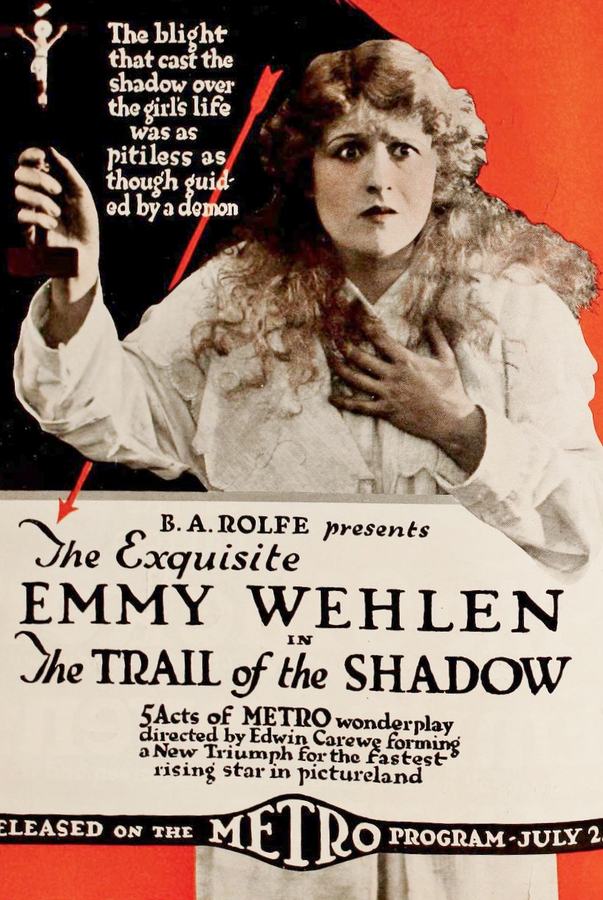
Dir: Edwin Carewe
Sylvia Mason, a mysterious girl, lives in a cabin by herself and sells her bead work to the visitors at a large hotel nearby. At the hotel, Sylvia meets Easterner Henry Hilliard, who falls in love with her, but she refuses to marry him and will not explain her reasons. Thus Henry returns East without learning that Sylvia's father had been murdered by his private secretary Jack Leslie in revenge for her refusal to marry him. One night after Henry's departure, Leslie, now known as the outlaw "The Shadow", breaks into Sylvia's cabin. There is a struggle that leaves Sylvia unconscious, and when she awakens she finds a note claiming that because Leslie has violated her, she must marry him. Meanwhile Henry's mother, horrified that her son wants to marry this strange girl, informs Sylvia that their marriage would destroy him. Sylvia agrees to give up Henry, but he learns her story from Padre Constantine and goes to search for her. Sylvia has gone to Leslie and Henry follows. In the ensuing fight, Henry forces Leslie to admit with his dying breath that he has lied to Sylvia.
View Details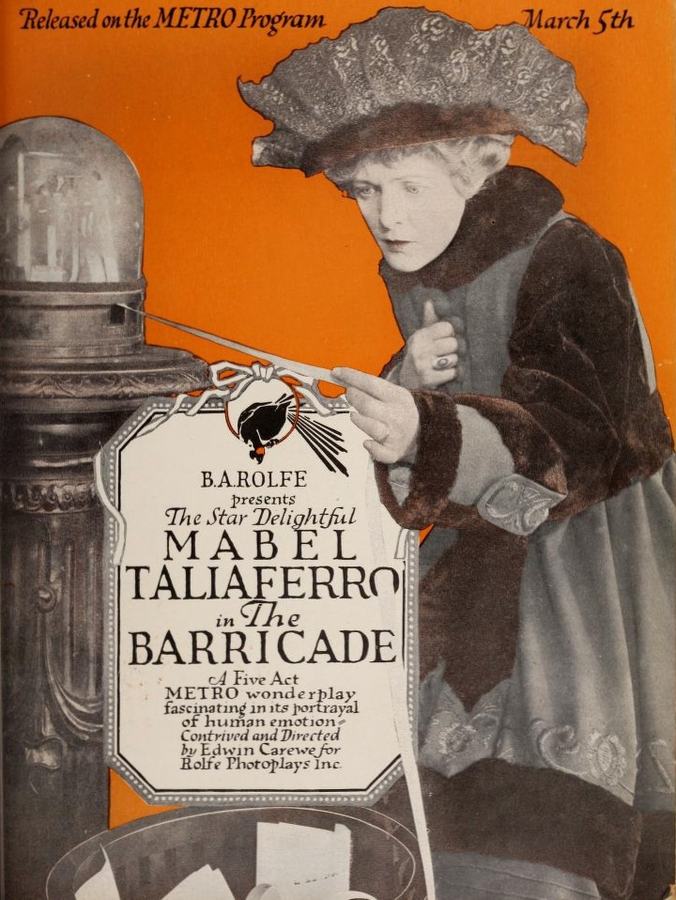
Dir: Edwin Carewe
Unnerved by the superiority of John Cook, the new president of the Securities Company, Wall Street business leader Amos Merrill begins to speculate with the trust funds in his control, ultimately losing all the funds. Amos, faced with discovery and disgrace, lies to his daughter Hope that Cook has ruined him; soon after, Hope meets Cook and conceives a plot for revenge. In the meantime, Cook has protected the frail Merrill from prosecution and paid back his debt after sending him away on a vacation to recover his health. Hope, knowing nothing of this, marries Cook and makes his life unbearable, finally conspiring with his business rival Gerald Hastings to ruin her husband and gain control of his funds. When Amos returns from his vacation, he is stunned at what Hope has done and reveals that his lie has resulted in a terrible mistake. Hope begs forgiveness from Cook and they go West together to begin a new life.
View Details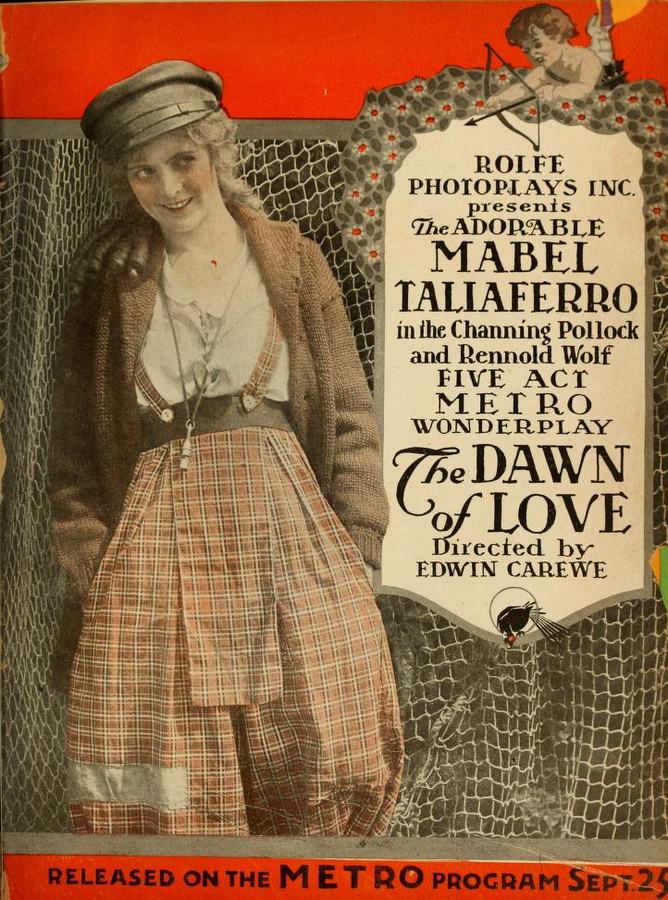
Dir: Edwin Carewe
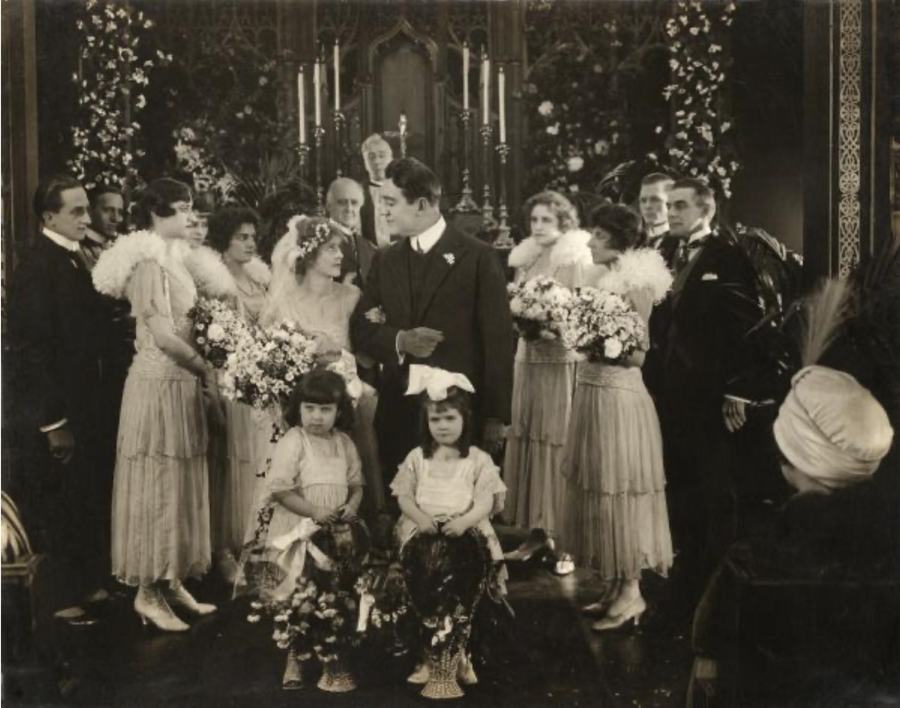
Unknown to his daughter Jacqueline, Miles Allen, in the guise of a fisherman, smuggles silk and fur into the country. Customs officer John Lang comes to investigate, and he and Jacqueline quickly fall in love. Ward Jennings, the owner of Miles' boat, also loves her, but Miles refuses to let him marry her, so Ward gets revenge by revealing Miles' smuggling operation to Coast Guard officers, who kill Miles in a struggle at his home. Jacqueline mistakenly blames John for her father's death and goes to Ward for help. She then learns the truth about Ward; they fight on a cliff-top and he falls to his death. John comes to comfort Jacqueline, and they begin making plans for their life together.
View Details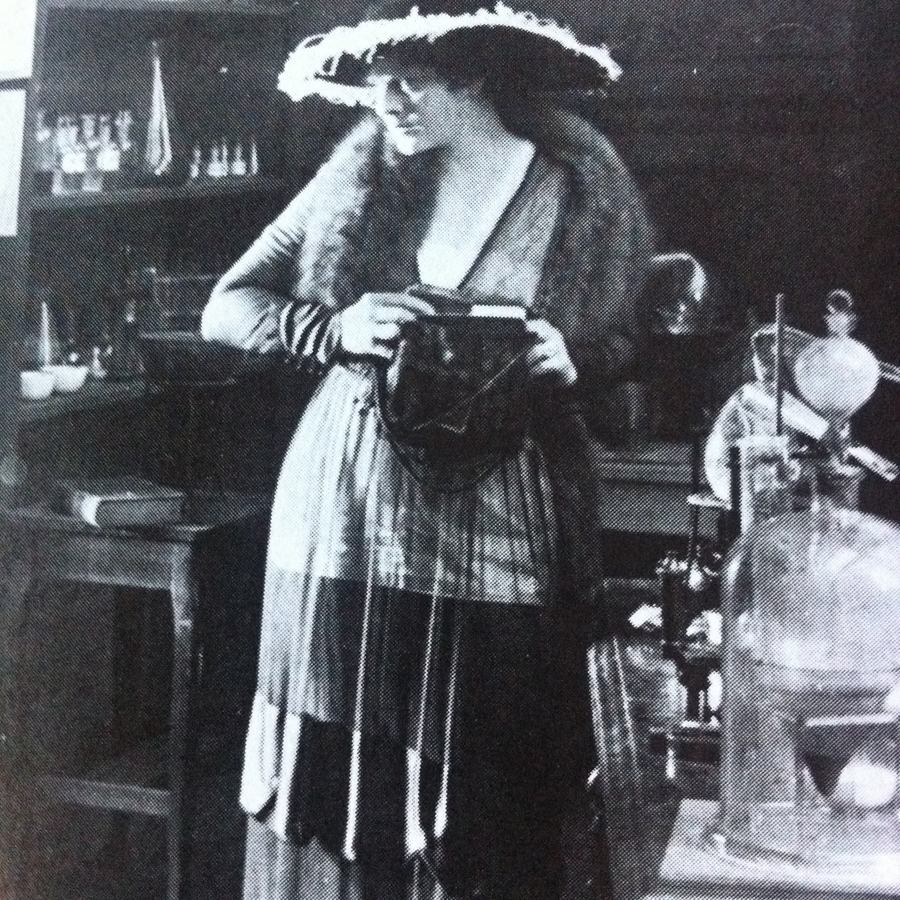
Dir: Edwin Carewe
Actress Jane Carleson has three admirers: Henry Strong (a millionaire), Hamilton Ross (a chemist), and Murray Campbell (a district attorney). When Jane weds Campbell, Ross writes an anonymous letter to Campbell, warning him that Strong is after his wife. Ross smears the flap of the envelope with poison. However, Strong is the one who opens the envelope, and dies from the poison. Since Campbell and Strong had quarreled just before the arrival of the letter, Campbell is convicted of the murder. Jane must expose the true murderer and save her husband.
View Details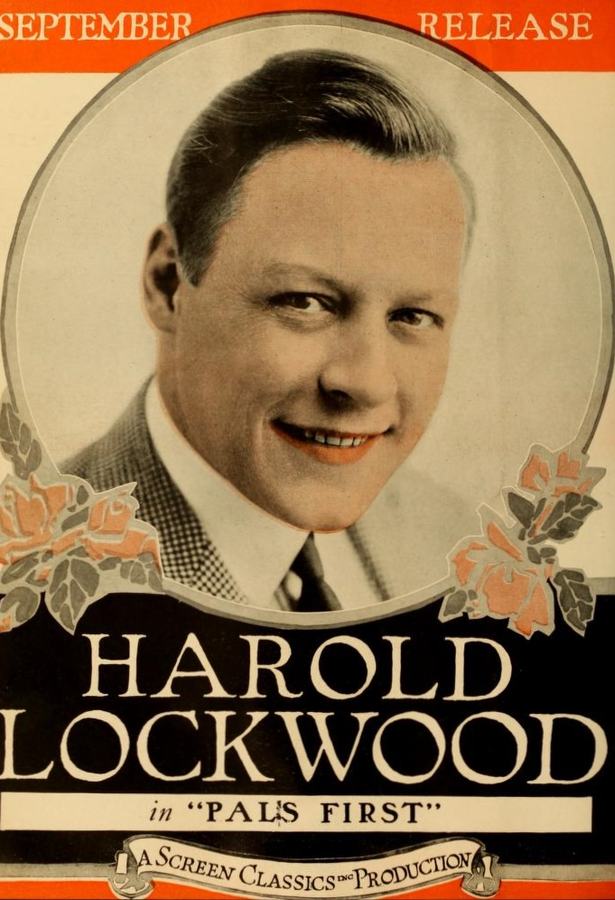
Dir: Edwin Carewe
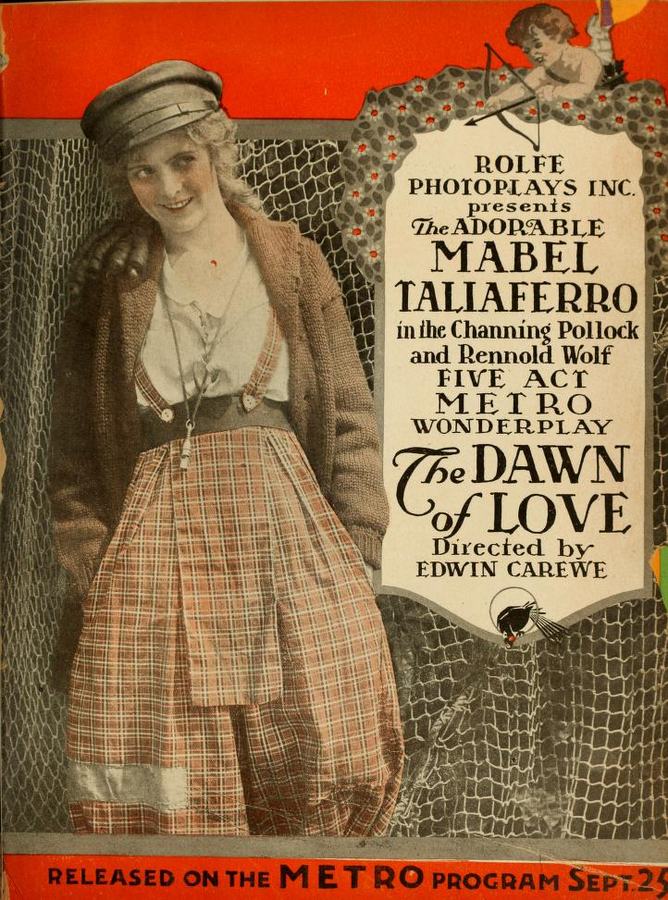
As Danny Rowland, a tramp, and his partner Dominie, an ex-minister, trudge wearily past the Winnicrest mansion in Tennessee, an old servant called Uncle Alex rushes up to Danny and welcomes him home as his long-lost employer, Richard Castleman. Amused, Danny assumes the role, and he and Dominie are clothed, fed, and generally treated like royalty. The beautiful Jean Logan, who had believed with the rest of the neighborhood that Richard was lost at sea, greets her returning sweetheart with a passionate embrace, and Danny soon falls in love with her. Dr. Harry Chilton, Richard's cousin and rival in love, maintains that Danny is an impostor, but Danny defeats him in a fight and banishes him from the estate. When Danny announces his intention to marry Jean, Dominie is shocked and tells her everything. Forced to confess to the sheriff, "Danny" reveals that he is indeed Richard, earlier robbed of his clothing and money by a crook named Danny Rowland, who died on a voyage to Australia. Relieved, all of the parties--with the exception of the jealous doctor--are reunited.
View Details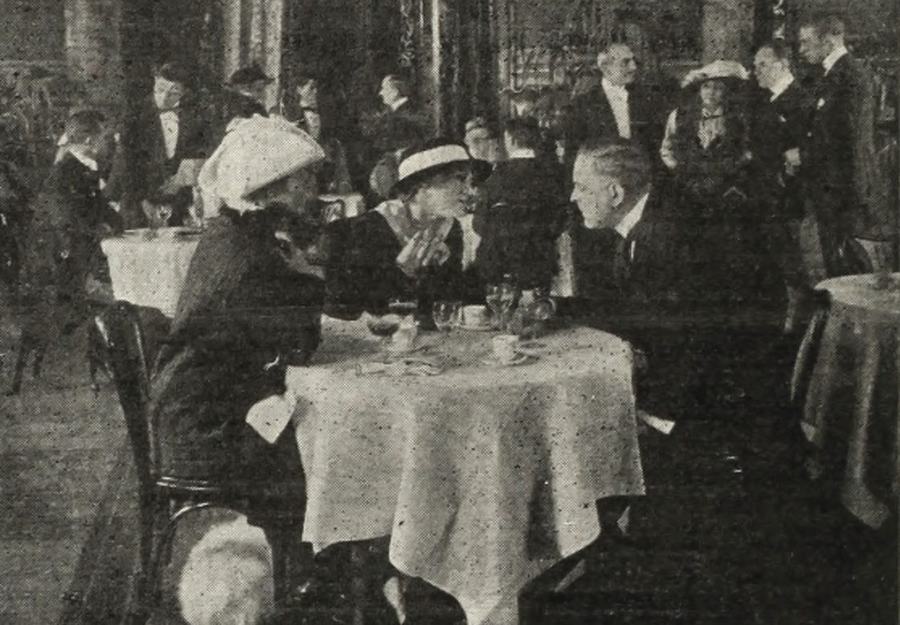
Dir: Edwin Carewe
In the House of Tears, there lived Robert Collingwood, his wife, Alice Collingwood, and their baby girl, Gail. In the courts Robert has been granted a decree of divorce and the custody of little Gail, upon evidence that Mrs. Collingwood has been found in a compromising situation with Henry Thorne, and her subsequent admissions. Once free, Mrs. Collingwood openly accepts the attention of Thorne, and they soon marry and go west to live. Thorne takes up the life of a prospector in a mining community, and his consistent failure proves a source of discouragement to him and unhappiness to the woman. Collingwood, his mind upset by domestic troubles, loses his fortune in Wall Street manipulation, and becomes a raving maniac. He drives his employees out of the office, and then goes to his home intending to kill his little daughter. In a chase up a staircase, he falls and is killed. An annuity he had settled on the baby when she was born, and which has been saved from the financial wreck, is the means of her education. Fifteen years later Thorne, who has been plodding along in the west, meeting with little success, wins $15,000 at faro in a desperate plunge one night. He has become tired of the woman he won by intrigue and his sudden prosperity turns his head. He arranges to go back to Wall Street to flirt with fortune, and he tells his wife he will not take her along, but will leave enough money for her to live on. She is horrified at the prospects of his desertion, and at the point of a revolver, demands his money. In a struggle which ensues, she is seriously wounded. Thorne leaves, believing his wife dead by the shot from her own hand. Back in Wall Street, Thorne electrifies other operators by his phenomenal rise to affluence, and he becomes the elegant man of wealth he aspired to be. Gail Collingwood, who has now grown to womanhood, is known under the name of Alice Gail, and employed as a reporter on the Evening News. She is sent to interview Thorne, who is now known as "Edward North." They become very friendly and their acquaintance soon ripens into love. In due time their betrothal is announced. Out in the mining town Thorne's wife has recovered, and she resolves to come back to the scenes of her youth. She is seeking Thorne in the great city, when Gail, who is riding in an automobile loaned her by her fiancé, runs down her mother, a poor, ill-clad, wandering woman. The mother is slightly injured, and she recognizes her daughter. They plan to make "North" face his past. Gail sends word for "North" to come to her home, as she is in trouble. When he arrives he is brought face to face with his wife, whom he believed to be dead. "North" becomes frenzied from fear, as he thinks the sad faced woman is an apparition, and he flees from the house. The apparition continues to haunt him, and in a half-crazed mood he drives his automobile blindly through the streets, ending by running off a bridge when he is hurled to death. Mother and daughter, re-united, then seek a happier existence.
View Details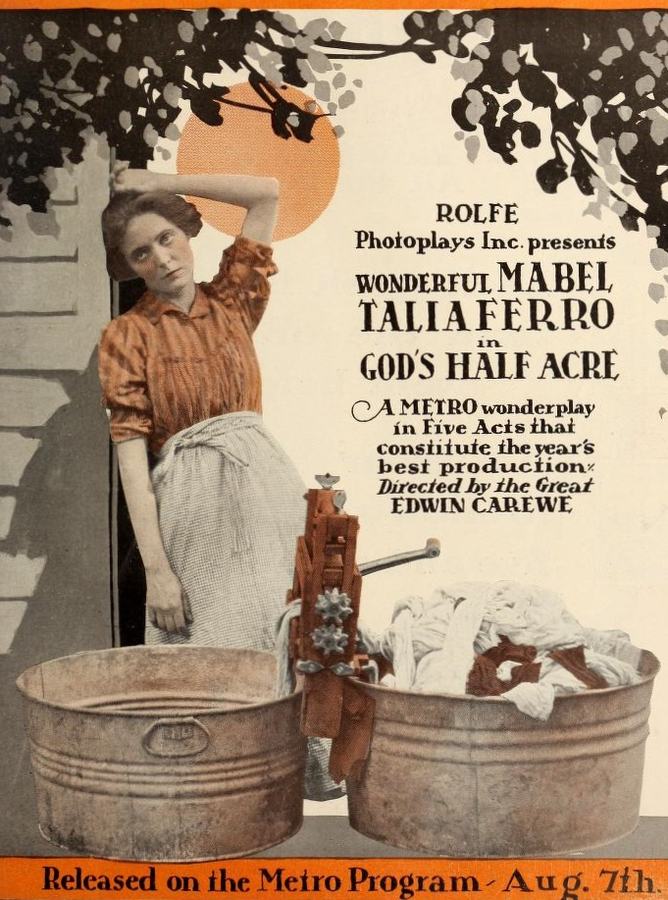
Dir: Edwin Carewe
Leaving his wife Rose for a few weeks and eager to do research for his new novel about the elderly, Henry Norman goes to live in a home for the aged, where Blossom, the home's young maid, falls in love with him. When she lets him know how she feels, however, Henry tells her that he has a wife. When his research is over, he returns to her--and discovers that she has eloped with his friend Perry Westley, and that they were both killed by a lightning bolt that struck Perry's car. While Henry recovers from this double shock, Blossom quits her job and finds work at God's Half Acre, an orphanage. While on a picnic with the children, she once again meets Henry, who realizes that he loves Blossom. They marry.
View Details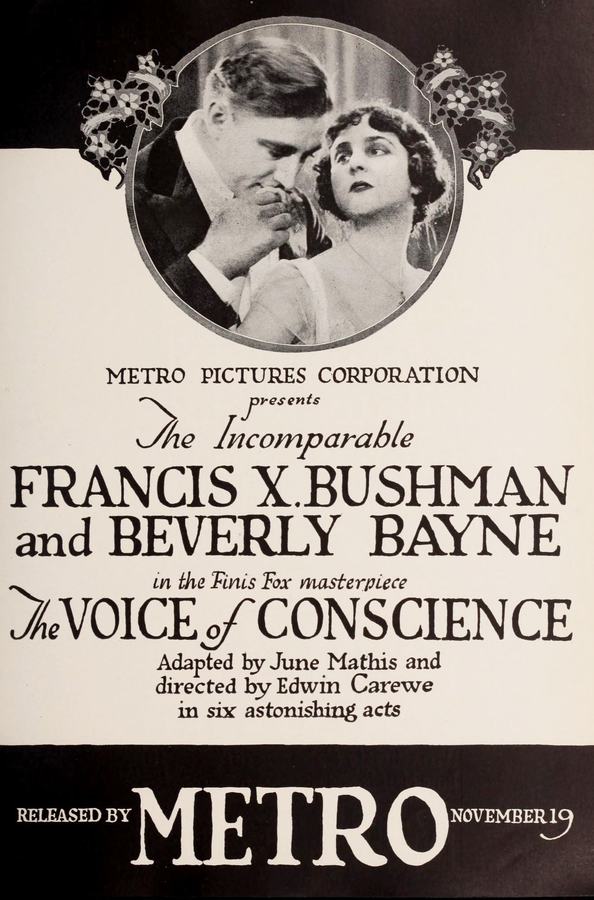
Dir: Edwin Carewe
A daughter is grief-stricken by the loss of her father. His male friend becomes her guardian, and she is taken to live with the friend's mother. Time passes and romance blossoms in the girl's heart for her guardian. However, a love rival arrives from the city and catches his eye, and the drama unfolds.
View Details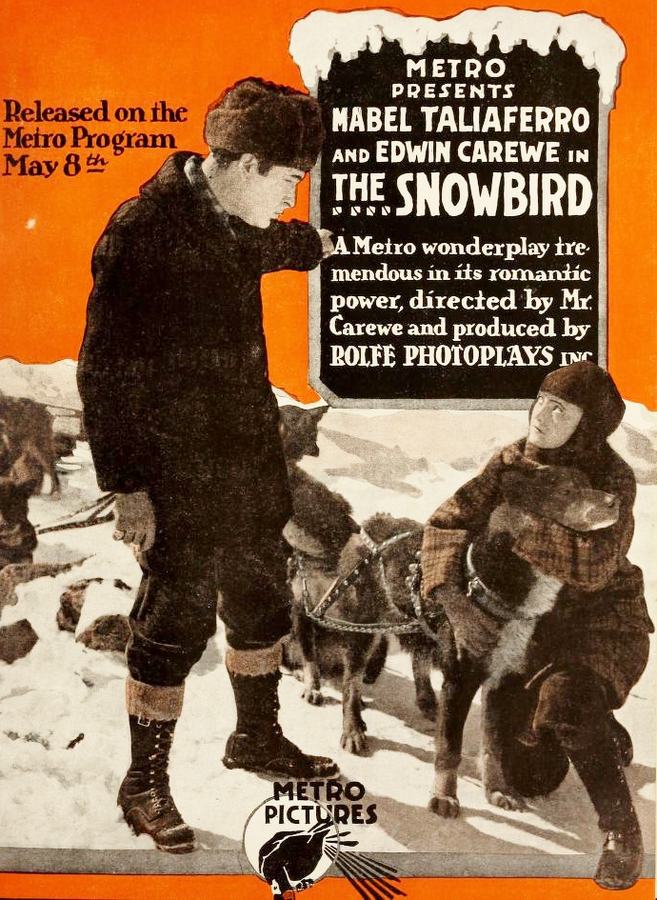
Dir: Edwin Carewe
John Wheeler, a traction magnate, becomes heavily involved and is obliged to sell a large timber tract he owns in the Hudson Bay district. He owns the property jointly with Henri Corteau, and the deed is filed in the office of Magistrate Le Blanc, at Chalet. Bruce Mitchell, a wealthy young man about town, who is infatuated with Lois Wheeler, the madcap daughter of Wheeler, readily agrees to take over the property. In the northland the elder Corteau has died suddenly, and the Magistrate's office, together with the Wheeler-Corteau deed, is destroyed by fire. The Magistrate receives word of the transfer between Wheeler and Mitchell and he sends for Jean Corteau, the son and heir of the late Henri Corteau, and asks him for the deed his father held, telling him he wishes to make a copy of it. When he adds that it is the only copy in existence, Jean walks out, saying he intends to keep the land himself. Meantime Mitchell has pressed his suit for the hand of Lois, and she takes a violent dislike to him. She resents it because he tries to make plain that her father is under obligations to him. Soon afterward Mitchell goes to Wheeler and wants to know why the deed has not arrived. Wheeler hopelessly shows him a letter from the Magistrate, telling of Jean's action. Mitchell threatens to jail Wheeler, accusing him of obtaining money under false pretenses. Lois overhears the threat and also Mitchell's offer to let the matter drop if Lois will marry him. Lois agrees to this proposal providing her father's innocence cannot be proved. Lois goes to the northland and seeks out Jean. He will not see her, saying he will not have any dealings with women. The next day she sets out, dressed in boy's clothes, on a dog sled for Jean's home in the forest. Pierre, a guide, accompanies her. They arrive in sight of Jean's cabin at nightfall, when Pierre attempts to force his attentions upon Lois. She flees and seeks refuge in Jean's cabin, stumbling in his door in a faint. Later, she tells Jean she has become lest from a lumber camp, and asks if she may remain a while with him. He tells her he has always wanted a boy companion and helper, and that since she came like a "wounded snowbird" to his cabin, she may stay. Although Jean is brutal and primitive in many ways Lois soon finds he has a gentle nature. The next day Jean discovers Lois is a girl, when her fair falls out from under her cap. She confesses her identity and he is angry. But he consents to her remaining, and he fetches some of his mother's clothes for her. Her one desire to get the deed is realized when she is dressing and finds the document hidden away behind a small mirror on the wall. That night she urges Jean to drink heavily, hoping to get away. He becomes fascinated with her and tells her he is going to save her father. He reaches for the deed and finds it gone. Her manner betrays Lois, and she confesses having the paper. Meanwhile Mitchell and Wheeler have come north in search of Lois. Pierre tells Mitchell she is living with Jean. In a jealous rage he goes to seek out Lois. He has Wheeler arrested and then sets out for Jean's cabin. Arrived there he sarcastically accuses Lois of a common liaison with Jean. Jean demands that Mitchell apologize. He refuses and they fight. Both are seriously wounded. Mitchell staggers out of the cabin in the snow. Lois, left with the unconscious Jean, decides to steal the deed and leave. On the edge of a cliff Lois sees Mitchell fall to his death. Then a vision of Jean left alone in his helpless condition comes to her. She turns back and joins Jean. She nurses him back to strength and they go to the aid of Wheeler, intending to marry and live in New York. But after they are wed they hearken to the call of the north, and go back to the life where their love was born.
View DetailsAnalysis relative to My Lady's Latchkey
| Film Title | Atmosphere | Complexity | Similarity |
|---|---|---|---|
| The Splendid Sinner | Ethereal | Dense | 87% Match |
| The Trail of the Shadow | Tense | Abstract | 91% Match |
| The Barricade | Surreal | Layered | 93% Match |
| The Dawn of Love | Ethereal | Linear | 89% Match |
| The Final Judgment | Surreal | Dense | 97% Match |
This guide was algorithmically generated using the cinematic metadata of Edwin Carewe's archive. Last updated: 6/26/2026.
Back to My Lady's Latchkey Details →