
DbcultAccessing Vault...
Recommendations
Senior Film Conservator
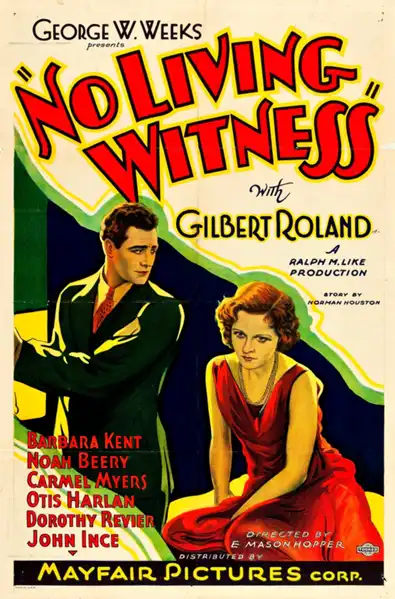
If you found yourself captivated by the nuanced performance of No Living Witness (1932), the profound questions raised in 1932 still require cinematic answers today. Experience the United States influence in these recommendations that echo No Living Witness.
No Living Witness remains a monumental achievement to provide a definitive example of E. Mason Hopper's stylistic genius.
An assistant district attorney tries to stop his girlfriend's father from being swindled out of his money by a crooked lawyer in a racetrack scam.
Based on the unique nuanced performance of No Living Witness, our vault has identified these titles as the most compelling follow-up experiences for fans of Adventure cinema:
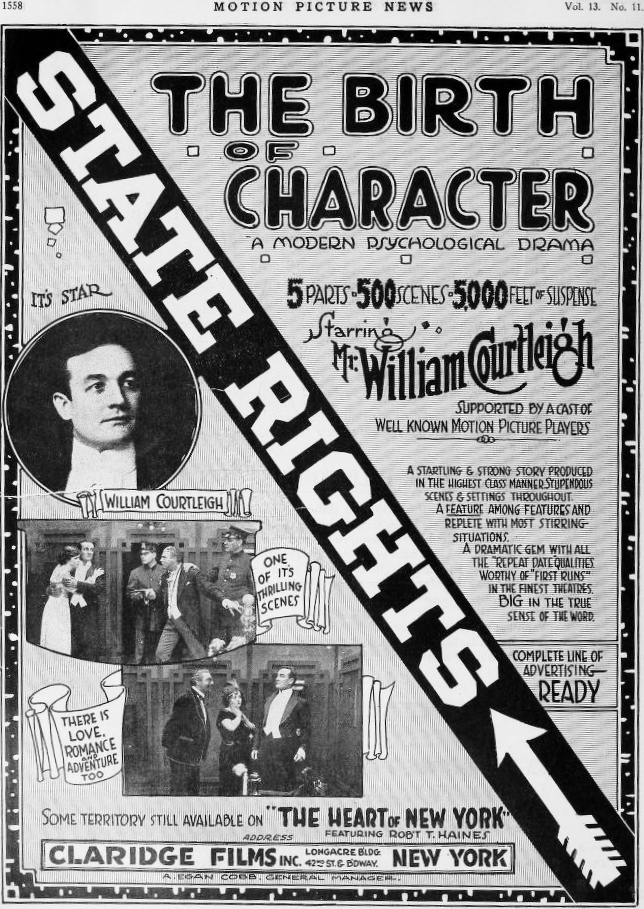
Dir: E. Mason Hopper
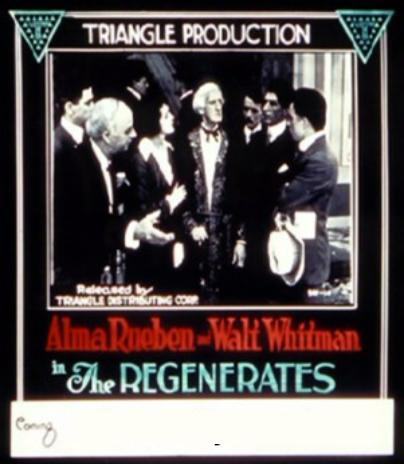
An alchemist, about to be burned at the stake, tells his captors that some day the teachings of the alchemists will be generally believed. The alchemist taught that the human character goes through a process of evolution and in the effort to conquer conditions about him, man finds his birth of character. Harry is in love with Grace. She is the good influence in his life. His companions influence him in the other direction. Large losses at cards make him desperate so that at a dance he is momentarily tempted to steal a diamond-studded hair ornament. The impulse immediately and he returns it, explaining that it dropped to the floor and he picked it up. Unfortunately a witness to both the impulse and the quick wit in pulling himself out of the dilemma was Darby, a master criminal. Later Harry is dragged to a gambling joint by his friends; the place is raided through Harry's bitter rival, Arthur Vane, from whom he rescues Alice, a girl who assists her father in the management of the place. All the boys are arrested except Harry, whom Alice saves by means of a secret door. He thus meets her father, who proves to be Darby. This leads Harry to his becoming the tool of Darby, and he is on the downward path. Harry and Grace become engaged. She does not know the life into which he is drifting. A dealer in objects shows them a valuable necklace. This latter is procured by Harry in a successful burglary. He is then sent to a fashionable house party by Darby to see what loot may be obtained there. Grace is a visitor at the same house party, and it is she who shoots him, not knowing his identity. Discovering who it is she saves him; the wound if only a scratch, but with scorn tells him she never wants to see him again. Harry then determines to make a man of himself, surrenders, and is imprisoned to pay the penalty of his crime. As an ex-convict he is welcomed only in the underworld. Alice, because she has fallen in love with him, unselfishly determines to help him, goes to Grace, pleads with her to overlook the past and give Harry a chance. Grace finally agrees to do so, and Alice sends Harry to her. He obtains a position and is rapidly demonstrating a real character. Refusing to have anything further to do with crooked work, he is threatened and only saved from trouble by the unselfish Alice. However, he repays this sacrifice with an open and cruel snub when with Grace he meets her on the street. Her love turns to hate. The master willingly lures him to his den, Alice maneuvers to lure Grace to the underworld, also so that she may be a witness to the punishment of her ungrateful lover. The situation works up to the dramatic climax where Darby is about to kill Harry when the police, summoned by Grace through a ruse, break in and she and Harry are saved.
View Details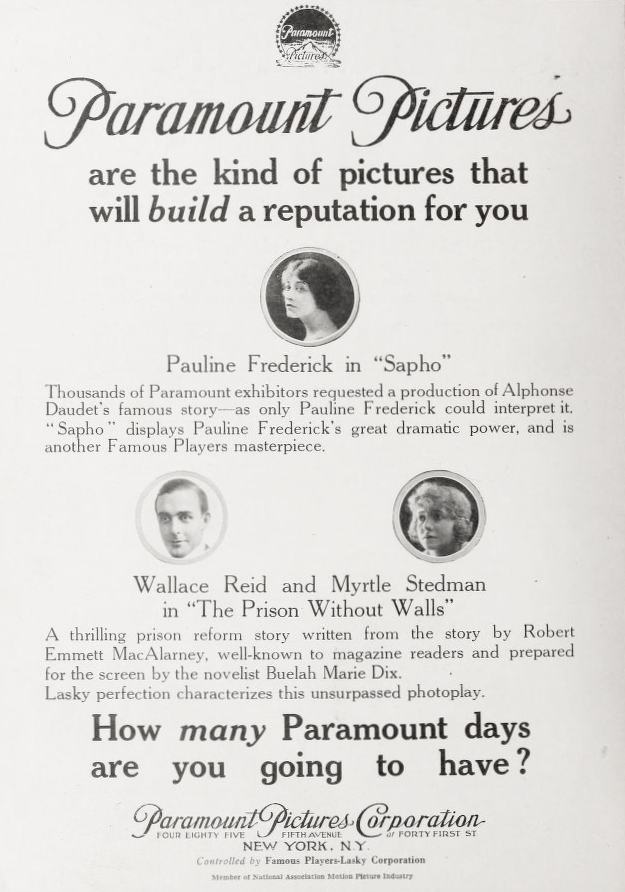
Dir: E. Mason Hopper
Helen Ainsworth, a young philanthropist, who is interested in a prison reform movement, is engaged to Norman Morris, administrator of the Ainsworth millions and the undiscovered "man higher up," grafting through his influence with prison wardens. He is also having an "affair" with Felice, Helen's maid, an ex-convict. Governor Havens sends for Huntington Babbs, prison expert, who enters the prison as a convict, is discovered by Helen and made her secretary upon his release. Morris is jealous of the good-looking secretary and he makes Felice "plant" a necklace which he has presented to Helen, in Babbs' room. Babbs discovers the plot, and Morris, overhearing his plan to visit a certain place in the rough part of the city, for Helen, plans to get him. He orders the gang to murder him. Helen accompanies Babbs (or Conroy, as he is known). Morris learns Helen has gone and reaches the place just as the men have nearly overpowered Conroy. Morris allows the men to escape, but Helen refuses his offer to take her home, preferring Conroy. Infuriated, Morris plans to have the Ainsworth safe burglarized the night of Helen's party. Conroy discovers the burglar and that he is Gilligan, whom he befriended in prison. Conroy sends a note to the Governor by Gilligan. Just as the burglar leaves, the guests of the house enter the library. Conroy is accused, but Helen allows no arrests. She orders Conroy to leave the house. Morris betrays the girl Felice by suggesting her arrest as an accomplice. Morris accompanies Helen to the Governor's office. The Governor requests an interview with Morris and accuses him of being the "man higher up." Morris asks for his witnesses and a door is opened, disclosing Gilligan and the gang, and Felice. Conroy is introduced as Huntington Babbs, prison expert. Morris is staggered. Helen overjoyed. Morris is arrested, but just as he is leaving Felice shoots him. Unconsciously, Helen goes into the arms of the man she loves.
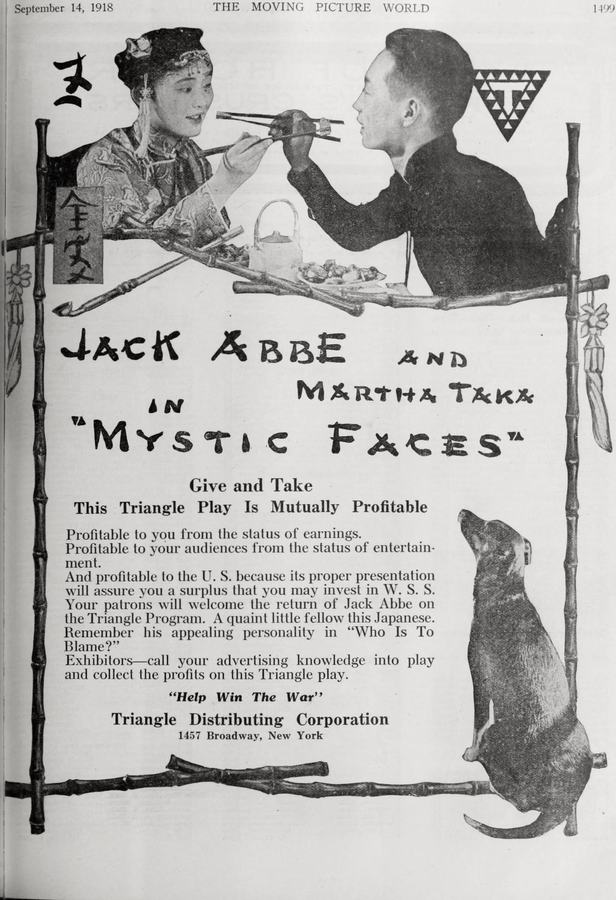
Dir: E. Mason Hopper
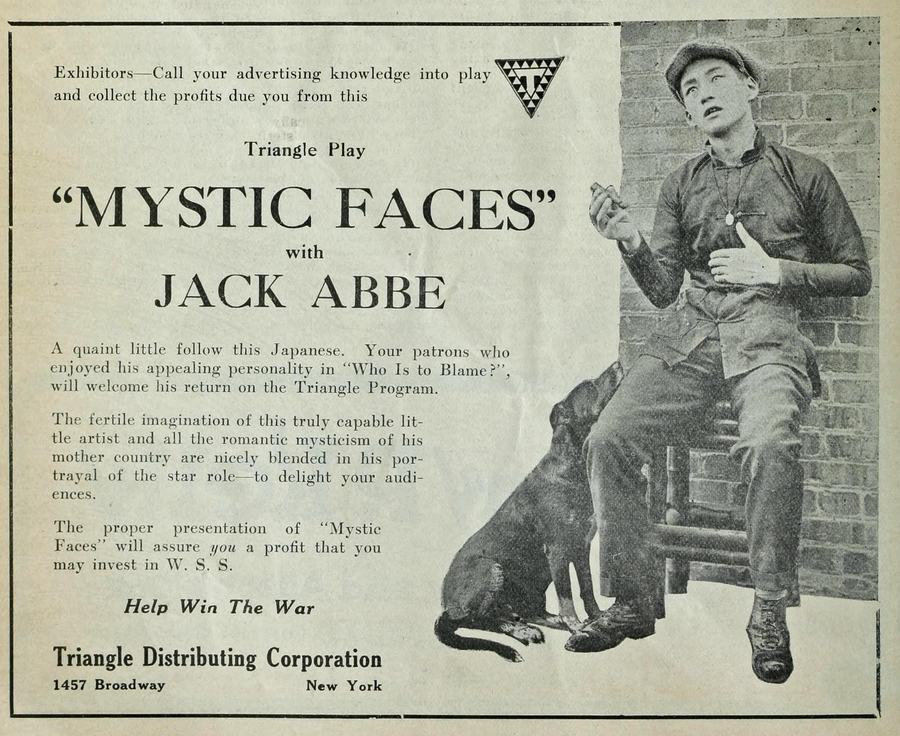
Yano is a small delivery boy for his uncle, who keeps a curio shop in Chinatown. His loves are Tama, his sweetheart, and Bengi, his dog. Bengi is seized by dog catchers, but is rescued by Letty Stanford, for which Yano promises his fealty. Later Letty is kidnapped by Germans because of her war activities, and it is Yano who goes to her rescue and gets her free in spite of his diminutive size. The Little Japanese has paid his debt.
View Details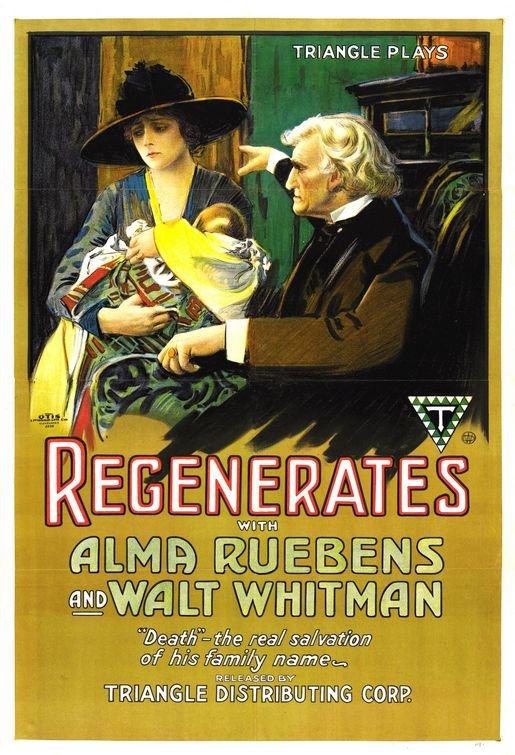
Dir: E. Mason Hopper
Mynderse Van Dyun, a wealthy old New York aristocrat, has one goal in life, to see his granddaughter Catherine and grandson Pell married; for, although they are cousins, the marriage would perpetuate the family name. Catherine, however, is in love with Paul La Farge and detests her drug-addicted cousin, who seduces and then secretly marries her maid, Nora Duffy. After a son is born to Nora, who dies in childbirth, the infant is taken to the Van Dyun house where, only a few days before, Pell, in a dispute involving drugs, had been thrown from a window by his valet and killed. When the old man refuses to acknowledge the child, Catherine and Paul adopt the baby, leave the Van Dyun house and are married. Five years later, Catherine comes to visit the old man with his great-grandson, and, seeing what a fine boy he is, the old aristocrat is forced to admit that the boy is worthy of bearing his name.
Dir: E. Mason Hopper
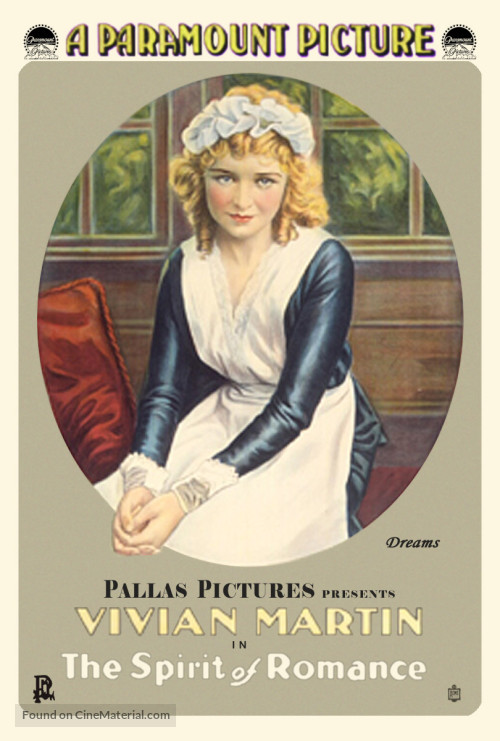
Abby Lou is the niece of the crabbed old antique dealer, Richard Cobb. Old Richard Cobb has a son who possesses all the qualities that his father seemingly was born without. This son, Tom Cobb, loves Abby Lou and is working on his great invention, a kettle that will not boil over. Finances are the only drawback to its successful achievement. Tom approaches wealthy old Joseph Snow for assistance but is turned down. Snow, though a hard man in money matters, in private life is also an unsuspected follower of Romance. In his home he has a secret chamber from which through the eyes of his portrait he can observe what goes on in his absence. Snow sees Abby in the antique shop and his charity offering of money to the ragged little girl is scorned. It amazes him; for the first time in his life his money is refused. It puzzles him and that night he decides on an eccentric test. The next day Abby Lou is notified that she is the heiress to deceased Snow's wealth. The lawyer takes her away to the mansion and she is surrounded by the parasitical Mrs. Rollins and her son Percival, relatives of Snow. Percival is in love with Marguerite D'Arcy but is as poor as a church mouse. Snow from his point of observation through the eves of his picture watches Abby set up Percival in business, secretly finance Tom's invention to success, reinstate his old and faithful employee Mace, and seemingly make everyone happy with his money. A new understanding of life and its meaning comes to Snow and the night of the mask ball Snow steps through the secret panel in costume, masked and apparently a guest. Then the denouement happens in a marvelously happy way and the Spirit of Romance, her mission finished, disappears forever.
View Details
Dir: E. Mason Hopper
Young engineer Tom Morley is building a railroad through Imperial Valley. Tom's father also wants the job and tries to persuade his son to give up the work, but Tom refuses. Tom falls for a society girl named Alice Hale, who marries him to bring prestige to her family. Initially, Alice plots against Tom, but Tom wins her over and they work together to defeat those who are plotting to destroy Tom's work.
Dir: E. Mason Hopper
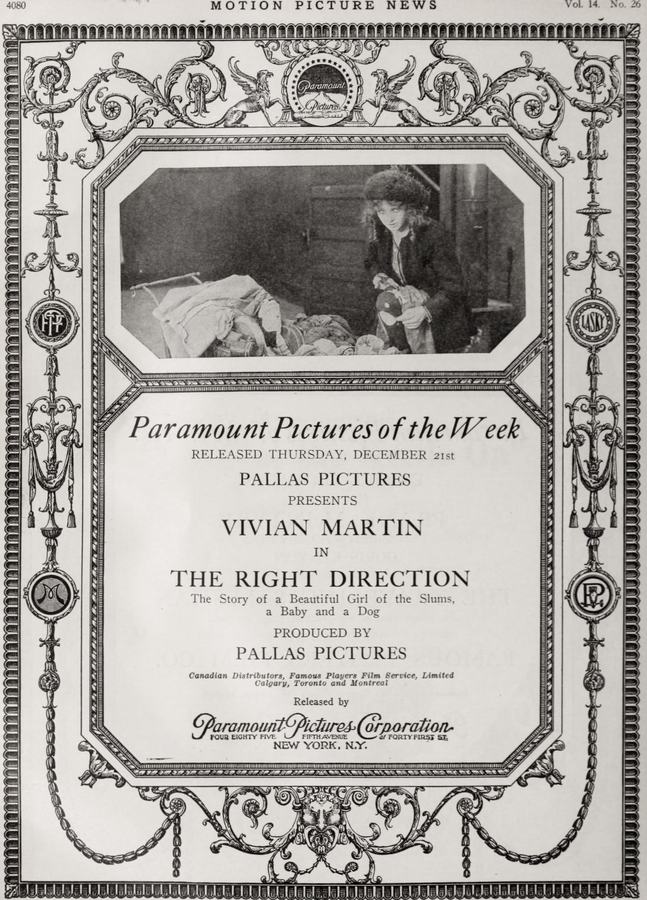
Young Polly Eccles is raising her sickly young brother Billy. When her doctor advises taking Billy away from their dank slum, she packs them both up and they head for California. While hitchhiking there, they are picked up by Kirk Drummond, who just happens to be driving to California himself. Upon their arrival, Kirk's wealthy father John is horrified that he has hooked up with a "lower-class" woman like Polly and does everything he can to make life miserable for her so she will leave. However, an incident occurs at the mine John's father owns that could turn out badly for all concerned.
View Details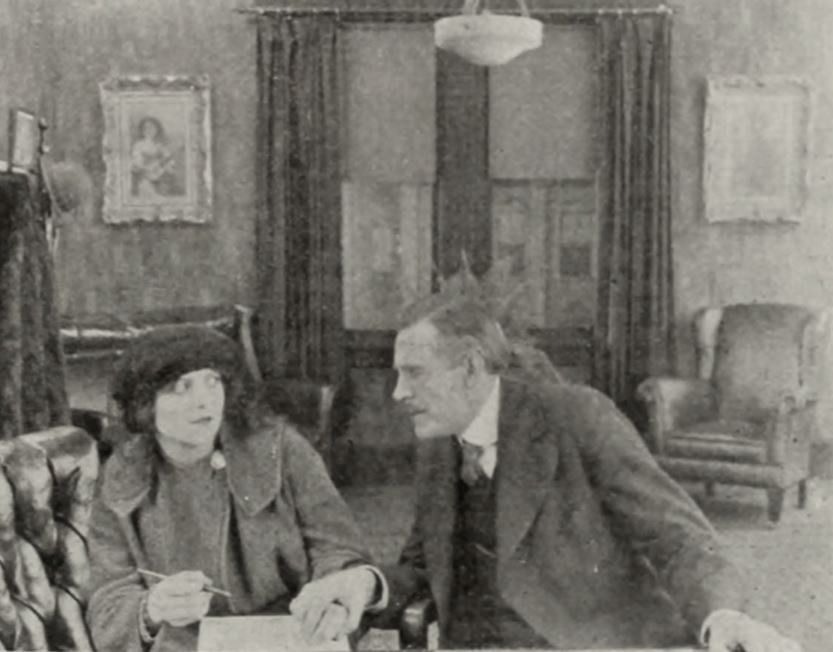
Dir: E. Mason Hopper
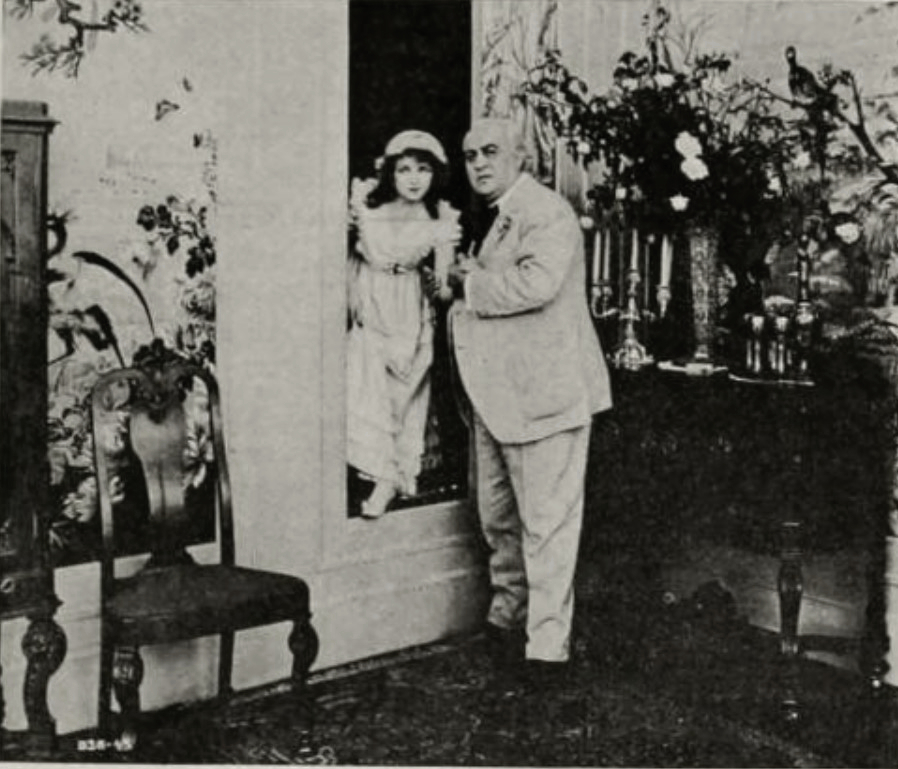
Florence Burgess, a singer in the Cafe Fanchon, supports her lame sister, Frances, but keeps her struggle secret. Oscar Morse, a theatrical manager, is attracted by Florence's beauty and talent, and offers her an engagement. When they meet he demands the usual payment his girls have to make, and is refused. The café has been closed, she is out of work and decides to trick Morse. She gets him drunk, and he signs a paper she has substituted for the contract he planned. Florence the next day admits her deception and Morse, fearing publicity, accepts the situation and stars Florence in "The Green Goddess." She makes a big success, her stage name being Flo Burke. At a little country hotel where she has gone to rest after the first year's work, she meets Fenton, the minister, whose efforts closed the Fanchon, but he does not recognize her. He tells the story of his mission work, she becomes interested, they fall in love, he not knowing that she is the actress, Flo Burke, the register showing Miss F. Burgess. She finally keeps her secret, saying she is the sister of the actress. Fenton is preaching, Florence hears him, determines to give up the stage, but Morse demands the payment of a large forfeit, and she is bound to the stage. Frances, who has been sent to a sanatorium, starts with her sister for New York, the train is wrecked, and Fenton, when the bodies are brought in, finds one bearing cards which tell him it is Flo Burke. Another woman, not dead, has cards of Florence Burgess. Florence sees in a paper in the hospital the announcement of the death of Flo Burke, and sees that it means her escape from the stage. She marries Fenton, but is full of remorse over her deception, and plans to use her money, which had come to her through her own will, which had left it to her sister, for the work of Fenton. Morse goes to the church rectory to see Fenton about a problem play, sees Florence, she denies knowing him, he returns to his office, finds a diary she had kept, and it reveals her secret. He returns, demands full payment of the contract forfeit, and Florence is up against a dilemma. If she gives the money to Morse, she must explain to her husband; if she gives it to her husband Morse will drag her back to the stage. Seeking a way out of the labyrinth, she promises Morse to read the play, and advises Fenton to favor it for production by Morse. He comes to the house, meets Fenton instead of Florence, who overhears her husband praising the play, and decides to give her husband the money. Morse flies into a rage, threatens to denounce her, but Fenton stops him; there is a fight, Morse accidentally shoots himself with his own pistol, and with her husband's love safe Florence feels that she has escaped from the labyrinth.
Dir: E. Mason Hopper
Julie Davenant is the neglected daughter of a Parisian dancer who, tired of her life, commits suicide. With her last breath she tells Julie not to trust men. Julie begins her battle with life as a nursemaid. Sculptor John Ramsey spies the beautiful little girl, gives her his card, and when she is discharged from her nursemaid position she becomes his model. She becomes the most talked-of model in Paris, and modiste Hermineux pays her a handsome sum to have her likeness made in wax, on which he displays his gowns. Julie meets Melville Ilchester, who seems "different." He also falls deeply in love with her. Ilchester, to satisfy a query in his mind if Julie is really "different," goes to her flat at night and walks in just as she, on a dare, takes a sip of wine and lights a cigarette. He refuses to listen to her explanation. In a moment of despair, Ilchester smashes both window and model at the Hermineux shop. Julie surmises Helen (Ilchester's sister) and Ramsey's plan to elope, sends Ilchester a note to go to Ramsey's because a friend is in danger, tells Helen that Ramsey is married, and hides her as Ilchester enters Ramsey's studio. Ilchester, believing this is a ruse of Julie's, leaves, still refusing to allow Julie to explain. Heartbroken she abandons her profession as a model and becomes destitute. She sends Ilchester a last note of appeal, which Helen accidentally sees, and after hearing the truth from his sister, Ilchester hastens to Julie, explanations are made and their happiness is assured.
View Details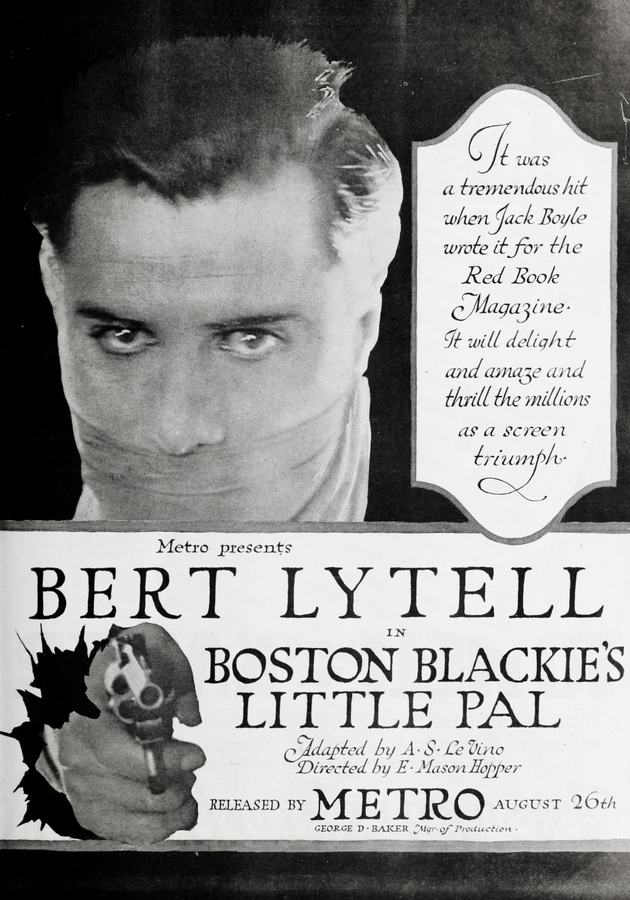
Dir: E. Mason Hopper
Boston Blackie, a gentleman crook, and his accomplice, Mary, plan to rob the Wilmerding mansion while Mr. Wilmerding is out of town. Mary is hired as a nurse to Martin Wilmerding, Jr., and after Mrs. Wilmerding has gone to a ball, she admits Blackie, who starts to open the safe. Just then little Martin enters, and he and Blackie play and become fast friends. Mrs. Wilmerding returns with her lover, Donald Lavalle, and when Blackie overhears their plans to elope together with her jewels, he tricks Donald into giving him the jewels by posing as the jealous husband. Through several telegrams, he effects the reconciliation of his little pal's parents but cannot decide whether or not to return the jewels.
View DetailsAnalysis relative to No Living Witness
| Film Title | Atmosphere | Complexity | Similarity |
|---|---|---|---|
| The Birth of Character | Gothic | Linear | 91% Match |
| The Prison Without Walls | Surreal | Abstract | 92% Match |
| Mystic Faces | Gothic | High | 94% Match |
| The Regenerates | Ethereal | Abstract | 87% Match |
| The Spirit of Romance | Gothic | Linear | 89% Match |
This guide was algorithmically generated using the cinematic metadata of E. Mason Hopper's archive. Last updated: 6/22/2026.
Back to No Living Witness Details →