
DbcultAccessing Vault...
Recommendations
Senior Film Conservator
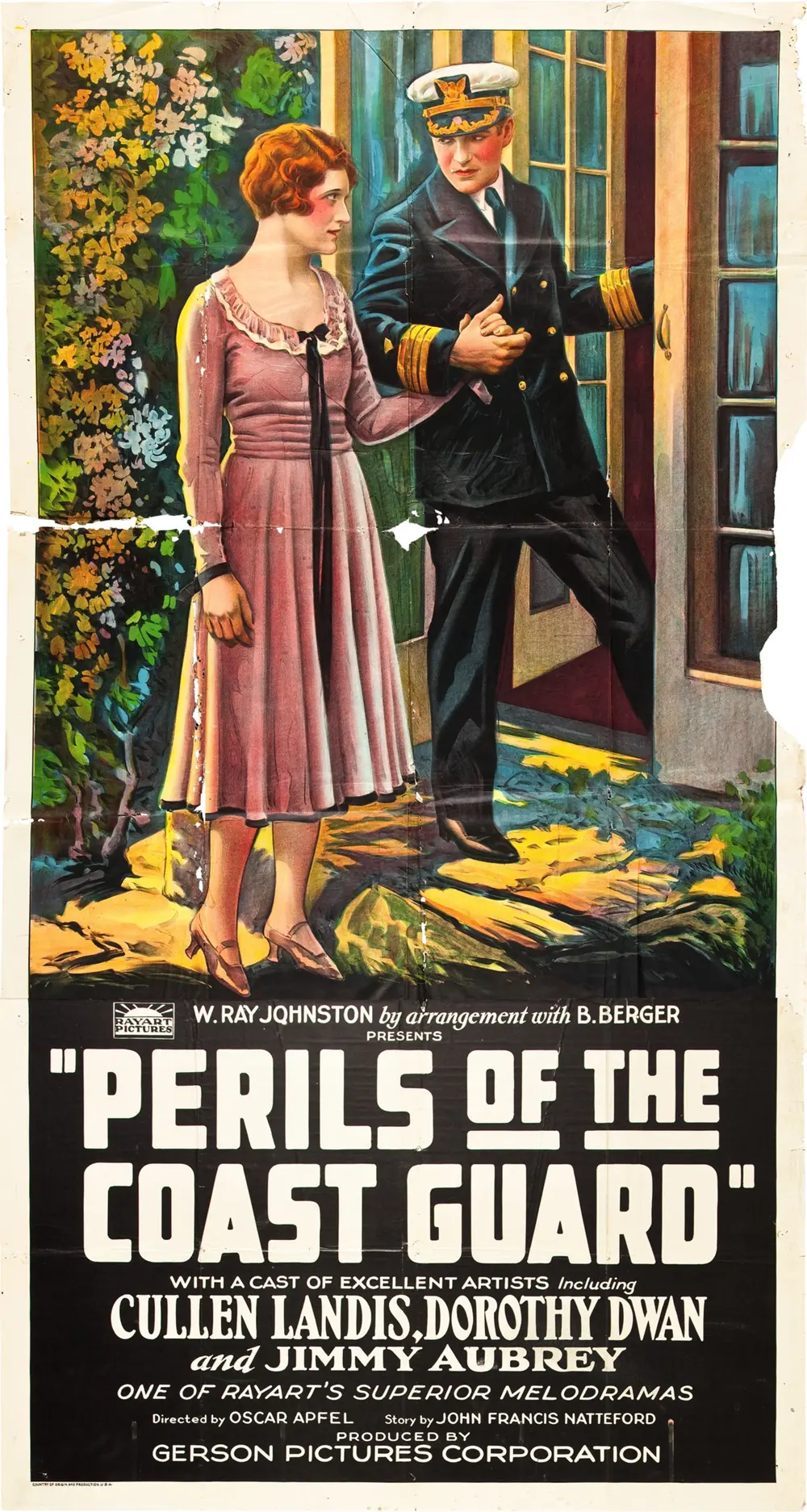
Delving into the atmospheric depths of Perils of the Coast Guard reveals a master at work, the artistic provocations of Perils of the Coast Guard demand a follow-up of equal intensity. These hand-selected movies are designed to satiate your craving for Romance quality.
The enduring power of Perils of the Coast Guard lies in to transcend the limitations of its 1926 budget and technology.
When Coast Guard Captain Tom Norris, at Point Lobos, Maine, save Natalie Aldridge from drowning, a romance blossoms much to the dislike of Carlton Aldrich, Natalie's uncle, who wishes her to marry Lonsdayle. In spite of her uncle, Natalie and Tom are married and live in a small cottage near the Coast Guard station, and Aldridge ignores them. Tom is assigned to capture the oyster pirates and does so, but the pirate leader escapes and plans to keep Tom from testifying against his men by kidnapping Natalie. (This film, and a few other Paul Gerson films, were never copyrighted.)
The influence of Oscar Apfel in Perils of the Coast Guard can be felt in the way modern Romance films handle cult status. From the specific lighting choices to the pacing, this 1926 release set a high bar for atmospheric immersion.
Based on the unique cult status of Perils of the Coast Guard, our vault has identified these titles as the most compelling follow-up experiences for fans of Romance cinema:
Dir: Oscar Apfel
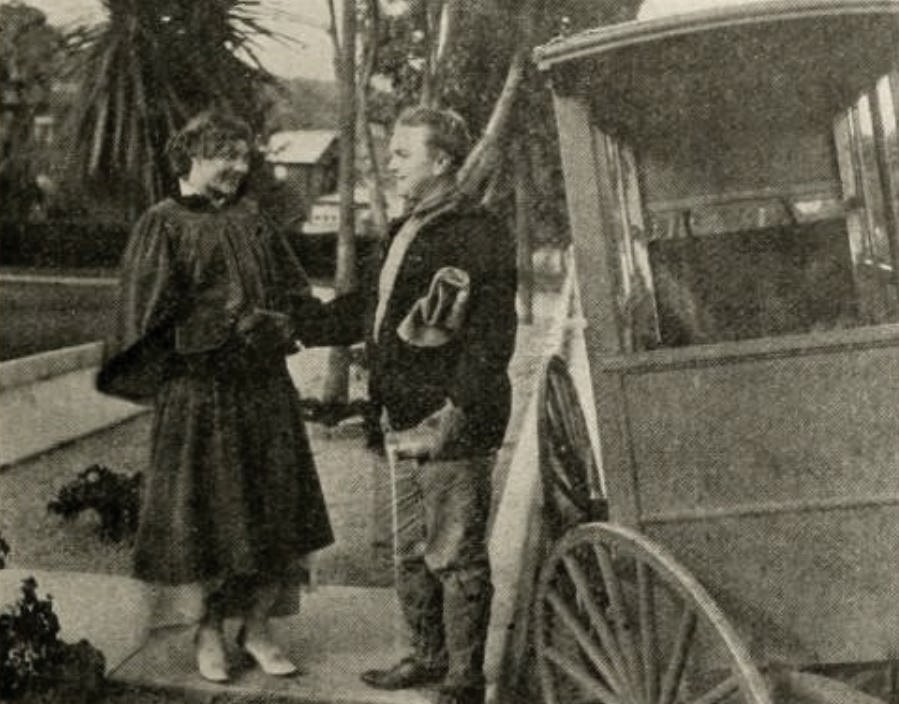
Henry Disney, a milkman residing in a small city, is discovered by Phipps, a lawyer, to be the heir to the title and fortune of the Duke of Walshire. Phipps and his sister Laura, being pressed for money and anxious to maintain their social position, conspire to arrange a marriage between the sister and the milkman before he knows that he is the Duke. Phipps has Disney assaulted and arranges to be near in order to rescue him and take him to the Phipps house. In the meantime, however, Disney has met Ethel Hamilton, one of the young social leaders of the town, and has fallen in love with her, although he doesn't dare to speak of his love on account of the great difference in their social positions. His love for Ethel, however, prevents him from falling victim to Laura's wiles, and he finally escapes from Phipps' house, where they are trying to keep him on the pretense that he is very ill. He then discovers that he is the Duke. The efforts of the milkman to be a Duke and to win the girl he loves lead to many humorous complications, and, finally at a ball which the milkman gives in honor of Ethel, his conduct so displeases her that she refuses his love and tells him very plainly that the social snobs who have been fawning upon him on account of his title have been making a fool of him. The milkman then begins to see a great light, and, after resenting an insult to Ethel by one of the snobs, takes occasion to tell them what he thinks of them. The dance breaks up in confusion and the milkman, sore at heart, sees that he is being used by the snobs, while they are making fun of him behind his back. He renounces his wealth and title and goes back to his milk route, where Ethel finds him. He agrees to do this on condition that Ethel will act as his instructor and teach him how to be a Duke. This she finally consents to do and he drives her home in the milk wagon, after an understanding between them which promises a happy ending to his love story.
View Details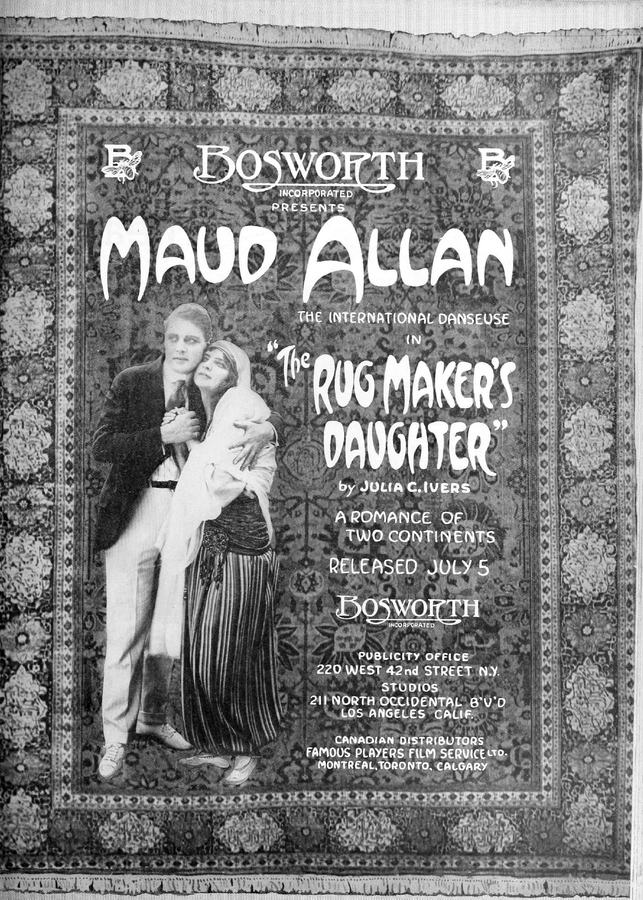
Dir: Oscar Apfel
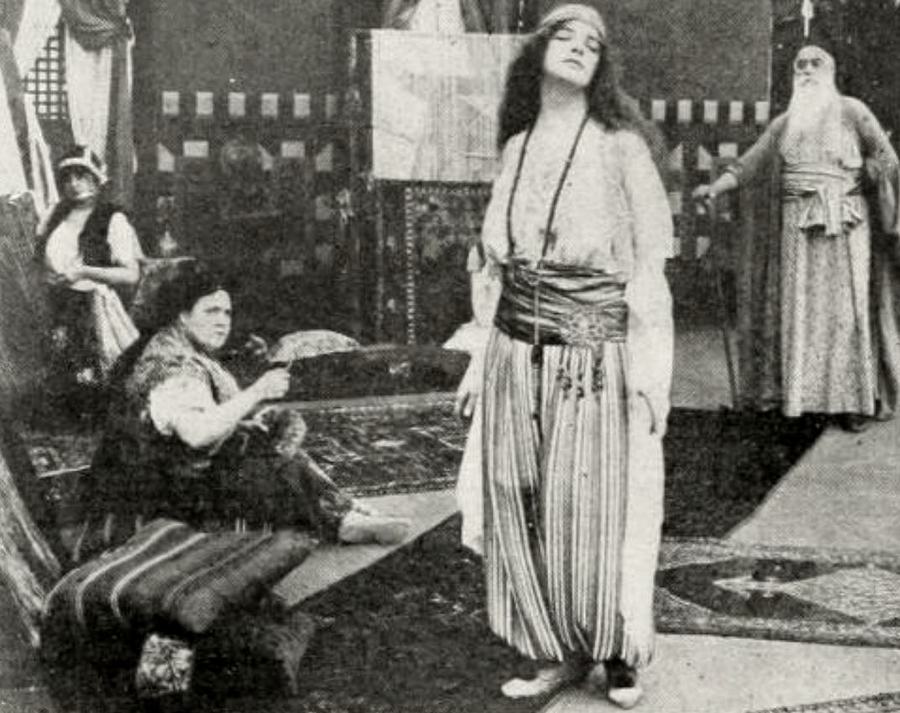
Bob Van Buren's rescue of an upper-class Turkish girl and her duenna in Constantinople when they are waylaid by robbers paves the way for a romance between them. The romance progresses rapidly despite the hullabaloo raised by Demetra's father and by the Turk fiancé he is trying to force upon her; but the very thought of a girl, so highly educated, so gifted with needle and loom, so famously graceful as a dancer ending up in a harem instead of a respectable home, drives Bob Van Buren to desperation. At length he persuades Demetra to elope with him to America, where Demetra could be married at his mother's in New York. Getting wind of it, the malicious Osman hires a band of ruffians who make away with Bob Van Buren on the very eve of departure. With her young American mysteriously vanished, and the day of her now-all-the-more-odious wedding to Osman drawing near, Demetra can stand it no longer, and taking her duenna, flees to a cousin's in New York on the P. and O. boat on which Bob had reserved sailings. Osman pursues the little refugee, corners her in New York, and with oriental cunning sets a trap into which Demetra walks blindly. Having her in his toils again Osman summons a second Turkish priest and is just forcing Demetra to her knees before him when the door bursts open and in rushes Bob Van Buren, who had finally escaped the dungeon in Constantinople to which he had been consigned. He routes Osman and takes Demetra to his mother's. Mrs. Van Buren suggested that the lovers wait until September, but their hearts were set on June. And so, as you may very well imagine, June it was.
View Details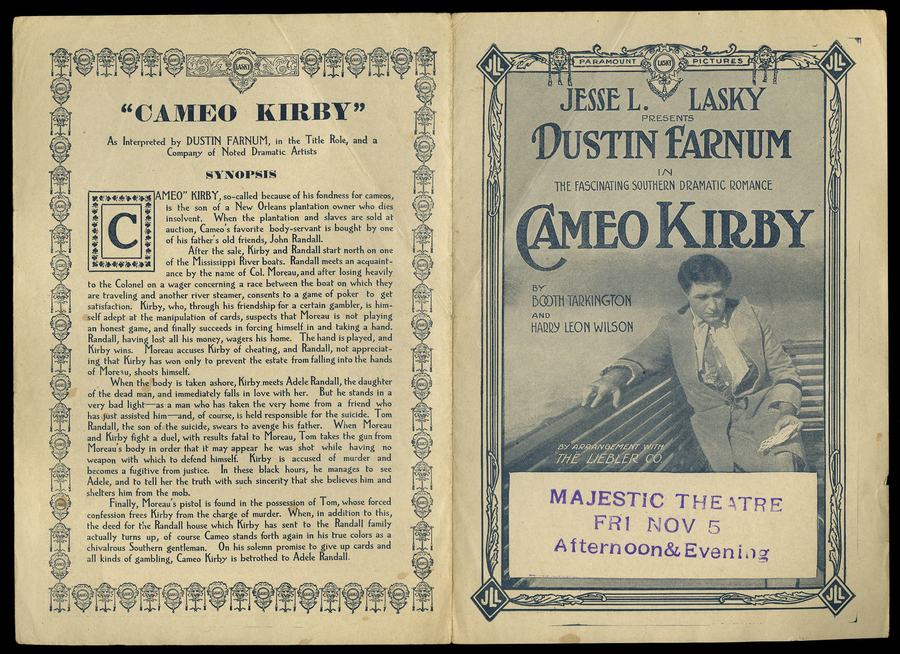
Dir: Oscar Apfel
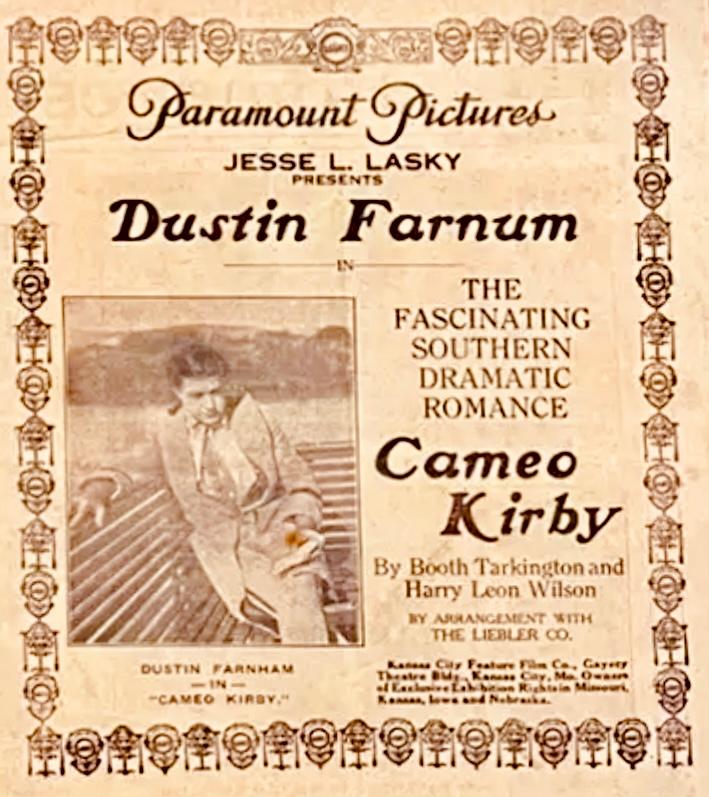
"Cameo" Kirby, so called because of his fondness for cameos, is the son of a New Orleans plantation owner who dies insolvent. When the plantation and slaves are sold at auction, Cameo's favorite body-servant is bought at auction by one of his father's friends, John Randall. John and Kirby head north on a Mississippi river boat where Randall meets Colonel Moreau. There he loses heavily on a wager and consents to a game of poker hoping to get back his losses. Kirby, through his friendship with another gambler, is adept at the manipulation of cards and suspects that Moreau is not an honest player. He joins the game and soon Randall, having lost all of his money, wagers the old homestead. Kirby wins the hand and Moreau accuses him of cheating while Randall, unappreciative of the fact that Kirby won the hand to keep Randall's estate falling into Moreau's hands, shoots himself. When his body is taken ashore, Kirby meets Randall's daughter, Adele, and instantly falls in love with her. But Kirby is on very shaky ground as he is known as the man who caused Adele's father to commit suicide, and she treats him to some southern disdain. Her brother, Tom, vows to take revenge on Kirby. He and Moreau have an un-witnessed duel and Colonel is shot dead by Kirby, who is somewhat of a dead shot among his many other talents. But Tom takes the gun from Moreau's hand so it will appear he was unarmed. Kirby, slave-owner becomes a fugitive from justice. This also deals a blow to his courtship of Adele. But, a true-blue southern gentleman such as Kirby should be able to win the day, sooner or later.
View Details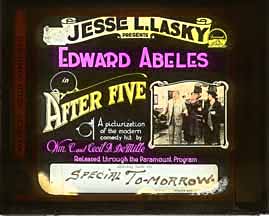
Dir: Oscar Apfel
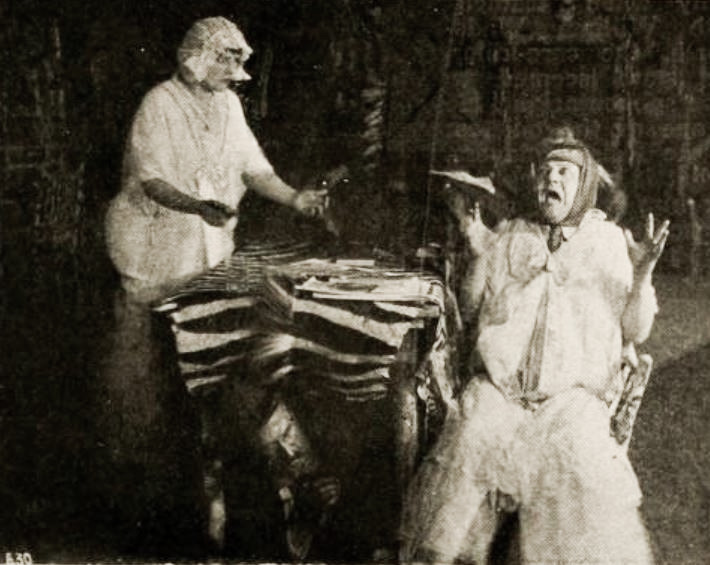
Ted Ewing, a young New Yorker, is the guardian of Nora Hildreth, with whom he is in love. He invests her fortune of $50,000 and an equal amount of his own money (constituting almost his entire property) in a stock exchange speculation. When this speculation apparently fails he seeks to reimburse the girl by taking out a life insurance policy in her favor and then killing himself. But, as the policy has a clause invalidating it in case of suicide, he has to arrange an "accidental death" for himself, and, to this end, enters into an arrangement with the chief of the S.S.S., a blackmailing society which has already threatened his life. The humorous complications really begin when it develops that the money has not been lost but doubled, so that Ted, instead of wishing to die, has every reason imaginable for wishing to live. It is, however, almost impossible to break his sworn pact with the S.S.S. and his own Japanese valet, to whom he gave the money to pay for his death, refuses to divert the money from the one use to which it has been pledged. The manner in which Ted manages to escape from his own plots against his own life, and the details of his romance with Nora form the concluding episodes of this highly amusing photodrama.
View Details
Dir: Oscar Apfel
A gypsy girl brought up by a Scottish Lord is arrested for rioting escapes jail and refugee with a young Minister who falls in love with her.
View Details
Dir: Oscar Apfel
Little Doris Calhoun, of a wealthy English family, makes a playmate of Pierre, a crippled gypsy boy, and drifts away with him and the gypsy band on their wanderings and is seen no more. In twelve years she becomes a great favorite with the gypsies, who have named her Kilmeny, but rather than be married to a brutal fellow, Barouche, she flees the camp. Kilmeny is found wandering in the woods, by Lord Leigh, and he persuades the rather reluctant Lady Leigh to give the ragged little wild thing shelter in the manor. The child of camps and trails at first finds naive delight in mysteries like electric light switches, bath tubs with fickle showers and rugs upon which she can slide beautifully over the hardwood floors. But long dresses trip her, the butler is a thundercloud, and at night she cannot sleep in the closed-in room unless she pulls her little white bed to the window. To make it worse, Lady Leigh becomes jealous of her husband's protegee, and so does her brother, Bob Meredith, a dashing chap with whom Kilmeny is very much in love. The sensitive girl who cannot bear to hurt birds, beasts or any living thing, cannot bear to hurt her benefactors either, and so in a pathetic self-sacrifice turns her back upon the manor and returns to the angry gypsies, and to Barouche. But just as the gypsy wedding ceremony is about to begin the father of the long-lost Doris Calhoun appears and calls a halt, and proves the beautiful Kilmeny is his own daughter. To prove it, he produces the poor cripple, Pierre, who has braved the wrath of the clan to balk the brutal Barouche and carry word to Kilmeny's father of her whereabouts.
View Details
Dir: Oscar Apfel
Robert Brewster, scion of a well-to-do family, elopes with Louise Sedgewick. Peter Brewster disinherits Robert and refuses to be reconciled to the marriage, and later drives the young couple from their home. A little son, "Monty," blesses the union. When Monty is a full-grown man, Peter Brewster dies and bequeaths a million dollars to him. The newly-acquired wealth staggers young Monty Brewster, and he is about to launch into the new life as one of the predatory rich when he receives a communication from an attorney in the West, advising him that his uncle, George Brewster, has left him $7 million, contingent upon his getting rid of the million dollars left him by Peter Brewster. "Peter Brewster mistreated your mother and father and I do not want you to touch a dollar of his money. If you spend the million left to you by him and can, at the end of a year, show by receipts that you have judiciously spent, not squandered this million dollars, my attorneys will turn over to you my worldly possessions, aggregating seven millions. You must own nothing of value at the end of the year," said George Brewster, and Monty, learning for the first time that Peter Brewster had mistreated his parents, begins to spend the million. He invests the money in a sure losing proposition in Wall Street in an effort to dispose of some of his unwelcome money, and the proposition turns out a winner. He backs a flabby fat pugilist, hoping to lose, and wins. There is a clause in the will of George Brewster which says that Monty must not tell anyone of his desire to spend the million and his friends think he has suddenly lost his mind. Everything Monty touches with the hope of losing some of his money, turns out just the reverse, and he wins. He has a most terrible time disposing of the undesired millions. Finally, in a desperate attempt at magnificent spending, Monty hires a palatial yacht, invites several dozen friends to accompany him and goes on a long cruise. The friends mutiny in mid-ocean, thinking him suddenly insane the way he is squandering his wealth, and threaten to lock Monty up, but Monty, to frustrate them, runs up a signal of distress. It costs him two hundred thousand dollars to be salvaged by a passing steamer, and the end of the year rolls around with Monty flat broke. He has squandered the entire million dollars, possesses a room full of receipts to show for every dollar spent, and his sweetheart, Peggy, believing him to be a pauper, consents to marry him. His friends, believing him broke, endeavor to press money and jewelry upon him, all of which he must not have in his possession or he loses the seven million. He dodges his friends, is met by the attorney and presented with seven million dollars, and everything turns out happily.
View Details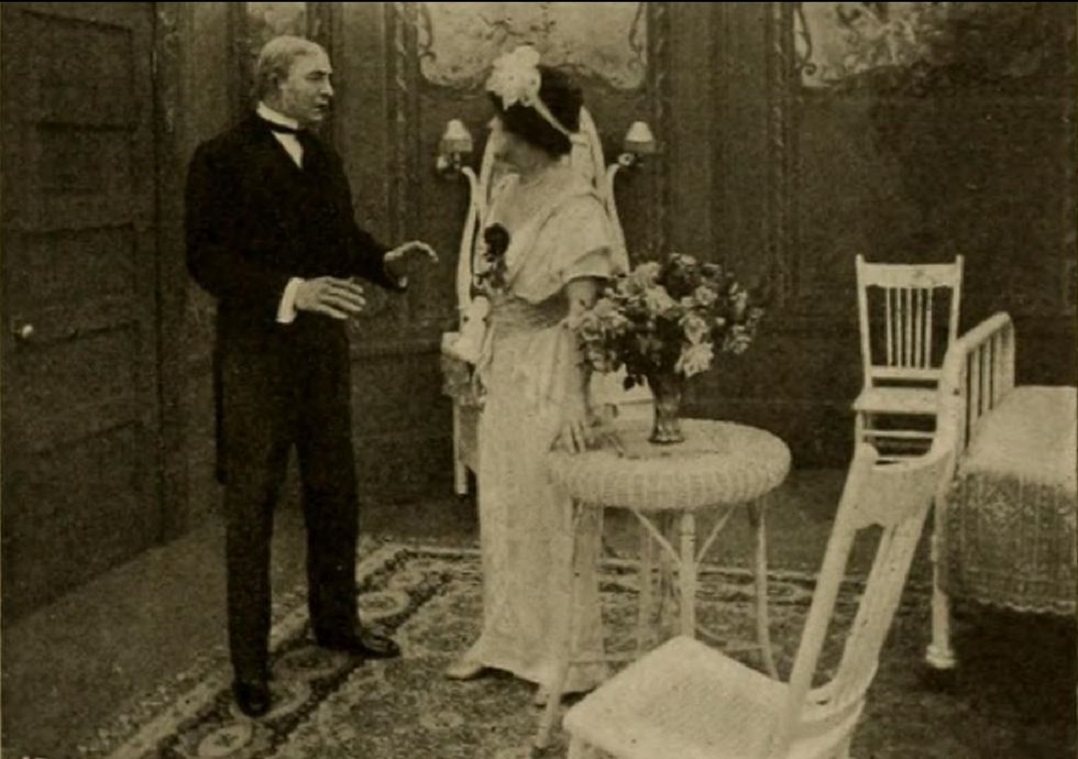
Dir: Oscar Apfel
The defense attorney who was unable to obtain the acquittal of an innocent young man concocts a complicated and diabolical scheme to get revenge on the prosecutor.
View Details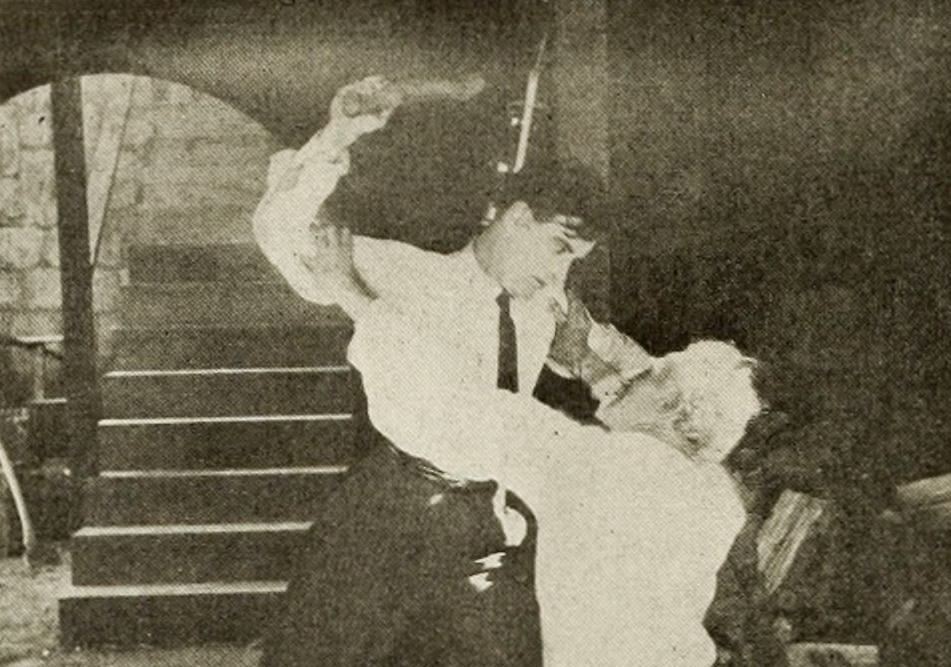
Dir: Oscar Apfel
David Jenison, accused of a crime which he did not commit, escapes his guards and joins a traveling circus. Mrs. Braddock, wife of the circus owner, takes an instant liking to David and prevails upon her husband to give him a job as clown. Mrs. Braddock's daughter Christine, falls in love with David. All the performers become friends of the new clown except Ernie Cronk, a hunch-back who, himself admires Christine, takes a violent dislike to David and tries to kill him. David later saves Ernie from a bad beating at the hands of a gang of rowdies and Ernie thanking David, promises to help him clear his name of the crime charge. Ernie's friendly feeling, however, is short-lived, for in a jealous rage, he writes a note to the detectives informing them that David disguised as a clown, will take part in the afternoon performance, but Dick Cronk, Ernie's brother, learning of the latter's treachery toward David, takes David's place as a clown, while David escapes. Dick Cronk, who has learned to love Dave like a brother, goes to Jenison Hall. David's former home, and there confronts David's Uncle Frank, who he feels quite certain is the man who committed the crime David is charged with. Dick returns to the circus and tells David of his experiences at Jenison Hall. A few days later they learn that David's uncle and a notorious colored attorney have quarreled, dueled and killed each other, and in his dying confession, the uncle had completely exonerated David. David, before leaving the circus, confesses his love for Christine and asks Mrs. Braddock's permission to marry her, but Mrs. Braddock, fearing them too young, promises David that in five years, he may marry Christine if he still loves her, so David leaves, pledged to return. Col. Grand, infatuated with Mrs. Braddock and who has been following the circus about, finally through his clever scheming and the lending of money to Braddock, secures control of the circus and places Mrs. Braddock and Christine in his power. Col. Grand becomes abusive when his treatment is no longer tolerant to Mrs. Braddock and Christine. They leave the circus and return to their home in New York. Later, in New York, Braddock and Col. Grand meet and in a street fight, Braddock is arrested, accused of attempting to kill Col. Grand, and is railroaded to the penitentiary for five years. Five years have now passed and David comes to New York to claim Christine. Arriving at Christine's home, he learns that she will arrive later, from a trip to the country, and goes to the railroad station to greet her, but seeing her in the company of another young man, postpones his errand. He later meets Mrs. Braddock at a telegraph office and she gives him a wire she was just about to send him in which she tells him it is time for him to redeem his promise and he agrees to call that evening. Braddock released from prison, has sworn to kill Col. Grand on sight, and takes up a position outside the Braddock residence, and is about to enter, when Dick Cronk interferes and together, they go to a low resort where they can talk in safety. Col. Grand and Braddock meet face to face and Mrs. Braddock pleads with her husband to spare Col. Grand. Braddock does so and walks out of the house, telling them he is going to the river to end it all. During an altercation between Col. Grand, Dick and Ernie, Ernie shoots Col. Grand and when the police arrive blames it on his brother Dick, who at the trial is sentenced to death. Ernie later confesses his guilt and Dick is saved from the death chair. Braddock, instead of suiciding reforms and returns a better man. while Dave and Christine, learning of the re-union of father and mother, once again don their circus attire and together in the sawdust ring, live over in memories the days of their early love.
View Details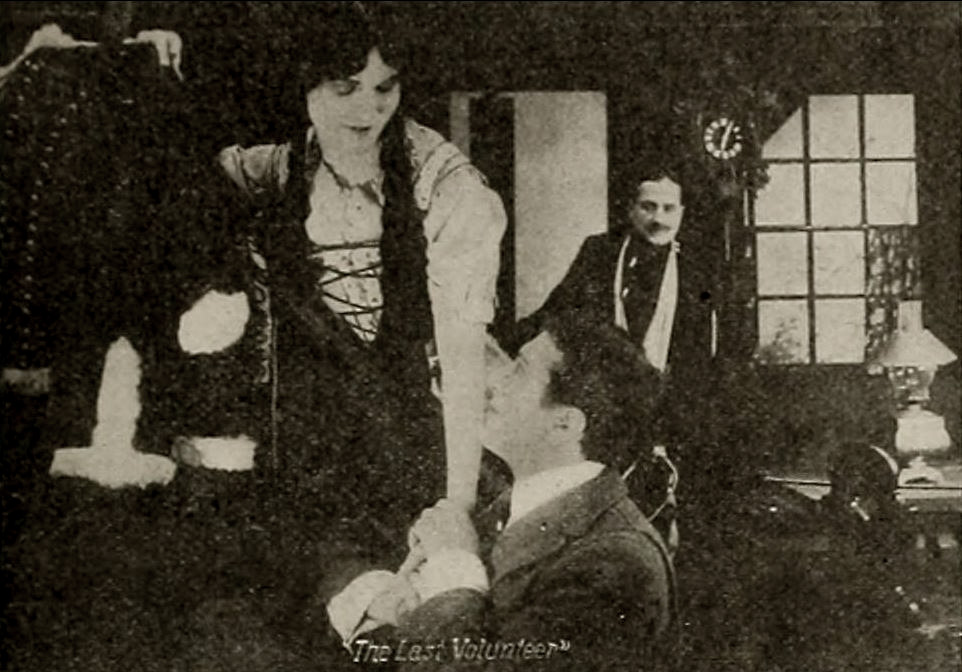
Dir: Oscar Apfel
While traveling incognito through his kingdom, Prince Ludwig of Saxe-Tholberg becomes infatuated with Katrina, the daughter of innkeeper Hermann Ardelheim, but their idyll is interrupted by the arrival of a courier bearing the news that Austrania has threatened war. Katrina is heartbroken to discover the identity of her sweetheart whom she can never hope to marry. After Ludwig's departure, Katrina overhears the plotting of two spies and with the help of her brother Raolf, she confronts them. In the ensuing struggle, Katrina kills one of them, who turns out to be the Austranian ambassador. Although Katrina admits her crime, Marshal von Trump plans to execute Raolf in order to pacify the Austranians. Katrina appeals to Ludwig, who pardons Raolf over the advice of his counselors causing Austrania to declare war. A crucial battle is fought near the Ardelheim inn, during which Katrina becomes a heroine by signaling the advance of Ludwig's troops. She is fatally wounded by the Austranians and is then brought to the inn where she dies with Ludwig at her side. He then eulogizes both Katrina and Raolf, who has also died in battle.
View DetailsAnalysis relative to Perils of the Coast Guard
| Film Title | Atmosphere | Complexity | Similarity |
|---|---|---|---|
| Snobs | Surreal | Dense | 87% Match |
| The Rug Maker's Daughter | Gritty | Dense | 95% Match |
| Cameo Kirby | Gritty | High | 89% Match |
| After Five | Surreal | Dense | 87% Match |
| The Little Gypsy | Ethereal | Linear | 93% Match |
This guide was algorithmically generated using the cinematic metadata of Oscar Apfel's archive. Last updated: 8/16/2026.
Back to Perils of the Coast Guard Details →