
DbcultAccessing Vault...
Recommendations
Senior Film Conservator
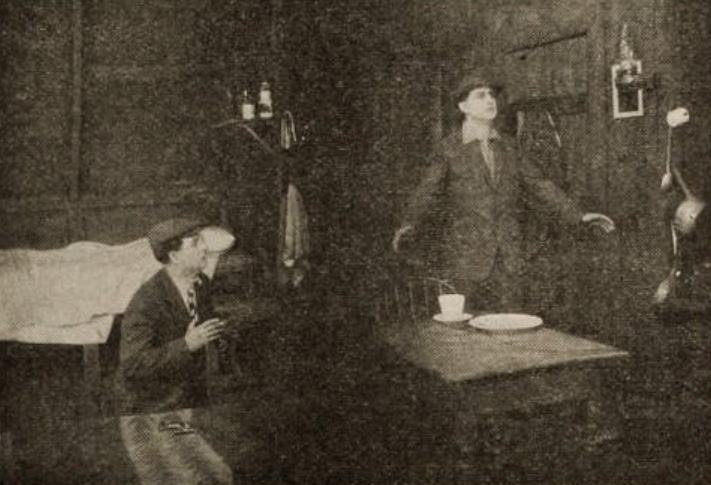
The United States-born brilliance of Satan Sanderson offers a unique artistic bravery, the profound questions raised in 1915 still require cinematic answers today. Our curated selection of recommendations echoes the very essence of Satan Sanderson.
In the Pantheon of cult cinema, Satan Sanderson to provide a definitive example of John W. Noble's stylistic genius.
The story of Reverend 'Satan' Sanderson, Hugh Stires and Jessica Holmes, a beautiful and romantic blind girl and ward of David Stires, father of Hugh. The latter is signing his will, making Jessica his sole heir, thereby disinheriting his dissolute son. Jessica protests and Reverend Sanderson protests to David on behalf of Hugh. Sanderson acknowledges that he himself was a wayward youth in college, the leader of a fast-set and looked favorably upon by Hugh, and he feels responsibility for Hugh's downfall. David Stires is obdurate and Jessca's sympathy goes out to Hugh and she blames Sanderson for Hugh's troubles. Sanderson, though, is in love with Jessica. Hugh returns home, gains his father's forgiveness, and weds Jessica, whose eyesight had been restored by a medical operation. And then David learns that Hugh has forged his name to a check. Davis threatens his son with jail and Hugh runs away and seeks Sanderson's help, again. From there the story takes a few turns.
Based on the unique artistic bravery of Satan Sanderson, our vault has identified these titles as the most compelling follow-up experiences for fans of cult cinema:

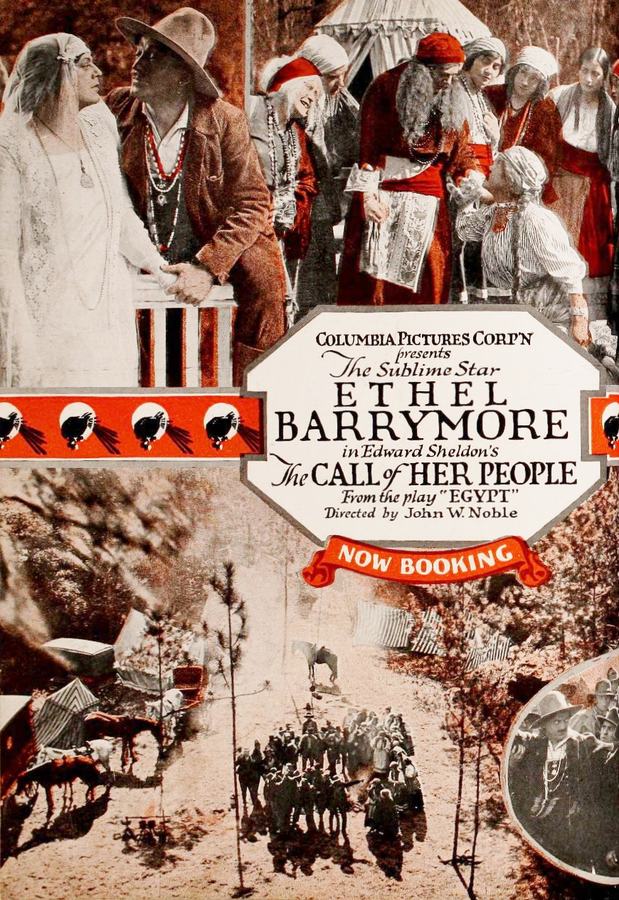
Dir: John W. Noble
Faro Black, the chief of the Gypsies, finds out that his son Faro and his girlfriend Egypt have gotten married. Infuriated, he tells that their marriage isn't valid, since Egypt is actually the daughter of wealthy Gordon Lindsay, who is on his way to the gypsy camp to claim her. The two promise to remain faithful to each other, but as time passes and she never hears from him, her love turns to bitterness. What she doesn't know is that Faro is being held prisoner by his father who, on his deathbed, tells him a secret that changes everything.
View Details
Dir: John W. Noble
A rich libertine leaves all his money to a college girl who had refused his advances. The ensuing scandal makes her retire to a small town, where she meets the dead man's son.

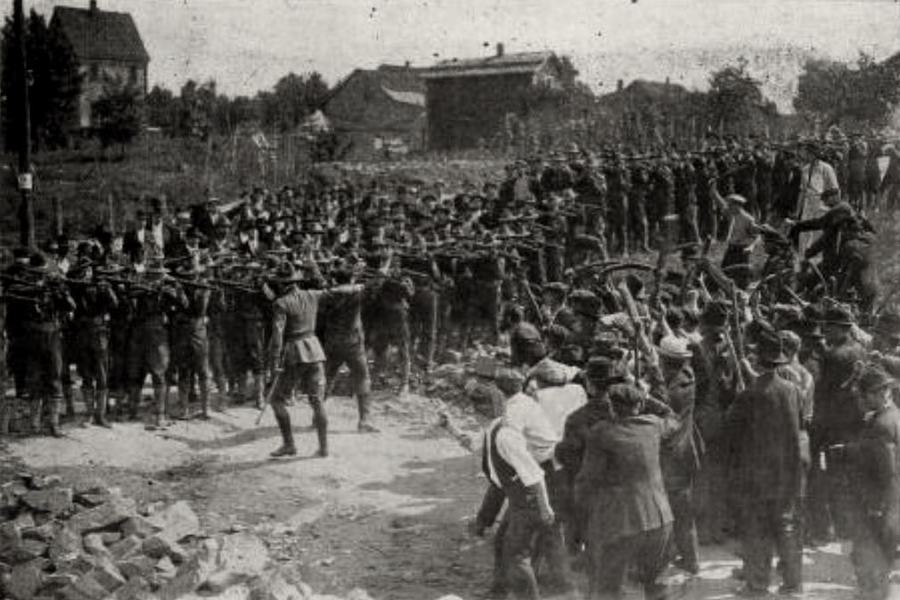
Dir: John W. Noble
In a prologue, the relationship between capital and labor throughout history is shown in caveman days, Biblical times, and the feudal period. In the main story John Stoddard, a construction chief building a gigantic bridge for capitalist Courtlandt Van Nest, sympathizes with the workers' dissatisfaction with low salaries and subsistence conditions. When his attempts to negotiate with Van Nest fail, the workers, led by agitator Lavinsky, prepare to strike. Van Nest's daughter Janet, who is engaged to a militia captain, visits the site and is appalled by the squalor. Despite their differences, Janet and Stoddard fall in love. When the strike breaks, Van Nest sends in the militia. As they prepare to fire, Stoddard sees Lavinsky about to throw dynamite, and wrestles it away. He then agrees to Van Nest's demand for settling the strike that he refrain from seeing Janet. After Janet leaves home to help poor families, Van Nest looks for her at Stoddard's house where Stoddard demonstrates that because of their similar ancestry, he and Van Nest are not very different. When Stoddard's sister Edith allows Van Nest to witness the surprise reunion of a worker and his wife from Europe, to whom Janet had sent transportation money, Van Nest softens and agrees to Janet's marriage to Stoddard. An epilogue follows showing blindfolded Justice saying to fat Capital and burly Labor, "Why quarrel? You are worthless without the other."
View Details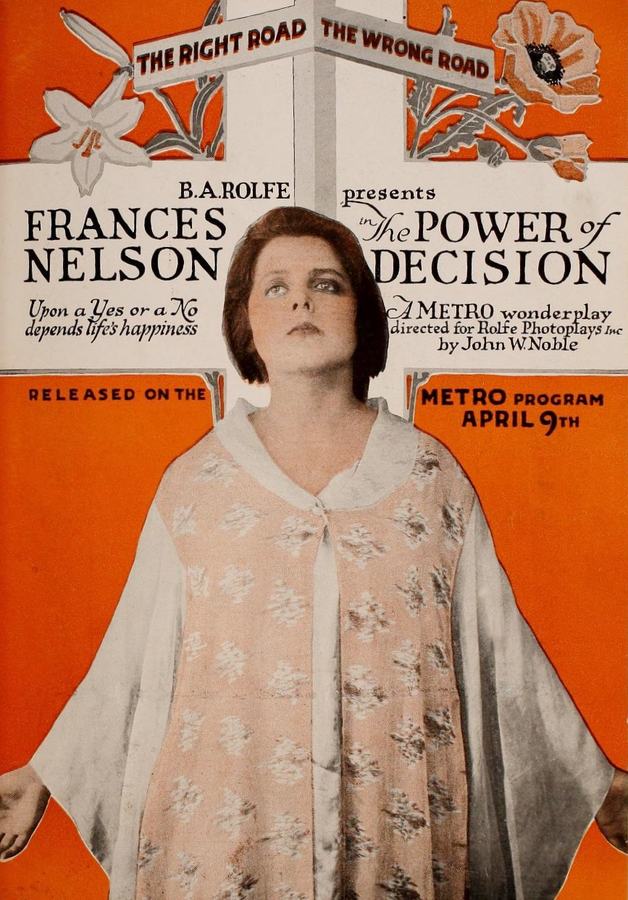
Dir: John W. Noble
Wood Harding, the illustrator, first sees Margot, the model, at a sale of the effects of a poor old artist who befriended her. The auctioneer is belittling the old man's work when Margot rushes upon the platform and tells how kind he has been to her. Harding buys the picture that has been ridiculed, and makes her a present of it. From that time on she poses only for him, and the two fall in love. Harding has a wife from whom he has been separated for some time, but he marries Margot without saying anything about her. The real Mrs. Harding returns, and threatens to have her husband arrested for bigamy. To save the man she loves Margot denies that she has been married to him. The girl goes to a distant city and poses for Mrs. Hall, a miniature painter. Mrs. Hall introduces her to Austin Bland, a novelist, who falls in love with her and asks her to marry him. She tells him frankly that she already has given all the love she possesses to another man. Bland says he will be content if she will only marry him, and she does so. Bland is writing a novel called "The Power of Decision." Its central theme is that "Every mortal has within himself the God-given power of decision." By his own decision each man must act for himself in every crisis. The publishers have engaged Wood Harding to illustrate Bland's book. It is the author's wish that his wife pose as the heroine, and Harding comes to visit at the Bland residence. Neither Margot nor Harding gives a sign of recognition on meeting, but Harding tries to exert his old spell over her. Her husband's book seems to have a special meaning for her. One paragraph in particular fascinates her: "This was the turning point in her life. The choice between these two men, one bound to her by the holy sanctity of the marriage vow, the other calling from out the darkness of the past. Which road? What lies beyond? The power of decision rests with her." Gordon, the butler, surprises Harding in the act of attempting to embrace Margot, and later when she discovers him trying to open the safe he prevents her from calling the police, threatening to expose her to her husband. Bland learns the truth through Mrs. Harding, who sees Margot's picture in an announcement of the new novel. Bland has been asked by his publishers to take a trip with an arctic explorer, to write a series of articles. He accepts. Harding has been urging Margot to go away with him and she cannot come to a decision. She promises to signal him by switching the library lights on and off when she has made up her mind. Bland leaves in his car for the railroad station, but the machine breaks down and he misses his train. Returning, he sees Harding across the street watching the library windows, and then the lights flash off and on. He goes into the house and confronts Margot, who tells him she has been tempted to go away with Harding, but has finally come to a realization of her love for her husband and has summoned Harding to tell him so. Bland does not believe her. The curtains at the French window move and Bland fires at them. A man falls, enveloped in the curtains. Margot urges her husband to escape, saying she will take the blame. Bland finds he has shot not Harding, but the butler, Gordon, who has come to attempt robbery. Harding has hurried away on hearing the shot. Margot finally makes her husband realize that, like his heroine, she has chosen the right road and has exercised her God-given power of decision.
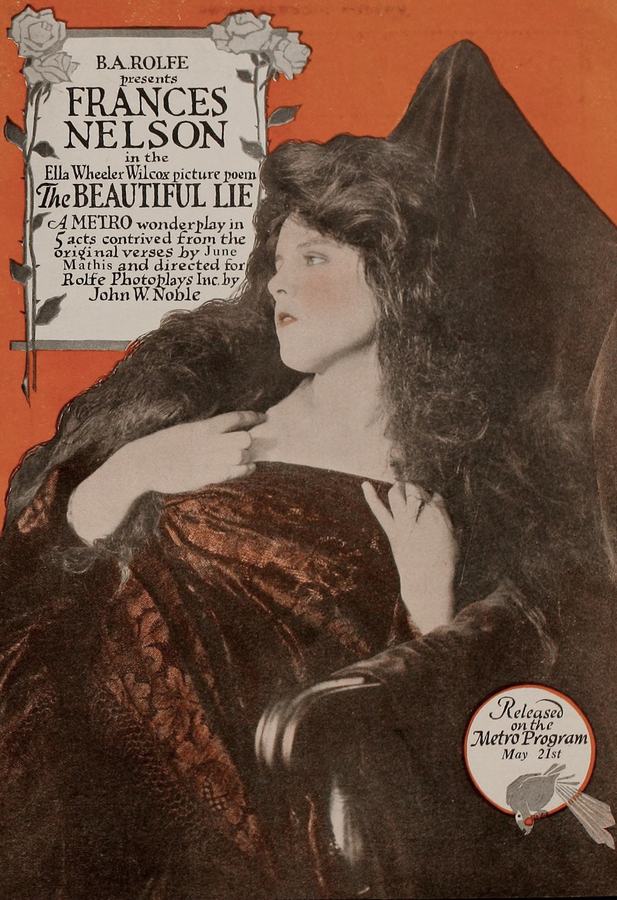
Dir: John W. Noble
After a brief courtship, Louise Joyce is married to her employer, architect Mortimer Grierson, who soon tires of her and begins to see other women. One night, he comes home drunk and informs Louise that the marriage was a fraud, actually only a mock ceremony arranged by Grierson's nephew Howard Hayes, then deserts her for good. Louise becomes an artist's model, and while working she meets Paul Vivian, a protégé of her husband, and the two fall in love. Grierson discovers their relationship and tells Paul that Louise was his mistress. Soon after, Grierson is mortally wounded by one of his lovers and Howard returns from Mexico to visit his uncle's deathbed. As Grierson instructs Howard to put his affairs in order, Howard confesses that Louise's marriage is legal because in an effort to spite his uncle, he secured a real minister to perform the ceremony. After Grierson's death, Paul finds Louise and learns the true story, and together they begin a new life.
View Details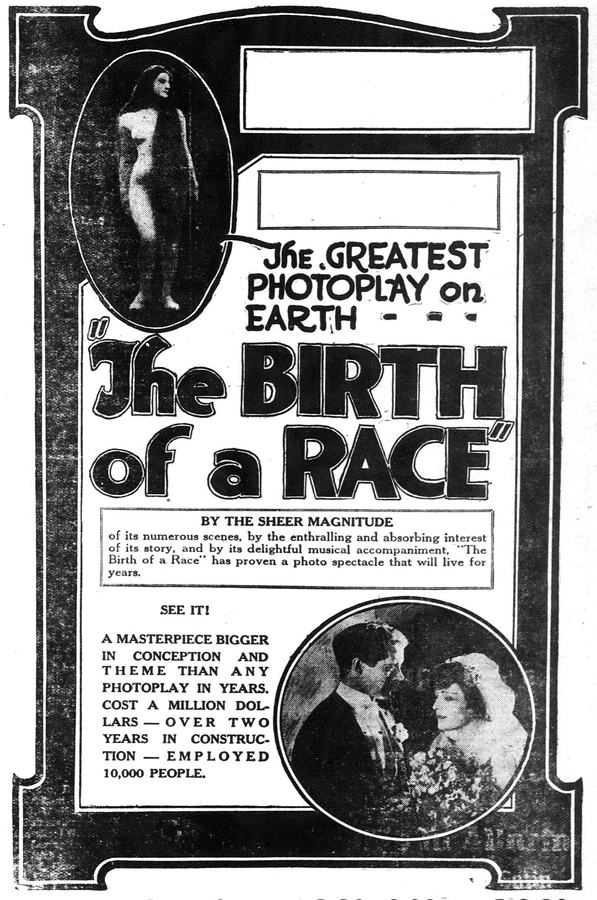
Dir: John W. Noble
After a biblical and historical prologue detailing the evolution of the idea of democracy through the creation of the world, the flood, the crucifixion of Christ, the discovery of America, the signing of the Declaration of Independence, and the Civil War, the present-day threat to this idea by autocratic powers is dramatized. Fritz Schmidt, a German-American steel plant owner, and his son Oscar remain loyal to the Kaiser, while son George fights for the Allies. When the American army hospital where Louisa Schmidt works as a nurse is attacked by the Germans, Oscar, now a German soldier, assaults her, not recognizing his sister in the confusion. George, recovering in the hospital, kills his brother and then returns home to find his mother and a German spy struggling for some secret papers. George kills the spy, Fritz realigns his loyalty to the American cause, and the family is reunited.
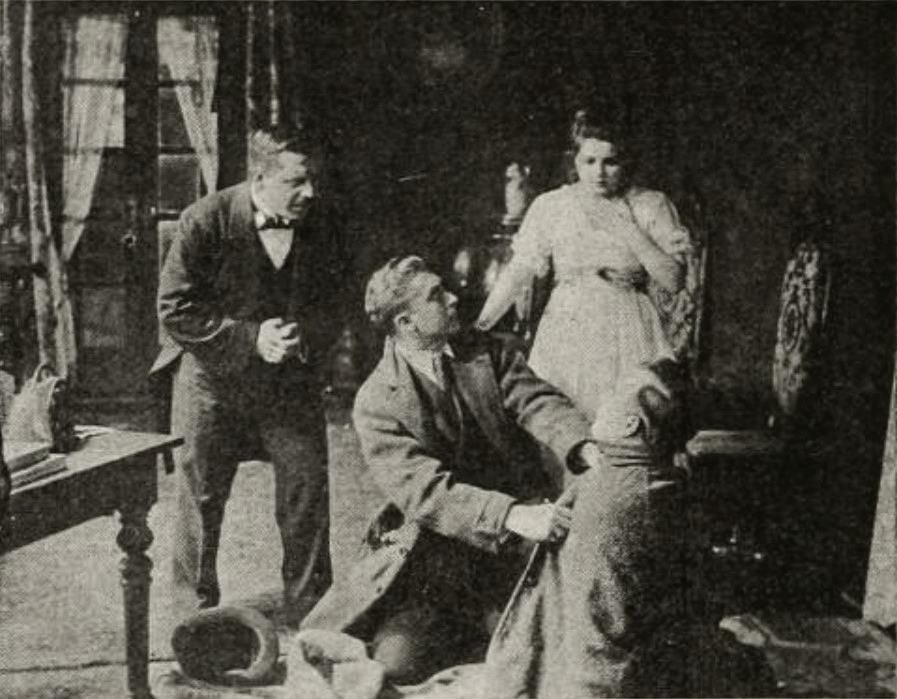
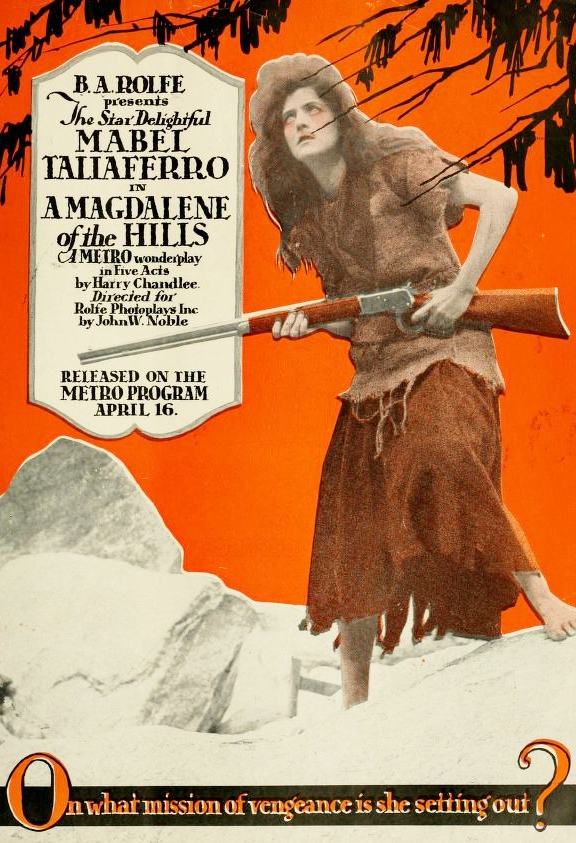
Dir: John W. Noble
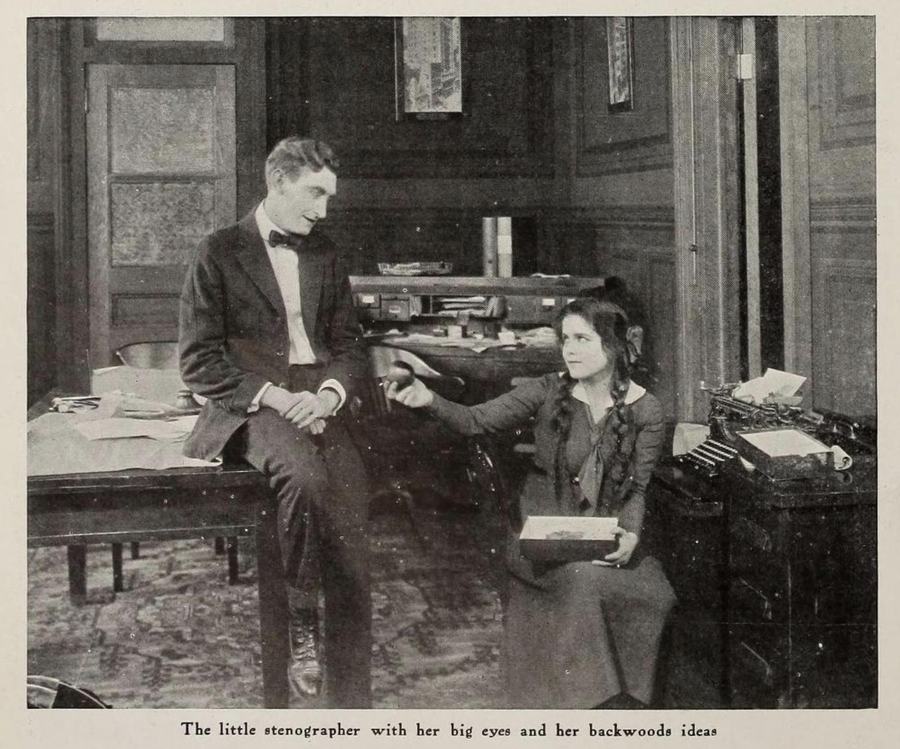
Herbert Grayson has timber holdings in a Southern state. One of his mills is burned, and he accuses Len Mathis, a young mountaineer. In trying to avoid arrest Len is killed, and old John Mathis, his father, swears to shoot Grayson or any member of his family on sight. His young daughter, Renie, makes the same vow. Grayson is anxious to gain control of lands owned by Mathis, Grayson's nephew, Eric Southard, volunteers to effect the purchase. On his arrival, he telegraphs his uncle, disclosing his identity to the station-agent, who loses no time in telling the bystanders. Eric starts for the home of Peets, his uncle's foreman, in the village "jitney," as Renie, rifle in hand, is walking across the hills to Hibbitsville to get cartridges. One of the tires of the automobile bursts, and Renie, thinking the noise that of a gun, creeps behind Eric and the chauffeur, who are mending the tire, and makes them throw up their hands. When they explain that the tires contain wind, she shoots one in order to prove it, and while the chauffeur is repairing the damage she and Eric sit by the roadside. She learns in the village that Eric is Grayson's nephew, and goes to Peets' cabin to avenge her brother. Trying to shoot through the window, she misses Eric, who returns her fire, and slightly wounds her. He carries Renie home, and she tells her father she has been wounded by dropping her own gun. Eric and Renie fall in love. John Mathis has promised Renie's hand in marriage to Bud Weaver, as soon as he earns the necessary $100 with which to set up housekeeping. Eric writes to his uncle, refusing to further his schemes in the mountains. Eric is summoned to the Mexican border with the National Guard. He promises Renie to return for her. Bud Weaver demands his bride, and old John, true to his promise, sets a date for the wedding. Eric, stricken with typhoid fever, has been sent back to New York to recuperate, but Renie, unable to read or write, cannot communicate with him. The night before the wedding Renie tries to run away, and discovered by her father, has to tell him the reason. Old John gives her her rifle and shows her the door. Renie goes to Peets' cabin to try to learn news of Eric, and Peets takes advantage of her loneliness. In the ensuing struggle, Renie's gun is fired, and Peets is killed. Some men who are passing break into the cabin and Renie is arrested charged with murder. In a New York hospital Eric is convalescent. He learns that Renie has shot Peets and that her trial will be held in a few days. Eric hurries to Hibbitsville and plans her defense. At the trial, the feud between the Grayson and the Mathis factions is brought out, making the case against Renie look serious, but Eric appeals to the sympathies of the mountaineers in her behalf, and the jury returns a verdict of "not guilty." Eric and Renie are married, and Grayson, having come to a realization of the needs of the mountaineers, begins a new regime of helpfulness among the hills.
View Details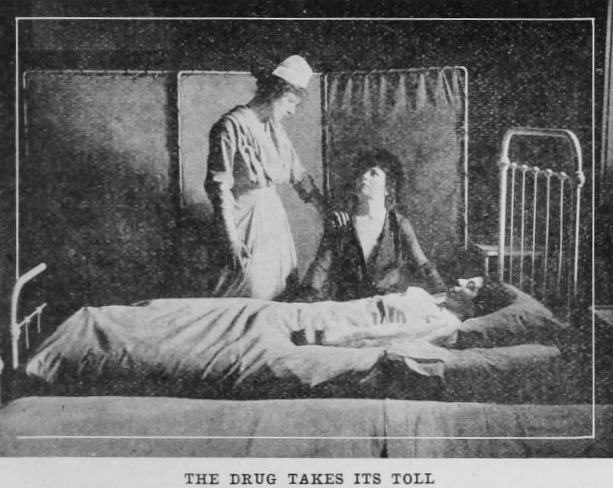
Dir: John W. Noble
A story about the affects of cocaine on the lives of a family.
Dir: John W. Noble
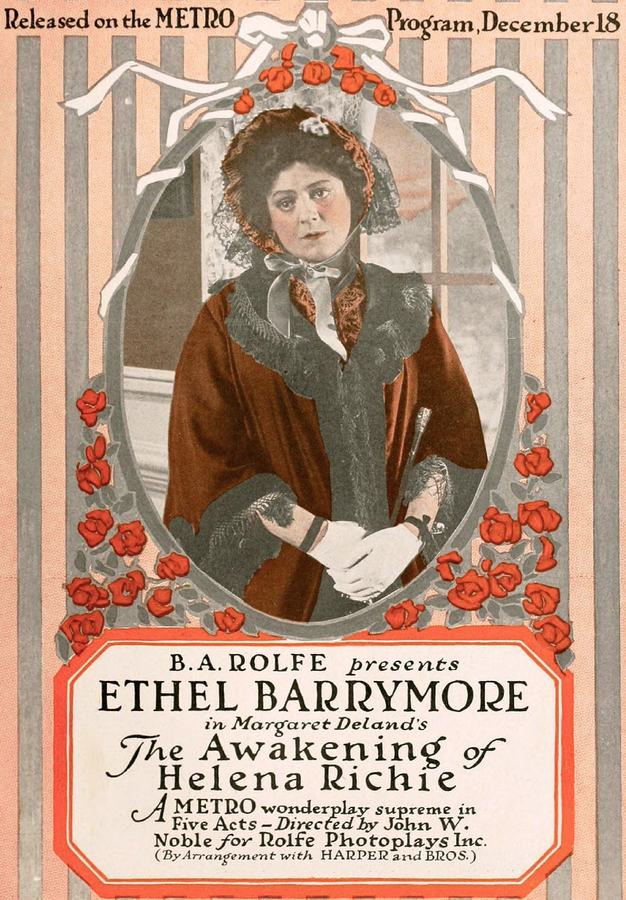
To the village of Old Chester comes Helena Richie in search of balm for a broken heart. Her dissolute husband, in a drunken rage, has killed their little child. This tragedy induces Helena to listen to the pleadings of Lloyd Pryor to leave Paris, where the Richies are living, and come to America with him. Pryor makes frequent visits to Helena in the little home he establishes for her in Chester, and the townspeople accept the statement that he is her brother. Old Benjamin Wright, however, has his own suspicions as to the relations between the two. His interest is more than a casual one, for his grandson, Sam Wright, a young poet, is in love with Helena. The old man tells him his belief with regard to Mrs. Richie. Sam asks her whether the suspicion has any foundation, and when she admits that it has he kills himself. Dr. Lavendar, the kindly old minister, has in his charge a child who needs a home. He has decided to send the little boy, David, to Mrs. Richie for a trial visit. She welcomes the boy, who fills the place in her heart left vacant by the death of her own child. Her heart becomes bound up in the boy, though she is torn by conflicting emotions by the thought of her own false position. Helena's husband has been in such feeble health, owing to his dissipations, that she has constantly expected his death to release her so that she and Pryor may be married. Finally the long-expected event happens, but Pryor has tired of her. His promise of marriage has been nothing but a ruse to get her to elope with him. Looking about for an excuse to break the bonds which have become irksome to him, he tells her that she must give up David. She refuses and he says she must choose between the child and himself. Realizing Pryor's unworthiness, she clings to the child, and Pryor leaves her. Helena goes to Dr. Lavendar, tells him the truth about her past relations with Pryor, and asks him to let her keep the child with her always. The old man's answer is: "Can you teach him to tell the truth, you who have lived a lie? Can you make him brave, you who could not endure? Can you make him honorable, you who have deceived all?" Helena is silent in the face of this accusation. She decides to give David up and to leave Old Chester. She tells Dr. Lavendar that on her way to the station next day she will come to bid David goodbye. Next day at the rectory Dr. Lavendar asks her to take with her a parcel which she will find wrapped up in the coach. She promises, and in the coach finds the package to be little David, all wrapped up for traveling. Her willingness to sacrifice her own happiness for the boy has proved her worthiness to keep him, and Helena and little David leave Old Chester to find peace among new surroundings.
View Details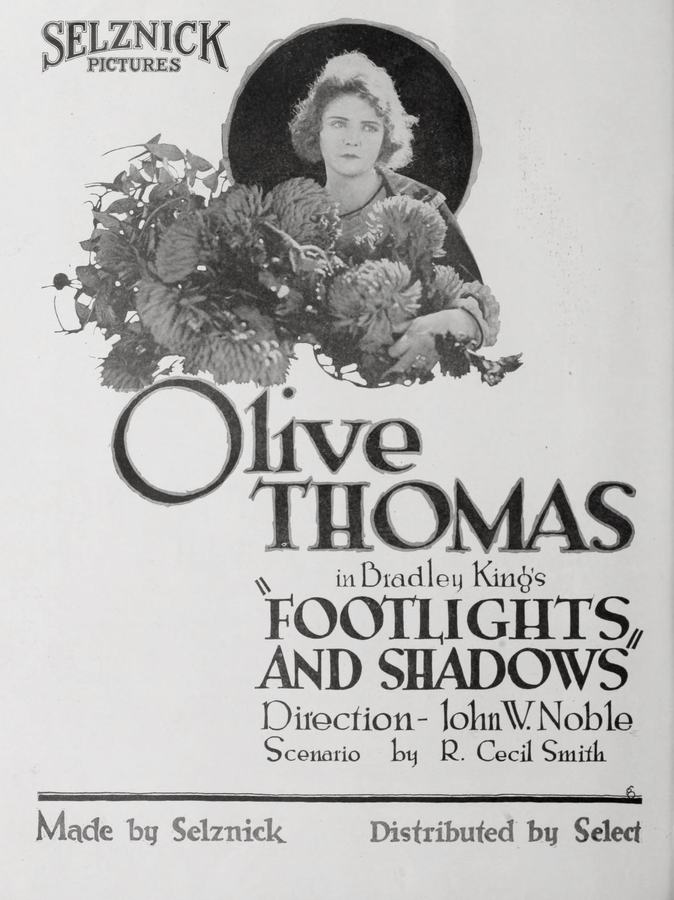
Dir: John W. Noble
A fortune-hunting follies star Gloria Dawn ( Olive Thomas ), begins to question her engagement to wealthy Peter Shaw after meeting an amnesiac young man who stumbles into her apartment one night. The doctor instructs that he not be moved, so Gloria nurses the stranger back to health, although his memory fails to return. Gloria falls in love with her patient and, upon discovering that he is millionaire sportsman Jerry O'Farrell, rushes home to restore his identity, only to find that he has gone. Amnesia continues to plague Jerry, and he soon forgets both Gloria's name and address. While he is attending a show at the follies, a fire breaks out, and Gloria, recognizing her lover in the audience, rushes to save him. Meanwhile, Shaw, who has discovered Gloria's feelings for Jerry, accosts her. Jerry, who has finally regained his memory, intercedes and rescues Gloria, and the two fall in love.
View DetailsAnalysis relative to Satan Sanderson
| Film Title | Atmosphere | Complexity | Similarity |
|---|---|---|---|
| The Call of Her People | Gothic | Abstract | 88% Match |
| The Golden Shower | Gritty | Linear | 90% Match |
| The Bigger Man | Gritty | Dense | 89% Match |
| The Power of Decision | Gritty | Abstract | 88% Match |
| The Beautiful Lie | Ethereal | Abstract | 92% Match |
This guide was algorithmically generated using the cinematic metadata of John W. Noble's archive. Last updated: 6/20/2026.
Back to Satan Sanderson Details →