Summary
In a poignant tableau of moral quandary and societal stricture, the narrative commences with the serendipitous encounter between Wood Harding, an artist of considerable talent, and Margot, a striking model, amidst the somber proceedings of an auction. Margot, propelled by fierce loyalty, defends the maligned oeuvre of a deceased, impoverished artist who had extended her kindness, captivating Harding with her spirited integrity. Their artistic collaboration blossoms into an illicit romance, culminating in a bigamous union, a clandestine act obscured by Harding's prior, unacknowledged separation. The spectral return of Harding's legitimate wife shatters their fragile idyll, forcing Margot into a heart-wrenching renunciation of their marriage to shield her beloved from legal repercussions. She retreats into anonymity, re-emerging in a distant metropolis as a muse for a miniaturist, where she encounters Austin Bland, a discerning novelist. Though her heart remains tethered to a past love, she accedes to Bland's steadfast proposal, finding solace in a marriage of companionship. Irony, a cruel mistress, orchestrates a reunion when Harding is commissioned to illustrate Bland's magnum opus, 'The Power of Decision,' a philosophical treatise on individual agency. The novel's central theme — the inherent human capacity for decisive action in moments of crisis — becomes an unsettling mirror to Margot's own unresolved dilemmas. Harding's insidious attempts to rekindle their former passion, coupled with a butler's opportunistic blackmail, plunge Margot into a vortex of agonizing indecision. The climax unravels with a thrilling sequence of misdirection and revelation: Bland's near-departure, a fateful mechanical failure, and his return to witness Margot's ambiguous signal to Harding. A tense confrontation ensues, culminating in a tragic, mistaken shooting and the unmasking of the butler's perfidy. Ultimately, Margot's harrowing journey culminates in a definitive exercise of her 'God-given power of decision,' affirming her commitment to Bland and the sanctity of her present life, a testament to resilience forged in the crucible of profound personal strife.
Synopsis
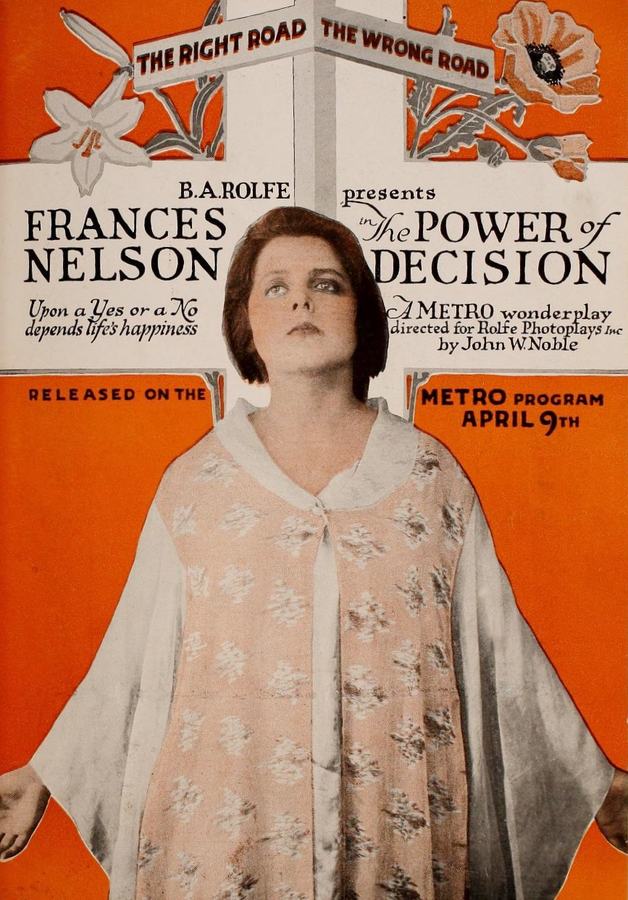
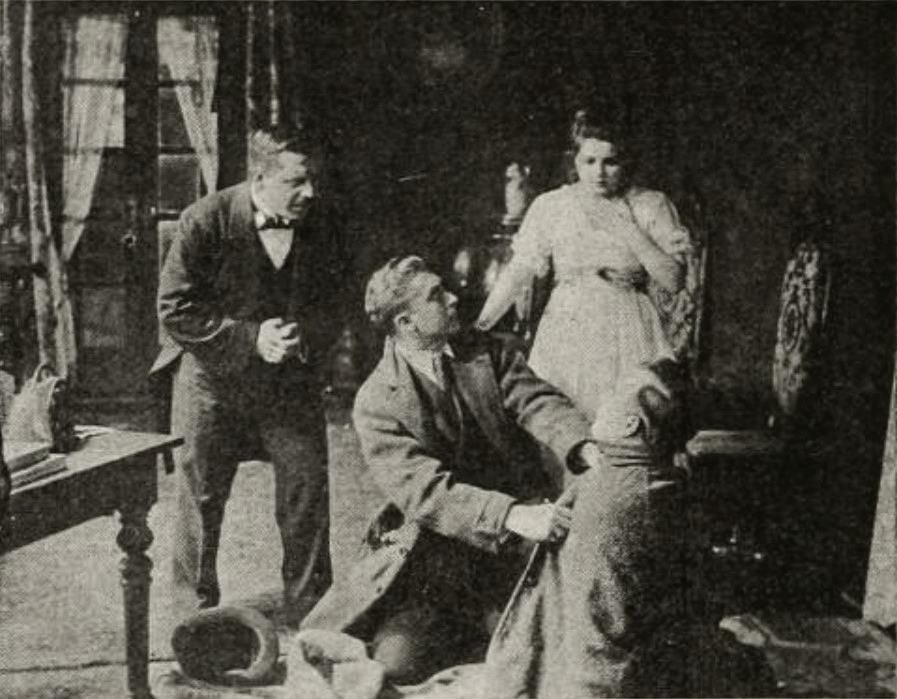
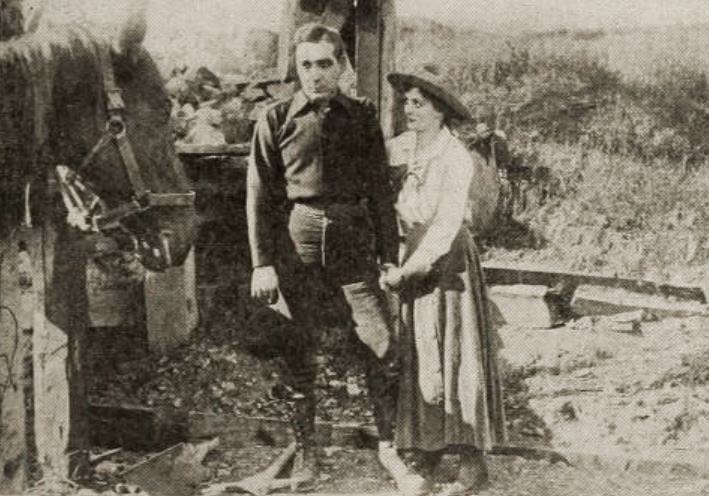
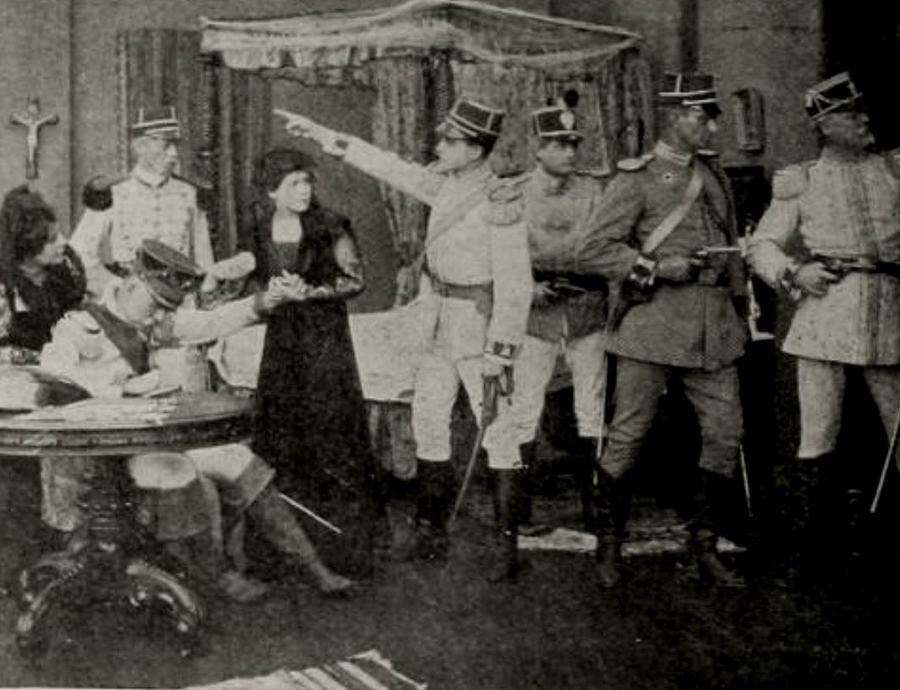
Wood Harding, the illustrator, first sees Margot, the model, at a sale of the effects of a poor old artist who befriended her. The auctioneer is belittling the old man's work when Margot rushes upon the platform and tells how kind he has been to her. Harding buys the picture that has been ridiculed, and makes her a present of it. From that time on she poses only for him, and the two fall in love. Harding has a wife from whom he has been separated for some time, but he marries Margot without saying anything about her. The real Mrs. Harding returns, and threatens to have her husband arrested for bigamy. To save the man she loves Margot denies that she has been married to him. The girl goes to a distant city and poses for Mrs. Hall, a miniature painter. Mrs. Hall introduces her to Austin Bland, a novelist, who falls in love with her and asks her to marry him. She tells him frankly that she already has given all the love she possesses to another man. Bland says he will be content if she will only marry him, and she does so. Bland is writing a novel called "The Power of Decision." Its central theme is that "Every mortal has within himself the God-given power of decision." By his own decision each man must act for himself in every crisis. The publishers have engaged Wood Harding to illustrate Bland's book. It is the author's wish that his wife pose as the heroine, and Harding comes to visit at the Bland residence. Neither Margot nor Harding gives a sign of recognition on meeting, but Harding tries to exert his old spell over her. Her husband's book seems to have a special meaning for her. One paragraph in particular fascinates her: "This was the turning point in her life. The choice between these two men, one bound to her by the holy sanctity of the marriage vow, the other calling from out the darkness of the past. Which road? What lies beyond? The power of decision rests with her." Gordon, the butler, surprises Harding in the act of attempting to embrace Margot, and later when she discovers him trying to open the safe he prevents her from calling the police, threatening to expose her to her husband. Bland learns the truth through Mrs. Harding, who sees Margot's picture in an announcement of the new novel. Bland has been asked by his publishers to take a trip with an arctic explorer, to write a series of articles. He accepts. Harding has been urging Margot to go away with him and she cannot come to a decision. She promises to signal him by switching the library lights on and off when she has made up her mind. Bland leaves in his car for the railroad station, but the machine breaks down and he misses his train. Returning, he sees Harding across the street watching the library windows, and then the lights flash off and on. He goes into the house and confronts Margot, who tells him she has been tempted to go away with Harding, but has finally come to a realization of her love for her husband and has summoned Harding to tell him so. Bland does not believe her. The curtains at the French window move and Bland fires at them. A man falls, enveloped in the curtains. Margot urges her husband to escape, saying she will take the blame. Bland finds he has shot not Harding, but the butler, Gordon, who has come to attempt robbery. Harding has hurried away on hearing the shot. Margot finally makes her husband realize that, like his heroine, she has chosen the right road and has exercised her God-given power of decision.
Review Excerpt
"
Unveiling the Silent Storm: A Deep Dive into 'The Power of Decision' (1918)
In the bustling, burgeoning landscape of early 20th-century cinema, where narratives often mirrored the dramatic societal shifts of the time, emerges a film of profound emotional resonance and intricate moral tapestry: The Power of Decision (1918). This silent era gem, penned with discerning insight by the prolific June Mathis, stands as a testament to the enduring human struggle with choice, consequence, and t..."