
DbcultAccessing Vault...
Recommendations
Senior Film Conservator
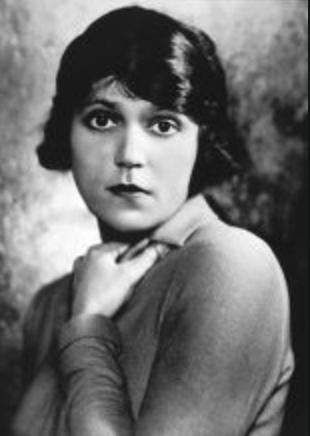
The cult sensibilities displayed in The Death Dance are unparalleled, the emotional payoff of the 1918 classic is what fans crave in similar titles. Our criteria for this list were simple: only the most cinematic excellence and relevant titles.
The cultural footprint of The Death Dance in United States to define the very concept of cinematic excellence in modern film.
Arnold Maitland is devastated when he finds out that his wife Cynthia is having an affair with a man named Boresky. He falls in love with Flora Farnsworth, a cabaret dancer, and sets out to divorce his wife and marry Flora. Unfortunately, Arnold is killed in an accident, and Flora turns for comfort to his business partner Philip Standish, and soon falls for him. Enter Cynthia, who has tired of Boresky and wants Philip for herself. She hatches a plan that will get rid of both Flora and Boresky and leave Philip for her.
The influence of J. Searle Dawley in The Death Dance can be felt in the way modern cult films handle cinematic excellence. From the specific lighting choices to the pacing, this 1918 release set a high bar for atmospheric immersion.
Based on the unique cinematic excellence of The Death Dance, our vault has identified these titles as the most compelling follow-up experiences for fans of cult cinema:
Dir: J. Searle Dawley
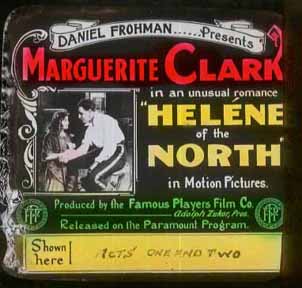
While waiting for the detained Lord Traverse, the guest of honor at an English society party, the guests play a game wherein each must tell a complete story before a cigarette burns out. Heléne Dearing relates that her proud father John left England after being exposed as a card cheat and became a whiskey runner near a Canadian lumber camp. John and his partner Pierre escape jail, and with Heléne, are pursued by Ralph Connell, a young Canadian Mounted Policeman, whom Heléne loves. John, wounded before they can reach the border, gives Pierre permission to marry Heléne, but a sympathetic curate reads the ceremony in Latin and has Ralph, as the witness, take the groom's marriage vows. After Pierre is captured and Heléne learns the truth about the marriage, Ralph leaves on a secret government mission. Heléne, who has since inherited a fortune, confides to the guests that she never saw Ralph again. After Lord Traverse arrives and turns out to be Ralph, he and Heléne leave the party to begin their belated honeymoon.
View Details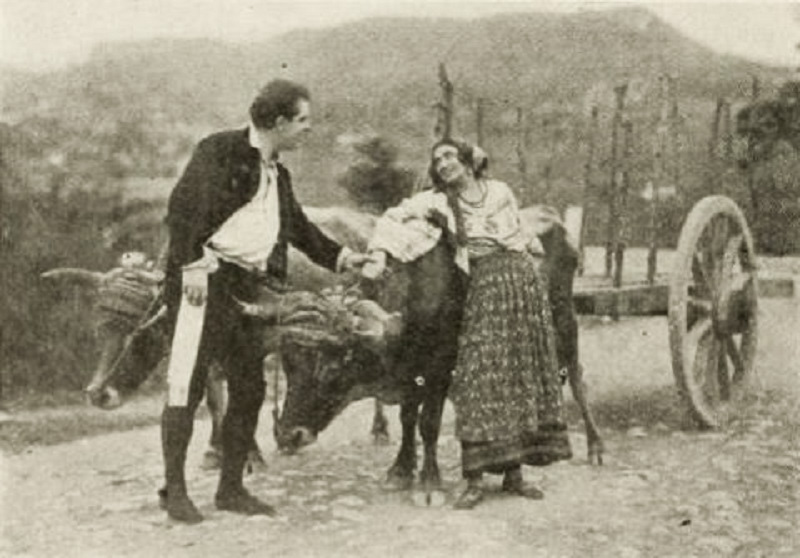
Dir: J. Searle Dawley
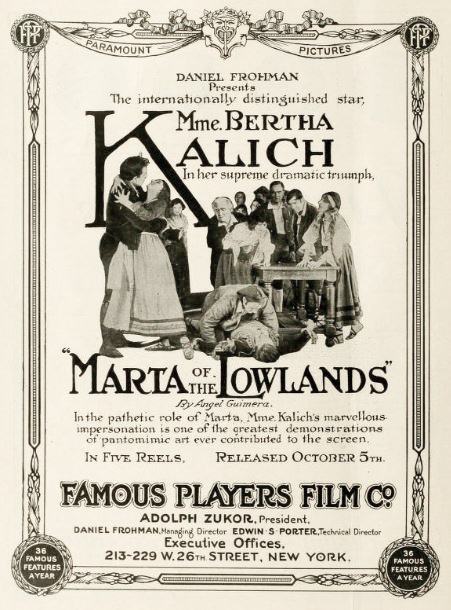
Marta is a beggar child, who is adopted by Sebastien, the wealthy landowner. Sebastien makes Marta his victim. He wishes to marry a wealthy woman, but at the same time retain his influence over Marta. He therefore arranges through Tomas, the hermit, to marry her to Manelich, a simple, untutored shepherd living in the mountains, a rough child of nature who kills wolves with his bare hands and knows naught of guile and deceit. The wedding is performed, Manelich being under the impression that Marta loves him, and being truly in love with her. Later he learns he has been tricked, while Marta, who had at first believed that Manelich had been bought with the master's gold to become her husband, finds her conclusion wrong, the honesty of his love compelling her own. Then come developments which make the drama one of the most passionate, intense, trenchant character studies ever created. Marta is a patient sufferer, a tragic figure indeed, as she bravely endures all the cruelty and indignities that are thrust upon her by the ruthless "master." We witness the poignancy of her grief, the restraint and the anguish of the oppressed woman, and her movements among the treacherous characters of her environment.
View Details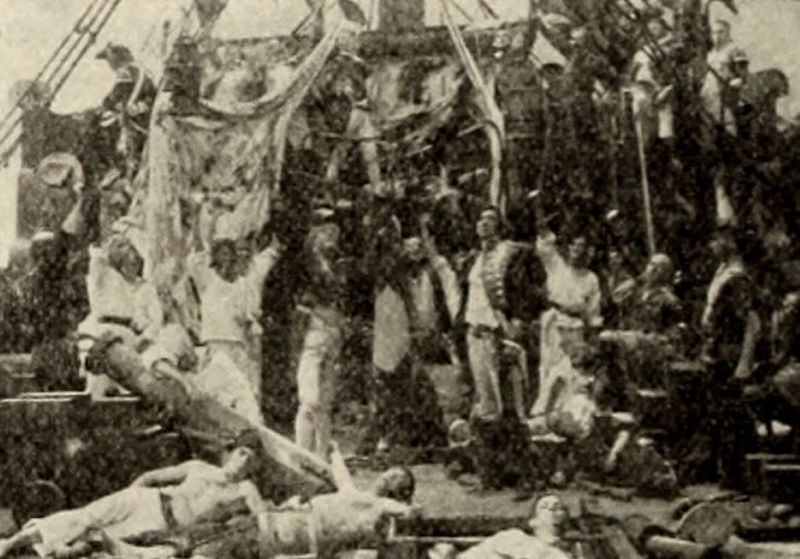
Dir: J. Searle Dawley
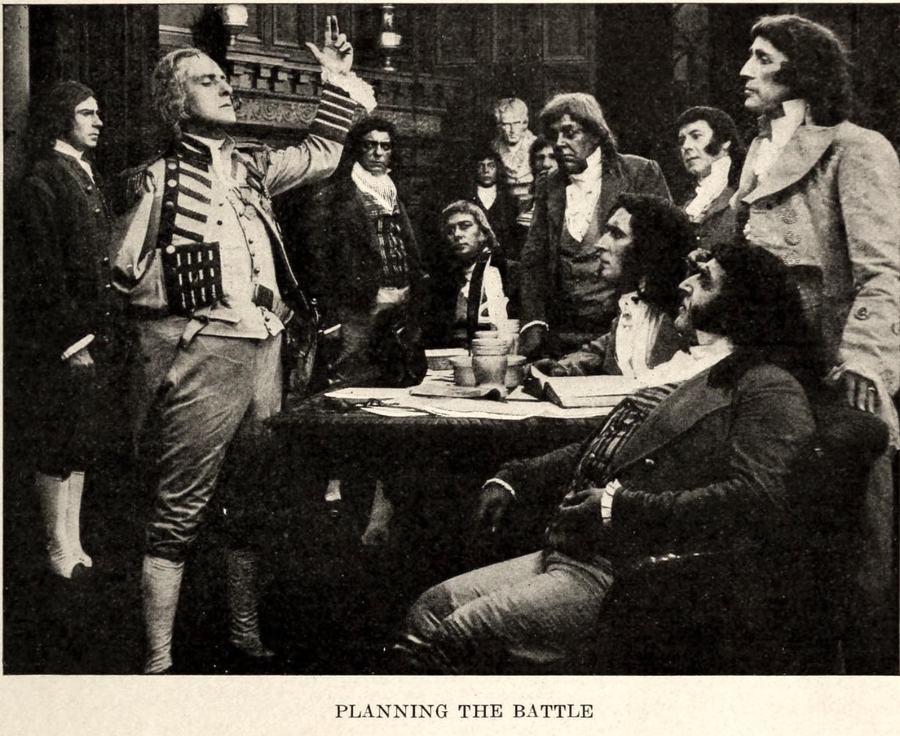
We show Lord Nelson leaving the admiralty room where he makes his famous speech and then introduce him with his captains giving the details of that wonderful plan of attack which was carried out to the letter at Trafalgar, the inspirations of the captains and their enthusiastic toast. We are then carried along to the day before the battle when the men are writing their last letters home. Here a beautiful scenic and photographic effect is introduced as the vision of the sweetheart of one of the lieutenants fades into view. This gives an opportunity to introduce that famous episode of the letter in which Lord Nelson called back the mail ship for a single message and which is endeared to the hearts of all those who sail the sea. We are then carried along to the morning of October twenty-first, Eighteen Hundred and Five, when the fleet of the enemy is sighted. The decks are cleared for action and the hoisting of the colors is portrayed with all the solemnity of the occasion before entering the battle. The correct incident of the hoisting of the famous signal "England expects every man to do his duty" is splendidly portrayed and carried out in every detail, and we note the pathetic touch in Nelson's life in bidding farewell to his captains having at the time a presentiment of his own death. We now get to the little human touch in his life and learn the true character of the man, for, in his last entry in his diary before the battle, he makes peace with his maker. And now we come to that wonderful spectacular picture of the real battle of Trafalgar. We see the ships in action, the firing of the guns, the ships caught on fire and then the camera switches to a close view of the deck of the Victory where human life is sacrificed by the hundreds, the fighting top of the Redoubtable, the fatal shot and Nelson's fall. We then see that wonderful character in his death, the solemnity, the beauty and the pathos of it all being carried out by the Edison players in all its grandeur; his farewell to Captain Hardy, the last kiss, the news of the victory and finally his death.
View Details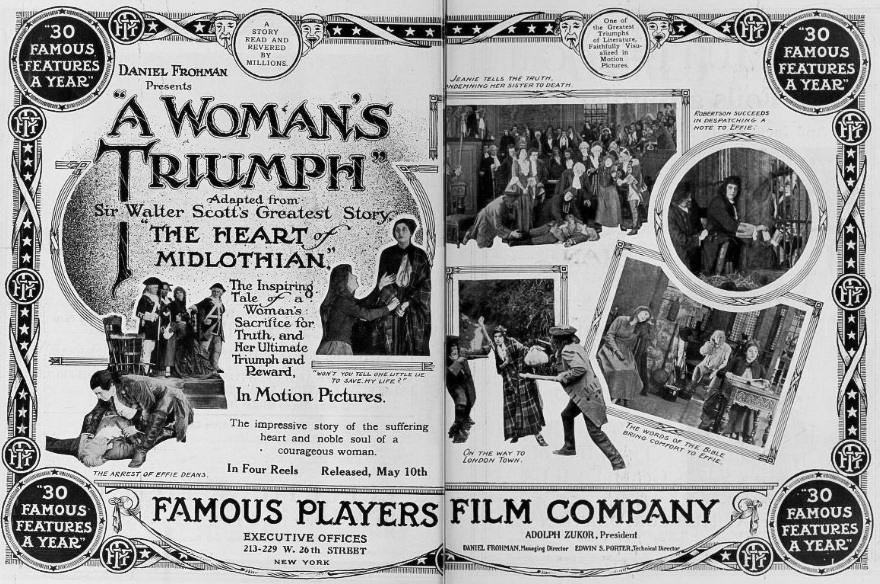
Dir: J. Searle Dawley
Beanie and Effie Deans are the two daughters of old David Deans, a thrifty Scotchman and strict church member, living near Edinburgh. David has reared his daughters in accordance with his rigid and austere ideas of life. The two sisters are as different in appearance and mind as two people could possibly be. Jeanie is steady, calm, noble and unaffected in dress and manner, while little Effie is gay and flighty, fond of finery and flirtations. Arriving at womanhood, Effie falls in love with young Georgie Robertson, the profligate son of a rich minister. Georgie has wandered far from his father's home and fold, and in his love for adventure becomes entangled with a band of smugglers. Under promise of marriage, Georgie often meets Effie secretly and gains her love and trust, but on his way to their prospective marriage is waylaid and arrested, in company with the leader of the smugglers, and thrown into prison. Effie has kept her family in ignorance of her love and betrothal, and has withheld from Jeanie even a greater secret, that she is to become a mother. Crushed by her misfortune, little Effie manages to secure a position in Edinburgh, and there receives word from Georgie, in prison, to go in her hour of trouble to friends of his who will care for her. She goes to these people, Madge Wildfire and her mother, a strange, eccentric pair, the mother a wicked old hag, the daughter demented through grief over her dead babe. They shelter Effie while her own little one is born, but the crazed Madge steals the young infant, leaving it alone by the roadside. The child is rescued by strangers, but is lost to Effie, who finally returns home, still guarding her sad secret. And there, for a time, she finds peace and quiet. But the old hag, fearing lest Effie accuse Madge of stealing the child, determines to accuse Effie of killing her own babe. Effie is torn from her dazed and grief-stricken family and thrust into prison, awaiting trial. During this lapse of time Robertson has escaped from prison, and incited a riot to rescue the smuggler-leader, who is popular among the town folks. Learning that Effie, too, is in the prison, Robertson also strives to effect her release. To his alarm and surprise, Effie refuses to leave the prison until her innocence is proved, and he is forced to leave without her. Desperate, he remembers the old Scotch law to the effect that if the accused has told any of her family that she is to become a mother, the statement is accepted as an evidence that she does not intend the death of her child. Robertson therefore writes Jeanie, begging her to meet him at midnight at an old church, and bidding her tell no one why he wishes to see her. This note he gives to Mr. Butler, a young minister, who loves Jeanie and is loved by her. Butler bears the note to Jeanie, demanding to know the reason for this appointment, but she steadfastly refuses to tell him, causing an estrangement between them. Jeanie meets Robertson, and he pleads with her to lie in court and thus save her sister. Meanwhile, Butler has been questioned by the authorities, on the occasion of a visit to Effie, as to his acquaintance with the escaped prisoner, Robertson, and is forced to reveal the contents of the note he bore to Jeanie. A searching party goes in pursuit of Robertson, led by Madge Wildfire, who knows the district better than the others. Madge divines the men mean danger to Robertson, whom she admires, and warns him with a wild song, so that he escapes in time, but without having secured Jeanie's promise. Jeanie visits Effie in prison, and is again begged to tell one little lie to save her sister's life, but she cannot escape her slavery to truth and honor, and refuses. At the trial Effie is condemned to die. Jeanie then goes barefoot to London and begs the Queen for her sister's life, telling her all. Though they offer the pardon in exchange for Robertson's hiding place, she staunchly refuses to reveal it. Her loyalty and strength appeal to the Queen's sympathies, and she grants the pardon. Stopping for nothing, she hastens back to the prison, and reaches the place of execution just in time. And so Jeanie saves her sister's life without the blight of having told a lie.
View Details
Dir: J. Searle Dawley
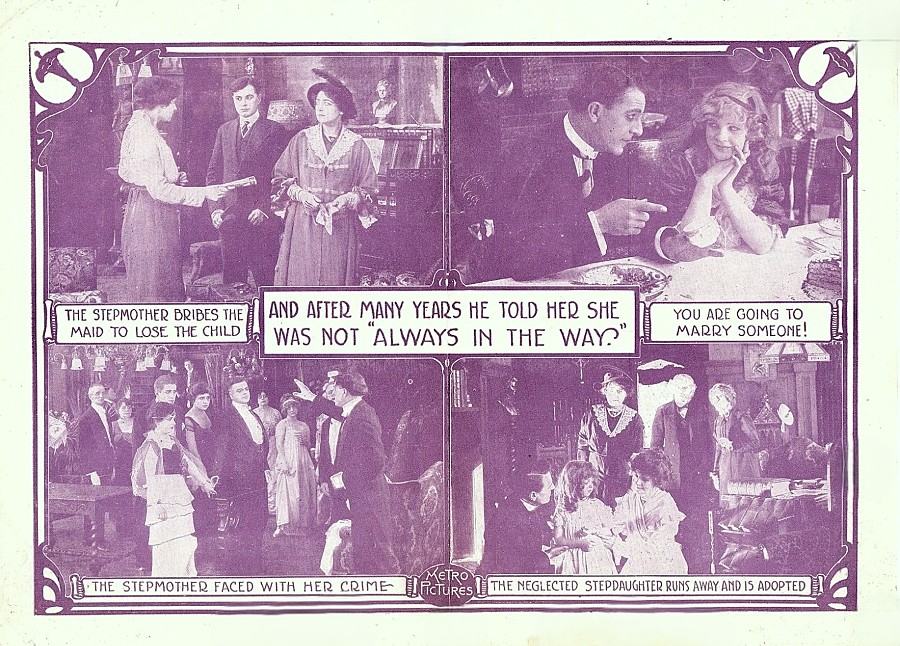
Four-year-old Dorothy, the daughter of rich lawyer Winfred North, is inconsolable over her mother's recent death. Her father, too absorbed with business to pay attention to his daughter and her problems, marries Helen Stillwell, a widow with her own two children. Helen ignores Dorothy while taking care of her own children, treating Dorothy as if she's always "in the way". Finally Dorothy can take no more and runs away. She is found by the Goodwins, a married missionary couple, but when they bring her home, Helen Stillwell denies knowing Dorothy at all, seeing a chance for her own children to inherit Winfred's wealth and cut Dorothy out of the picture altogether. The Goodwins take Dorothy to Africa with them to bring Christianity to the natives, but matters don't work out quite as well as they expected.
View Details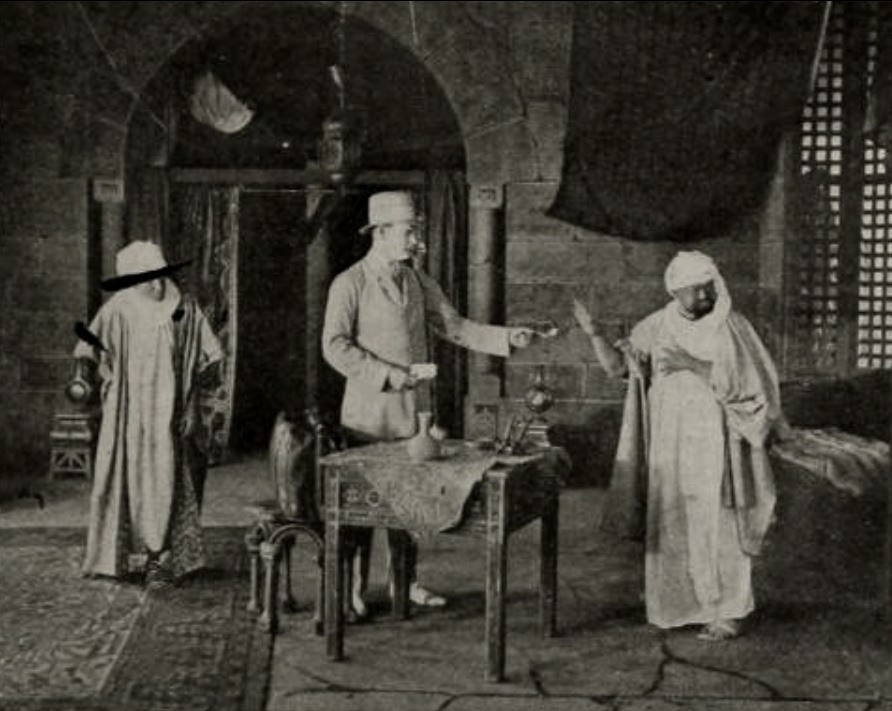
Dir: J. Searle Dawley
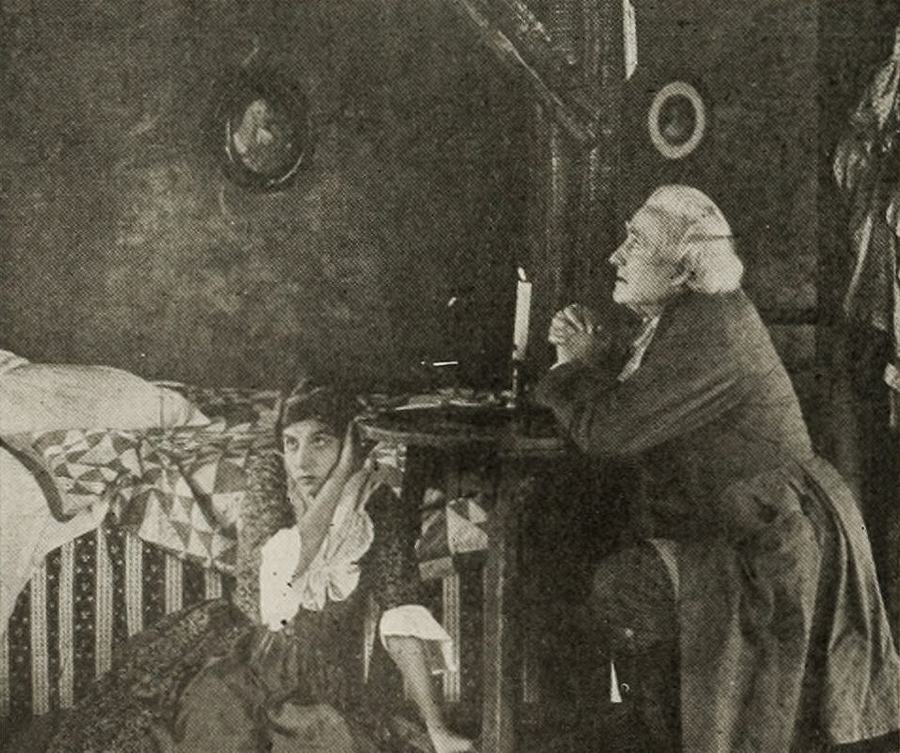
The story opens at General Feversham's residence at the annual dinner that he gives to the ones who are left of the Crimea officers. At this dinner, Harry Feversham, the General's only son, a boy of fourteen, is a guest. After the dinner is finished they tell stories of what happened in the Crimea, and Harry listens intently. The story is carried ahead about ten years when Harry is a captain in the army, showing him with his friend, Captain Durrance. They are both in love with the same girl, Ethne Eustace, and Harry and the girl after a time become engaged. Harry gives a dinner to his brother officers, Captain French, Lt. Willoughby and Captain Castleton, to announce his engagement. During the dinner Harry receives a telegram saying the regiment is ordered on regular service. Harry does not show his fellow officers the telegram as he should have done. They see him throw it into the fire. After they have gone, Harry determines to give up his commission, fearing that when put to the test he will be a coward. To preclude such a possibility he sends in his resignation. His fellow officers have, in the meantime, found out that they are ordered on active service, and next day they see that Harry Feversham has resigned his commission. They decide to send him three white feathers. While a ball is going on at Ethne's home a small package comes addressed to Captain Harry Feversham. He opens it in front of the girl and she asks him what he has done and he tells her. When she brands him as a coward, and striking a white feather from her fan, gives it to him. After this Harry Feversham's father will have nothing to do with him, and he consults his mother's old friend, Lieutenant Sutch, and announces to him that he is going to try and retrieve himself. He sails for Egypt in the hope of being able to do something and make the senders take back their feathers. After a long wandering at last he gets his chance and after many trials and tortures by the Arabs and a thrilling rescue he makes his fellow officers take back their feathers. In the meantime Durrance has been with his regiment in the Sudan and has been struck blind by the glare of the sun. Ethne, taking pity on him, has become engaged to him. Harry returns home to find that Ethne is engaged to another man. One day Durrance overhears them talking and decides for the sake of both of them to give up the girl, thus making Ethne and Harry both happy, and go back to the desert he loved so well.
View Details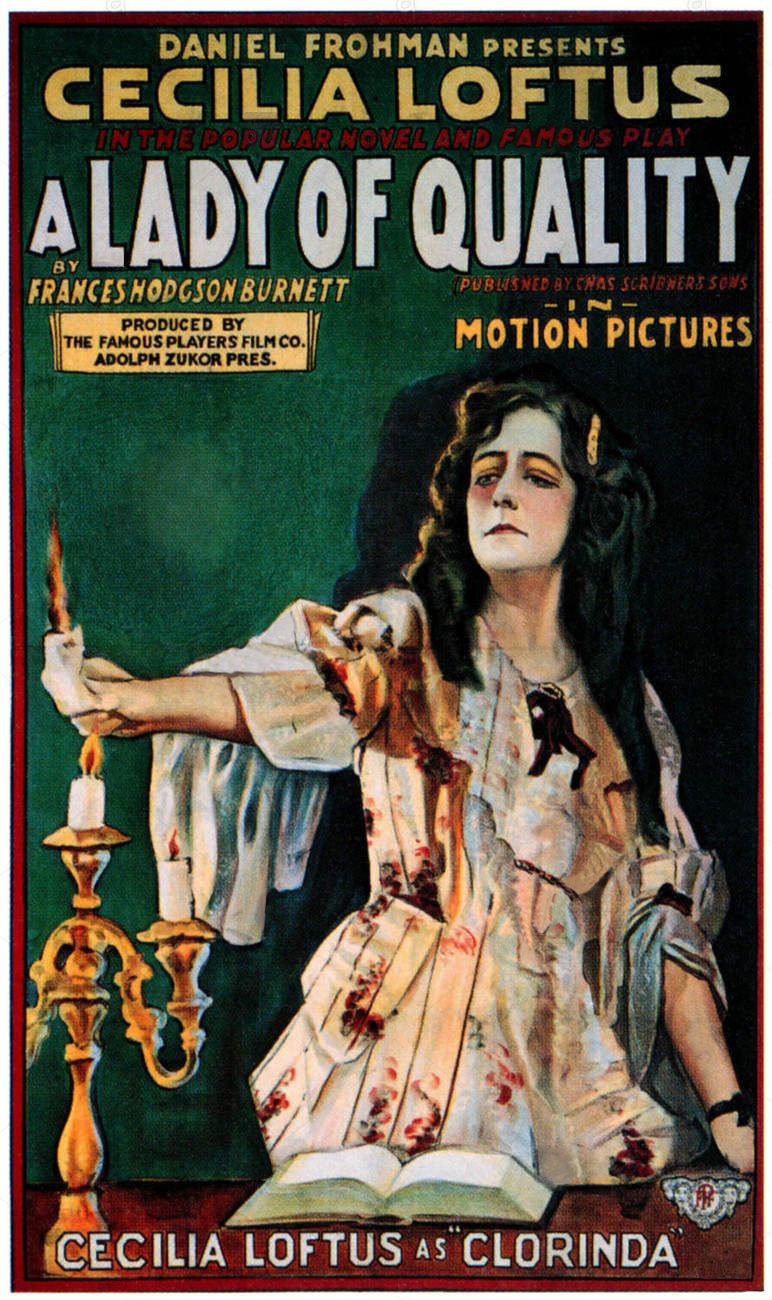
Dir: J. Searle Dawley
News is received by Sir Jeoffrey, a dissolute roué, whose contempt for the other sex extends even to his own daughters, of the arrival of another female child in the family. The mother dies shortly after, and the child, Clorinda, is brought up among the servants without a guiding hand. True to his vow to ignore his offspring, Sir Jeoffrey does not come in contact with Clo, until her sixth year, when he finds her playing with his powder horn in the great hall of his castle, Wildair, and sternly upbraids her. The child, who has inherited her father's courage and strength of will, shows no fear, and grasping a riding crop beats Sir Jeoffrey with all the fury of her tiny wrath. Her spirit and daring attract Sir Jeoffrey's attention, and he is delighted to find the child his own. From that moment, he keeps her in his own company, dressed in boy's clothing to obscure her sex, a member of his wanton circle. She grows up in this atmosphere of debauchery, and learns to swear, smoke and drink. Years later, at a hunting lodge, she meets the Duke of Osmonde and other great gentlemen, who are shocked at her male attire and masculine manners. In a spirit of pious benevolence, Lord Twenlow sends his chaplain to Wildair Hall to censure Sir Jeoffrey for permitting his daughter to grow up in this wild style. Clo overhears the Chaplain's remonstrances and realizes the true significance of her reckless habits. Meantime, her notoriety has reached London, and Sir John Oxon, the beau ideal of the town, lays a wager that he will win the heart of Clo, not as a hoyden, but as a woman. He arrives at Wildair Hall on Clo's birthday-night, and banters her on her claims to masculine prowess. Stung by his derision to prove she has all the attributes of a man, she challenges him to a duel, in which Sir John Oxon is badly worsted. However, his sarcasm has had definite effect and at the striking of the midnight hour, she gives the toast to the assembled noblemen: "Behold me for the last time clad in trousers." Later she appears in the Hall dressed in all the finery of a lady of quality, and from that moment bends every effort to attain that title legitimately. Sir John Oxon piles all his wiles to win her untutored heart, and she finally falls a victim to his flattery. Secretly she meets him in the rose garden, but publicly she slights him in the great halls. Nevertheless, Oxon wins her confidence, and she bestows her first kiss upon his lips, but not without a price, for at that moment he steals one of her raven curls, the proof of his wager. He hastens back to London to boast of his conquest, but in an intoxicated moment he hides the curl for safe-keeping, forgetting where. Clo waits for his return and is shocked when she receives news from London that he is to wed a wealthy lady of title. At this critical moment in her life the old Earl of Dunstanwolde asks her hand in marriage, and piqued at having thrown her affections so idly away, she accepts. A half hour later, she meets the Duke of Osmonde, and recognizes in him the man she loves. Faithful to her promise, she marries the Earl of Dunstanwolde, and becomes his devoted wife until he dies two years later. Sir John Oxon, having failed to make his match, and aware that Clo now possesses wealth, influence and position, tries to win back the heart he had so ruthlessly cast aside. But Osmonde has triumphed over her affections, causing jealousy and hatred to creep into the heart of Oxon. Chance places again in his hand the lost curl, which he holds over her head as a silken sword. Stunned by the fear that she will lose the love of Osmonde through the accusing evidence of the curl in an intensely dramatic scene in which Oxon attempts to force his embraces upon her, she strikes him across the temple with her riding crop. He falls to the floor. She lashes him, the pale still body lies there, dead. At that moment guests arrive, she conceals the body under the couch, and in the dead of night she drags it down into the deep cellar. For years afterwards, she atones for her sin by paying Oxon's debts, consoling the women had he wronged, and in other ways undoing the evil he had wrought.
View Details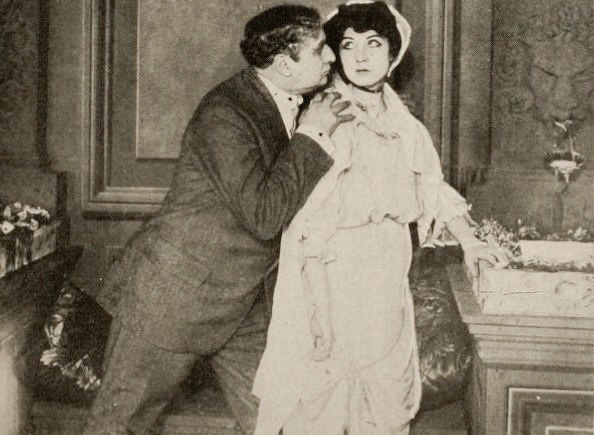
Dir: J. Searle Dawley
Arthur Stillman, the senior member of the firm of Stillman and Thornton, cotton goods manufacturers of Rockton, Mass., has closed his mills under the pretense that he cannot obtain cotton to operate, but really because he has conceived the plan of secretly buying cotton and storing it for the rise in price that he knows will come. The town of Rockton is entirely dependent upon the mills for its existence and the closing of the mills causes great suffering and even starvation. Dell Hamilton, daughter of an old mill dyer and a favorite with her people by reason of her sweet character and true sympathy with them, is probably the one in Rockton who suffers most. Her lover, Sam Lloyd, in despair at his inability to provide for his mother and sick sister, receives a note from a friend suggesting that if he can get to Springdale, a town nine miles distant, that he may get a job as fireman in a certain mill. On his way home, he accidentally comes upon a large warehouse which he learns is filled with cotton bales, and upon careful inquiry he finds that the cotton is being stored there by Stillman and Thornton. In a flash the true state of affairs is recognized by him and spurred on by bitter anger he makes his way back to Rockton, where he meets some of his mates and makes known his discovery. The news spreads throughout the town and groups of mill hands gather here and there voicing their indignation. Bill Slinger, a great strapping big-hearted fellow and a favorite among them is selected as a leader to get them either justice or revenge. Dell, in horror, goes to Stillman's house to warn him of his danger. She pleads with Stillman to open the mills and give work to the people and tries to soften his heart with her stories of the condition of the people. Stillman, whose passion for the girl has been growing stronger day by day, finally tells her that he will open the mills upon one condition, that is that she marry him. Stillman hastily arranges an illegal marriage with Dell. The girl believes she is to become his lawful wife, but Stillman has no such intention. The ceremony is performed and they repair to Stillman's home in the country. Dell writes her father of her marriage to Stillman, but he intercepts the letter and substitutes one supposed to come from a certain friend saying that Dell will not be home that night because she is going to watch by the body of the dead boy, Bennie. In the meantime Stillman's love for the girl is growing genuine and she becomes the one thing in the world that he desires and his one fear is that she may learn the secret of the illegal life. Dell returns to the mill and is indignantly repulsed by her former friends. Her father in a bitter scene renounces her and in utter dejection she finds her way to the boiler room of the mill seeking Sam, from whom she at least expects sympathy. She meets with the same treatment at Sam's hands and in fact is informed by this that he has entirely forgotten her and is to be married to another. Dell has heard the conversation between Stillman and Sam and a revelation comes to her. She realizes the true condition. She knows that Stillman is the real love and slowly and sadly she walks to him as she asks him to take her back.
View Details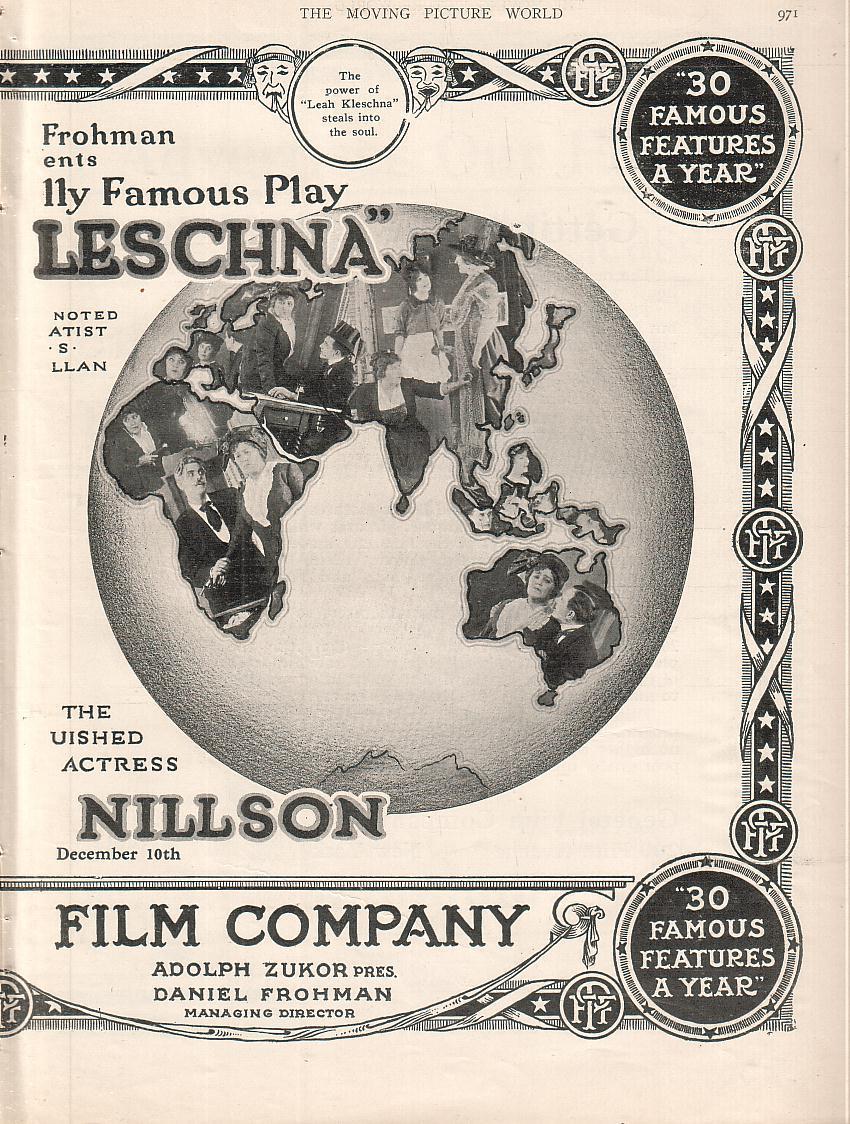
Dir: J. Searle Dawley
Leah's father taught her from early childhood to steal. Attempting to commit a robbery at the home of Paul Sylvaine, she's caught by Sylvaine; instead of treating her as a thief and turning her over to the police, he has an extraordinary interview with her. Sylvaine has faith in the innate goodness of human nature, and this faith is strengthened by Leah's confession that her father has taught her to steal and that she wants to go somewhere to forget the past and begin life anew. An adroit complication is here introduced that increases the suspense: The brother of the girl that Sylvaine is to marry, returning from a drunken spree, enters Sylvaine's apartments and steals the jewels that Leah was to have taken. Sylvaine believes that he was duped by Leah, who after all his kindness and forbearance, fulfilled her job before she left. But eventually Sylvaine learns that the theft was committed by his fiancée's brother. Leah is exonerated, and just to help sentimental matters along, the engagement between Sylvaine and his fiancée is suddenly terminated. Sylvaine seeks Leah and finds her living far from Paris, a redeemed and regenerated woman. Ha asks her to marry him; she consents, and the jewels that brought her into Sylvaine's home and into contact with his refining influence are bestowed upon her as a wedding gift.
View Details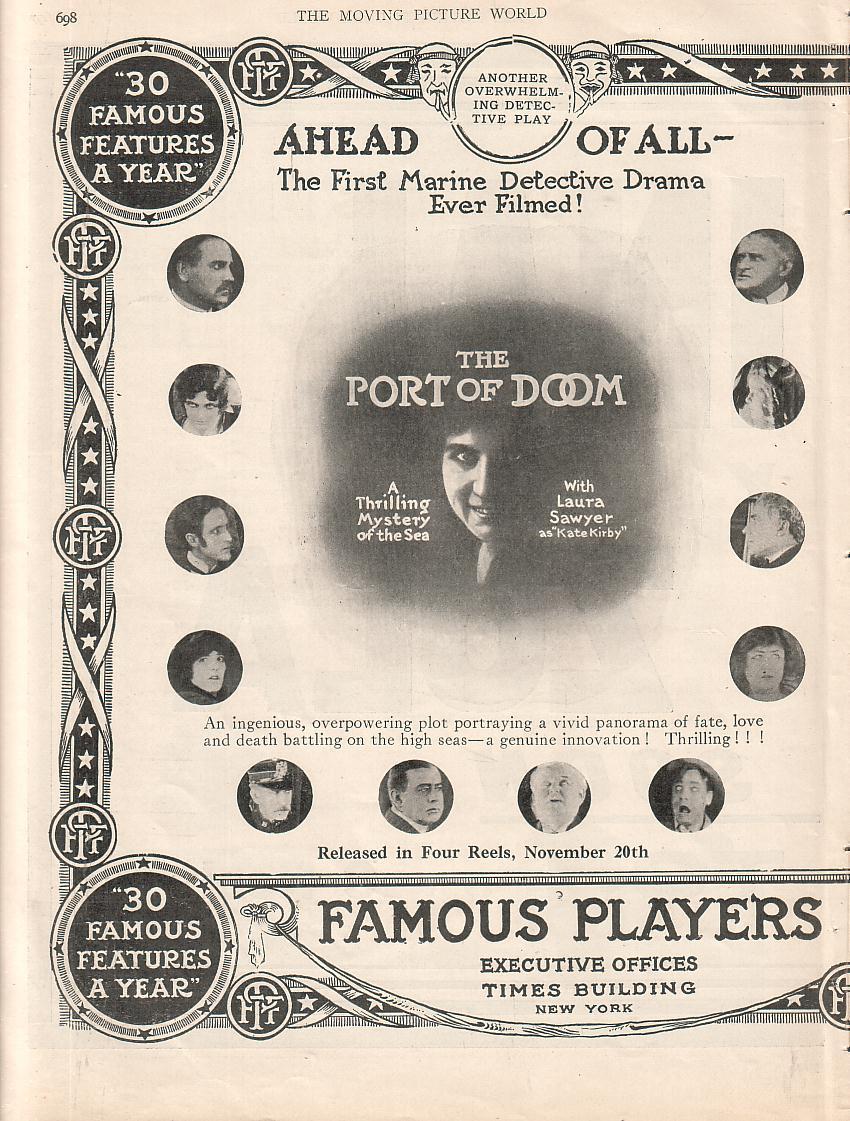
Dir: J. Searle Dawley
Detective Kate Kirby discovers that a ship captain has been sent on a doomed voyage by his rival for the affections of the shipowner's daughter.
View DetailsAnalysis relative to The Death Dance
| Film Title | Atmosphere | Complexity | Similarity |
|---|---|---|---|
| Helene of the North | Gritty | Dense | 87% Match |
| Marta of the Lowlands | Gritty | Dense | 98% Match |
| The Battle of Trafalgar | Gothic | Dense | 95% Match |
| A Woman's Triumph | Surreal | Abstract | 89% Match |
| Always in the Way | Gritty | Dense | 91% Match |
This guide was algorithmically generated using the cinematic metadata of J. Searle Dawley's archive. Last updated: 8/17/2026.
Back to The Death Dance Details →