
DbcultAccessing Vault...
Recommendations
Senior Film Conservator
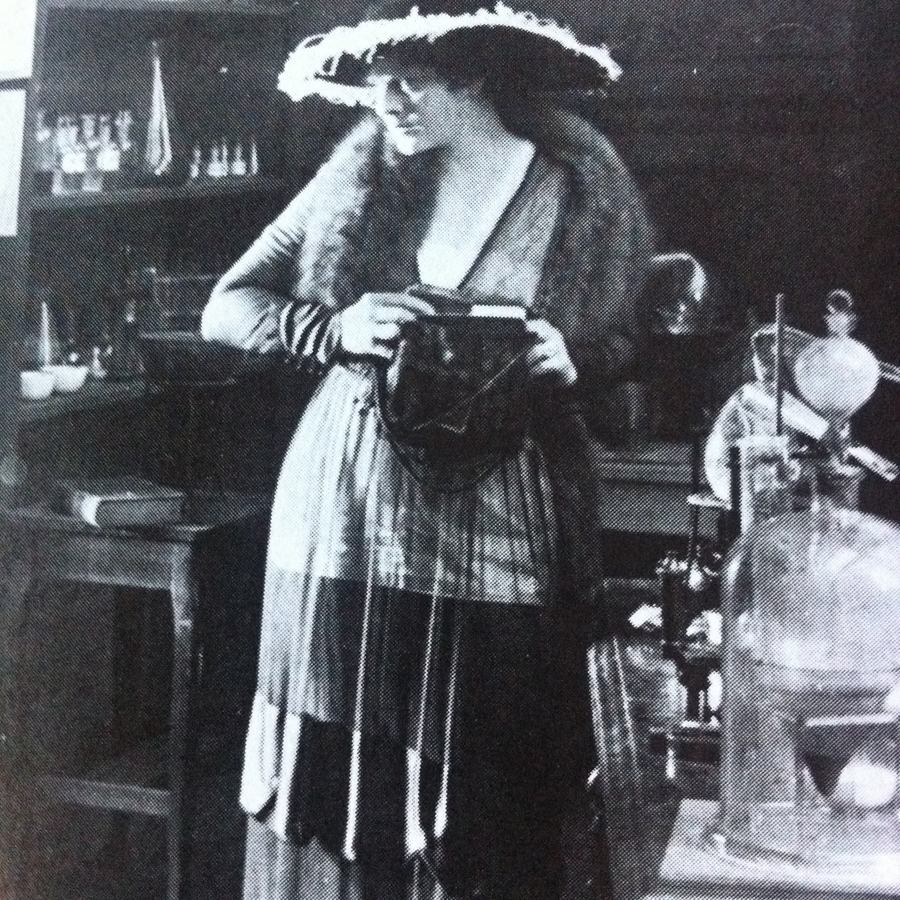
If the cult status of Edwin Carewe's work in The Final Judgment left an impression, the juxtaposition of cult status and narrative makes it a cult outlier. Experience the United States influence in these recommendations that echo The Final Judgment.
By merging cult status with cult tropes, it to elevate cult to the level of high art.
Actress Jane Carleson has three admirers: Henry Strong (a millionaire), Hamilton Ross (a chemist), and Murray Campbell (a district attorney). When Jane weds Campbell, Ross writes an anonymous letter to Campbell, warning him that Strong is after his wife. Ross smears the flap of the envelope with poison. However, Strong is the one who opens the envelope, and dies from the poison. Since Campbell and Strong had quarreled just before the arrival of the letter, Campbell is convicted of the murder. Jane must expose the true murderer and save her husband.
Based on the unique cult status of The Final Judgment, our vault has identified these titles as the most compelling follow-up experiences for fans of cult cinema:
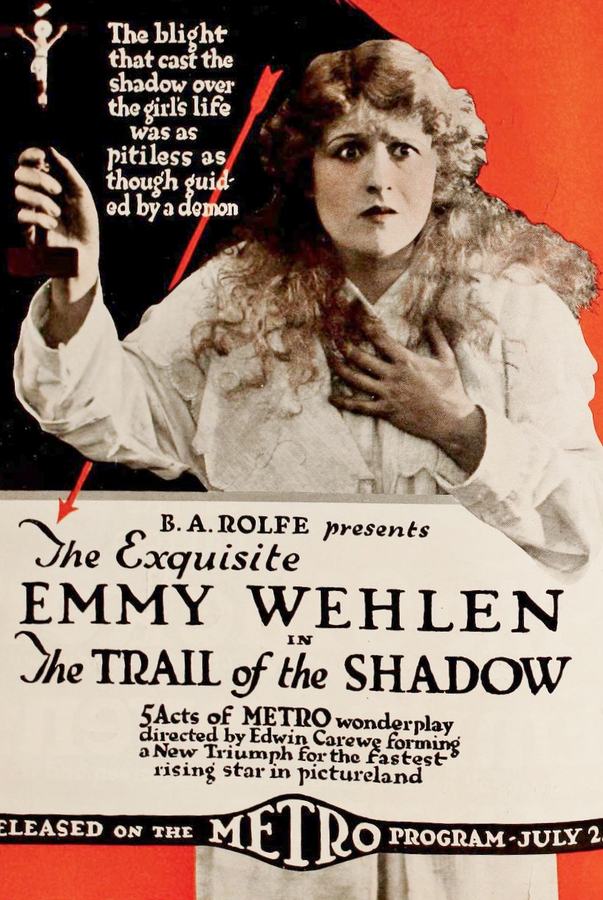
Dir: Edwin Carewe
Sylvia Mason, a mysterious girl, lives in a cabin by herself and sells her bead work to the visitors at a large hotel nearby. At the hotel, Sylvia meets Easterner Henry Hilliard, who falls in love with her, but she refuses to marry him and will not explain her reasons. Thus Henry returns East without learning that Sylvia's father had been murdered by his private secretary Jack Leslie in revenge for her refusal to marry him. One night after Henry's departure, Leslie, now known as the outlaw "The Shadow", breaks into Sylvia's cabin. There is a struggle that leaves Sylvia unconscious, and when she awakens she finds a note claiming that because Leslie has violated her, she must marry him. Meanwhile Henry's mother, horrified that her son wants to marry this strange girl, informs Sylvia that their marriage would destroy him. Sylvia agrees to give up Henry, but he learns her story from Padre Constantine and goes to search for her. Sylvia has gone to Leslie and Henry follows. In the ensuing fight, Henry forces Leslie to admit with his dying breath that he has lied to Sylvia.
View Details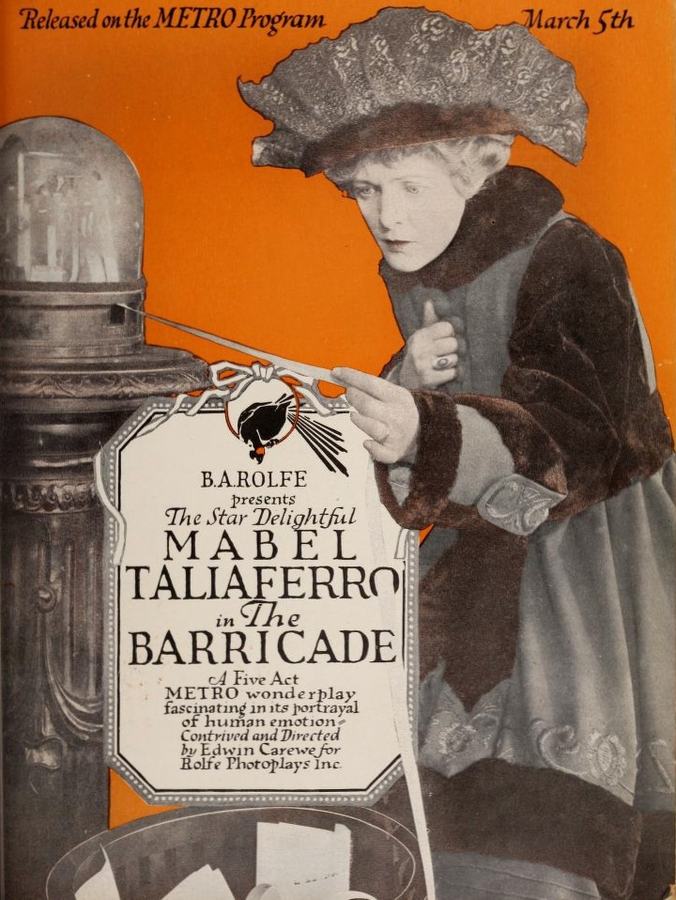
Dir: Edwin Carewe
Unnerved by the superiority of John Cook, the new president of the Securities Company, Wall Street business leader Amos Merrill begins to speculate with the trust funds in his control, ultimately losing all the funds. Amos, faced with discovery and disgrace, lies to his daughter Hope that Cook has ruined him; soon after, Hope meets Cook and conceives a plot for revenge. In the meantime, Cook has protected the frail Merrill from prosecution and paid back his debt after sending him away on a vacation to recover his health. Hope, knowing nothing of this, marries Cook and makes his life unbearable, finally conspiring with his business rival Gerald Hastings to ruin her husband and gain control of his funds. When Amos returns from his vacation, he is stunned at what Hope has done and reveals that his lie has resulted in a terrible mistake. Hope begs forgiveness from Cook and they go West together to begin a new life.
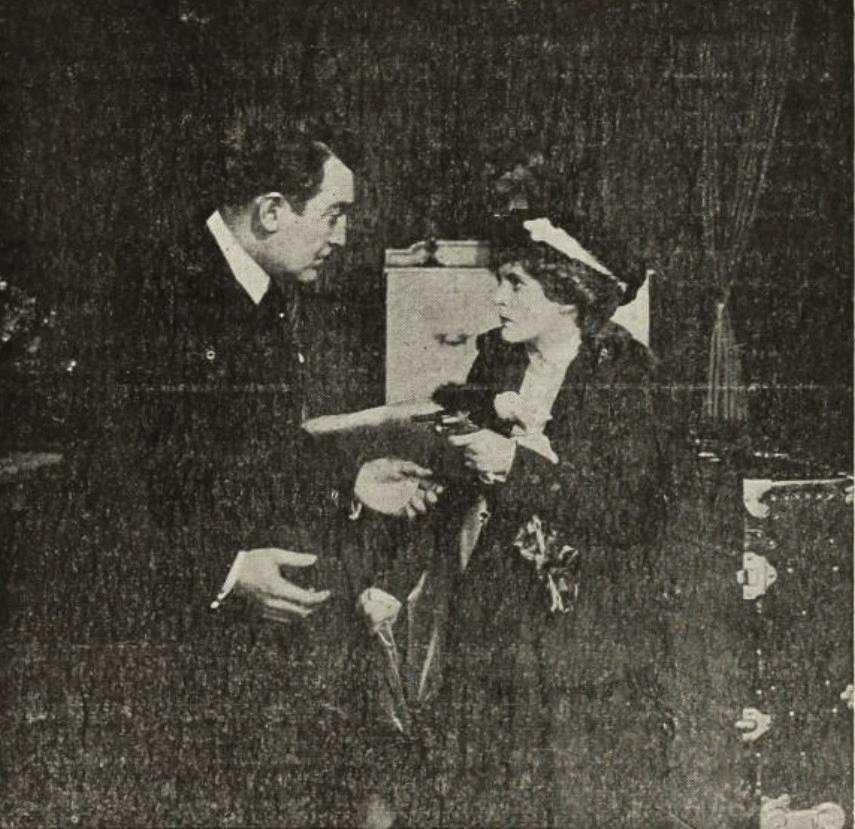
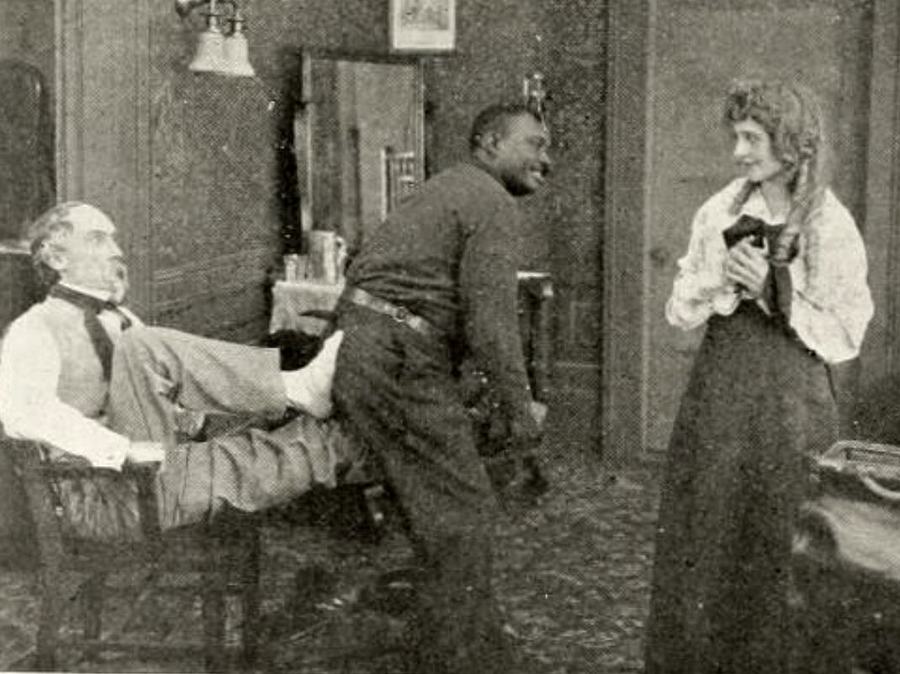
Dir: Edwin Carewe
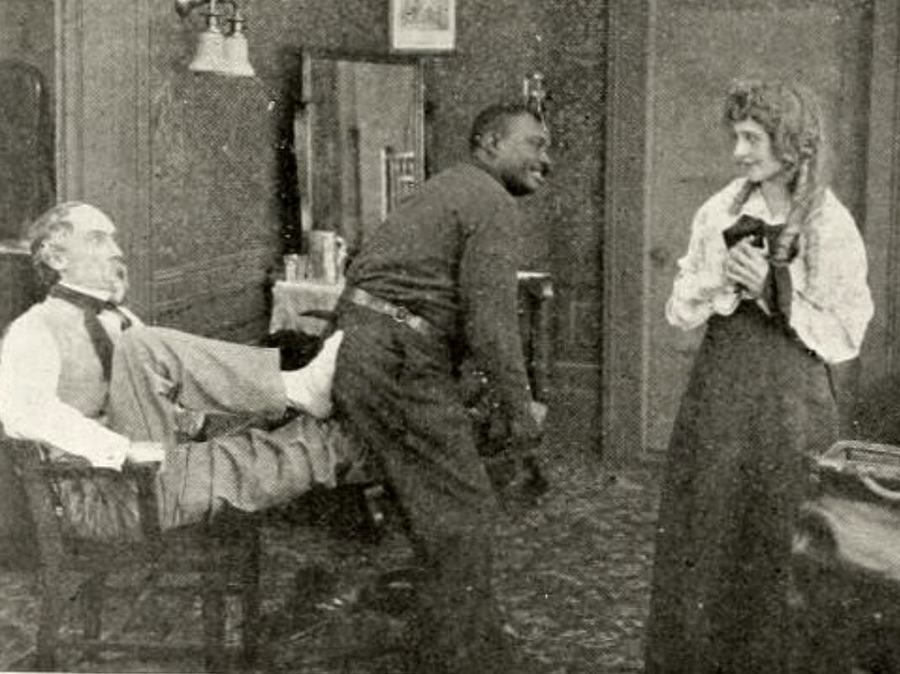
Proud Confederate Captain Covington Halliday refuses to allow his daughter Martha to marry Northern lawyer Walter Lewis. As a boy, Covington was given an African American servant named Dan, who has always called him "Marse Covington." After the Civil War, Dan refused his freedom and stood by Covington, sharing his misfortunes. Jim Daly, who holds the mortgage on Halliday House, also wants to marry Martha, so he schemes with gambler Edward Bantree to fix a race in which Covington has wagered all his property on his beloved horse, Bess. Although Bess loses, Martha refuses to marry Jim to reclaim her family home. She moves to New York City with her father and Dan, but their savings are soon exhausted and Covington is forced to stand in bread lines. After Dan goes to work for Edward, he learns about the plot to fix the race. He tells Walter, who is later hired to defend Edward for Jim's murder. In lieu of cash, Walter demands the Halliday House deed as payment. Covington returns to his home with Dan, and gives Walter his blessing to marry Martha.
View Details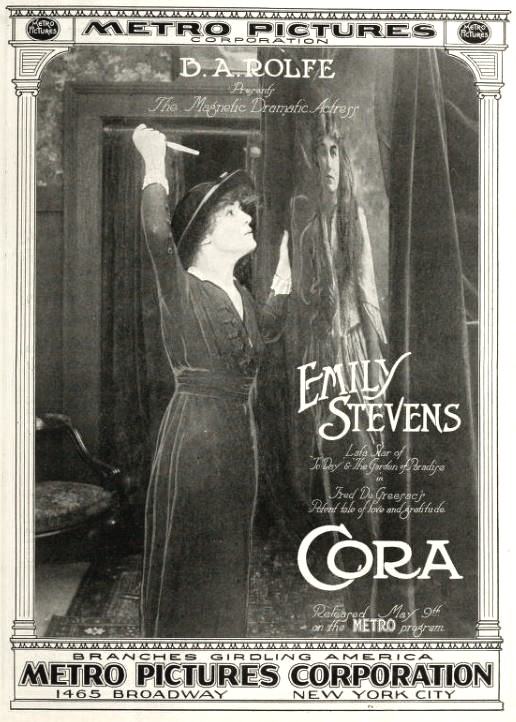
Dir: Edwin Carewe
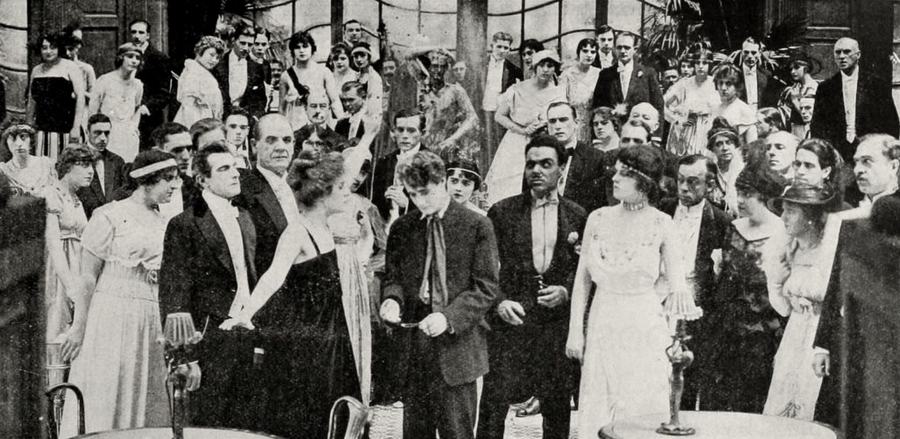
When her mother, the operatic idol of Paris, takes her to the United States and dies, Cora goes to live with Marie, a model for artist George Garnier. Although George is engaged to wealthy Helen Van Brooks, who is in love with Carl Wilson, a club-man, George and Cora fall in love. When Cora discovers the engagement, however, she leaves and becomes an opera star. Years later, after breaking his engagement, George visits Cora again, causing Mrs. Van Brooks to entreat Cora to give up George. At a wild party, Cora allows Jose, her long-time admirer, to make love to her, which provokes George's disgust until Marie explains Cora's behavior. When Jose, alone with Cora, attacks her, George and Marie burst in to see Jose, hit by a wine cooler hurled by Cora, fall backward through a window, fall to the street and die. After they learn that Helen and Wilson have eloped, Cora and George are able to marry.
Dir: Edwin Carewe
Standish, an artist, finishes a painting of the Madonna. His wife, Mary, acted as model, and when the Connoisseur and the Parishioner inspect the picture, the former tells Standish that he recognizes in the model a one-time paramour of his. The Connoisseur and the Parishioner buy the painting and after their departure Standish upbraids his wife, who tells him that she believed herself legally married to the Connoisseur. Standish refuses to accept her explanation and ejects her and their baby son. Mary leaves her boy on the steps of a monastery, and seventeen years later, just before becoming a monk, he receives permission to see the world. He wanders into a gay café and succumbs to the charms of Beauty. The other inmates of the place, Lust, Rum, Avarice and Passion are dancing around him when the proprietor enters. It is Mary, his mother. She recognizes him from the crucifix which he wears and which she left with him when he was a baby. Without revealing her identity she persuades him to go back and later when he has become a priest, a bedraggled old woman (his mother) enters his church. She recognizes him and just before she dies her son gives her absolution.
View Details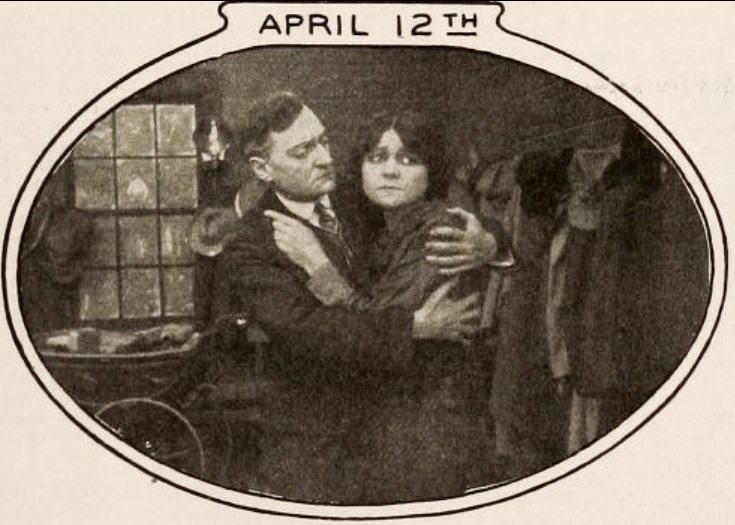
Dir: Edwin Carewe
Margaret Primrose is not permitted to see Ted North, who loves her, by her father, whom Ted's father ruined. To spite Ted, Primrose forces Margaret to marry Weston, a dissolute young millionaire, and Ted, heartbroken, goes West. Weston neglects Margaret and continues drinking. Seven years later, the Westons move West on the advice of his doctor to improve his health. Ted, meanwhile, has adopted the small daughter of a cattle rustler who was lynched by Ted's cowboys. When he spots a runaway horse and lassoes its rider, Margaret, they embrace, but realizing the impropriety, they bid each other goodbye. Weston resumes drinking and takes an interest in Molly, the proprietress of a dance hall. When Molly's sweetheart, "Quick Foot Jim" learns that Molly and Weston are planning to elope, he kills Weston. After Ted is convicted of the murder, based on circumstantial evidence, Jim abducts Molly. When Margaret learns the truth, a posse is organized to find Jim. No information has been located concerning the film's ending.
Dir: Edwin Carewe
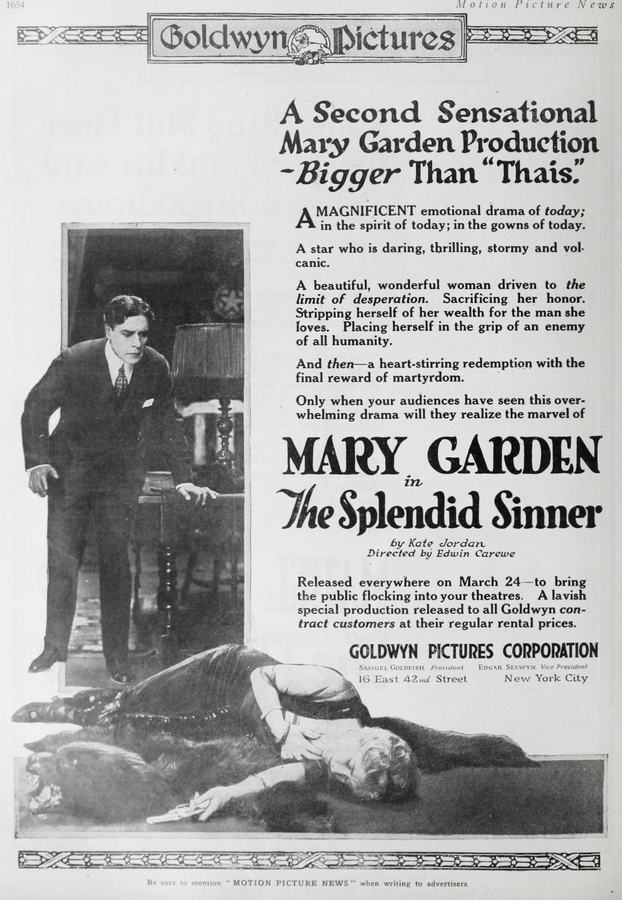
A woman marries a German immigrant in New York, but loses him when her soiled past is revealed. He returns to Germany after the beginning of the First World War, where he becomes a high-ranking officer in the German army. His wife joins the Red Cross and, in a combat hospital, discovers her wounded husband. Her love for both her husband and her country lead her to a great sacrifice.
View Details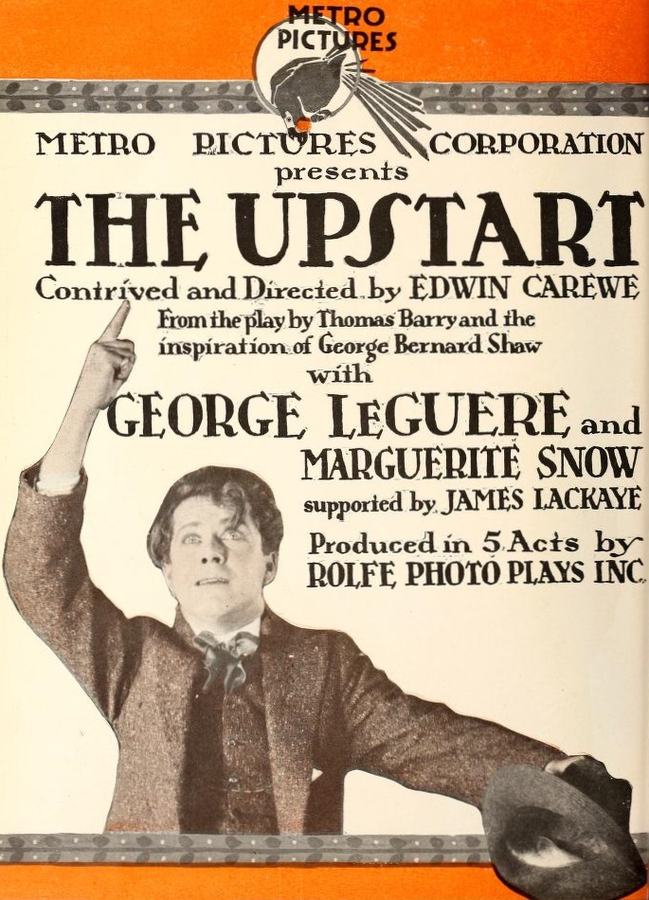
Dir: Edwin Carewe
One day Coventry Petmore leaves his wife and child to go out in the world and fight the social evils of divorce and loveless marriage. Circumstances lead him to the home of Judge Mitchell, where the judge's son, a minister, and his wife Beatrice reside. The minister does not believe in expressing affection to his wife, and Beatrice becomes enamored of her chauffeur Larry Price. Petmore encourages Beatrice to tell the minister that she is running away with Price, then surreptitiously coaches the minister to give a response that Petmore believes will win Beatrice back. The plan backfires, however, and only a rainstorm and car trouble prevent Beatrice and Price from running off. Getting wind of Petmore's role in the affair, the judge has him ejected from the household, and Petmore returns home to discover that his wife has run away with her chauffeur. Petmore's conviction in his theories remains unshaken, however.
Dir: Edwin Carewe
As Danny Rowland, a tramp, and his partner Dominie, an ex-minister, trudge wearily past the Winnicrest mansion in Tennessee, an old servant called Uncle Alex rushes up to Danny and welcomes him home as his long-lost employer, Richard Castleman. Amused, Danny assumes the role, and he and Dominie are clothed, fed, and generally treated like royalty. The beautiful Jean Logan, who had believed with the rest of the neighborhood that Richard was lost at sea, greets her returning sweetheart with a passionate embrace, and Danny soon falls in love with her. Dr. Harry Chilton, Richard's cousin and rival in love, maintains that Danny is an impostor, but Danny defeats him in a fight and banishes him from the estate. When Danny announces his intention to marry Jean, Dominie is shocked and tells her everything. Forced to confess to the sheriff, "Danny" reveals that he is indeed Richard, earlier robbed of his clothing and money by a crook named Danny Rowland, who died on a voyage to Australia. Relieved, all of the parties--with the exception of the jealous doctor--are reunited.
View Details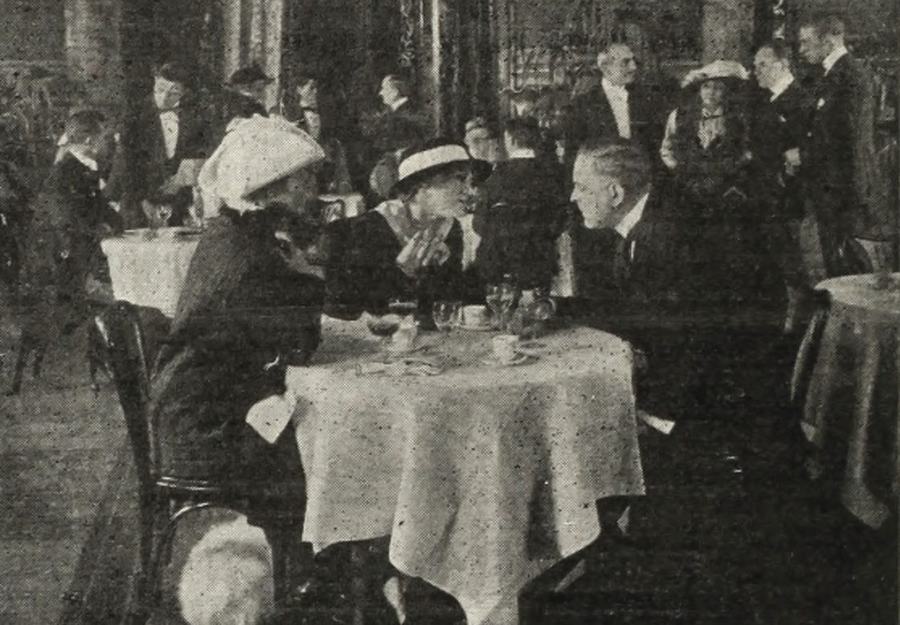
Dir: Edwin Carewe
In the House of Tears, there lived Robert Collingwood, his wife, Alice Collingwood, and their baby girl, Gail. In the courts Robert has been granted a decree of divorce and the custody of little Gail, upon evidence that Mrs. Collingwood has been found in a compromising situation with Henry Thorne, and her subsequent admissions. Once free, Mrs. Collingwood openly accepts the attention of Thorne, and they soon marry and go west to live. Thorne takes up the life of a prospector in a mining community, and his consistent failure proves a source of discouragement to him and unhappiness to the woman. Collingwood, his mind upset by domestic troubles, loses his fortune in Wall Street manipulation, and becomes a raving maniac. He drives his employees out of the office, and then goes to his home intending to kill his little daughter. In a chase up a staircase, he falls and is killed. An annuity he had settled on the baby when she was born, and which has been saved from the financial wreck, is the means of her education. Fifteen years later Thorne, who has been plodding along in the west, meeting with little success, wins $15,000 at faro in a desperate plunge one night. He has become tired of the woman he won by intrigue and his sudden prosperity turns his head. He arranges to go back to Wall Street to flirt with fortune, and he tells his wife he will not take her along, but will leave enough money for her to live on. She is horrified at the prospects of his desertion, and at the point of a revolver, demands his money. In a struggle which ensues, she is seriously wounded. Thorne leaves, believing his wife dead by the shot from her own hand. Back in Wall Street, Thorne electrifies other operators by his phenomenal rise to affluence, and he becomes the elegant man of wealth he aspired to be. Gail Collingwood, who has now grown to womanhood, is known under the name of Alice Gail, and employed as a reporter on the Evening News. She is sent to interview Thorne, who is now known as "Edward North." They become very friendly and their acquaintance soon ripens into love. In due time their betrothal is announced. Out in the mining town Thorne's wife has recovered, and she resolves to come back to the scenes of her youth. She is seeking Thorne in the great city, when Gail, who is riding in an automobile loaned her by her fiancé, runs down her mother, a poor, ill-clad, wandering woman. The mother is slightly injured, and she recognizes her daughter. They plan to make "North" face his past. Gail sends word for "North" to come to her home, as she is in trouble. When he arrives he is brought face to face with his wife, whom he believed to be dead. "North" becomes frenzied from fear, as he thinks the sad faced woman is an apparition, and he flees from the house. The apparition continues to haunt him, and in a half-crazed mood he drives his automobile blindly through the streets, ending by running off a bridge when he is hurled to death. Mother and daughter, re-united, then seek a happier existence.
View DetailsAnalysis relative to The Final Judgment
| Film Title | Atmosphere | Complexity | Similarity |
|---|---|---|---|
| The Trail of the Shadow | Tense | Abstract | 91% Match |
| The Barricade | Surreal | Layered | 93% Match |
| Marse Covington | Ethereal | Linear | 92% Match |
| Cora | Gritty | Abstract | 85% Match |
| Destiny: or, the Soul of a Woman | Gothic | Dense | 97% Match |
This guide was algorithmically generated using the cinematic metadata of Edwin Carewe's archive. Last updated: 6/21/2026.
Back to The Final Judgment Details →