
DbcultAccessing Vault...
Recommendations
Senior Film Conservator
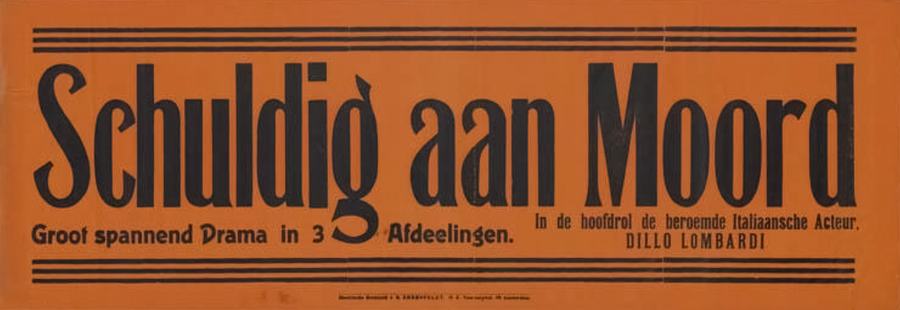
The Italy-born brilliance of The Fugitive offers a unique cinematic excellence, the profound questions raised in 1913 still require cinematic answers today. Our curated selection of recommendations echoes the very essence of The Fugitive.
In the Pantheon of cult cinema, The Fugitive to provide a definitive example of Ubaldo Maria Del Colle's stylistic genius.
No obstacles can stand in the way of Rosalie's love for the artist Corrado. Despite her family's opposition, particularly that of her brother. Rosalie weds the man she loves. Their days are one long poem of love and happiness. They are further blessed by the birth of their daughter, Ada. Corrado works steadily. Alonzo, who resents the insulting intrusion of the stranger in their family, decides to snatch Rosalie and Ada from the hands of the hated brother-in-law, but Corrado, warned by the old man-servant, who had previously aided Rosalie in her flight, stays at home to await developments. Alonzo soon shows himself angered and insulting. The artist contains himself, but his violent nature cannot long endure that torrent of threats and abuse; the fight in the dark is as sudden as it is terrible. Suddenly, Corrado draws back terrified; he has killed his enemy. He runs away like a madman, his face congested and his hands stained with blood; he falls in the hands of gendarmes, who arrest him. Unable to defend himself, he is condemned to imprisonment for life. Rosalie is reduced to the most abject misery, and unable to buy the remedies so necessary to her sick child. Dr. Palmieri, a good and generous man, comes to her assistance and requests her to share his home. Ada will grow in his house, and he will thus fancy that he has found again his daughter Emma. Palmieri shall be her father and Rosalie will give up her sacred name of mother, so that Ada may always ignore her father's unhappy fate. Corrado wears out his years in prison, tired both in spirit and body. One day he has visions of his happy days, and his heart is rent asunder. He has now but one object in view, escape. He succeeds. Ragged and famished, he wanders through forest, plains, byways, ever sustained by the thought of his wife and daughter. Disguised in clothes kindly given to him by a peasant, he arrives in his native land. Deeply moved, he kneels at the threshold of the village church and prays; he, who has never prayed. He enters the presbytery, where he is greeted by the priest and one of his former friends. He learns with intense delight that his wife and daughter live in the village; Ada is in that house yonder. Corrado calls on the doctor. Greatly troubled and frightened, Rosalie finds herself in the presence of her child's father. What is going to happen? Rosalie implores Corrado to keep silent, but the latter has seen his "beautiful little one" who believes herself to be the doctor's daughter. He has seen his Ada; he wants her. The doctor, a human and loving being, endeavors to dissuade Corrado from his designs, points out to him that he is "civilly dead." He has escaped from prison; he is being sought for. What about his daughter? Nothing can move Corrado, not even Rosalie's painful confession of the sacrifice she has made. Corrado must have his Ada, "Very well!" exclaims Palmieri, "your daughter shall learn and decide." Frightened and trembling upon hearing that revelation, Ada seeks a refuge in the arms of the one she has always believed to be her father and whom she so tenderly loves. No, that man cannot be her father. Everything is ended for Corrado. His heart, deprived of its life-giving element, scarcely beats. He understands that a supreme sacrifice is necessary ineluctable, and while Ada, who has drawn nigh, prays for him, he fondly kisses her hair and swallows a poisonous pellet. The end is nigh; his life is ebbing away, he smiles. Uniting Rosalie's and the doctor's hands above the innocent girl's head, he murmurs, ''Love one another; be happy and watch over her." He dies in peace. His daughter has called him "Father, my father!"
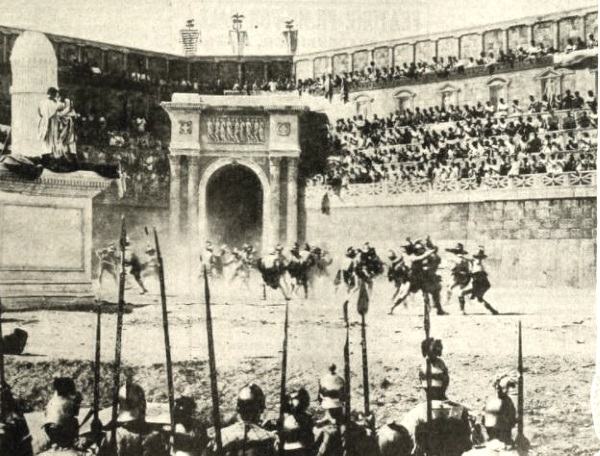
The Fugitive was a significant production in Italy, bringing a unique perspective to the global stage. It continues to be a top recommendation for anyone studying cult history.
Based on the unique cinematic excellence of The Fugitive, our vault has identified these titles as the most compelling follow-up experiences for fans of cult cinema:

Dir: Ubaldo Maria Del Colle
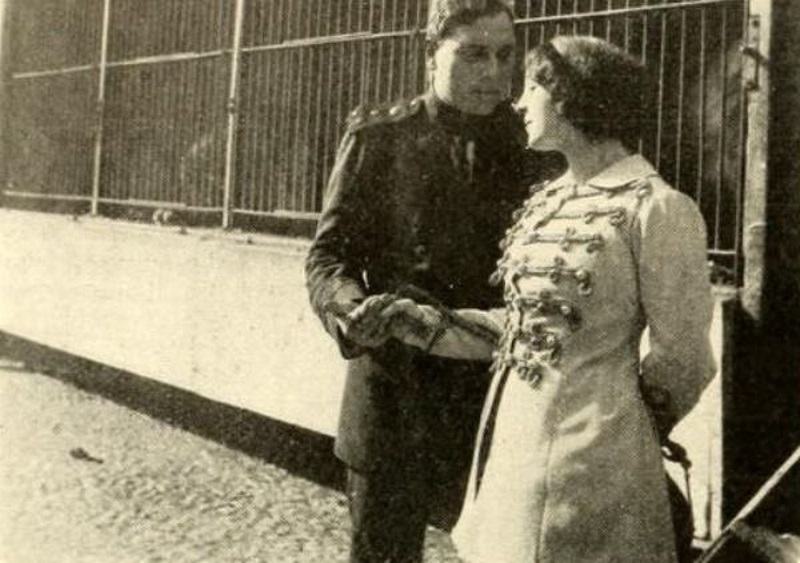
Based on the Edward Bulwer-Lytton novel. Set in the shadows of Mt. Vesuvius just before its famous eruption.
View Details
Dir: Ubaldo Maria Del Colle
Jack Hilton, naval lieutenant, has fallen in love with Adriana Duncan, a wild beast tamer, but his relatives refuse to sanction the marriage owing to the poverty and to the humiliating occupation of his fiancée. In despair, Milton appeals for the last time to his eccentric old uncle, Marquis Hilton, who threatens to alter his will in favor of another if he persists in his mad intention. A fortnight later, in spite of this determined opposition, the marriage is celebrated. Furious at this disobedience, the Marquis is in the act of disinheriting his nephew when his old complaint seizes him and he dies without having time to change his will. Jack is ordered out to conduct an expedition into the interior of India with a view to discovering the unknown sources of the "Sacred River" of Belopore. Sadly he takes leave of his young bride and sets out upon his journey. In the train he meets Thomas Trevalny, his old school friend, and on board the liner, a few minutes before the departure, he receives the news of his uncle's unexpected death and of his own inheritance. In great haste, Hilton entrusts the important documents to Trevalny, saying that he will send the power of attorney from Calcutta. Left alone, Trevalny determines to gain possession of his friend's valuable inheritance, and gains admittance into his house as gardener in order to intercept the letters from the East, and also Hilton's power of attorney, Trevalny succeeds in his villainous plan, and, while poor Adriana is still waiting for news of her husband, he becomes master of the fortune by means of the intercepted power of attorney. At last Jack Hilton and his expedition are bivouacking on the banks of the "Sacred River." The Rajah, however, an unrelenting foe of all Europeans, is informed of their intrusion, and sends his fanatic soldiers to attack the encampment. Overwhelmed by a superior force, the Europeans are almost all massacred, and Hilton himself is taken prisoner. The Rajah himself condemns the unfortunate man to be burned alive, but, at the entreaty of his favorite Fedorah, he imprisons him for life. Meanwhile Adriana has become poor once more, and believes her husband to be dead. A son is born, of whose existence the father knows not, and Adriana is compelled to devote herself once again to her old profession of wild beast tamer in a menagerie to provide food for her child. At Belopore, the Rajah observes Fedorah's nightly visits to the European's prison, and the unfortunate Jack Hilton is thrown into the Court of Lions. Fedorah, however, persuades the faithful Pipel to save her lover, and he flees from Belopore to his safety. Trevalny, who loves Mrs. Hilton, comes one day to force his will upon her, and is driven from the house by the unexpected arrival of one of her leopards. Furious at his failure, he buys the menagerie where Adriana is employed, and writes a letter to her, announcing his fixed intention, either to realize his desire or to drive her into the streets with her little son. Helpless, Adriana comes to appeal to his better feelings. That same evening, after two years' absence, Jack Hilton returns home, finds the threatening letter, and guesses the danger of his wife's position. Without losing a moment, he runs to Trevalny's mansion, and bursts into the drawing room where the scoundrel is trying to seduce his wife. With a terrible cry he hurls himself upon the traitor, but, at his wife's prayer, restrains his fury until the arrival of the police. So, after so many sufferings, Hilton and his wife embrace once more, while Trevalny awaits the punishment he well deserves.
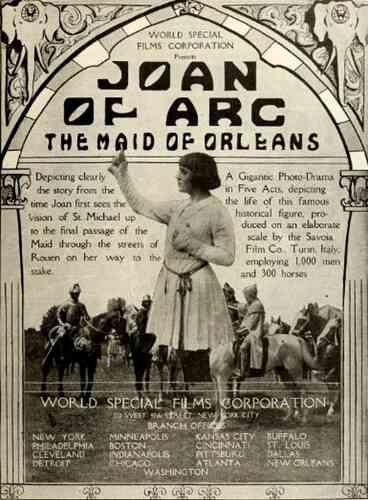
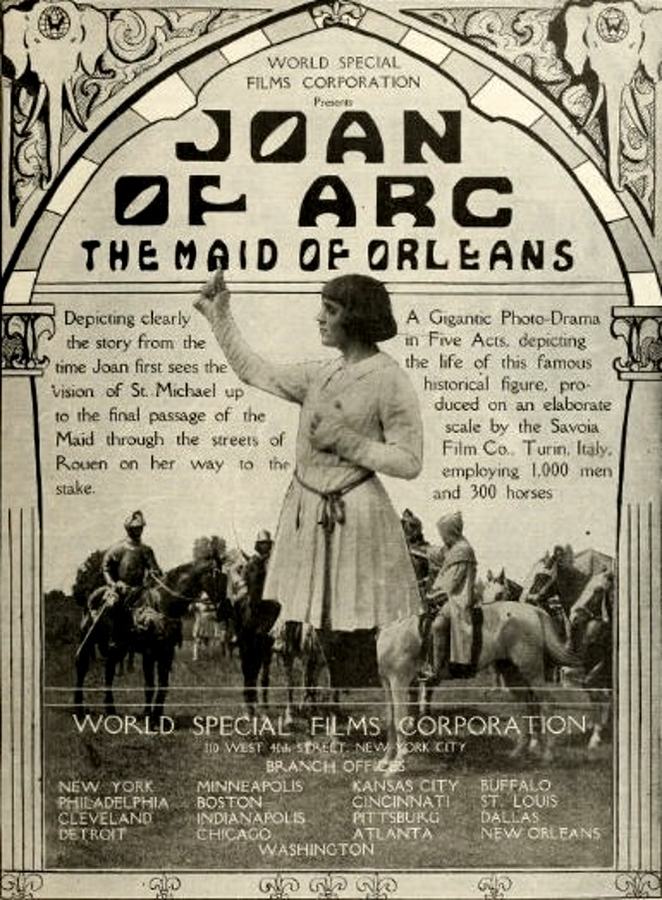
Dir: Ubaldo Maria Del Colle
At Domremy, a town situated close to the river Meuse, little Joan, the daughter of Jacques d'Arc, heard the tales of the war which was then devastating her country. Mercenary troops of the Duke of Armagnor fought in defense of King Charles VII. They were opposed by the soldiers of the Duke of Burgundy, allied with the English. Devastation and pillage followed in their wake. The peasantry passed their days in wretchedness and terror, hanging round the castles imploring aid and assistance. It was a constant din of battle, galloping horses and the clash of arms. All houses were solidly barred. Joan lived thus in the midst of trouble and anxiety. At times the sound of distinct and melodious bells reached her ears when tending her sheep and cattle in the meadows. She knelt for hours, listening to those mysterious and sweet sounds. One evening she heard a voice calling her in the sweetest tone imaginable. The maiden knelt; a great flood of light dazzled her. St. Michael was standing before the bewildered girl and spoke to her. His words sounded like music to her ear, "Beloved Joan, hearken to the duty that lies before thee. Go to Lord Baudricourt and then to the King. Ask for arms and soldiers, and fight the enemies of France." Some days later, St. Margaret and St. Catharine appeared to Joan and confirmed St. Michael's order, encouraging her and recommending, at the same time, virtue and resolution. Joan was now firmly assured of her mission. The Lord of Baudricourt receives Joan's supplication with derision. "I do not believe a word of all this," says he to Joan's uncle, who has accompanied her, "She is dismissed." Bertrand de Poulangy, a young man secretly in love with Joan, entreats her not to despair. He accompanies her on a second visit to the Lord of Vaucouleur and she finally succeeds. Baudricourt consents to furnish Joan with a small body of knights who will accompany her to the King. Joan, accompanied by Bertrand, puts on a coat of mail, girds her sword and mounting her steed rides at the head of her squires to the castle of Chinon, the actual residence of the King. More than three hundred barons and feudal lords of the realm were then assembled at the King's Court. Desirous of judging for himself whether Joan's mission was really inspired, the King disguises as a courtier, among whom he mixes. Joan enters amid the assemblage. Her rustic beauty causes quite a flutter; the ladies whisper, the knights admire her. Without the least hesitation, she walks straight up to the King, before whom she kneels and says, "Kindly Dauphin, I am Joan the Virgin, from Domremy. The King of Heaven has sent me to say that through my humble offices you will truly become King of France." Joan not only convinces the King of her heavenly mission, but also the King's councilors, all learned prelates, who ply her with numerous and intricate questions. The brilliant career of the Virgin Warrior has begun. At the head of ten thousand men Joan starts for Orleans. The French array was defending the city heroically, but has been reduced to extremities through lack of provisions. Joan crosses the Loire, gives battle, and on the evening of May 1, 1429, the glorious Virgin makes a triumphant entry into the beleaguered city. The next day she discusses with Dunois, commander of the city and the officers of the garrison, her plan of defense and studies the position of the enemy. Anxious and filled with pity for the many lives which must necessarily be lost through warfare, Joan shoots a missive into the English camp. She implores the Englishmen in the name of Heaven not to shed blood ruthlessly, but to raise the siege and depart in peace. This message is received with jeers and taunts, which affect Joan to tears. For fourteen hours the battle raged. One after the other the strong towers on the bridge were taken, and finally the English were forced to raise the siege. Joan, following up her advantage, pursues the flying horde and completely routs the English at the battle of Patay. Talbot was taken prisoner. Night falls on the field of battle. The heroic maiden helps the wounded. The tidings of Joan's magnificent victory stirs the Court and the vacillating King. Joan is received with unusual honors and succeeds in persuading Charles to go to Rheims, there to be crowned King of France in the sacred cathedral of that ancient city. The imposing pageant of the Dauphin Charles' triumphal procession, led by Joan holding aloft her standard, fills the population with enthusiasm and joy. As Joan proceeds, women and girls kiss the hem of her mantle; her path is strewn with roses. On July 11, 1429, the Dauphin Charles is duly crowned King of France, and thus it came to pass that the second part of Joan's mission was fulfilled. Joan is on the eve of returning to her native home when renewed activities of the English convince her that her task is not yet completed and cannot be until she has driven them all from French soil. However, the King's inborn pusillanimity, fostered by the envy, malice and hatred of both the Court and the Clergy, causes him to take an unwise and undignified course. He commands Joan to lay down her arms and retire in one of the royal residences. With intense sorrow, Joan places her sword and spurs and armor on the altar of Saint Denis. Many of her companions and soldiers are in tears. The people hold her in veneration and accompany her, singing hymns and acclaiming her frantically. Mothers bring their sick children to her; she blesses and restores them to health. Joan frets over her inactivity; the Duke of Burgundy's troops are still active and Joan longs to go out and meet them. One morning she starts at the head of her army and leads it under the walls of Paris. Despite the fact that she has been wounded, she again leads her forces to the attack, but is again repulsed. Finally she retires to Compiegne, when, falling into a trap, she is taken prisoner by John of Luxembourg. Joan's star is fading. She is kept a prisoner; her faithful Bertrand succeeds in reaching her in prison and endeavors to make a way for her escape. Joan of Arc heeds not the divine "voices" that remonstrate with her. In her rash attempt she falls on the rocks at the foot of the tower where she was imprisoned and is once more a captive. John of Luxembourg, greatly terrified, the effect of a demoralizing dream, delivers Joan into the hands of the English for the paltry sum of $10,000. Joan is accused of witchcraft. In her prison she is subjected to the insults of her guards and noblemen. Her confessor, the priest Loyseleur, betrays her. She is taken before the inquisition tribunal, which cross-examines her severely. Her replies to the subtle questions of the judges are dignified. The tribunal is confused, but inexorable. Joan is condemned to death by fire. Joan, dressed in white, is led to her doom. Loyseleur, the groveling monk, implores her forgiveness for his treachery. Bertrand, her faithful attendant, showers roses to her as a last tribute of love and respect. She ascends to the scaffold and is tied to the stake. She asks for a cross, which is given to her and which she kisses, praying at the same time for her enemies and invoking the saints. The flames surround Joan; her head droops, her lips faintly murmur the name of the Crucified and her noble and immortal soul appears to be home up to heaven by heavenly messengers. Even her enemies wept and were heard to say, "We have burned a saint."
View Details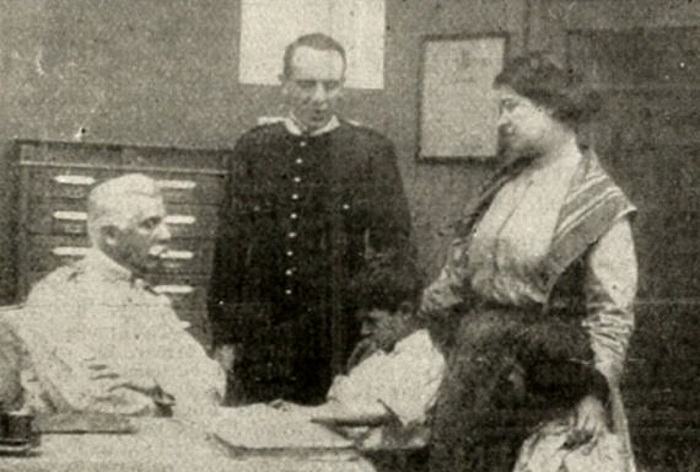
Dir: Ubaldo Maria Del Colle
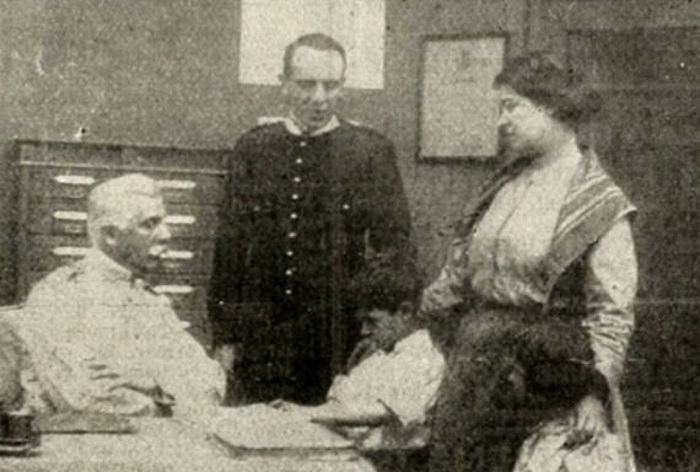
Frank Canti, a professional hunter, has had a very bad season. Winter is approaching, and with an old father and two sick children on his hands, he has no money to buy food or medicine. The proprietor of the only hotel in the village, meets him, and tells him that he must have a couple of wild ducks for a banquet, and offers him a large stipend for securing them for him. Canti realizes that the only place to get them is on the preserves, closed to the layman, and to get them he would have to trespass. He is sorely tempted, but refuses. He returns home and is confronted by the doctor, who insists that the child receive the medicine prescribed, so he returns to the proprietor of the hotel and accepts an advance from him, the balance to be paid on the delivery of the ducks. He goes to the Count's grounds, shoots a duck, and is immediately caught by the keeper of the grounds, who is in love with his wife. He is hailed to the police court, where the keeper swears to a charge of trespassing against him. The penalty for the offense is 300 francs, or one month in jail. Police Officer Moretti's term of three years is practically over. During this time he has saved 300 francs, which he has placed in an envelope, and intends using same as a wedding gift to his bride. The hunter's wife calls on him for advice, he having a reputation for big-heartedness, but he advises her that nothing can be done, and takes her to the lieutenant, thinking possibly that he might see a way out of the dilemma, but, instead, the lieutenant confirms what he has already said. He, too, is extremely warm-hearted and generous, and as soon as the hunter's wife departs, gives the policeman five francs to take to her. The hunter is allowed three days in which to decide whether he must serve his term in prison. The time having expired and the fine not paid, Moretti is given a warrant for the hunter's arrest. He goes to the house, and the children, on seeing him, embrace and kiss him. Touched by this show of affection, he hesitates about making the arrest. In the meantime, the lieutenant decides to go to the house himself to see if the policeman is carrying out his orders. As he approaches, Moretti realizes that he cannot carry out his duty, and pulling out his savings, hands it to the lieutenant in the envelope, and tells him that the hunter has decided to pay the fine. Moretti, having sent for his mother and fiancée, returns to the police headquarters and finds them awaiting his arrival. The hardest task of all is now in front of him, that of telling his beloved ones that he cannot go on with the marriage, as he has lost his savings. In the meantime, the lieutenant opens the envelope that has been given to him by Moretti and notices the inscription, "For My Wedding," written on it. The truth of the situation dawns upon him, and out of his own savings takes 300 francs, places it in another envelope, and writes the inscription, "The Hunter's Fine" on it. He goes into the room where Moretti, his fiancée and mother are, drops the original envelope on the floor and calls Moretti's attention to it. Moretti picks it up and at once realizes the generosity of his superior officer. The last scene shows everybody reunited.
View Details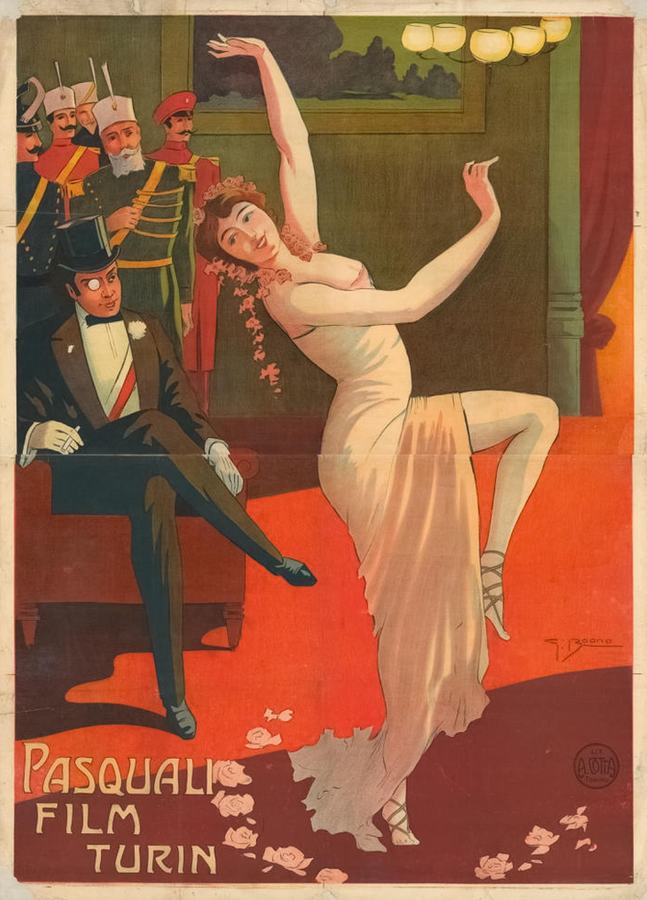
Dir: Ubaldo Maria Del Colle
The kingdom of Silistria, during the minority of the heir to the throne, Prince Vladimir, is ruled by Count Backine as Regent. Backine, an ambitious, power-loving man, knowing that the end of his period of power is approaching with the Prince's twenty-first birthday, uses all his wiles to bring about a marriage between Vladimir and his niece Alexandra, trusting to the influence which he hopes to be able to exercise on the Prince through his wife to keep him still, in fact if not in name, the ruler of Silistria. Unhappily for the Regent's plans, Vladimir has already fallen in love with his pretty cousin Olga, and the lovers frequently meet secretly in the beautiful gardens of the palace. One of these meetings is witnessed by a creature of the Regent, who hastens to tell Backine what he has seen, and, alarmed at the danger thus threatened to his project, Backine, after an attempt to affiance Vladimir to Alexandra has proved unsuccessful, summons a meeting of the Council of State, and persuades his colleagues to decide that the Prince shall be requested to spend the time which must pass before his coronation in Paris. Vladimir cannot refuse the request, which is, in effect, a command, but before he goes he visits all his old friends in Silistria- not forgetting his old fencing master, with whom he engages in a last friendly bout, in the course of which an incident occurs which has an important bearing on future events. The master's foil slips and inflicts a wound on the Prince's forearm, which, although not serious, will leave a permanent scar. Later a series of superb stagings show him clad in the uniform of his regiment of guards leaving the palace after a passionate farewell to Olga, and entering a motor-car, in which, with an escort of soldiers, he is driven to the railway station", en route to the French capital. Backine has arranged for one of the lieutenants to accompany Vladimir, with secret instructions to induce the Prince, by plunging him into all the distractions which Paris can offer, to forget Olga and the promise he has made to her. Although, with a letter from his sweetheart always carried in his breast pocket, Vladimir is not likely to be untrue to her, he willingly enters into the amusements provided for him, and his admiration for Mile. Thais, a dancer who is the sensation of the hour, gives his enemies the opportunity they require. Backine's emissary in Paris is greatly struck with the resemblance which a rather shady young dancer, whom he encounters in a cafe bears to the Prince, and he thinks the discovery so important that he reports it to Backine in Silistria, and receives detailed instructions, upon which he acts immediately. Chicita, the dancer, calls upon Thais, who has fallen in love with the Prince, whom she believes to be an English nobleman, and, showing her a letter from Olga to Vladimir, in which she asks the latter to return to Silistria, informs her who her lover really is, and tells her that he will surely desert her at the first opportunity. Temporarily blinded by jealousy, Thais agrees to become an accomplice to the Regent's plans and writes to Vladimir asking him to meet her at a certain house - in reality one which Backine's employee has engaged. When the Prince arrives at the house he is shown into a sitting-room and a trap-door is released under his feet. He is plunged into a cellar which has been prepared, and from which there is no egress, and with Thais and one of the Regent's men as gaolers is left there while Chicita is hastily made up as the Prince, and prepared for the journey to Silistria. The formal coming-of-age of Prince Vladimir is announced, and at the same time publicity is given to his engagement to Backine's niece, Alexandra. A triumphant reception is arranged for the returning ruler, and the pretender is driven through files of soldiers, cheered by the populace of the capital, to the palace. The resemblance between the real Vladimir and the sham is so close that everybody is deceived but Olga, who at once knows as if by intuition that this is not the man. She makes known her suspicions to one-or two friends, am rig then the old fencing master, who vows to solve the puzzle. Challenging the supposed Prince to a bout with the foils, the master contrives to wound him slightly in the arm, and, on pretense of examining the wound, discovers that there is no trace of the old scar which his sword inflicted on Vladimir. The Regent has fathomed the suspicions of the fencing master, who is known, moreover, to be a firm friend of Vladimir, and gives instructions so that the faithful old man is shot while out for his morning ride, and his body thrown in the river. Seriously injured though he is, he manages to scramble to shore and to attract the attention of two officers, to whom be tells the story of the imposture he has discovered. Meanwhile, orders have been sent to Backine's agent in France ordering him to put the captive Vladimir to death, but, though the Prince is bound and the train of powder which is to blow him to pieces is almost lighted, Thais relents at the last moment and releases the Prince. When their enemy attempts to detain them lie is thrown on the trap-door, which hurls him into the cellar. The explosion occurs, and the villain meets the death he had destined for the Prince. Meanwhile, Coronation Day dawns in Silistria. One after another the superb ceremonies are carried through, and at last the sham Prince and his Consort are led, through a company of men clad in blazing uniforms and women in sumptuous dresses, to the steps of the throne. Then, before the actual act of coronation can take place, the real Vladimir with his few faithful friends bursts into the chamber, the usurper is swept aside, and while all look on with amazement, Vladimir goes to Olga, and, taking her by the hand, leads her to the steps of the throne which is rightfully his.
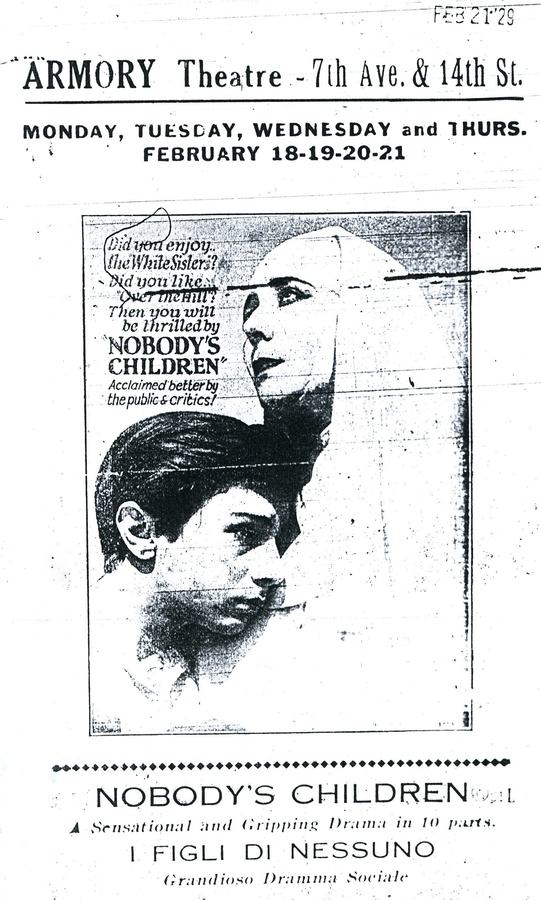
Dir: Ubaldo Maria Del Colle
Three part melodrama later reworked in the 50s by Matarazzo: A count has an illegitimate child with a woman who his elderly mother tries to separate him from, and who later retreats into a convent.
View Details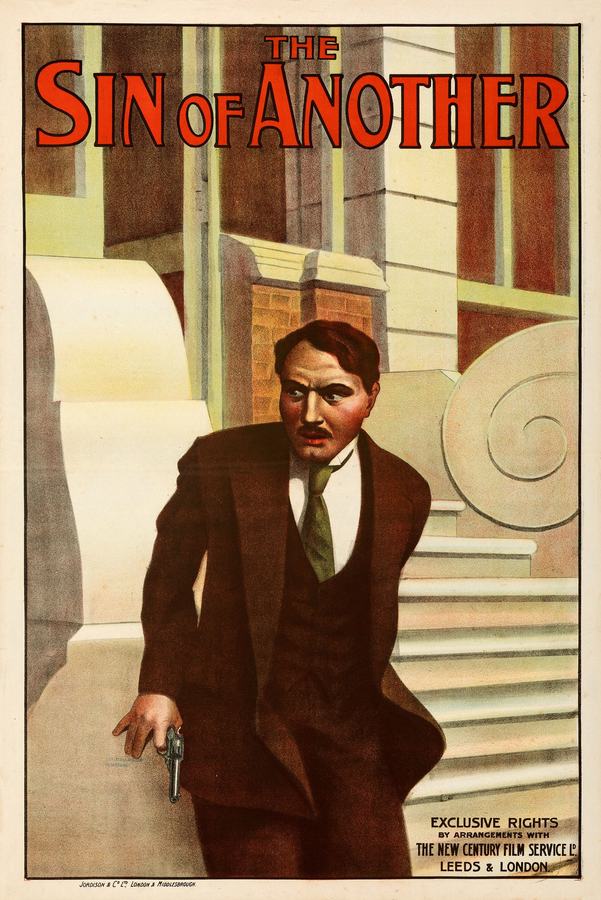
Dir: Ubaldo Maria Del Colle
A fascinating piece of cinema that shares thematic elements.
View Details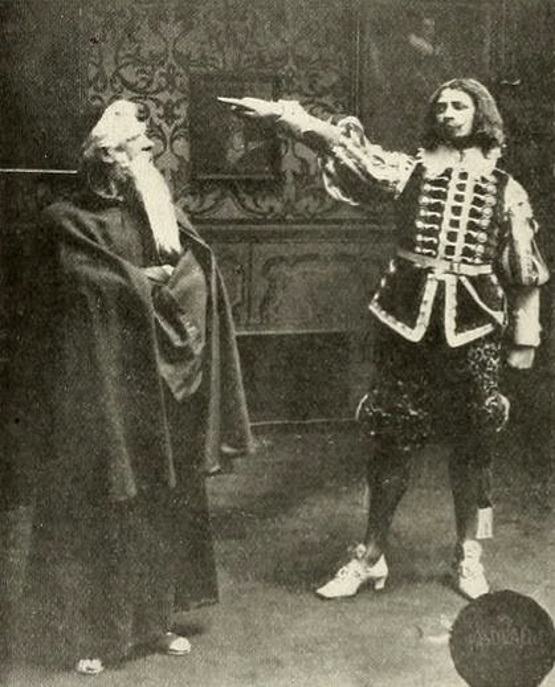
Dir: Ubaldo Maria Del Colle
A couple is prevented from marrying by a local tyrant, and they are not reunited until after a number of misfortunes, including pestilence.
View DetailsAnalysis relative to The Fugitive
| Film Title | Atmosphere | Complexity | Similarity |
|---|---|---|---|
| The Last Days of Pompeii | Ethereal | Abstract | 95% Match |
| By Power of Attorney | Gothic | Layered | 98% Match |
| Joan of Arc | Surreal | Dense | 89% Match |
| The Heart of a Police Officer | Surreal | Layered | 94% Match |
| On the Steps of the Throne | Gothic | High | 96% Match |
This guide was algorithmically generated using the cinematic metadata of Ubaldo Maria Del Colle's archive. Last updated: 6/22/2026.
Back to The Fugitive Details →