
DbcultAccessing Vault...
Recommendations
Senior Film Conservator
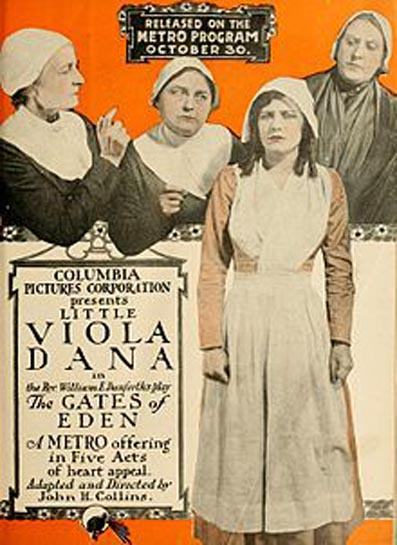
If you found yourself captivated by the stylistic flair of The Gates of Eden (1916), the quest for comparable cinema becomes a journey through the fringes of film history. Below, we've gathered a list of films that every fan of John H. Collins's work should explore.
The Gates of Eden remains a monumental achievement to create a hauntingly beautiful cinematic landscape.
Evelyn and her boyfriend William Bard are members of a small Shaker community. They rock the community one day when they announce that they want to get married and have children, in direct opposition to the Shaker prohibition against marriage and procreating. The Shakers drive the couple out of town, but before she leaves Evelyn gives birth to a daughter, Eve. Shortly afterward Evelyn dies, and the Shakers inform William that their daughter Eve has died also. William leaves town, but vows to take his revenge on the Shakers, whom he blames for the loss of his family.
The Gates of Eden was a significant production in United States, bringing a unique perspective to the global stage. It continues to be a top recommendation for anyone studying cult history.
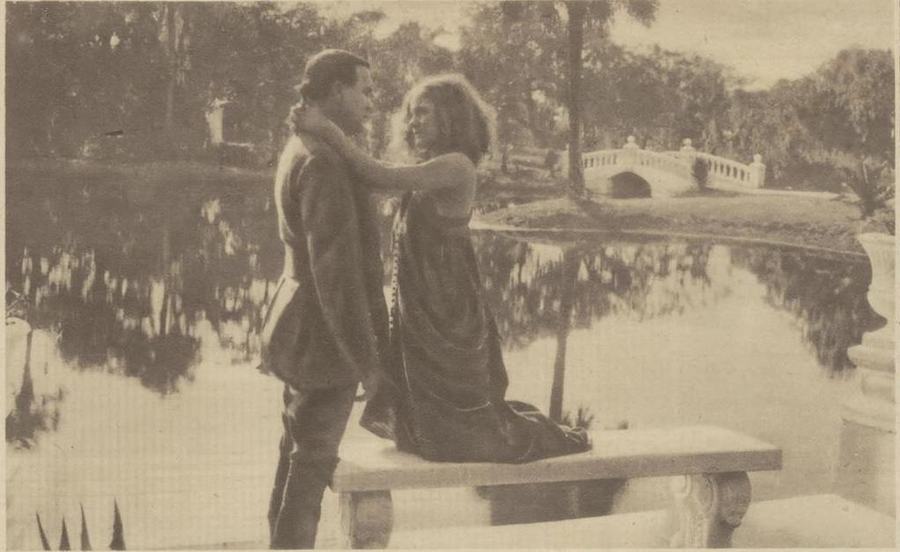
Based on the unique stylistic flair of The Gates of Eden, our vault has identified these titles as the most compelling follow-up experiences for fans of cult cinema:

Dir: John H. Collins
Dr. Claude Drummond, a young English doctor in India, saves Ameia, a young girl, from being sacrificed to the priests of the temple of Krishna by buying her as his wife. Returning to England upon the death of his elder brother, who was the heir to the estate, Claude finds that his father has arranged a marriage between himself and Olive Dennison, the daughter of the Major-General. To please his father, Claude is about to submit to the marriage, although neither he nor Olive love each other, when Ameia arrives from India. Discovering that her existence is a barrier to her husband's advantageous alliance, Ameia takes poison but is saved by an antidote administered by Claude. It is then discovered that Ameia is actually the daughter of Major-General Dennison, by a native wife whom he had deserted. Thus, Claude finds it possible to be true to his love and to his father's wish that he marry the general's daughter.
View Details
Dir: John H. Collins
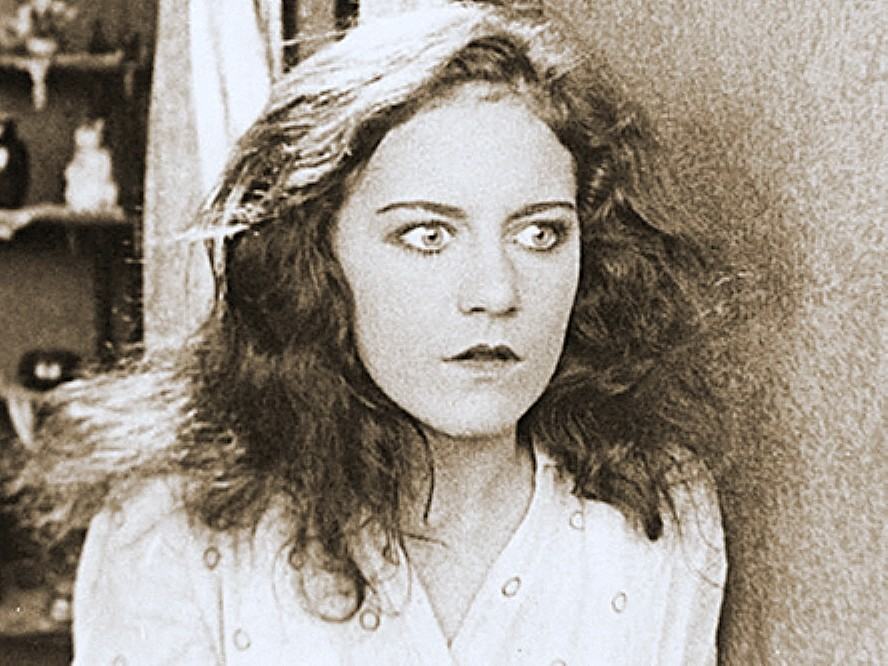
The story of two young sisters: one a demure musician in love with a scoundrel who's no good for her; the other a wild free spirit who is the object of a shy young carpenter's affections.
View Details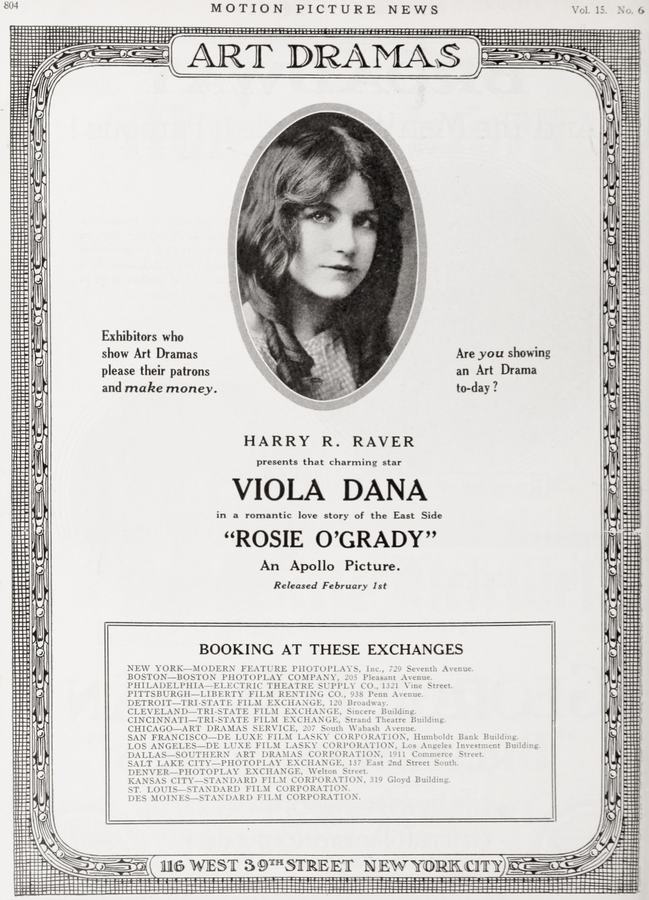
Dir: John H. Collins
A fascinating piece of cinema that shares thematic elements.
View Details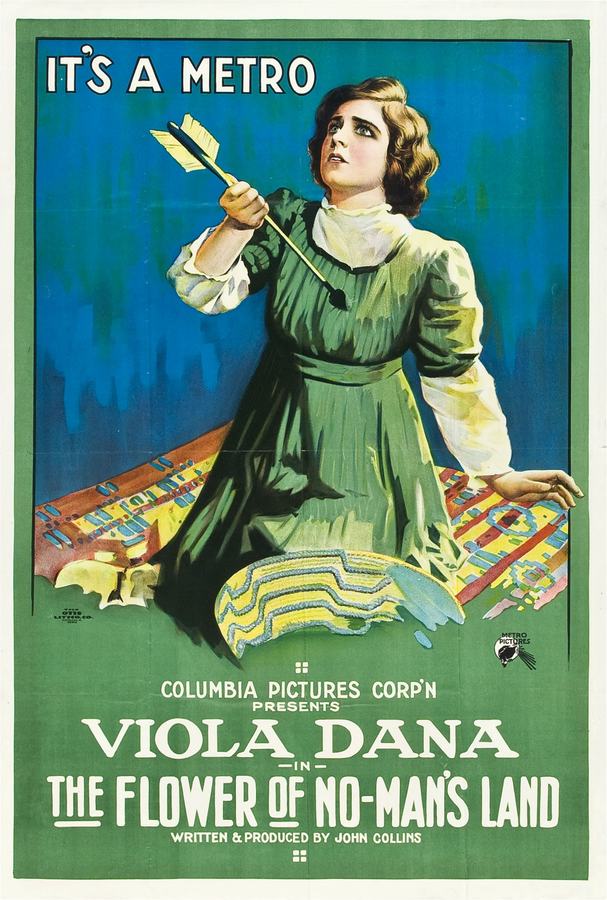
Dir: John H. Collins
Echo, the orphaned "flower of no man's land," has been raised by an Indian foster father, Kahoma. Then, when opera singer Roy Talbot goes West to recover his health, Echo falls instantly in love and forgets all about Big Bill, her cowboy sweetheart. Roy marries Echo and takes her back East, but soon after returning to his adoring public, he loses all interest in her. Finally, Echo leaves Roy and goes back to the wilderness, where she discovers that Roy had already been married when they met and had deserted his wife years before. For so deceiving his adopted daughter, Kahoma tracks Roy down and kills him, while Echo forgets about her big-city unhappiness and returns to Big Bill, with whom she makes plans to marry.
View Details
Dir: John H. Collins
When Judith Sylvester becomes engaged to Dr. Carter Keith, he prepares a charming little home for her arrival, dubbing it the "House of Hearts." Their happiness is complete until Margery Gordon appears to distract Carter from his fiancée. Judith is troubled by his sudden change of heart, but not until she sees Margery and Carter embracing in the "House of Hearts" does she fully realize that their romance is over. After breaking their engagement, she moves in with Cynthia Bancroft, who had met and fallen in love with Judith's guardian, Martin Chandler, when the two were involved in a train wreck. Judith is instrumental in reuniting them, and then, left alone, she grimly resolves to make the best of life.
View Details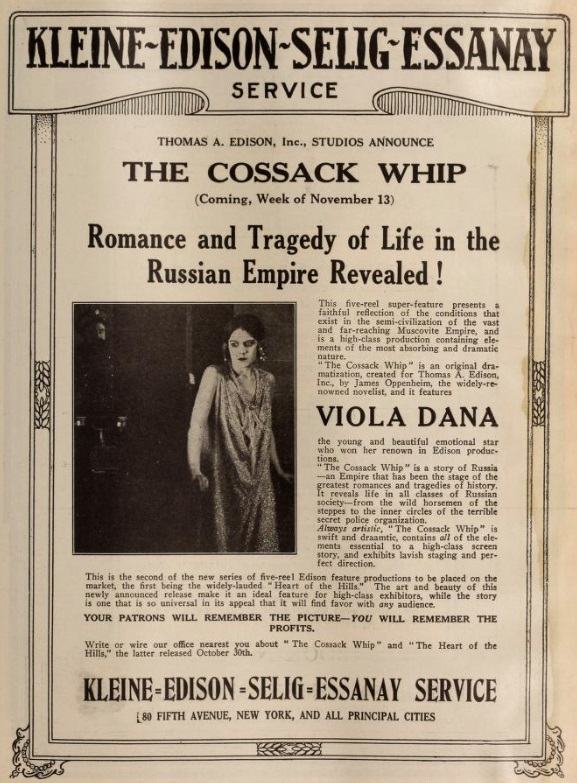
Dir: John H. Collins

Feodor Turov, chief of the Russian Czar's secret police, orders his Cossacks to attack a village he believes to be infested with rebels. The Cossacks attack the village and massacre almost everyone, and the young Katerina is whipped to death. Before escaping to England, her sister Darya swears to avenge her sister's death. Years later--now one of the world's most famous prima ballerinas--she returns to Russia. Turov falls in love with her and manages to secure a meeting. She coyly asks him to take her to see a prison first. As it turns out, what he has planned for her is nothing compared to what she has planned for him.
View Details
Dir: John H. Collins
Krishna Dhwaj, the son of the Maharajah of Rhamput, is in love with Lakshima, the daughter of the Maharajah of Bhartari, but their fathers will not allow them to marry. Krishna is then sent to Harvard to get an American education. Lakshima, determined to kill herself when her father orders her to marry an old man, jumps into the ocean. She does not drown, however, but is rescued by George Morling, a Bostonian, who smuggles her on board his ship dressed in boy's clothing. George, the son of a minister, is engaged to a proper Bostonian woman. Although he has not behaved improperly, George fears that his fiancé and her father will not understand the situation, and so he hides Lakshima in a trunk. Once back in Boston, George's fiancé discovers Lakshima and is horrified, but after several misunderstandings, George and his fiancé are reconciled, and Lakshima is able to find and marry her Indian sweetheart Krishna.
View Details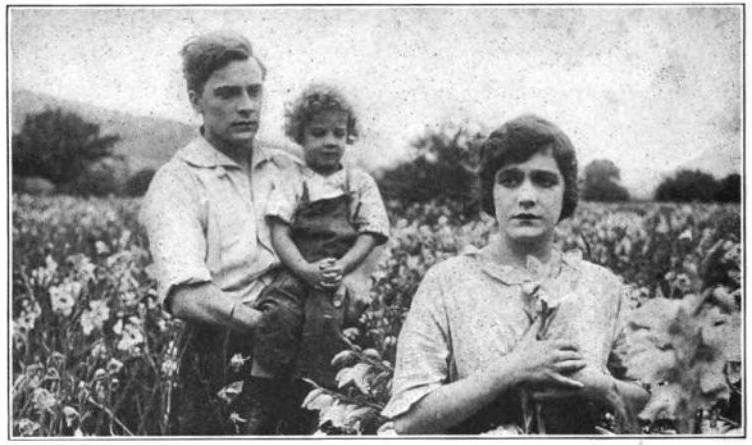
Dir: John H. Collins
Although she has a strong friendship with Abner, a hand on her father's farm, saucy Gladiola Bain loves only her father, until she meets vacationing Ned Williams, a self-described "idler" from the city. When their seemingly harmless flirtation develops into love, Gladiola refuses to obey her father's wishes that she give Williams up, and when Williams, after some hesitation, offers her a beautiful home and clothes, they elope to the city, where Williams arranges a mock marriage. After a few months of happiness, Williams' real wife appears. Gladiola tells Williams that she despises him and returns to her welcoming father. Amid much gossip in the town, Gladiola gives birth to a child, while Williams, whose wife has refused to divorce him, has gone abroad. When he learns that his wife has died, he returns repentantly to Gladiola's farm, but although she is touched by his concern, her love has died, and she refuses his entreaties. At the end, Gladiola and her child stroll in the gladiola fields with the faithful Abner.
View Details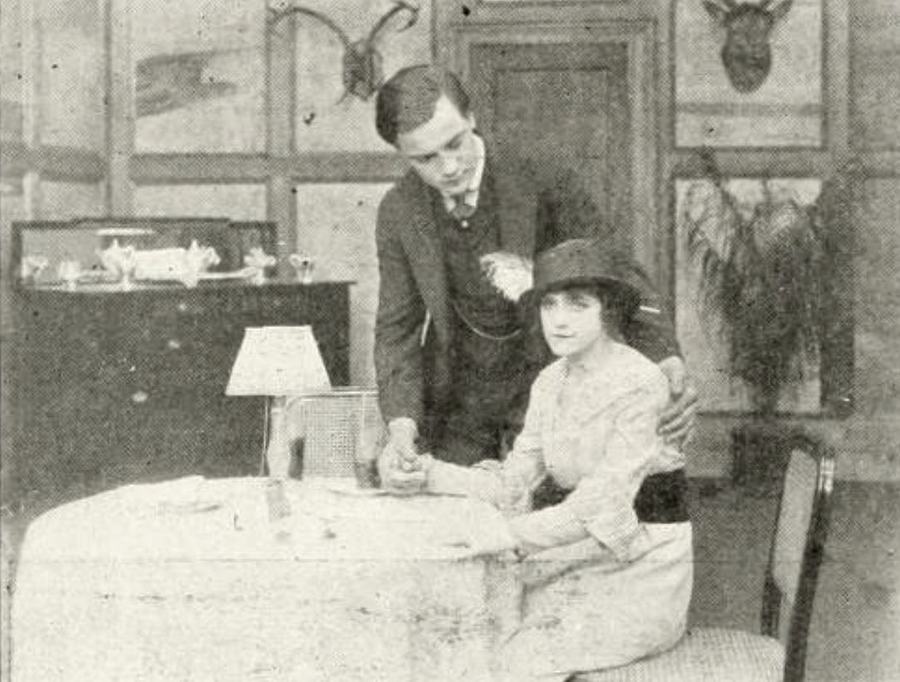
Dir: John H. Collins
"On Dangerous Paths" Is the story of a foolish young girl who insisted upon learning the lesson of life through experience rather than take the advice of those who had already gone through the mill. It's only saving grace is that it is a story taken out of life, a story that nearly every young girl has to learn. Viola Dana in the leading role is winsomely pretty. As an unsophisticated young girl with the whole world before her, Miss Dana was eminently pleasing. Pat O'Malley playing opposite gave his usual finished performance, and the balance of the cast was good. Though the recipient of the love of a very desirable young man and though she returns this affection. Eleanor Thurston feels that she must be independent and earn her own living. She leaves for the city and obtains a position as nurse in one of the large hospitals, where one of the young doctors with a reputation as a lady killer becomes infatuated with her fresh young beauty and pays ardent attention to her. She is carried off her feet and not realizing that his intentions are not honorable, is placed in a compromising situation from which she is rescued by her country lover.
View Details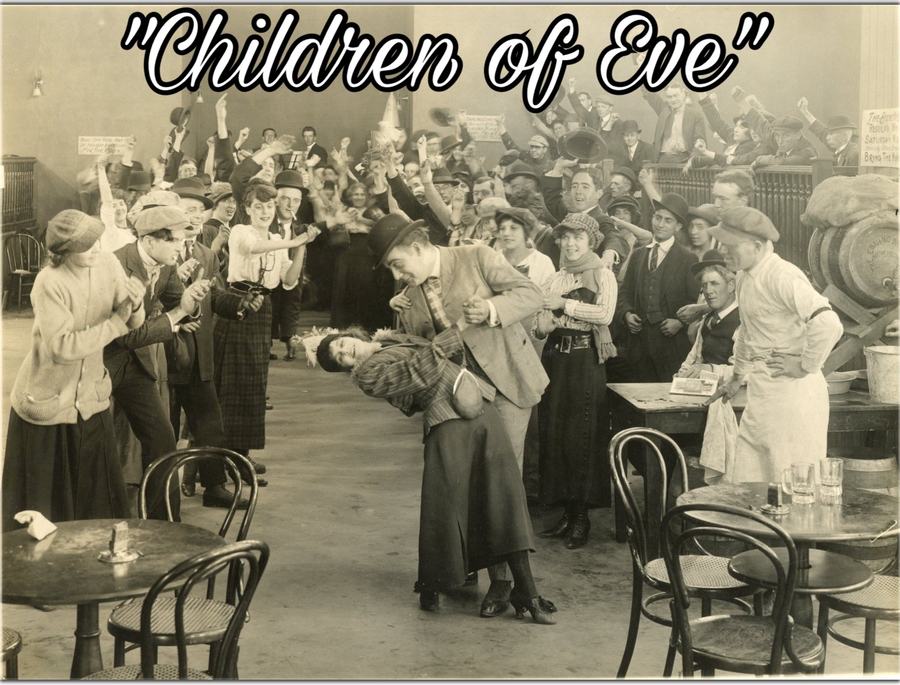
Dir: John H. Collins
Young Henry Clay Madison, a clerk, falls in love with Flossy Wilson, a prostitute from New York's East Side. Although she reforms under his influence, Flossy believes that she is unworthy of Madison and rejects his marriage proposal. Seventeen years later, Madison's nephew Bert, a social worker, falls in love with wanton Fifty-Fifty Mamie, reforms her and elicits her help in his work. Bert falls ill, and when Mamie tries to visit him, Madison, who now is concerned only with money, convinces her to give up the idea of marrying Bert. Mamie goes to work in Madison's canning factory to investigate conditions. In addition to employing children, Madison's factory has no fire escape and only one staircase, which catches fire, many children die and Mamie is seriously injured. Madison visits Mamie, who cries Bert's name in delirium. When Madison brings Bert, now recovered, Madison notices a photograph of Flossy, Mamie's mother and realizes that Mamie is his daughter. She dies in Bert's arms, and Madison resolves to toil for the welfare of workers and the end of child slavery.
View DetailsAnalysis relative to The Gates of Eden
| Film Title | Atmosphere | Complexity | Similarity |
|---|---|---|---|
| God's Law and Man's | Gritty | High | 90% Match |
| The Girl Without a Soul | Tense | Dense | 93% Match |
| Rosie O'Grady | Surreal | Abstract | 95% Match |
| The Flower of No Man's Land | Tense | Abstract | 85% Match |
| A Weaver of Dreams | Ethereal | Dense | 87% Match |
This guide was algorithmically generated using the cinematic metadata of John H. Collins's archive. Last updated: 8/16/2026.
Back to The Gates of Eden Details →