
DbcultAccessing Vault...
Recommendations
Senior Film Conservator
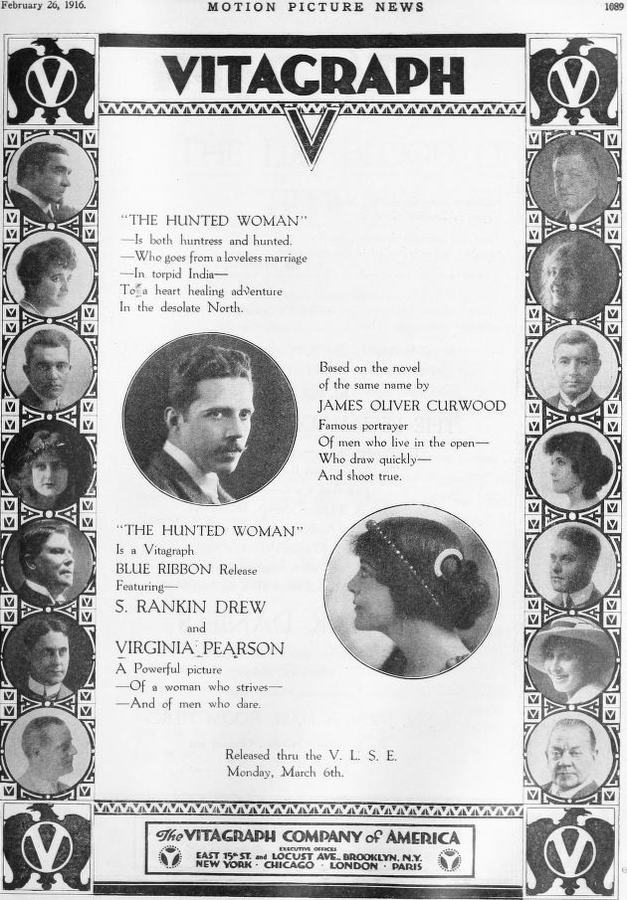
If you found yourself captivated by the cinematic excellence of The Hunted Woman (1916), the quest for comparable cinema becomes a journey through the fringes of film history. Below, we've gathered a list of films that every fan of S. Rankin Drew's work should explore.
The Hunted Woman remains a monumental achievement to create a hauntingly beautiful cinematic landscape.
Sir Daniel Grey, dying in India, begs his daughter, Joanne, to marry the man of his choice, Mortimer Fitzhugh, and she finally consents, although disliking the man. The marriage ceremony is performed at Sir Daniel's deathbed, and at its conclusion, all present receive a shock when a former mistress of Mortimer's confronts them. Joanne, horrified at the woman's story, refuses to live with her husband and runs away to America. There she receives news of her husband's death while hunting in the wilds of British Columbia, and her relief is great. But two years later she hears that her husband is alive, and the old fear returns. Determined to prove for herself the truth, Joanne leaves for the railroad construction camp high up in the mountains of British Columbia. She is maliciously directed to Bill Quade's place, thus falling into the clutches of the worst men in the camp. He conceives a violent love for Joanne and tries to force his caresses upon her, but is prevented by John Aldrous, a young novelist and explorer and his companion, Donald McDonald, typical old mountaineer. Bill swears he will have the girl, and John places her under the protection of his friends, Paul Blackton and his wife. She and Aldrous fall in love, but her former marriage is a barrier to their happiness. While watching blasting operations Joanne and Aldrous wander into the cavern which is to act as the air chamber for the explosion of several tons of dynamite and are trapped there by a landslide. Expecting death momentarily, they are saved by the fact that the exploding wires were broken by the landslide and they are rescued. Meanwhile, Quade and his gang have been on the trail of Aldrous and Joanne, and after some exciting adventures, one of the crooks turns out to be Joanne's first husband. In a struggle with John he is killed, freeing Joanne forever and when John has recovered from his experience, he and Joanne are reunited in permanent happiness and love.
The Hunted Woman was a significant production in United States, bringing a unique perspective to the global stage. It continues to be a top recommendation for anyone studying cult history.
Based on the unique cinematic excellence of The Hunted Woman, our vault has identified these titles as the most compelling follow-up experiences for fans of cult cinema:
Dir: S. Rankin Drew
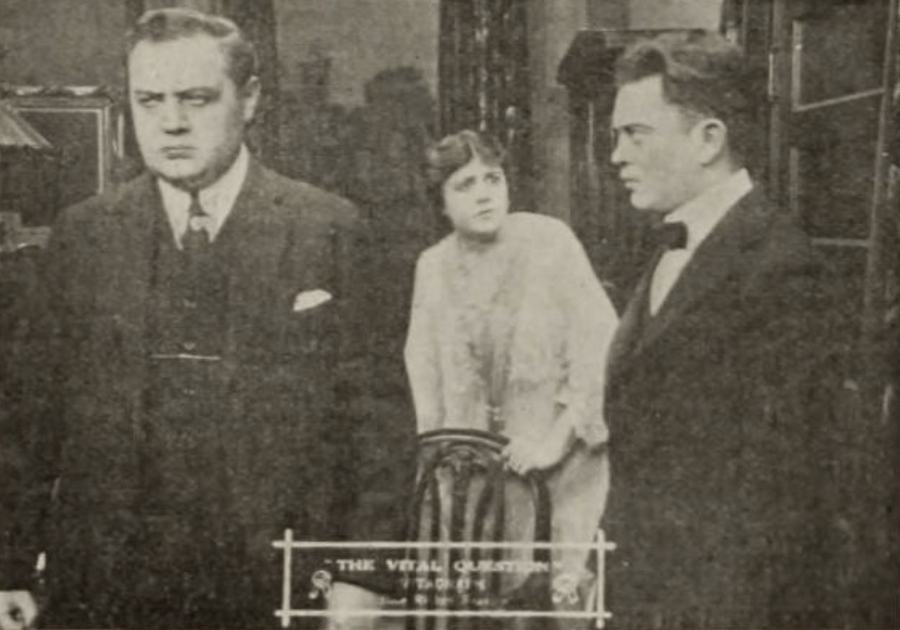
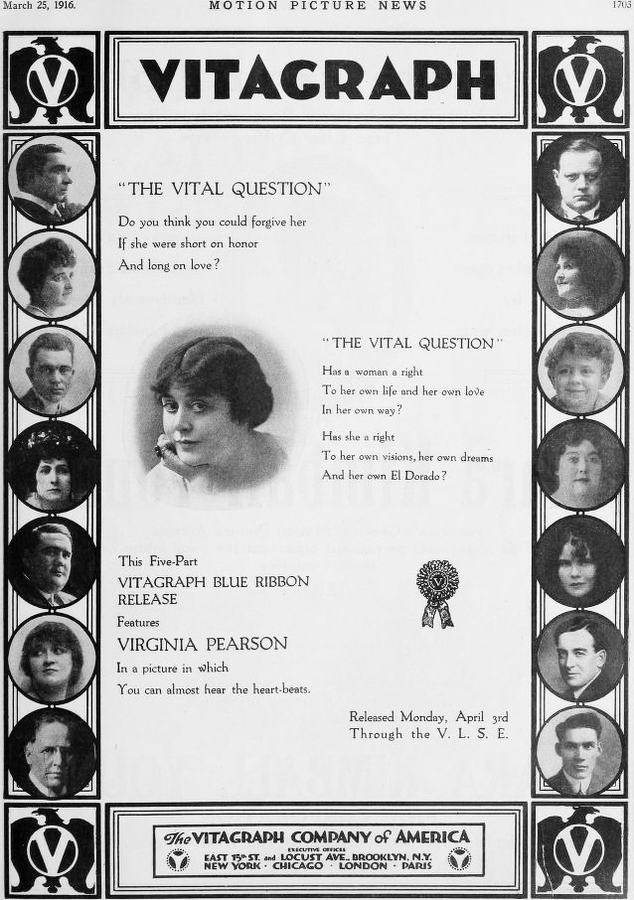
King, a businessman, has reason to believe that an investigating committee has been appointed to inquire into the workings of certain shady deals with which his name has been connected. While he is brooding over the matter, Worden comes in and King tells him of his trouble and is advised to consult a clever lawyer. Worden recommends Scarsdale for the job. King looks hopefully upon this advice for Scarsdale is engaged to his daughter Beatrice. When King finally reveals his true motive, Scarsdale is greatly perturbed. The proposition as it stands reads King's salvation or the loss of Beatrice. Scarsdale turns down the case and bids Beatrice farewell. King's creditors get after him and King commits suicide. Beatrice holds Scarsdale morally responsible for her father's death. She refuses to see him. The small amount of money Mr. King left is soon exhausted, for Dick, Beatrice's brother, speedily gets rid of it by dissipation. Beatrice, facing a financial crisis, appeals to Warden for assistance. When Dick returns in a maudlin condition his sister remonstrates with him for his action, and Worden, who is standing nearby, suggests that Beatrice marry him, and thus obtain a protector for her brother. Deep down in her heart Beatrice still cherishes a regard for her former lover, Scarsdale, and she refuses Worden's offer. When Dick comes out of a drunken stupor, he finds himself penniless. To obtain money for further dissipation, he forges Worden's name to a check. The forgery discovered, Dick is just about to be sent to prison. Beatrice appeals to Worden to withdraw the charge. Worden refuses to intervene. Beatrice makes a final plea. Her distress arouses the brute feeling to Worden's mind, and he tells her he will drop the charge if Beatrice will repay him by becoming his wife. Beatrice sobbingly consents. Scarsdale has gradually climbed the ladder of success. After years of earnest endeavor he is made district attorney. His first campaign is against the Beef Trust. It happens that Worden is head of the Trust. Later, through a trick, Scarsdale and Dick are brought to Worden's home where together with a henchman, he hopes to get certain damaging evidence on the district attorney. A fight follows and the four men upset an electric library lamp, leaving the room in darkness. A revolver shot rings out and silence follows. It is discovered that Worden has been killed by the man he had hired and the latter is captured by the police in his attempt to escape. With Worden out of the way, Scarsdale and Beatrice renew their old love and look with promise on the future.
View Details
Dir: S. Rankin Drew
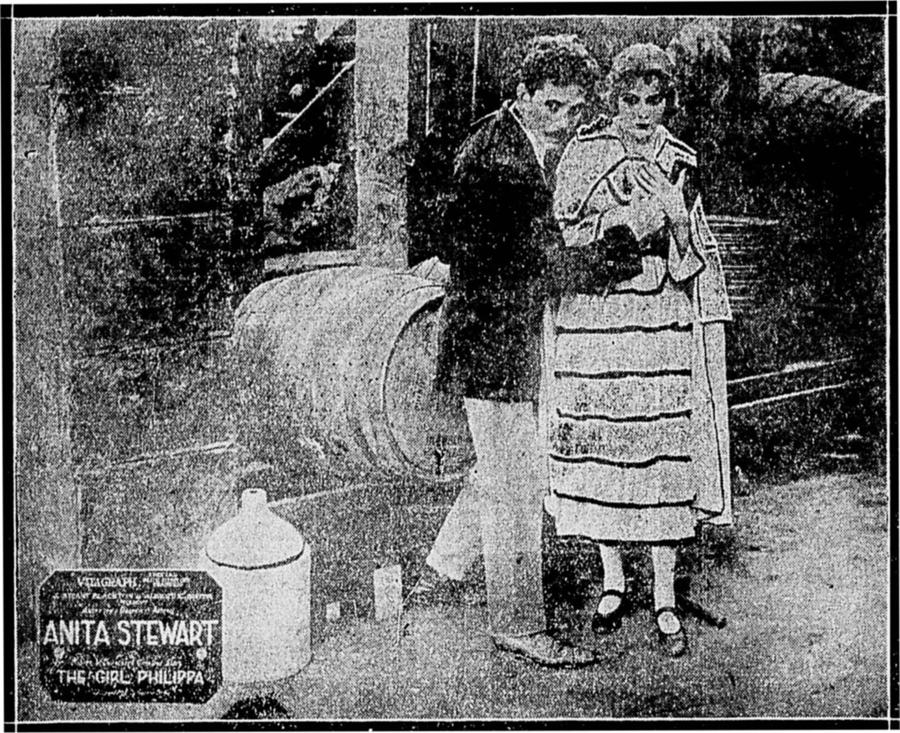
About the year 1900 in a midnight raid on the palace of a Balkan king, emissaries of a great power slay the royal pair, and carry off the infant crown princess. The time shifts to the present. Foreign agents steal the plans of a new shell loaned Great Britain by America. Halkett and Gray, English officers, recover the plans; and the foreign agents endeavor to gain possession of them again. Warner, an American artist sojourning in the neighborhood of Ausone in France, secures as his model, Philippa, cashier of the Cabaret de Biribi. He sees great intrinsic character in the beautiful pensive girl. Browbeaten by her burly foster father Wildresse, she is made to spy upon Warner, who has become a confidant of Halkett. She exposes Wildresse to Warner and goes to him for refuge. Wildresse and his band capture her. Warner penetrates the master spy's stronghold and rescues Philippa. Meanwhile war between France and Germany has broken out. A hint from a tool of Wildresse who has deserted him causes the girl to desire to find proofs of her birth. She hastens to Ansone, which is already besieged, and rifles the safe of Wildresse. She discovers proofs that she is a princess and is trapped in the cellar because of a battle fought in the streets. Warner, who had sought her, defends her from Wildresse and the invaders until the French save them by retaking the village. The spy is shot as a traitor, Philippa's true identity is established, and Warner, who has wooed her as a waif, now receives an answer from her as a princess.


Dir: S. Rankin Drew
Twenty-five years before the story opens, Jason Brisco, owner of the Daily Argus, became embittered by the death of his wife, whose life was snubbed out as her child was born. In his anguish he seeks consolation in travel. After all these years Briscoe's son, John, is editor of the Argus and has won a reputation for absolute honesty. He receives a telegram from Paris telling him to prepare to receive his father, who is coming on the next boat. The days drag for John, who is impatient to get a glimpse of the father he has never seen, but when he arrives John is disappointed. The man does not measure up to the strong, honest character with which John invested his father; his face is cunning, his eyes shifty. Just before the arrival of his father John had been honored by a visit from the leaders of a certain political faction who came to buy the support of the Argus, but who went away with sad faces. Hearing of the return of the elder Briscoe, they return once more, determined to buy either the support of the Argus or the paper itself. In Jason Briscoe they find a man to their liking, for, although he will not sell his support, he is eager to bargain for the sale of the paper. Despite John's protests arrangements are made, and the signature of Jason Briscoe to the documents is all that is now required. In fond anticipation of the large purchase price, Briscoe is about to affix his signature to the bill of sale, when the door is thrown open unceremoniously and Diana Pearson, star reporter of the Argus, enters and commands the attention of all those present. Recognizing her and terrified at her appearance at this inopportune moment, Briscoe jumps from his chair and tries to escape, but runs right into the arms of a waiting policeman, who brings him back and forces him to listen to Diana's tale. After the arrival of Jason Briscoe from Paris Diana had seen a woman following his automobile, and thought it worth her while to investigate the cause. On reaching Briscoe's house she heard a loud report, and entering found the woman on the floor, shot. Diana attempted to leave the house to summon aid, but was detained and thrown into a cellar with the other woman by "Briscoe" and his valet. Here, when she regained consciousness, the woman told Diana of how the man who is posing as Briscoe had trapped the real Briscoe in Paris and left him in the care of an Apache on the outskirts of the city. His real name, she said, is Stange, and he is one whom she has ample reason to hate. Diana was horrified by the story, but she realized her helplessness; she was unable to prevent the sale of the paper. Then she thought of a plan, and made Stange her innocent accomplice. Unknowingly he carried word of her plight to the Argus office with him, and one of the reporters started out immediately with a number of policemen to her rescue. After her release Diana rushed straight to the office where she was fortunate in arriving in time to prevent the illegal sale. Seeing that all is known, Stange makes a frantic attempt to escape from his captors, but is shot to death in the struggle. Two weeks later a cable to the Prefect of Police in Paris has secured the release of Briscoe from the Apache's den, and in the office of the Argus he is introduced to his future daughter-in-law, Diana Pearson, reporter.
View Details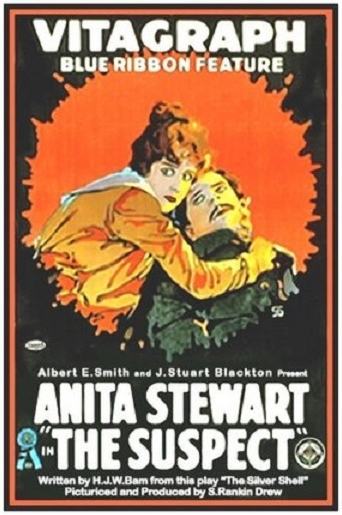
Dir: S. Rankin Drew

Mouroff's aim is bad; the bomb which he threw at Karatoff, the butcher, explodes harmlessly many feet away. Karatoff's son Paul, puts spurs to his horse, and chases the nihilist. The latter is elusive, but Paul trails him and enters a house after him. Once inside, Valdor, another nihilist, stuns Paul with a blow from his club and carries him to his apartment. Valdor would willingly let him die from loss of blood, but Sophie commands him to heal the wound. This, at first, puzzles Valdor, coming as it does from Sophie Karrinini, leader of the nihilists and one who has ample reasons to hate Karatoff and his kin, but in an undertone, she explains. The sight of Paul Karatoff rouses to her mind vivid recollections of the scene, years before, when Paul's father compelled her to stand helplessly by, while her father was tortured to death, and her mother had died from the effects of the gruesome sight. Now what is the one little life of Paul Karatoff? She can find better ways to strike at the butcher's heart, by allowing him to live. Paul returns to consciousness, and Sophie gives him her most tender care. She listens, apparently horrified, to his tale of the attempt on his father's life. Soon, he is well enough to be moved, and is returned in safety to his father, cherishing in his heart, a love for Sophie. He asks her to be his bride. This being the first step in her plan, she readily consents. Karatoff's son the husband of a nihilist. But then their child is born, and with the boon of motherhood comes the realization that she loves Paul more than the cause. Having heard rumors of his wife's affiliation with the nihilists, Paul confronts her with the evidence and she confesses. He leaves to expose her, but is waylaid and stunned by Valdor, who throws his apparently lifeless form into the ice of the river. Mouroff, on the way to the market, finds the body, and seeing signs of life, takes it home with him. When Paul awakes, his memory is gone and Mouroff brings him up as a nihilist. Valdor returns to Sophie and tells her that the police have killed her husband. Five years later while traveling in England under an assumed name, Sophie meets Sir Richard Stanhope, an English nobleman, and they become interested in each other. Karatoff captures a nihilist messenger from whom he learns of a meeting of the band, and being unknown to the members, he takes the place of the messenger. He meets Richard, to whom he is known, and explains the reason for his assumed name. Mouroff receives the call to the meeting and takes Paul along. At the meeting Mouroff recognizes and denounces Karatoff and the true identities of all are established. While Karatoff is greeting his son, a shot is fired, intended for Karatoff, but it kills Paul. The police rush into the place and arrest all present, including Richard who had just appeared on the scene. Little Jack, Sophie's son, is now a Prince. His pleas for his mother's freedom are finally granted by his grandfather, Karatoff, with whom he returns to Russia to fulfill the duties of his heritage. Sophie now leaves her nihilistic tendencies behind, as she travels, in peace, at last, to England with Richard.
View Details
Dir: S. Rankin Drew
Reformers pass a law to force prostitutes out of the Red Light District.

Dir: S. Rankin Drew
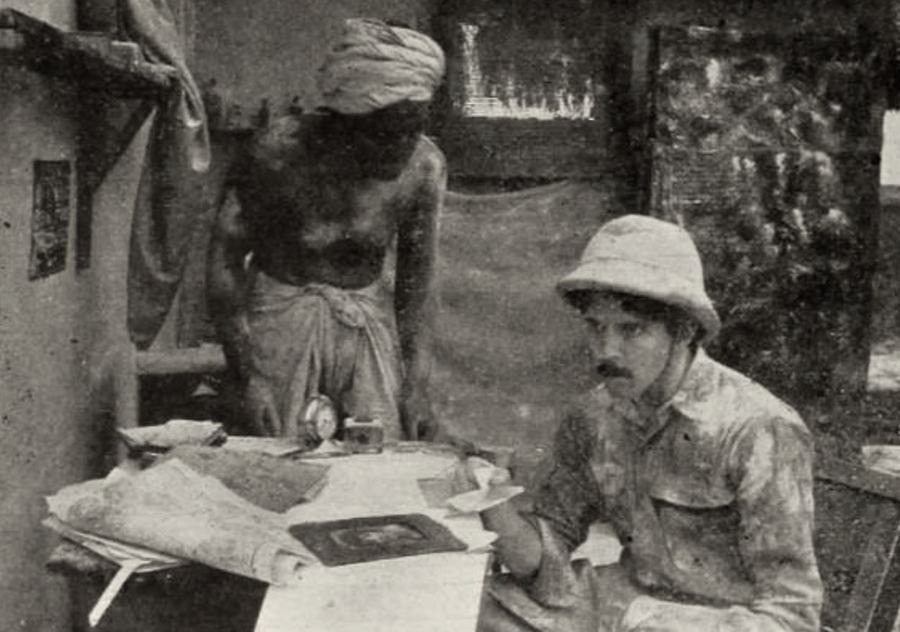
A clerk in the British Civil Service stationed in India, Gilbert Raynor sends for his wife Emily after a long period of diligent saving. Shortly after her arrival, Emily becomes ill, and Raynor requests a transfer to a gentler climate. Marner, Raynor's superior, refuses the request until he meets Emily and falls in love with her, after which he moves Raynor to a high-paying but dangerous post. Inevitably, Raynor contracts the fever which is endemic to the district where he is stationed. Marner, who follows Emily to the mountain area where she goes to recover, learns of Raynor's illness but does not transfer him. Finally, after Emily, who has backed off Marner's advances, learns of her husband's plight, Marner has an attack of conscience and journeys with Emily to rescue Raynor in the nick of time. Remaining in the fever zone, Marner reads the story of David and Uriah in Raynor's Bible, recognizes the parallel to his own wrongdoing, and dies from fever, while husband and wife are restored to happiness.
View Details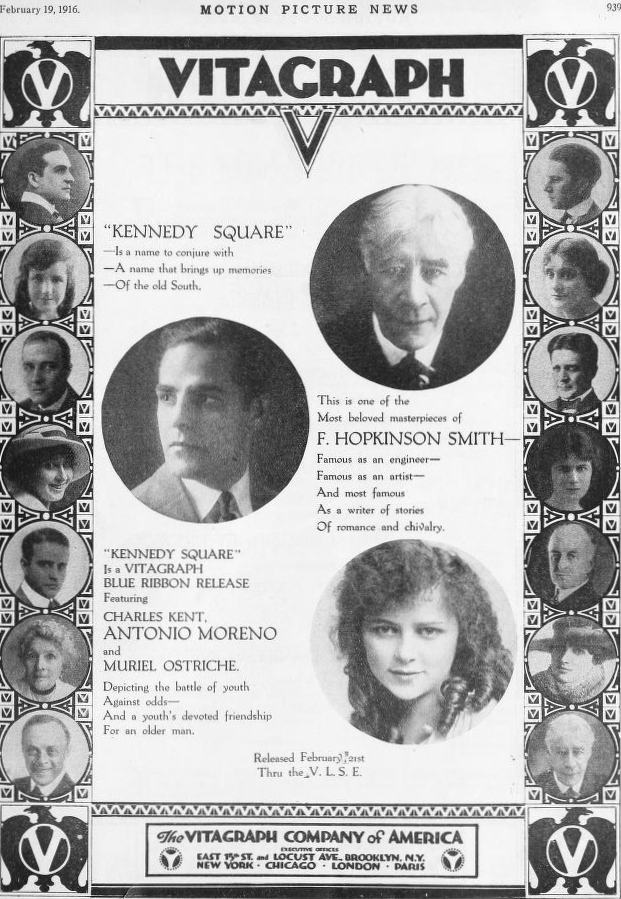
Dir: S. Rankin Drew
At a dance on his parents' plantation in the early nineteenth century, Harry Rutter wins a duel with Langdon Willetts, but loses his fiancée, Kate Seymour, who disapproves of fighting. Harry also is thrown out of the house by his father for violating every rule of Southern hospitality. He then stays at Kennedy Square, the home of his older friend and confidant, St. George Temple, who risks financial ruin in order to pay off Harry's debts. Tired of accepting charity, Harry leaves for South America, after which the bank forecloses on St. George's home. A few years later, Harry, having made a fortune, returns, and buys back Kennedy Square for St. George. Then, Harry and Kate reconcile, and begin making plans for their marriage.
View DetailsAnalysis relative to The Hunted Woman
| Film Title | Atmosphere | Complexity | Similarity |
|---|---|---|---|
| The Vital Question | Gothic | Abstract | 85% Match |
| The Girl Philippa | Tense | Layered | 98% Match |
| The Daring of Diana | Gritty | Linear | 87% Match |
| The Suspect | Surreal | Abstract | 85% Match |
| Who's Your Neighbor? | Tense | Dense | 90% Match |
This guide was algorithmically generated using the cinematic metadata of S. Rankin Drew's archive. Last updated: 6/22/2026.
Back to The Hunted Woman Details →