
DbcultAccessing Vault...
Recommendations
Senior Film Conservator
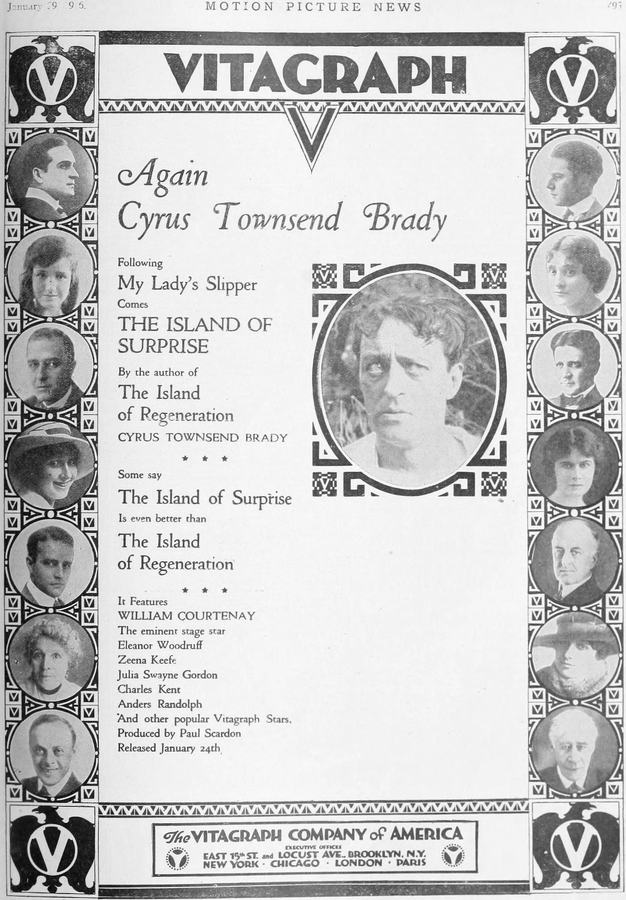
For cinephiles who admire the cinematic excellence within The Island of Surprise, its lasting impact ensures that its spirit lives on in modern recommendations. Each of these movies shares a piece of the cinematic excellence that made The Island of Surprise so special.
At its core, The Island of Surprise is a study in to provoke thought and inspire awe in equal measure.
Dorothy Arden is private secretary to Godfrey Lovell, known as the Croesus of Wall Street. His Western partner is Daniel Casselis, who has a daughter named Dorothy. Lovell has a son, Robert, and the two financiers are trying to arrange a match between their children. But Robert falls in love with his father's secretary and marries her, but on returning home to tell dad, he finds that Lovell is ill and has gone on a long sea voyage to recuperate. Bob is sent to Chicago to see Casselis and invite him and his daughter to come on the cruise with Lovell, and Dorothy is greatly distressed at this turn of events. Bob reassures her, however, and still they do not tell his father. Bob meets Miss Casselis on the Limited as she is returning from an Eastern trip and they become friends. Meanwhile, Dorothy has determined to go on the yachting trip, so when the whole party arrive at Frisco Bob finds his wife awaiting them. Many amusing complications occur during the voyage and jealousies are aroused. The yacht anchors off a lonely island in the Pacific and Bob, with the two Dorothys, goes ashore. The yacht is driven out to sea by a terrible storm, leaving the three stranded on the Island of Surprise. Bob is hurt in a terrific landslide and the blow causes him to lose his memory. Dorothy tries in vain to call to mind his marriage to her, and Miss Casselis, thinking Dorothy is merely bluffing, is not to be outdone and claims Bob is her husband. Bob finally settles an uncomfortable situation by telling the women he will simply remain their friend and protector. Meanwhile, the yacht has had to send out a boat for the nearest land, owing to engine trouble, and a man-of-war is met. She is directed to the island, and arrives just in time to drop a shrapnel among a horde of island savages who are attacking the three castaways and just about to annihilate them. Rescued by the navy men, the three castaways are reunited with their party. Bob recovers consciousness and recognizes his wife, and all ends in forgiveness and happiness.
Based on the unique cinematic excellence of The Island of Surprise, our vault has identified these titles as the most compelling follow-up experiences for fans of cult cinema:
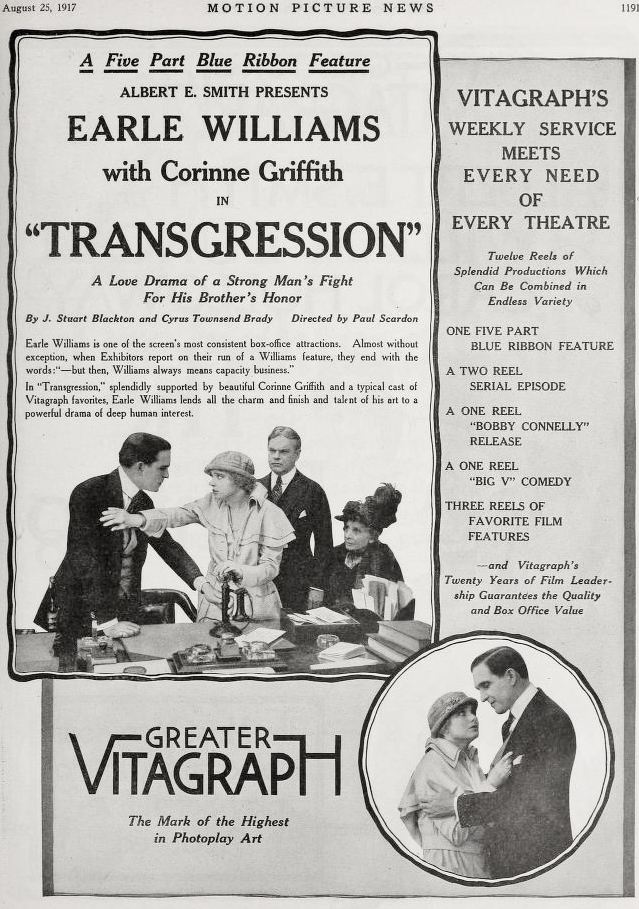
Dir: Paul Scardon
Hal Page, the weakling brother of Stephen Page, the town mayor, falls in love with Carline Shrefton, who throws over Burt Staley to entangle Hal in her self-serving schemes. Furious over her abrupt departure, Staley shows up at Carline's, and a jealous fight with Hal ensues in which Staley is shot and killed with Carline's gun. After Hal confesses to the deed, Stephen quietly sends him off to Spain. One year later, Stephen announces his engagement to Marion Hayward, the daughter of the district attorney, who is pressing charges against James Reed, a corrupt politician and Carline's new husband. To save Reed, Carline threatens Stephen with exposure, but he refuses to bend to her demands. Just days before Carline is to reveal her story about Staley, Hal appears and confesses to Hayward that Carline is the true killer. After verifying Hal's story, Hayward grills Carline, who finally admits her guilt. A matured Hal is restored to his family and Reed is sent away for his crimes.
View Details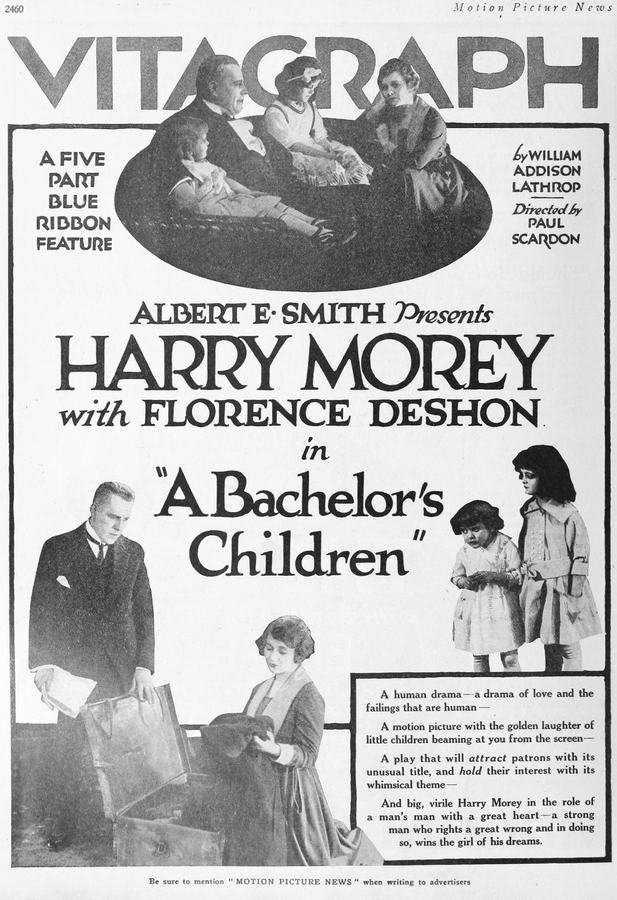
Dir: Paul Scardon
Young Hugh Jordan, the nephew of the man who robbed the Winthrop children, is earning his living out west when he comes into the millions of his thieving old uncle. Hugh goes east and settles down to a life of ease and enjoyment. He is entertaining a stag party at his home when the butler announces the arrival of the Misses Winthrop. A letter left by their father told them to go to Hugh Jordon, as he held a mining claim in trust for them. Penelope, the oldest girl, shows the letter to Hugh and he invites the orphans to remain until he has investigated the matter. It is all plain sailing after that, and Hugh marries Penelope and the fortune is kept in the family. There is a slight underplot involving a handsome widow, who tries to capture Hugh, and a most despicable specimen of the wealthy class who tries to ruin Penelope.
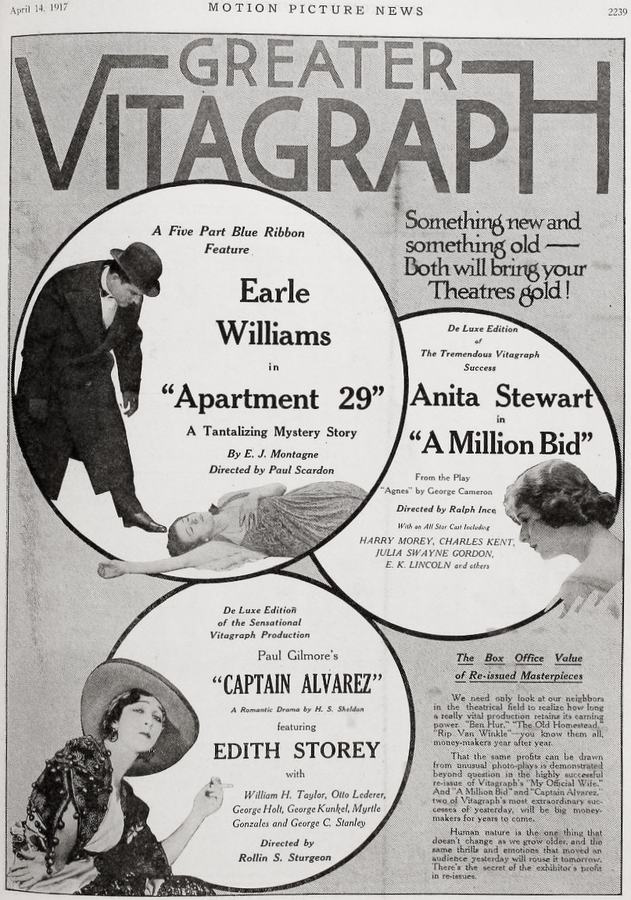
Dir: Paul Scardon
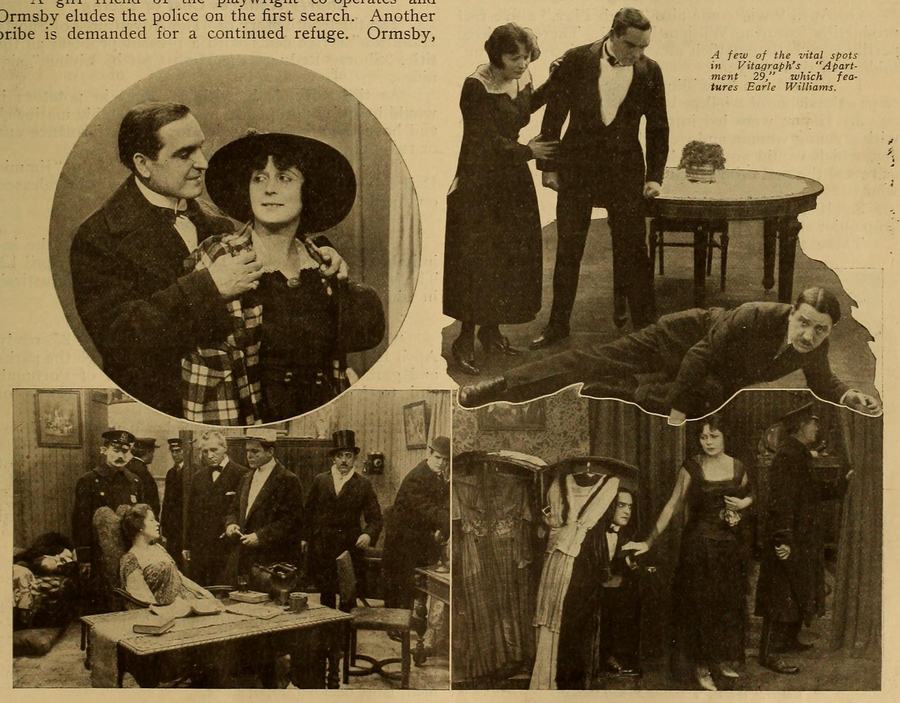
Stanley Ormsby, a dramatic critic, runs foul of an author and dramatic company who have just put on a new play which he announces as "rotten." On his way home from the play, after waiving aside the author's pleas for a merciful criticism, his adventures begin. He interferes between a couple quarreling on the street and is rebuffed. Later he gets an assignment from his editor to go to a certain apartment house to interview a singer. Entering the place he is diverted from his mission by a woman falling apparently dead at his feet, before the door of Apartment 29. Carrying her inside he finds her to be the woman of the quarrel, and there finds also her husband shot. There alone, he realizes suddenly that circumstances are against him and wishes to flee. The playwright, who lives in the same building, offers refuge, but in return asks a large sum of money, which Ormsby is only too glad to give. A girl in the playwright's apartment hides him while the police search the place. He has a dozen hairbreadth escapes and is finally shocked as the playwright demands a bribe to keep him hidden. Finally Ormsby escapes from the house with the girl, only to run into a nest of thugs, who attack him. He is then rescued by the very police, who then charge him with murder, after which...well, it winds up all right, but it was a hair-raising experience, mates.
View Details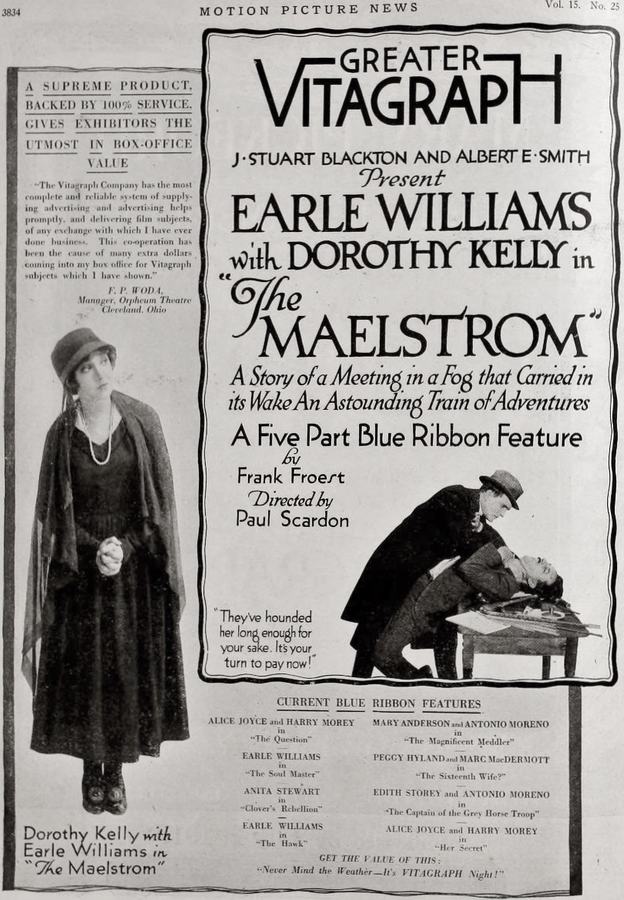
Dir: Paul Scardon
Jimmie Hallet is walking through a heavy fog one night when, seemingly out of nowhere, a girl appears, shoves a bundle of papers and a slip of paper with an address on it into Jimmie's hands, then disappears. Intrigued, he goes to the address on the paper, and is promptly knocked out by a blackjack. When he wakes up the next morning he discovers the dead body of a man named Greye-Stratton and learns that the "mystery girl" was Stratton's daughter Peggy. Jimmie soon finds himself questioned by the police about her father/s murder and mixed up with a gang of thieves and killers led by a mysterious thug named Ling.
Dir: Paul Scardon
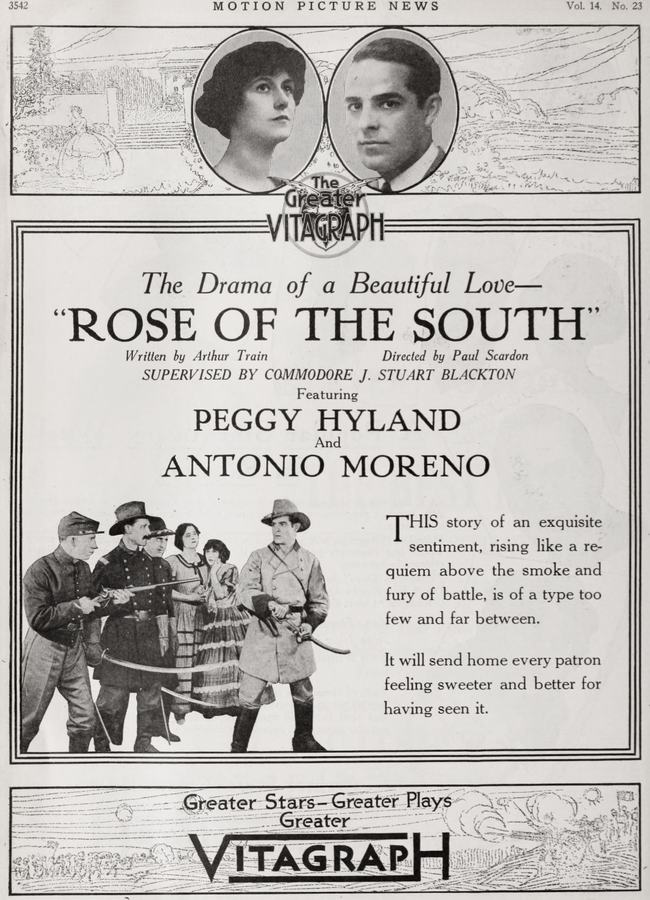
Mr. Curtis returns to his Alma mater and regales students with stories about the Civil War, which ended fifty years before. He tells them about his college friends, Dick Randolph and Watkins, who were at first rivals for Marian - who far preferred Dick - and then rivals on the battlefield. Watkins, a Union officer, captured Dick, a Confederate, but Marian helped her sweetheart escape. Watkins and Dick were then wounded in the same battle and died in each other's arms after asserting their friendship and forgetting their past differences. Back in the present, an aged Marian joins the group. She dies while listening to Mr. Curtis, and fifty years after she and Dick had been lovers in the flesh, her spirit goes to join his.
View Details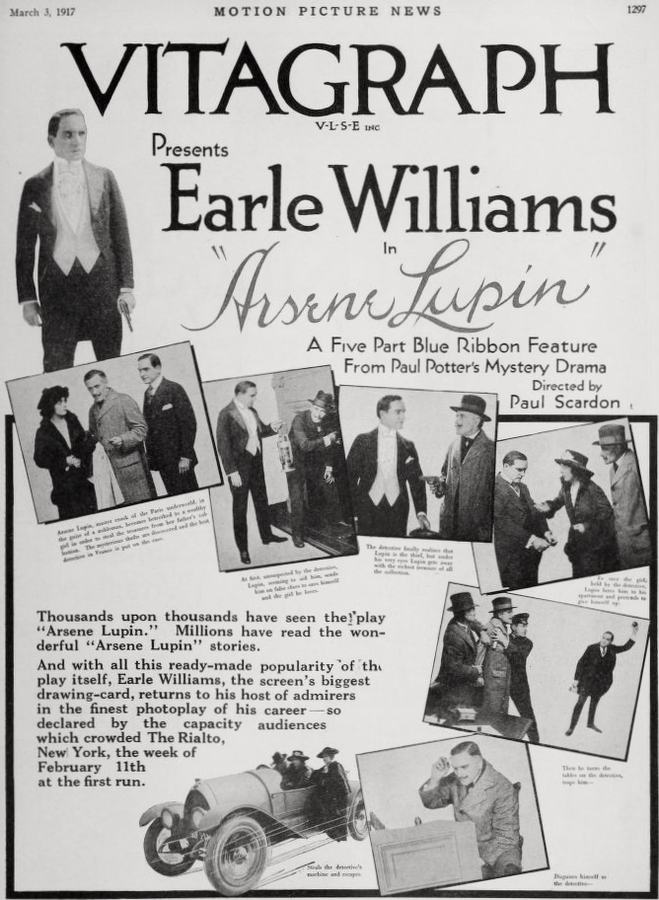
Dir: Paul Scardon
Gifted with charm of manner and a prepossessing appearance, Arsene Lupin, instead of employing his talents along legitimate lines, prefers to match his wits against those of the French police, with the result that he becomes the most celebrated crook of his time. Always after big game, he moves in the most exclusive circles of French society, and takes advantage of an opportunity to pass himself off as the Duke de Charmerace. Assuming the Duke's title and estates, he sets about the delicate task of stealing the rare works of art and the enormously valuable jewels belonging to a M. Guernay-Martin. As the first step in this direction he becomes engaged to Germaine, Guernay-Martin's daughter. Under the cloak of their hospitality he commits a series of audacious robberies, stealing old masters off the walls and always signing his name on the wallpaper to show he committed the theft. The distracted art collector calls in Guerchard, the shrewdest detective in Paris, but even under the nose of this sleuth, the thefts continue as before. Germaine's secretary, Sonla Kritchnoff, attracts more than the passing attention of Lupin and before he has finished with the Guernay-Martins he finds himself in love with her. Guerchard finally draws the net of suspicion so closely about Lupin that the latter is forced to leave the Guernay-Martin home and hide in his own apartment. Just before leaving he discovers that Sonia is also a thief, and the shock of this knowledge determines him to lead a straight life thereafter and take her along with him. Though Guerchard trails him to his hiding place he makes use of an ingenious concealed elevator and at the last exciting moment, slips from between the detective's fingers and escapes with Sonia to safety.
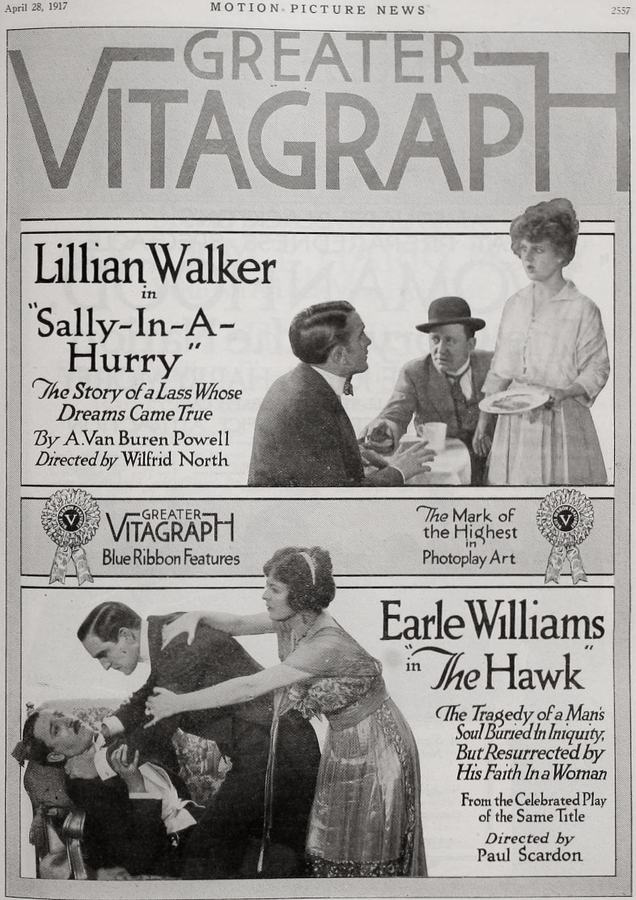
Dir: Paul Scardon
The Hawk, Count George De Dazetta, preys upon society with the aid of his beautiful wife. She seems to be in love with a young French nobleman, who is the real aggressor in this triangle. De Dazetta finds that the young nobleman's love for his wife is changing her for the better, that she begins to abhor his gambling profession and his inroads upon society. However, he continues to use her beauty as a lure to his gaming tables and wins heavily. In the meantime the nobleman breaks with a young woman aristocrat whom his mother wishes him to wed. During a transaction with an American from whom he borrows money to repay his gaming losses to De Dazetta the nobleman learns of the Hawk's love for his wife, and that she is helping her husband to win. Marina, the wife, washes her hands of the whole earning enterprise and is accused of infidelity by her husband, who tried to kill the nobleman. Failing, he leaves, and the nobleman protects the wife while attempting to locate the gambler and get his consent to a divorce. Finally this is effected, and Marina herself pleads for the divorce, that is until she learns that De Dazetta is now penniless, having lavished his every cent upon her and really loves her, and has consented to give her up only because he thinks it best for her future welfare. Her womanhood comes to the surface and she goes to him, renouncing the nobleman, her love for the latter having been without sin throughout.
View Details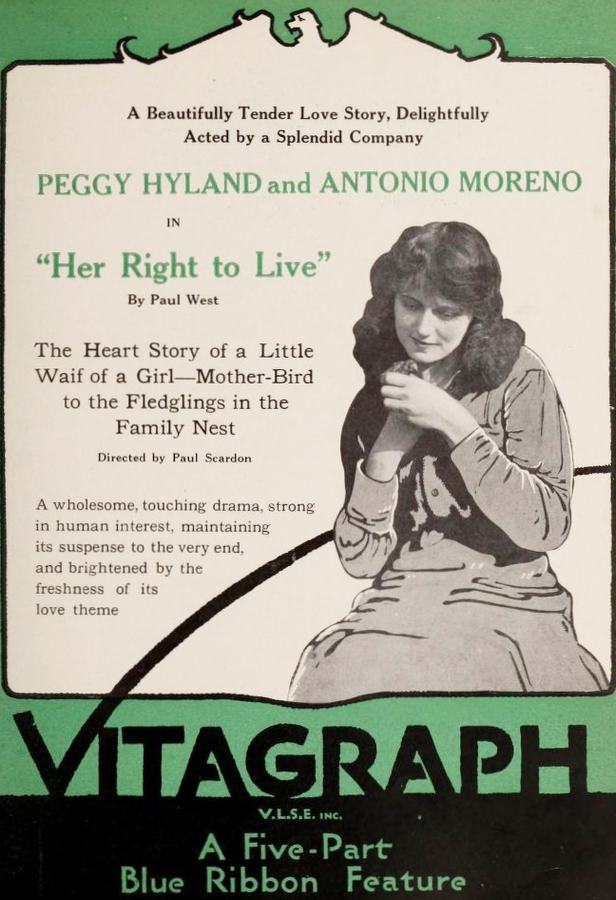
Dir: Paul Scardon
Polly Biggs helps care for her younger brother and sisters, while her widowed mother works hard as a seamstress to earn a living. Mayor Hoadley, Mrs. Biggs' brother, a crooked politician, calls to sympathize with her on the death of her husband, and Polly takes a dislike to him. Within a short time Mrs. Biggs dies and for the sake of appearances, Hoadley and his wife take the children to live with them. Oxmore, a reform candidate, opposes Hoadley's re-election. His son John, an artist, meets Polly and calls on her at the Hoadley mansion, where he saves her from the advances of Hawkins, a ward boss who "has something" on Hoadley. Hawkins threatens to "get" John for his interference, and the threat is heard by Hoadley. Polly and the children are treated so badly that they run away to the poorhouse, which later burns; Polly saves the children, and they wander to a bungalow in the woods, John, who owns the bungalow, finds them there, and permits them to stay all night. During the night Hoadley visits Hawkins and kills him in self-defense, using a cane that John has inadvertently left at his house, when John goes to town he is arrested. Polly and the children are his only alibi, and he cannot tell of Polly's presence. The evidence is strong against him, and if he is convicted his father will lose the election. Polly, who has been sent away by Hoadley, returns in time to straighten matters.
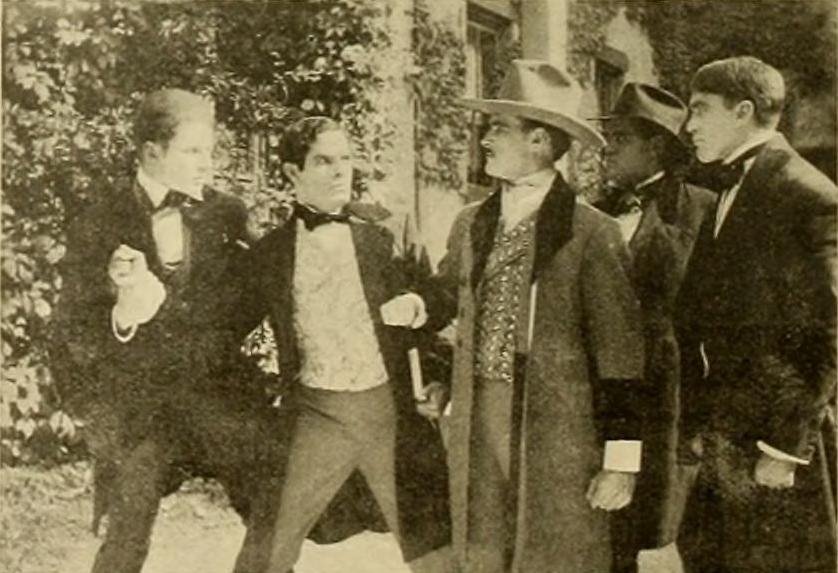
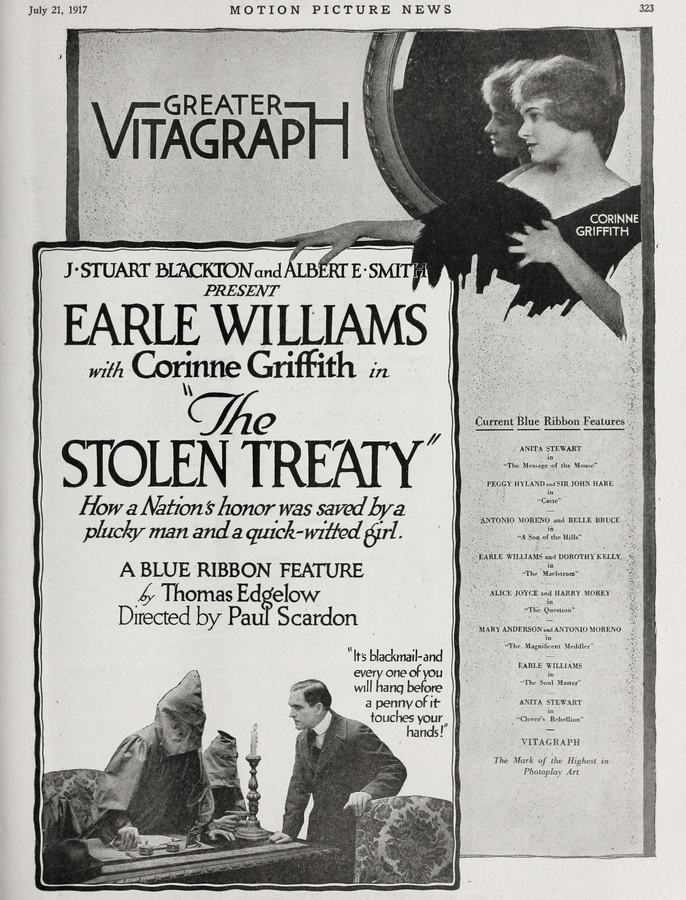
Dir: Paul Scardon
At a reception given for the vacationing Prince Zarl of Zorania, secretly the emissary of Zorania set on negotiating a treaty with the United States, Geoffrey Wynne, apparently a society dandy, but in reality a secret service agent, meets the prince. During the reception, Wynne is summoned to Washington where he learns that the treaty has been stolen and is being held for $15,000,000 ransom. Discovering that one of the thieves is an Italian named Farnelli, Wynne enlists the aid of his fiancée, Irene Mitchell, in apprehending the thief. Irene meets the Italian who offers to accompany her to New York. En route, Wynne overtakes them, chloroforms Farnelli and rips off his disguise to reveal Prince Zarl. Zarl then admits that he has stolen the treaty in order to cover his gambling debts.
View Details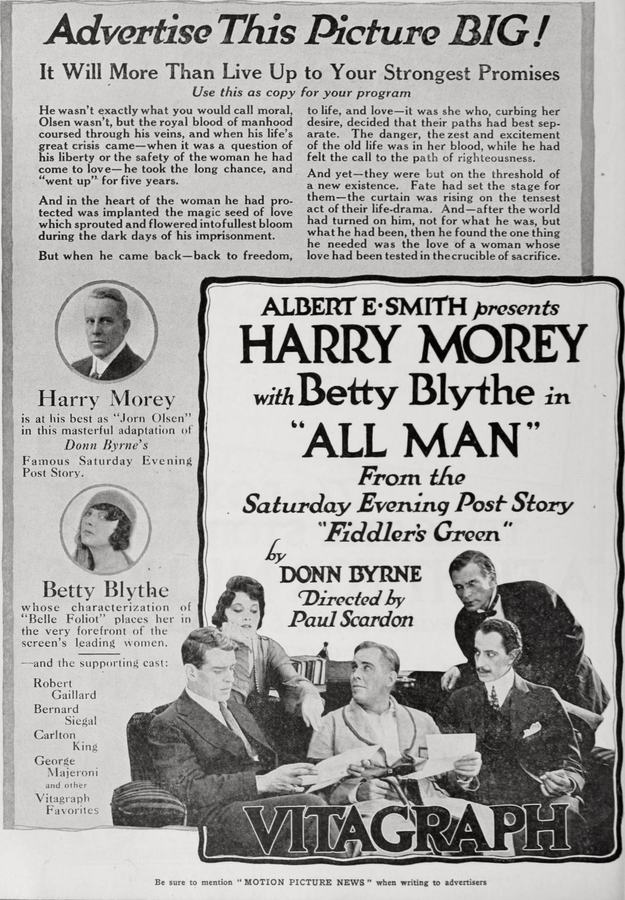
Dir: Paul Scardon
John Olsen, the foreman in an iron foundry, is persuaded by two of the workmen to rob the company safe, an operation so successful that the three decide to embark on a career of safe cracking. While pulling a job, John breaks his leg and is forced to take refuge in the home of Belle Foliot, whose husband is serving a life sentence. As she tends John's injured leg, Belle falls in love with him and decides to join the gang, and when she becomes trapped during a robbery, John remains at the scene of the crime so that she can escape. Following his five year prison term, John declares that he is going straight, whereupon Belle leaves him. John marries and buys a farm, but one day his arresting officer, Lieut. Reilly, appears and reveals his past to his wife and the townspeople. As a result, the farmers shun him and his wife divorces him. He is about to break into the bank when Belle and Reilly arrive. Promising to go straight, Belle accompanies John out West to a new life.
View DetailsAnalysis relative to The Island of Surprise
| Film Title | Atmosphere | Complexity | Similarity |
|---|---|---|---|
| Transgression | Surreal | Abstract | 90% Match |
| A Bachelor's Children | Surreal | Layered | 85% Match |
| Apartment 29 | Ethereal | Layered | 88% Match |
| The Maelstrom | Gritty | Dense | 96% Match |
| Rose of the South | Gothic | Linear | 85% Match |
This guide was algorithmically generated using the cinematic metadata of Paul Scardon's archive. Last updated: 6/23/2026.
Back to The Island of Surprise Details →