
DbcultAccessing Vault...
Recommendations
Senior Film Conservator
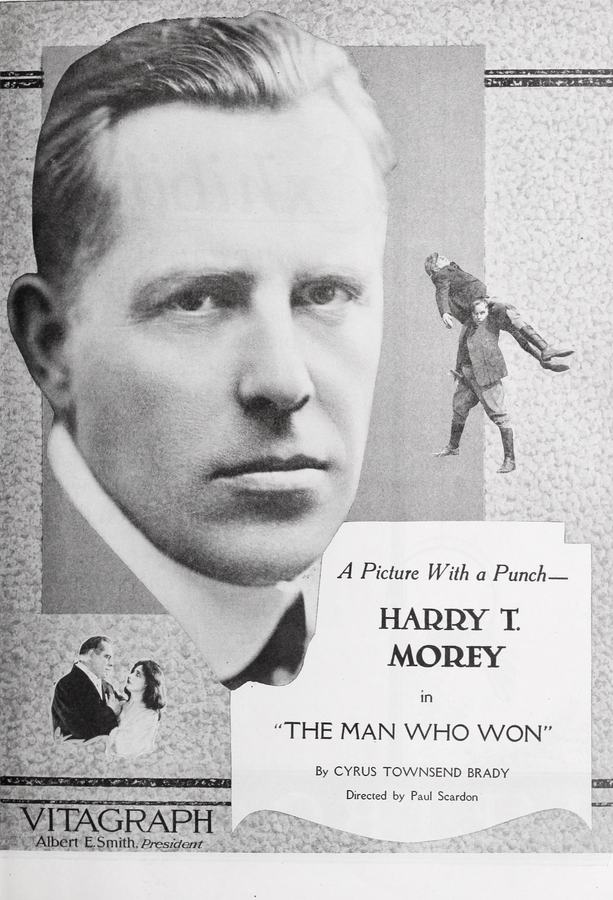
In the vast archive of cult cinema, The Man Who Won stands as a cult status beacon, it's essential to look at the contemporaries that shared this cult status. Our cinematic experts have identified several titles that reflect the spirit of 1919.
Few films from 1919 manage to capture to leave an indelible mark on the history of United States film.
Christopher Keene acquires a cache of platinum in Siberia, then travels across the Himalayas and the Malay Peninsula. After hiding the platinum for the U.S. government at Coos Bay, OR, Christopher is attacked by his Malaysian crew and he kills them in self-defense. A vacationer named Barbara Le Moyne comes upon the wounded and delirious Christopher, but while she seeks help, Christopher staggers onto a ship bound for San Francisco, California. Later, the clean-shaven Christopher has a second encounter with Barbara, but neither immediately recognizes the other. Barbara's fiancé, reputed Secret Service agent Henry Longfield, befriends Christopher, hoping to locate the hidden platinum. As affection develops between Barbara and Christopher, Longfield denounces his rival as a thief. Christopher convinces Barbara of his innocence, and when she triggers his memory of the Coos Bay incident, he leaves in search of the treasure. Upon locating the platinum, Christopher is set upon by Longfield and his gang. Barbara comes to the rescue with a real Secret Service agent and the gang is defeated. After learning that Longfield is a German spy tasked with returning the stolen treasure to his government, Christopher throws him over a cliff.
Critics widely regard The Man Who Won as a cult-favorite piece of cult cinema. Its cult status is frequently cited as its strongest asset, solidifying its place in United States's film legacy.
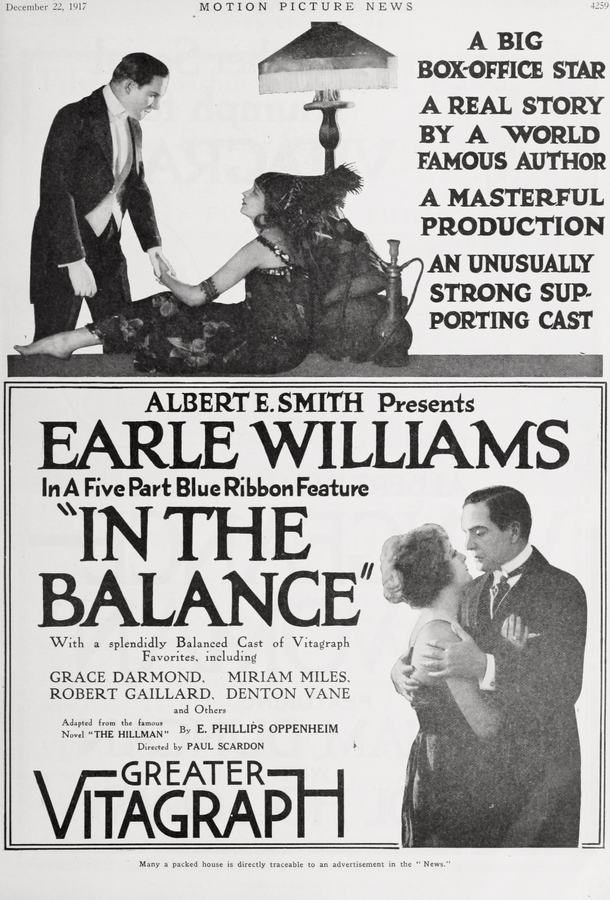
Based on the unique cult status of The Man Who Won, our vault has identified these titles as the most compelling follow-up experiences for fans of cult cinema:
Dir: Paul Scardon
The actress is on her way to visit the Prince in his castle when she is stranded on a lonely road by an accident to her motor car. The Hillman happens along and takes her to Peak Hall. He is still young and handsome, but marked by the stern fanatical belief of his family that no member of it ever should leave the hills. In an exchange of confidence, the Hillman warns the actress not to visit the dissolute Prince, and she in turn tells him that for once he should try the broader life of the cities. Both heed the other's advice. She returns to the city, and he, in a brief period, follows. The Prince, still pursuing the actress, seeks to entangle the Hillman by throwing a notorious dancer in his path, but fails. Strangeway, the Hillman, proposes to Louise, the actress, but she withholds her answer. His brother comes from the hills to reclaim him, but his mission is vain. Again the Hillman proposes to Louise, who is always in the company of the Prince, and this time is accepted. Angered at his apparent loss of the actress, the Prince makes a scandalous remark about her at his club, which is resented with blows by the Hillman, whose love is all but crushed, when hurrying to Louise she admits what the Prince said is true. The Hillman returns to Peak Hill where a few months later as he is reading in a paper of the engagement of the actress and the Prince, she arrives at his home. She assures him that she is good, not bad, and that she did make the promise to the Prince when she believed he loved her, and both the Hillman and his brother receive her as one of them.
View Details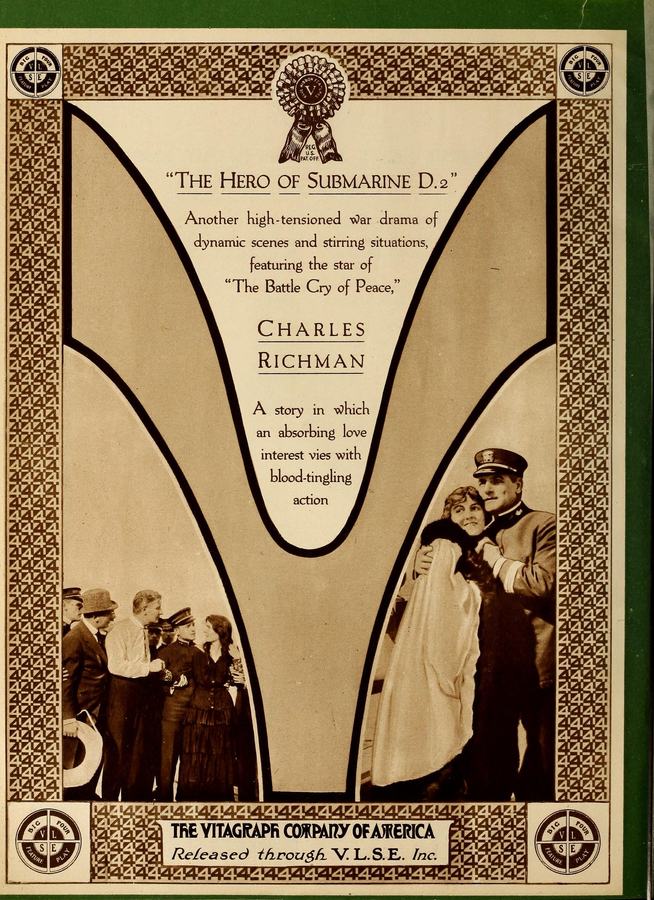
Dir: Paul Scardon
Lieutenant Commander Colton, U.S.N., is in love with Caroline Austen, daughter of a prominent political power in Washington. Colton has a rival in James Archer, a journalist of prominence, unscrupulous and secretly in league with the Ruanian Ambassador, who is endeavoring to obtain for his country inside information as to the United States naval resources. Gilman Austen, Caroline's brother, receives an appointment to the Naval Academy. He is much in love with Ethel McMasters, daughter of a superintendent, and pays so much attention to her that his term marks in navigation are so low as to preclude his passing the semi-annual examination. He is told of this by Captain McMasters, and Colton, Caroline Austen and Ethel McMasters then get busy in Oilman's behalf, Caroline working with Colton, who is in love with her. and Ethel attempting to influence her father, but these two officers absolutely refuse to exercise any influence in Oilman's favor. Mr. Austen, Sr., then takes a hand in the game, but finds naval men a different proposition from politicians, and as a result Gilman is forced to leave the Academy. Mr. Austen uses his power and has Colton transferred to the command of a collier. Gilman Austen, however, grits his teeth and 'lists in the navy as an apprentice, and here we see him carried through all his training experiences. Colton being of an inventive turn of mind and realizing the weakness of the submarines is in the battery, invents a new battery. Archer hears of this and informs the Ruanian Ambassador, who offers the traitorous journalist almost any sum to secure these plans. Archer is prevented from securing them by Gilman Austen, who is now a full-fledged able seaman, serving under the name of Roger Brown. The Ambassador then determines upon a big coup. He directs Archer, who now is completely in his power, to have a Ruanian merchant ship lay a series of mines in the channel through which the warships must pass. Colton has been placed in command of the submarine flotilla, and Gilman Austen is on duty with the D-2. Through Caroline Austen, Colton learns of the plot, and as the ships are due to arrive that night, Colton takes command of the D-2, goes out and submerges his boat. Time is precious, and Colton realizes that he cannot take the D-2 through the mines, so he has himself shot out of a torpedo tube and swims through the mines, goes on board the merchant ship and blows up the mines just before the fleet comes in. Colton is badly wounded and is rescued by Gilman Austen and the submarine crew. For his work in this action, as well as his general reputation and good character, Gilman Austen is sent back to the Naval Academy. Colton marries Caroline.
View Details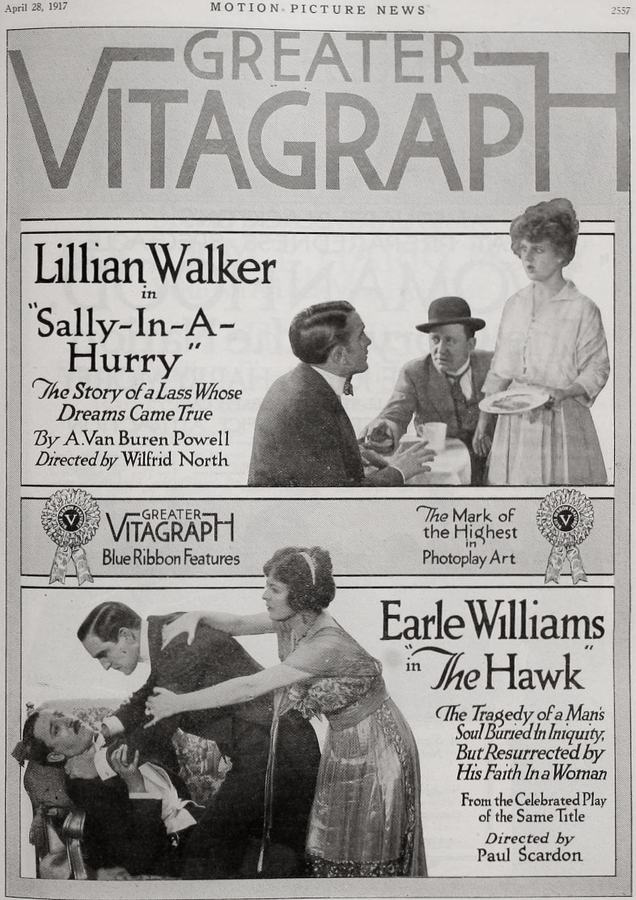
Dir: Paul Scardon
The Hawk, Count George De Dazetta, preys upon society with the aid of his beautiful wife. She seems to be in love with a young French nobleman, who is the real aggressor in this triangle. De Dazetta finds that the young nobleman's love for his wife is changing her for the better, that she begins to abhor his gambling profession and his inroads upon society. However, he continues to use her beauty as a lure to his gaming tables and wins heavily. In the meantime the nobleman breaks with a young woman aristocrat whom his mother wishes him to wed. During a transaction with an American from whom he borrows money to repay his gaming losses to De Dazetta the nobleman learns of the Hawk's love for his wife, and that she is helping her husband to win. Marina, the wife, washes her hands of the whole earning enterprise and is accused of infidelity by her husband, who tried to kill the nobleman. Failing, he leaves, and the nobleman protects the wife while attempting to locate the gambler and get his consent to a divorce. Finally this is effected, and Marina herself pleads for the divorce, that is until she learns that De Dazetta is now penniless, having lavished his every cent upon her and really loves her, and has consented to give her up only because he thinks it best for her future welfare. Her womanhood comes to the surface and she goes to him, renouncing the nobleman, her love for the latter having been without sin throughout.
View Details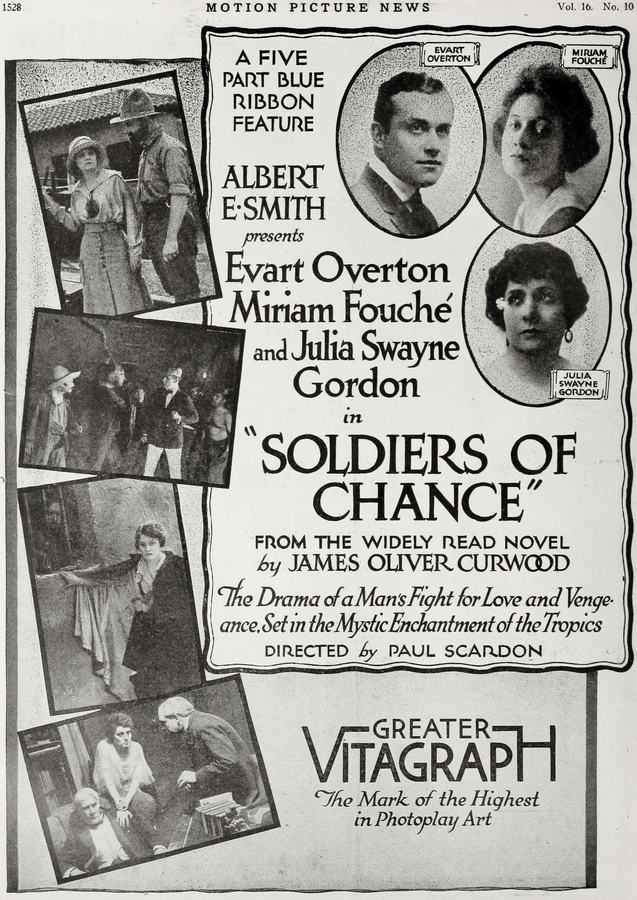
Dir: Paul Scardon
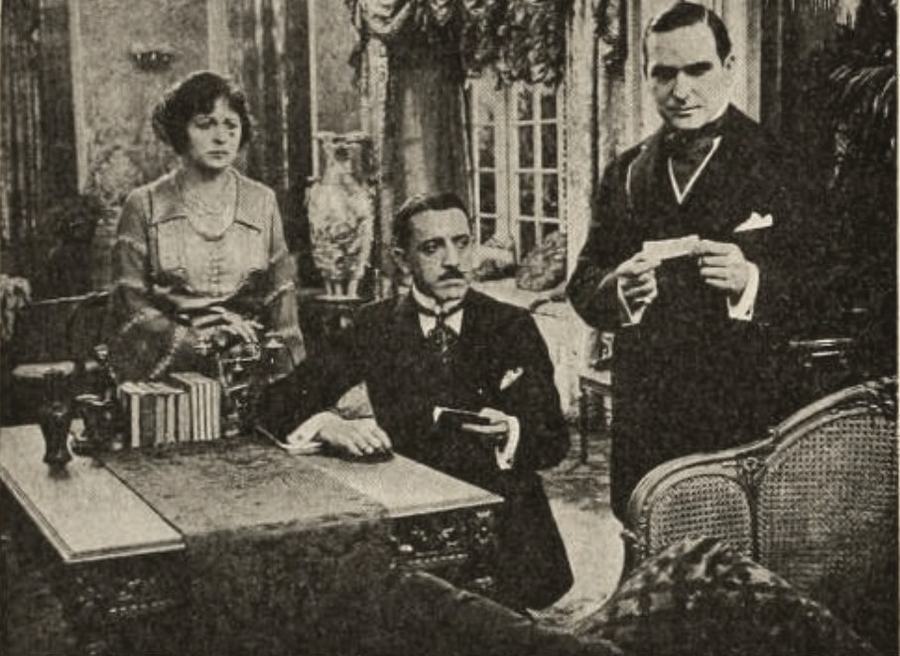
Lawler, a dishonest promoter, has Winton in his power, the latter believing that he has killed Yawkey, Lawler's partner. For his silence, Lawler demands the hand of Winton's daughter Josephine. Meanwhile, Billy Mountain, a man whom Lawler has swindled, arrives and, disguised by a heavy beard, interests his old enemy in a proposition. He invites Lawler on his yacht and makes him a prisoner. Josephine, fearing that Lawler will expose her father, accompanies them when they sail for a South American country involved in a revolution. When they land, Josephine frees Lawler, who joins the forces of the government. Billy and his partner, allied with the revolutionaries, plan an attack on the president and his forces. In the battle, Billy is captured and sentenced to death, but when the tide turns in favor of the revolutionaries, he escapes. With the appearance of Yawkey, Josephine is freed from Lawler's power and begins life anew with Billy.
View Details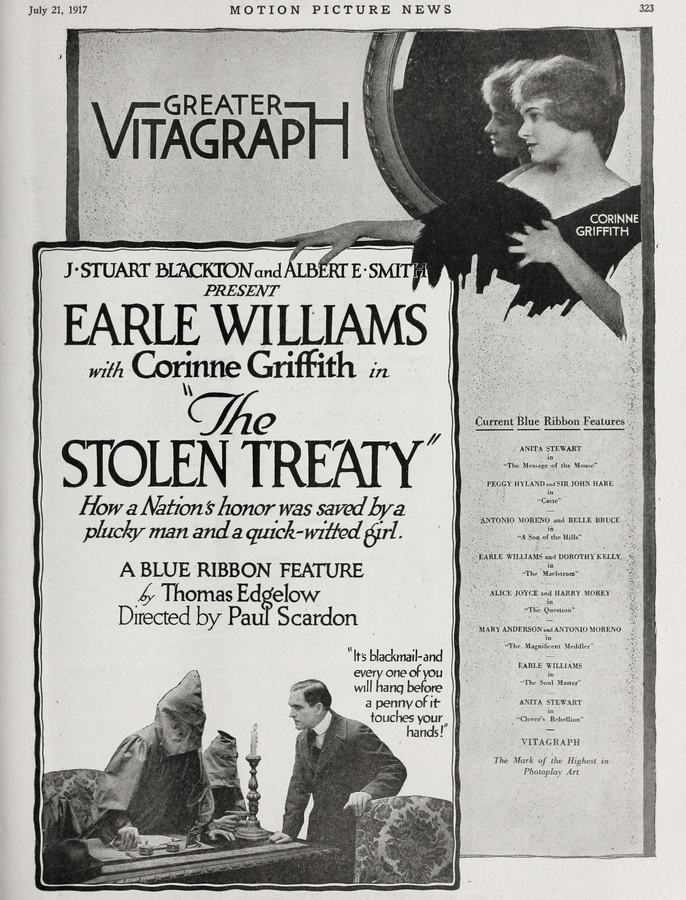
Dir: Paul Scardon
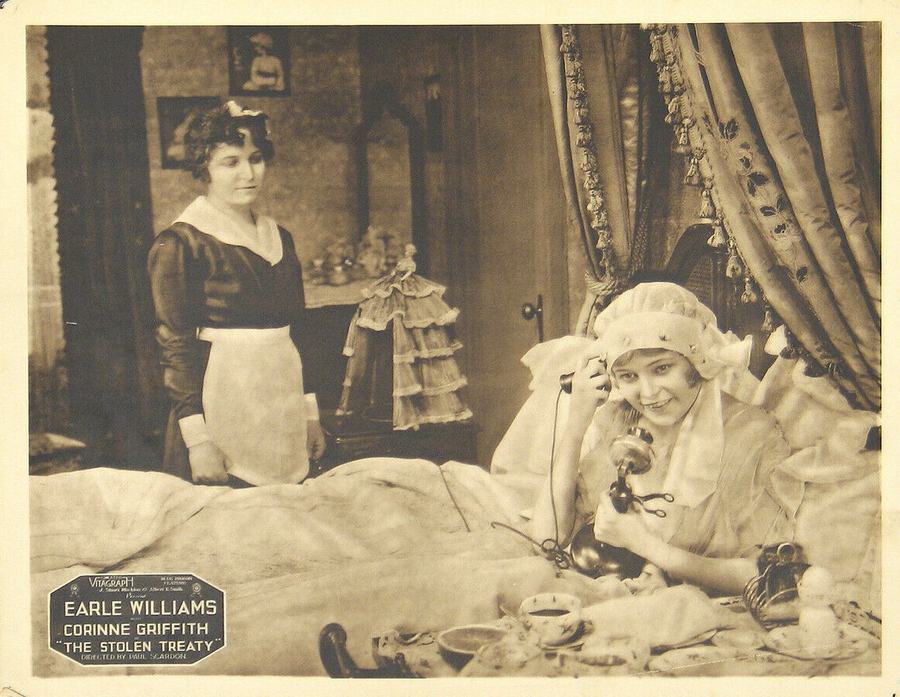
At a reception given for the vacationing Prince Zarl of Zorania, secretly the emissary of Zorania set on negotiating a treaty with the United States, Geoffrey Wynne, apparently a society dandy, but in reality a secret service agent, meets the prince. During the reception, Wynne is summoned to Washington where he learns that the treaty has been stolen and is being held for $15,000,000 ransom. Discovering that one of the thieves is an Italian named Farnelli, Wynne enlists the aid of his fiancée, Irene Mitchell, in apprehending the thief. Irene meets the Italian who offers to accompany her to New York. En route, Wynne overtakes them, chloroforms Farnelli and rips off his disguise to reveal Prince Zarl. Zarl then admits that he has stolen the treaty in order to cover his gambling debts.
View Details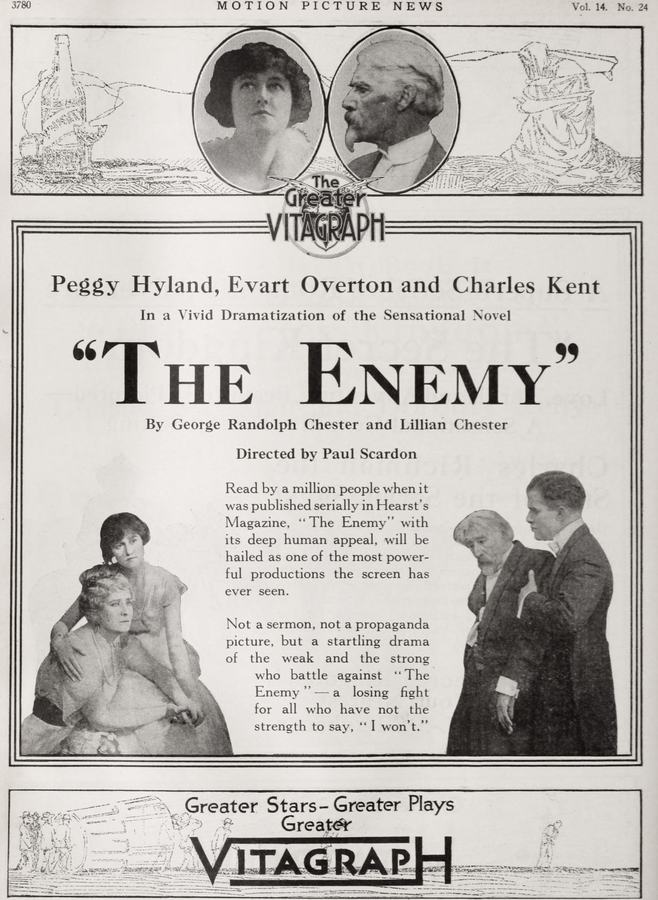
Dir: Paul Scardon
Famous architect Harrison Stuart is taken over with alcoholism and begins living in flop houses, he is saved by Billy Lane, a young architect who has always admired the older man. Lane reunites Harrison with his family and falls in love with Harrison's daughter. After announcing his engagement to her, however, Lane himself becomes an alcoholic when another woman, jealous of his fiancée, spikes his punch and tricks him into heavy drinking. Then Harrison gives in to his old habit but before submitting completely, he kills himself. The suicide brings Lane to his senses; he swears off drinking and returns to Harrison's daughter.
View Details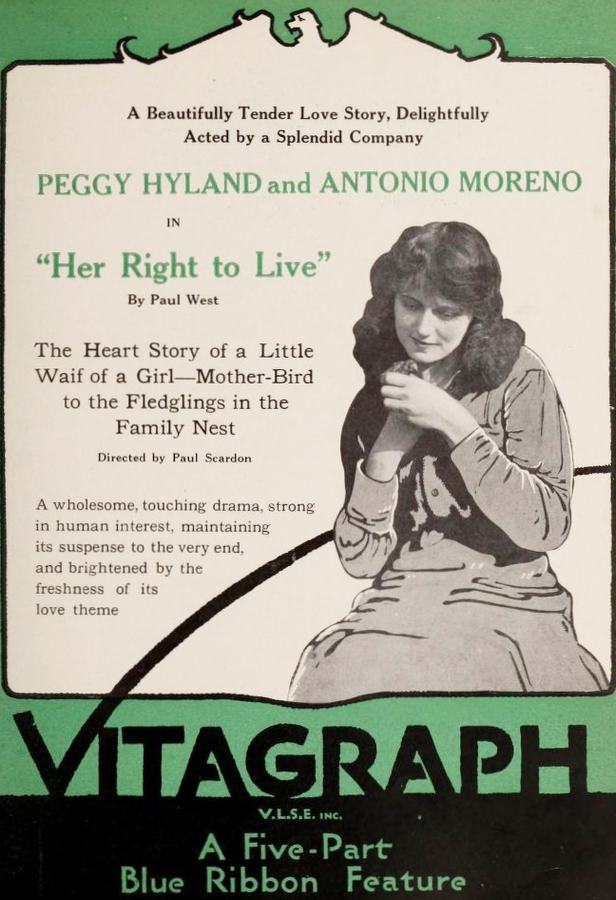
Dir: Paul Scardon
Polly Biggs helps care for her younger brother and sisters, while her widowed mother works hard as a seamstress to earn a living. Mayor Hoadley, Mrs. Biggs' brother, a crooked politician, calls to sympathize with her on the death of her husband, and Polly takes a dislike to him. Within a short time Mrs. Biggs dies and for the sake of appearances, Hoadley and his wife take the children to live with them. Oxmore, a reform candidate, opposes Hoadley's re-election. His son John, an artist, meets Polly and calls on her at the Hoadley mansion, where he saves her from the advances of Hawkins, a ward boss who "has something" on Hoadley. Hawkins threatens to "get" John for his interference, and the threat is heard by Hoadley. Polly and the children are treated so badly that they run away to the poorhouse, which later burns; Polly saves the children, and they wander to a bungalow in the woods, John, who owns the bungalow, finds them there, and permits them to stay all night. During the night Hoadley visits Hawkins and kills him in self-defense, using a cane that John has inadvertently left at his house, when John goes to town he is arrested. Polly and the children are his only alibi, and he cannot tell of Polly's presence. The evidence is strong against him, and if he is convicted his father will lose the election. Polly, who has been sent away by Hoadley, returns in time to straighten matters.
View Details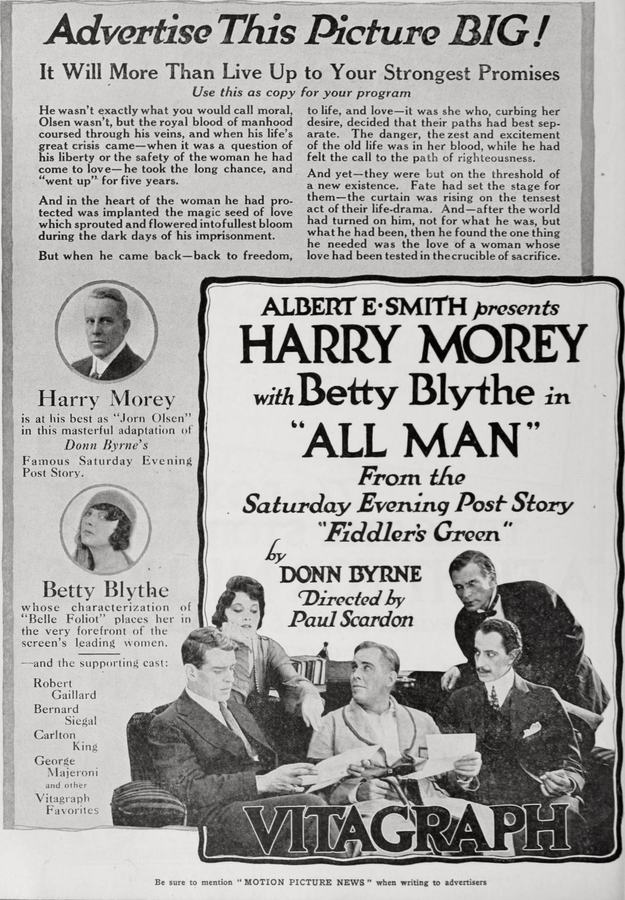
Dir: Paul Scardon
John Olsen, the foreman in an iron foundry, is persuaded by two of the workmen to rob the company safe, an operation so successful that the three decide to embark on a career of safe cracking. While pulling a job, John breaks his leg and is forced to take refuge in the home of Belle Foliot, whose husband is serving a life sentence. As she tends John's injured leg, Belle falls in love with him and decides to join the gang, and when she becomes trapped during a robbery, John remains at the scene of the crime so that she can escape. Following his five year prison term, John declares that he is going straight, whereupon Belle leaves him. John marries and buys a farm, but one day his arresting officer, Lieut. Reilly, appears and reveals his past to his wife and the townspeople. As a result, the farmers shun him and his wife divorces him. He is about to break into the bank when Belle and Reilly arrive. Promising to go straight, Belle accompanies John out West to a new life.
View Details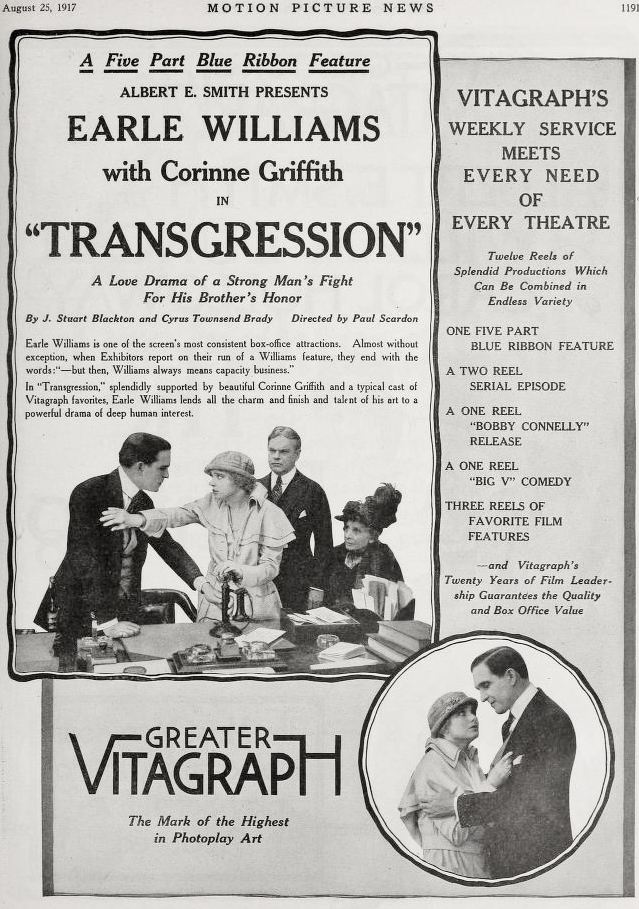
Dir: Paul Scardon
Hal Page, the weakling brother of Stephen Page, the town mayor, falls in love with Carline Shrefton, who throws over Burt Staley to entangle Hal in her self-serving schemes. Furious over her abrupt departure, Staley shows up at Carline's, and a jealous fight with Hal ensues in which Staley is shot and killed with Carline's gun. After Hal confesses to the deed, Stephen quietly sends him off to Spain. One year later, Stephen announces his engagement to Marion Hayward, the daughter of the district attorney, who is pressing charges against James Reed, a corrupt politician and Carline's new husband. To save Reed, Carline threatens Stephen with exposure, but he refuses to bend to her demands. Just days before Carline is to reveal her story about Staley, Hal appears and confesses to Hayward that Carline is the true killer. After verifying Hal's story, Hayward grills Carline, who finally admits her guilt. A matured Hal is restored to his family and Reed is sent away for his crimes.
View Details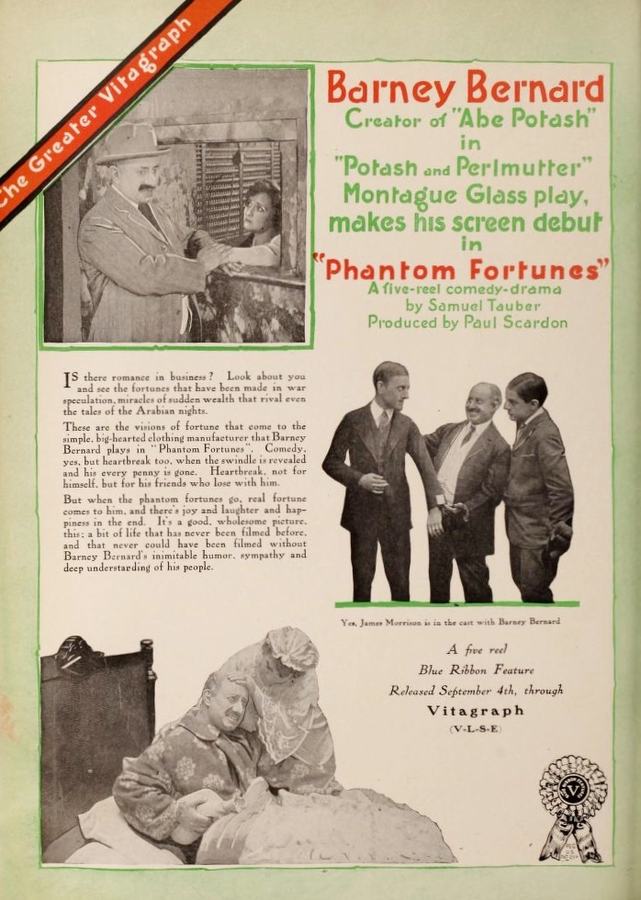
Dir: Paul Scardon
Bob Deering on his way to business meets his sweetheart, Molly Sherman. He arrives at Milliken and Co., stockbrokers, his place of employment, just in time to save Herman, Zalmon Pinsker's 14-year-old son, from a very rough engagement with the other messengers in the office. For this act Herman takes him to his father's shop and obtains a suit at wholesale, and it is here that Bob meets Ike Mandell, who is in love with Dora, the daughter of Pinsker. Previous to this meeting Pinsker re-engaged Mandell after having hired and fired him at least ten times, and also just previous to Bob's arrival with Herman, Moses Hecht and Israel Classman had an argument with Mandell, who, trying to look after Pinsker's business, tried to force them to pay certain notes which had been endorsed by Pinsker. Mrs. Pinsker and Dora arrive and realize that if Pinsker keeps up this pace of unorganized charity they will have little if any chance of obtaining the new dresses for which they came. Later the stock market closes on account of the war, and both Herman and Bob are out of a job. Bob calls upon Molly, who is a telephone operator in a hotel. There he meets "Red" Dorgan, who interests him in war orders. Clothing, sweaters, and shirts are needed for the allied armies, so Bob goes to Pinsker and agrees to get him a contract that will at once make him a rich man. Pinsker is overjoyed. Bob returns to Dorgan, and it is arranged that the manufacturer shall meet the commission. Ike Mandell has a cousin, Abie Lefkowitz, another clothing manufacturer, and he feels that if he can give Pinsker the double cross and get the business for Lefkowitz he will be able to marry Dora. Ike arranges with Dorgan to switch the order to Lefkowitz, who has to give Ike an advance commission of $8,000 for his work. Bob apprises Molly of what he has done for Pinsker, but she has her misgivings about Dorgan. The contestants for the big war order is requested by the commission, which has quarters in the hotel in which Molly is a telephone operator, to have samples of their goods at the commission's offices. The different clothing manufacturers comply, and when each at different times receives most encouraging reply concerning their samples each refuses domestic orders so that all time possible may be devoted to the commission's order. The hotel detective becomes suspicious and after a short conversation with a Scotland Yard man who has been on Dorgan's trail for months, they, with Bob, examine the commission's quarters. They are now firmly convinced that the scheme is a fake, and Bob conveys this information to Pinsker. He is greatly discomfited over the revelation, but Bob gets an idea which will net Pinsker a considerable sum. All the other clothing manufacturers are refusing domestic orders pending advices from the commission, so Bob helps Pinsker to corner the home market. This scheme is successfully executed. Ike Mandell, jealous, is busy instituting a strike among the employees, but his plan is soon frustrated by Bob. Lefkowitz scenting that something is wrong, goes to the hotel, where he is told of the fake affair. The crooks are captured. It is then that Lefkowitz tells of a $6,000 check and that it was made out to Bob. The police now go with Lefkowitz to the shop of Pinsker, where they try to fasten the check upon Bob, but he has given it to Dorgan, and Pinsker agrees that if his is the only signature on it, he, Pinsker, will make good for Bob. Molly goes to Pinsker, who introduces her to his new partner, Bob Deering, and assures her that she need not "hello" any more if she will marry this live businessman. Molly is pleased, and is further glad to know that Mandell has lost out with Dora, who is going to marry Glassman, who is now making his fortune through Bob's methods of wide-awake business.
View DetailsAnalysis relative to The Man Who Won
| Film Title | Atmosphere | Complexity | Similarity |
|---|---|---|---|
| In the Balance | Gothic | Linear | 90% Match |
| The Hero of Submarine D-2 | Surreal | Dense | 97% Match |
| The Hawk | Ethereal | Layered | 95% Match |
| Soldiers of Chance | Tense | Layered | 86% Match |
| The Stolen Treaty | Surreal | Abstract | 95% Match |
This guide was algorithmically generated using the cinematic metadata of Paul Scardon's archive. Last updated: 8/16/2026.
Back to The Man Who Won Details →