Summary
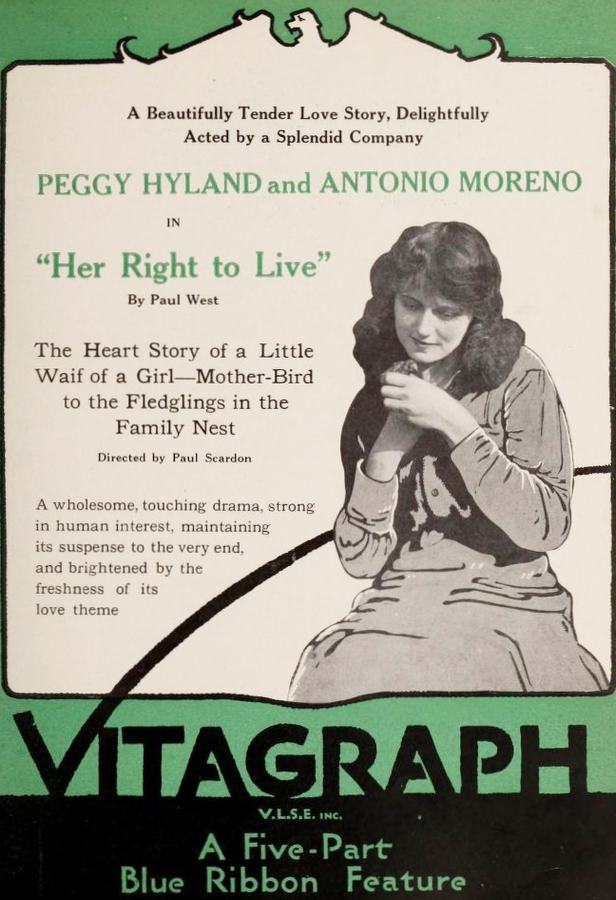
In the somber tapestry of early 20th-century urban life, Paul West's narrative, Her Right to Live, unfurls a gripping melodrama centered on the resilient young Polly Biggs. Burdened prematurely by the care of her younger siblings, Polly navigates a world rendered harsher by the untimely demise of her widowed mother, a tireless seamstress. Her sole remaining kin, Mayor Hoadley – a figure of insidious political corruption and her late mother's brother – ostensibly extends a hand of familial solace, yet his true intentions are quickly unmasked by Polly's discerning eye. This forced cohabitation within the Hoadley mansion becomes a crucible of neglect and abuse, compelling Polly and her charges to flee into the stark anonymity of the streets. Their desperate flight culminates in a harrowing escape from a burning poorhouse, leading them serendipitously to a secluded woodland bungalow, the sanctuary of John Oxmore. John, an artist and the scion of Hoadley's reformist political rival, has already crossed paths with Polly, having previously intervened to shield her from the predatory advances of Hawkins, a shadowy ward boss with incriminating leverage over the Mayor. A tragic twist of fate sees Hoadley, in a moment of self-preservation, dispatch Hawkins, inadvertently using a cane belonging to John. This act ensnares John in a web of circumstantial evidence, placing him on trial for murder. With his political lineage hanging precariously in the balance, John's only alibi rests with Polly and the children, a truth he cannot disclose without exposing their precarious, runaway status. The narrative crescendos as Polly, having been deliberately displaced by Hoadley, re-emerges with a resolute clarity, her return a pivotal force in unraveling the intricate knot of deceit and injustice, ultimately affirming her inherent right to shape her destiny and secure justice for those she cherishes.
Synopsis
Polly Biggs helps care for her younger brother and sisters, while her widowed mother works hard as a seamstress to earn a living. Mayor Hoadley, Mrs. Biggs' brother, a crooked politician, calls to sympathize with her on the death of her husband, and Polly takes a dislike to him. Within a short time Mrs. Biggs dies and for the sake of appearances, Hoadley and his wife take the children to live with them. Oxmore, a reform candidate, opposes Hoadley's re-election. His son John, an artist, meets Polly and calls on her at the Hoadley mansion, where he saves her from the advances of Hawkins, a ward boss who "has something" on Hoadley. Hawkins threatens to "get" John for his interference, and the threat is heard by Hoadley. Polly and the children are treated so badly that they run away to the poorhouse, which later burns; Polly saves the children, and they wander to a bungalow in the woods, John, who owns the bungalow, finds them there, and permits them to stay all night. During the night Hoadley visits Hawkins and kills him in self-defense, using a cane that John has inadvertently left at his house, when John goes to town he is arrested. Polly and the children are his only alibi, and he cannot tell of Polly's presence. The evidence is strong against him, and if he is convicted his father will lose the election. Polly, who has been sent away by Hoadley, returns in time to straighten matters.
Review Excerpt
"
In the annals of early cinema, where narratives often relied on broad strokes of emotion and stark moral contrasts, certain films emerge not merely as historical artifacts but as resonant echoes of timeless human struggles. Her Right to Live, a compelling silent drama from the pen of Paul West, stands as a testament to the era's capacity for profound storytelling, weaving a tapestry of political intrigue, familial devotion, and an individual's unyielding quest for justice. It is a ..."