
DbcultAccessing Vault...
Recommendations
Senior Film Conservator
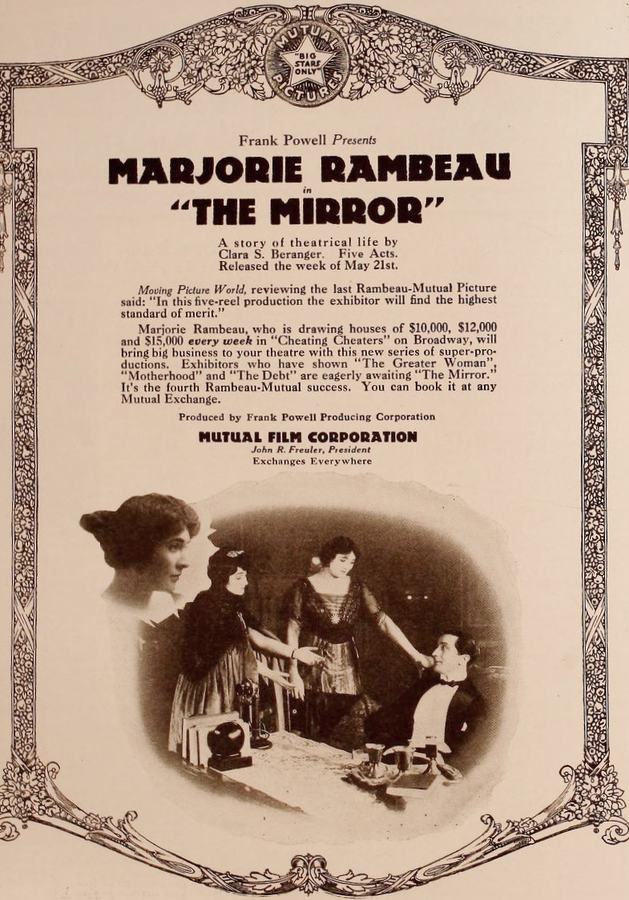
Witnessing the stylistic evolution of Frank Powell through The Mirror is profound, this cult landmark continues to dictate the rules of its category. If the cast impressed you, these next recommendations will too.
The synthesis of form and function in The Mirror to maintain its cult relevance across several decades.
Blanche Merrill, the handsome wife of a young artist who is seeking his way to fame, is surprised when her husband Bob, seeing her standing before a mirror, insists upon painting her portrait. The painting is exhibited and attracts the attention of Boyd, a theatrical manager and playboy who seeks Blanche out and entices her to leave her husband with promises of a theatrical career. Blanche leads a life of indulgence with Boyd until, feeling the pangs of dissolution, she awakens in her husband's arms to discover that it was all a dream.
Based on the unique cult status of The Mirror, our vault has identified these titles as the most compelling follow-up experiences for fans of cult cinema:
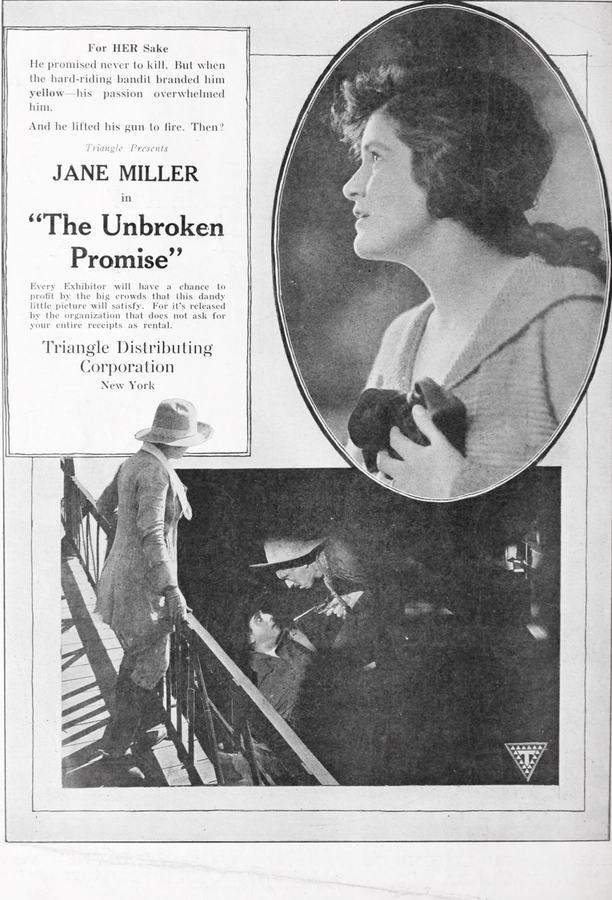
Dir: Frank Powell
Nell Loring, a Texas sheep rancher's daughter, stops a fight between her father and his neighbor John Corliss, a cattleman, who have feuded for years. Although John loves Nell, he keeps it secret when she promises to marry his errant brother Billy if he stops drinking. After John rescues Nell from a runaway horse, though, she confesses that she really loves him. Worried about the feud, Nell makes John promise never to kill anyone. After Billy is wounded in a barroom brawl, John refuses him money until he reforms. Angered, Billy plots with Fadeaway, a cowboy John dismissed, to rob John's safe. John remembers his promise during his subsequent fight with Fadeaway and only punches him soundly. After Fadeaway is killed by the sister of a woman he betrayed, John, believing that Nell killed him, plants evidence to convict himself. Although Billy, now reformed, tries to take the blame, the murderer's written confession frees John to marry Nell.
View Details
Dir: Frank Powell
Alaire Austin runs a cattle ranch along the Texas-Mexican border with her corrupt husband Ed. After Texas ranger Dave Law saves her from dying of thirst in the desert, the two fall in love. Mexican bandit Longorio, who longs to possess the beautiful Alaire, orders his men to kill her husband and take control of the ranch. The bandit captures Alaire and forces an old priest to marry them, but before the ceremony can be performed, Dave arrives and secretly marries her himself. The couple escapes and seeks refuge in a little house just inside the Mexican border, but Longorio's men pursue them and set the building on fire. Just in time, a force of United States cavalrymen arrives and conducts the couple across the Rio Grande to safety.

Dir: Frank Powell
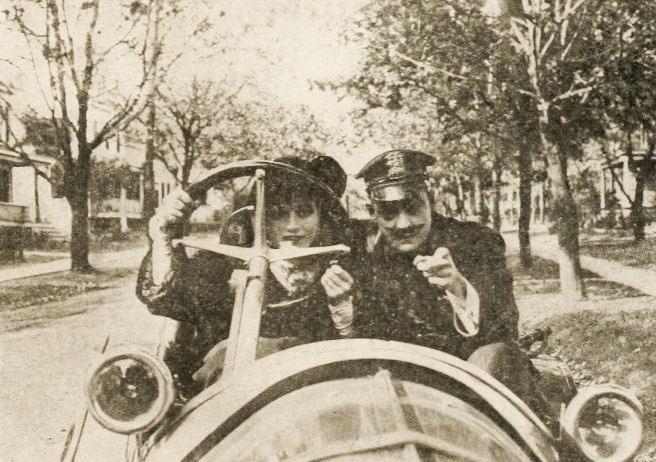
Travers Gladwin, a young millionaire, returns incognito from abroad with his Japanese servant, Bateato, after cabling his chum Whitney Barnes to meet him that evening at the Gladwin mansion. Al Wilson, a picture thief, arrives from Europe the same afternoon. He has obtained keys to the Gladwin mansion from a dismissed servant of Gladwin's and, parading under the other's name, wins the love of romantic Helen Burton with whom he plans to elope at ten thirty that night. Bateato goes to the mansion at once and excites the suspicions of Phelan, "Officer 666," whom he finally satisfies as to his identity. A few minutes later Whitney Barnes reaches the home, followed shortly after by Travers. This visit is interrupted by the arrival of Helen Burton and her friend, Sadie Small, and Helen explains that she intends that evening to elope with her sweetheart, Travers Gladwin. Amazed at first, Travers scents trouble and then pretends an intimate friendship with Gladwin. Barnes, under the influence of a brilliant idea, takes Sadie aside and advises that she tell her aunt of the proposed elopement. Both girls leave, promising to return at 10:30. Gladwin at once determines upon a plan, brings in "Officer 666," borrows his uniform and, sending Phelan to the kitchen with Bateato, goes into the street, where he purchases a false mustache and returns. Sadie and her aunt call and Gladwin hides, leaving Phelan and Barnes to face the music. After threatening to have them arrested, the two women leave in high dudgeon, the house is darkened and Barnes and Phelan go into the kitchen to entertain themselves in anticipation of Wilson's visit. Promptly at ten, Wilson slips into the house and begins cutting valuable oil paintings from their frames. He is surprised by the sudden appearance of Gladwin in Phelan's uniform and immediately puts the pseudo-policeman to work helping him pack the canvases. Helen arrives and does not recognize Gladwin in his false mustache and policeman's uniform, but when Wilson goes upstairs for a moment, Travers quickly explains the situation, advising Helen to be quiet to avoid scandal. In the meantime the excitable Japanese, Bateato, alarmed at the strange doings, brings a captain and two patrolmen toward the house. Phelan enters the parlor and demands the return of his uniform, explaining the matter to Wilson. Travers dares not tell the truth for fear of implicating Helen for whom he has already formed a strong attachment. Thus Wilson easily brands Gladwin as the real thief. Meantime at Phelan's approach, Helen hides herself in the hallway clothes closet. At this juncture the police enter with the Japanese and Phelan denounces Gladwin. The captain praised Phelan and sends him on his beat. The Japanese, seeing a door partly open, reaches in and drags Helen into the parlor. Barnes, attracted by the noise, enters from the kitchen and a patrolman promptly claps the handcuffs on that unfortunate gentleman, much to his subsequent misery and woe. Helen takes advantage of the confusion to slip into the closet. The situation is further complicated by the arrival of Sadie and her aunt with a half dozen policemen. One of them takes a long look at Wilson, recognizes him as an old offender and steps forward to arrest him. Instantly Wilson throws the room into darkness and jumps unseen into a large chest. The police scamper in all directions, leaving Gladwin alone in the parlor. A moment later Wilson emerges, revolver in hand, and exchanges some pleasantries with Gladwin, who for Helen's sake is anxious that the thief should escape. A fresh wagonload of police arrive and among them Phelan, who, seeing Galdwin at liberty in the parlor, promptly leaps upon him. The captain enters and upbraids Phelan and leaves with Gladwin to search the roof. Wilson takes advantage of the opportunity to step from behind the portieres, chloroform Phelan, don his uniform and toss him into the big chest. Then he calmly walks into the street, informs the wagon-driver that he is wanted inside by the captain, and coolly makes his escape on the driver's seat of the empty patrol. Meanwhile in the library Barnes, still handcuffed, after failing in his desperate effort to embrace Sadie, brings her into the parlor where Travers and Helen are engaged in rescuing the unhappy Phelan. And when Sadie makes a promise to Barnes and Helen to Travers, that wealthy young gentlemen makes another to Phelan, that uniform or no uniform there will always be a job waiting for "666."
View Details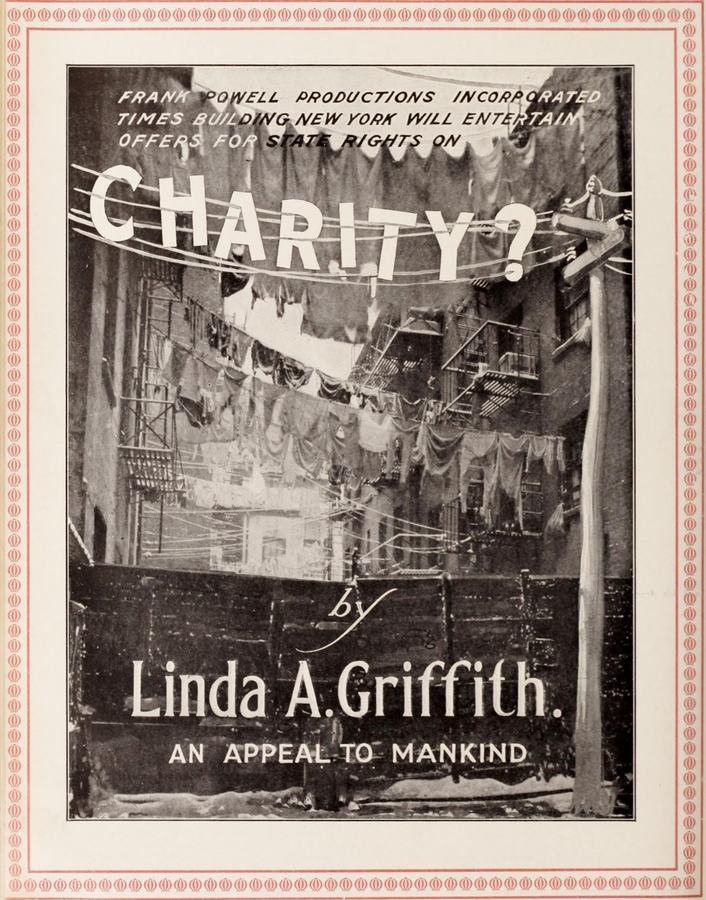
Dir: Frank Powell
A fascinating piece of cinema that shares thematic elements.
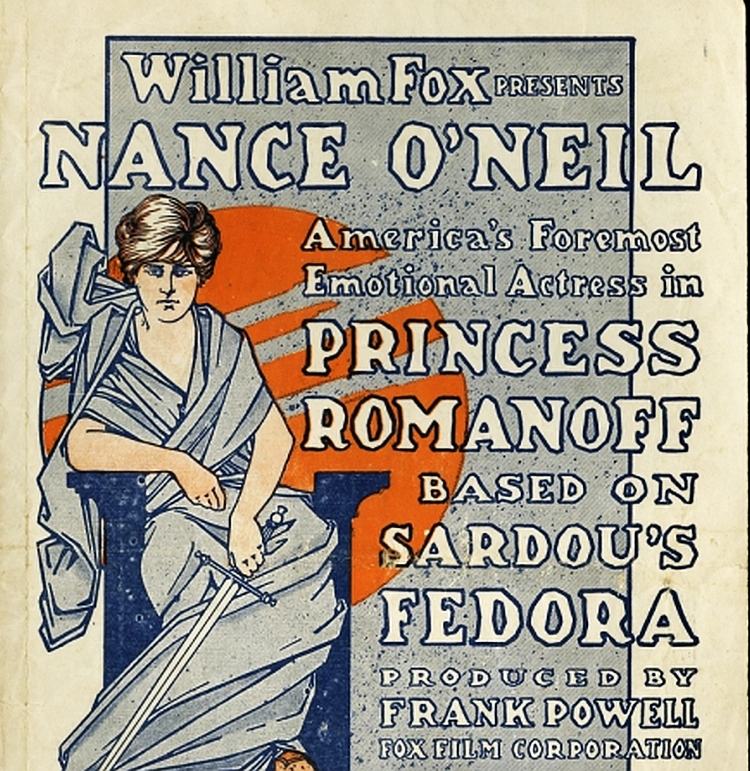
Dir: Frank Powell
Princess Fedora Romanoff, a wealthy, beautiful St. Petersburg widow, is betrothed to Vladimir Boroff, a young man of high social position in the Russian capital. On the eve of their wedding, Vladimir is murdered and Princess Fedora, transformed by the tragedy from a gentle, loving woman into a tigress, vows to devote her life to finding and punishing the slayer of her beloved. Her quest takes her to New York City.
View Details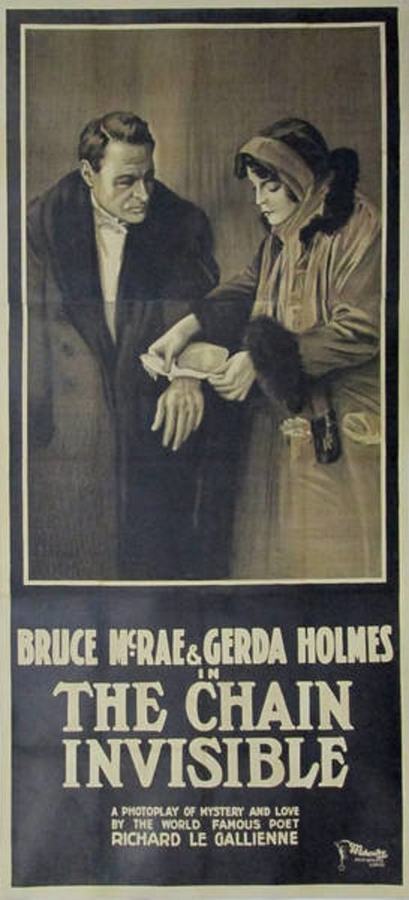
Dir: Frank Powell
James Wadsworth sets his sights on lovely society girl Anna Dalton and determines to marry her. To achieve that goal, he follows her everywhere she goes, including on a ship to South America. He comes up with a plan to make her love him: he throws her overboard, follows her over the side, and swims with her to a deserted island. His somewhat unorthodox method works and he wins over Anna, but problems arise when Richard Towne, Anna's fiancé who has been searching for her, finds the island and discovers the two.
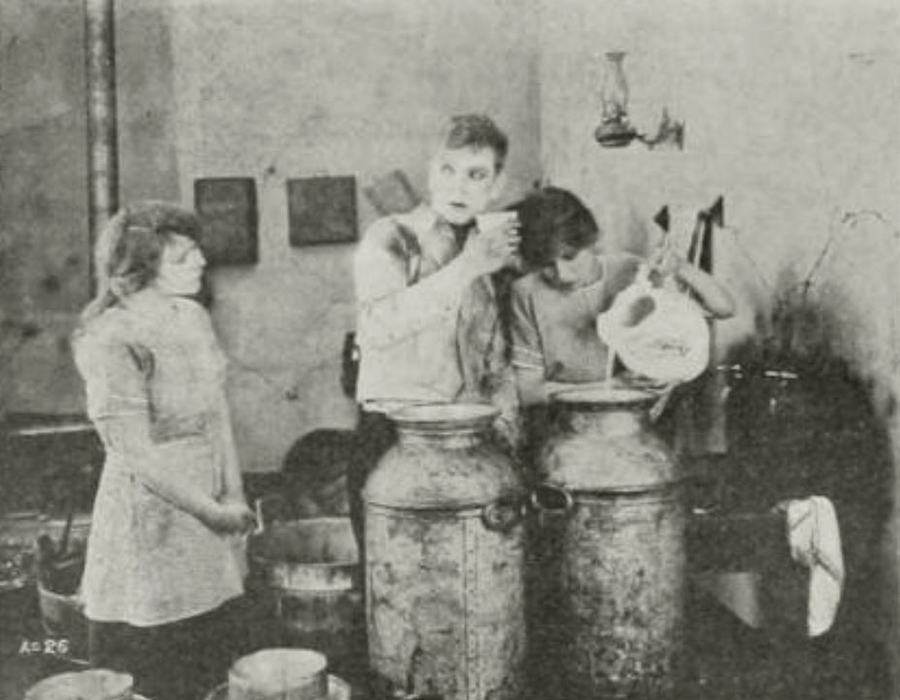
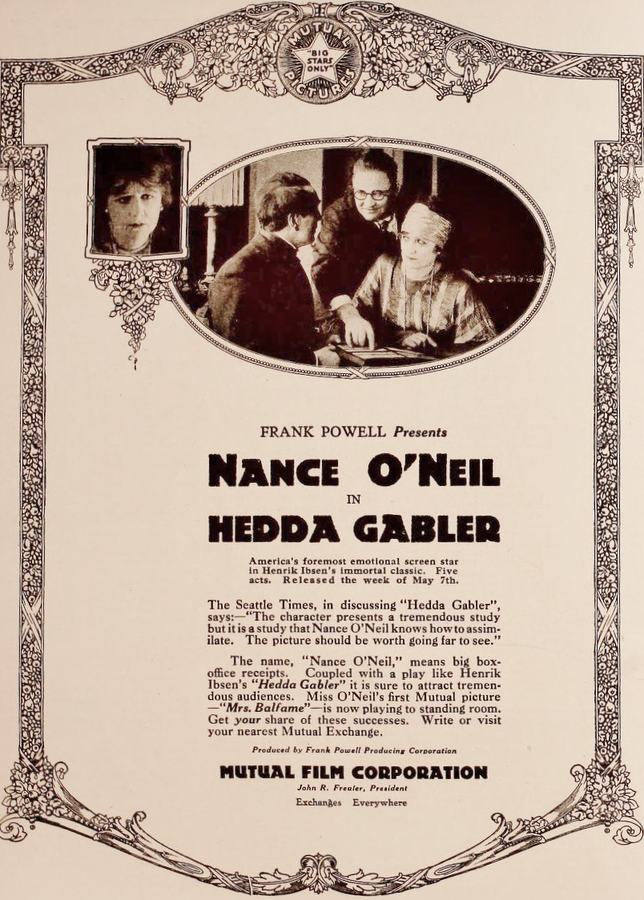
Dir: Frank Powell
Hedda Gabler, the degenerate daughter of a drunken, dueling father, has just returned with her husband, George Tesman, from their honeymoon. Hedda, who possesses an uncanny affection for her father's pistols, lives in jealous watchfulness over Ejlert Lovberg, a former lover whom she often pictures in Tesman's place, in her imagination. Lovberg, while under the positive influence of Thea Elvsted, has written an important book, and Hedda, learning this, sets out to recapture Lovberg's affection, whereupon he takes to drinking, loses the manuscript, and is cast into despair. Tesman finds the manuscript, which Hedda then obtains from him. Lovberg then breaks with Thea and goes to Hedda. She shows him her pistols; he takes one and goes to Thea's home where, in her arms, he shoots himself. Hedda, after burning the manuscript that she regards as the child of Lovberg and Thea, shoots herself as well.
View Details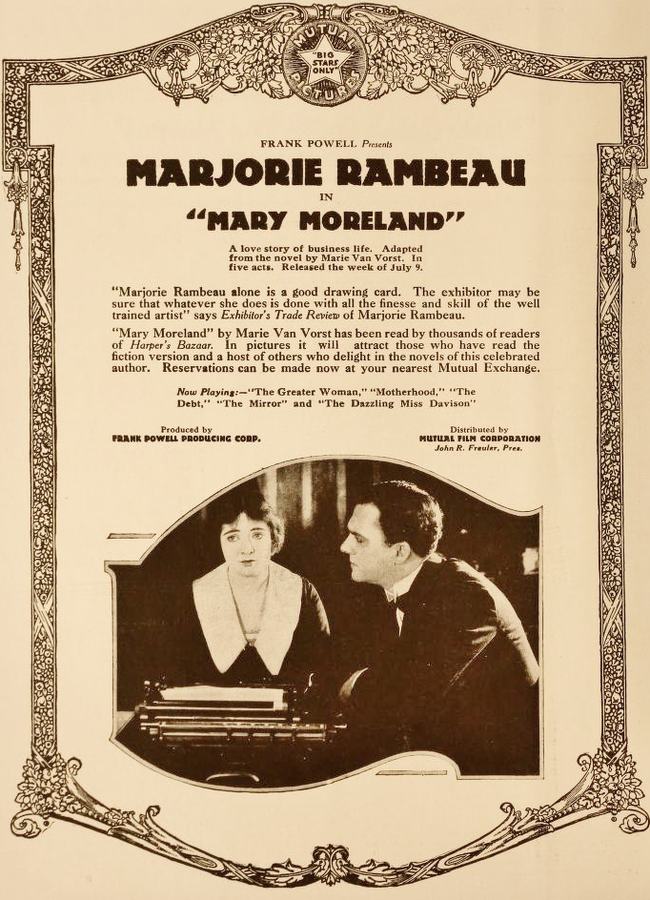
Dir: Frank Powell
Wealthy Wall Street broker Thomas Maughm finally decides to divorce his spendthrift and reckless wife, and dictates a letter to that affect to his stenographer, Mary Moreland. While dictating the letter, he realizes that he is actually in love with Mary; when he tells her this, she confesses that she loves him, also, The pair make plans to meet in Boston later that night, but before Mary leaves, Maughm's wife confronts her and tells Mary that she still loves her husband. Ashamed, Mary convinces Maughm to go back to his wife. Complications ensue.
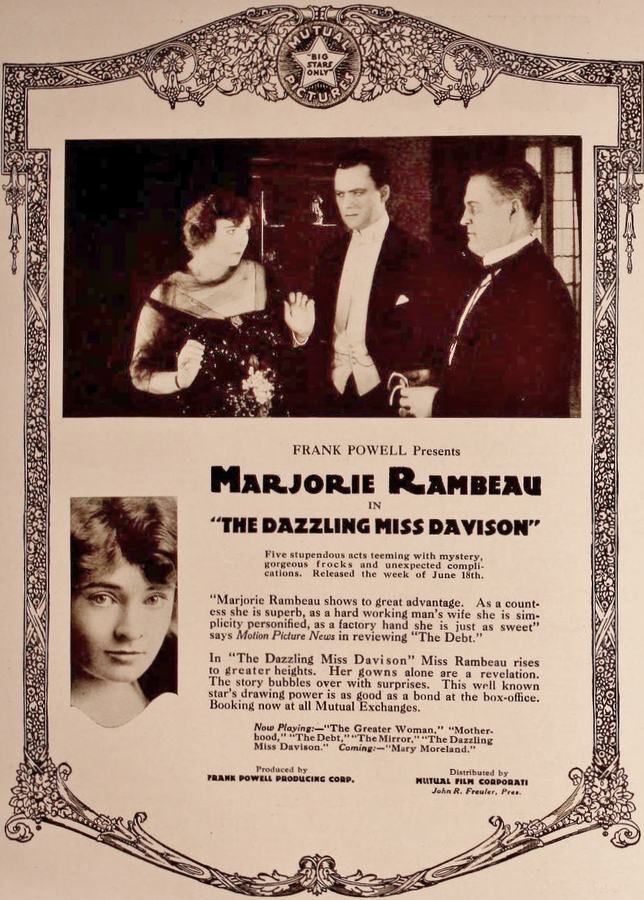
Dir: Frank Powell
Young society rake Gerard Buckland spies a pretty girl walking down the street. As he tries to figure out a way to approach her, he sees a disreputable-looking man surreptitiously hand her a diamond necklace, which she hides on her person before fading into the crowd and disappearing from sight. Later that day he visits a friend's home, and is astounded to meet that same girl. During their conversation she claims that, as a lark, she picks her friends' pockets of valuables and gives them back later--but Gerard doesn't quite buy it. It turns out that she is, in fact, not what she says she is, but not in the way Gerard thinks.
View Details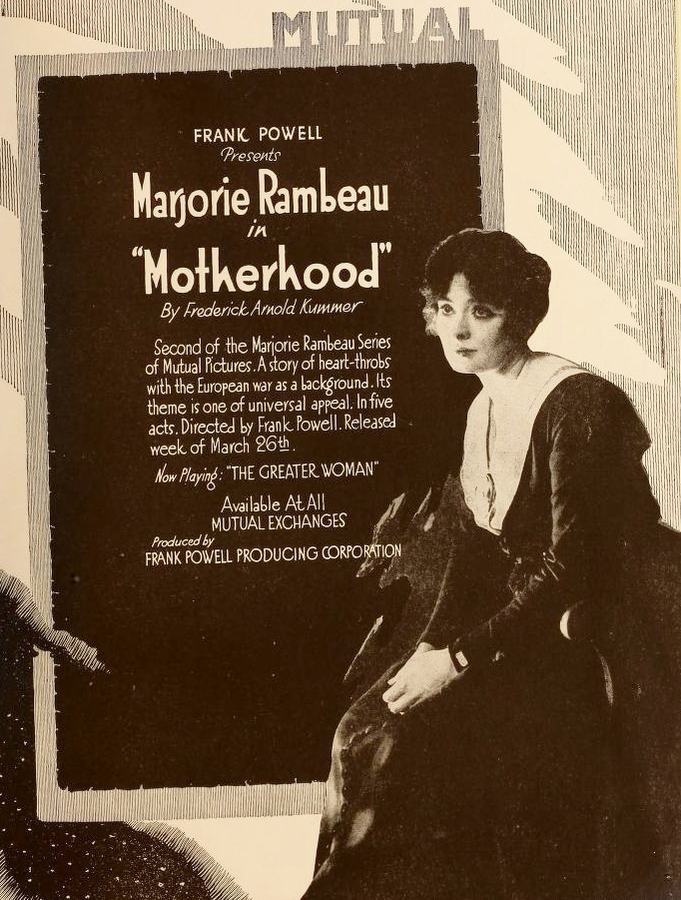
Dir: Frank Powell
The husband and wife of a typical American family read the story of Albert and Louise, European peasants. Albert, called to war, is able to come home but once during the conflict. The captain of the enemy takes up his headquarters in Albert's house and forces his attention upon Louise. War over, Albert returns home rejoicing in the news of the birth of a son. He is told Louise has never looked at or touched the baby. Demanding an explanation Louise tells of the visit of the captain. Albert would kill the child, but Louise's motherhood asserts itself and she saves its life. The American family rejoice on completing the story that America is at peace.
View DetailsAnalysis relative to The Mirror
| Film Title | Atmosphere | Complexity | Similarity |
|---|---|---|---|
| The Unbroken Promise | Gritty | High | 88% Match |
| Heart of the Sunset | Ethereal | Dense | 93% Match |
| Officer 666 | Ethereal | Dense | 89% Match |
| Charity | Surreal | High | 86% Match |
| Princess Romanoff | Surreal | Abstract | 94% Match |
This guide was algorithmically generated using the cinematic metadata of Frank Powell's archive. Last updated: 8/16/2026.
Back to The Mirror Details →