
DbcultAccessing Vault...
Recommendations
Senior Film Conservator
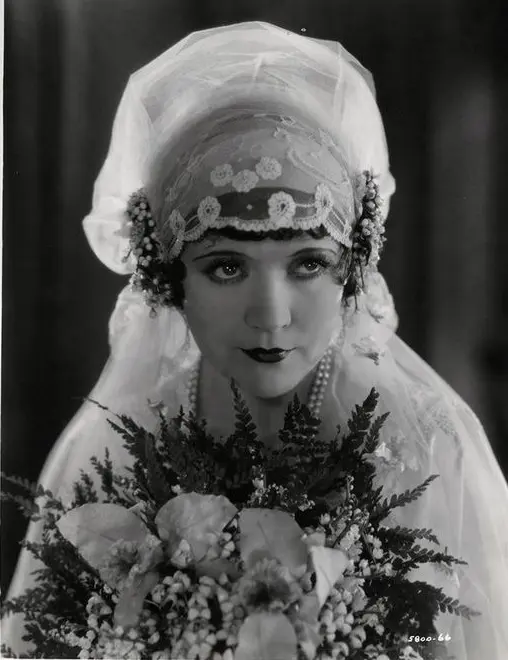
Witnessing the stylistic evolution of E. Mason Hopper through The Night Bride is profound, audiences who connected with its message often look for similar thematic gravity. Each of these movies shares a piece of the stylistic flair that made The Night Bride so special.
The synthesis of form and function in The Night Bride to establish E. Mason Hopper as a true visionary of the 1927s.
Cynthia Stockton's roadster collides with that of Stanley Warrington, an author and woman-hater, on a one-way road, but he refuses to yield to her impetuous demands; appropriating a milkman's truck, she finally makes her way home. Cynthia, engaged to Addison Walsh, finds him in the arms of her sister, Renée, just before the wedding, and, disillusioned, she wanders to Warrington's home and sleeps in a vacant room. Horrified, Warrington begs her to return home, but she refuses. When they are interrupted by Cynthia's father, she insists that she and Warrington have just been married. Complications ensue as Stockton proposes to send the couple on a wedding tour; when their steamship leaves the harbor, the couple reach an understanding and are married by the captain.
The Night Bride was a significant production in United States, showcasing the immense talent of Malcolm Denny, Marie Prevost, George Kuwa. It continues to be a top recommendation for anyone studying Comedy history.
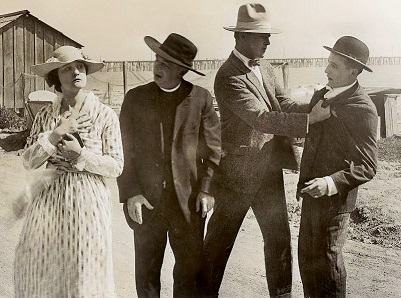
Based on the unique stylistic flair of The Night Bride, our vault has identified these titles as the most compelling follow-up experiences for fans of Comedy cinema:
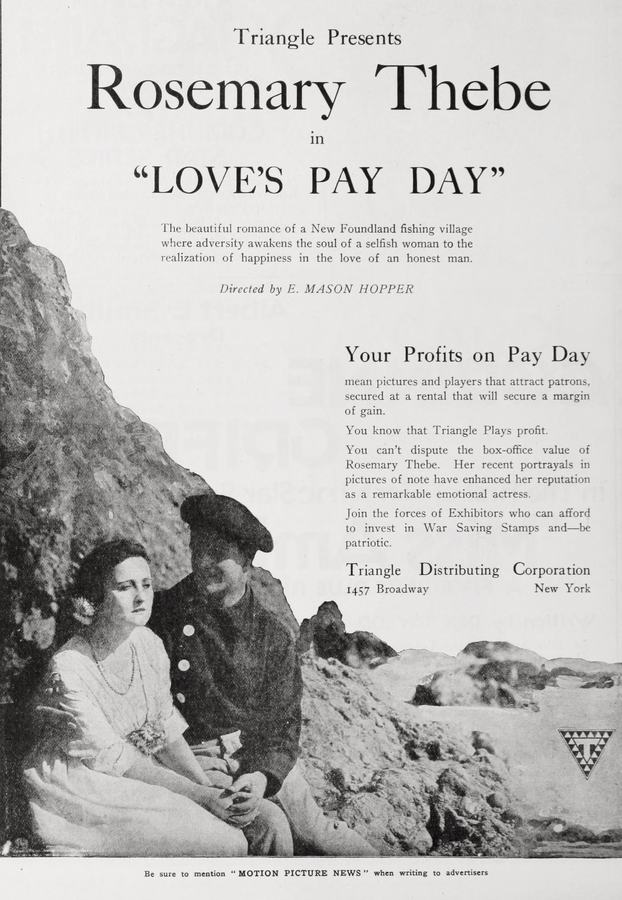
Dir: E. Mason Hopper
Representing a large New York fish packing concern, George Wilton travels to the Newfoundland fishing village of Hearts Desire to purchase a packing plant, but he soon learns that the plant's owner, Jean Laroque, has no intention of selling. Wilton promises Jean's restless young fiancée, Judith Bretans, that he will finance her move to New York City provided she give him the deed to the plant. On the night of the wedding, Judith secures the papers from her new husband, and when Jean realizes that he has lost the plant to Wilton, he denounces Judith and leaves town. As the new owner, Wilton operates the plant with such cruelty that the outraged fishermen decide to revolt and are about to attack the building when Jean appears. Although he succeeds in dispersing the mob, Wilton is killed, and Judith, who has realized her foolishness, is reunited with her husband.
View Details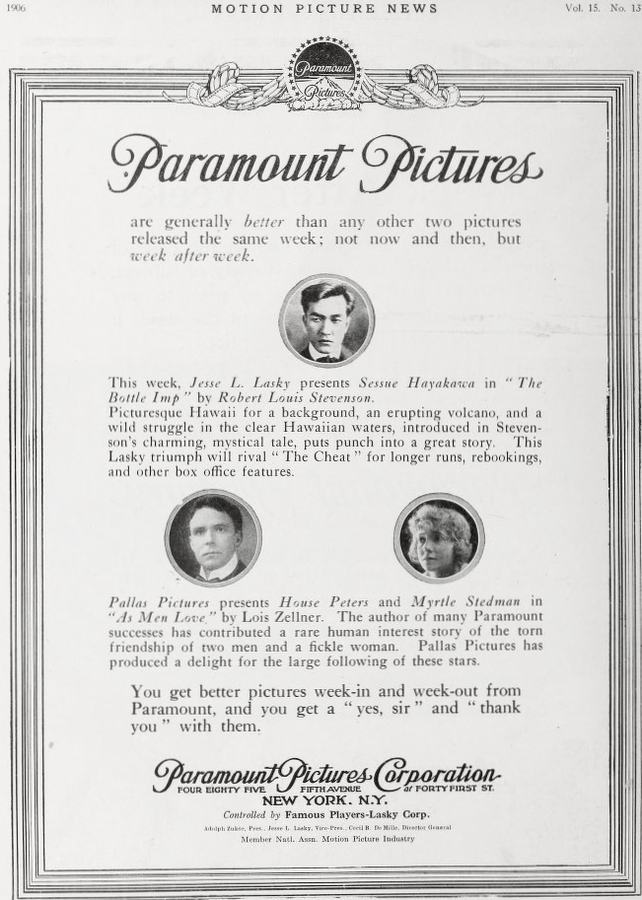
Dir: E. Mason Hopper
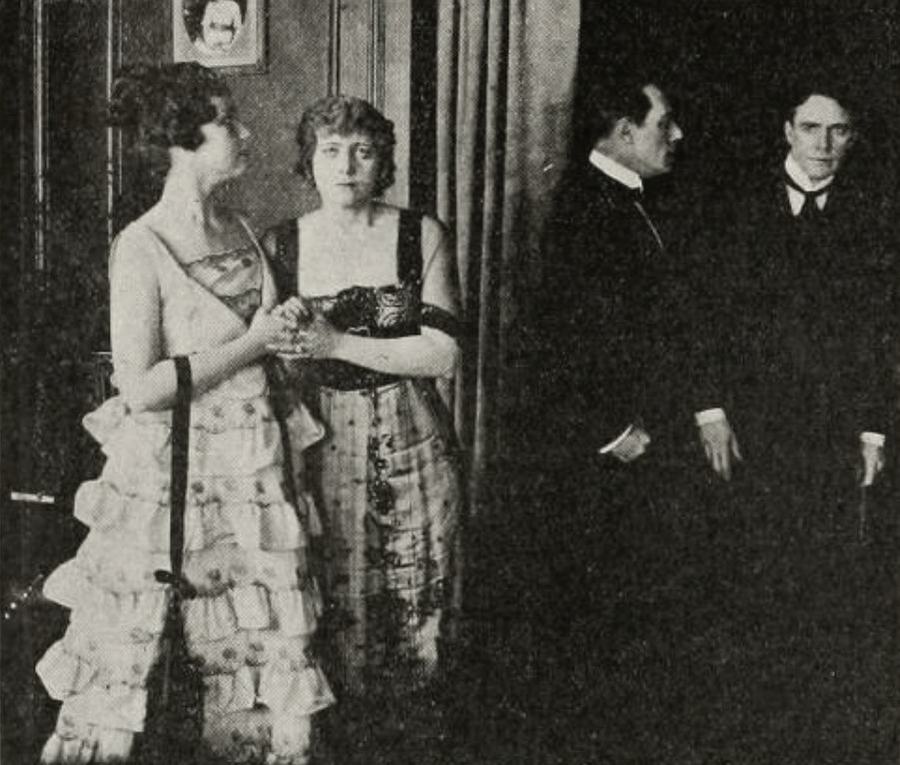
Diana Gordon a socialite, falls madly in love with Dr. Paul Russell, her husband Keith's best friend. Russell, however, is in love with Keith's sister Marjorie, who is spending the winter with the Gordons. Overhearing Russell's proposal to Marjorie, Diana is extremely jealous and when alone with the physician, throws herself into his arms. At that moment, Gordon enters the room, and to protect Diana's reputation, Russell takes the blame and is banished from the house. Sometime later, polio sweeps the city and Russell becomes an expert in treating the disease. The Gordon's young daughter is stricken and Diana summons the physician, but Gordon forbids him to enter their home. In order to save her child, Diana reveals the truth to her husband and sister-in-law. All are then reconciled and the little girl recovers.
View Details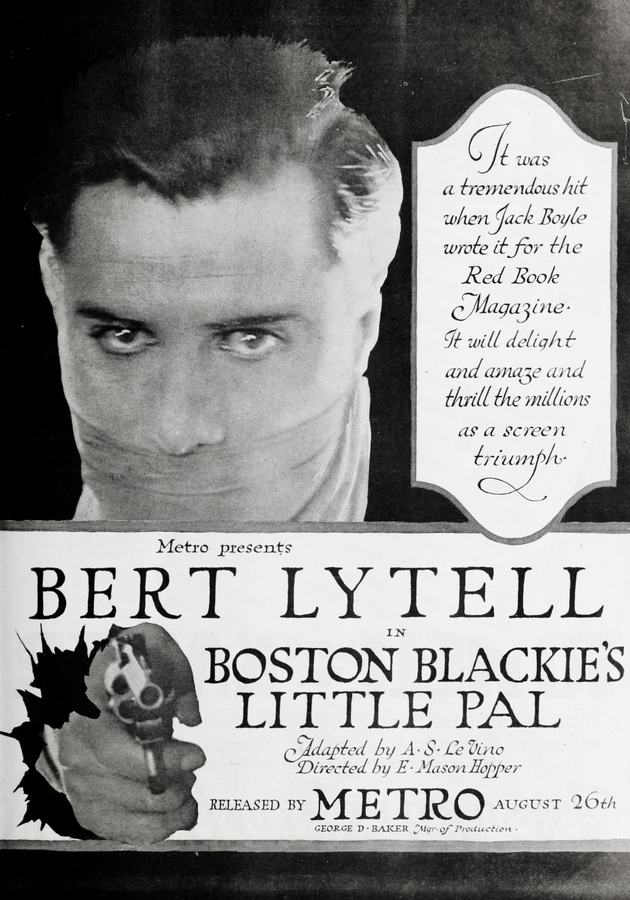
Dir: E. Mason Hopper
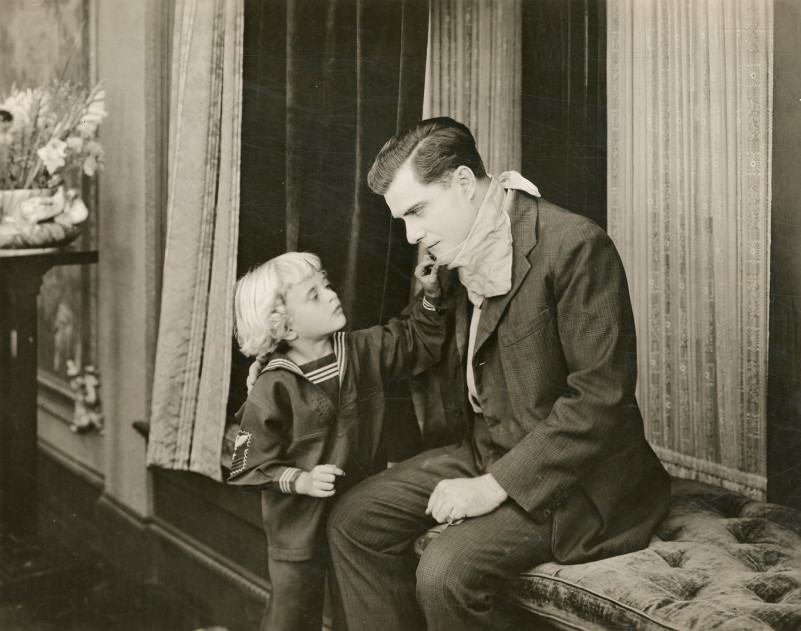
Boston Blackie, a gentleman crook, and his accomplice, Mary, plan to rob the Wilmerding mansion while Mr. Wilmerding is out of town. Mary is hired as a nurse to Martin Wilmerding, Jr., and after Mrs. Wilmerding has gone to a ball, she admits Blackie, who starts to open the safe. Just then little Martin enters, and he and Blackie play and become fast friends. Mrs. Wilmerding returns with her lover, Donald Lavalle, and when Blackie overhears their plans to elope together with her jewels, he tricks Donald into giving him the jewels by posing as the jealous husband. Through several telegrams, he effects the reconciliation of his little pal's parents but cannot decide whether or not to return the jewels.
View Details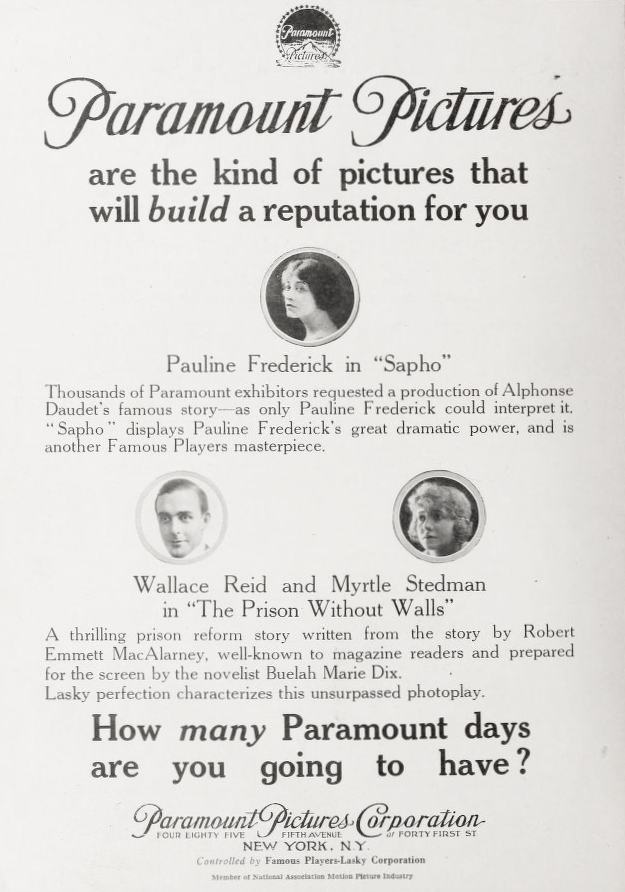
Dir: E. Mason Hopper
Helen Ainsworth, a young philanthropist, who is interested in a prison reform movement, is engaged to Norman Morris, administrator of the Ainsworth millions and the undiscovered "man higher up," grafting through his influence with prison wardens. He is also having an "affair" with Felice, Helen's maid, an ex-convict. Governor Havens sends for Huntington Babbs, prison expert, who enters the prison as a convict, is discovered by Helen and made her secretary upon his release. Morris is jealous of the good-looking secretary and he makes Felice "plant" a necklace which he has presented to Helen, in Babbs' room. Babbs discovers the plot, and Morris, overhearing his plan to visit a certain place in the rough part of the city, for Helen, plans to get him. He orders the gang to murder him. Helen accompanies Babbs (or Conroy, as he is known). Morris learns Helen has gone and reaches the place just as the men have nearly overpowered Conroy. Morris allows the men to escape, but Helen refuses his offer to take her home, preferring Conroy. Infuriated, Morris plans to have the Ainsworth safe burglarized the night of Helen's party. Conroy discovers the burglar and that he is Gilligan, whom he befriended in prison. Conroy sends a note to the Governor by Gilligan. Just as the burglar leaves, the guests of the house enter the library. Conroy is accused, but Helen allows no arrests. She orders Conroy to leave the house. Morris betrays the girl Felice by suggesting her arrest as an accomplice. Morris accompanies Helen to the Governor's office. The Governor requests an interview with Morris and accuses him of being the "man higher up." Morris asks for his witnesses and a door is opened, disclosing Gilligan and the gang, and Felice. Conroy is introduced as Huntington Babbs, prison expert. Morris is staggered. Helen overjoyed. Morris is arrested, but just as he is leaving Felice shoots him. Unconsciously, Helen goes into the arms of the man she loves.
View Details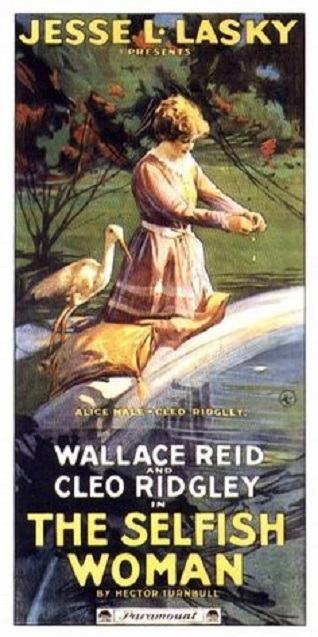
Dir: E. Mason Hopper
Young engineer Tom Morley is building a railroad through Imperial Valley. Tom's father also wants the job and tries to persuade his son to give up the work, but Tom refuses. Tom falls for a society girl named Alice Hale, who marries him to bring prestige to her family. Initially, Alice plots against Tom, but Tom wins her over and they work together to defeat those who are plotting to destroy Tom's work.
View Details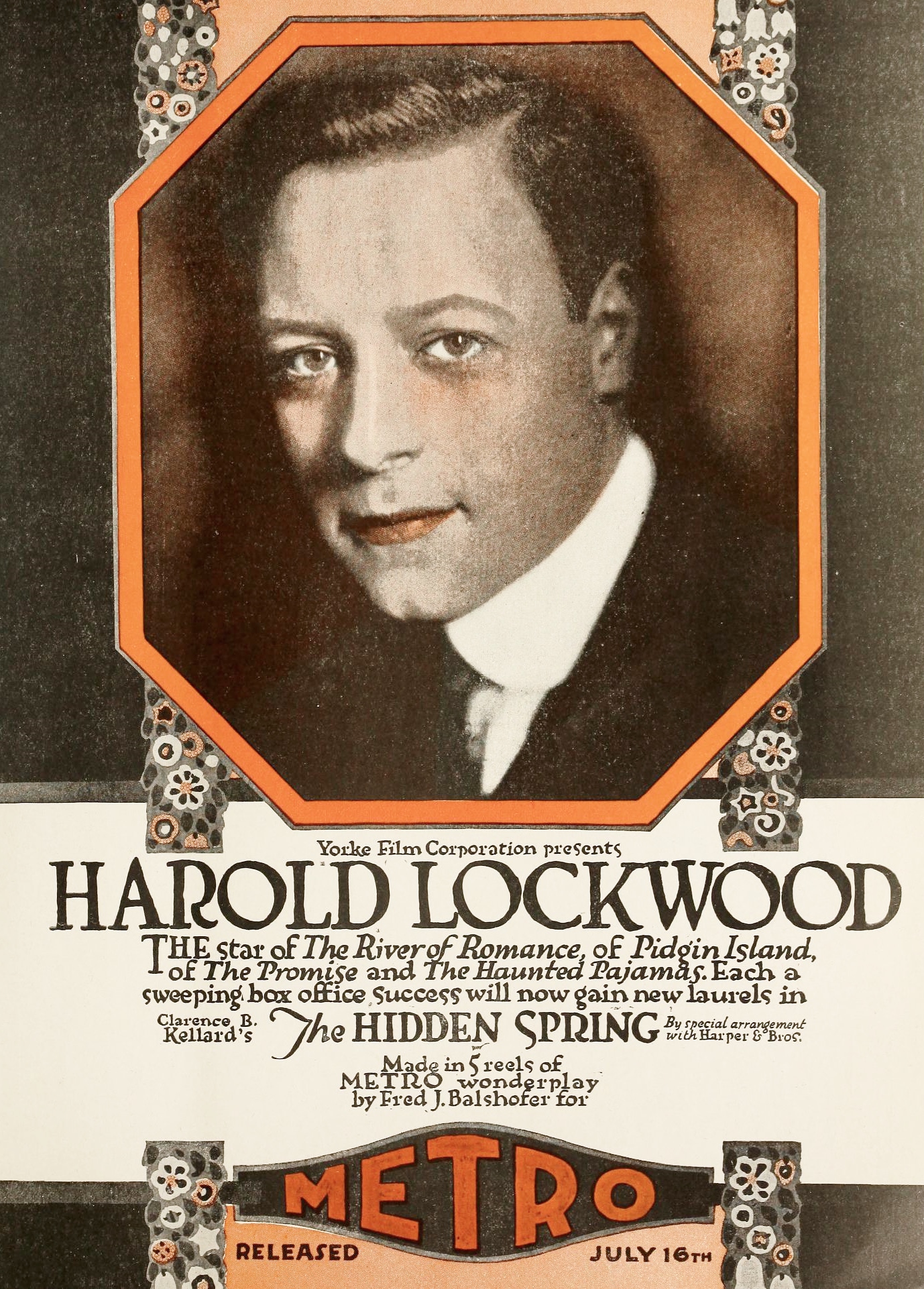
Dir: E. Mason Hopper
Quartus Hembly, a man without a conscience, is the ruler of the town of Copper City, having made himself rich at the expense of his workers. When Donald Keith, a young lawyer, arrives in town, a hidden spring within him is touched after Hembly viciously kicks his dog. Keith refuses to leave town and warns Hembly that he will fight to see that the people get their rights. Keith's only ally is Thora Erickson, the daughter of Hembly's henchman. Keith's opportunity to topple Hembly presents itself when he rescues Bill Wheeler, who, out of gratitude, confesses that it was Hembly who dynamited the log jam years earlier. With the lawyers and the courts in the palm of his hand, Hembly is acquitted, but the townspeople are so outraged that they capture Hembly and tie him to the whipping post. He is rescued by Keith, who forces a full confession for all Hembly's crimes and then allows him to leave town. Keith is then made district attorney, Thora becomes his bride, and Copper City becomes a decent place in which to live.
View Details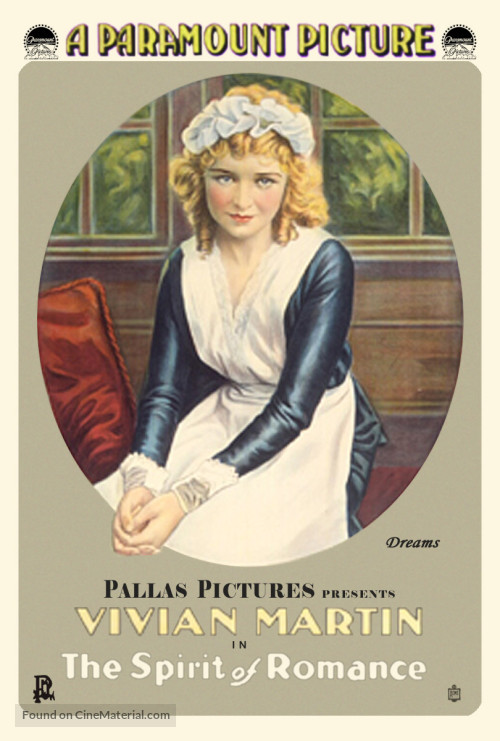
Dir: E. Mason Hopper
Abby Lou is the niece of the crabbed old antique dealer, Richard Cobb. Old Richard Cobb has a son who possesses all the qualities that his father seemingly was born without. This son, Tom Cobb, loves Abby Lou and is working on his great invention, a kettle that will not boil over. Finances are the only drawback to its successful achievement. Tom approaches wealthy old Joseph Snow for assistance but is turned down. Snow, though a hard man in money matters, in private life is also an unsuspected follower of Romance. In his home he has a secret chamber from which through the eyes of his portrait he can observe what goes on in his absence. Snow sees Abby in the antique shop and his charity offering of money to the ragged little girl is scorned. It amazes him; for the first time in his life his money is refused. It puzzles him and that night he decides on an eccentric test. The next day Abby Lou is notified that she is the heiress to deceased Snow's wealth. The lawyer takes her away to the mansion and she is surrounded by the parasitical Mrs. Rollins and her son Percival, relatives of Snow. Percival is in love with Marguerite D'Arcy but is as poor as a church mouse. Snow from his point of observation through the eves of his picture watches Abby set up Percival in business, secretly finance Tom's invention to success, reinstate his old and faithful employee Mace, and seemingly make everyone happy with his money. A new understanding of life and its meaning comes to Snow and the night of the mask ball Snow steps through the secret panel in costume, masked and apparently a guest. Then the denouement happens in a marvelously happy way and the Spirit of Romance, her mission finished, disappears forever.
View Details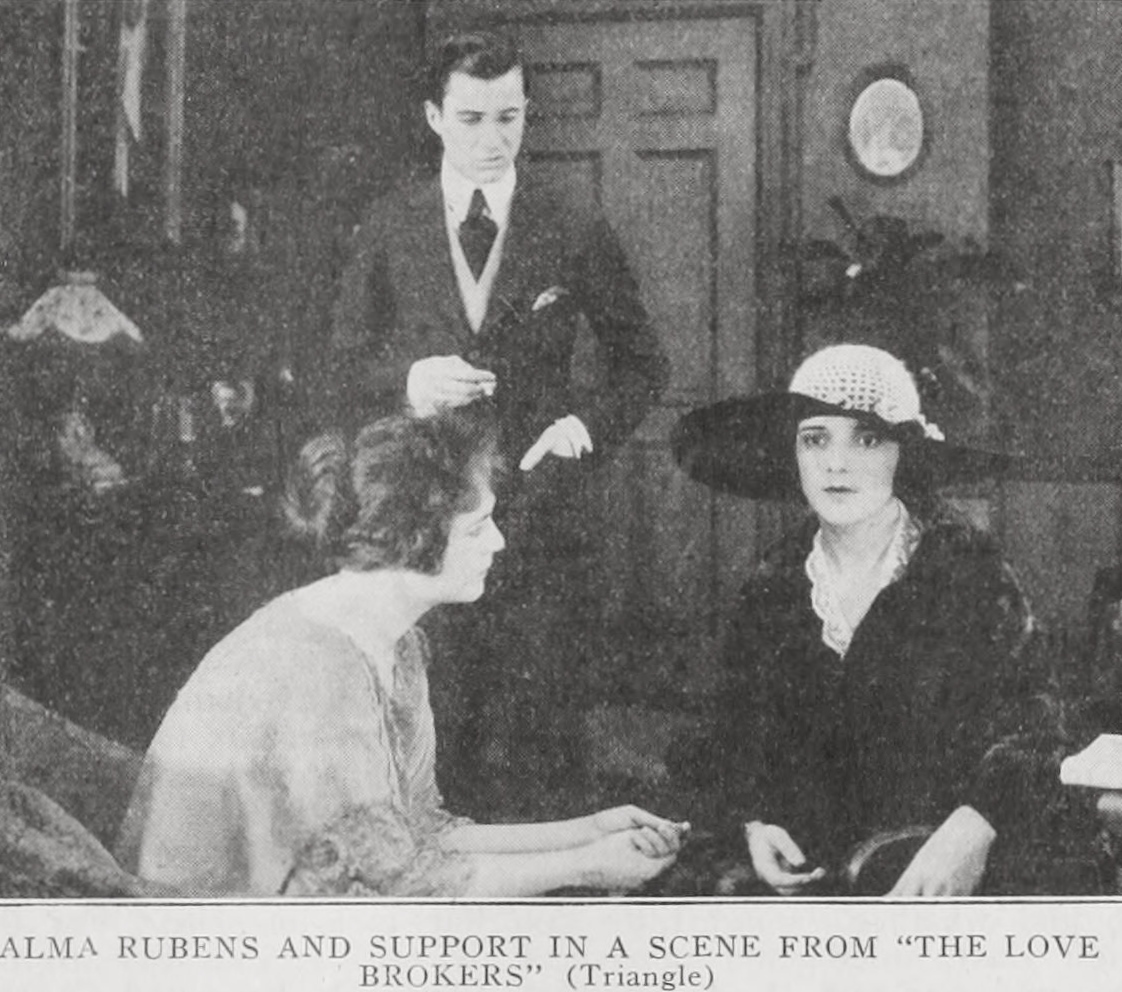
Dir: E. Mason Hopper
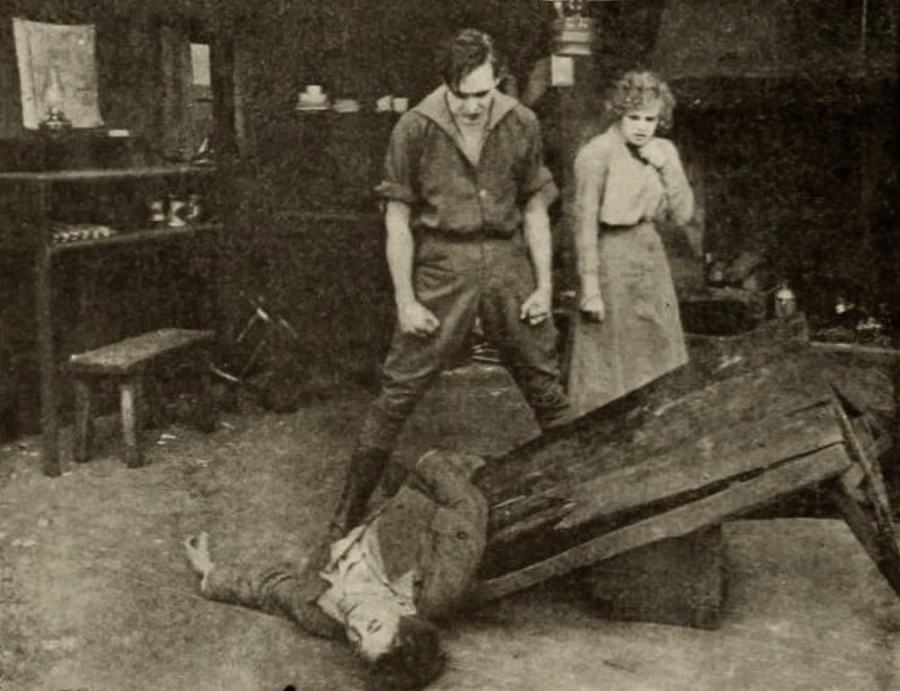
Charlotte Carter, a young songwriter, moves to New York and settles in the city's Bohemian quarter. When Peter Ladislaw, one of her admirers, confesses that he has forged a number of checks and is in danger of arrest, the good-hearted girl promises to help him. Olga Grey, a dishonest schemer, convinces Charlotte to marry wealthy arts patron Gerard Townshend, who has been injured in an auto accident and is near death. Charlotte consents and the two are wed, but following an operation, Gerard recovers. Ashamed, Charlotte confesses that she married Gerard for his money, and he forgives her. Olga and Peter try to frame them for a divorce, but the couple, now deeply in love, rid themselves of the crooks and begin their marriage again.
View Details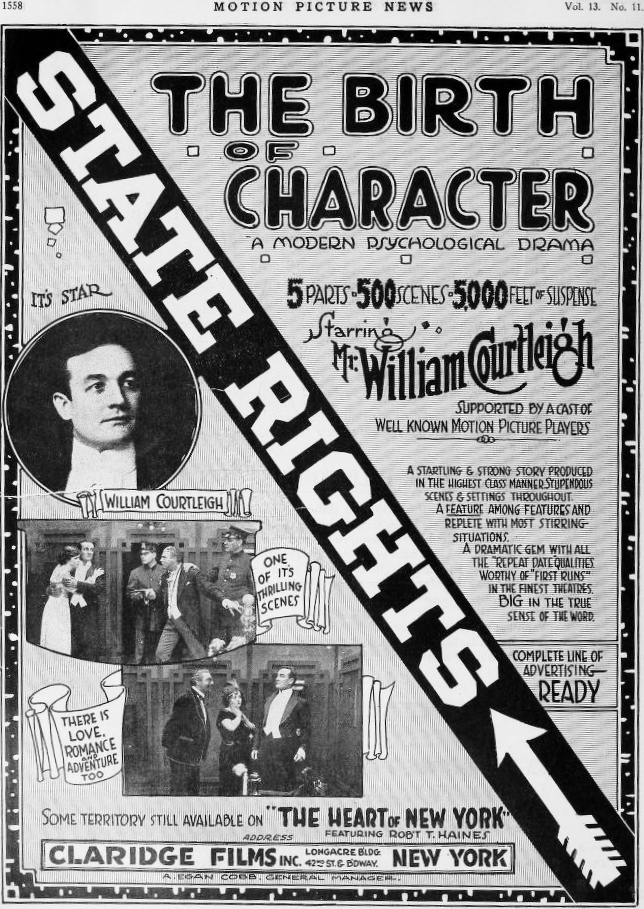
Dir: E. Mason Hopper
An alchemist, about to be burned at the stake, tells his captors that some day the teachings of the alchemists will be generally believed. The alchemist taught that the human character goes through a process of evolution and in the effort to conquer conditions about him, man finds his birth of character. Harry is in love with Grace. She is the good influence in his life. His companions influence him in the other direction. Large losses at cards make him desperate so that at a dance he is momentarily tempted to steal a diamond-studded hair ornament. The impulse immediately and he returns it, explaining that it dropped to the floor and he picked it up. Unfortunately a witness to both the impulse and the quick wit in pulling himself out of the dilemma was Darby, a master criminal. Later Harry is dragged to a gambling joint by his friends; the place is raided through Harry's bitter rival, Arthur Vane, from whom he rescues Alice, a girl who assists her father in the management of the place. All the boys are arrested except Harry, whom Alice saves by means of a secret door. He thus meets her father, who proves to be Darby. This leads Harry to his becoming the tool of Darby, and he is on the downward path. Harry and Grace become engaged. She does not know the life into which he is drifting. A dealer in objects shows them a valuable necklace. This latter is procured by Harry in a successful burglary. He is then sent to a fashionable house party by Darby to see what loot may be obtained there. Grace is a visitor at the same house party, and it is she who shoots him, not knowing his identity. Discovering who it is she saves him; the wound if only a scratch, but with scorn tells him she never wants to see him again. Harry then determines to make a man of himself, surrenders, and is imprisoned to pay the penalty of his crime. As an ex-convict he is welcomed only in the underworld. Alice, because she has fallen in love with him, unselfishly determines to help him, goes to Grace, pleads with her to overlook the past and give Harry a chance. Grace finally agrees to do so, and Alice sends Harry to her. He obtains a position and is rapidly demonstrating a real character. Refusing to have anything further to do with crooked work, he is threatened and only saved from trouble by the unselfish Alice. However, he repays this sacrifice with an open and cruel snub when with Grace he meets her on the street. Her love turns to hate. The master willingly lures him to his den, Alice maneuvers to lure Grace to the underworld, also so that she may be a witness to the punishment of her ungrateful lover. The situation works up to the dramatic climax where Darby is about to kill Harry when the police, summoned by Grace through a ruse, break in and she and Harry are saved.
View Details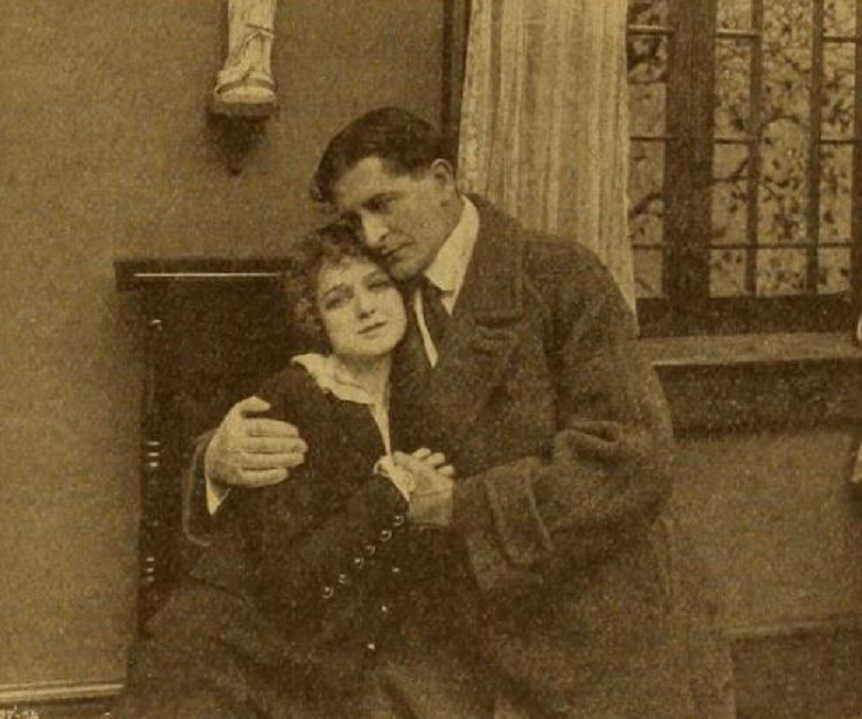
Dir: E. Mason Hopper
Julie Davenant is the neglected daughter of a Parisian dancer who, tired of her life, commits suicide. With her last breath she tells Julie not to trust men. Julie begins her battle with life as a nursemaid. Sculptor John Ramsey spies the beautiful little girl, gives her his card, and when she is discharged from her nursemaid position she becomes his model. She becomes the most talked-of model in Paris, and modiste Hermineux pays her a handsome sum to have her likeness made in wax, on which he displays his gowns. Julie meets Melville Ilchester, who seems "different." He also falls deeply in love with her. Ilchester, to satisfy a query in his mind if Julie is really "different," goes to her flat at night and walks in just as she, on a dare, takes a sip of wine and lights a cigarette. He refuses to listen to her explanation. In a moment of despair, Ilchester smashes both window and model at the Hermineux shop. Julie surmises Helen (Ilchester's sister) and Ramsey's plan to elope, sends Ilchester a note to go to Ramsey's because a friend is in danger, tells Helen that Ramsey is married, and hides her as Ilchester enters Ramsey's studio. Ilchester, believing this is a ruse of Julie's, leaves, still refusing to allow Julie to explain. Heartbroken she abandons her profession as a model and becomes destitute. She sends Ilchester a last note of appeal, which Helen accidentally sees, and after hearing the truth from his sister, Ilchester hastens to Julie, explanations are made and their happiness is assured.
View DetailsAnalysis relative to The Night Bride
| Film Title | Atmosphere | Complexity | Similarity |
|---|---|---|---|
| Love's Pay Day | Gritty | Linear | 85% Match |
| As Men Love | Ethereal | High | 88% Match |
| Boston Blackie's Little Pal | Ethereal | High | 85% Match |
| The Prison Without Walls | Surreal | Abstract | 92% Match |
| The Selfish Woman | Ethereal | Dense | 97% Match |
This guide was algorithmically generated using the cinematic metadata of E. Mason Hopper's archive. Last updated: 8/17/2026.
Back to The Night Bride Details →