
DbcultAccessing Vault...
Recommendations
Senior Film Conservator
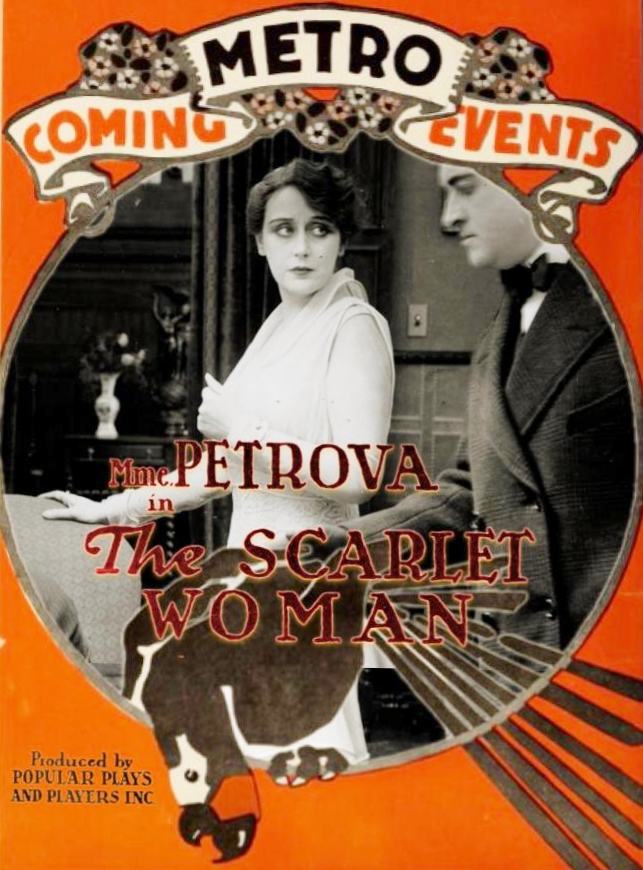
For those who were mesmerized by The Scarlet Woman, a true cult masterpiece from 1916, its influence on cult cinema remains a vital reference point for fans today. This list serves as a bridge to other cult experiences that are just as potent.
The legacy of The Scarlet Woman is built upon its ability to blend thematic complexity with stunning visual execution.
Hanlin Davis, vice-president of a bank, has been gambling in stocks, and loses heavily. While in the act of robbing the bank he is surprised by another official, and Davis kills him. Davis is arrested and his wife goes to Hastings, the District Attorney, and makes a plea in his behalf. Hastings is a corrupt official and does not hesitate to make an improper proposal to Thora. He agrees to let her husband off with a light sentence after she accepts his demands. When Davis is released from prison and learns of the sacrifice his wife has made he openly denounces her and turns her into the street. Then he gets a divorce. Ignored by all her friends and driven out of society, she is thrown upon her own resources and becomes known as "the scarlet woman," void of heart and conscience. The District Attorney becomes notorious for his association with the sporting element along Broadway, and is believed to be a graft taker. Robert Blake, a wealthy young man, institutes a reform investigation and the District Attorney is exposed. Disbarred and disgraced, Hastings decides to revenge himself upon Thora, whom he considers the cause of his downfall. He cultivates the friendship of Paula Gordon, an unscrupulous society woman, who is much in the company of Blake and holds his respect. Hastings has evidence of a crooked transaction in which Paula participated, and he threatens exposure unless she does his bidding. Through Paula, Thora is introduced to Blake. He is made to understand that she is a pure woman, and she is led to believe that he knows about her past. They fall in love and soon afterward are quietly married. After the wedding Hastings confronts the couple and denounces Thora, telling Blake of her past and that she is the notorious "scarlet woman." Blake gives Hastings a beating, but hears Thora confess that he has told the truth. Before he can regain composure, following this blow, and speak to her, Thora is gone. She secures employment in a factory hidden from her former friends. Paula now hopes to win Blake's love, but he remains steadfast in his love for his wife. Blake becomes a melancholy weakling in his deep sorrow. Paula goes to Thora and tells her she is wrecking his life; that if she would save him she must divorce him and openly return to her old life of the street and café. This Thora does. It proves the severest blow of all for Blake, and he is about to yield to Paula's persuasion to come to her when he learns the truth. He seeks out Thora, begs her to forgive him, as he long ago has forgiven her, and they are happily reunited.
Based on the unique cult status of The Scarlet Woman, our vault has identified these titles as the most compelling follow-up experiences for fans of cult cinema:
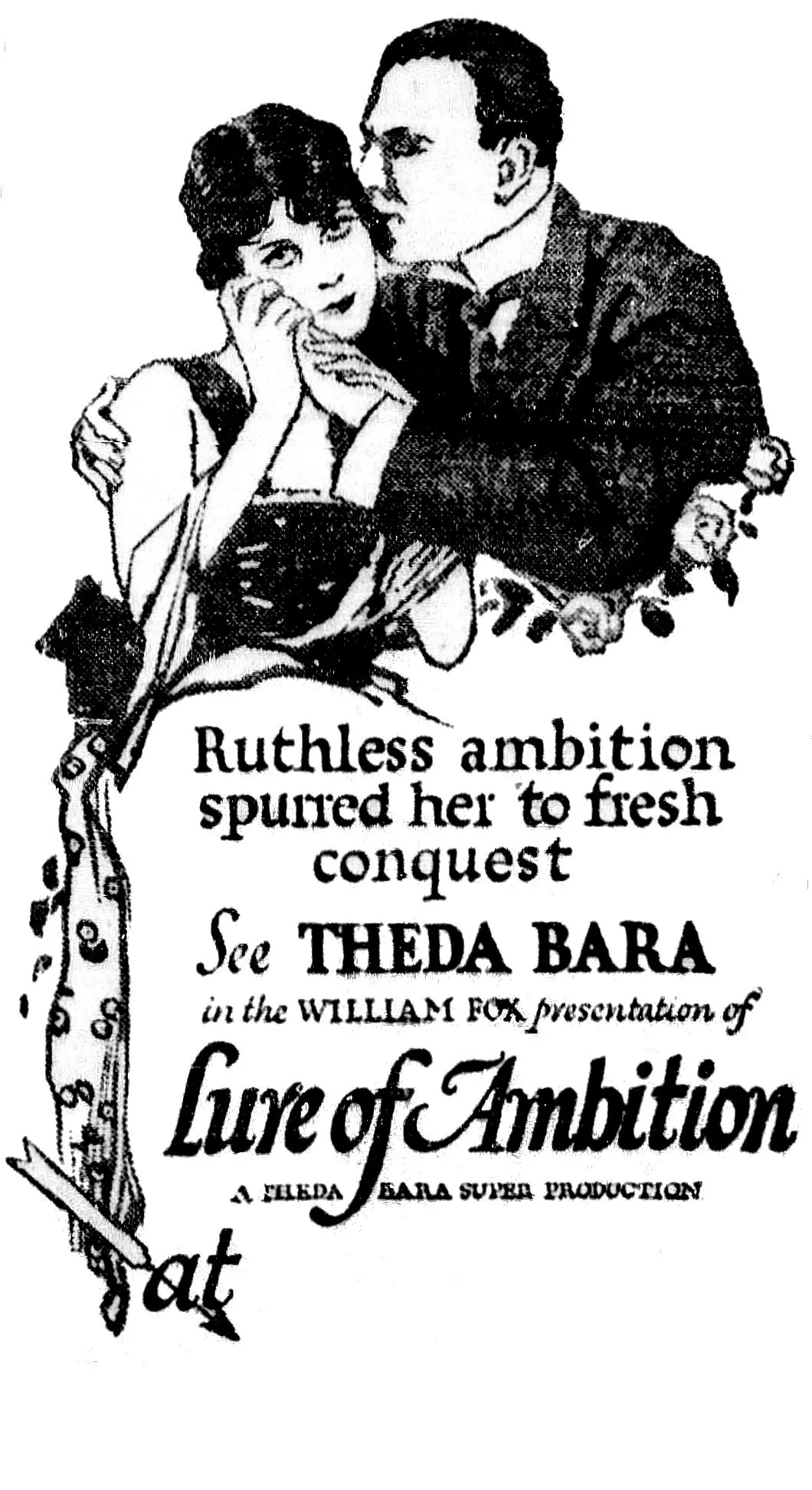
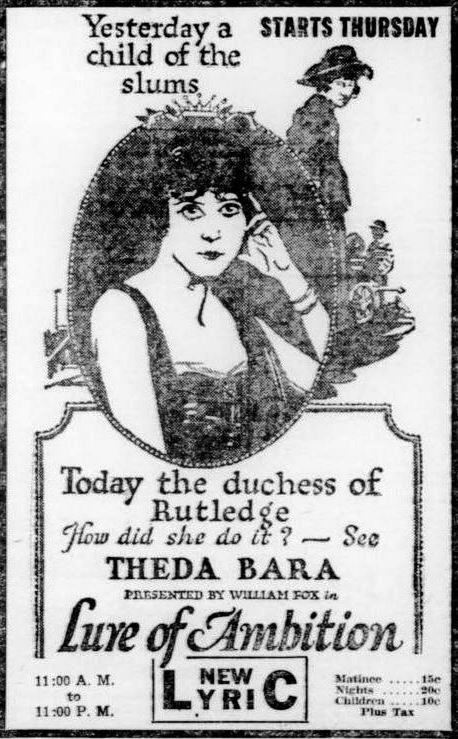
Dir: Edmund Lawrence
Poor Olga Dolan works as a public stenographer at a fashionable New York hotel. After she charms the Honorable Cyril Ralston and introduces him to her uncouth father and squalid home, Ralston persuades her to accept a suite of rooms in a hotel, promising he will marry her "some time." When Ralston returns to England, Olga vows revenge. She goes there working as the secretary to Lady Constance Bromley, and once there, learns that Ralston is her employer's son and also that he is married. Interested in the Duke of Rutledge, Olga makes Ralston introduce her to him. After Ralston becomes obnoxious in his advances, Olga becomes the duke's private secretary, impressing him when she flirts with a Spanish diplomat to make him sign some papers. When the duke's insane wife escapes from her secluded room in the castle, Olga stops her from killing the duke. The duchess' subsequent fatal heart attack brought on by intense jealousy allows Olga to marry the duke.
View Details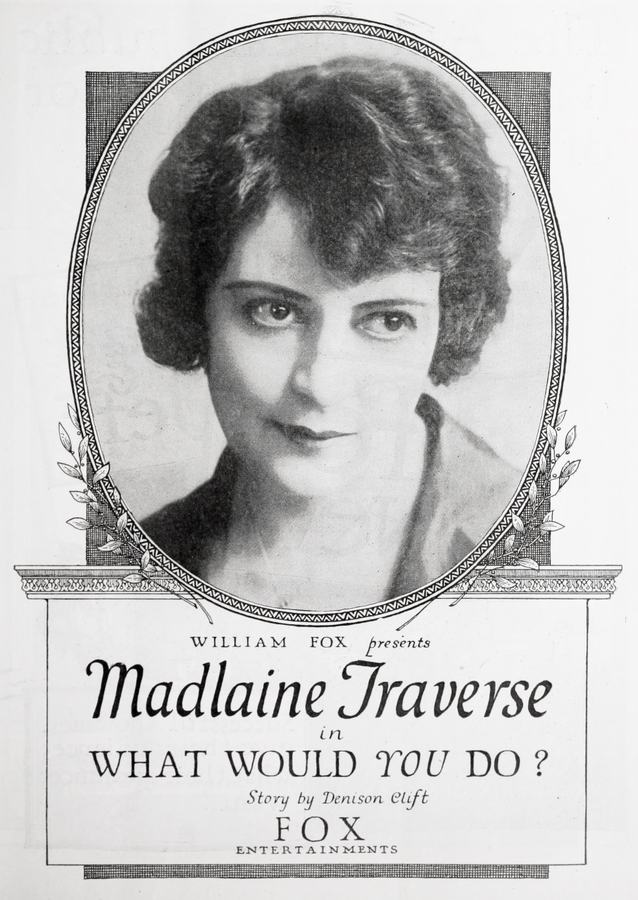
Dir: Edmund Lawrence
Discovering that his partner has been selling fake oil stock, Hugh Chilson, realizing that the law will consider him guilty also, flees to South America where he is reported to have committed suicide. Receiving notice of her husband's death, Chilson's wife Claudia marries her old friend Cyrus Brainerd, unaware that he is having an affair with his brother's wife Lily. One day, Curtis is thrown from a horse and is paralyzed, doomed to a life of endless pain. He lies on his bed, calling for death. On the day of the accident, Chilson returns after having made a fortune, but informed of his wife's remarriage, refrains from contacting her. Meanwhile, Claudia, out of pity, places a pistol by Curtis' bed and he takes his life. Upon learning of Chilson's return, Curtis' brother Robert interprets Claudia's act as murder until she silences him by showing him a letter written by Lily to Curtis. Chilson, learning that Claudia is once again free, goes to his wife and the pair are happily reunited.
Dir: Edmund Lawrence
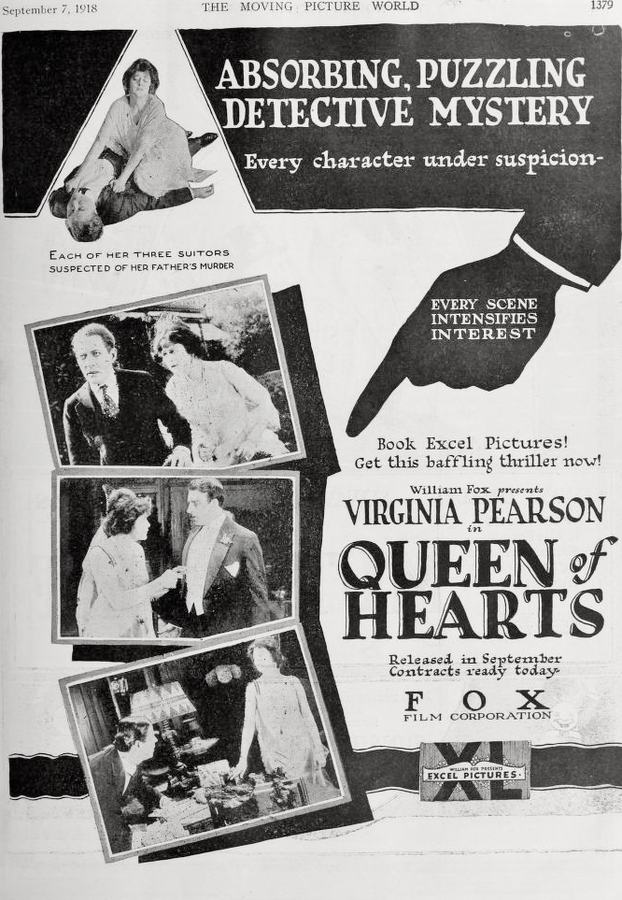
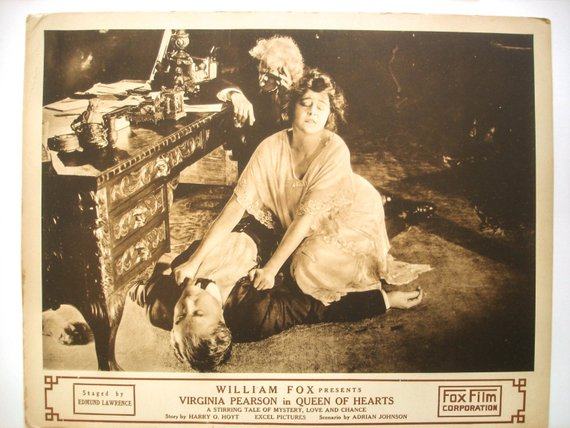
While his daughter Pauline attends school in France, Emil Cheraud establishes a fashionable gambling-house in New York. Upon her return, Pauline begs her father to close the establishment, and he promises to do so that very night at midnight, but when she enters his library shortly after the appointed hour, she finds him dead. Determined to bring the murderer to justice, Pauline assumes control of the gambling-house, hoping to trap the criminal into a confession. Three men are suspected, all of them in love with Pauline: one who owed her father a fortune; another who boasted that he would kill a man to win her affections; and a third, Jimmie Dreen, whose coat button was found at the scene of the crime. The evidence points strongly to Jimmie, with whom Pauline is in love, until Pierre, Emil's servant, confesses that he killed his employer upon learning that he had lost his job. Much relieved, Pauline agrees to marry Jimmie.
View Details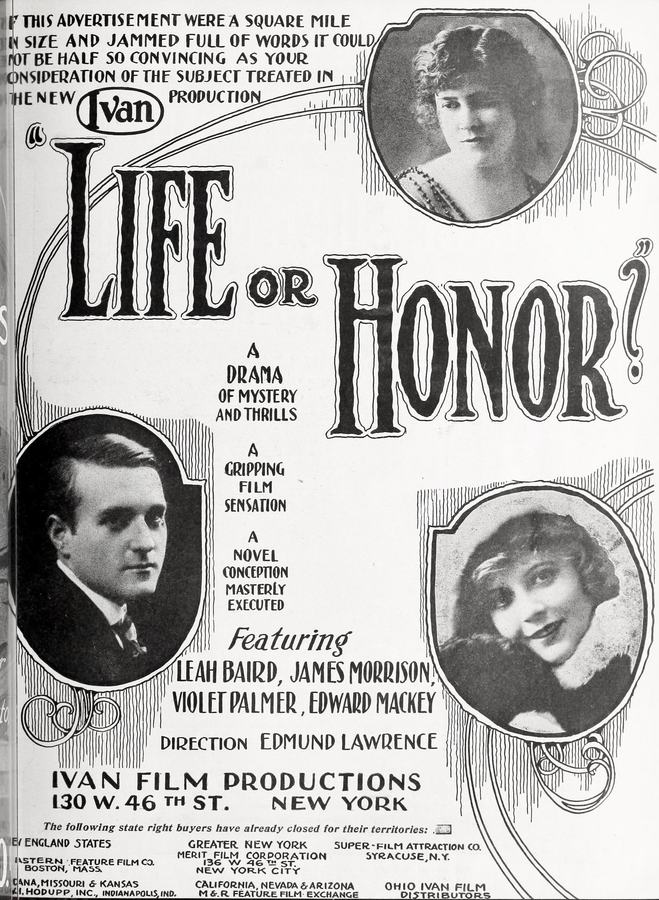
Dir: Edmund Lawrence
When retired merchant J. T. Manly is murdered, his son James, with whom he had quarreled, is arrested and finally convicted through the testimony of Manly's valet Aguinaldo. Shortly before James's execution, Sidney Holmes reveals to retired criminologist Martin Cross that on the night of the murder, he saw Aguinaldo commit the crime through the bedroom window of his friend Robert West's wife Helen. Although his presence in Helen's room was innocent, he refuses to make a public statement that might besmirch her honor. With this knowledge, Cross hires a fake spiritualist to terrorize Aguinaldo with contrivances of ghosts, skeletons and mysterious faces. The ruse is successful, and Aguinaldo confesses that he killed Manly to avenge his mother, whom the merchant had wed and later abandoned. Robert dies, leaving Helen free to marry Sidney.
Dir: Edmund Lawrence
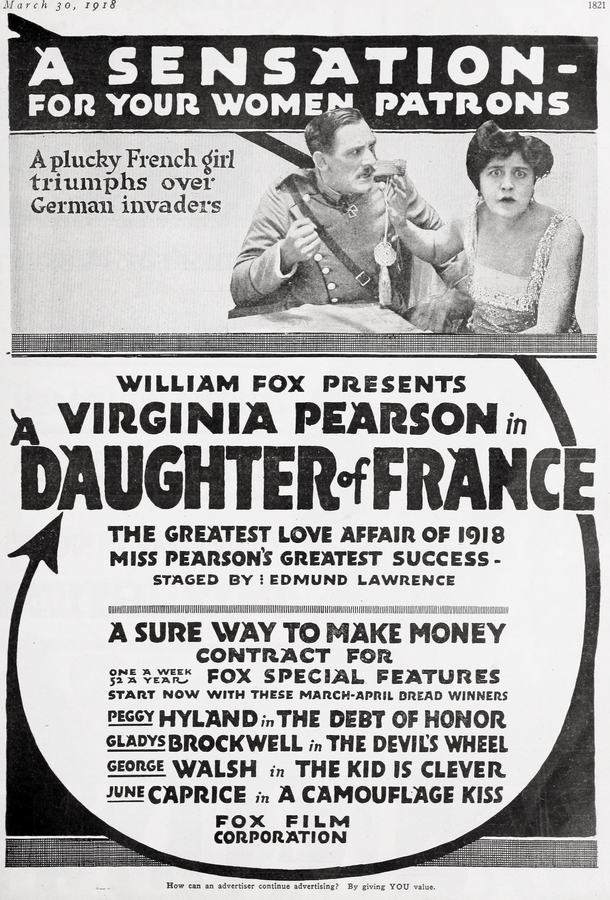
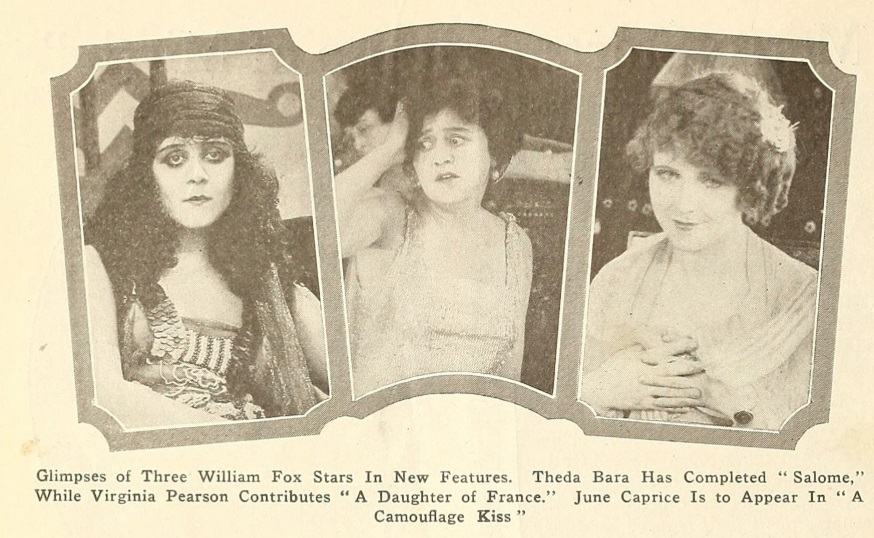
During World War I, Louise, a French girl, refuses to leave her château after the invading Germans take it over for use as their headquarters. A German officer, Col. von Knorr, makes repeated advances on her, but she rebuffs him. When another German officer lures her to an inn and attacks her, the colonel kills him. When the colonel tries to apologize to Louise for his past behavior towards her, she gets the wrong idea and stabs him. Complications ensue.
View Details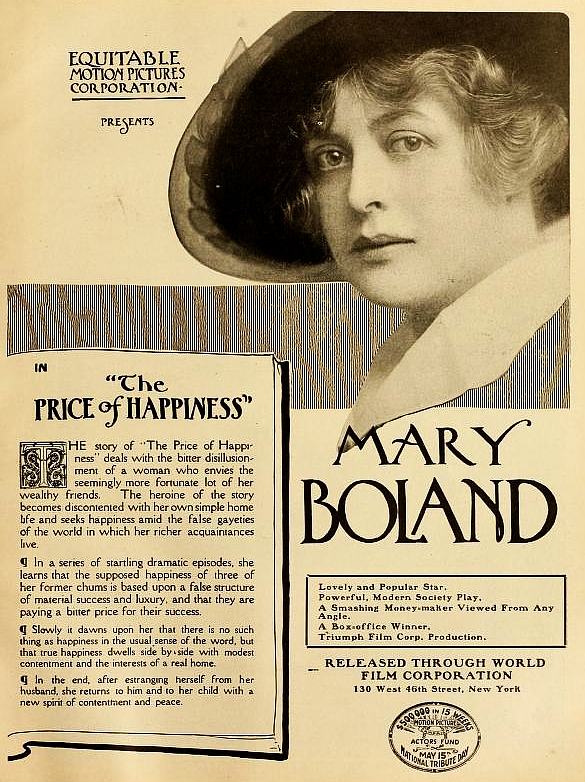
Dir: Edmund Lawrence
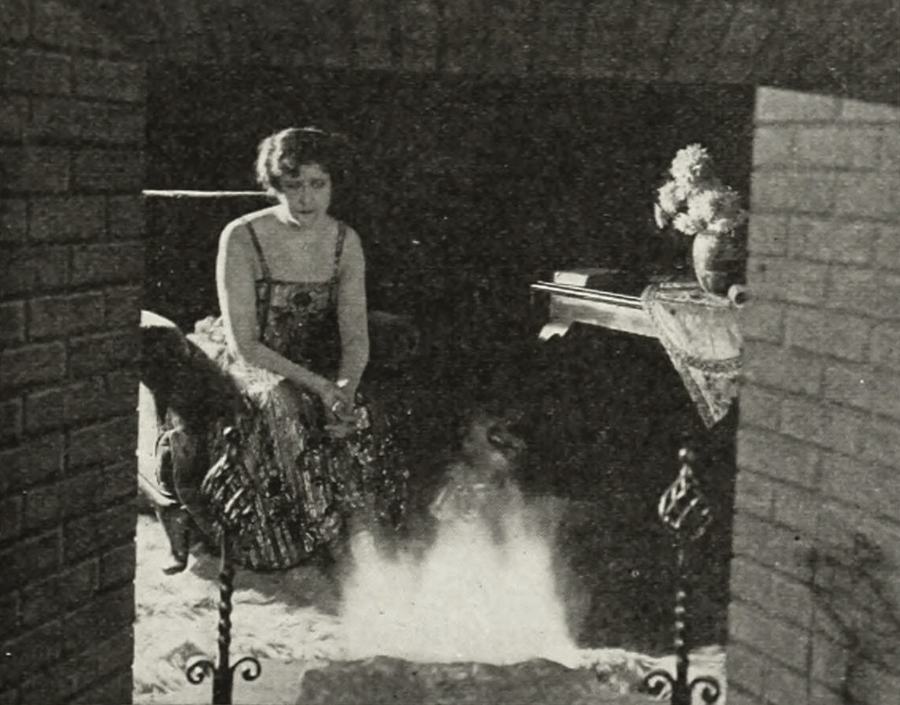
Bertha Miller is the young wife of an industrious artisan. The couple live comfortably but hardly luxuriously, and sometimes Bertha can't stifle the envious longings aroused in her by reports of her former girl friends' material success. Three of these former chums have had particular success, in the sense of having all the things that money can buy. Bertha and her three friends reunite when they meet a steamer that is bringing back one of the group who has become an opera singer. Bertha is invited to visit each of her three friends. She first visits Ruth Taylor's beautiful home, where she receives the first intimation that things are not as pleasant in Ruth's world as they appear on the surface. She finds Ruth in a nervous state and learns that she has written letters to an admirer and fears her husband will discover it. Bertha agrees to help Ruth out of her trouble and in doing so nearly estranges herself from her own husband. Lucille, the opera singer, has a handsome suite of rooms in a fashionable hotel. Bertha finds Lucille in despair over the fact that her expected operatic role has been given to another singer. Bertha learns to her surprise that Lucille's lot is in no way so happy as she had thought at first. The climax of this scene comes when Lucille has Bertha meet the man whom Lucille loves and expects to marry. This man Bertha discovers to be the owner of the house in which she and her husband live. Lucille is broken-hearted when she learns that her lover is married and the father of a family. The third seemingly-successful friend, Evelyn, lives in a pretty apartment, and when Bertha visits her she seems to have no cares or worries. Induced to go out to a gay party with Evelyn that evening, Bertha discovers to her horror that Evelyn's lovely gowns and luxurious living are being paid for in the old way of the underworld. It is in this scene, amid the false gaiety of Broadway night-life, that Bertha receives her final disillusionment and discovers the whole false fabric of her friends' careers. All envy is wiped from her heart and she returns to her steady, hard-working husband and her little child conscious that hers is, after all, the real success in life.
Dir: Edmund Lawrence
Sam Harris, a black worker on the sugar plantation of Hugh Houston in Puerto Rico, is crippled for life when Houston beats him. Huston silences Harris with money and promises him a monthly allotment for the rest of his life. Houston's secretary, Franklin Harvey, is puzzled by Harris' regular appearances at Houston's office. When Houston's daughter Sybil, who lives in Boston, visits her father, she so enchants Harvey that he becomes fiercely determined to marry her. Sybil repulses Franklin's attentions, and after her father dies, Franklin tries to prevent her marriage to the man she loves, John Carter, by falsifying Houston's marriage certificate, substituting the name of Harris' mother for that of Sybil's own. When he threatens to reveal to John that Sybil is part black, she orders him to leave but is later haunted by the fear that her child will be born black. Franklin angrily tells his story to John, and while the two men fight, Sybil rushes into the next room and apparently shoots herself. Remorseful at the thought that Sybil killed herself because of him, Franklin confesses his lie, but Sybil appears at the door unharmed and says she knew he was lying.
View Details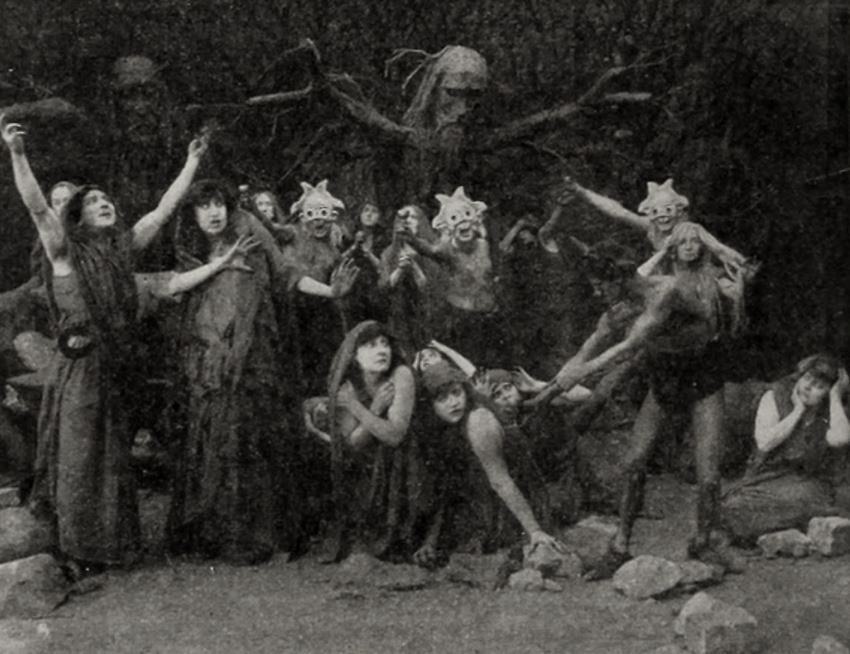
Dir: Edmund Lawrence
A fascinating piece of cinema that shares thematic elements.
Dir: Edmund Lawrence
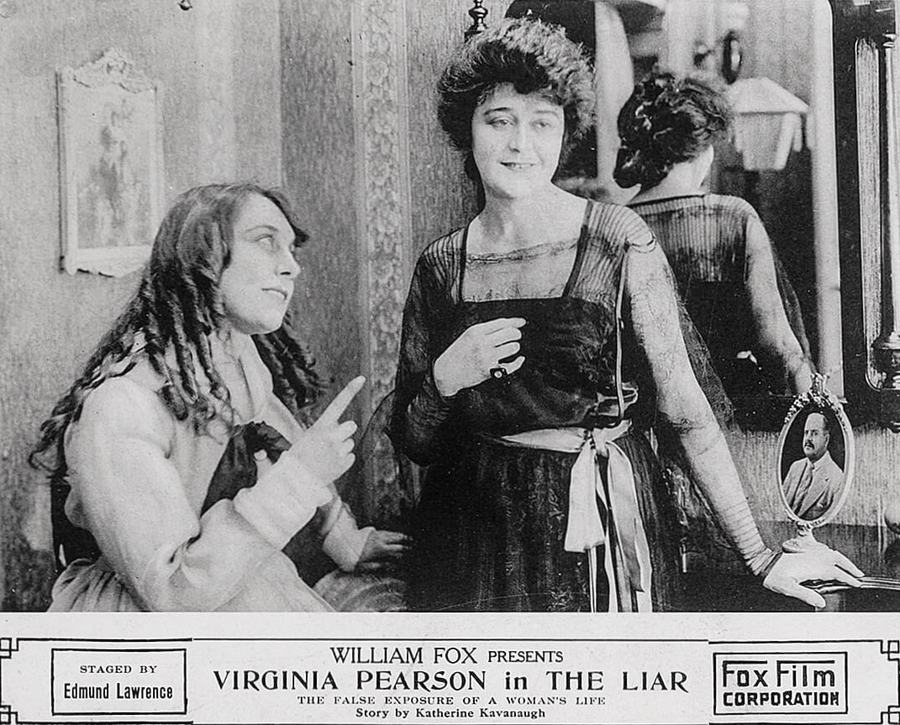
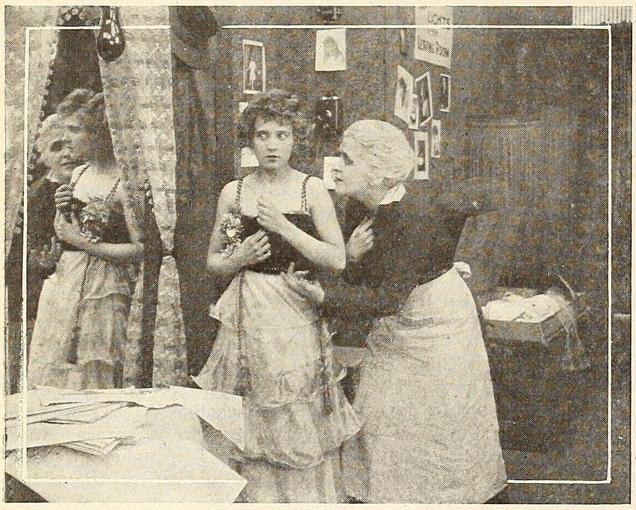
Young Janet Osborne is stuck in a loveless marriage; her only source of pleasure is her daughter. Janet always dreamed of a career on the stage but never had the chance. One day she meets theatrical agent Geoffrey Allen and decides to try her luck at becoming an actress. But when her husband Mark finds out, he orders her out of the house and keeps their daughter Marcia. Her acting career sputters to a halt also, and Geoffrey takes advantage of her situation to make her his mistress. Years later she finds out that Marcia has become an actress--and has also become involved with Geoffrey.
View Details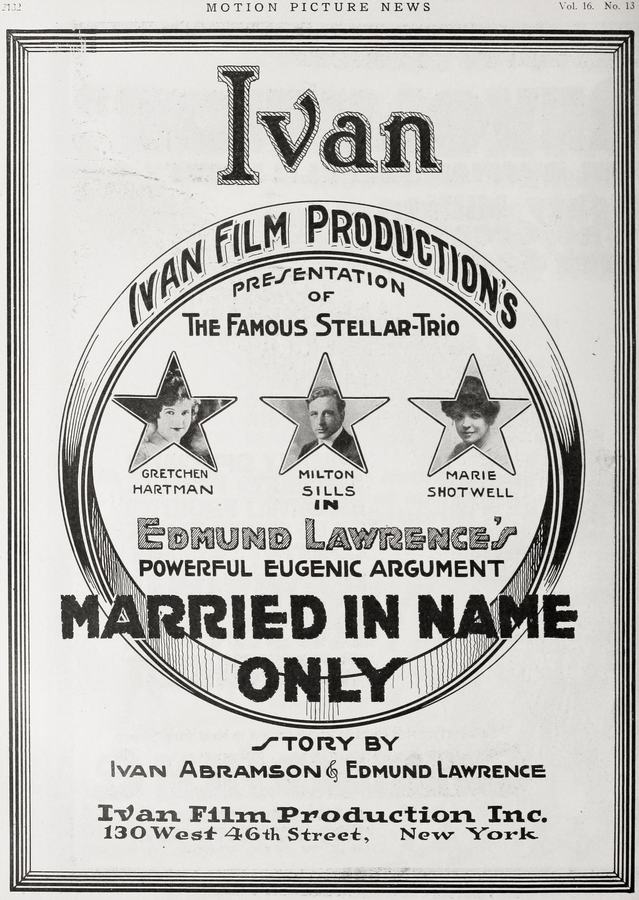
Dir: Edmund Lawrence
Robert Worthing marries his sweetheart, Madeline Francis, but the wedding is ruined by his mother, who announces that because she and her parents are insane, he possesses tainted genes. Fearing that he will pass the disease on to his children, the bridegroom avoids his new wife and locks the door between their rooms. Deeply in love with Madeline, whom he is forced to love only as a sister, Robert considers suicide, but all ends well when the young man learns that he was adopted.
View DetailsAnalysis relative to The Scarlet Woman
| Film Title | Atmosphere | Complexity | Similarity |
|---|---|---|---|
| Lure of Ambition | Gritty | Linear | 90% Match |
| What Would You Do? | Ethereal | Linear | 98% Match |
| The Queen of Hearts | Gritty | Dense | 96% Match |
| Life or Honor? | Surreal | Linear | 97% Match |
| A Daughter of France | Tense | Dense | 86% Match |
This guide was algorithmically generated using the cinematic metadata of Edmund Lawrence's archive. Last updated: 8/16/2026.
Back to The Scarlet Woman Details →