
DbcultAccessing Vault...
Recommendations
Senior Film Conservator
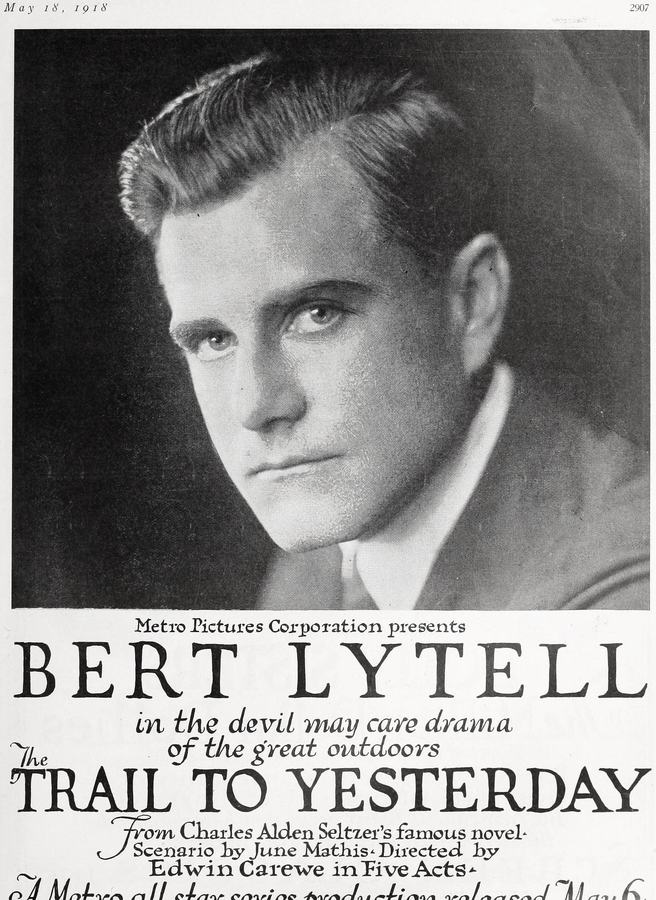
If you found yourself captivated by the stylistic flair of The Trail to Yesterday (1918), the quest for comparable cinema becomes a journey through the fringes of film history. Below, we've gathered a list of films that every fan of Edwin Carewe's work should explore.
The Trail to Yesterday remains a monumental achievement to create a hauntingly beautiful cinematic landscape.
David Langford, a member of the firm of Keegles and Langford, hardware merchants, has a violent quarrel with his partner, and kills him. Ned, Mr. Keegles' son, who has been expelled from college, returns on the night of the murder, and is suspected of the crime. He leaves for the west, where he becomes known as "Dakota." "Texas" Blanca, a Mexican, and John Duncan blacken the name of "Dakota" by unjustly accusing him of cattle stealing. Later, "Dakota" aids a young girl named Sheila during a thunderstorm, and he subsequently learns that she is the daughter of Langford, the murderer of his father. In revenge he forces her to marry him, and then she leaves for the Double R ranch, which her father has purchased. "Dakota" becomes implicated in a number of other diabolical plots, but emerges triumphant, and the climax of the drama shows him and Sheila living happily as man and wife.
The Trail to Yesterday was a significant production in United States, bringing a unique perspective to the global stage. It continues to be a top recommendation for anyone studying cult history.
Based on the unique stylistic flair of The Trail to Yesterday, our vault has identified these titles as the most compelling follow-up experiences for fans of cult cinema:

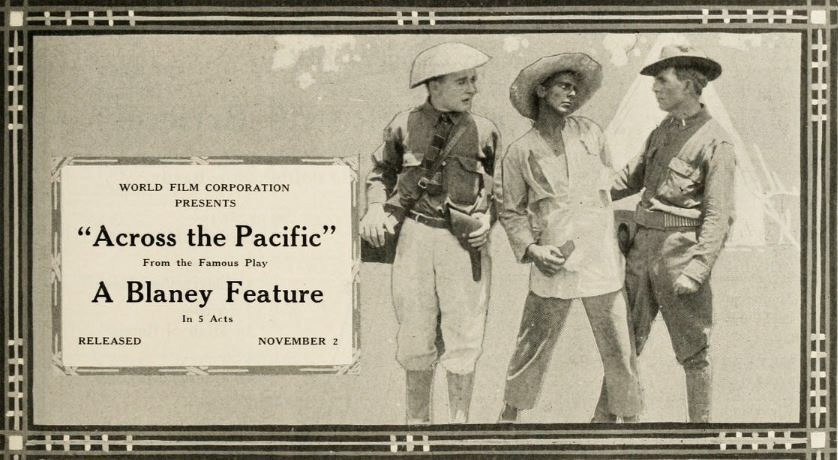
Dir: Edwin Carewe
The Escott family, on their way to Montana, is attacked by Indians. Army Lt. Joe Lanier afterwards finds little Elsie Escott, the only survivor, and brings her to his mother, who takes in the girl and raises her. Joe later leaves the army and becomes a successful miner, and over the years as he sees Elsie grow into a woman, he falls in love with her. Soon, however, a handsome stranger named Bob Stanton becomes his rival for Elsie's affections, and when Joe becomes jealous Elsie gets angry and makes plans to elope with Stanton. However, a war with Spain complicates everything.
View Details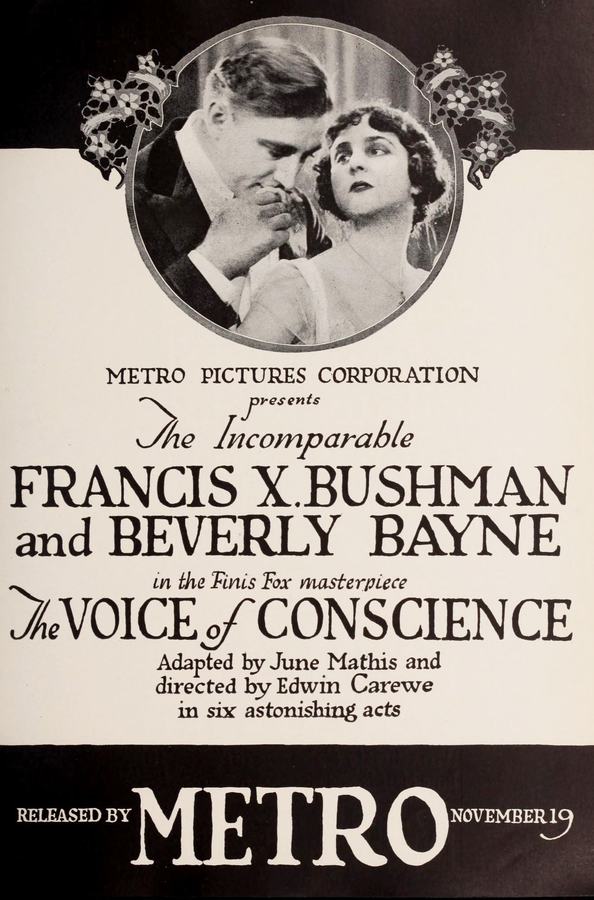
Dir: Edwin Carewe
A daughter is grief-stricken by the loss of her father. His male friend becomes her guardian, and she is taken to live with the friend's mother. Time passes and romance blossoms in the girl's heart for her guardian. However, a love rival arrives from the city and catches his eye, and the drama unfolds.
View Details
Dir: Edwin Carewe
Actress Jane Carleson has three admirers: Henry Strong (a millionaire), Hamilton Ross (a chemist), and Murray Campbell (a district attorney). When Jane weds Campbell, Ross writes an anonymous letter to Campbell, warning him that Strong is after his wife. Ross smears the flap of the envelope with poison. However, Strong is the one who opens the envelope, and dies from the poison. Since Campbell and Strong had quarreled just before the arrival of the letter, Campbell is convicted of the murder. Jane must expose the true murderer and save her husband.
View Details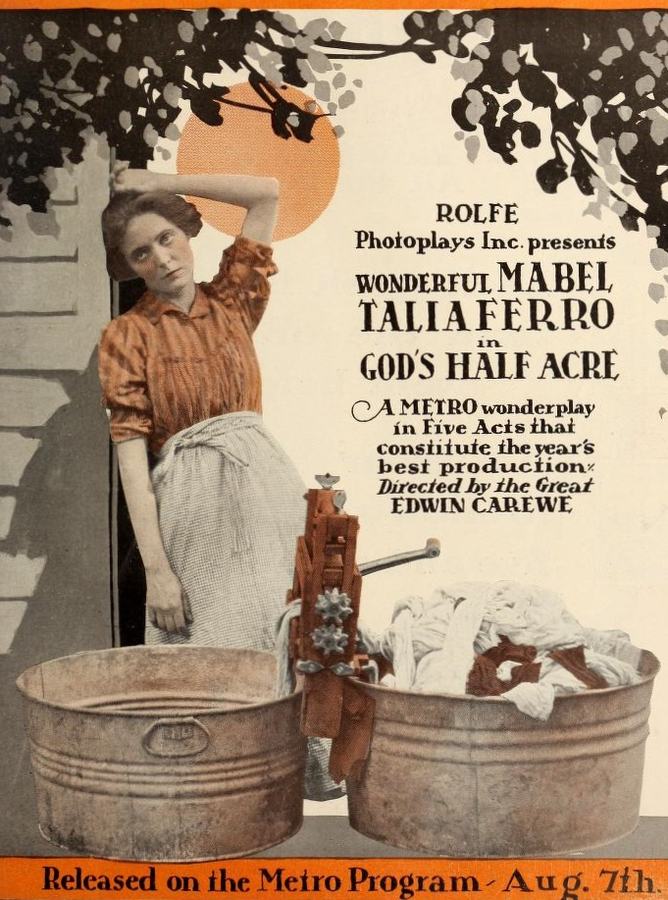
Dir: Edwin Carewe
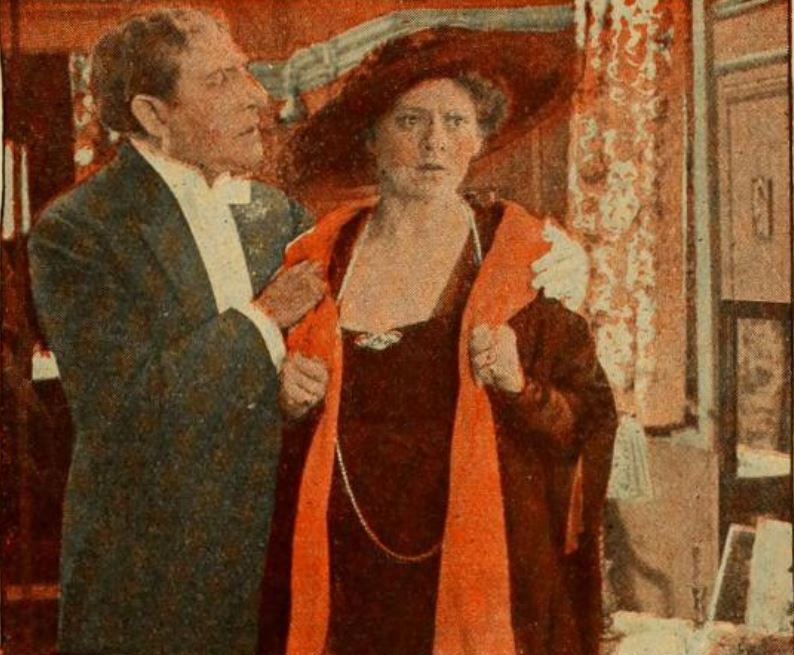
Leaving his wife Rose for a few weeks and eager to do research for his new novel about the elderly, Henry Norman goes to live in a home for the aged, where Blossom, the home's young maid, falls in love with him. When she lets him know how she feels, however, Henry tells her that he has a wife. When his research is over, he returns to her--and discovers that she has eloped with his friend Perry Westley, and that they were both killed by a lightning bolt that struck Perry's car. While Henry recovers from this double shock, Blossom quits her job and finds work at God's Half Acre, an orphanage. While on a picnic with the children, she once again meets Henry, who realizes that he loves Blossom. They marry.
View Details
Dir: Edwin Carewe
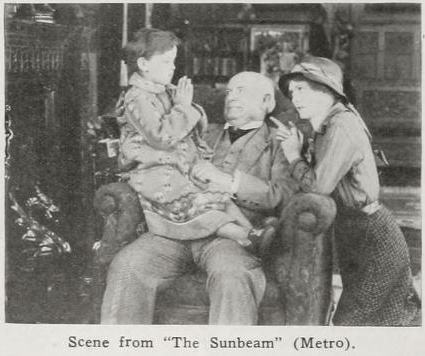
Big-hearted Prue, living in the slums, and Danny O'Maddigan, a reformed crook, want to buy a birthday cake for Prue's 75-year-old grandmother. They live across the hall from Ellen Rutherford, the destitute widow of Steven Rutherford, Jr., who was disinherited by his father, a wealthy candy manufacturer. Prue, who works at the candy factory, gives Ellen the money that was meant for her grandmother's cake so Ellen will be able to care for her son Bobby. Frustrated over the loss of the money, Danny steals the price of a cake from the factory's safe, leaving the safe's door open in his haste to depart. Danny's former gang arrives and cleans out the safe, and Danny is convicted of the crime and sent to prison for four years. While Danny is in prison, Bobby is struck by his grandfather's car and slightly injured. Stricken with remorse, Mr. Rutherford effects a reconciliation with his daughter-in-law and promises to use his influence to bring about Danny's release from prison.
View Details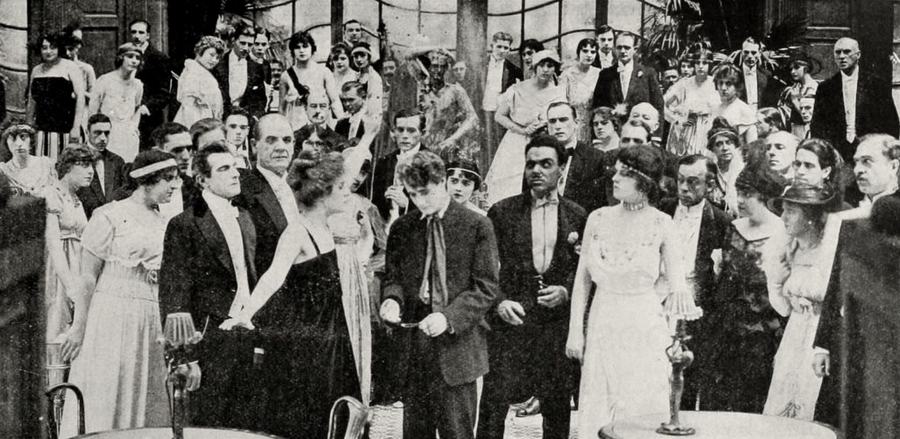
Dir: Edwin Carewe
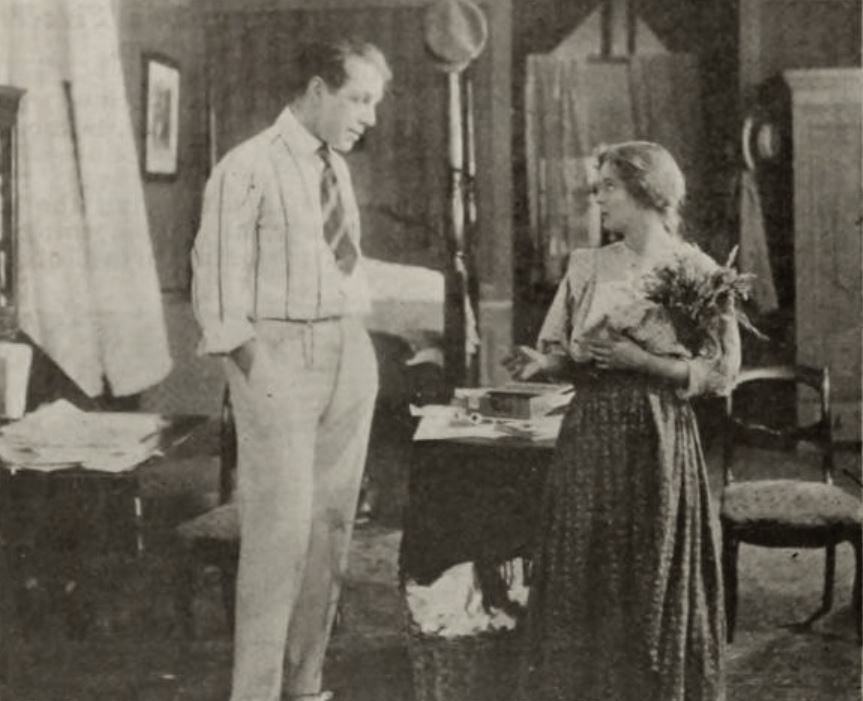
Standish, an artist, finishes a painting of the Madonna. His wife, Mary, acted as model, and when the Connoisseur and the Parishioner inspect the picture, the former tells Standish that he recognizes in the model a one-time paramour of his. The Connoisseur and the Parishioner buy the painting and after their departure Standish upbraids his wife, who tells him that she believed herself legally married to the Connoisseur. Standish refuses to accept her explanation and ejects her and their baby son. Mary leaves her boy on the steps of a monastery, and seventeen years later, just before becoming a monk, he receives permission to see the world. He wanders into a gay café and succumbs to the charms of Beauty. The other inmates of the place, Lust, Rum, Avarice and Passion are dancing around him when the proprietor enters. It is Mary, his mother. She recognizes him from the crucifix which he wears and which she left with him when he was a baby. Without revealing her identity she persuades him to go back and later when he has become a priest, a bedraggled old woman (his mother) enters his church. She recognizes him and just before she dies her son gives her absolution.
View Details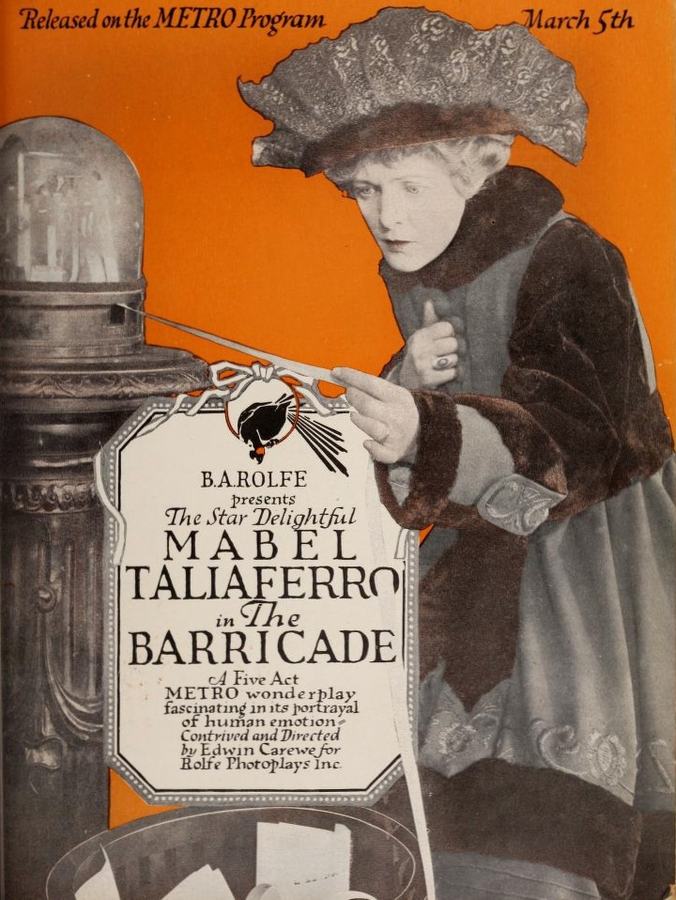
Dir: Edwin Carewe
Unnerved by the superiority of John Cook, the new president of the Securities Company, Wall Street business leader Amos Merrill begins to speculate with the trust funds in his control, ultimately losing all the funds. Amos, faced with discovery and disgrace, lies to his daughter Hope that Cook has ruined him; soon after, Hope meets Cook and conceives a plot for revenge. In the meantime, Cook has protected the frail Merrill from prosecution and paid back his debt after sending him away on a vacation to recover his health. Hope, knowing nothing of this, marries Cook and makes his life unbearable, finally conspiring with his business rival Gerald Hastings to ruin her husband and gain control of his funds. When Amos returns from his vacation, he is stunned at what Hope has done and reveals that his lie has resulted in a terrible mistake. Hope begs forgiveness from Cook and they go West together to begin a new life.
View Details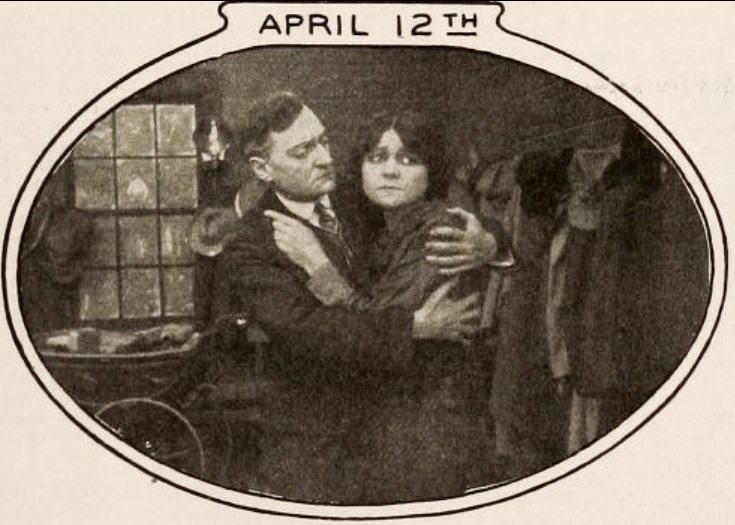
Dir: Edwin Carewe
Margaret Primrose is not permitted to see Ted North, who loves her, by her father, whom Ted's father ruined. To spite Ted, Primrose forces Margaret to marry Weston, a dissolute young millionaire, and Ted, heartbroken, goes West. Weston neglects Margaret and continues drinking. Seven years later, the Westons move West on the advice of his doctor to improve his health. Ted, meanwhile, has adopted the small daughter of a cattle rustler who was lynched by Ted's cowboys. When he spots a runaway horse and lassoes its rider, Margaret, they embrace, but realizing the impropriety, they bid each other goodbye. Weston resumes drinking and takes an interest in Molly, the proprietress of a dance hall. When Molly's sweetheart, "Quick Foot Jim" learns that Molly and Weston are planning to elope, he kills Weston. After Ted is convicted of the murder, based on circumstantial evidence, Jim abducts Molly. When Margaret learns the truth, a posse is organized to find Jim. No information has been located concerning the film's ending.
View Details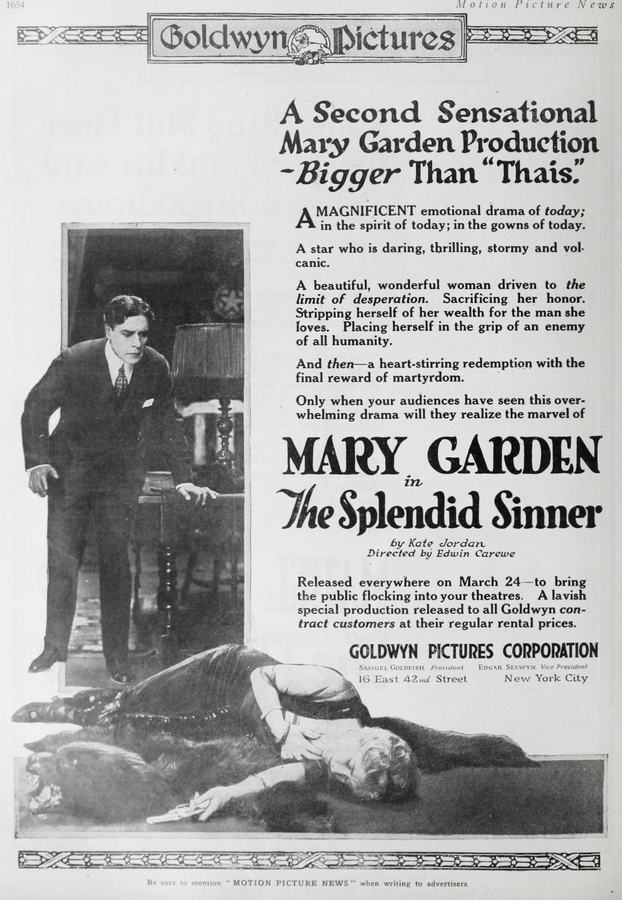
Dir: Edwin Carewe
A woman marries a German immigrant in New York, but loses him when her soiled past is revealed. He returns to Germany after the beginning of the First World War, where he becomes a high-ranking officer in the German army. His wife joins the Red Cross and, in a combat hospital, discovers her wounded husband. Her love for both her husband and her country lead her to a great sacrifice.
View Details
Dir: Edwin Carewe
Sylvia Mason, a mysterious girl, lives in a cabin by herself and sells her bead work to the visitors at a large hotel nearby. At the hotel, Sylvia meets Easterner Henry Hilliard, who falls in love with her, but she refuses to marry him and will not explain her reasons. Thus Henry returns East without learning that Sylvia's father had been murdered by his private secretary Jack Leslie in revenge for her refusal to marry him. One night after Henry's departure, Leslie, now known as the outlaw "The Shadow", breaks into Sylvia's cabin. There is a struggle that leaves Sylvia unconscious, and when she awakens she finds a note claiming that because Leslie has violated her, she must marry him. Meanwhile Henry's mother, horrified that her son wants to marry this strange girl, informs Sylvia that their marriage would destroy him. Sylvia agrees to give up Henry, but he learns her story from Padre Constantine and goes to search for her. Sylvia has gone to Leslie and Henry follows. In the ensuing fight, Henry forces Leslie to admit with his dying breath that he has lied to Sylvia.
View DetailsAnalysis relative to The Trail to Yesterday
| Film Title | Atmosphere | Complexity | Similarity |
|---|---|---|---|
| Across the Pacific | Tense | High | 97% Match |
| The Voice of Conscience | Tense | Abstract | 91% Match |
| The Final Judgment | Surreal | Dense | 97% Match |
| God's Half Acre | Ethereal | High | 87% Match |
| The Sunbeam | Ethereal | Layered | 95% Match |
This guide was algorithmically generated using the cinematic metadata of Edwin Carewe's archive. Last updated: 6/24/2026.
Back to The Trail to Yesterday Details →