
DbcultAccessing Vault...
Recommendations
Senior Film Conservator

In the vast archive of Drama cinema, The Truth About Women stands as a poignant storytelling beacon, it's essential to look at the contemporaries that shared this poignant storytelling. Our cinematic experts have identified several titles that reflect the spirit of 1924.
Few films from 1924 manage to capture to leave an indelible mark on the history of United States film.
Artist Warren Carr abandons his wife, Hilda, and their child for the worldly Nona Boyd. Hilda then becomes a cabaret sensation under the tutelage of novelist Howard Bronson. The death of the child causes Warren to attempt a reconciliation, but Hilda chooses to remain with Bronson.
Critics widely regard The Truth About Women as a cult-favorite piece of Drama cinema. Its poignant storytelling is frequently cited as its strongest asset, solidifying its place in United States's film legacy.

Based on the unique poignant storytelling of The Truth About Women, our vault has identified these titles as the most compelling follow-up experiences for fans of Drama cinema:
Dir: Burton L. King
Nancy Page is a frivolous socialite until her husband Richard becomes entangled in his employer David Davenport's shady business dealings. Davenport, a building contractor, had secured Richard's signature on several papers that promised payment of over a million dollars, even though the firm was insolvent. At a party held in honor of wealthy Japanese agent Tato Usaki, Richard tries to convince Davenport's wife Lila, who is in love with him, to obtain the vouchers, and Nancy attempts to charm Usaki into signing a building contract that will save the firm. Usaki and Nancy arrange to meet at the vacant house next door, where he signs the contract but then locks the door and attacks her. Nancy escapes through a window and returns to the party with the contract, while Davenport, having discovered that his wife has destroyed the incriminating vouchers, shoots himself.
View Details
Dir: Burton L. King
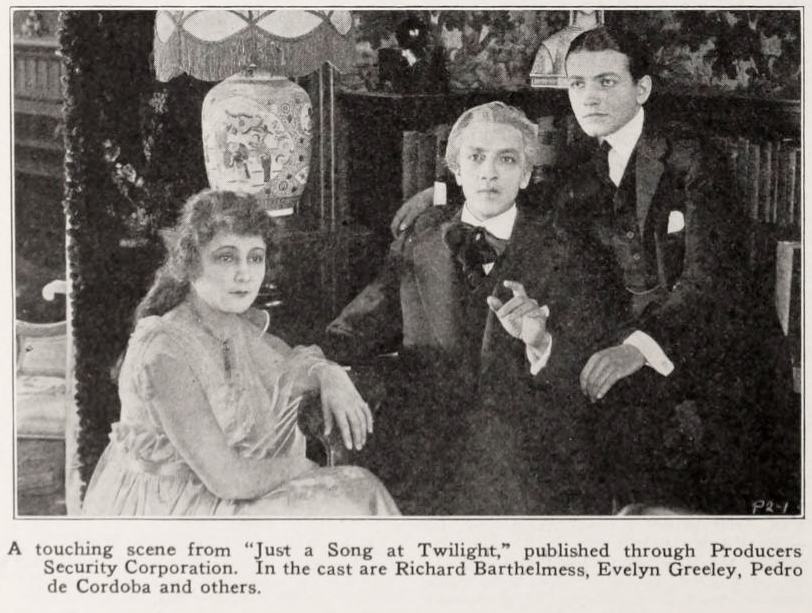
Lucy Winter, raised in the lap of luxury, has reluctantly accepted the suitor of her father's choice. George Turner, whose aunt has recently died, leaving him a necklace of peculiar antique beauty, has decided to search for his father, whom he has always believed dead. Passing a beautiful old Southern mansion that somehow seems strangely familiar, he sees a "Gardener Wanted" sign, applies for the position, and is accepted by the girl Lucy, with whom he falls in love, to the chagrin of her banker father, who orders him to leave after recognizing the necklace which the boy has given Lucy in lieu of an engagement ring. During a troubled sleep Father Time leads Winter's conscience to review his past. This extends over 18 years, during which Winter is installed as gardener at the Turner mansion and becomes the pal of his master, Carlysle. They love the same girl, Lucy Lee, who elopes with Winter. Their married life is one continued struggle. Previously Turner has given the antique necklace to Lucy as a wedding gift. This she later places in Carlysle's hands as security for one of the loans he made to her in their struggle against poverty. She led her husband to believe the money came from her mother, but he knew the truth, and accepted Carlysle's friendship, planning his ruin at the same time. Through the loss of Lucy's love, Turner passes many restless nights, eventually resorting to morphine, which finally masters him. Winter rises to the position of bank cashier, forecloses a mortgage on the Turner mansion, ousts Carlysle as bank president, and becomes president himself. Turner has been wrongly convicted of murder and sent to prison for life. Lucy, realizing the despicable character of Winter, and really in love with Carlysle, dies of a broken heart. Father Time leads Winter's conscience back into his body, and he wakes, calling "Lucy. Lucy!" George Turner arrives at the house and reads a number of letters, including one from his father, accusing Stephen Winter of being the cause of his troubles. He determines on revenge and hastens to the Winter mansion. Pity takes the place of anger at sight of Winter, and the old man tells George how it happened, giving his promise that he will secure his father's pardon. Soon George is able to bring his father from prison to the Winter Mansion. Winter tries to make amends to Carlysle, and the two leave the room arm-in-arm, and the young people give each other the previous promise, "I will."
View Details
Dir: Burton L. King
A battalion of the U. S. Army's 77th Division penetrates deep into the Argonne Forest of France during the First World War. The battalion becomes surrounded and holds out for six long days, awaiting reinforcement and rescue.
View Details
Dir: Burton L. King

When Vera, the daughter of steel king Daniel Maitland, marries Blair, a young lawyer, her father cuts her off with only a small allowance. A few months later, Blair becomes famous by securing the acquittal of one of his friends who had killed his wife's lover, basing his plea on "the unwritten law." He then succumbs to the fascination of another woman. Vera discovers them in a compromising situation and shoots Blair. At her trial, her lawyer is pleading for mercy when Vera explains that she does not want mercy, but justice. She asks if there is one law for a woman and another for a man and explains that she shot her husband because he betrayed her trust. At that moment, it is revealed that the whole episode is being composed by novelist Elaine Esmond, who interrupts her story to go to the opera with her sweetheart.
View Details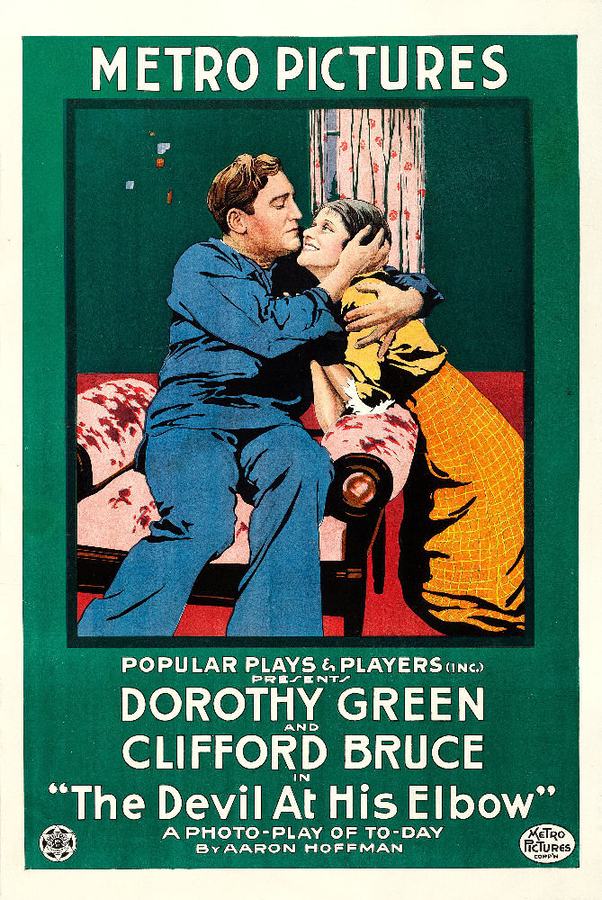
Dir: Burton L. King
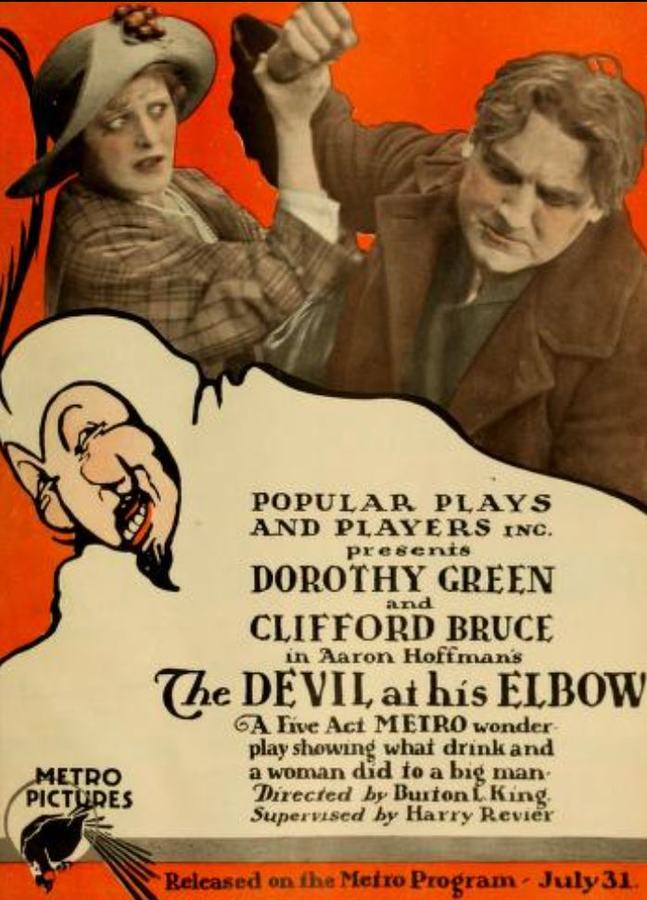
John Ashton, a young mechanical engineer, is completing the plans of a new submarine. The government is interested in his work, and he has promised to have it done by the tenth of the month, which gives him only six days in which to complete it. More and more he has been resorting to whiskey to keep his brain active. Robert Gray remonstrates with him, but to no avail. His fiancée, Grace Sealey, telephones him and urges him to attend a dinner party on the ninth. He accepts, though against his will. He falls asleep and dreams that he prepares to attend the dinner; he is still intoxicated when he arrives. Grace's father at once breaks off the engagement, and he leaves the house in disgrace. He goes home and finishes his plans on the morning of the tenth, and then, still wearing his evening clothes, wanders out into unknown streets. He goes into a saloon on the waterfront and drinks until he is insensible. There he is noticed by the captain and mate of a freighter, and shanghaied on board the vessel. When he comes to his senses he is far out at sea, and is told that the cruise will occupy six months, but that he may have all he wants to drink. At the end of the cruise Ashton and the captain, coming ashore, take a farewell drink together. Meg, a human derelict, attracts the captain's attention, and he attempts to force his attentions upon her. Ashton comes to her assistance, angering the captain, who gets two stevedores to attack him. Meg takes him to her own meager quarters and takes care of him. Gradually she induces him to stop drinking. Passing the building where he formerly had his office, he sees Franklin Darrow, a government engineer, and Gray, and hears them speak of Grace's wedding. She is to marry Wilfred Carleton, a broker, thinking Ashton dead. The news sends Ashton back to drinking heavily once more. But Meg learns of his real identity and helps him to win back his self-respect. They are married and Ashton's ambition returns. He resumes his work and seeks out his former friends. But Meg is unused to the new life. Her husband's work takes him more and more away from her, and she decides to take radical measures. Since he fell in love with her when under the influence of drink, she induces him to drink again, preferring his society in idleness and sordid surroundings to his neglect in luxury. The new plans for the government's submarine are made while he is intoxicated. They are wrong, and the crew of the first boat launched is drowned. Meg confesses what she has done, and takes the blame on herself. He flies at her throat, and waking up, knocks over the things on his desk. His original plans are as yet unfinished. He puts from him "the devil at his elbow," whiskey, and he and his fiancée have an early marriage, with the promise of a life full of achievement and ambition that is not clouded by an enemy which steals away the brains.
View Details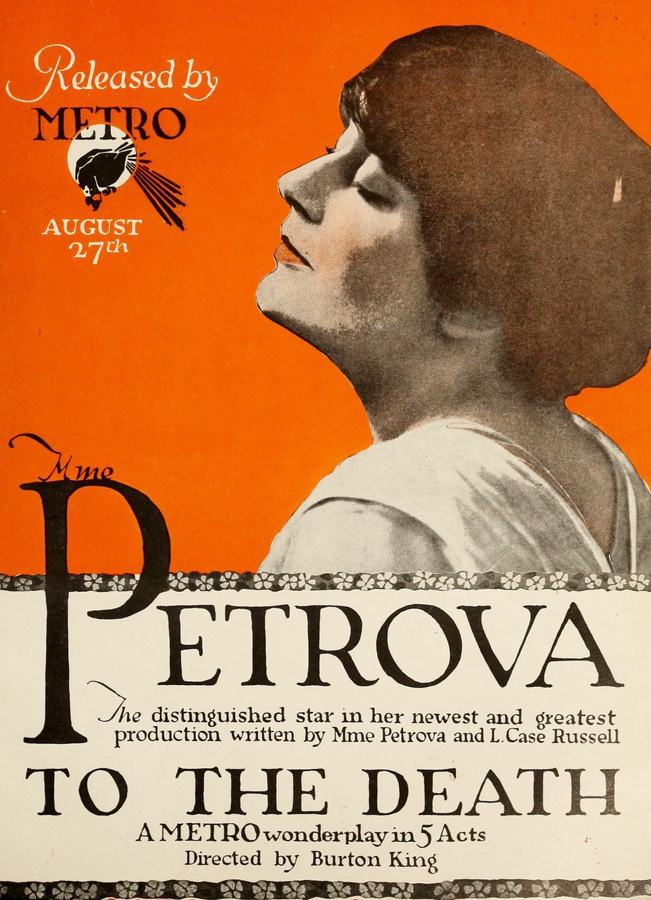
Dir: Burton L. King
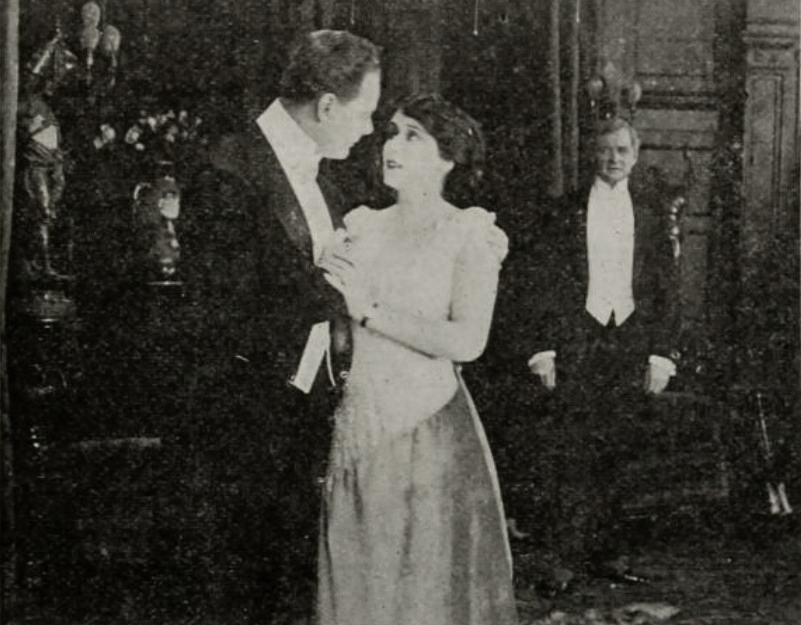
Bianca, a Corsican, supports her frivolous sister, Rosa, by making laces. The sculptor, Manatelli, visits her cottage to buy laces, and sees her modeling in clay. Impressed by her talent, he offers her free instruction if she wishes to come to Paris. Bianca accepts and promises to send for Rose as soon as possible. In Paris she meets Etienne Du Inette, head of the Internationale, a powerful secret service organization. He and Bianca are instantly attracted to each other. Jules Lavinne, also in the service of the Internationale, goes to Corsica on a secret mission. He sees and desires Rosa. One day a mysterious veiled woman slips a note under Etienne's door, warning him to go to Corsica and watch Lavinne, who is a traitor. He soon has occasion to protect Rosa from Lavinne. Lavinne learns the assumed name Etienne is using on the island and signs it to a note asking Rosa to meet him. In Paris, Bianca finishes and exhibits her first piece of work, and it is purchased by a wealthy patron. She sends for Rosa, but a letter from old Maria tells of the girl's disgrace and attempted suicide. Bianca rushes to her sister, who is dying. She finds the note which lured her sister to her destruction. It is signed, "Pierre Renard." Bianca vows to follow Pierre Renard "To the Death." She meets Jules Lavinne, and instinctively dislikes him, but when she learns that he belongs to the Internationale she forces herself to be gracious to him, hoping that he will aid her in finding "Pierre Renard." Lavinne, determined to win her, avoids meeting Etienne. Bianca asks Lavinne's aid, and he promises to find the man for her if she will marry him. Having vowed to avenge her sister at any cost, she promises. That night Lavinne telephones that he has a photograph of Pierre Renard. Bianca asks him to bring it to her at once. Before he comes he writes a note which he instructs his man to deliver to Etienne. It reads, "Bianca is in great danger. Go to her at once." Lavinne engages tickets on the midnight train, and tells his valet to take his portmanteau to a prominent hotel, where he arranges to have a priest ready to perform the ceremony. He shows Bianca the photograph. She is speechless with horror when she sees that it is a picture of Etienne. Lavinne instructs her to ask him whether he was not known in Corsica as "Pierre Renard." When he arrives she does so, and he admits it, also admitting that he knew Rosa there. She plunges a dagger in his breast, and he falls to the floor. Unwilling to keep her bargain with Lavinne, she attempts to take her own life. Lavinne prevents her, and forces her to accompany him to the hotel where the priest is in waiting. No sooner is the ceremony performed than Lavinne boasts of having won her by trickery, saying that it was he himself who lured Rosa to her death by the use of the name "Pierre Renard." Just then the valet knocks at the door, and Lavinne admits him. Behind him follow the woman of mystery and two gendarmes. The woman is Lavinne's wife, and he is arrested as a bigamist and a traitor. He returns to Bianca the dagger with which she struck down her lover. She rushes back to her own apartment, to kill herself beside his body, but she is amazed to find him gone. Her old nurse leads her into the room where he is lying asleep. The medallion of herself worn over his heart has saved his life.
View Details
Dir: Burton L. King
The sole support of her invalid mother and young crippled brother, Heloise Broulette is forced to become the mistress of Leland Norton in order to secure the money for an operation to save her mother's life. Mrs. Broulette recovers, but when she discovers the real source of her daughter's income, the news kills her. After her mother's death, Heloise leaves her career behind and goes to the country where she takes a job as a secretary to author Carter Vail, who falls in love with her. Ruth finds herself in a dilemma when Vail's sister Alice visits friends in the city and falls in love with Norton. Honor bound, Ruth sacrifices her own happiness to save Alice from Norton. In revenge, Norton informs Vail of Heloise's past, but Vail responds that she has the soul of a Magdalene despite the life that she had been forced to endure.
View Details
Dir: Burton L. King
Ephram Judson is an itinerant evangelist. He is always accompanied by his daughter Ruth and his 17-year-old son Tom. They enter a community of devout Christians and hold a series of meetings. On the outskirts of the community lives Hugh Lee, an outcast. His only sister had been burned to death on her wedding day when he renounced the world and his God. Accidentally he meets Ruth Judson, the evangelist's daughter. For the first time since the tragedy, the world looks bright to him. Ruth induces him to attend the Sunday service, but in the midst of it, he pictures his sister's death, and bursts forth into a violent denunciation of religion. The worshippers are shocked and pursue him to the woods. The collection that day was large and the money is given to young Tom Judson to take to the treasurer. Tom has formed the acquaintance with the village sport, who meets him and inveigles him into a game of cards. Tom stakes the church funds and loses. The gambler turns the money over to the village grocer in payment of a bill and the distressed boy, who has witnessed the transaction, sees the grocer hide it. Tom steals the money, but is pursued and slightly wounded by the grocer. He makes his way to the only place of refuge he can think of, the cabin of Hugh Lee, the unbeliever. Tom believes he is dying and pleads for his sister. Lee fetches her at night to the cabin. Meantime the grocer has aroused the community, including the evangelist, to hunt down the thief. The boy is traced to Lee's cabin, which is attacked. Ruth, aroused, as she was from her slumber, is found in the cabin in her night clothes, but she still shields her guilty brother and Lee. The fury of the mob breaks loose, Lee is dragged from his cabin and a noose placed about his neck. Ruth refuses to tell why she was in the cabin, despite the pleadings of Lee to save her honor, and give her brother up to the law. She declares that God will save them all. A storm is raging. Lighting its way with fire-brands, the mob marches Lee to the scene of the revivals after having fired the cabin. The leader of the mob throws the end of the noose over a tree and gives the horse Lee is riding a crack with the whip. Just at that moment a terrific bolt of lightning strikes the limb, severing it from the tree and throwing Lee to the ground. It strikes, too, the mob leader, killing him instantly. Tom, driven from the burning cabin, has followed the mob and arrives on the scene just as the hand of God saves an innocent man. He confesses his guilt, clearing Lee and his sister's honor and changing a frenzied mob into a rejoiceful gathering, the picture closes with Lee acknowledging the power of faith that has saved him and clasping Ruth in his arms.
View Details
Dir: Burton L. King
Young Dudley Kent falls in love with Grace Vaughan and leaves his wife for her. The two are very happy until Kent learns that his young son has died. He blames Grace for "luring" him away from his family and leaves her. Alone and broke, Grace is tricked into working at a "sporting house" run by madam Marie D'Arcy. Desperate to escape her circumstances, she meets a young man who she believes can rescue her from her predicament. He eventually does, but complications ensue.
View Details
Dir: Burton L. King
Sonia Demitri, daughter of an exiled Russian nobleman, comes to this country almost penniless, teaches a while, and then, being a lover of books, starts a little second-hand bookstore. Sonia grows to womanhood unaware of her noble birth, she has a great singing voice. In an old Bible which her father treasures are the documents which will establish her claim to large estates, but her father tells her she will learn it all after his death. David Tryne, living in the same neighborhood, deformed and with a twisted mind, is a remarkable penman and a lover of the beautiful. He forges a letter of recommendation given to one man. The second man uses it and as a result the first man is accused of forgery. The neighbors try to mob Tryne, who takes refuge in the bookstore. Sonia pities his deformities, aids him, and wins his adoration. To the bookstore comes Sutton, a society man, with Kitty Fish, and an impresario. Later, with Schuyler, they all go to hear Sonia sing. She succeeds and it is planned that she shall go abroad and study. Tryne is with her father while she is away and when Demitri dies Tryne learns from the papers in the old Bible of Sonia's high birth. Sonia makes a great success, Schuyler falls in love with her, and Tryne, crazed with jealousy, forges a note which he places in the old Bible, saying that Sonia is the daughter of a disreputable woman. This he signs with Demitri's name, and gives the book to Sutton to give to Sonia, asking him to say that he found it in an old bookshop. Schuyler's mother asks Sonia about her ancestry, and learning nothing, decides to institute inquiries in Russia. Sutton sprains his ankle on his way to Sonia, and sends for her to come and get the book. Tryne learns of this and sends a note to Schuyler, telling him of her going to Sutton. Schuyler meets her there. She shows Sutton's note, and while Schuyler declares his trust in her, she feels that she cannot marry him with the stain on her birth, and sends him away. Sonia gives up everything, and with Tryne as her servitor, awaits only death. Kitty feels for her, and sends for Schuyler to come and see her. The day he is to come, Soma finds the genuine documents regarding her birth which had fallen from Tryne's coat pocket. Tryne sees the papers in her hands, and tries to get them back, but she holds him with her eyes, and as Schuyler enters the room, Tryne sees that he has lost and quietly slips away. With the barrier to their love removed, Sonia and Schuyler find their happiness.
View DetailsAnalysis relative to The Truth About Women
| Film Title | Atmosphere | Complexity | Similarity |
|---|---|---|---|
| Her Husband's Honor | Surreal | High | 89% Match |
| Just a Song at Twilight | Ethereal | High | 97% Match |
| The Lost Battalion | Ethereal | Abstract | 93% Match |
| More Truth Than Poetry | Tense | Layered | 95% Match |
| The Devil at His Elbow | Gritty | High | 97% Match |
This guide was algorithmically generated using the cinematic metadata of Burton L. King's archive. Last updated: 6/28/2026.
Back to The Truth About Women Details →