
DbcultAccessing Vault...
Recommendations
Senior Film Conservator
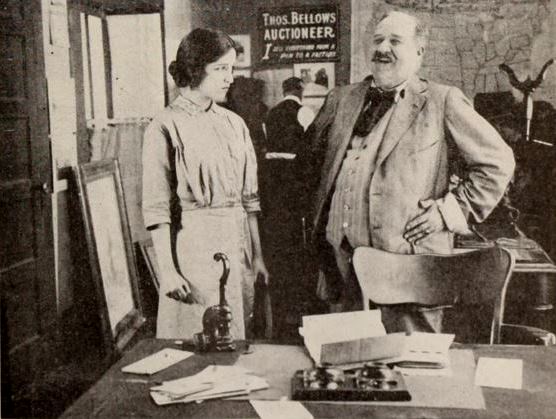
Looking back at the 1918 milestone that is To the Highest Bidder, the cinematic shorthand used by Tom Terriss is both ancient and revolutionary. Dive into this collection and find the spiritual successors to Tom Terriss's vision.
As Tom Terriss's most celebrated work, it defines to articulate the unspoken anxieties of United States's 1918 era.
The story concerns a young girl who spends her entire life in trying to obtain money to pay off the mortgage on her farm. But the day comes when she can no longer meet the claims, and Jarvis, the man who holds the mortgage, gives her the alternative of selling herself to him in return for the land. She spurns his offer, but adopts a plan to sell herself in service for one year to the highest bidder. Her old sweetheart arrives too late to save her and later proves that he was not worthy of her. The year passes without her "master" claiming her. Then the girl learns that Jarvis had bought her services because he had really loved her and she, having learned to care for him, marries him. - New York Dramatic Mirror, July 27, 1918.
Based on the unique artistic bravery of To the Highest Bidder, our vault has identified these titles as the most compelling follow-up experiences for fans of cult cinema:
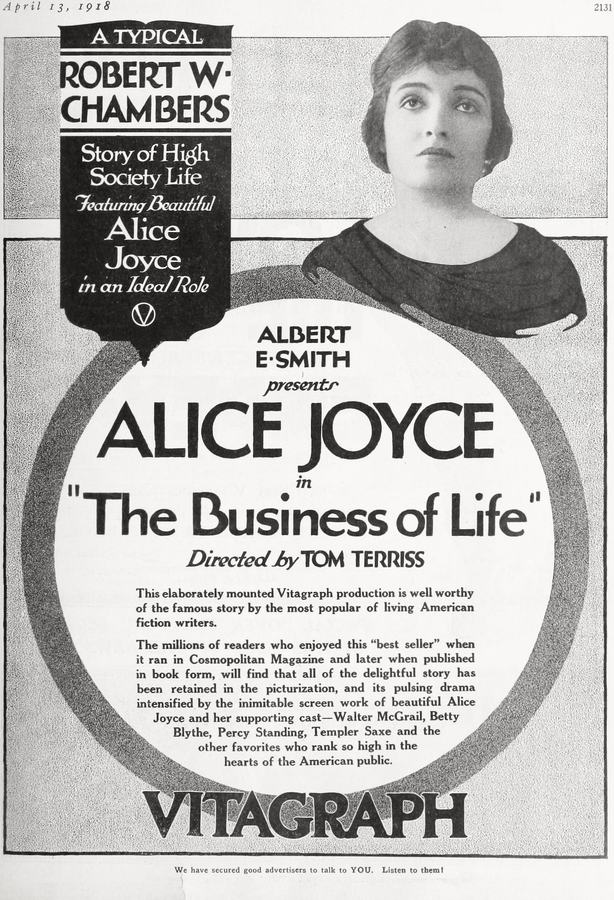
Dir: Tom Terriss
Carrying on with the antique business of her deceased father, Jacqueline Nevers (Alice Joyce) is asked to catalog James Desboro's (Walter McGrail) collection. When they fall in love, it induces the jealousy of Elena Clydesdale, a married woman who is also in love with James. Jacqueline and James marry, but Elena endangers their happiness by announcing that she and James are having an affair. When Elena becomes ill, she becomes reconciled with her husband and confesses her lies to Jacqueline, permitting the newlyweds to live in peace.
View Details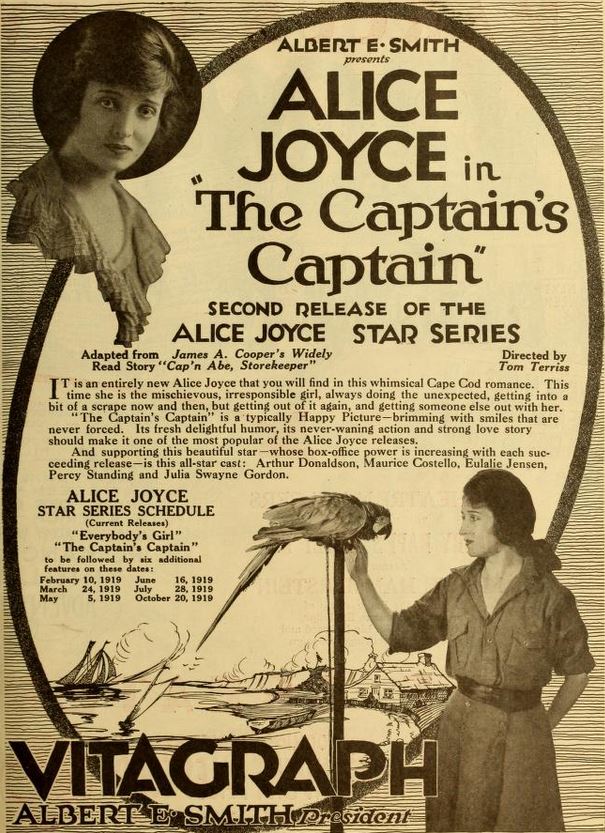
Dir: Tom Terriss
Louise Grayling escapes from a straight-laced aunt on a plea that she wants to visit her uncle, Captain Abe, on Cape Cod. Abe is henpecked by his housekeeper and rather looked down upon by the villagers who haunt his store. To give himself a fictitious glory he invents a fictitious brother, Amzon, who is a composite of all the pirates from Blackbeard to the food profiteers. Louise penetrates the deception and induced Abe to go away and come back as the fictitious brother. She has the time of her life keeping the placid Abe up to the reputation of his fire-eating brother, but all would have gone well had not some shipwrecked East Indians imagined that they recognized him as the desecrator of their Temple. Between them and the town people, who get the idea that Abe has been murdered by Amzon, Louise has her hands full, but Abe is transformed into his proper self, and a supposed fisherman who turns out to be a young millionaire rescues her from the mob and all ends happily after all. - Moving Picture World.

Dir: Tom Terriss
William Lanyon, a West Indian planter, dies and leaves all his estate to his nephew, Dick Lorient, a New York society rounder, who is engaged to be married to his cousin, Dulcie Lanyon. Dick leaves to inspect his property and John Stark, the overseer, to whom the estate has been left in the event of Dick's death, conspires to gain possession of the property. In Jamaica, Dick meets the "Woman," and in the Flame of Passion, passes through rushing waters and fires of hell. How he escapes the siren's deadly fascination and the villainous scheming of Stark is depicted herein.
View Details
Dir: Tom Terriss
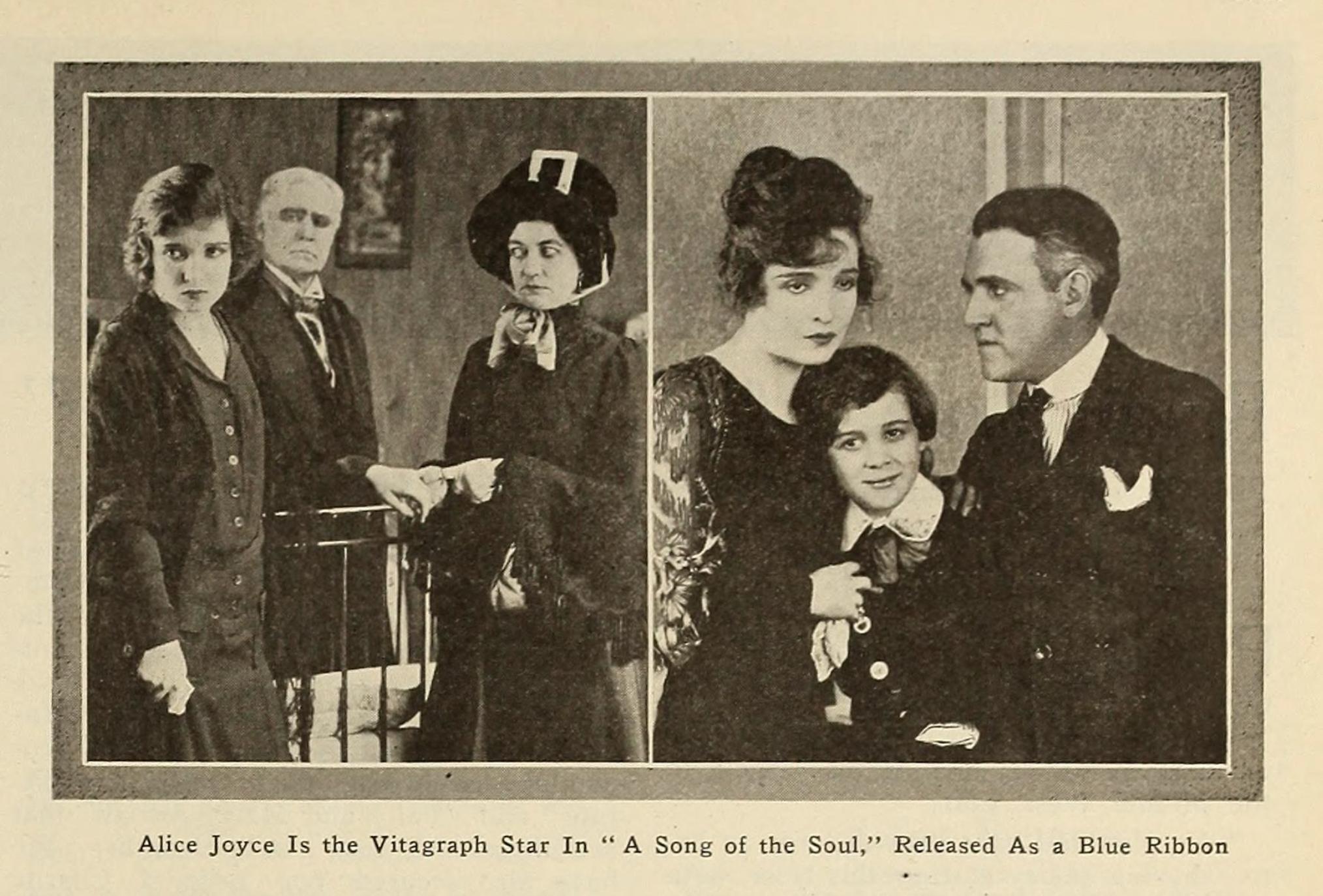
Young, innocent, confiding, it is a shock to Ann Fenton to learn that her supposed husband is not a business man, but a gambler, and that her marriage is bigamous. The child is taken from her by a Helping Hand Society and apprenticed to a brutal farmer. She is left upon her own resources. Seven years later Fenton again crosses her path, but she finds happiness in honorable marriage while her betrayer is taken away to face a murder charge, and the Song of the Soul now rises in full, pure tones from the breast of the happy wife and mother.
Dir: Tom Terriss
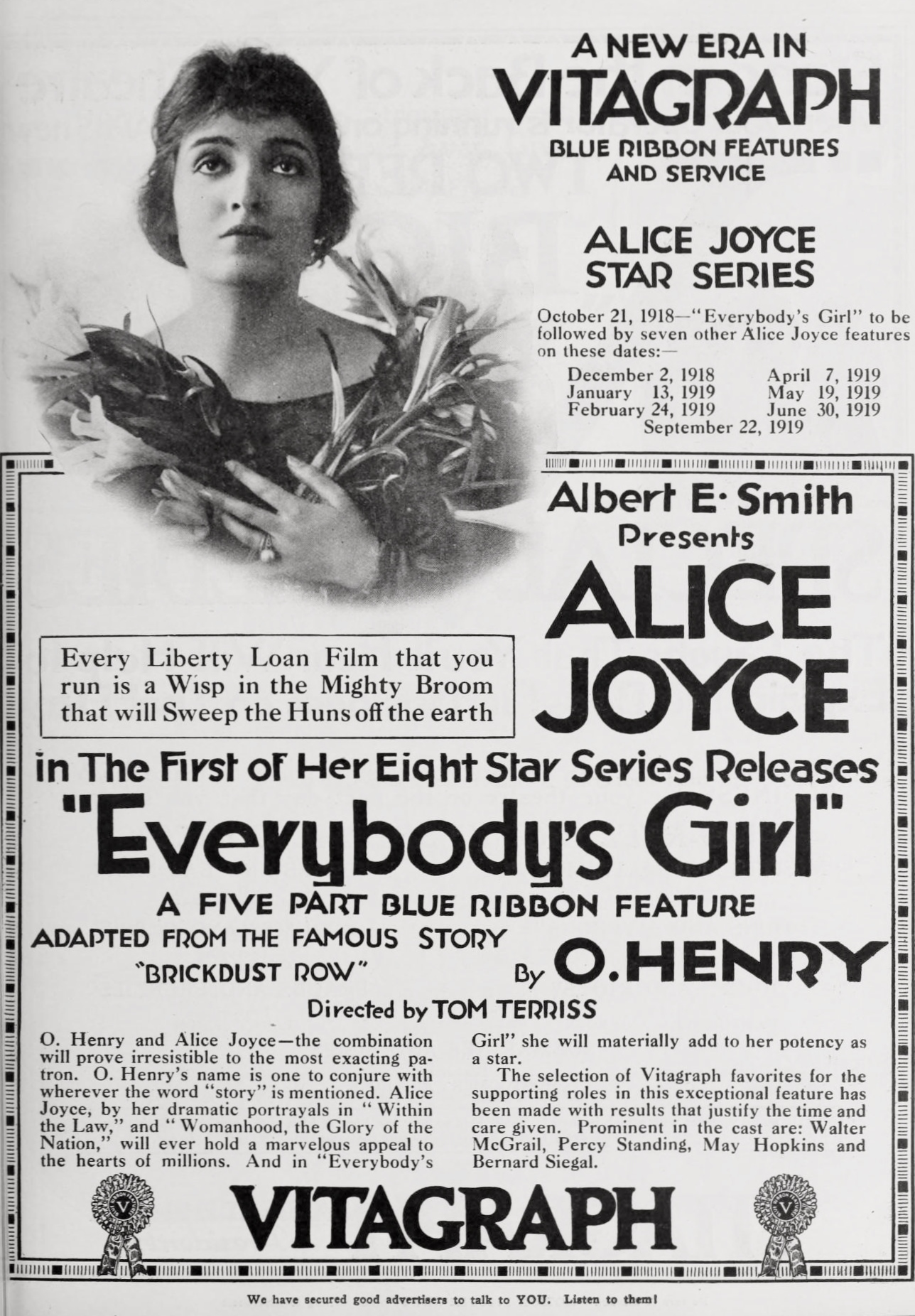
Florence is a little milliner who shares a room in "Brick Dust Row" with Ella, a fellow worker. It is all the home she has and the girls have to receive their company in the parks because there is no reception room, the millionaire owner of the Row having sublet the parlors. They see no harm in chance acquaintances. Then Florence meets Blinker, and real love comes into her life; but Blinker learns of what to him seems her promiscuous acquaintances and makes it plain that he cannot marry such a woman. There is a fire on the excursion boat on which they are traveling, and Bill, a gun-packing husky, who has constituted himself Florence's champion, saves them both. Then he learns Blinker's attitude, and a visit to the young millionaire owner of the Roy shows Blinker that his own greed is basis for Florence's actions and a changed Row is Florence's wedding present. - Moving Picture World 1918.
View Details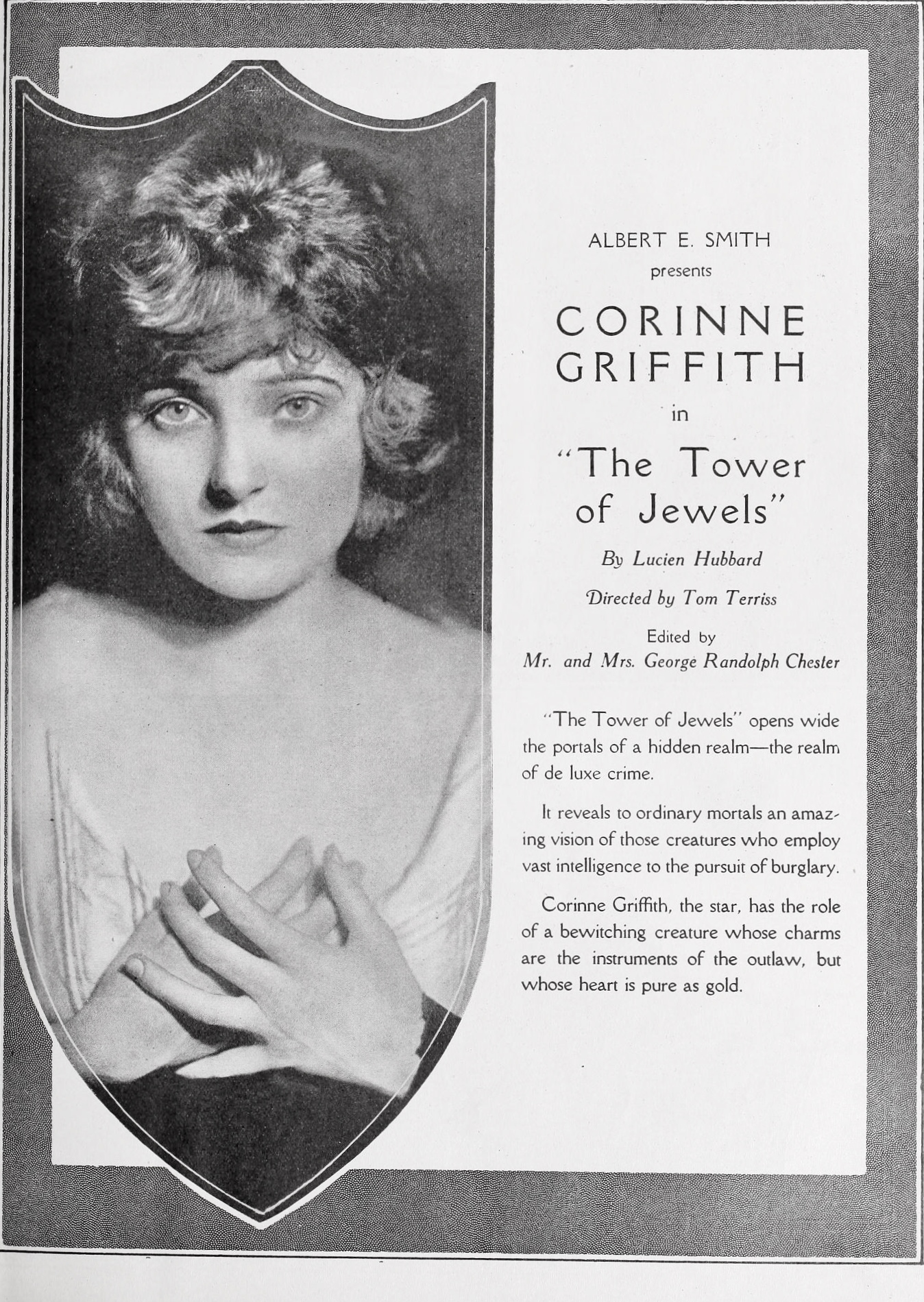
Dir: Tom Terriss
Emily Cottrell, one of the most respected members of a large gang of crooks headed by Fraser Grimstead, is caught while robbing the home of wealthy David Parrish. Emily accepts David's offer of a home and a chance to go straight, but Grimstead is unwilling to lose her, and he insists that she help him steal the famous diamond collar, The Tower of Jewels, which is in David's possession. When Emily refuses, Grimstead threatens to expose her past to Wayne Parrish, her benefactor's son with whom she is in love. Grimstead and the gang surround the Parrish home, then Wayne's cousin removes the jewel case to throw suspicion on her rival for Wayne's affections. Emily's innocence is established later, and her reputation is further cleared by Grimstead, who is shot by the police. With his dying breath, Grimstead describes Emily's gentle birth and states that she is fit to marry Wayne.
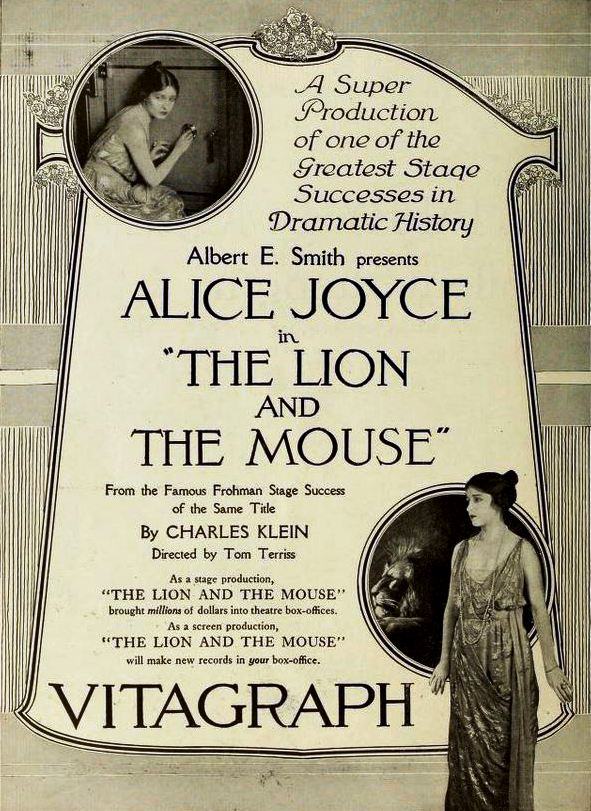
Dir: Tom Terriss
John Burkett Ryder, "the richest man in the world," determines to discredit a judicial decision which works against the interest of his millions by discrediting its author, Judge Rossmore, and causes impeachment charges to be laid against him in Congress. The judge's daughter Shirley Rossmore, learns of his trouble and returns home from Paris, where she has won success as a writer. She is loved by Jefferson Ryder, son of the magnate who is slowly killing her father. Determined to force the millionaire's hand, she publishes "The American Octopus" under a pseudonym, using Burkett's character as the central figure. He is attracted by the book and brings Shirley, whom he knows as Sarah Green, to his home to write his biography. This is the opportunity she is seeking, as it gives her a chance to obtain the two letters which will clear her father's name. Jefferson Ryder helps her secure the desired papers, but his father catches him and denounces him as a thief. Shirley, who loves Jefferson, cannot stand to see him so branded and confesses her identity to his father. The "Lion" had long since been won by the charm of the "Mouse," and the story is cleared up in pleasing style. - Moving Picture World 1919.
View Details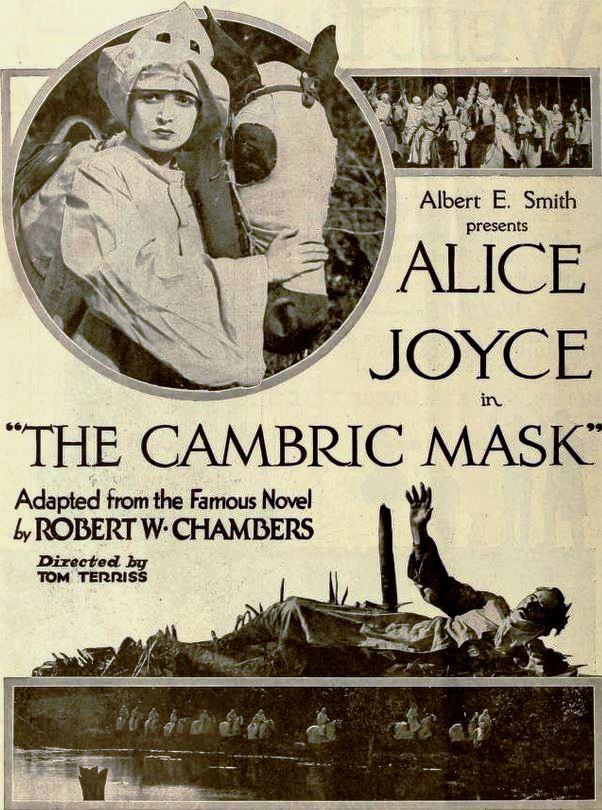
Dir: Tom Terriss
John Sark is the owner of a piece of land coveted by Henry Murden, leader of the band of "White Riders," who has purloined the information that a railroad wishes to buy the property. Sark is a naturalist and has for an assistant Rose Ember. He discovers one of the rider's masks which is made of one of Rose's handkerchiefs, and this introduces a mysterious element into the love affair. The mask belonged to her father. The riders try to force Sark's hand, but are obliged to capture him. Rose, seeing Sark lead away, dons a mask and riding close to his horse, cuts his bonds. Sark kills Murden, and, finding that his savior was Rose, is once more happy in his love. - Moving Picture World 1919.
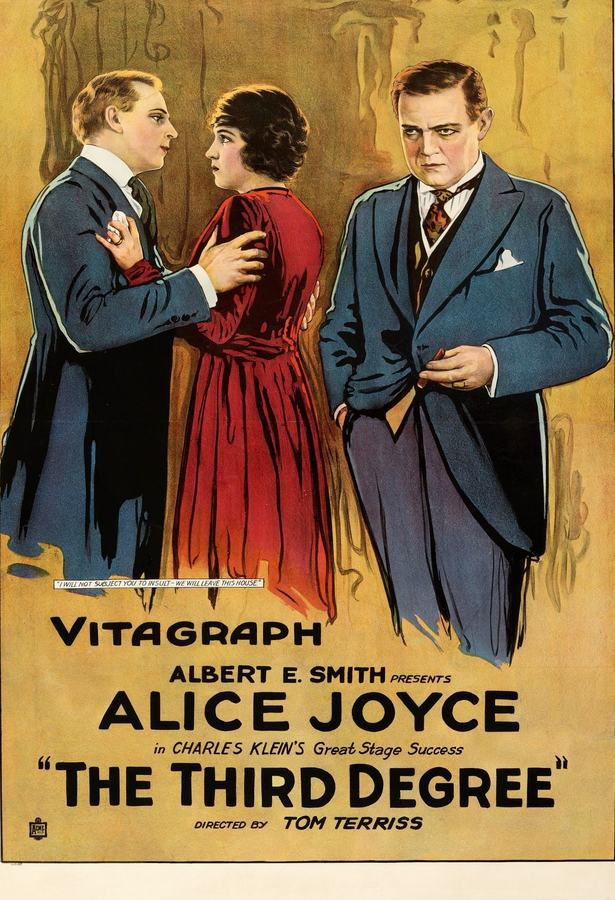
Dir: Tom Terriss
An expose of the methods used by a police-department to extract a confession from a suspect, regardless of innocence or guilt, and the effect and consequences on a family when an innocent member breaks under the interrogation methods and confesses to a crime he did not commit.
View Details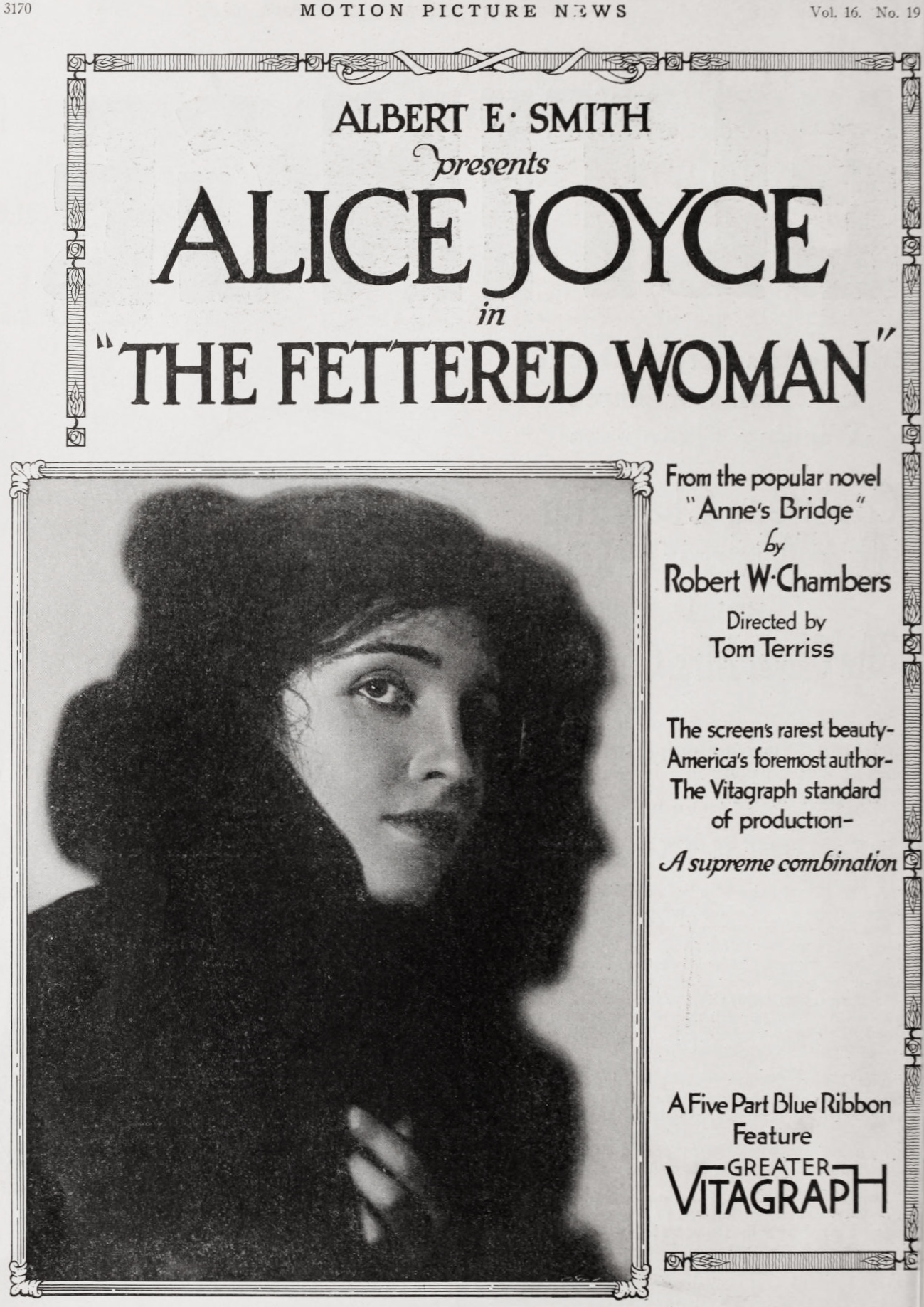
Dir: Tom Terriss
The story is of Angelina Allende, who is left an orphan by the suicide of her father, a real-estate visionary who has beggared not only himself but his friends in a vain attempt to "boom" the deserted hamlet of Anne's Bridge. Receiving news of his death, Angelina returns home, where she is presently inveigled into a trip to New York by two men, one of whom wants the property and the other of whom wants Angelina. In a restaurant scene which follows, Bink, the elder of the conspirators, makes advances to Angelina, is repulsed and then is shot by Wolver his fellow conspirator. The police enter, Angelina is accused of the shooting, and she is sentenced at length to a three-years' term in a home for delinquent girls. Emerging at the expiration of her sentence, she returns to Anne's Bridge. Here, in the lonely days that follow, she advertises for boarders and is at last rewarded by the appearance of James Deane. It is here that the love story begins; and it progresses until Angelina is cleared, through Deane's efforts, and, finally, is free to marry him. - New York Dramatic Mirror, November 10, 1917.
View DetailsAnalysis relative to To the Highest Bidder
| Film Title | Atmosphere | Complexity | Similarity |
|---|---|---|---|
| The Business of Life | Gritty | Layered | 95% Match |
| The Captain's Captain | Tense | High | 90% Match |
| The Flame of Passion | Surreal | Linear | 95% Match |
| The Song of the Soul | Ethereal | Layered | 85% Match |
| Everybody's Girl | Gritty | Abstract | 87% Match |
This guide was algorithmically generated using the cinematic metadata of Tom Terriss's archive. Last updated: 8/17/2026.
Back to To the Highest Bidder Details →