
DbcultAccessing Vault...
Director's Spotlight
Senior Film Conservator
Director's Spotlight: United States
A Deep Dive into the 1926 Vision of Charles Andrews
To understand the modern evolution of United States film, one must first look at Pirates of the Sky and the collaborative alchemy between Charles Andrews and the 1926 creative team. Subverting the expectations of the typical 1926 audience, it remains a vital reference point for anyone studying the evolution of Charles Andrews.
In Pirates of the Sky, Charles Andrews pushes the boundaries of conventional narrative. The film's unique approach to its subject matter has sparked endless debates and interpretations among cinephiles and critics alike.
While deeply rooted in United States, Pirates of the Sky has achieved a global reach, influencing directors from various backgrounds. Its ability to translate Adventure tropes into a universal cinematic language is why it remains a cult staple decades after its 1926 release.
| Cinematography | Handheld |
| Soundtrack | Experimental |
| Editing | Invisible |
| Art Direction | Kitsch |
Visualizing the convergence of Charles Andrews's style and the core Adventure narrative.
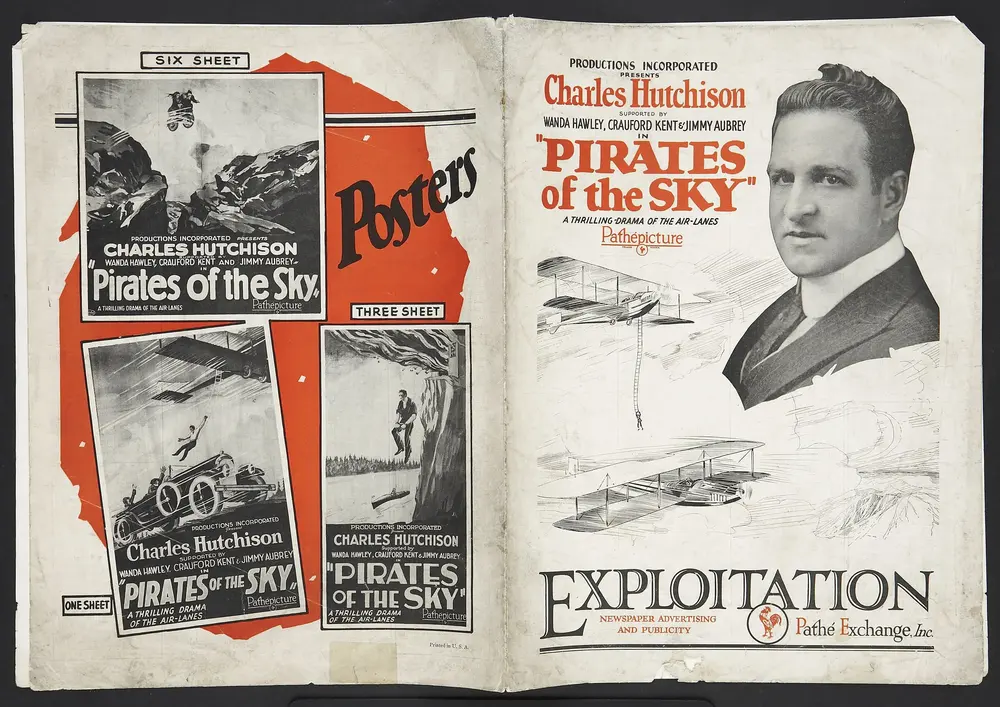
Manning is engaged by the secret police to trail aeroplane thieves,who learn this and grab his ex-fiancée. Both escape from a burning cliff-building, and the gang leader "falls for" Doris, whom he does not suspect until a note to Manning (now disguised as an air mechanic) is intercepted. Manning rescues Doris, chases the mail by motor-cycle, climbs up into it, transfers to another, drops on to some hay, and after a revolver battle captures the crooks, the leader being later arrested; Doris comes to Manning's arms.
Decades after its release, Pirates of the Sky remains a vital piece of the cinematic puzzle. Its influence can be seen in countless modern works, solidifying Charles Andrews's status as a master of the craft in United States and beyond.