
DbcultAccessing Vault...
Director's Spotlight
Senior Film Conservator
Director's Spotlight: United States
A Deep Dive into the 1917 Vision of Charles Brabin
Exploring the cult underpinnings of Babette leads us to the stylistic boundaries pushed by Charles Brabin during the production. Through a lens of existential fatalism and cult tropes, it continues to spark endless debates among critics and cinephiles alike.
In Babette, Charles Brabin pushes the boundaries of conventional narrative. The film's unique approach to its subject matter has sparked endless debates and interpretations among cinephiles and critics alike.
While deeply rooted in United States, Babette has achieved a global reach, influencing directors from various backgrounds. Its ability to translate cult tropes into a universal cinematic language is why it remains a cult staple decades after its 1917 release.
| Cinematography | Static |
| Soundtrack | Minimalist |
| Editing | Disjunctive |
| Art Direction | Baroque |
Visualizing the convergence of Charles Brabin's style and the core cult narrative.
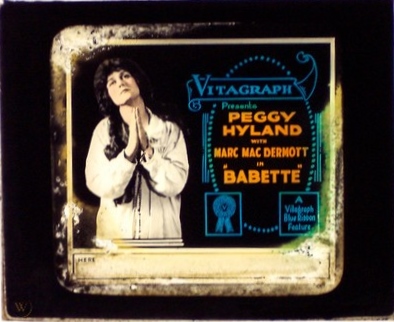
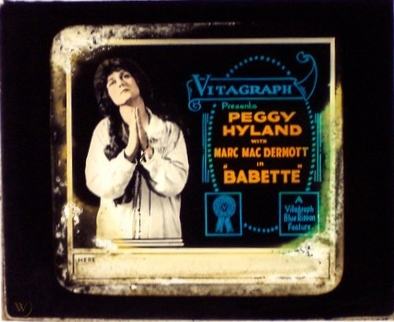
Babette is living with her father, the jailer and hangman in the castle-jail at La Fourche. Raveau, a criminal, comes to the castle and meets her. Her sweetness and purity cause him to realize his form of life is an empty shell. He even restores a necklace purloined from a tourist. Later he and Babette realize their love for each other. Their wedding is celebrated with much pomp. Guinard, a detective, turns up. Realizing his danger, Raveau convinces his wife that their friends are planning to separate them, and gets her to escape with him. They elude Guinard. In Montmartre, Raveau and Babette are like two doves. He again takes up art. But his work is not up to date and he finds the purse growing slimmer. When Babette shyly confesses that there will be another mouth to feed, and that she has given much of their store to Fifine, a "Quarter" girl, whose husband is just coming from prison, Raveau realizes how desperate is his need. He tries once more to sell his wares, without success. An appeal to an old partner brings a turn-down. Raveau then steals banknotes from a man in the post office. Guinard turns up after the baby is born. Without letting Babette know of his crime, Raveau parts from her, saying he has a commission which may take him away for a long time, but in the Commissionaire's office he learns his prosecutor is the husband of a woman to whom he had restored the money won at a gaming salon just before his marriage. The man refuses to recognize Raveau as the thief and he returns to Babette to say he has passed up the commission and will stay with her always, and Babette is happy in her husband's love, ignorant of his sacrifice for her.
Decades after its release, Babette remains a vital piece of the cinematic puzzle. Its influence can be seen in countless modern works, solidifying Charles Brabin's status as a master of the craft in United States and beyond.