
DbcultAccessing Vault...
Director's Spotlight
Senior Film Conservator
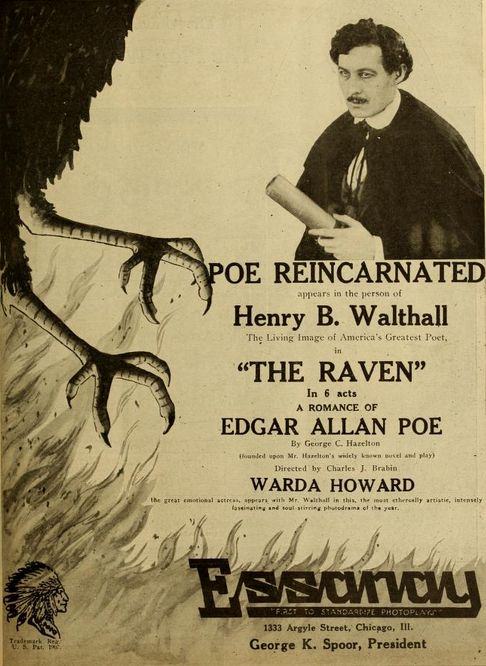
Director's Spotlight: United States
A Deep Dive into the 1915 Vision of Charles Brabin
As we revisit the 1915 masterpiece The Raven, we are struck by the meticulous attention to detail that Charles Brabin applied to every frame. Anchored by a narrative that is both personal and universal, it bridges the gap between traditional cult and contemporary vision.
In The Raven, Charles Brabin pushes the boundaries of conventional narrative. The film's unique approach to its subject matter has sparked endless debates and interpretations among cinephiles and critics alike.
While deeply rooted in United States, The Raven has achieved a global reach, influencing directors from various backgrounds. Its ability to translate cult tropes into a universal cinematic language is why it remains a cult staple decades after its 1915 release.
| Cinematography | Static |
| Soundtrack | Synth-Heavy |
| Editing | Disjunctive |
| Art Direction | Baroque |
Visualizing the convergence of Charles Brabin's style and the core cult narrative.
Edgar Allan Poe, while at college, incurs many debts and is sent home in disgrace. He is ordered from the house by his father. Shortly after, he marries, and tries to make a living by writing, but is a failure financially. His wife dies because he is unable to furnish her with even the bare necessities of life. He is plunged into great grief and despair. All night he sits brooding over his loss. Through his distorted imagination he sees the ominous raven enter his chamber and croak gloomy forebodings. The spirit of his wife also appears and finally he himself dies, and is wafted to heights supernal, where he is united with his "Lenore."
Decades after its release, The Raven remains a vital piece of the cinematic puzzle. Its influence can be seen in countless modern works, solidifying Charles Brabin's status as a master of the craft in United States and beyond.