
DbcultAccessing Vault...
Director's Spotlight
Senior Film Conservator
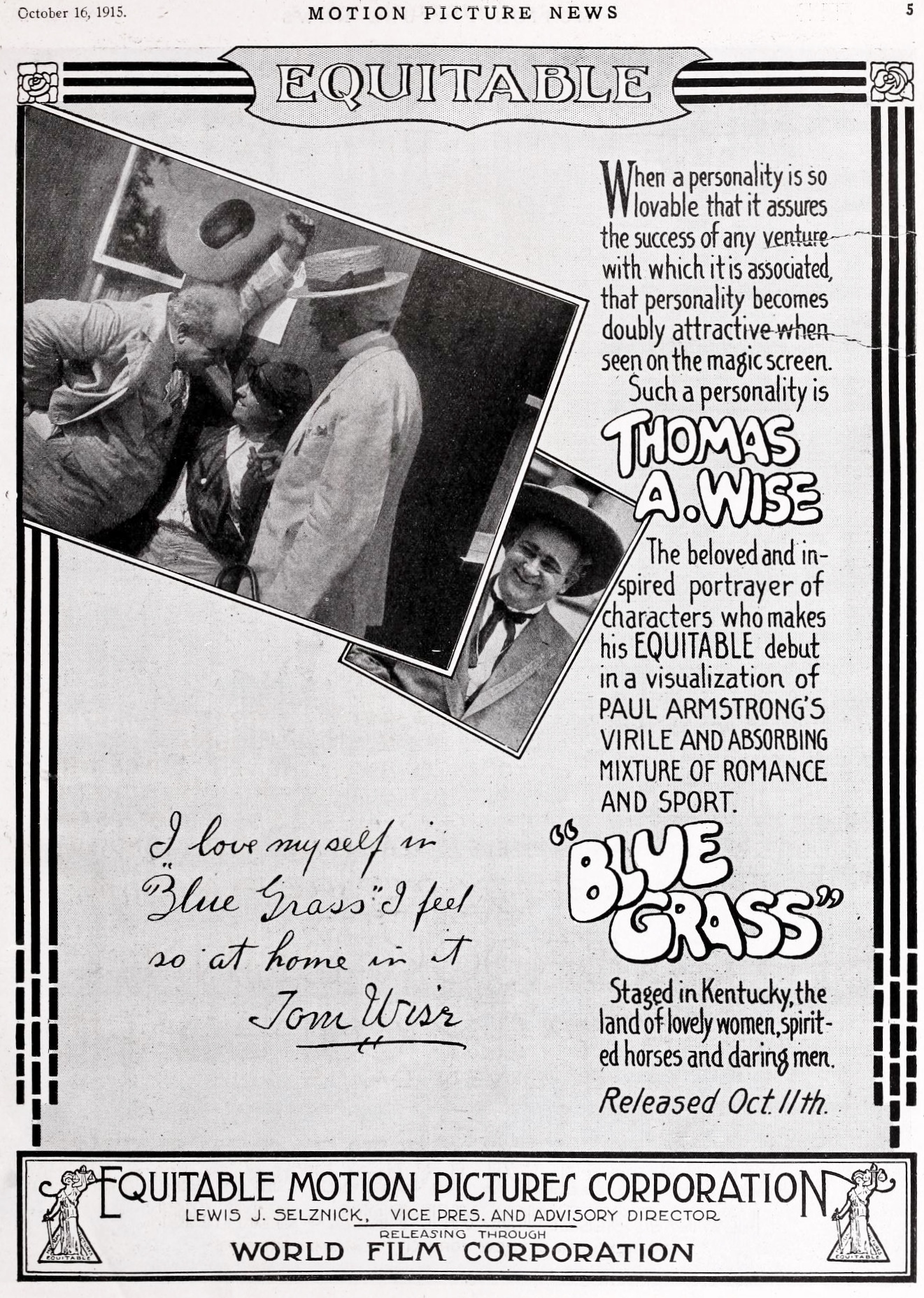
Director's Spotlight: United States
A Deep Dive into the 1915 Vision of Charles M. Seay
The 1915 release of Blue Grass marked a significant moment for the stylistic boundaries pushed by Charles M. Seay during the production. In the context of United States's rich cinematic history, it invites us to question our own perceptions of cult narratives.
In Blue Grass, Charles M. Seay pushes the boundaries of conventional narrative. The film's unique approach to its subject matter has sparked endless debates and interpretations among cinephiles and critics alike.
The visual language of Blue Grass is defined by its use of shadows and framing, a hallmark of Charles M. Seay's style. By utilizing a 1915-era palette, the film creates an immersive experience that perfectly complements its cult themes.
| Cinematography | Noir-Inspired |
| Soundtrack | Orchestral |
| Editing | Invisible |
| Art Direction | Kitsch |
Visualizing the convergence of Charles M. Seay's style and the core cult narrative.
At a race, My Lady, a horse belonging to Colonel Taylor, wins, but is injured so seriously that she will be unable to run again. Wilfred Warren wagers a large sum on the mare, but is cheated out of his winnings by Kelley, an unscrupulous character of the track. The next year, Colonel Taylor, being in straitened circumstances, breeds My Lady, and Blue Grass, a striking colt, is born. Another year and the Colonel starts to break and train Blue Grass. Another colt is born. Finances become tighter. In the meantime Warren meets Virginia, the Colonel's daughter, a love affair resulting. The Colonel, compelled to sacrifice the second colt, sends his son, Morgan, who, forced to accept a much smaller sum than expected, stakes the money on a "sure tip" and loses. In his anger the Colonel casts him off, ordering him out of the house. Kelley, in an effort to buy My Lady, meets Virginia and determines to get her, as he determines to get the mare. Just before the race in which Blue Grass is entered, the Colonel, badly in need of money, sells the mare to Kelley upon the latter's promise to sell her back, in the event of Blue Grass winning the race. The Colonel uses the money received for a side bet on his horse, and Kelley frames the race against him. Morgan, now Kelley's cashier, meets Warren, who. on learning Morgan's identity, brings about a meeting between him and Virginia, and caught red-handed by the Colonel, is forbidden to see Virginia again. On learning Kelley's intentions, Morgan quits Kelley. In the race, Blue Grass is left flat-footed by the bribed starter, but starts after the rest and wins. Warren, learning of Kelley's plot to steal My Lady, evens up old scores, bringing about a reconciliation and all ends as it should.
Decades after its release, Blue Grass remains a vital piece of the cinematic puzzle. Its influence can be seen in countless modern works, solidifying Charles M. Seay's status as a master of the craft in United States and beyond.