
DbcultAccessing Vault...
Director's Spotlight
Senior Film Conservator
Director's Spotlight: United States
A Deep Dive into the 1916 Vision of Chester M. Franklin
The evocative power of The Children in the House stems from the unique collaboration between the subversive storytelling techniques employed by Chester M. Franklin in 1916. Synthesizing the best elements of United States and international cinema, it reminds us of the fragility and beauty of the 1916s.
In The Children in the House, Chester M. Franklin pushes the boundaries of conventional narrative. The film's unique approach to its subject matter has sparked endless debates and interpretations among cinephiles and critics alike.
To fully appreciate The Children in the House, one must consider the cinematic climate of 1916. During this period, United States was undergoing significant artistic shifts, and Chester M. Franklin was at the forefront of this cult movement, often challenging established norms.
| Cinematography | Handheld |
| Soundtrack | Experimental |
| Editing | Invisible |
| Art Direction | Kitsch |
Visualizing the convergence of Chester M. Franklin's style and the core cult narrative.
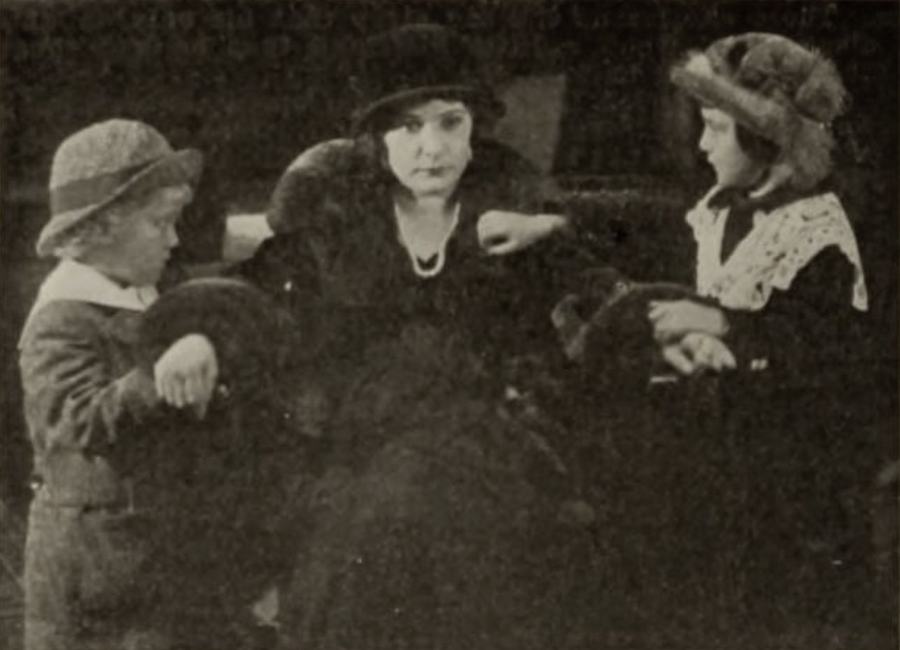
Roy Somerville has turned out an interesting story that will hold the interest of the majority of audiences as produced by the Triangle-Fine Arts Company. It is a five-reel feature produced under the direction of C.M. and S.S. Franklin,. Norma Talmadge stars as Cora, who is wed to Arthur Vincent (Eugene Pallette); they have two children. Vincent is a bank president's son who devotes much of his time to cabaret dancer Jane Courtenay, who is willing to have him devote his time to her as long as he is a good provider. The wife, who has been sadly neglected, turns to her sister, who is wed to young detective Fred Brown. His brother Charles, who works in the elder Vincent's bank as a cashier, lives with them. He was Cora's first love and has never quite recovered from the fact that she jilted him to wed Vincent because of his money. The cabaret dancer makes several demands on the young Vincent, who tries to borrow money from his father to meet them; failing to receive the loan, he agrees to help several friends of the cabaret charmer rob his father's bank. After the robbery Charles Brown is accused of the crime and arrested. But the robbers are discovered in their hiding place, and in escaping all but one is killed. Cora is left a widow and the natural supposition is that she and Charles were happily married afterward. Just where the title comes in is hard to say, but the picture, while not one of the best that has been produced at the Fine Arts, is one that will get by because of its great appeal to women.
Decades after its release, The Children in the House remains a vital piece of the cinematic puzzle. Its influence can be seen in countless modern works, solidifying Chester M. Franklin's status as a master of the craft in United States and beyond.