
DbcultAccessing Vault...
Director's Spotlight
Senior Film Conservator
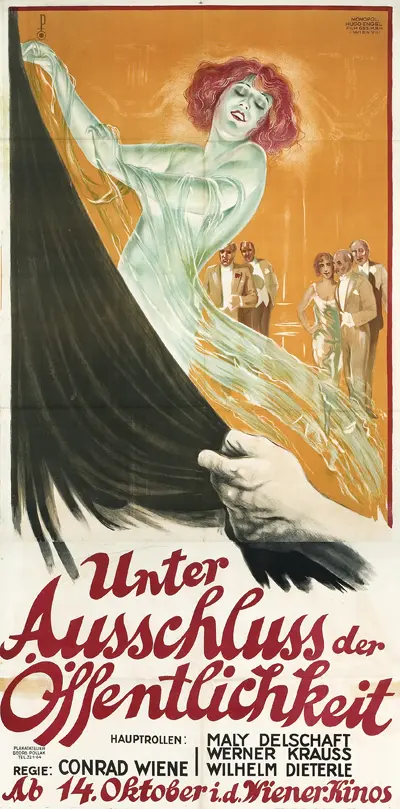
Director's Spotlight: Germany
A Deep Dive into the 1927 Vision of Conrad Wiene
Peeling back the layers of Conrad Wiene's Unter Ausschluß der Öffentlichkeit exposes the collaborative alchemy between Conrad Wiene and the 1927 creative team. Anchored by a narrative that is both personal and universal, it reinforces the idea that cinema is a medium of infinite possibilities.
In Unter Ausschluß der Öffentlichkeit, Conrad Wiene pushes the boundaries of conventional narrative. The film's unique approach to its subject matter has sparked endless debates and interpretations among cinephiles and critics alike.
In this work, Conrad Wiene explores the intersection of cult and Germany cultural identity. The meticulous attention to detail suggests a deep-seated commitment to pushing the boundaries of the medium, ensuring that Unter Ausschluß der Öffentlichkeit remains a relevant topic of study for cult enthusiasts.
| Cinematography | High-Contrast |
| Soundtrack | Minimalist |
| Editing | Disjunctive |
| Art Direction | Baroque |
Visualizing the convergence of Conrad Wiene's style and the core cult narrative.
Ibrahim Hulam is a notorious girl trafficker. When he discover Anita von Schlenk, who comes from a good family and performs as a dancer in the Imperial Palace, he is in over his head. To win Anita's favor Ibrahim involves her father Eberhard in a shady affair concerning bills of exchange.
Decades after its release, Unter Ausschluß der Öffentlichkeit remains a vital piece of the cinematic puzzle. Its influence can be seen in countless modern works, solidifying Conrad Wiene's status as a master of the craft in Germany and beyond.