
DbcultAccessing Vault...
Film History
Senior Film Conservator
There is a delicious irony buried in the cooling nitrate of the early 20th century: the films most desperately designed to keep us on the straight and narrow path are the ones that eventually led us into the deepest, darkest woods of cinematic obsession. As a historian of the fringe, I have spent decades watching the transformation of the 'instructional' into the 'infernal.' When we talk about the roots of the cult experience, we often point toward the avant-garde or the transgressive underground of the 1960s. Yet, the true DNA of our devotion to the strange, the overacted, and the ideologically warped was forged much earlier, in the fires of moral panic and state-sponsored paranoia.
These films—often categorized as propaganda, social hygiene reels, or cautionary tales—were never meant to be enjoyed for their aesthetics. They were cinematic sermons intended to terrify the viewer into compliance. But time has a way of stripping away the sermon and leaving behind something far more potent: a raw, unfiltered glimpse into the anxieties of a bygone era, rendered with a sincerity so intense it borders on the hallucinatory. When we watch a film like Trapped by the Mormons (1922) today, we aren't receiving a lesson in religious caution; we are witnessing the birth of the 'Other' as a camp icon, a foundational moment where the intended message collapses under the weight of its own hysterical delivery.

The early 1920s were a period of profound social friction. The world was reeling from a global war, the industrial machine was grinding traditional lifestyles into dust, and the flickering screen offered a new way to control the narrative. This gave rise to the 'Scare' film—a genre that exists purely to manufacture outrage. These films were the ancestors of the exploitation circuit, using a veneer of 'educational' value to bypass censors while delivering sensationalist thrills. They were the first films to understand that the forbidden is the ultimate magnet for the human eye.
Consider the sheer, unadulterated dread baked into the frames of Trapped by the Mormons. Intended as a warning against the perceived predatory nature of a growing religious movement, the film utilizes the visual language of the gothic thriller. The shadows are long, the villains are mustache-twirling archetypes, and the 'innocent' victims are portrayed with a wide-eyed fragility that feels more like a fever dream than a social reality. This isn't just propaganda; it is the blueprint for the 'trapped' subgenre that would later define much of the midnight movie circuit. The cultist does not watch this for the theology; they watch it for the ritualistic absurdity of the performance—the way the film weaponizes fear into a form of dark entertainment.
"The cultist does not watch these films for the theology; they watch them for the ritualistic absurdity of the performance—the way the film weaponizes fear into a form of dark entertainment."
While religious scares targeted the soul, wartime propaganda targeted the future. In 1918, The Kaiser's Shadow introduced audiences to a concept that would become a staple of cult sci-fi and spy-fi: the secret super-weapon. The film centers on a 'Ray Rifle' that utilizes X-rays and ultraviolet light—a technological MacGuffin that feels like a precursor to the death rays of 1950s B-movies. This was designed to stoke fears of German espionage, but in doing so, it accidentally created a visual vocabulary for the 'mad scientist' and the 'techno-conspiracy' that we still worship today.
What makes The Kaiser's Shadow a proto-cult masterpiece is the way it merges hard-nosed nationalist propaganda with the fantastical. It suggests a world where the borders between science and magic are blurred, a hallmark of the underground imagination. When we look at the 'Ray Rifle,' we aren't seeing a historical artifact of 1918 warfare; we are seeing the first flicker of the 'forbidden tech' trope that fuels everything from *The Rocky Horror Picture Show* to *Videodrome*. The propaganda intent has evaporated, leaving behind a crystalline structure of pure, imaginative paranoia.
Similarly, The Secret Game (1917) pitted German and Japanese spies against one another on American soil. At the time, it was a piece of xenophobic anxiety management. Today, it plays like a surrealist chess match. The film’s obsession with secret codes, hidden identities, and the 'invisible enemy' laid the groundwork for the cult of the conspiracy thriller. By turning the 'foreigner' into a hyper-competent, shadowy strategist, these films inadvertently created the very archetypes that the cult audience would eventually embrace as symbols of anti-establishment cool.
Not all early propaganda was aimed at external enemies. Much of it was directed inward, at the growing labor movements and the 'corruption' of the working class. The Blacklist (1916), based on the Colorado miners' strike, is a fascinating example of how cinema was used to negotiate class warfare. While it ostensibly seeks to present a 'balanced' view (often leaning toward the status quo of the coal companies), the raw depiction of industrial struggle has a gritty, proto-realist quality that predates the social-conscience cult films of the 1970s.
There is a harshness in these early industrial films that feels authentically transgressive. The coal-dusted faces, the looming machinery, and the sense of a system designed to crush the individual—these are the elements that modern cultists seek out in 'miserabilist' cinema or industrial horror. When the 'manager' in The Blacklist enters the fray, he isn't just a character; he is a symbol of an oppressive architecture. The cult appeal here lies in the friction—the way the film tries to resolve a conflict that is fundamentally unresolvable, leading to a narrative tension that feels modern, jagged, and dangerously honest.
The transition of a film from 'warning' to 'cult' usually happens when the moralizing becomes so extreme that it detaches from reality. Take The Girl in the Checkered Coat (1917). It was designed to show the divergence of two sisters—one who flees a criminal life and one who embraces it to become 'Flash' Fan. The intent was to show that crime doesn't pay, but the result was the creation of a magnetic, transgressive anti-heroine. 'Flash' Fan is far more interesting than her virtuous counterpart, and the film’s focus on her 'checkered' life provides the voyeuristic thrill that is the lifeblood of cult cinema.
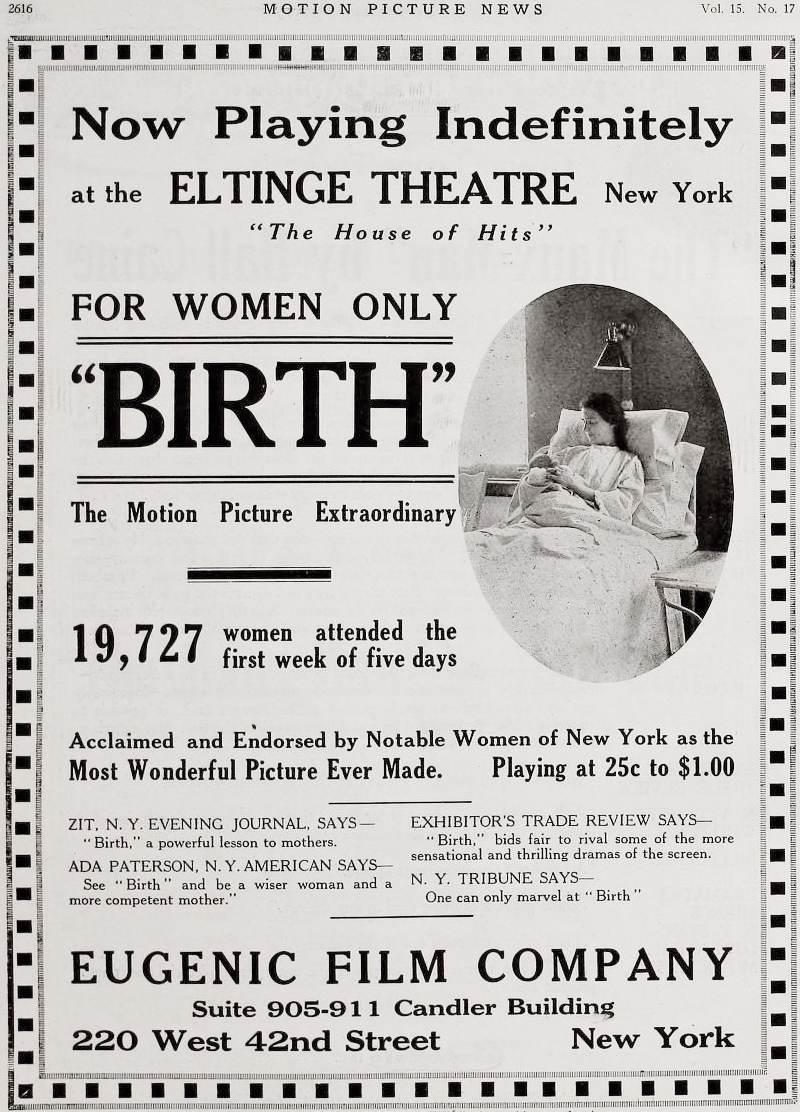
This is the secret language of the early 'vice' films. By showing us what we *shouldn't* do, they gave us a front-row seat to the very things they condemned. This voyeurism is what allowed films like $30,000 (1920) or Oath-Bound (1922) to function as proto-noirs. They dealt with theft, corruption, and the moral rot of the wealthy, all while pretending to be tales of justice. The cult audience, even then, was likely more interested in the mechanics of the crime than the restoration of the law.
Why do we, as a community of film obsessives, gravitate toward these failed sermons? It is because they represent a form of 'pure' cinema that is unburdened by the self-awareness of modern filmmaking. When the creators of Hello, Mars (1922) crafted a story about an aviator dreaming of Martian adventures, they were tapping into a collective wonder that was still being defined. There is a vulnerability in that lack of cynicism that makes the films feel alive, even when their ideologies are dead.
The cult experience is, at its heart, an act of reclamation. We take the scraps of the past—the things that were meant to be used and discarded, like propaganda leaflets—and we treat them as sacred texts. We find beauty in the 'Ray Rifle' of The Kaiser's Shadow not because we believe in its science, but because we believe in the *passion* that put it on screen. We find truth in The Blacklist not because we agree with its politics, but because we recognize the genuine human struggle captured in its nitrate frames.
The 'Dogma of the Damned' is the realization that the most rigid structures eventually crumble into the most beautiful ruins. The propaganda of the 1910s and 20s was a cage built to hold the human imagination. But the bars were made of flickering light, and the inhabitants—the spies, the Mormons, the 'Flash' Fans, and the Martian dreamers—were always too vibrant to be contained. Today, we don't watch these films to learn how to behave; we watch them to remember how it felt when the world was strange, dangerous, and utterly, beautifully absurd.