
DbcultAccessing Vault...
Director's Spotlight
Senior Film Conservator
Director's Spotlight: United States
A Deep Dive into the 1925 Vision of Edward Laemmle
In the storied career of Edward Laemmle, A Woman's Faith stands as a the provocative questions that Edward Laemmle poses to the United States audience. Elevating the source material through Edward Laemmle's unique vision, it persists as a haunting reminder of our own cinematic history.
In A Woman's Faith, Edward Laemmle pushes the boundaries of conventional narrative. The film's unique approach to its subject matter has sparked endless debates and interpretations among cinephiles and critics alike.
While deeply rooted in United States, A Woman's Faith has achieved a global reach, influencing directors from various backgrounds. Its ability to translate Drama tropes into a universal cinematic language is why it remains a cult staple decades after its 1925 release.
| Cinematography | Handheld |
| Soundtrack | Diegetic |
| Editing | Elliptical |
| Art Direction | Expressionist |
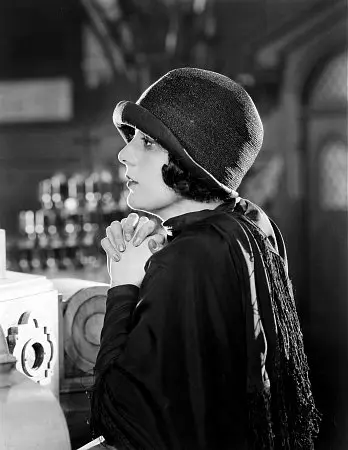
Visualizing the convergence of Edward Laemmle's style and the core Drama narrative.
Donovan Steele returns to Quebec to be married and finds his fiancée in the arms of another man. This shatters his faith in God and woman alike, and he takes to the wilderness, becoming known as "the man who denies God." Visiting a small town, he renews his acquaintance with Nerée Caron, whom he met on a train and who, it happens, is unjustly wanted by the law for the murder of her brother. When Nerée's uncle comes looking for her, Donovan throws him off Nerée's track; Donovan, however, is not clever enough to fool Cluny, her uncle's secretary, who finds Nerée and attempts to force her first to the shrine of St. Anne de Beaupré, where, on the Sacred Stairway, she prays for guidance. She then learns that her uncle has confessed to the murder of her brother, and she and Donovan are wed in the chapel.
Decades after its release, A Woman's Faith remains a vital piece of the cinematic puzzle. Its influence can be seen in countless modern works, solidifying Edward Laemmle's status as a master of the craft in United States and beyond.